
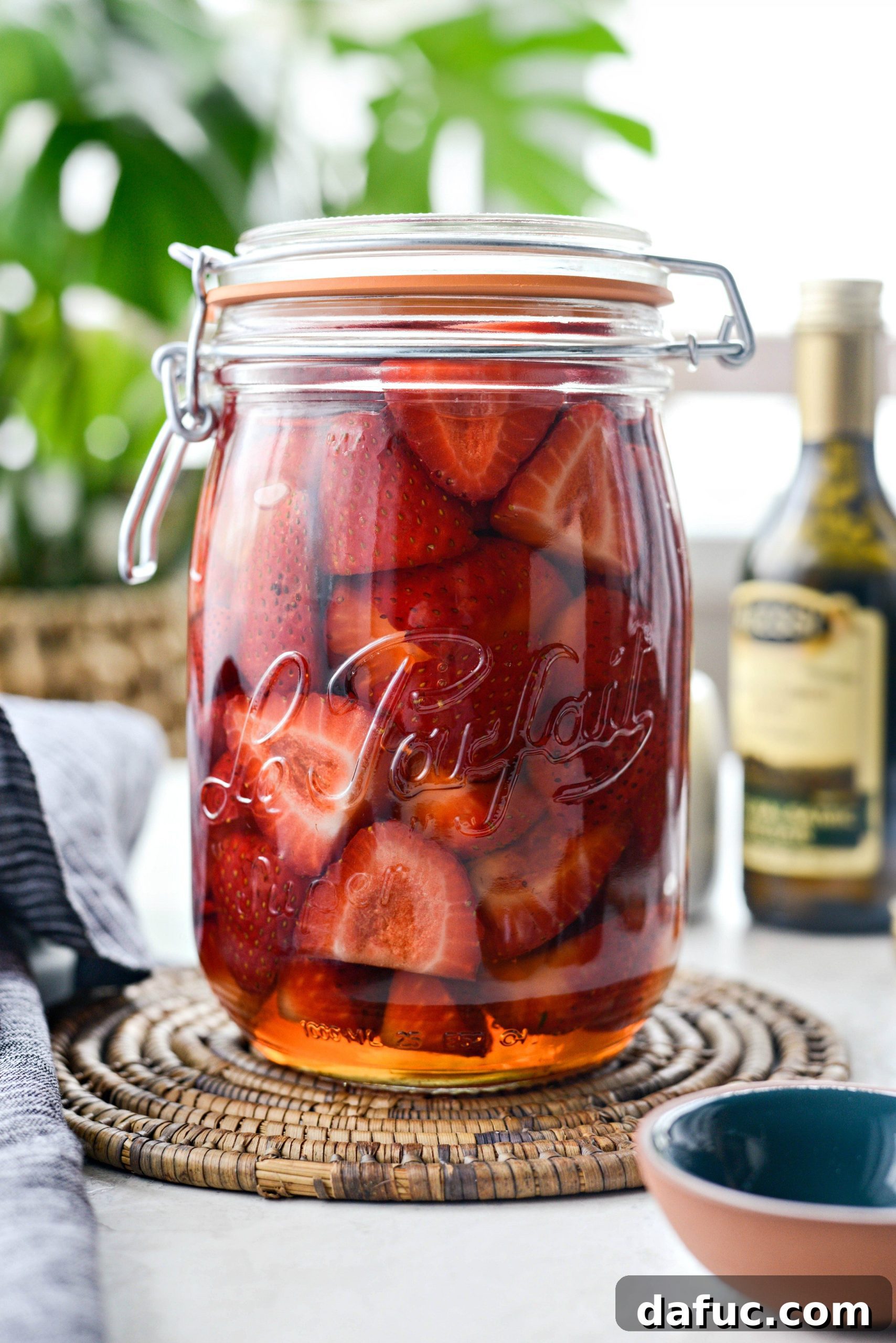
Pickled Strawberries: A Sweet & Tangy Culinary Revelation
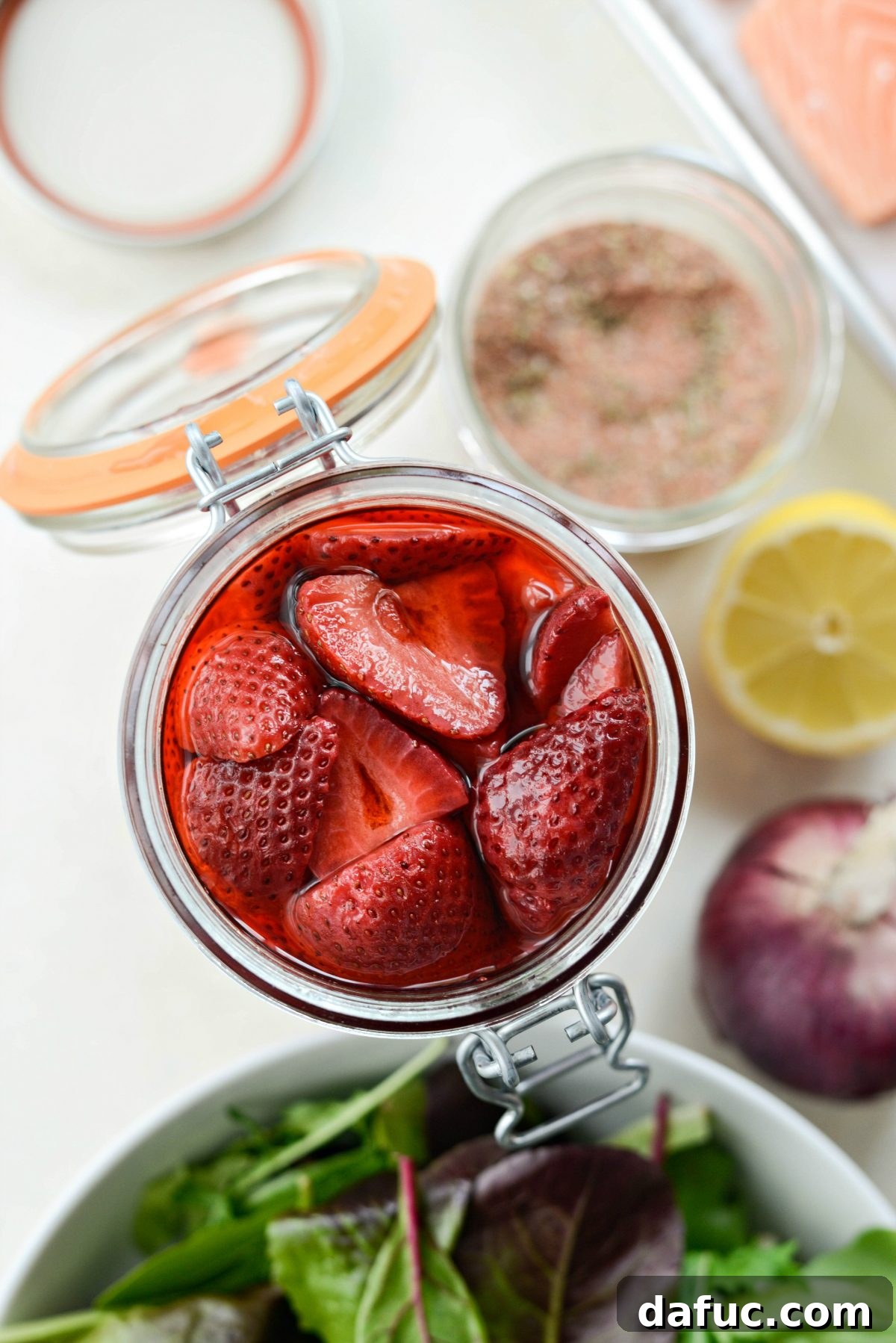
Prepare your palate for an extraordinary flavor experience that will redefine your perception of strawberries. Forget the typical sweet jam; we’re diving into the enchanting world of pickled strawberries. These vibrant red gems, transformed by a quick pickling process in white balsamic vinegar, sugar, and sea salt, offer an irresistible balance of sweet, tart, and savory notes. They are not merely a condiment but a versatile ingredient that can elevate everything from salads and sandwiches to appetizers, desserts, and even cocktails.
This simple recipe yields a generous 32-ounce jar of these “jeweled beauties,” designed to be enjoyed for up to a month, allowing you to savor the essence of summer long after the season ends. If you haven’t yet had the pleasure of tasting pickled strawberries, prepare to have your mind blown.
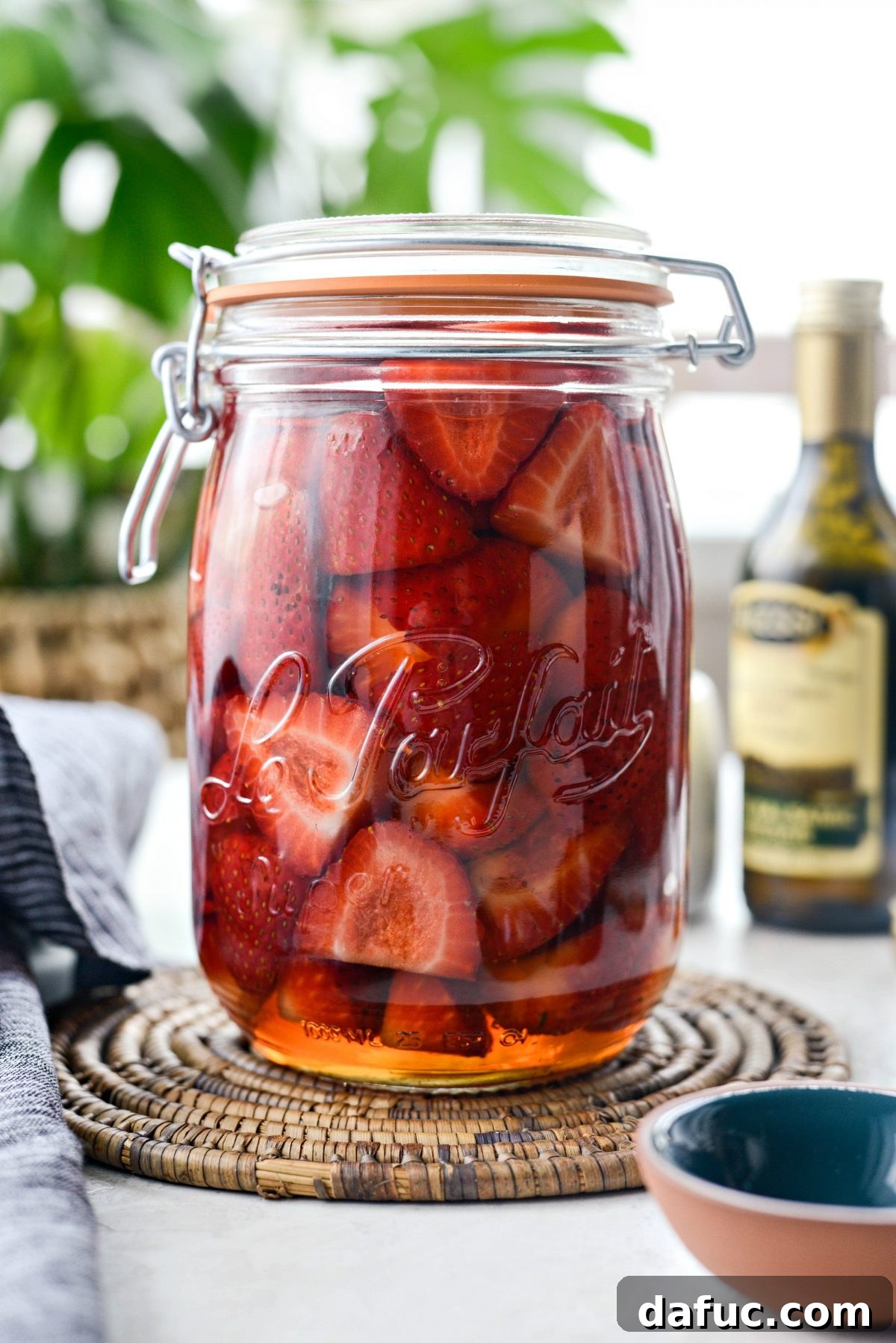
Beyond the Jam Jar: The Unexpected Delight of Pickling Strawberries
While the thought of “pickled” fruit might initially sound unconventional, pickled strawberries are a true culinary revelation. Their flavor profile is uniquely complex: intensely sweet and tart, with a delightful hint of saltiness that awakens the taste buds. The vinegar brightens their natural fruitiness, adding an acidic zing that cuts through richness and provides a refreshing counterpoint to sweeter dishes. This unexpected combination is what makes them so utterly delicious and addictive.
My first encounter with these delicate, yet potent, flavor bombs was on a fresh salad. It was January, a time when fresh, vibrant produce feels like a distant memory, and yet these strawberries tasted like the purest essence of summer. The moment they hit my tongue, I knew it was love at first bite. They were sweet, salty, and acidic all at once, incredibly juicy, and still unmistakably strawberry. I immediately resolved to recreate them at home, not only to adorn “all the things” but also to capture and preserve a little slice of summer for the colder fall and winter months. The beauty of this recipe lies in its simplicity and the profound impact it has on the humble strawberry, transforming it into a gourmet ingredient with minimal effort.
The Art and Science of Quick Pickling
Pickling is an ancient method of food preservation that involves submerging food in an acidic brine, typically vinegar, often with salt and sugar. This process not only preserves the food by inhibiting spoilage but also significantly alters its flavor and texture. In the case of quick pickling, as with these strawberries, the fermentation step is often bypassed, focusing instead on the rapid infusion of flavor from the pickling liquid into the fruit.
The vinegar, specifically white balsamic, provides the necessary acidity for preservation and that characteristic tangy flavor. Sugar balances the tartness of the vinegar and strawberries, enhancing their natural sweetness. Sea salt plays a crucial role in drawing out moisture, firming the fruit, and contributing to the overall complex taste. Together, these ingredients create a harmonious brine that subtly transforms the strawberries, making them even more succulent and flavorful. This method is incredibly rewarding, allowing you to extend the enjoyment of seasonal produce and experiment with unique flavor combinations in your kitchen.
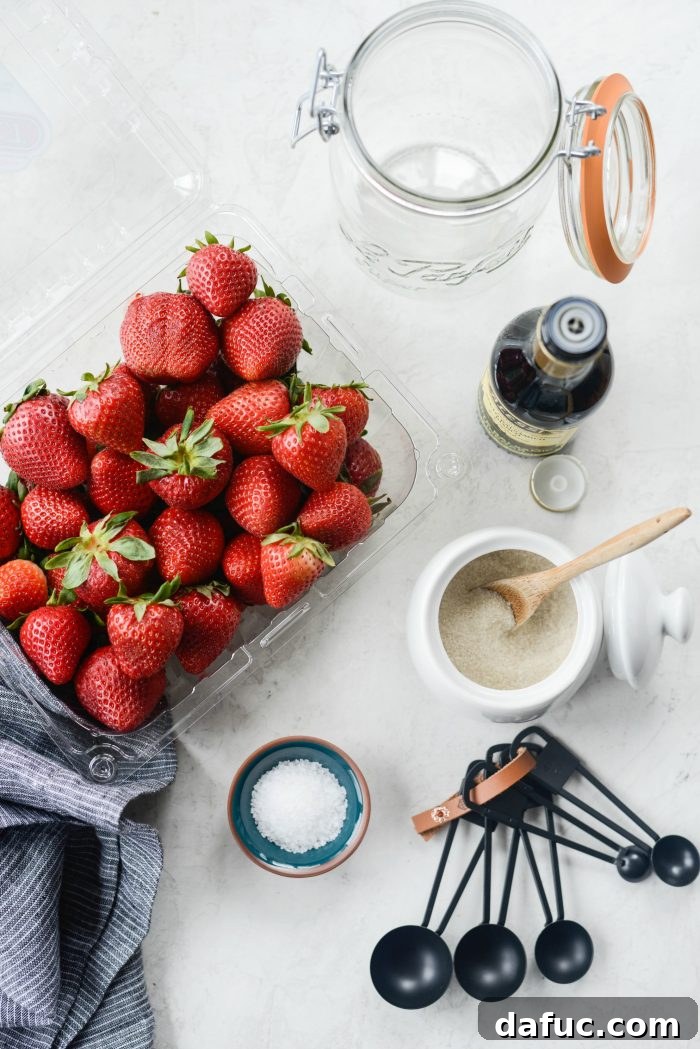
Essential Ingredients for Your Pickled Strawberries
The beauty of this recipe lies in its minimal ingredient list, making quality paramount. Each component plays a vital role in achieving that perfect sweet, tangy, and slightly salty balance:
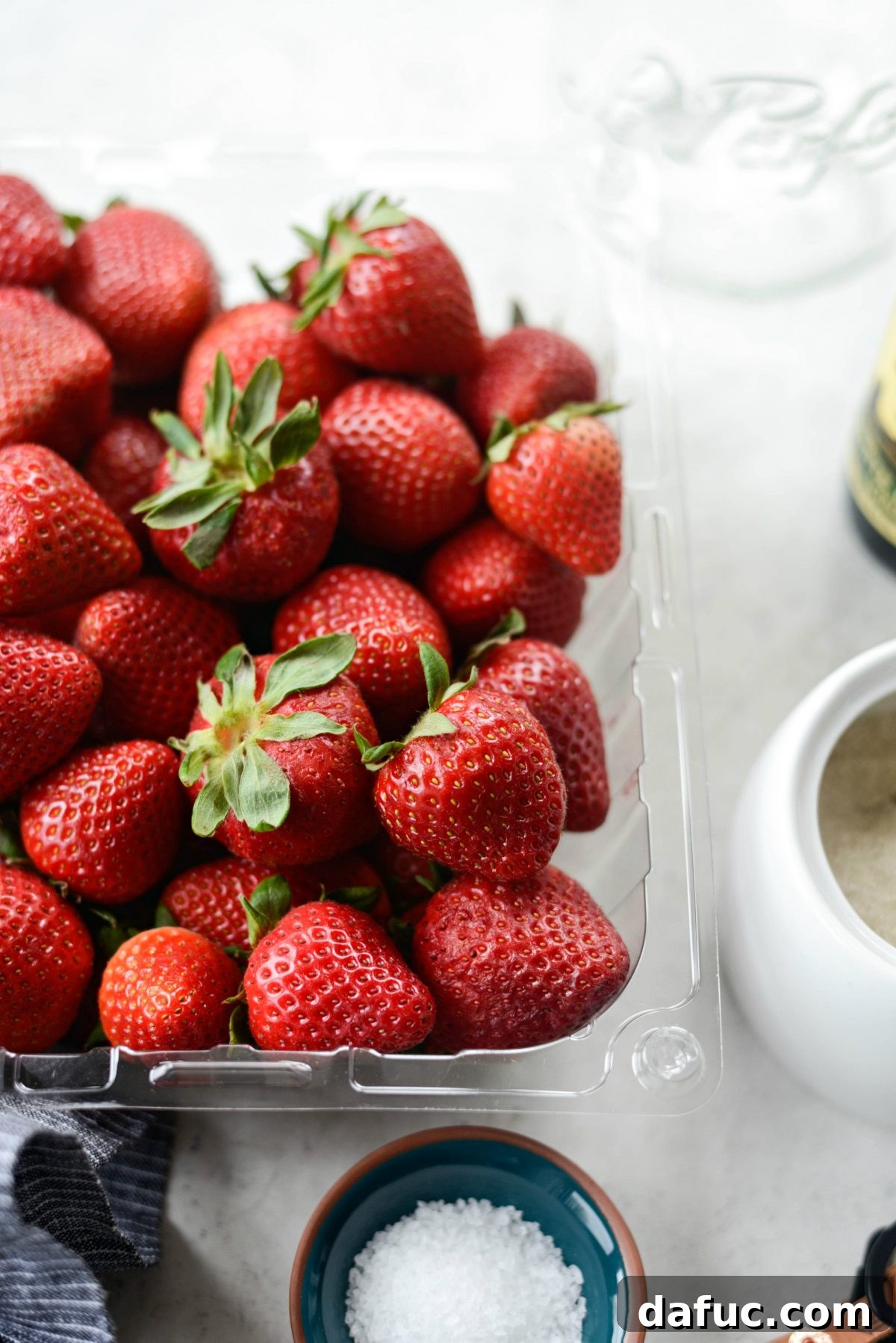
- Strawberries: Opt for fresh, ripe, and firm strawberries. While any variety will work, locally sourced, in-season berries will provide the best flavor. Look for berries that are vibrantly red, plump, and free of blemishes.
- Granulated Sugar: This provides the necessary sweetness to balance the acidity of the vinegar and enhance the natural sugars in the strawberries. Feel free to adjust the amount slightly to suit your personal preference for sweetness.
- Sea Salt: Essential for both flavor and texture. Sea salt offers a clean, crisp brininess without the harshness of iodized table salt. It helps to firm up the strawberries and draws out excess moisture.
- White Balsamic Vinegar: This is the star of the pickling liquid. White balsamic vinegar is milder and sweeter than its dark counterpart, with a beautiful golden hue that won’t discolor your vibrant strawberries. Its nuanced flavor profile complements the fruit perfectly without overpowering it. While red wine vinegar could be a substitute for a different flavor profile, white balsamic is highly recommended for its delicate balance.
- Water: Used to dilute the vinegar, creating a milder pickling liquid that allows the strawberry flavor to shine through while still providing adequate acidity.
Equipment Checklist
Having the right tools ensures a smooth and enjoyable pickling process:
- Heavy-Bottomed Saucepan: For preparing the pickling liquid, a heavy bottom helps distribute heat evenly and prevents scorching.
- Paring Knife: Essential for hulling and neatly cutting the strawberries.
- 32-Ounce Jars: Clean, sterilized glass jars with tight-fitting lids are crucial for safe storage. Le Parfait jars, or similar canning jars, work wonderfully. This recipe is designed for one large jar, but you can use multiple smaller ones if preferred.
- Measuring Cups and Spoons: For accurate ingredient proportions.
- Stirring Spoon/Whisk: To ensure the sugar and salt dissolve completely.
Crafting Your Own Pickled Strawberries: A Step-by-Step Guide
Making pickled strawberries is surprisingly straightforward and incredibly rewarding. Follow these detailed steps to create your own batch of this delightful condiment:
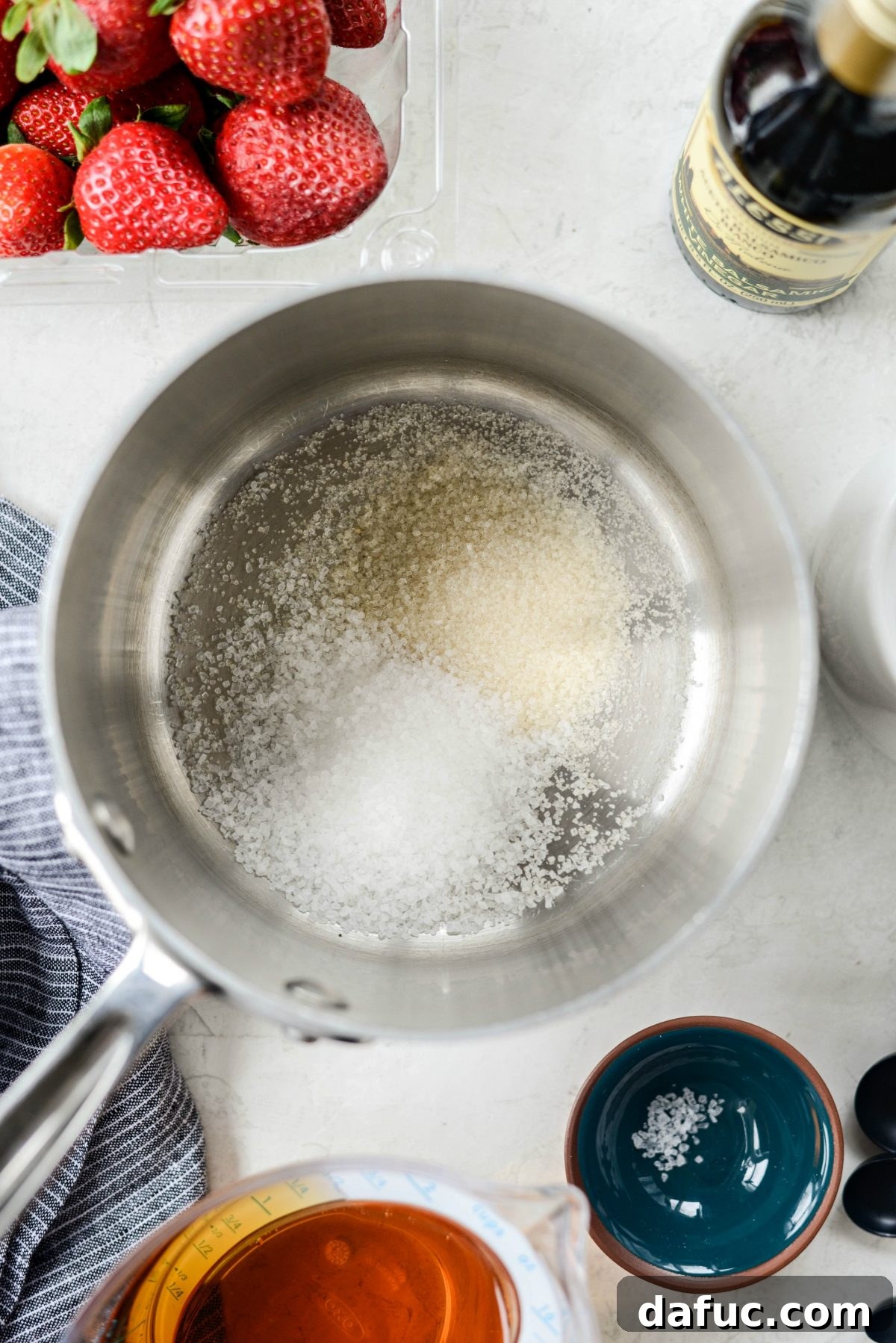
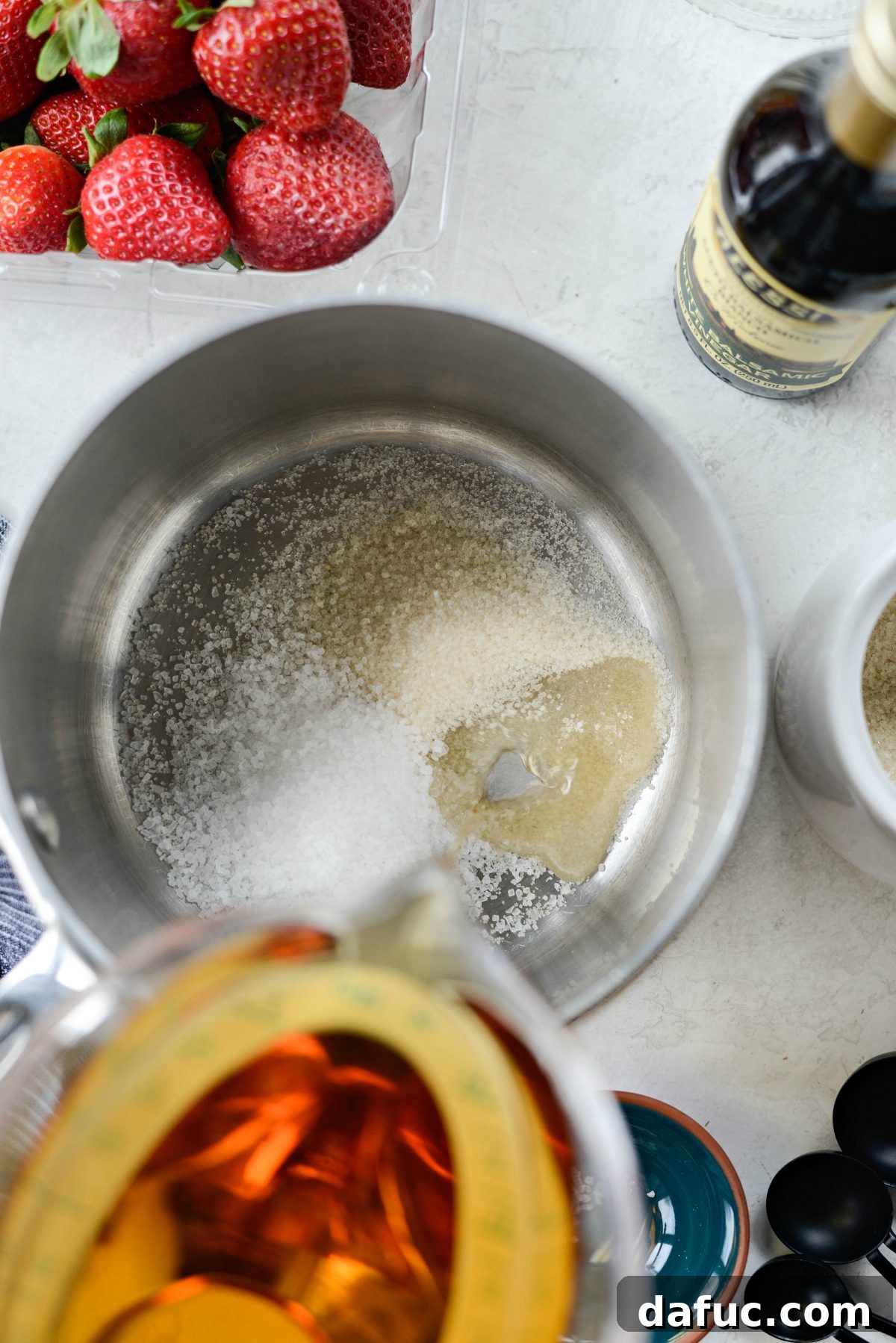
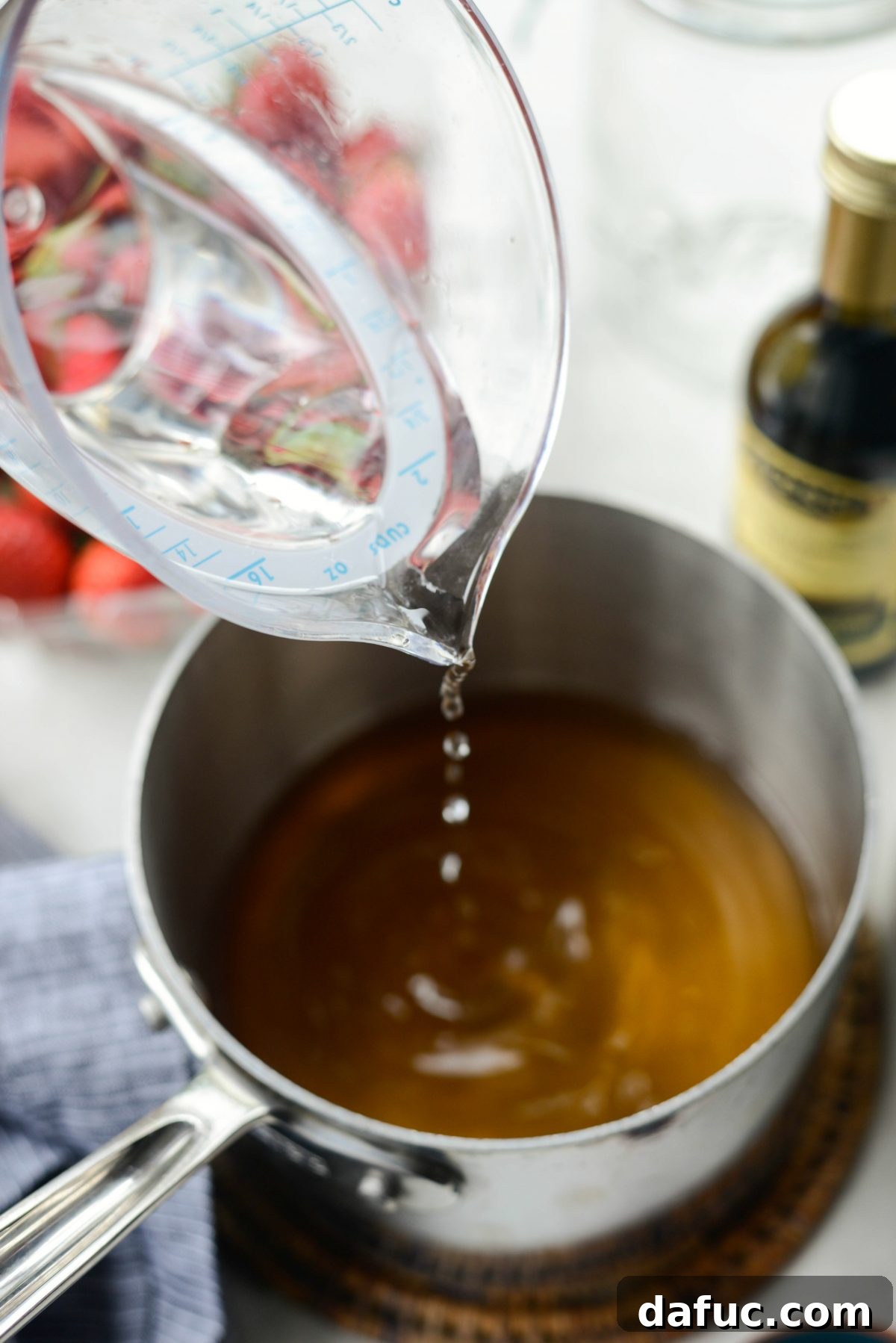
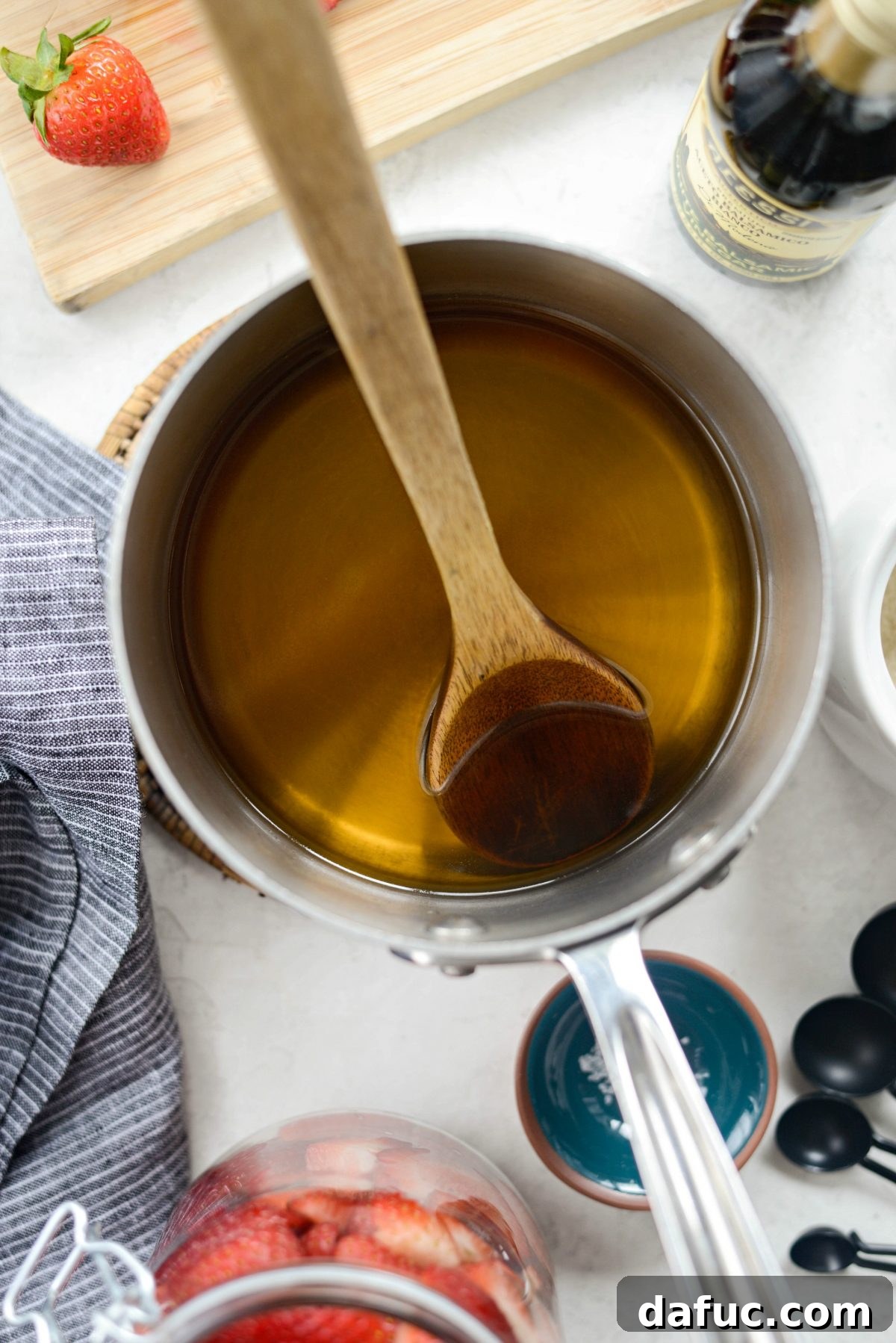
- Prepare the Pickling Liquid: Begin by combining the granulated sugar, sea salt, white balsamic vinegar, and water in a heavy-bottomed saucepan. Place the saucepan over low to medium-low heat. Stir continuously until both the sugar and salt have completely dissolved into the liquid. It’s important not to bring the mixture to a boil; gentle heat is sufficient to dissolve the solids. This process typically takes about 8 to 10 minutes. The goal is a clear, uniform liquid, ready to infuse your strawberries with flavor.
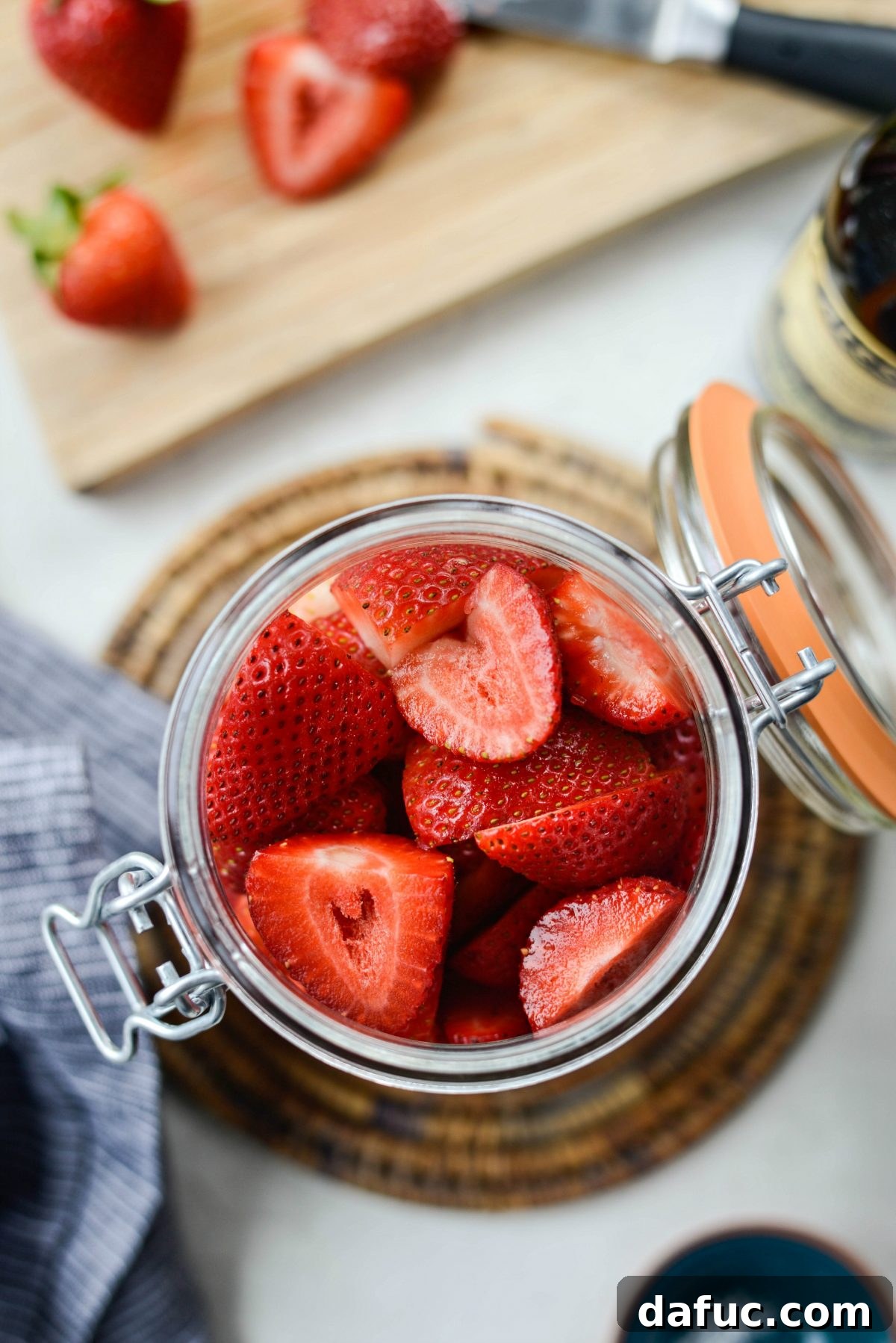
- Prepare the Strawberries: While your pickling liquid is gently heating, prepare your fresh strawberries. Rinse them thoroughly under cool, running water to remove any dirt or debris. Once rinsed, pat them dry with a clean cloth or paper towel. Using a small paring knife, carefully remove the leafy green tops (hull) from each strawberry. Next, decide on their size: quarter any large strawberries, halve medium ones, and leave smaller strawberries whole. This variation in size adds visual appeal and ensures an even pickling process.
- Fill the Jar: Take your clean, sterilized 32-ounce jar and begin to carefully fill it with the prepared strawberries. Pack them in as snugly as possible without bruising or crushing them. You’ll want to fit as many as you can. Don’t worry if you can’t fit every single strawberry in at this stage; there will be an opportunity to add more later.
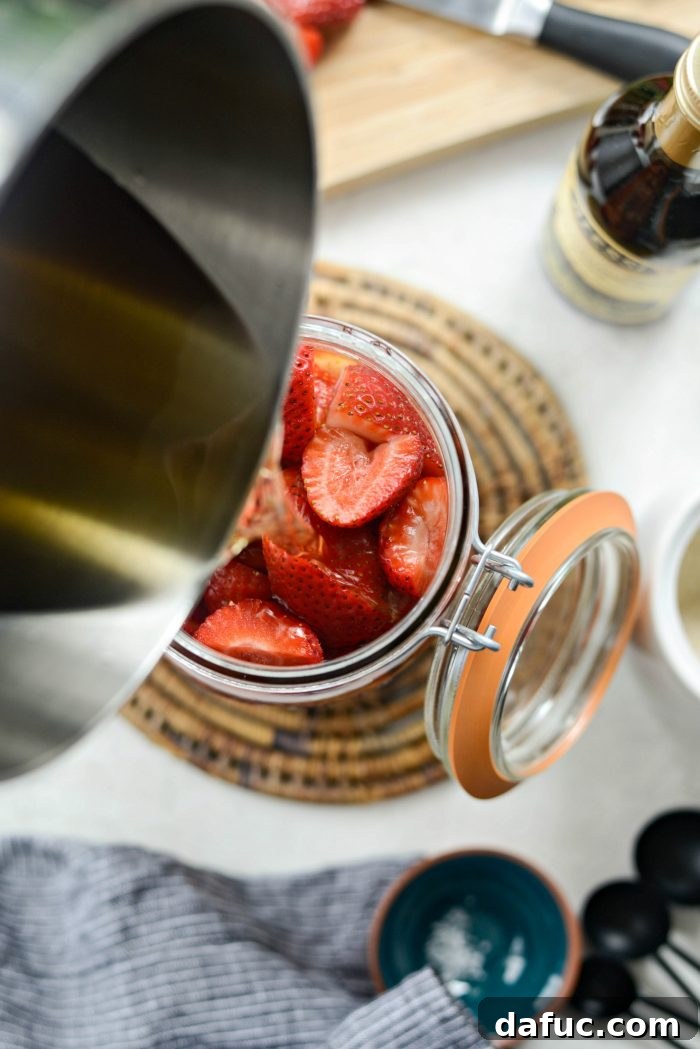
- Combine Liquid and Strawberries: Once the sugar and salt have fully dissolved in your pickling liquid, remove the saucepan from the heat. Carefully pour the warm pickling liquid directly over the strawberries in the jar, ensuring that all the fruit is fully submerged.
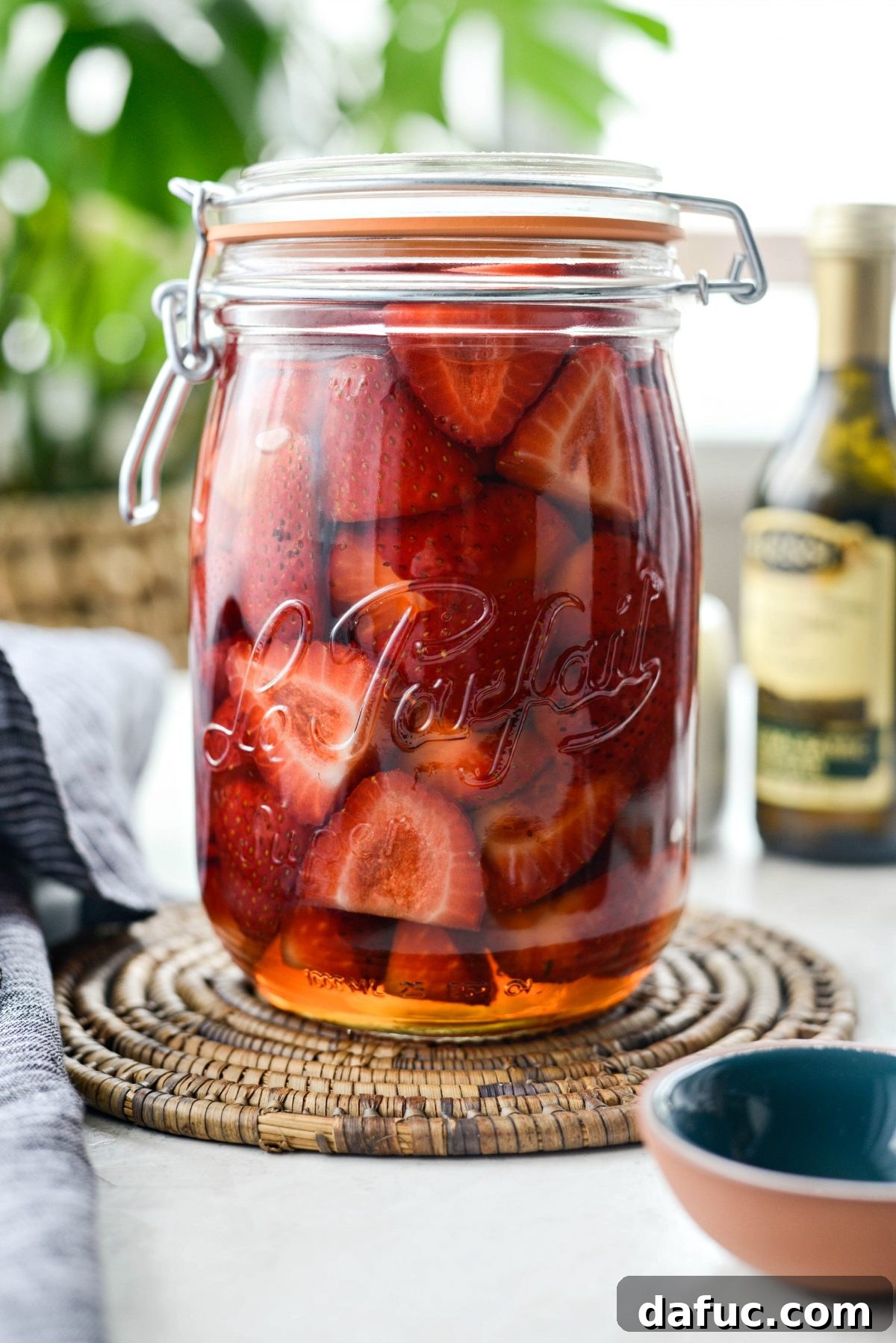
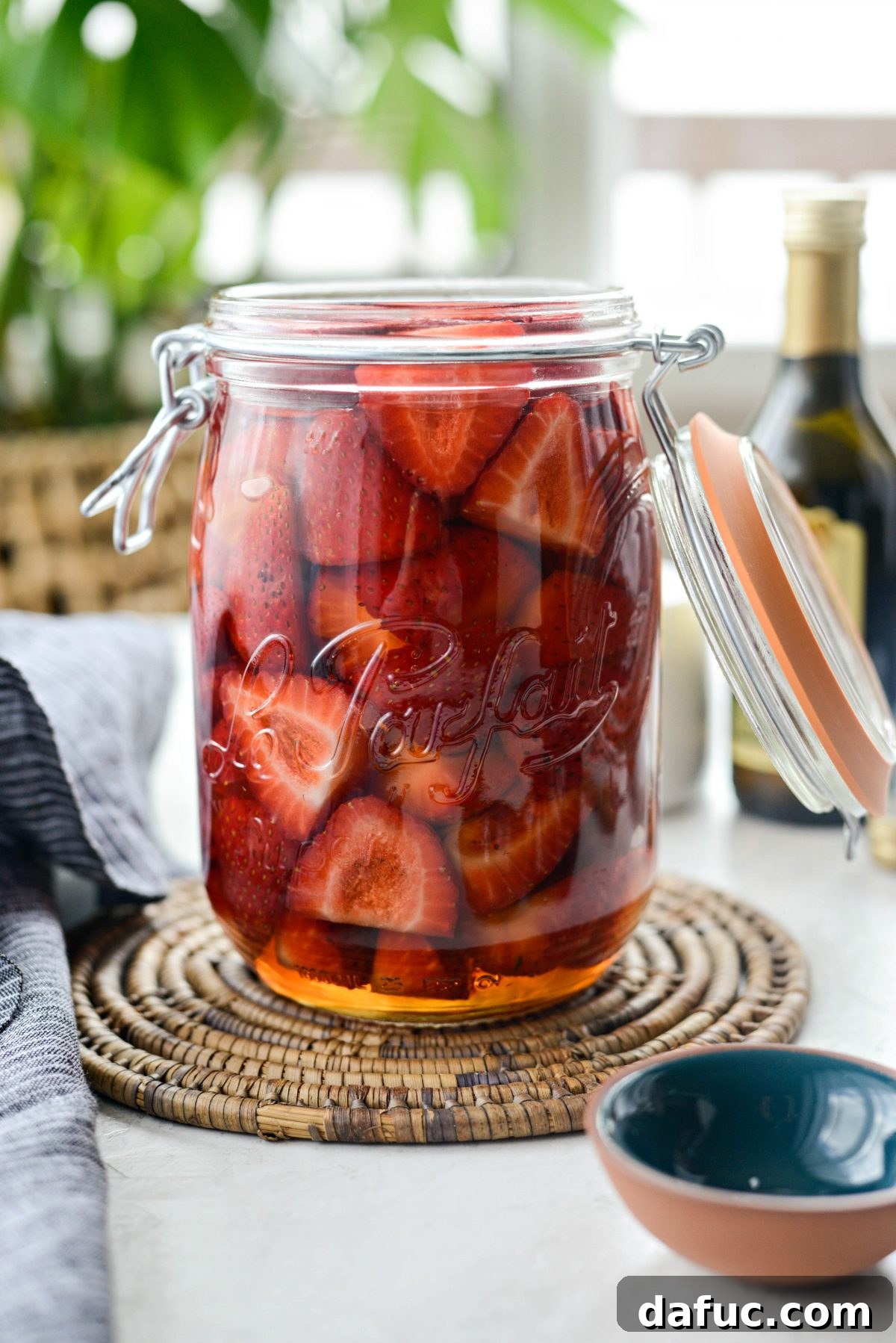
- Cool and Seal: Allow the jar of strawberries and pickling liquid to cool down completely to room temperature before securing the lid. As the strawberries cool and begin to absorb the pickling liquid, you’ll notice they will naturally shrink. This shrinkage will create more space in the jar, providing the perfect opportunity to add any leftover strawberries that didn’t fit initially. Once completely cool, seal the jar tightly.
- Refrigerate and Enjoy: Transfer the sealed jar of pickled strawberries to your refrigerator. For the flavors to fully meld and the pickling process to take effect, allow the strawberries to pickle for at least 24 hours before you begin to enjoy them. This waiting period is crucial for achieving that signature sweet-tangy taste and tender texture.
Storage and Shelf Life
Once cooled and sealed, these pickled strawberries should be stored in the refrigerator. They will maintain their delicious flavor and texture for up to 1 month. Always ensure they remain submerged in the pickling liquid for best preservation. If you are interested in long-term preservation through traditional canning methods, please refer to the USDA guidelines for proper canning instructions and safety protocols, as this recipe is for quick pickles intended for refrigeration.
Endless Culinary Adventures: Ways to Enjoy Pickled Strawberries
The versatility of pickled strawberries is truly remarkable, making them a fantastic addition to both sweet and savory dishes. Here are just a few ideas to get your creative juices flowing:
- Salads: They add a surprising burst of flavor to green salads, especially those with goat cheese, feta, or a balsamic vinaigrette. Their acidity cuts through rich dressings and complements fresh greens beautifully.
- Sandwiches & Wraps: Thinly sliced, pickled strawberries are an unexpected delight in sandwiches, particularly those featuring turkey, ham, or even a sophisticated grilled cheese. They offer a refreshing counterpoint to savory fillings.
- Appetizers & Cheese Boards: Spoon them over crostini slathered with creamy goat cheese or ricotta for an elegant appetizer. They are also a phenomenal addition to any cheese board, pairing exceptionally well with soft cheeses, charcuterie, and crusty bread.
- Desserts: While seemingly unconventional, their sweet and tangy profile works wonders in desserts. Try them atop vanilla ice cream, panna cotta, cheesecake, or even simply layered with Greek yogurt and granola for a unique parfait.
- Cocktails: Muddle them into cocktails like a gin fizz, a spritzer, or even a creative margarita for a fruity, acidic twist. The pickling liquid itself can also be used as a flavorful shrub.
- Grilled Meats & Fish: Serve them as a vibrant relish alongside grilled chicken, pork tenderloin, or flaky white fish to add a bright, acidic garnish that enhances the main course.
- Breakfast: Stir them into oatmeal, swirl them into yogurt, or serve alongside pancakes and waffles for a gourmet breakfast experience.
Customizing Your Pickled Strawberry Experience
While the basic recipe is fantastic on its own, don’t hesitate to get creative with your pickling liquid. Here are a few ideas to customize your batch:
- Spices: Add a few black peppercorns, a bay leaf, a star anise pod, or a cinnamon stick to the pickling liquid for an extra layer of warmth and complexity.
- Herbs: Fresh sprigs of thyme, mint, or even basil can infuse subtle herbaceous notes into the strawberries. Add them to the jar along with the fruit before pouring in the liquid.
- Citrus Zest: A strip of lemon or orange zest can brighten the flavor even further.
- Vinegar Variations: Experiment with different types of vinegar for distinct results. Apple cider vinegar will yield a fruitier, more robust pickle, while champagne vinegar offers a lighter, more delicate touch.
- A Touch of Heat: For those who enjoy a little kick, a thinly sliced jalapeño or a pinch of red pepper flakes can be added to the pickling liquid.
These simple additions can significantly alter the final flavor profile, allowing you to tailor your pickled strawberries to your specific tastes and culinary applications. Feel free to experiment and discover your favorite combinations!
Enjoy! And if you give this Pickled Strawberries recipe a try, we’d love to hear about it! Snap a photo and tag us on twitter or instagram!
Print Recipe
Pin Recipe
Leave a Review »
32 servings
Pickled Strawberries
10 mins
10 mins
Ingredients
- 2 pounds strawberries, washed and patted dry
- 1 tablespoon granulated sugar
- 1 tablespoon sea salt
- 1½ cups white balsamic vinegar
- 1/2 cup water
Equipment
-
32 ounce Le Parfait Jars set of 4
-
Heavy-bottomed saucepan
-
Paring knife
Instructions
-
In a heavy-bottomed saucepan, combine the granulated sugar, sea salt, white balsamic vinegar, and water. Heat on low to medium-low, stirring continuously until both the sugar and salt have completely dissolved. Do not bring to a boil; this process should take approximately 8-10 minutes.
-
Meanwhile, prepare your strawberries by rinsing them thoroughly under cool water. Using a paring knife, remove the leafy green tops (hull) from each strawberry. Quarter any large strawberries, halve medium ones, and leave smaller strawberries whole for an appealing visual variety.
-
Carefully fill a clean, sterilized 32-ounce jar with the prepared strawberries. Pack them in as snugly as possible without crushing.
-
Once the sugar and salt are dissolved in the pickling liquid, remove it from the heat. Pour the warm pickling liquid over the strawberries in the jar, ensuring they are fully submerged.
-
Allow the jar of strawberries and liquid to cool down completely to room temperature before securing the lid and refrigerating. As they cool, the strawberries will shrink, giving you more room to add any remaining strawberries that might not have fit in the jar initially.
-
For optimal flavor development, allow the strawberries to pickle for at least 24 hours in the refrigerator before enjoying.
Notes
As they cool, you’ll notice the strawberries will shrink, thus giving you more room to add any remaining strawberries that might not have fit in the jar the first time. These pickled strawberries can last refrigerated for up to 1 month. If looking for canning instructions or directions for longer-term preservation, always follow the USDA guidelines.
Nutrition Information (per 2 tablespoons serving)
- Calories: 21kcal
- Carbohydrates: 5g
- Protein: 1g
- Fat: 1g (Saturated Fat: 1g, Polyunsaturated Fat: 1g, Monounsaturated Fat: 1g)
- Sodium: 221mg
- Potassium: 57mg
- Fiber: 1g
- Sugar: 4g
- Vitamin A: 3IU
- Vitamin C: 17mg
- Calcium: 8mg
- Iron: 1mg
Laurie McNamara
Homemade Ingredients & Condiments
American