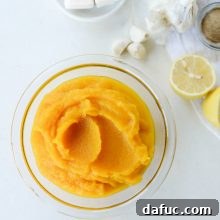
Homemade Butternut Squash Purée: Your Ultimate Guide to a Versatile Kitchen Staple
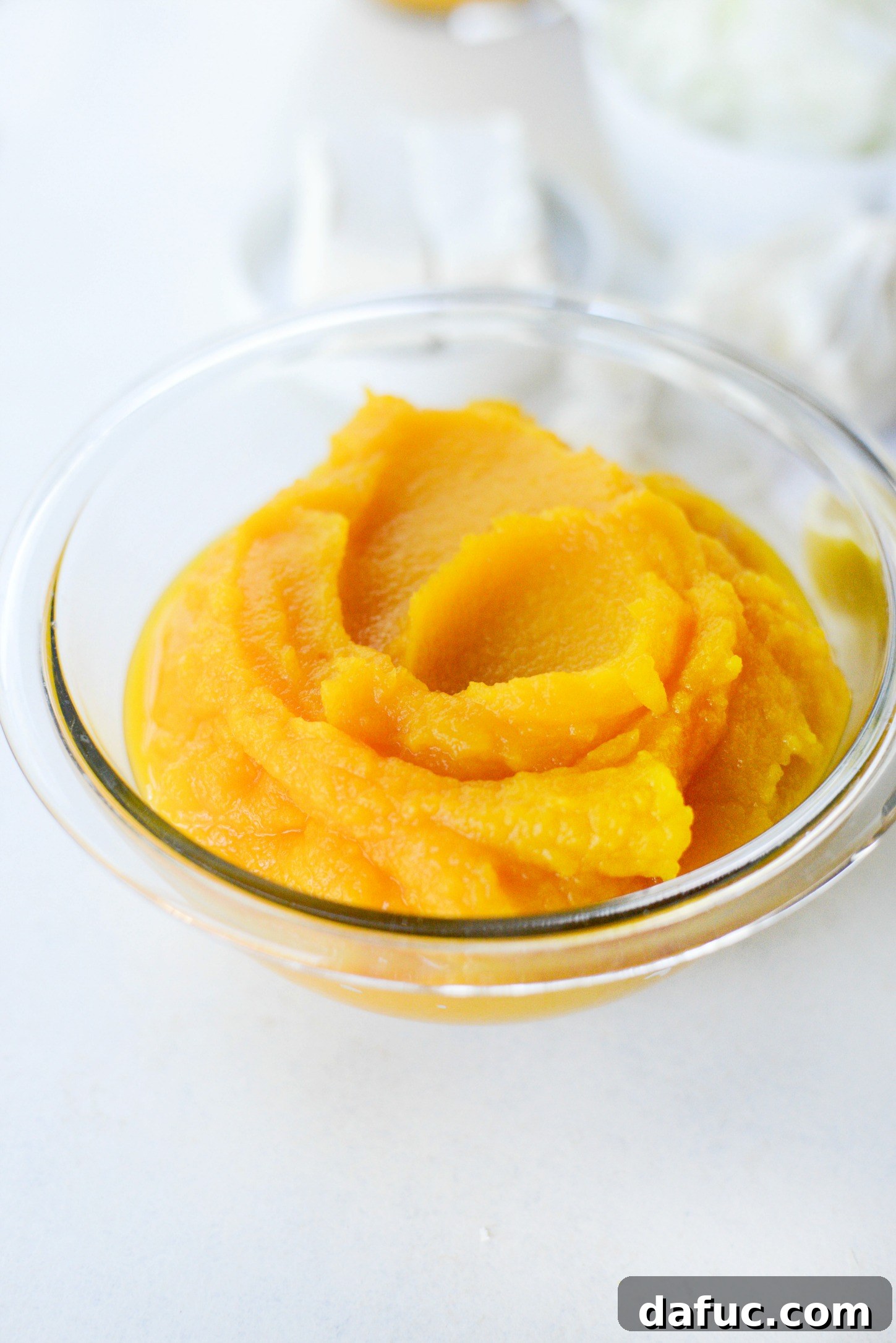
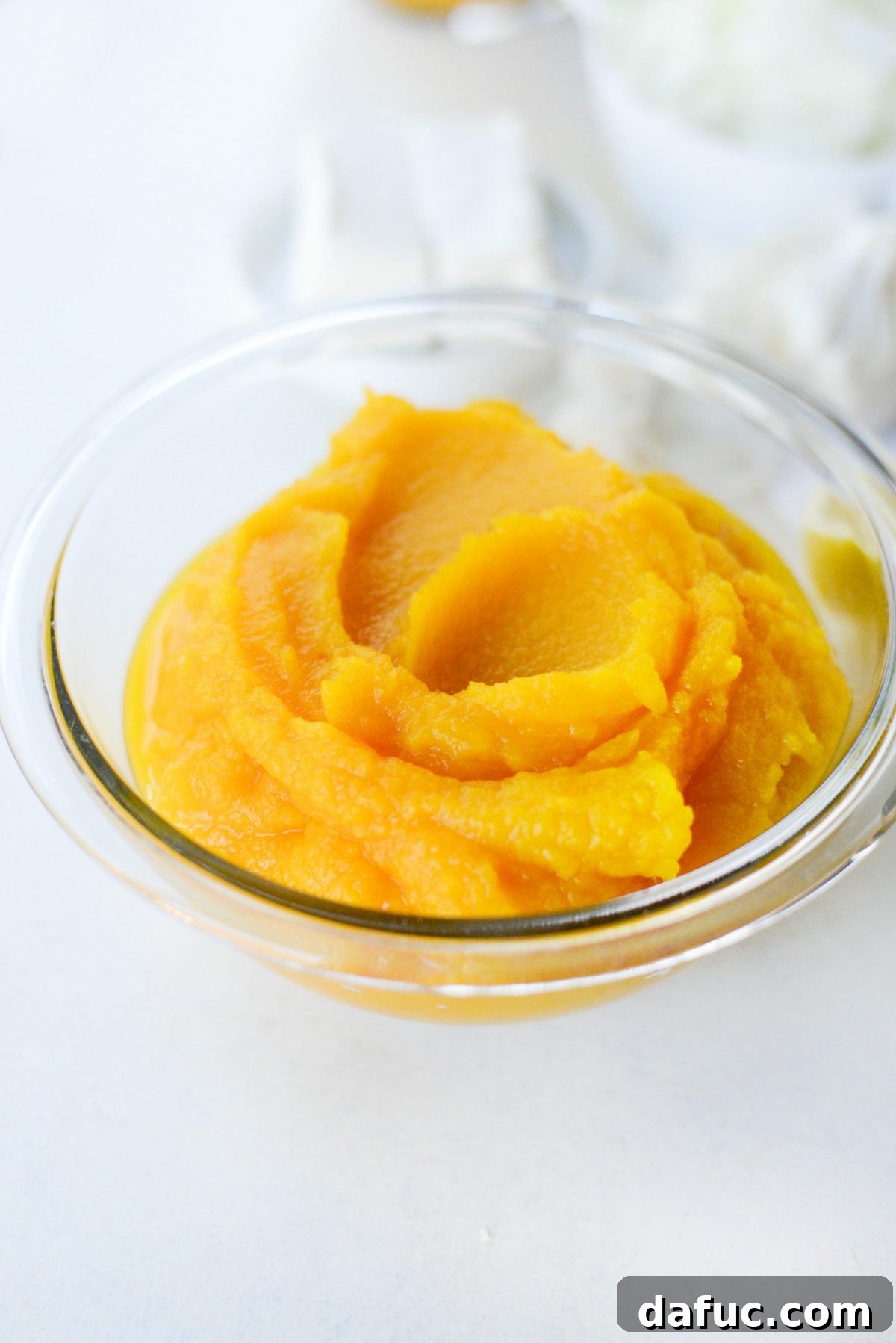
Unlock the secret to delicious and versatile cooking with homemade butternut squash purée. Whether you’re crafting a velvety soup, enriching a savory sauce, baking a comforting pie, or preparing nutritious baby food, this simple guide will show you how to transform a humble butternut squash into a culinary masterpiece. Making your own purée is incredibly easy, requiring just a few basic steps: roasting the squash halves until tender, scooping out the sweet, softened flesh, and blending until perfectly smooth. This foundational ingredient is a game-changer for anyone looking to add natural sweetness, a creamy texture, and a boost of nutrition to their meals.
Many home cooks shy away from making their own purée, opting for canned varieties, but the difference in flavor and freshness is truly incomparable. Once you experience the rich, earthy sweetness and vibrant color of homemade purée, you’ll never go back. Plus, it’s a fantastic way to control exactly what goes into your food, avoiding any unwanted additives or preservatives often found in store-bought options. Embrace the simple pleasure of creating this essential ingredient from scratch and elevate your favorite dishes.
Why Choose Homemade Butternut Squash Purée?
There are countless reasons to swap store-bought purée for its homemade counterpart. Foremost among them is the unparalleled taste. Roasting butternut squash caramelizes its natural sugars, intensifying its sweetness and imparting a depth of flavor that canned versions simply cannot replicate. This rich, nutty taste forms a superior base for any recipe.
Beyond flavor, homemade purée offers complete control over ingredients. You decide if you want to add a touch of olive oil, a pinch of salt, or nothing at all, making it ideal for those with dietary restrictions or specific health goals. It’s also a surprisingly economical choice, especially when butternut squash is in season and readily available at your local market. You get more purée for your money, and you can easily freeze any excess for future culinary adventures. Furthermore, the satisfaction of creating such a foundational ingredient yourself is immensely rewarding.
Selecting the Perfect Butternut Squash
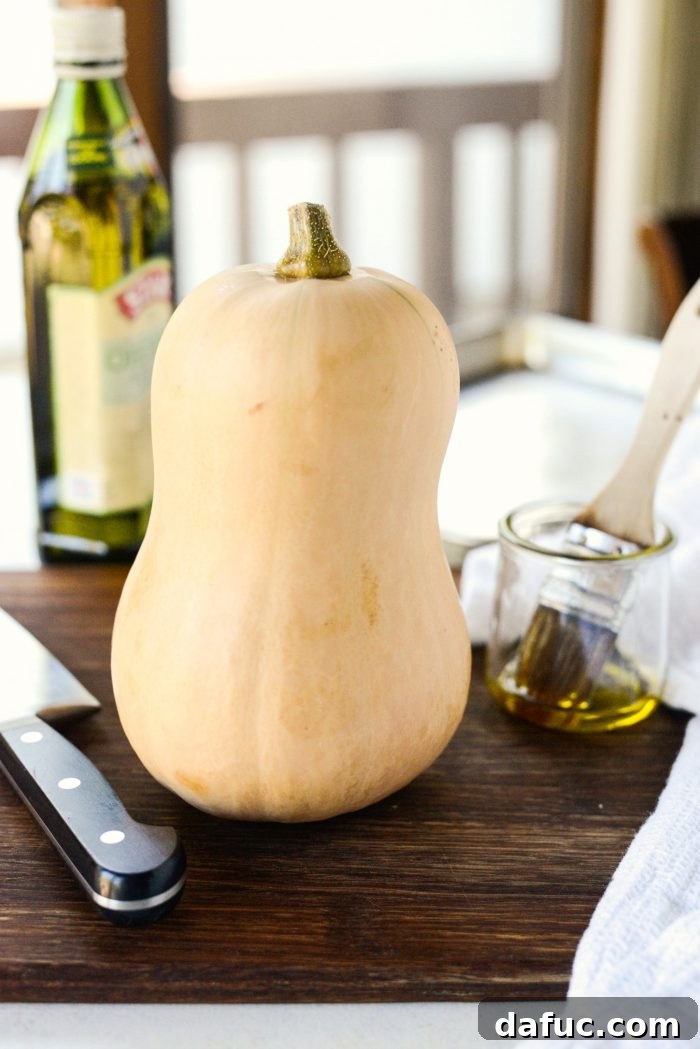
Choosing the right butternut squash is key to a delicious purée. Look for a squash that feels firm and heavy for its size, indicating a good water content and ripe flesh. The skin should be dull, not shiny, and free from any soft spots, cuts, or blemishes. A deep, uniform tan color is also a good indicator of ripeness. Avoid squash with green patches, as this suggests it was picked too early. A healthy stem is also a positive sign, as it helps the squash store longer. Once you’ve selected your perfect squash, it can be stored in a cool, dark place for up to a month or even longer before cooking.
Essential Ingredients for Your Butternut Squash Purée
The beauty of this recipe lies in its simplicity. You truly need very little to create a fantastic purée.
What You’ll Need:
- Butternut Squash: One medium to large squash, typically yielding about 2-3 cups of purée.
- Light Olive Oil (Optional): A small amount helps with caramelization and prevents sticking, enhancing flavor.
- Kosher Salt (Optional): A pinch can bring out the squash’s natural sweetness, especially when roasting cut-side up.
Step-by-Step Guide to Roasting Butternut Squash
Roasting is the preferred method for preparing butternut squash for purée, as it coaxes out its deepest flavors and creates that desirable buttery soft texture. Follow these steps for perfect results every time.
Preparation:
- Preheat Your Oven: Start by preheating your oven to 400°F (200°C). This ensures the squash begins roasting immediately upon entering, leading to consistent cooking.
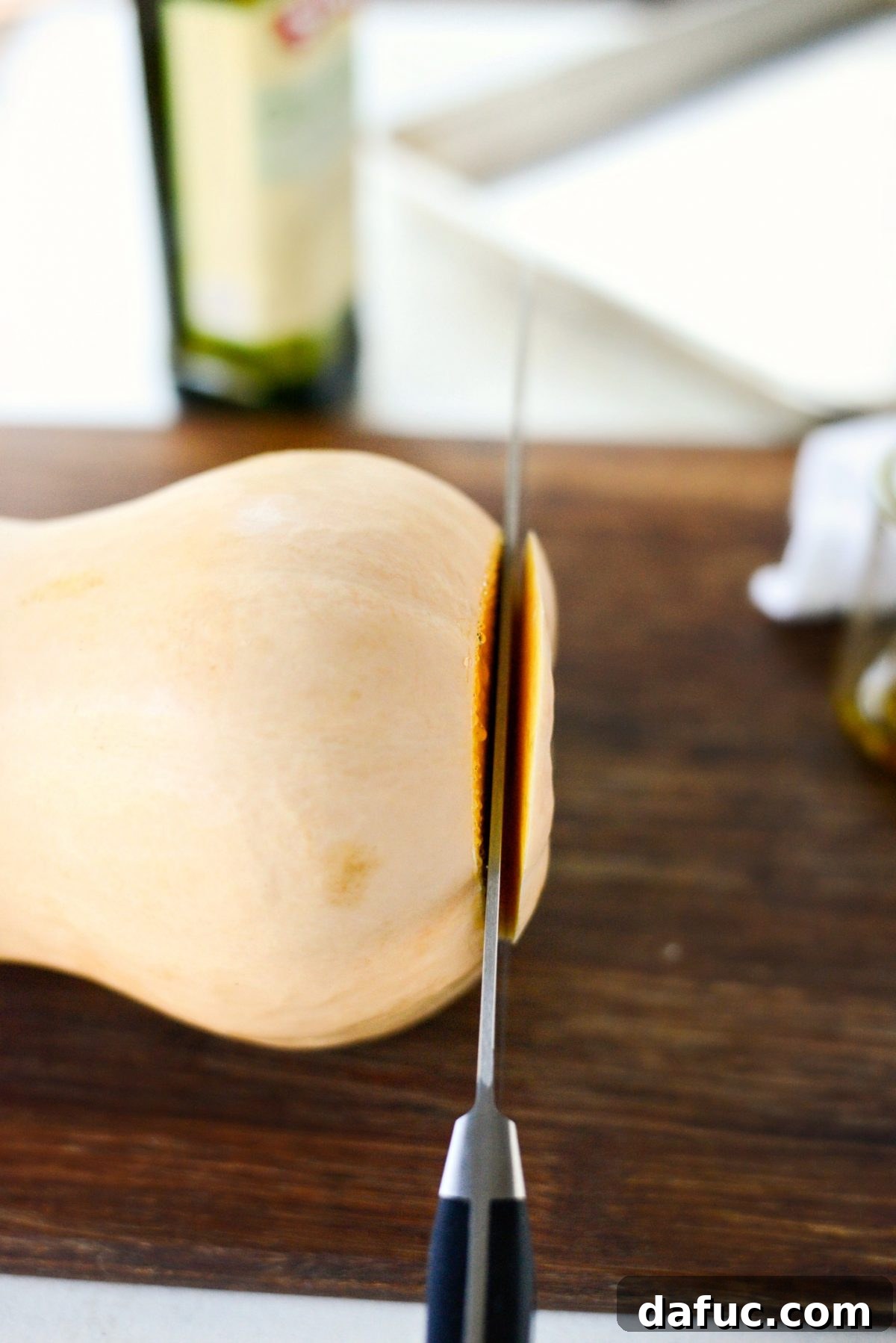
- Wash and Trim: Thoroughly wash the exterior of your butternut squash. While you won’t be eating the skin, cleaning it is good practice. Using a sharp, sturdy knife, carefully trim off both ends of the squash. This makes it easier and safer to cut in half.
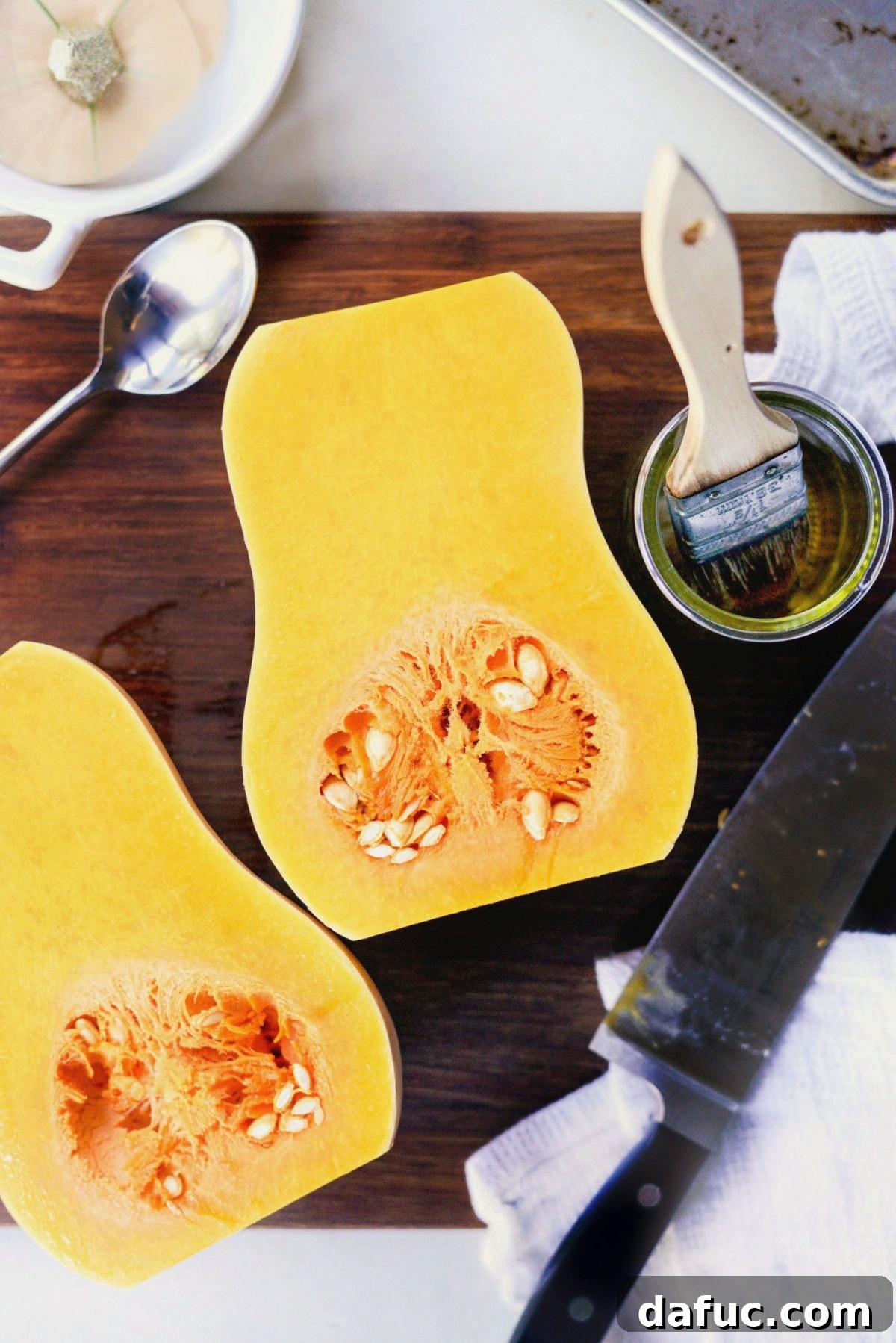
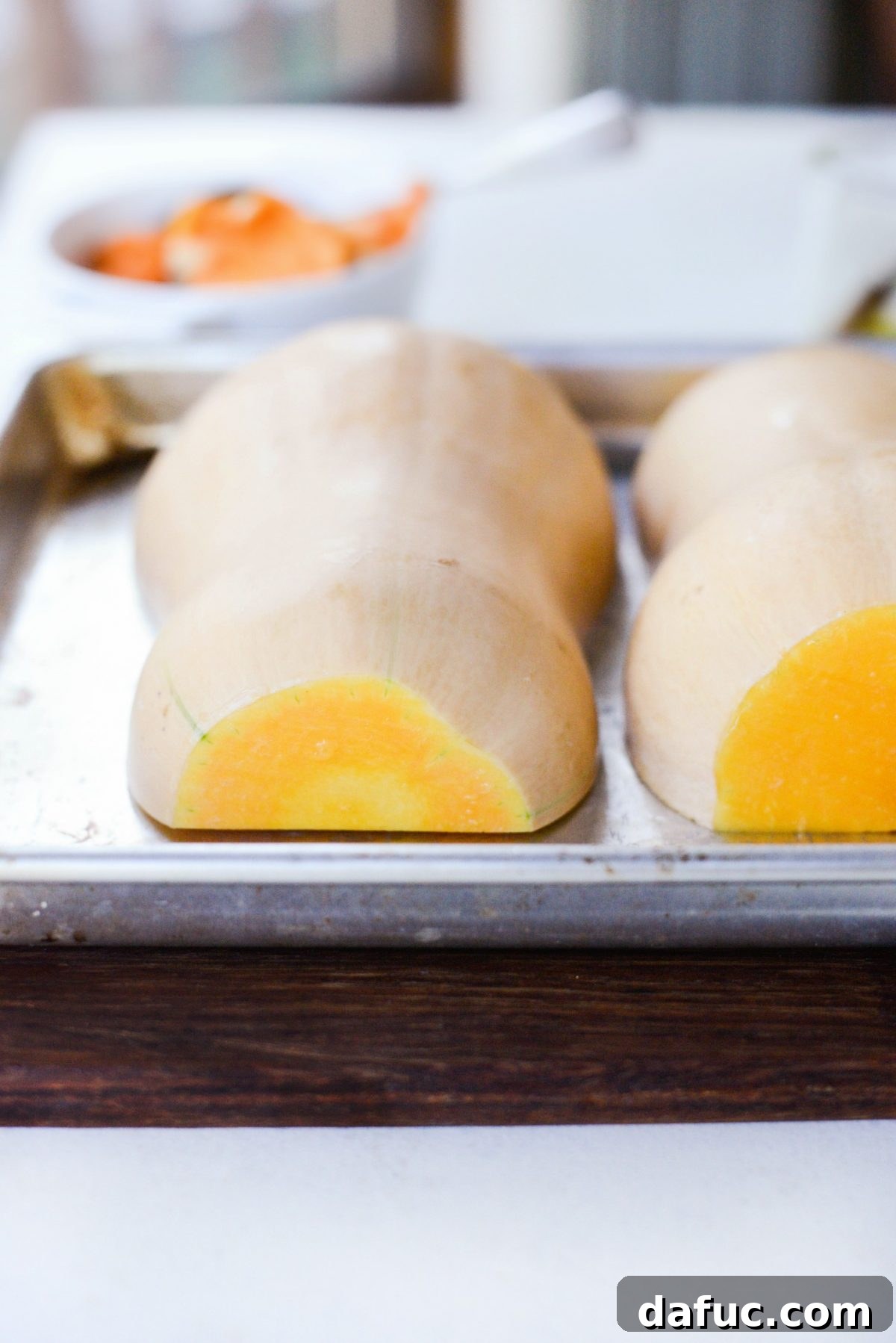
- Cut in Half: Place the squash on one of its trimmed ends for stability. Carefully cut the squash in half lengthwise. Butternut squash can be tough to cut, so use a firm grip and a sharp knife. If it’s particularly challenging, you can microwave it for 1-2 minutes to soften the skin slightly.
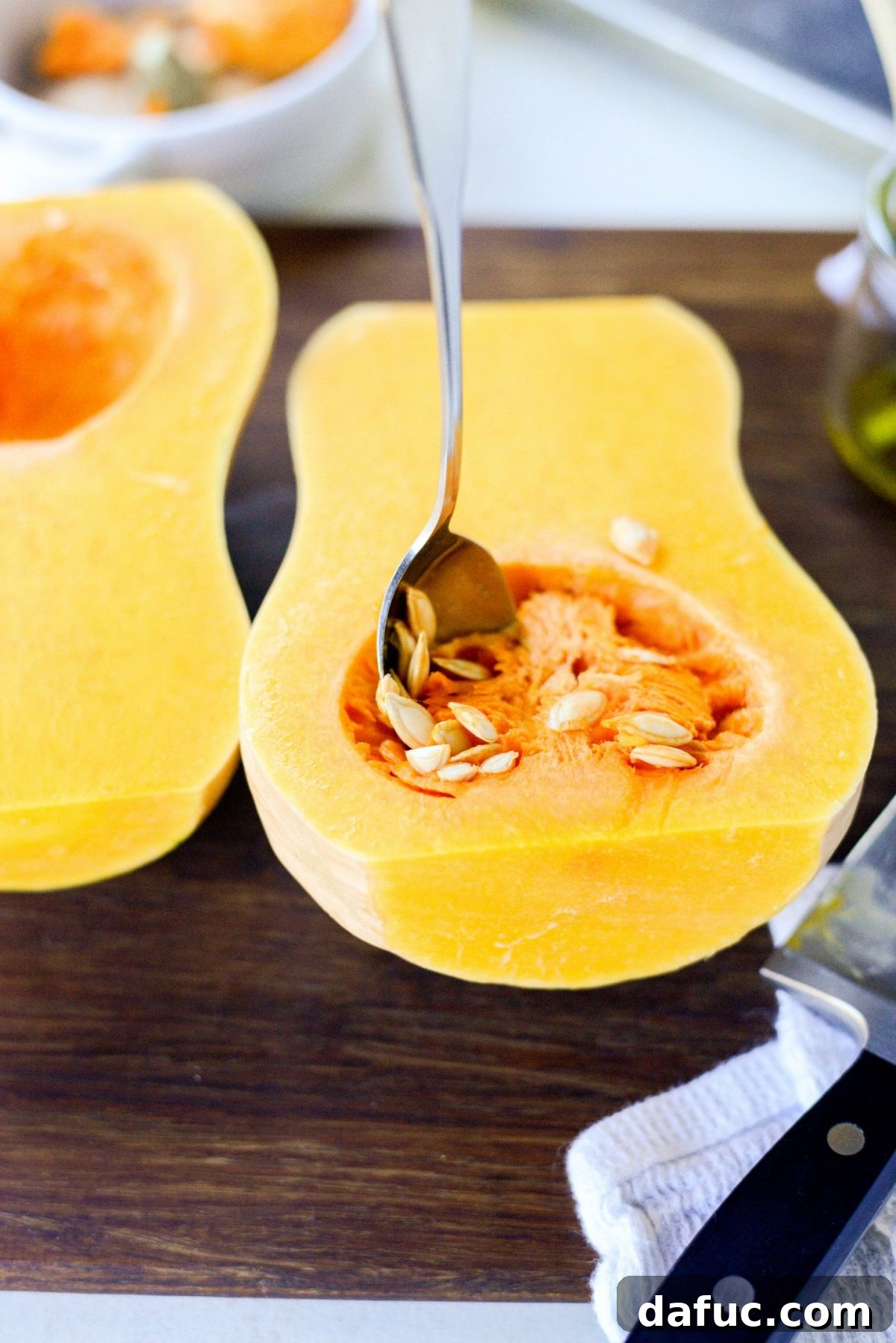
- Scoop Out Seeds: Using a sturdy spoon, scrape out the seeds and the stringy fibrous pulp from the cavity of each squash half.
- Don’t Discard the Seeds! Butternut squash seeds are completely edible and delicious when roasted! Instead of throwing them away, give them a quick rinse under cold water to remove any clinging pulp. Pat them dry, toss with a little olive oil, salt, and your favorite spices (paprika, garlic powder, or chili powder work wonderfully), then spread them on a separate baking sheet and roast alongside your squash for 10-15 minutes, or until golden and crispy. They make a fantastic crunchy snack or salad topping.
Roasting Methods for Optimal Flavor:
There are two primary methods for roasting butternut squash, both yielding excellent results. The choice often comes down to personal preference or the specific nuances you desire in your purée.
- Method 1: Cut-Side Down with Olive Oil (For Deep Caramelization)
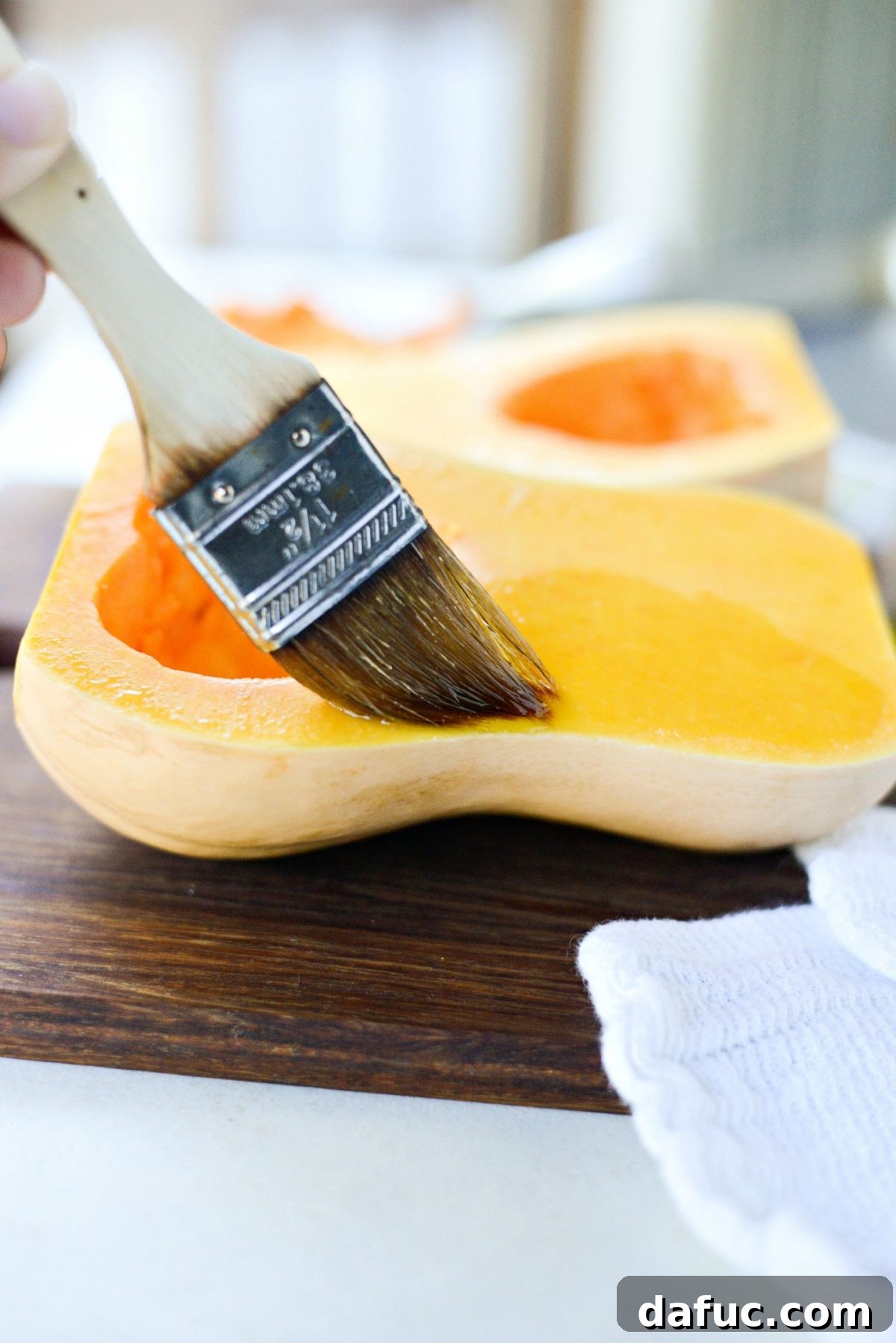
For a deeper, caramelized flavor, brush the cut sides of your butternut squash halves with a light coating of olive oil. Place them cut-side down onto a rimmed metal baking sheet. This direct contact with the hot pan helps the sugars caramelize, resulting in a richer, slightly sweeter purée.

- Method 2: Cut-Side Up with Salt (For Steamed Tenderness)
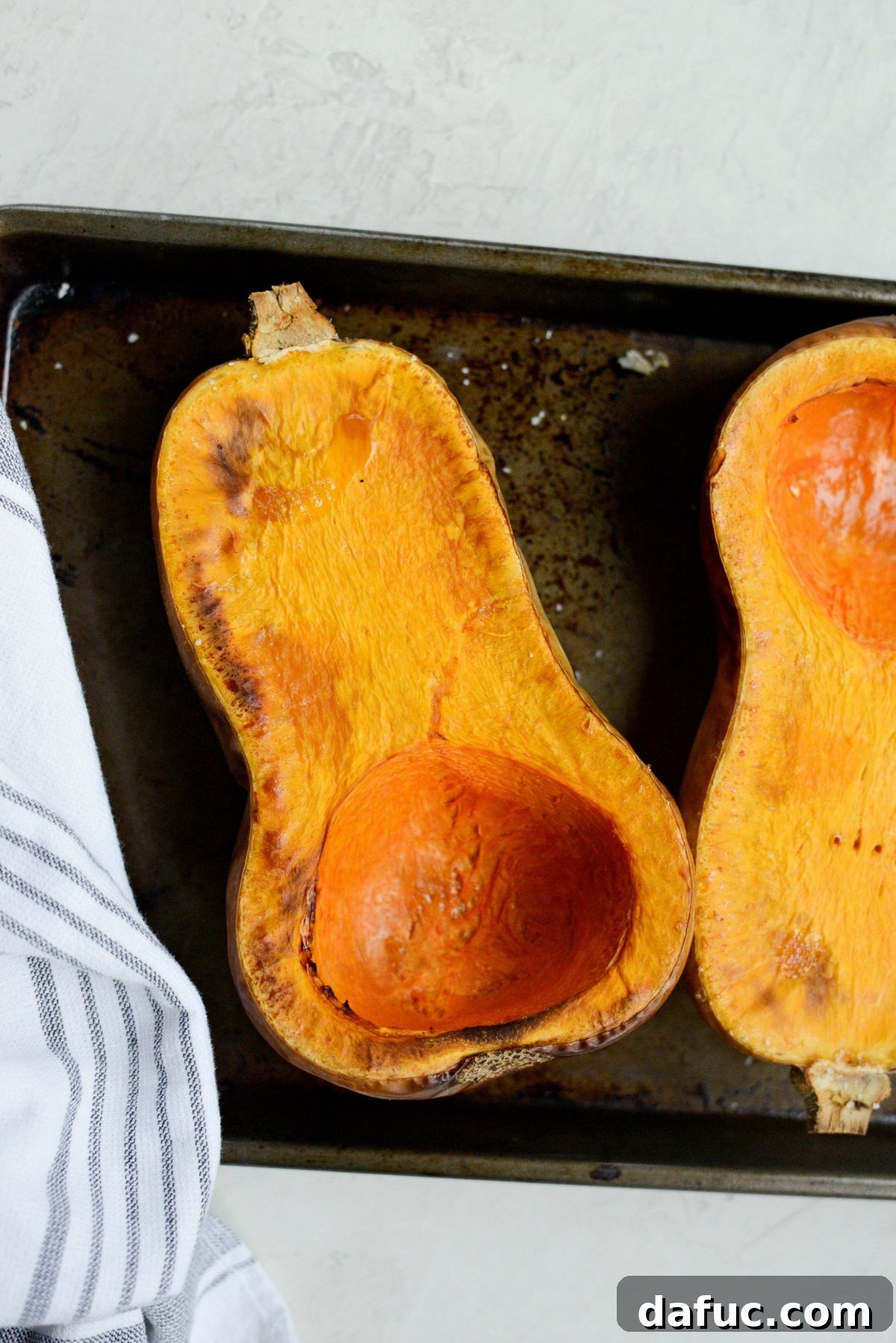
Alternatively, you can place the squash halves cut-side up on the baking sheet. While olive oil isn’t strictly necessary for this method, a light sprinkle of kosher salt on the exposed flesh can enhance the natural flavors. Roasting cut-side up allows the squash to steam slightly in its own moisture, resulting in a very tender and evenly cooked flesh.
Roasting Time: Roast the butternut squash in your preheated 400°F (200°C) oven for 40 to 60 minutes. The exact time will vary depending on the size and weight of your squash. Smaller squashes will cook faster, while larger ones will require closer to the hour mark.
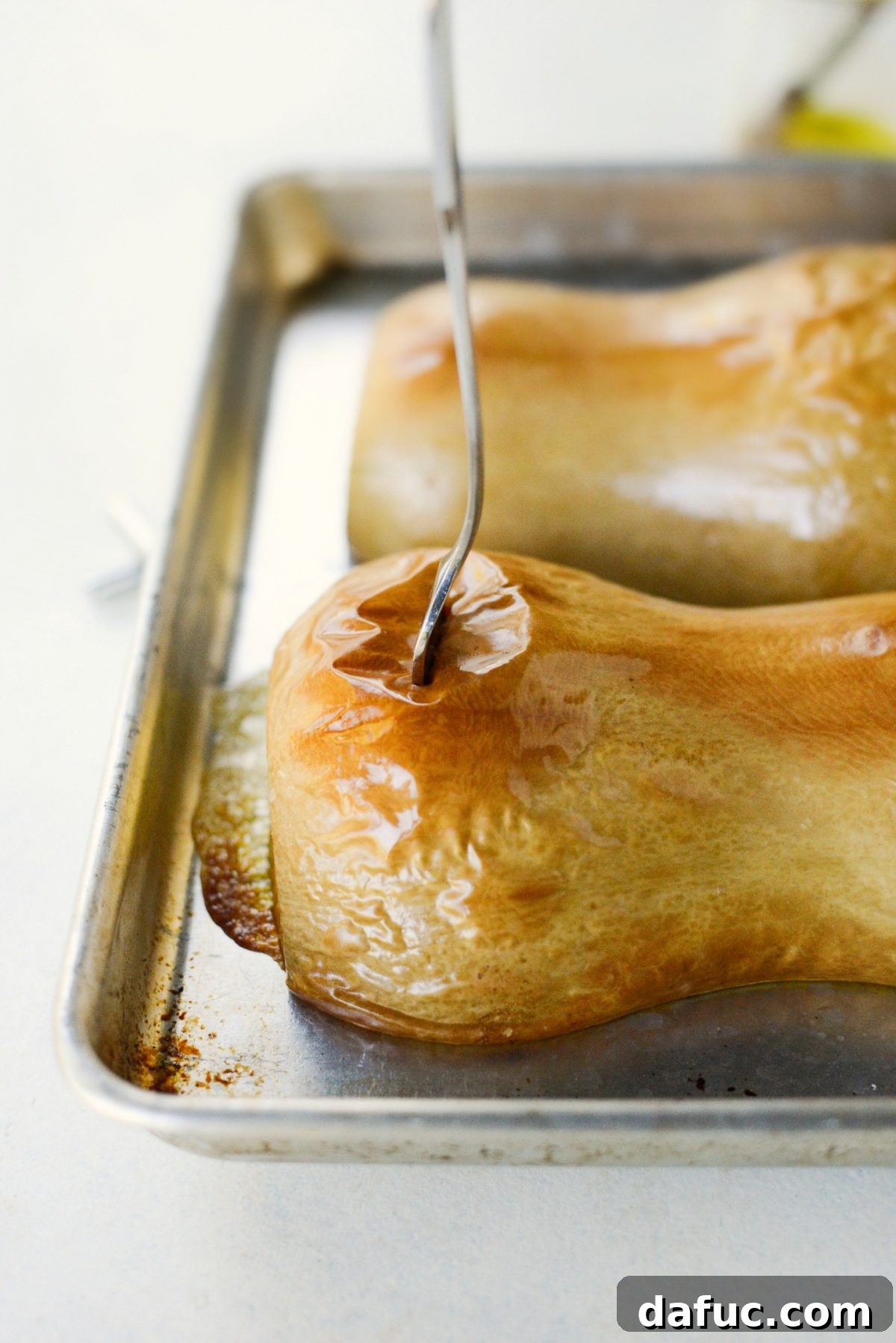
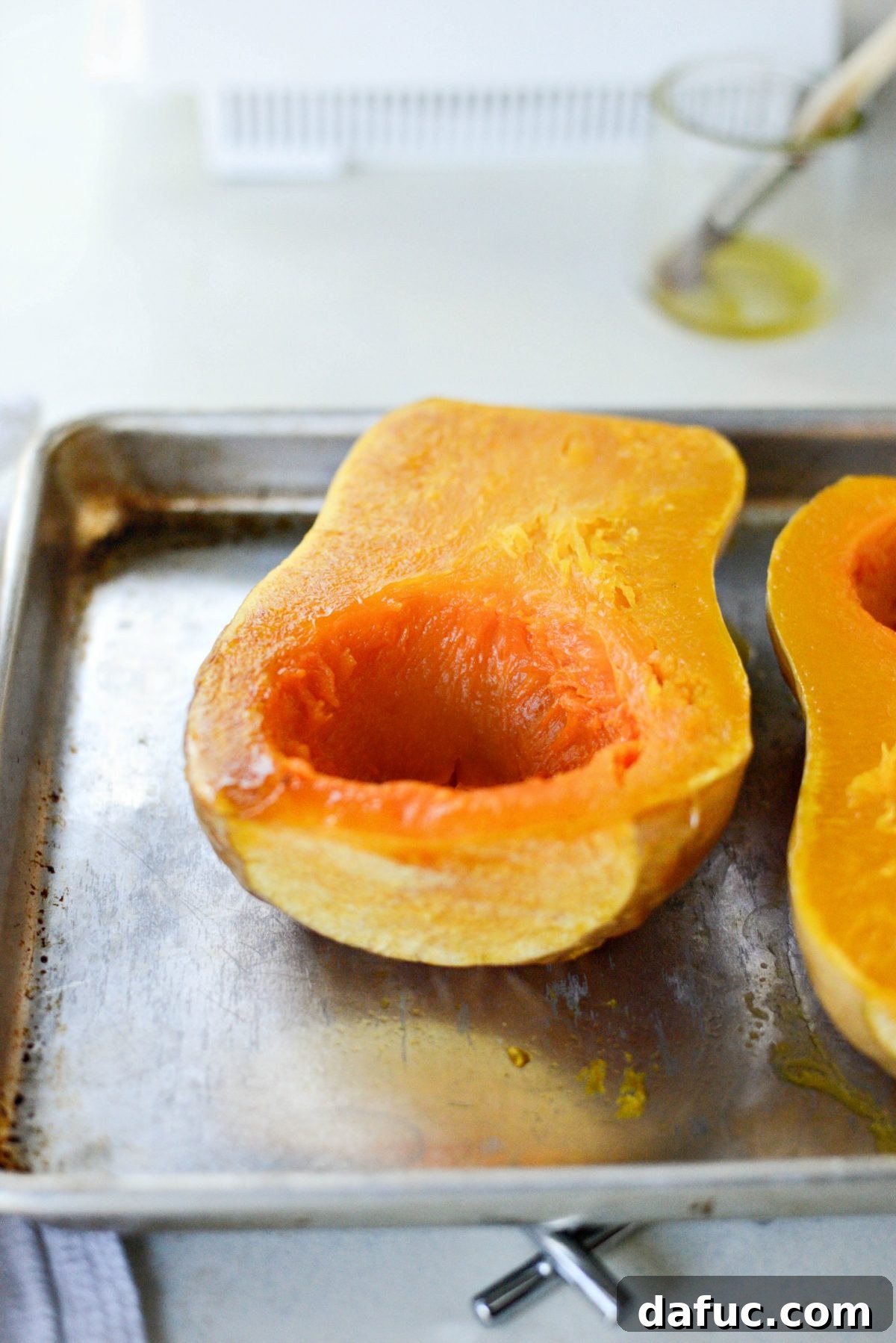
How to Know It’s Done: The squash is perfectly roasted when it’s fork-tender. A fork should easily pierce through the flesh without resistance. You’ll also notice the edges might be slightly browned, and the kitchen will be filled with a wonderful sweet, earthy aroma.
Achieving Silky Smooth Purée
Once your butternut squash is beautifully roasted, the next step is to transform it into a smooth, luxurious purée. Patience is key here – allow the squash to cool slightly after roasting until it’s safe and comfortable to handle. This usually takes about 10-15 minutes.
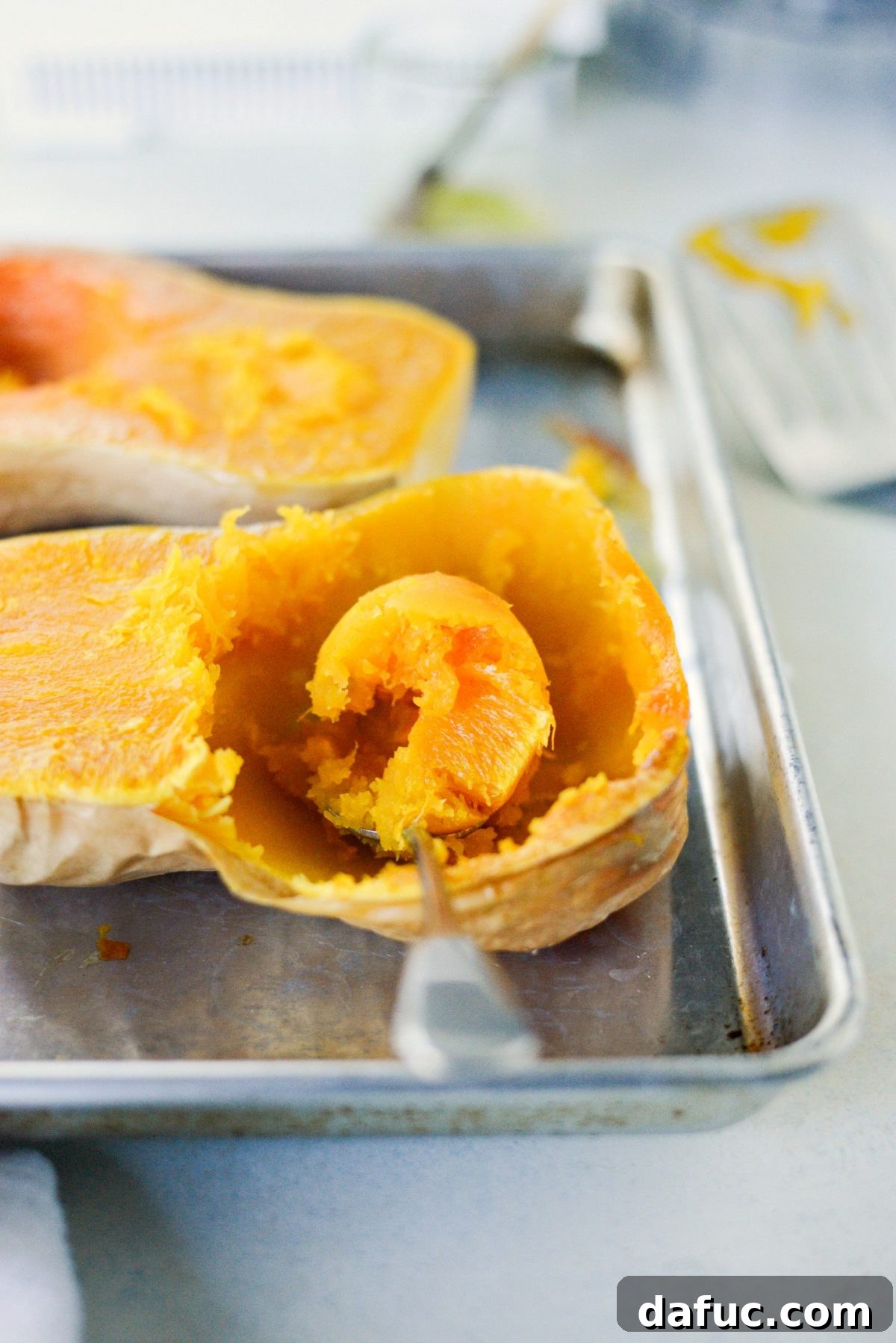
- Scoop the Flesh: Once cooled, use a large spoon to carefully scoop the tender, cooked flesh from the skin of each squash half. The skin should peel away easily, or the flesh should come out effortlessly. Discard the skin.
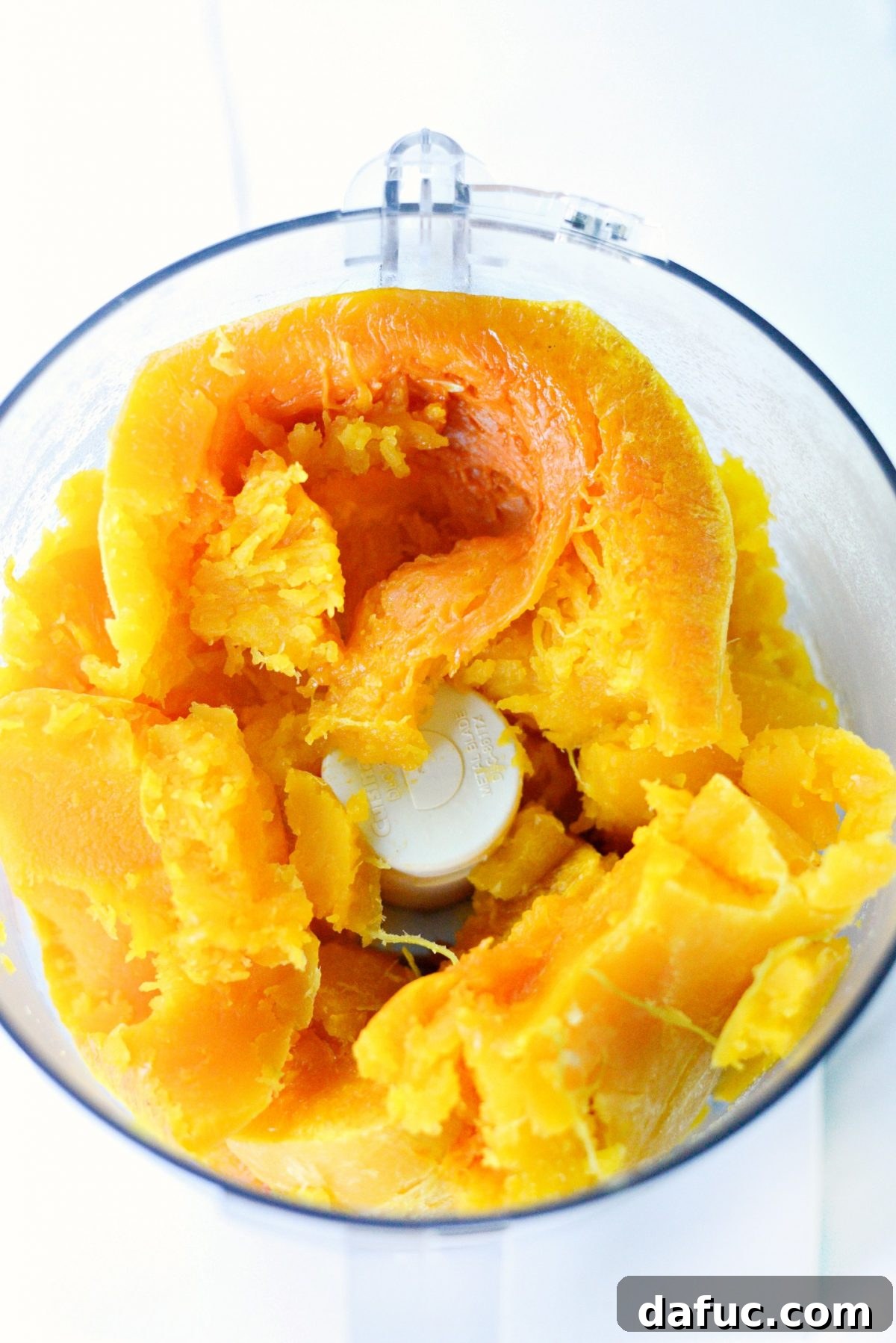
- Transfer to Food Processor: Transfer all the scooped squash flesh into the bowl of your food processor, fitted with the standard blade attachment.
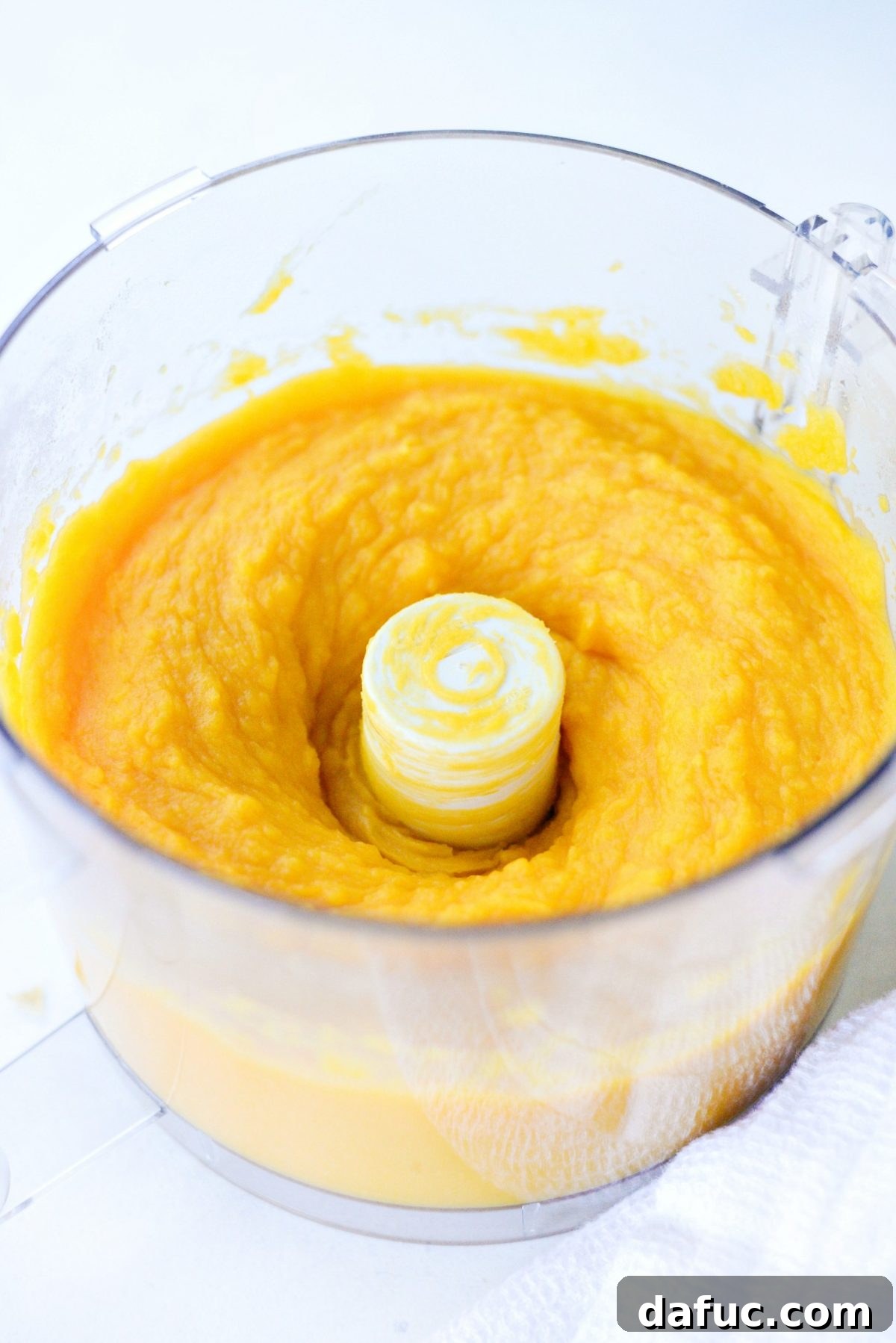
- Purée Until Smooth: Process the squash until it becomes completely smooth and creamy. You may need to stop occasionally to scrape down the sides of the bowl with a spatula, ensuring all pieces are evenly blended. Continue processing until there are no lumps remaining, achieving that desired silky texture.
- Alternative Methods: If you don’t have a food processor, an immersion blender or a regular blender can also work effectively. For a slightly chunkier purée, a potato masher can be used, though it won’t yield the same smooth consistency.
Creative Ways to Use Your Butternut Squash Purée
Now that you have a batch of gorgeous homemade butternut squash purée, the culinary possibilities are endless! Its subtly sweet flavor and creamy texture make it an incredibly versatile ingredient in both sweet and savory dishes.
Inspiring Recipe Ideas:
- Cheesy Roasted Butternut Squash Rigatoni: A comforting pasta dish where the purée adds richness and depth to a cheesy sauce.
- Homemade Squash Soup: The most classic use, creating a velvety and warming soup perfect for chilly days.
- Spicy Squash Queso: Elevate your dip game with a creamy, spicy squash addition.
- Butternut Squash Marinara: Sneak some extra veggies and natural sweetness into your pasta sauce.
- Baby Food: A natural, wholesome, and delicious first food for infants.
- Smoothies: Add a tablespoon or two for a creamy texture and nutrient boost in your morning smoothie.
- Baked Goods: Incorporate into muffins, pancakes, waffles, or even quick breads for added moisture and flavor.
- Gnocchi or Risotto: Replace some of the liquid or flour in these dishes for a delightful squash twist.
- Sauces and Dips: Blend into hummus, create a creamy vegan cheese sauce, or use as a base for flavorful gravies.
Storage and Freezing Your Homemade Purée
One of the best advantages of making your own butternut squash purée is the ease of storage, allowing you to enjoy this seasonal delight all year round.
- Refrigeration: Freshly made purée can be stored in an airtight container in the refrigerator for up to 3-4 days.
- Freezing: For longer storage, freezing is an excellent option.
- Measure out the purée into freezer-safe containers, zip-top bags, or even ice cube trays for convenient portioning.
- Leave about 1/2 inch of headspace in containers to account for expansion during freezing.
- Ensure containers are tightly sealed to prevent freezer burn.
- Store frozen purée for 6 to 12 months. When ready to use, thaw in the refrigerator overnight or gently reheat from frozen for immediate use.
Nutritional Powerhouse: The Benefits of Butternut Squash
Beyond its delicious taste and versatility, butternut squash is a nutritional powerhouse, making your homemade purée a healthy addition to any diet. It’s an excellent source of vitamins and minerals that contribute to overall well-being:
- Vitamin A: Extremely rich in beta-carotene, which converts to Vitamin A in the body, crucial for vision, immune function, and skin health.
- Vitamin C: A strong antioxidant that supports immune health and collagen production.
- Fiber: Promotes digestive health, helps regulate blood sugar levels, and contributes to a feeling of fullness.
- Potassium: Essential for maintaining healthy blood pressure and fluid balance.
- Antioxidants: Contains various antioxidants that help protect cells from damage caused by free radicals.
Incorporating butternut squash purée into your meals is an easy and delicious way to boost your daily nutrient intake.

Print Recipe
Pin Recipe
Leave a Review »
12 servings
Homemade Butternut Squash Puree
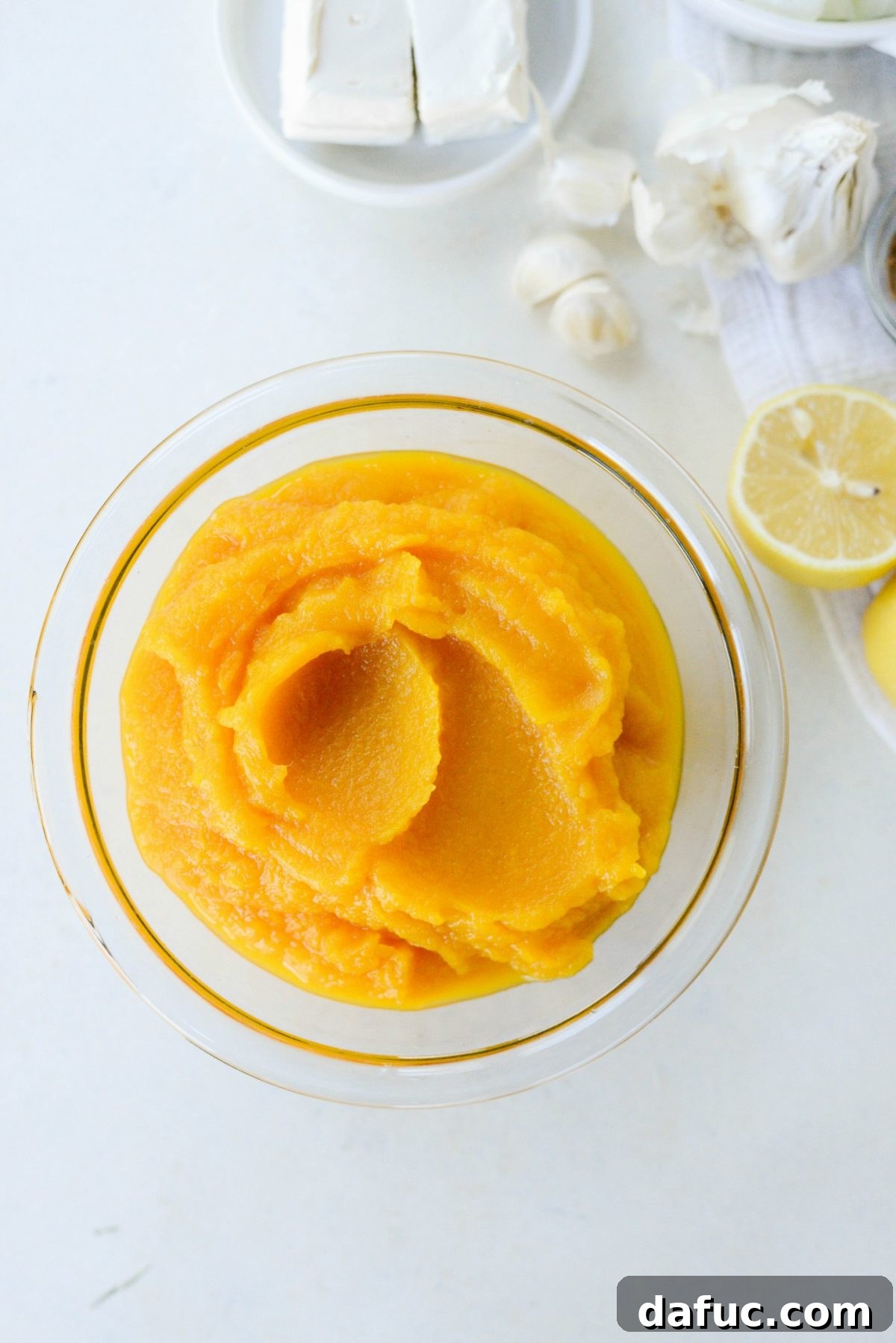
Whether it’s for soup, sauce, or pie making, homemade Butternut Squash Purée is as simple as roasting squash halves, scooping out the flesh, and puréeing until smooth. Yields about 3 cups.
Prep Time: 5 mins
Cook Time: 1 hr
Additional Time: 10 mins
Total Time: 1 hr 15 mins
Ingredients
- 1 butternut squash
- Light olive oil, optional
- 2 pinches kosher salt, optional
Instructions
- Preheat your oven to 400℉ (or 200℃).
- Wash and pat dry your squash. Use a sharp knife to trim off the ends and then cut in half lengthwise.
- Place the squash halves, either cut side up or down onto a rimmed metal baking sheet. If placing cut side down, brush the flesh with olive oil beforehand. I personally sprinkle the cut side with kosher salt too, but that’s completely optional.
- Roast on the middle rack of your preheated oven for 40 to 60 minutes or until fork tender.
- Once cool enough to handle, use a spoon to scoop and scrape the flesh and place it into your food processor fitted with the blade attachment. Purée until smooth, scraping down the sides as you go.
- TO FREEZE: Measure out the purée into a freezer-safe container(s) leaving 1/2 an inch of space to allow for food expansion. Store for 6 to 12 months.
Notes
*Nutritional information is based on the entire recipe.
Nutrition Facts:
- Calories: 28kcal
- Carbohydrates: 7g
- Protein: 1g
- Fat: 1g
- Saturated Fat: 1g
- Polyunsaturated Fat: 1g
- Monounsaturated Fat: 1g
- Sodium: 67mg
- Potassium: 220mg
- Fiber: 1g
- Sugar: 1g
- Vitamin A: 6644IU
- Vitamin C: 13mg
- Calcium: 30mg
- Iron: 1mg
Author: Laurie McNamara
Course: homemade ingredient
Cuisine: American
Conclusion: Embrace the Simplicity and Flavor
Making your own homemade butternut squash purée is a rewarding endeavor that brings fresh, vibrant flavor and essential nutrients to your kitchen. It’s a testament to how simple ingredients, prepared with a little care, can transform into an incredibly versatile and healthy staple. From hearty fall dishes to light, refreshing smoothies, your homemade purée is ready to elevate any recipe. So, grab a squash, preheat your oven, and get ready to enjoy the rich, creamy goodness of this wonderful ingredient!
Enjoy! And if you give this Homemade Butternut Squash Purée recipe a try, let me know! Snap a photo and tag me on Twitter or Instagram!