
Unlock the Full Flavor: A Comprehensive Guide to Toasting and Grinding Your Own Spices
In the vast world of culinary arts, few steps are as transformative and rewarding as toasting and grinding your own spices. This detailed guide is your definitive resource, offering everything you need to know to elevate your cooking from good to truly extraordinary by harnessing the power of fresh, whole spices. Prepare to embark on a sensory journey that will forever change the way you perceive and utilize these foundational ingredients.
Why Toast and Grind Your Own Spices? The Secret to Superior Flavor
Many home cooks rely on pre-ground spices from the grocery store, and while convenient, they often fall short in delivering the vibrant, nuanced flavors that whole spices offer. The simple acts of toasting and grinding your own whole spices unlock a depth of flavor and aroma that is truly unparalleled. It’s an intoxicating and exhilarating experience, much like baking bread from scratch or growing your own herbs – it connects you more deeply to your ingredients and the cooking process itself.
Unleashing Unparalleled Flavor
Toasting whole spices is akin to roasting nuts or seeds; the gentle heat coaxes out their natural oils, intensifying and deepening their intrinsic flavors. This process, known as the Maillard reaction, creates new aromatic compounds, transforming often subtle notes into bold, complex profiles. Imagine the difference between raw nuts and toasted ones – that’s the kind of flavor revolution you can expect. Spices that might taste flat or muted when pre-ground come alive with an earthy, warm, and often sweeter character once toasted.
Maximizing Aroma and Freshness
Grinding whole spices yourself releases their natural oils and volatile compounds just before use. These oils are the carriers of flavor and aroma, and in pre-ground spices, they begin to degrade almost immediately upon grinding, losing potency over time. Whole spices, on the other hand, retain their integrity for much longer, sometimes up to a year or more when stored correctly. By toasting and grinding fresh, you capture the peak of their aromatic brilliance, filling your kitchen with an incredible fragrance and infusing your dishes with unmatched vibrancy.
Complete Culinary Control
Beyond flavor and aroma, grinding your own spices gives you complete control over the texture. Whether you desire a coarse crush for a rustic rub or a fine powder for a delicate curry, a mortar and pestle or spice grinder allows you to achieve the perfect consistency for any recipe. This level of customization is simply not possible with pre-ground alternatives.
A Rewarding Sensory Experience
There’s a unique satisfaction that comes from transforming humble seeds into fragrant powder with your own hands. The visual transformation, the crackling sounds during toasting, and especially the rich, evolving aromas, create a truly immersive cooking experience. It’s a small step that yields immense rewards in the quality of your meals and the enjoyment of your culinary journey.
Essential Tools for Your Spice Transformation Journey
Embarking on the path of fresh spice preparation requires a few key tools. Most are likely already in your kitchen, or easily acquired. Simplicity is often key, making this an accessible culinary upgrade for everyone.
- Dry Skillet or Pan: A heavy-bottomed pan, such as cast iron or stainless steel, is ideal. Ensure it’s clean and completely dry before you begin. No oil or fat is needed for toasting spices.
- Mortar and Pestle: This ancient tool is a timeless choice for grinding spices. It allows for precise control over the texture and the physical act of grinding helps to release oils and flavor compounds effectively. I personally find great joy in using mine, which I picked up for a fantastic price.
- Spice Grinder (or Dedicated Coffee Grinder): For those seeking a finer powder or a quicker process, an electric spice grinder is an excellent option. A coffee grinder can also serve this purpose, but it is crucial to dedicate one solely to spices to prevent flavor cross-contamination. You definitely don’t want your morning coffee tasting like last night’s curry!
- Small, Clean, Dry Jars with Tight-Fitting Lids: Essential for storing your freshly ground treasures. Airtight containers help preserve freshness and potency. Reusing thoroughly cleaned and dried old spice bottles is an eco-friendly choice.
- Wooden Spoon or Spatula: For stirring spices in the pan to ensure even toasting.
- Measuring Spoons: For accurate measurement of whole spices.
- Time: Patience is indeed a virtue here. While the process isn’t overly long, giving your spices the attention they deserve will yield the best results.
The Art of Toasting Whole Spices: A Step-by-Step Guide
Toasting is the first critical step in awakening the latent flavors within your whole spices. It’s a simple technique, but one that requires attention and a watchful eye.
1. Select Your Spices
You can find whole spices in most well-stocked grocery stores, though the selection might be limited. For a broader array, explore specialty spice shops like Penzeys, ethnic markets, or online retailers. Look for vibrant, aromatic whole spices without any signs of clumping or fading.
For this demonstration, we’ll focus on coriander and cumin seeds, two incredibly versatile and fragrant spices that truly benefit from this process.
2. Measure and Prepare
Begin by measuring your desired amount of whole spices. For reference, two tablespoons of whole spices typically yield about four teaspoons of ground spice, but this can vary depending on the spice’s density and how finely it’s ground. Place your whole spices into a clean, dry pan. Remember, no oil is needed.
3. Toasting with Care
Place the pan over medium-low heat. The key here is gentle, even heat to prevent burning. Slowly toast the spices, either by continuously shaking the pan or stirring them with a wooden spoon or spatula. You’ll notice the spices starting to change color slightly, becoming a shade darker.
The magic truly happens with your senses. Listen for subtle crackling or popping sounds, especially from larger seeds. Most importantly, pay attention to the aroma. As the spices toast, they will become wonderfully fragrant, filling your kitchen with a rich, inviting scent. This aromatic bloom is your indicator that they are perfectly toasted. Be careful not to over-toast, as burnt spices will taste bitter and ruin your dish. Remove them from the heat immediately once they reach this fragrant stage.
4. Cool Down
Once toasted, immediately transfer the spices from the hot pan to a plate or shallow dish to cool completely. Leaving them in the hot pan can lead to residual cooking and potential burning. Allowing them to cool ensures they maintain their crispness and prevents any steam from forming when you grind them.
Step-by-Step: Grinding Your Toasted Spices
With your spices perfectly toasted and cooled, it’s time for the final, satisfying step: grinding. Whether you choose a mortar and pestle or an electric grinder, this process releases the concentrated flavors you’ve worked to develop.
Using a Mortar and Pestle (The Traditional Method)
For a truly hands-on experience and excellent control over texture, the mortar and pestle is unmatched.
1. Add to Mortar: Once cooled, pour the toasted spices into your mortar. Don’t overcrowd it; work in small batches if you have a large quantity.
2. Start Pulverizing: Begin by gently smashing the spices with the pestle. This initial impact helps to break down the outer husks. You’ll hear delightful snapping and crackling sounds as the seeds yield to the pressure.
3. Grind and Rotate: Once the spices are partially broken, switch to a grinding motion, rotating the pestle against the sides of the mortar. Apply firm, steady pressure. Continue this process, scraping down the sides of the mortar as needed, until you achieve your desired consistency.
Achieving an ultra-fine powder by hand can be challenging and requires significant effort. If a very fine consistency is crucial for your recipe, an electric spice grinder might be a better tool for the job. However, the slightly coarser texture from a mortar and pestle often adds wonderful character to dishes.
Ta-dah! Perfectly ground coriander with a heavenly aroma! This effort yields an incredibly vibrant and complex spice, far superior to anything pre-ground.
Using an Electric Spice Grinder
If you prefer speed and a very fine grind, an electric spice grinder (or a dedicated coffee grinder) is your best friend. Ensure it’s sparkling clean and completely dry before use.
1. Add Cooled Spices: Place the cooled, toasted spices into the grinder. Again, avoid overfilling.
2. Pulse, Don’t Grind Continuously: Use short bursts of pulsing rather than continuous grinding. This prevents the spices from overheating, which can diminish their delicate flavors and aromas. Check the consistency frequently between pulses.
3. Achieve Desired Fineness: Continue pulsing until you reach your desired fineness. Be mindful not to grind for too long, as the friction can heat the spices, causing them to release their oils prematurely and potentially clump.
Featured Spices: Coriander and Cumin
Let’s take a closer look at the two spices we’ve used in this demonstration: coriander and cumin. They are staples in many global cuisines and truly exemplify the benefits of fresh toasting and grinding.
Coriander Seed
Whole coriander seeds possess a unique flavor profile that is citrusy, sweet, and slightly peppery, with hints of sage. When toasted, these notes intensify, becoming wonderfully fragrant and warm. Freshly ground coriander is indispensable in Indian curries, Middle Eastern stews, and even certain European baked goods.
Cumin Seed
Cumin seeds offer an earthy, warm, and distinctly pungent flavor. They are a cornerstone of Mexican, Indian, North African, and Middle Eastern cuisines. Toasting cumin seeds deepens their smokiness and brings out a rich, robust aroma that is instantly recognizable.
Since cumin seeds are typically smaller than coriander, they tend to toast a bit quicker. It’s essential to keep a close watch and rely on your sense of smell to detect that characteristic toasty cumin scent. Once toasted, the grinding process is similar to coriander, often a bit easier due to their smaller size and more delicate structure.
Into the mortar they go, ready to release their incredible essence.
And then, the satisfying work of grinding begins, transforming the seeds into a fine, aromatic powder.
Ahhh… seriously, if only you could smell this through the screen! The aroma of freshly ground cumin is simply incomparable.
Storage and Usage Tips for Your Freshly Ground Spices
Proper Storage is Key
To preserve the exquisite flavors and aromas you’ve worked hard to develop, proper storage is paramount. Transfer your freshly ground spices into small, airtight jars or tiny canisters. Make sure the containers are perfectly clean and dry. As a sustainable option, you can reuse old spice bottles after washing and thoroughly drying them.
Store these labeled jars in a cool, dark place, away from direct sunlight, heat, and moisture. A cupboard or pantry shelf is ideal. Avoid storing them above the stove, as the heat and steam will quickly degrade their quality.
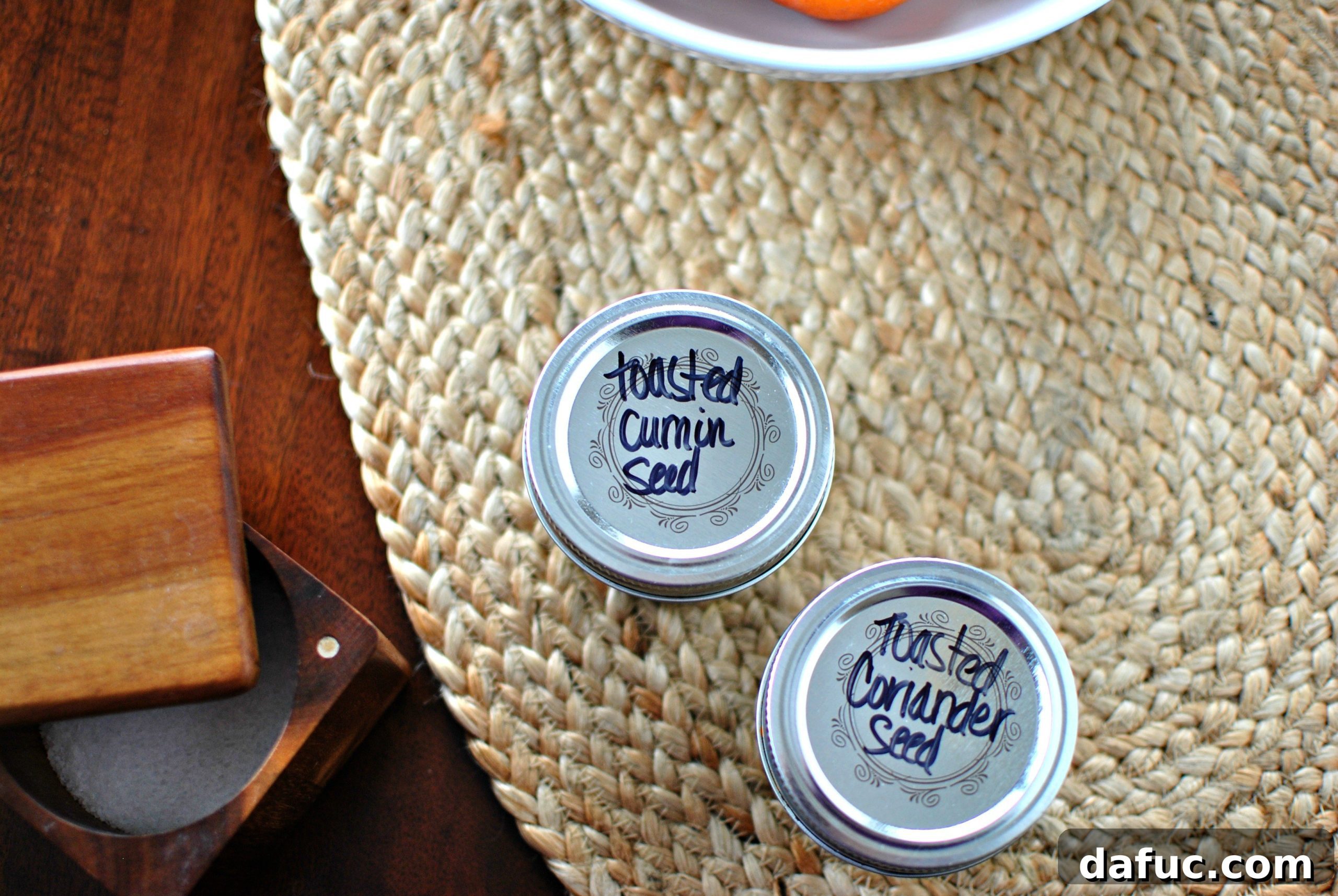
Always remember to label the tops of your jars clearly. While your nose might eventually distinguish between similar-looking spices like coriander and cumin, a clear label saves time and prevents culinary mishaps.
Adjusting for Potency
Freshly ground spices are significantly more potent and flavorful than their pre-ground counterparts. When a recipe calls for a specific amount of pre-ground spice, it’s wise to start with a slightly smaller quantity (e.g., use ¾ of the amount) when using your freshly prepared spices. Taste and adjust as you go; you can always add more, but you can’t take it away!
Shelf Life
While whole spices can last for a year or even more, freshly ground spices, due to their increased surface area, will start to lose potency more quickly. For optimal flavor and aroma, aim to use your freshly ground spices within six months. This is still a vast improvement over commercial pre-ground spices, which often sit on shelves for much longer.
Conclusion: Elevate Your Culinary Journey
The journey of toasting and grinding your own spices is a truly rewarding one. It’s a simple yet profound way to connect with your ingredients, understand the building blocks of flavor, and elevate your cooking to new heights. The vibrant aromas and intense flavors you’ll unlock will transform your everyday meals into extraordinary culinary experiences.
I wholeheartedly encourage you to give this method a try. It is, without a doubt, totally worth the small investment of time and effort. Once you experience the unparalleled freshness and depth of flavor, you’ll find it hard to go back to pre-ground spices.
Enjoy the process and the incredible flavors! If you embark on this culinary adventure and toast and grind your own spices, please share your experience. Snap a photo and tag me on Twitter or Instagram! I’d love to see your creations and hear about your favorite freshly ground spices!