
Authentic Ukrainian & Russian Beet Salad (Vinegret): A Vibrant Winter Delight
Dive into the rich culinary heritage of Eastern Europe with Vinegret, a beloved beet salad that graces tables across Ukraine and Russia, especially during the colder months. Often referred to simply as “Beet Salad,” this traditional dish is a harmonious blend of earthy potatoes, vibrant beets, tangy pickles, hearty beans, and crunchy sauerkraut. It strikes a delightful balance of sweet, sour, and salty flavors, offering not just a feast for the taste buds but also a powerhouse of essential vitamins, nutrients, and beneficial probiotics. This recipe yields approximately 12 cups, making it perfect for family gatherings or meal prepping, but it can easily be halved for smaller servings.
Discovering the Magic of Vinegret
My journey with this extraordinary salad began with a thoughtful gesture from my dear friend, Meg. She introduced me to a bowl of her husband’s Baba’s (grandmother’s) cherished Vinegret recipe, and from that first bite, I was utterly captivated. I quickly learned that this delightful beet salad, known as a classic Soviet-era dish, has intriguing roots, adapted from the French “Vinaigrette.” With Meg’s generous blessing, I recreated (and photographed) this recipe the very next week, simply because it’s that good. For those unfamiliar with this winter staple, the combination of ingredients might seem unconventional, and indeed it is—yet, it works with an unexpected brilliance that truly lives rent-free in my mind.
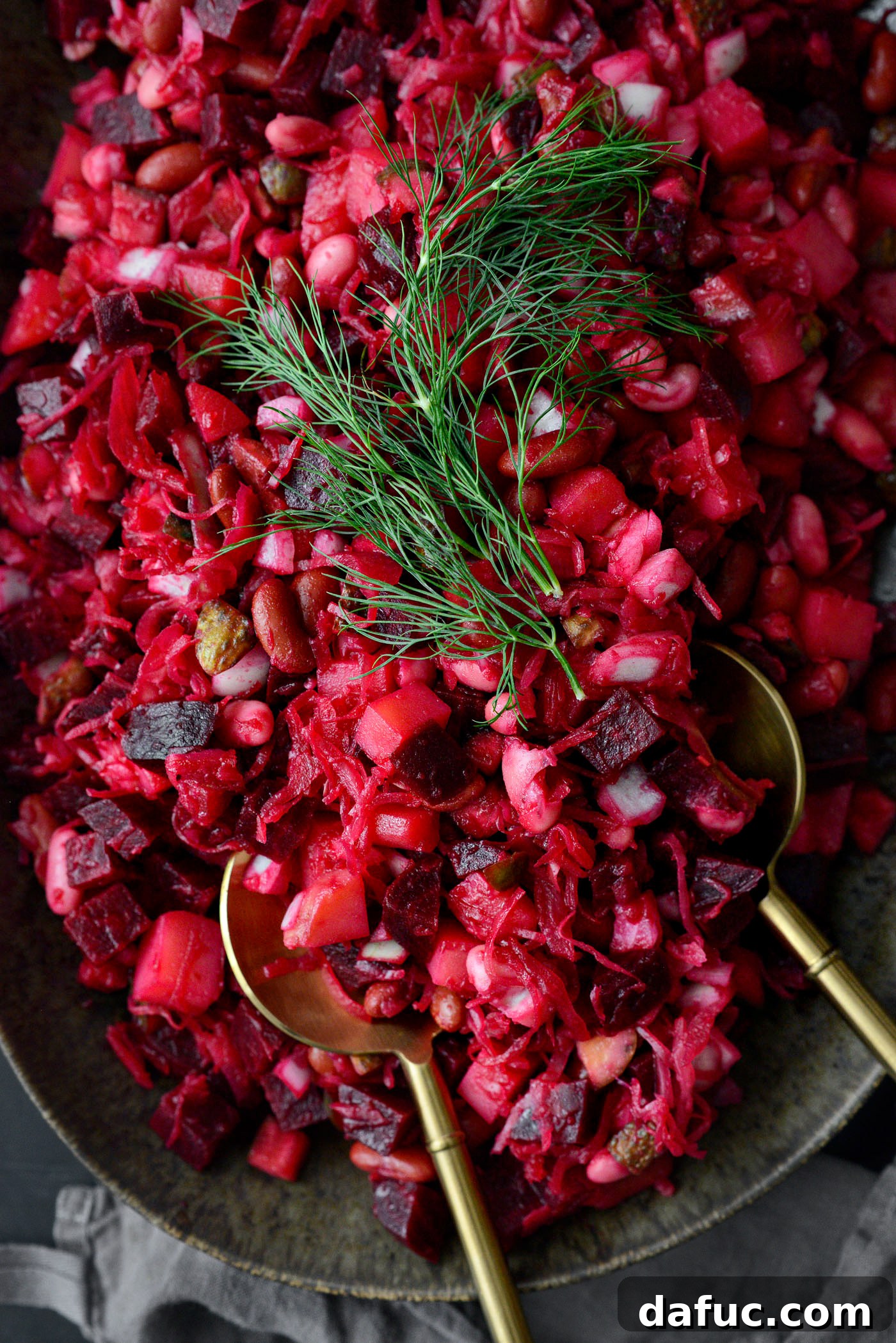
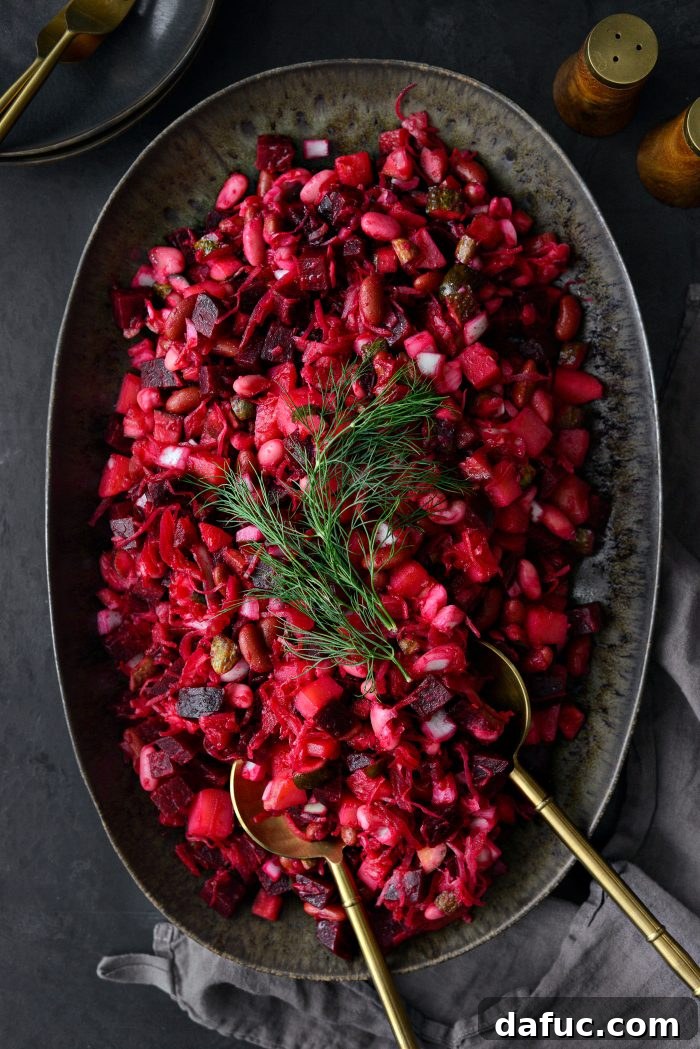
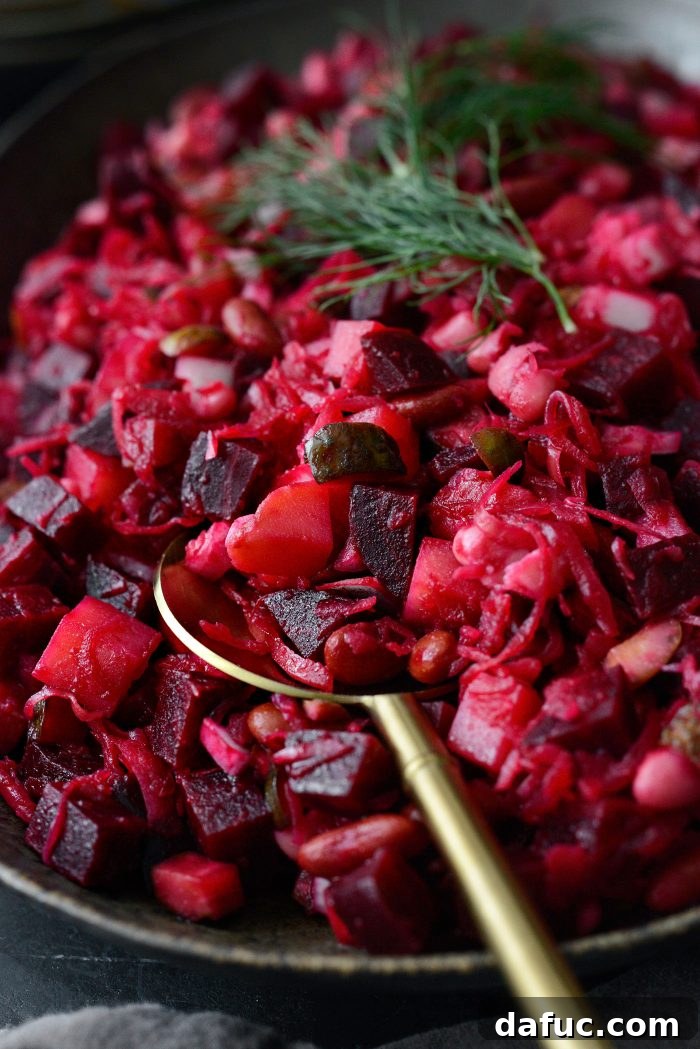
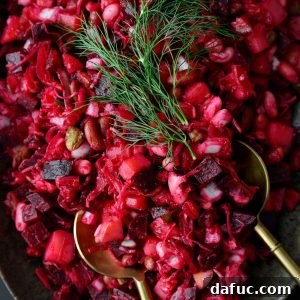
The interplay of textures is a revelation: the tender, slightly yielding beets and potatoes perfectly complemented by the crisp, tangy dill pickles. This unique textural contrast has, quite frankly, altered my brain chemistry, and I am forever changed by it. Beyond its incredible taste and texture, the salad boasts a visual appeal that is nothing short of stunning. My photographs, I fear, scarcely do justice to its magnificent color. The beets, the true stars of the show, gracefully bleed their rich, fuchsia hue into every other ingredient, transforming each piece into a gradient of captivating pinks and purples. It’s an aesthetic masterpiece, and I am utterly obsessed.
While the preparation involves a bit of dicing and cooking, the process is straightforward. Once your ingredients are prepped and chopped, it’s a simple matter of tossing everything together with a generous drizzle of olive oil and a sprinkle of salt to taste. The briny notes from the dill pickles and the fermented tang of sauerkraut lay the foundation for the salad’s complex flavor profile, creating a depth that is both comforting and invigorating.
Why This Vibrant Salad is a Must-Try
Beyond its delicious taste and stunning appearance, Vinegret is a nutritional powerhouse. Packed with fiber from the beets and potatoes, gut-friendly probiotics from the sauerkraut, and a medley of vitamins and minerals, it’s a truly wholesome addition to any diet. The best part? This salad only improves with time, allowing the flavors to meld and deepen as it sits. This characteristic makes it an ideal candidate for meal prep, as you can make a large batch and enjoy it throughout the week, with each day bringing a richer, more integrated flavor experience. (Thank you, Meg, for sharing this gem!)
Essential Ingredients for Your Perfect Vinegret
Crafting this incredible beet salad requires a selection of fresh and pantry staples. Here’s what you’ll need to gather:
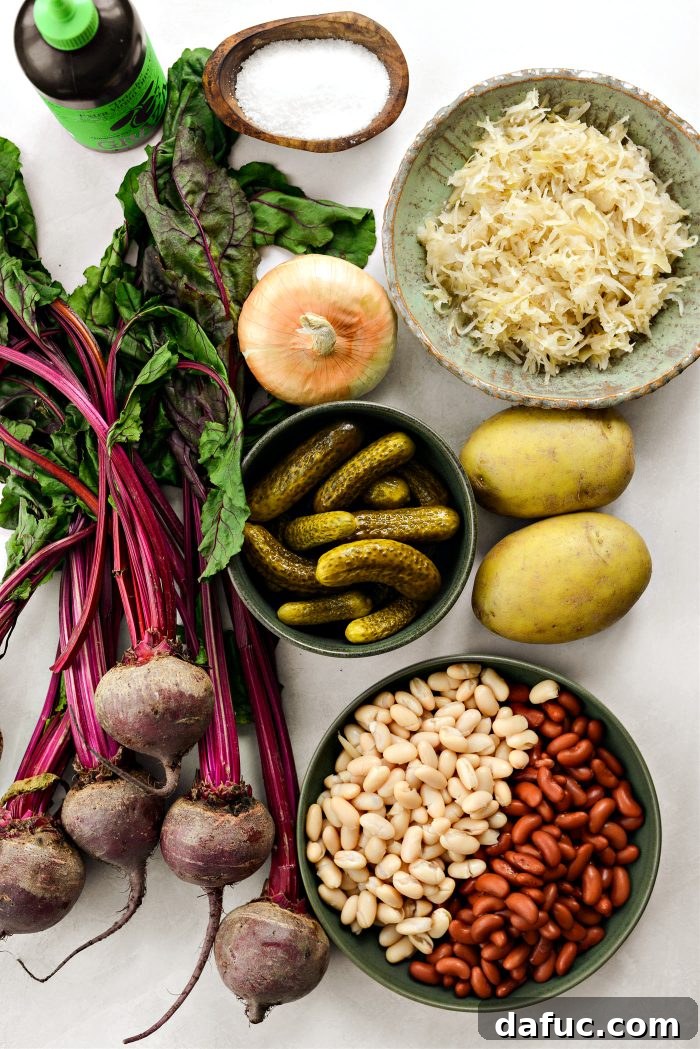
- Beets: Opt for 6 to 8 medium-sized red beets that are similar in size. This ensures they cook evenly, whether you choose to roast or boil them. Beets are packed with essential nutrients, including folate, manganese, and vitamin C, and contribute the salad’s signature color and earthy sweetness.
- Olive Oil: A good quality extra virgin olive oil not only provides healthy fats but also enhances the overall flavor of the salad, adding a smooth, rich finish. While traditionally sunflower oil might be used, olive oil offers a delightful Mediterranean twist.
- Kosher Salt: Essential for seasoning, kosher salt brings out the natural flavors of all the ingredients, balancing the sweet, sour, and salty notes perfectly. Always season to taste.
- Potatoes: Any variety of potatoes will work, but yellow potatoes (like Yukon Golds) are often recommended for their creamy texture and ability to hold their shape after cooking. They provide a comforting starchiness that balances the tang of the other ingredients.
- Red or Pink Kidney Beans: These add a substantial texture and a boost of plant-based protein and fiber. Remember to drain and rinse them thoroughly before adding to the salad.
- Cannellini Beans: Also known as white kidney beans or great northern beans, cannellini beans offer a softer texture and a slightly milder flavor profile, complementing the firmer kidney beans. Like the kidney beans, they should be well-drained and rinsed.
- Sauerkraut: This fermented cabbage is a cornerstone of Vinegret, providing a distinctive sour crunch and a powerful dose of probiotics, beneficial for gut health. Brands like Bubbies or Cleveland are excellent choices, or you might even consider making your own for an extra authentic touch.
- Dill Pickles: Crucial for that signature tangy bite and crunch. I personally favor Claussen pickles because they consistently deliver on crispness, even after sitting in the salad for a day or two. The brine from the pickles also contributes significantly to the salad’s depth of flavor.
- Sweet Onion: A finely diced sweet onion adds a delightful aromatic sharpness and another layer of crunchy texture. Its mild sweetness prevents it from overpowering the other ingredients.
Step-by-Step Guide to Crafting Your Vibrant Vinegret
Making this beet salad is a rewarding process that begins with cooking the root vegetables and ends with a simple toss. Follow these detailed steps for a perfect outcome.
Roasting Beets for Maximum Flavor
Roasting the beets brings out their natural sweetness and deepens their earthy flavor, which is a key component of a truly exceptional Vinegret.
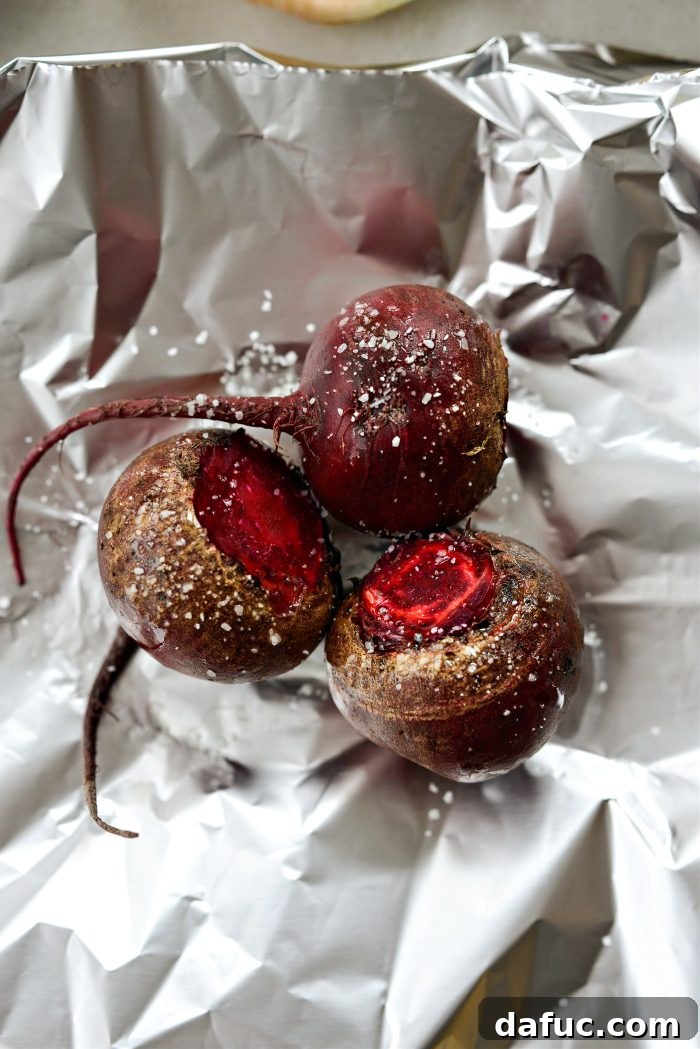
- Preheat your oven: Set your oven to 400°F (or 200°C).
- Prepare the beets: Trim off the leafy stems from 6 to 8 medium beets, then wash and pat them thoroughly dry. This prevents excess moisture during roasting.
- Season and wrap: Divide the clean beets onto two pieces of heavy-duty aluminum foil. If you’re using regular foil, double up the layers to prevent tearing and leakage. Drizzle a little olive oil over the beets and sprinkle generously with a pinch of kosher salt.
- Seal and roast: Fold up the foil and crimp the edges tightly to create sealed pouches. Place these pouches onto a rimmed baking sheet. Roast on the middle rack of your preheated oven for 50 to 60 minutes, or until the beets are tender when pierced with a fork.
- Cool and dice: Once roasted, carefully remove the baking sheet from the oven and open the foil pouches, being mindful of the hot steam that will escape. Allow the beets to cool completely. Once cooled, you can easily peel them by gently rubbing the skin off (or choose to leave the skin on for extra fiber and rustic appeal—it’s entirely up to you!). Dice the peeled or unpeeled beets into uniform ½-inch pieces.
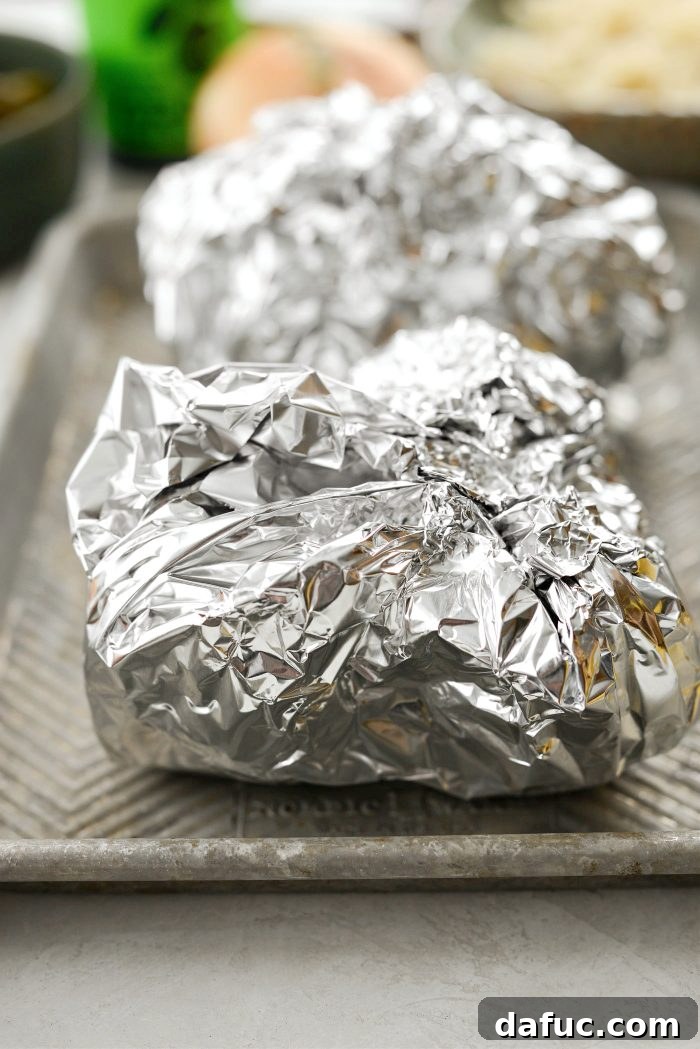
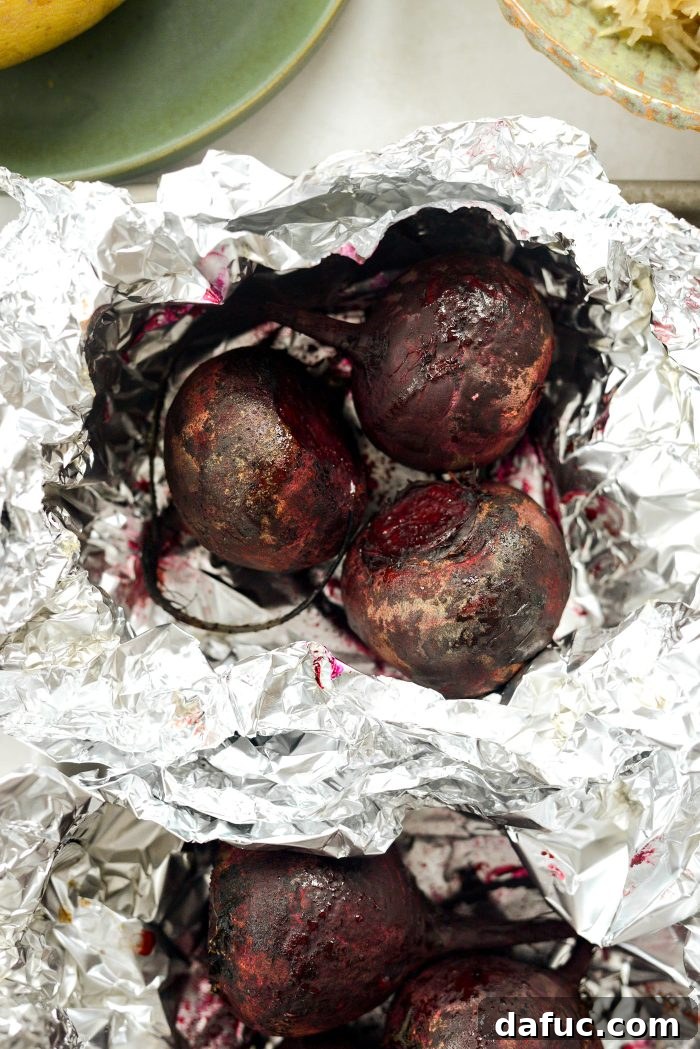
Boiling Potatoes to Perfection
While the beets are roasting, you can simultaneously prepare the potatoes, ensuring they are firm enough to hold their shape in the salad.
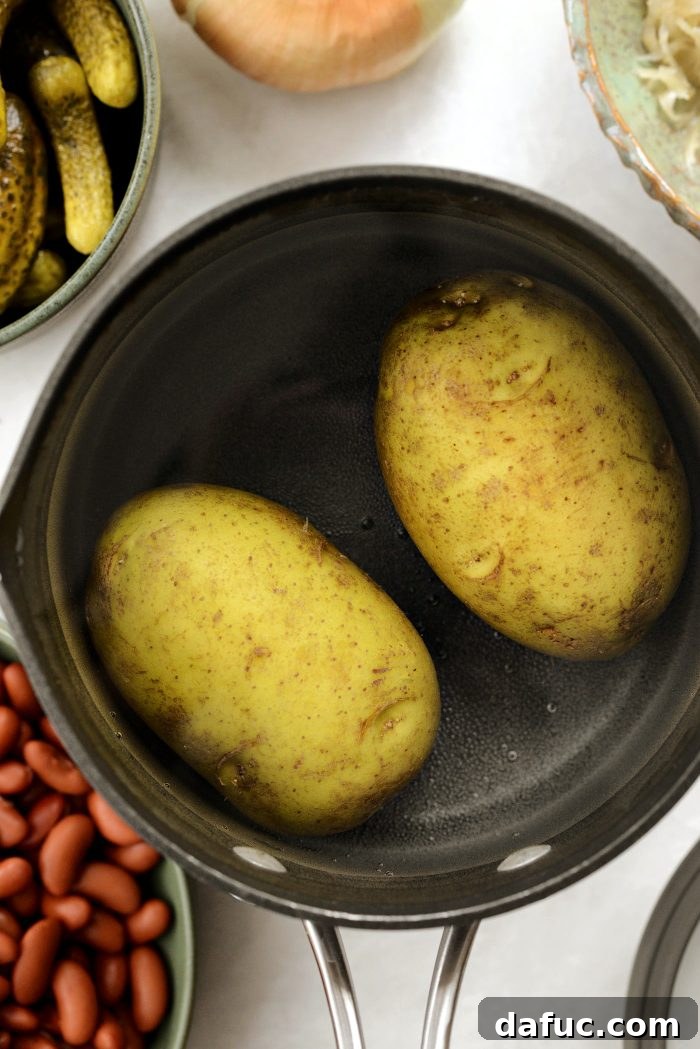
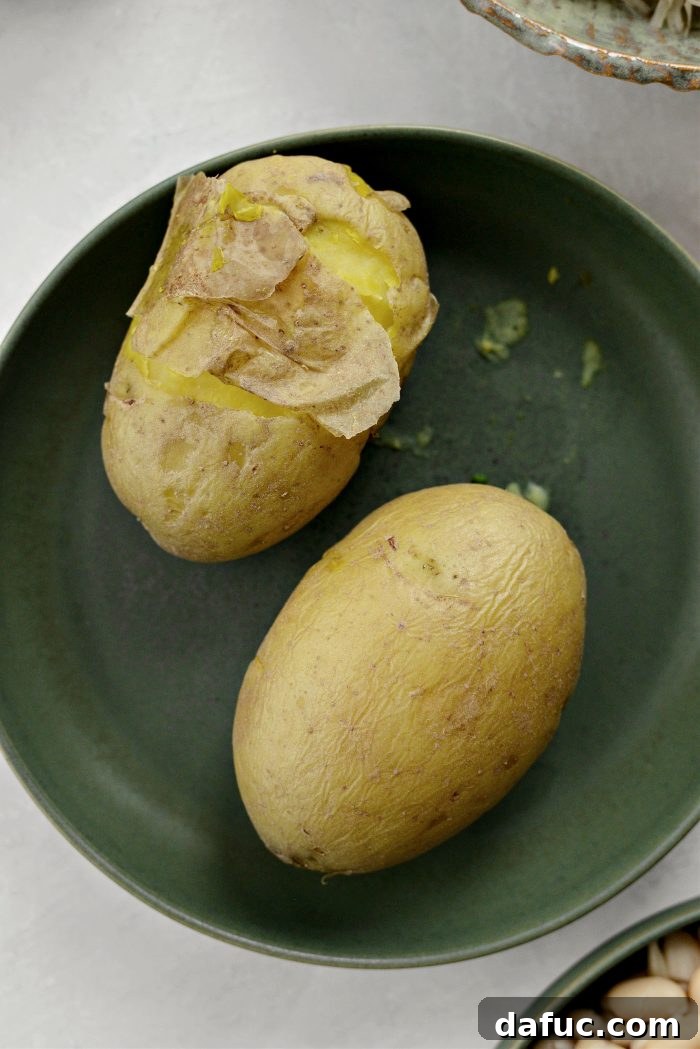
- Cook the potatoes: Place 2 large yellow potatoes into a pot of cold water. Bring the water to a rolling boil and cook for approximately 15 minutes. The goal is to have potatoes that are still slightly firm to the bite; this ensures they won’t become mushy and fall apart when tossed with the other ingredients in the salad.
- Cool and dice: Once cooked, remove the potatoes from the hot water and let them cool completely. Similar to the beets, you can choose to peel them or leave the skin on. Dice the cooled potatoes into ½-inch pieces, matching the size of your diced beets for a consistent texture.
Assembling Your Vibrant Salad: Prep and Combine
With your cooked beets and potatoes ready, the final stage is to chop the remaining ingredients and bring everything together.
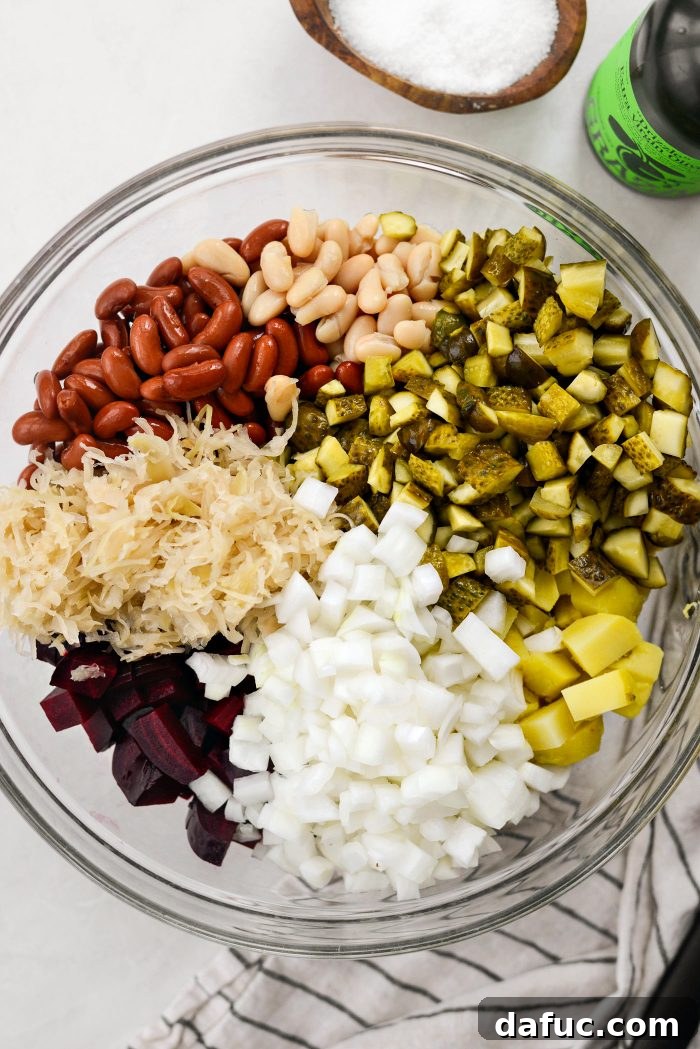
- Combine ingredients: In the largest mixing bowl you have available, combine the diced beets and potatoes. Add 1 can each of pink (or red) kidney beans and cannellini beans (both drained and thoroughly rinsed to remove excess sodium). Stir in 2 cups of sauerkraut, 1 (20-ounce) jar of dill pickles (diced), and 1 large diced sweet onion.
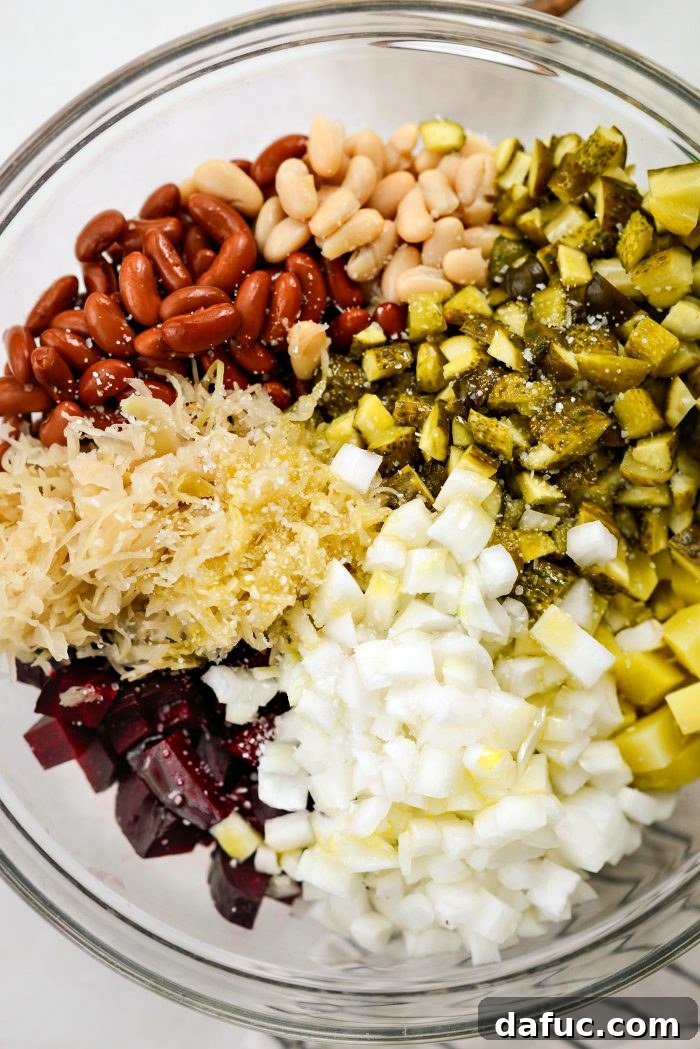
- Season and dress: Season the salad generously with a couple of pinches of kosher salt. Adjust to your preference – I often eyeball this.
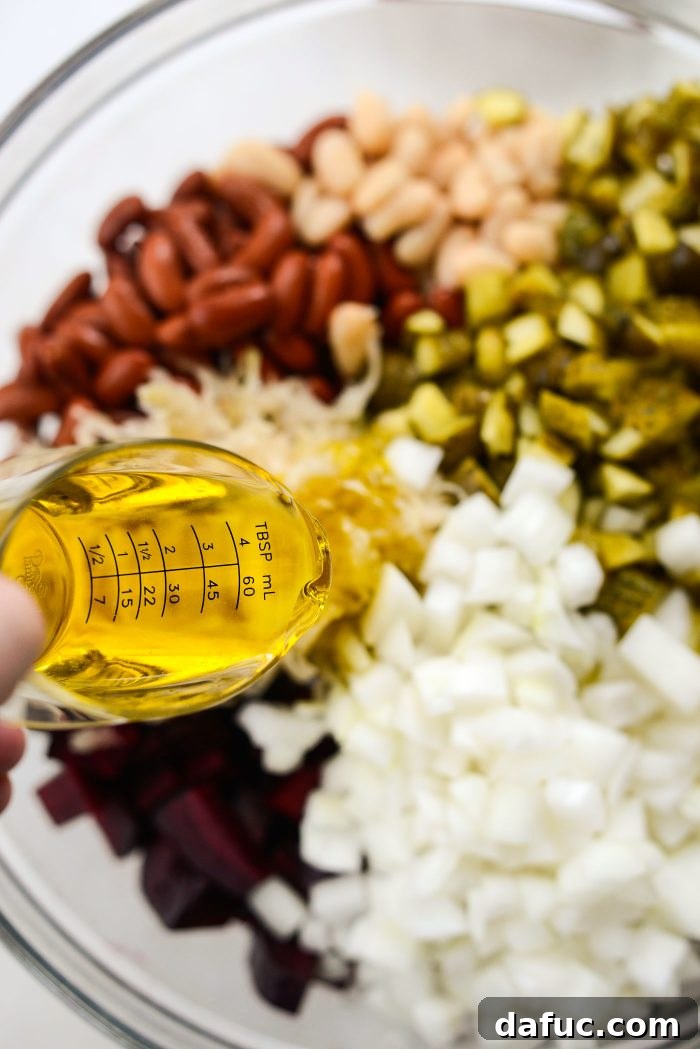
- Add olive oil: Pour in ¼ cup of good quality olive oil. This is the primary dressing, binding all the flavors together.
- Include beet juices: Don’t discard the flavorful oil and juices collected in the foil pouches from roasting the beets! Pour these precious liquids into the salad as well; they enhance both the flavor and the vibrant color.
- Gently toss: Using a large rubber spatula, gently toss all the ingredients together. Take care not to mash the potatoes or beets. Continue tossing until everything is thoroughly combined and coated with the dressing and seasonings. The beets will begin to beautifully dye the other ingredients, creating that signature fuchsia hue.
- As a meatless main: For a hearty and satisfying vegetarian meal, simply serve Vinegret as is, perhaps alongside a slice of crusty bread to soak up the delicious juices. It’s remarkably filling due to the beans and potatoes.
- Alongside your favorite protein: This salad makes an excellent side dish for grilled fish, roasted chicken, or any protein of your choice. Its vibrant flavors and textures provide a refreshing contrast to richer main courses.
- Holiday spread addition: Vinegret is a popular fixture on holiday tables, particularly during winter celebrations, offering a refreshing and colorful component to larger feasts.
- Boil the beets: Instead of roasting, you can boil the beets (separately from the potatoes) until tender. This method is quicker and yields a slightly softer beet texture. Just be sure to cool and dice them afterward.
- Mellow the onion flavor: If you find raw onion too pungent, try soaking the diced onion in ice water for about 15-20 minutes. This helps to reduce its sharpness, making it milder and sweeter. Alternatively, you can lightly sauté the onions in a little oil until translucent before adding them to the salad for a gentler, cooked onion flavor.
- Traditional oil choice: Historically, sunflower oil is often used in Vinegret, providing a neutral backdrop that lets the other flavors shine. While olive oil is a fantastic choice for its health benefits and rich flavor, feel free to substitute with sunflower oil for a more traditional profile.
- Add carrots: For extra sweetness, color, and nutrients, incorporate diced or shredded carrots into the salad. They blend beautifully with the other root vegetables.
- Include tart apples: A unique addition, diced or shredded tart (green) apple can introduce a surprising burst of crispness and a refreshing tart note that complements the earthy and savory elements.
- Creamy Vinegret: For those who prefer a richer, creamier texture, stir in a dollop of mayonnaise, sour cream, or a combination of both. This transforms the salad into a luxurious, satisfying dish.
- Avocado addition: My friend Meg’s original recipe also suggested adding avocado. If you choose to do this, I recommend adding it “per serving” rather than mixing it into the entire batch of salad. Avocado tends to brown quickly once cut and can alter the salad’s texture if left to sit for too long with the other ingredients.
- For a wetter salad: If you prefer a salad with more moisture and an extra tang, don’t hesitate to add a few splashes of pickle and/or sauerkraut brine to the mixture. This will intensify the fermented flavors and create a juicier consistency.
- 6 to 8 medium red beets
- 2 large yellow potatoes, or Yukon gold
- 1 (15 ounce) can canned pink or red kidney beans, rinsed and drained
- 1 (15 ounce) can canned cannellini beans, rinsed and drained
- 1 (20 ounce) jar dill pickles, or about 15 mini dill pickles, diced
- 2 cups sauerkraut, I like Bubbies brand
- 1 large sweet onion, diced
- 1/4 cup olive oil, or sunflower oil, more or less to taste
- Kosher salt, to taste
- Preheat your oven to 400°F (or 200°C). Trim off the leafy stems from the beets, wash and pat dry. Divide the beets onto 2 pieces of heavy duty aluminum foil (use 2 layers for regular foil). Drizzle a little olive oil over top and sprinkle with a pinch of kosher salt. Fold up and crimp the top sealing the foil pouches tightly. Place onto a rimmed baking sheet and roast on the middle rack of your preheated oven for 50 to 60 minutes. Once roasted, remove and carefully open the pouches to avoid the steam. Let cool. Once cooled, peel (or don’t – that’s up to you) and dice into 1/2-inch pieces.
- While the beets are in the oven, place the yellow potatoes into a pot of cold water. Bring to a boil and cook 15 minutes. You want the potatoes to be a little firm still so they won’t fall apart when tossing with the other ingredients. Once cooked, remove and let cool. Once cooled, peel (or don’t peel) and dice the potatoes into 1/2-inch pieces.
- In the largest bowl you have, add the diced beets and potatoes, beans, sauerkraut, dill pickles and sweet onion. And pour in olive oil and any beet juice/oil from roasting and then season with a couple pinches of salt (I eyeball this). Use a rubber spatula to gently toss to combine.
- You can serve this immediately, but it is best if refrigerated for an hour or longer.
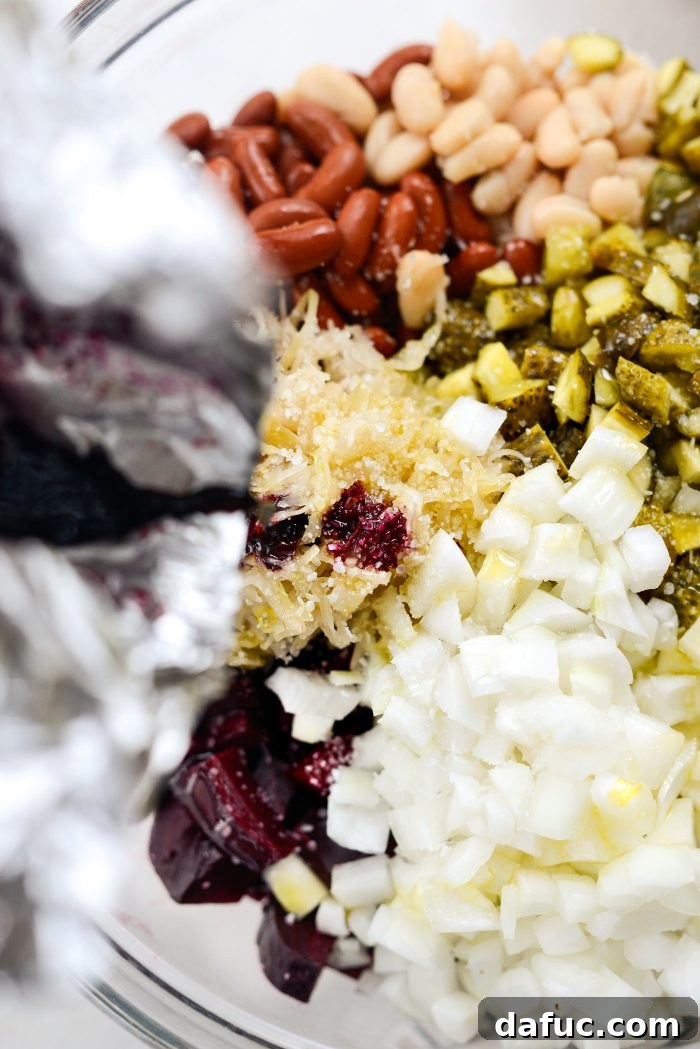
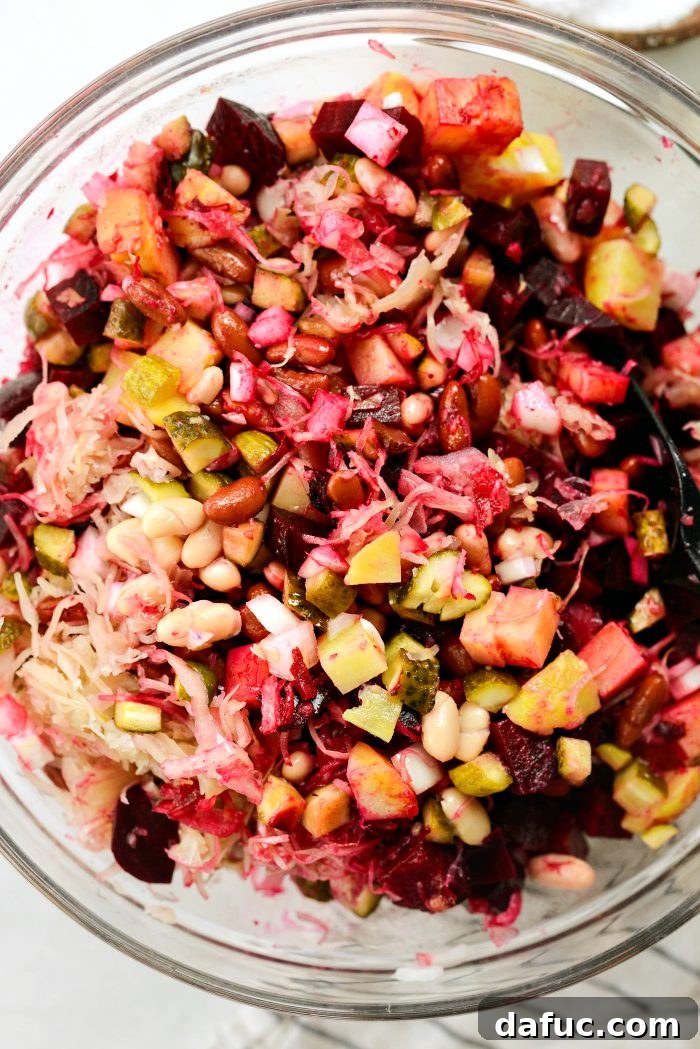
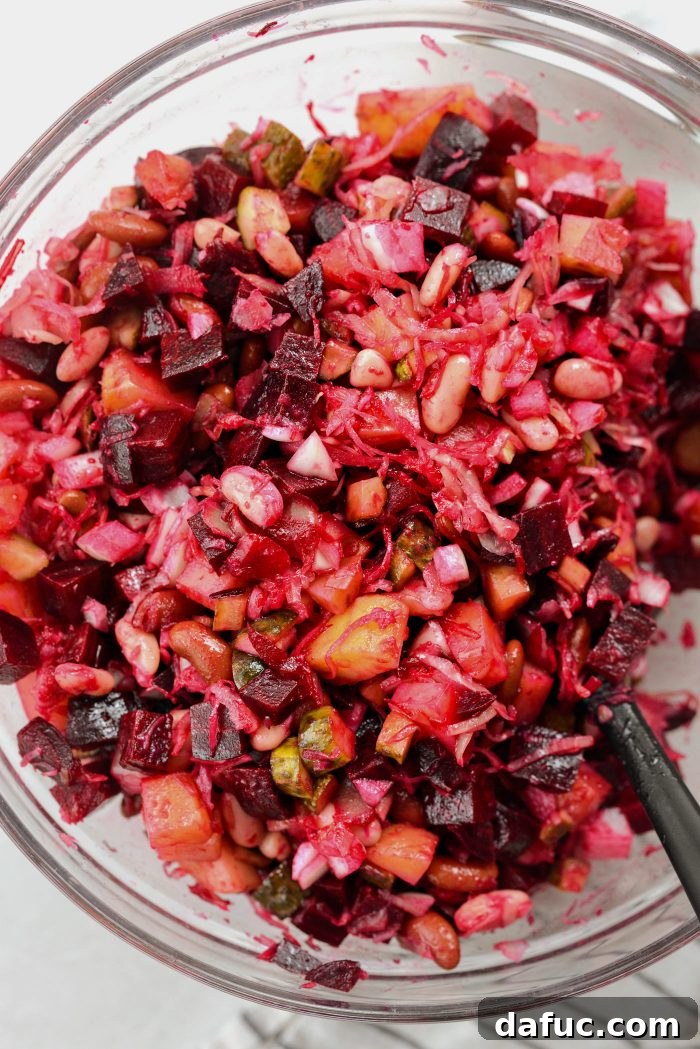
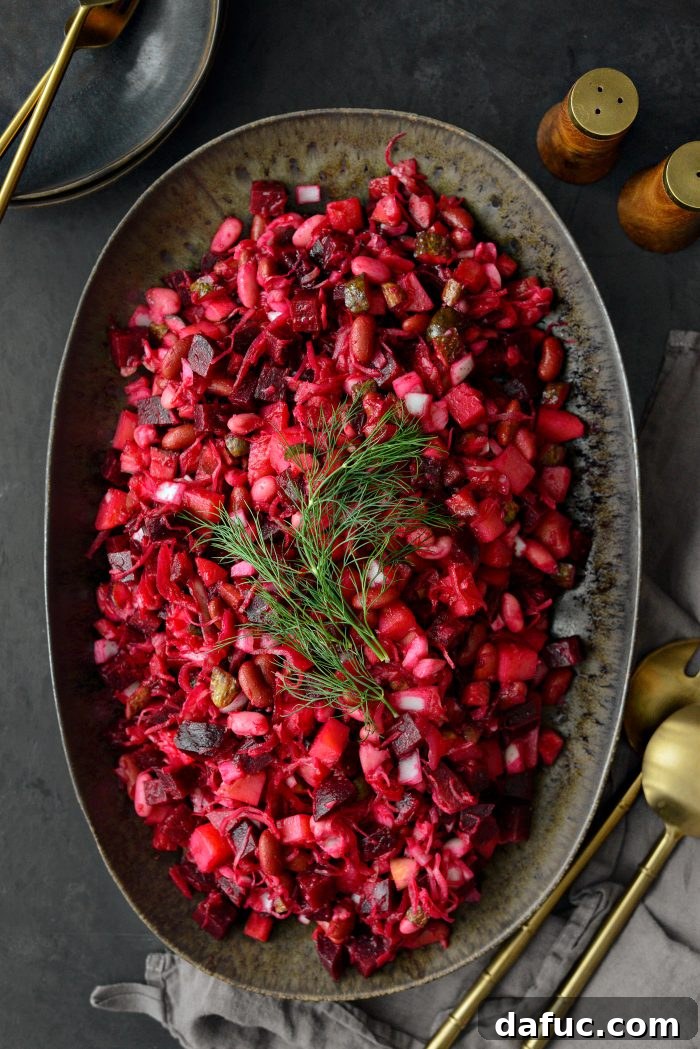
While you can certainly enjoy a bowl of this magnificent salad right after making it, its flavors truly blossom after a period of chilling. For the best experience, especially if you’re serving it to a crowd, allow the salad to chill in the refrigerator for at least an hour, or even better, overnight. This resting time allows the ingredients to fully meld, creating a more cohesive and deeply satisfying flavor profile.
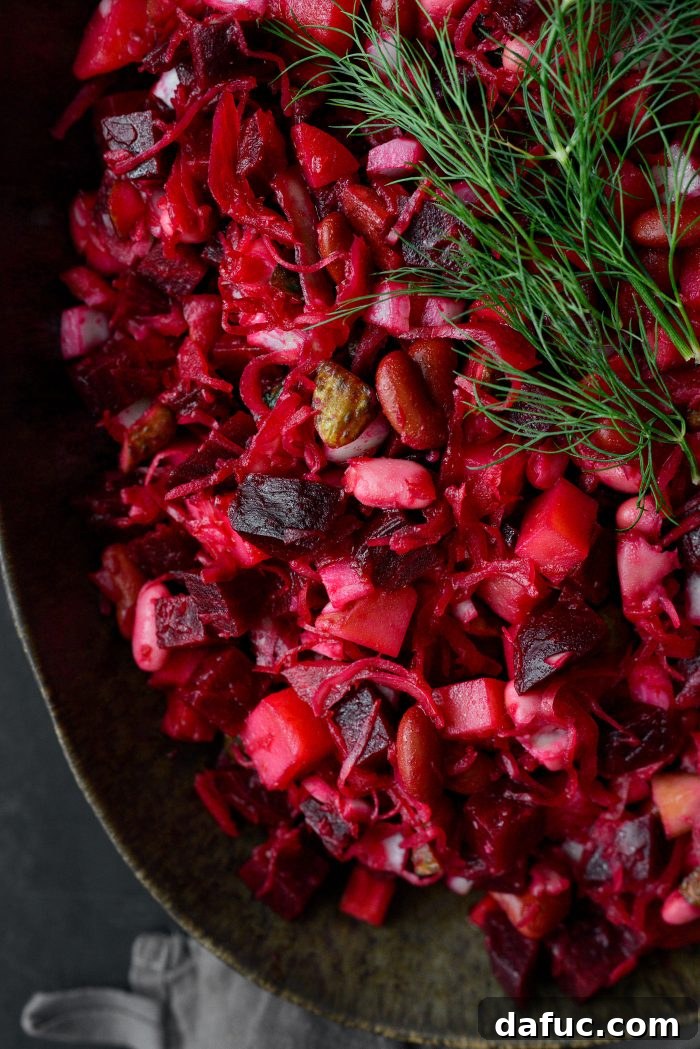
Serving Suggestions & Storage Tips for Your Vinegret
Vinegret is incredibly versatile and can be enjoyed in various ways, making it a staple for any occasion.
What to Serve with Beet Salad (Vinegret)?
How to Store This Beet Salad:
To maintain its freshness and flavor, store your Vinegret in an airtight container. Keep it refrigerated to ensure it remains delicious and safe to eat.
How Long Will Beet Salad Last For?
When stored properly in an airtight container in the refrigerator, this vibrant beet salad will typically last for up to 5 days. In fact, many find its flavor to improve on the second and third day as the ingredients marinate and harmonize.
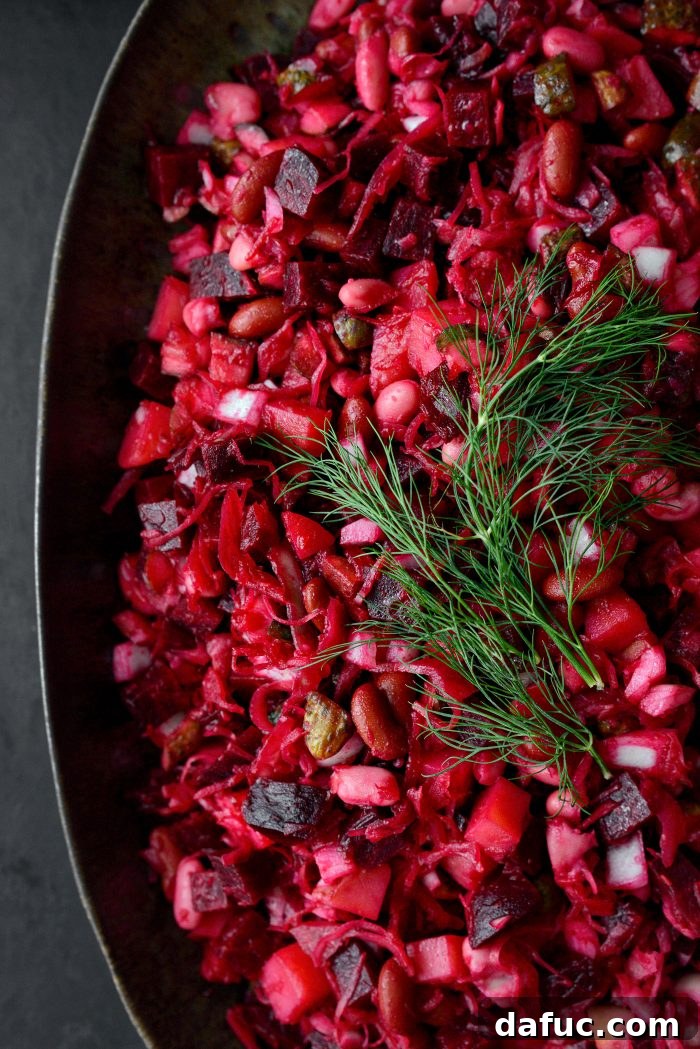
Customizing Your Vinegret: Creative Variations & Pro Tips
While the traditional Vinegret recipe is perfect as is, it’s also wonderfully adaptable. After exploring various recipes and learning more about this dish online, I’ve gathered some fantastic alteration and substitution ideas to suit different tastes and preferences. Feel free to experiment and make this recipe your own!
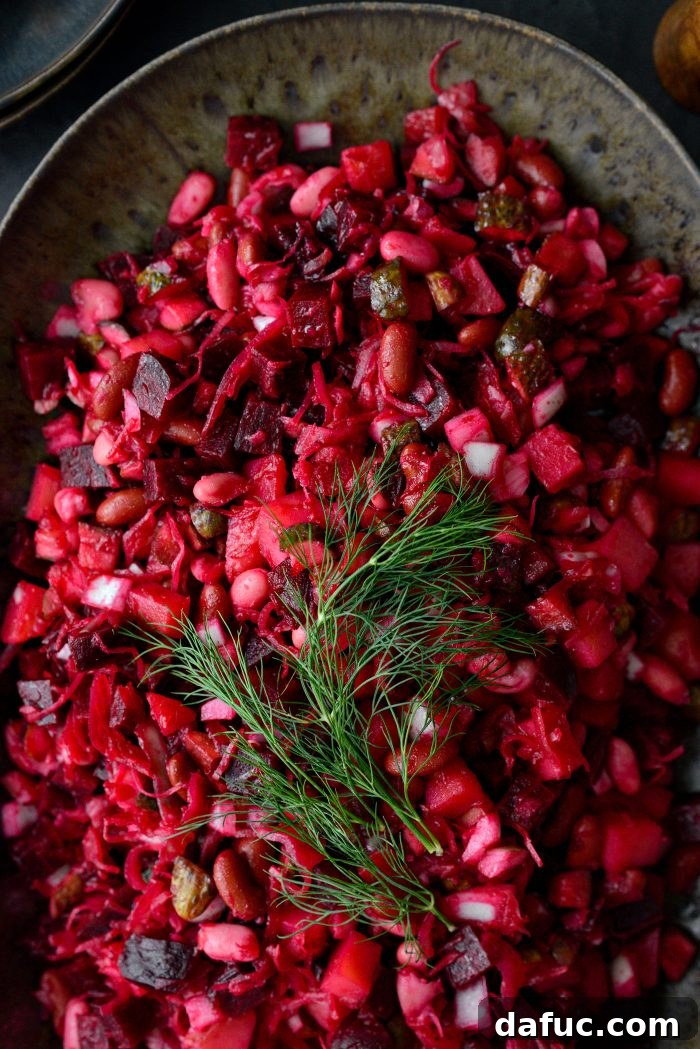
Enjoy this incredible Beet Salad! If you try this Vinegret recipe, I’d love to hear about your experience. Snap a photo and tag me on Twitter or Instagram!
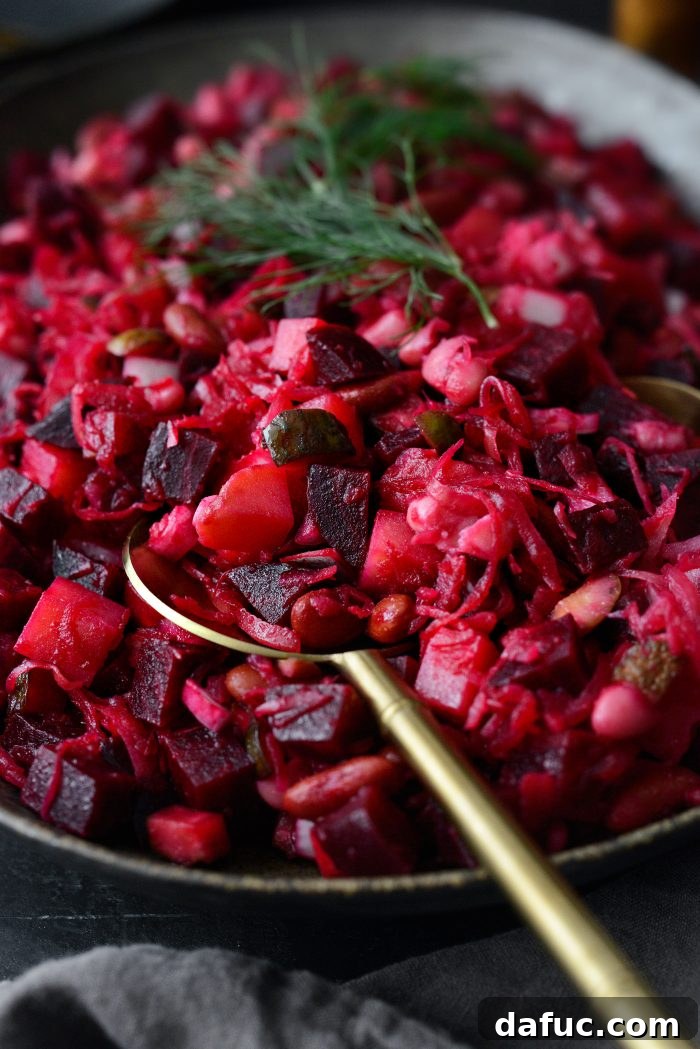
Authentic Beet Salad (Vinegret) Recipe Card
Print Recipe
Pin Recipe
Yield: 12 servings
Beet Salad (Vinegret)
Beet Salad (Vinegret or Vinaigrette) is a popular Ukrainian (and Russian) winter salad consisting mostly of potatoes, beets, pickles, beans and sauerkraut. It’s slightly sweet, sour and salty and loaded with vitamins, nutrients and probiotics.
Yields approximately 12 cups but can be halved to serve less.
Prep Time: 30 mins
Cook Time: 50 mins
Chill Time: 2 hrs
Total Time: 1 hr 20 mins (excluding chill time)
Ingredients
Instructions
ROAST THE BEETS:
BOIL THE POTATOES:
PREP AND CHOP THE REMAINING INGREDIENTS:
Notes
Nutrition Disclaimer: All information presented on this site is intended for informational purposes only. I am not a certified nutritionist and any nutritional information shared on SimplyScratch.com should only be used as a general guideline.
Nutrition Facts (Approximate per serving)
Serving: 1 cup, Calories: 196kcal, Carbohydrates: 32g, Protein: 7g, Fat: 5g, Saturated Fat: 1g, Polyunsaturated Fat: 1g, Monounsaturated Fat: 3g, Sodium: 570mg, Potassium: 845mg, Fiber: 9g, Sugar: 11g, Vitamin A: 94IU, Vitamin C: 17mg, Calcium: 86mg, Iron: 3mg
Author: Laurie McNamara
Course: Salads
Cuisine: Russian, Ukrainian