
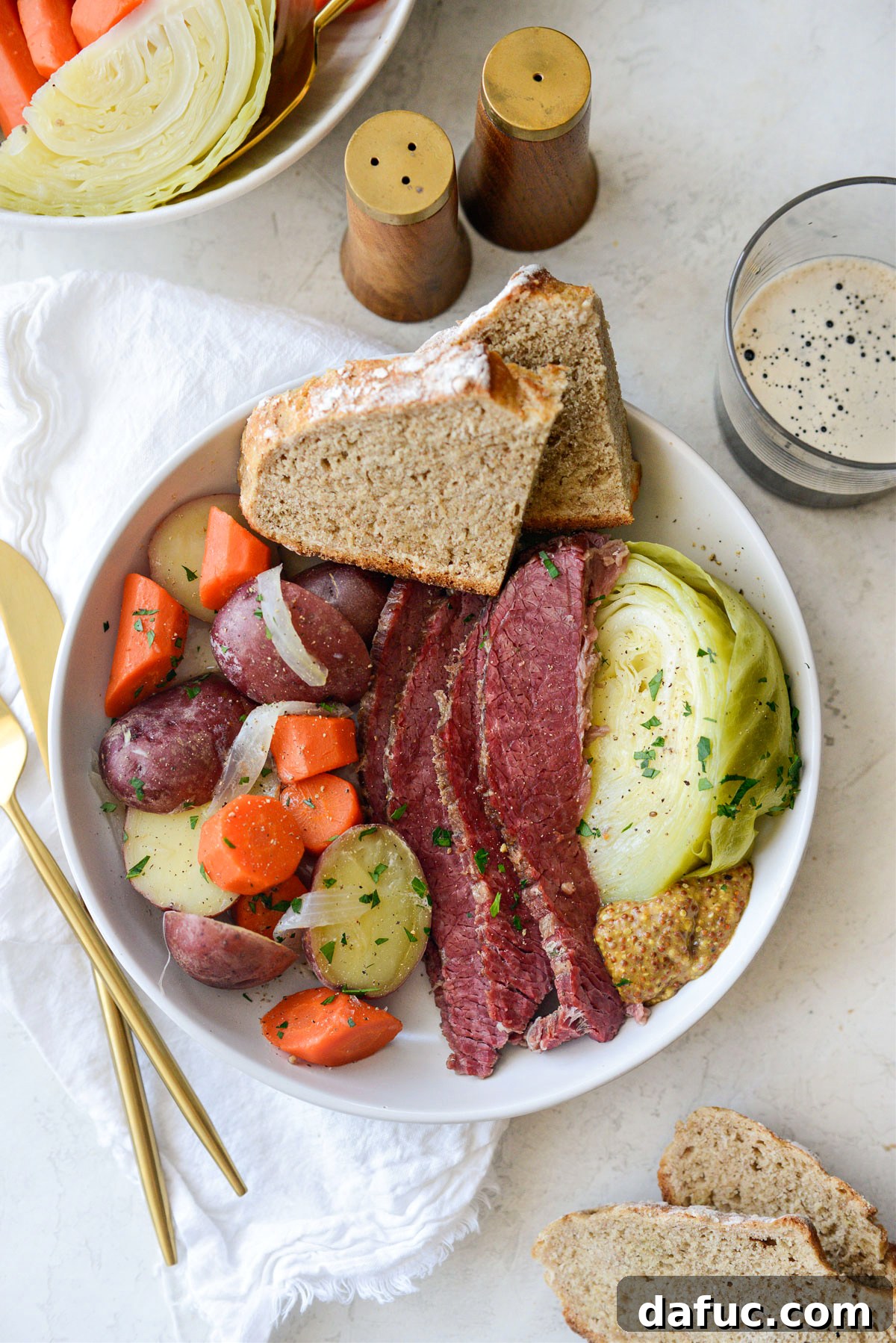
Corned Beef and Cabbage stands as an iconic and deeply cherished Irish-American culinary tradition, particularly synonymous with St. Patrick’s Day festivities across the United States. This isn’t just a meal; it’s a comforting ritual, a flavorful centerpiece around which families gather to celebrate heritage and good cheer. In this comprehensive guide, we’ll walk you through the art of preparing a truly delectable corned beef brisket alongside perfectly tender boiled vegetables. Our recipe is designed to be foolproof, ensuring a delicious outcome every time, transforming simple ingredients into a memorable feast that captures the spirit of the occasion.
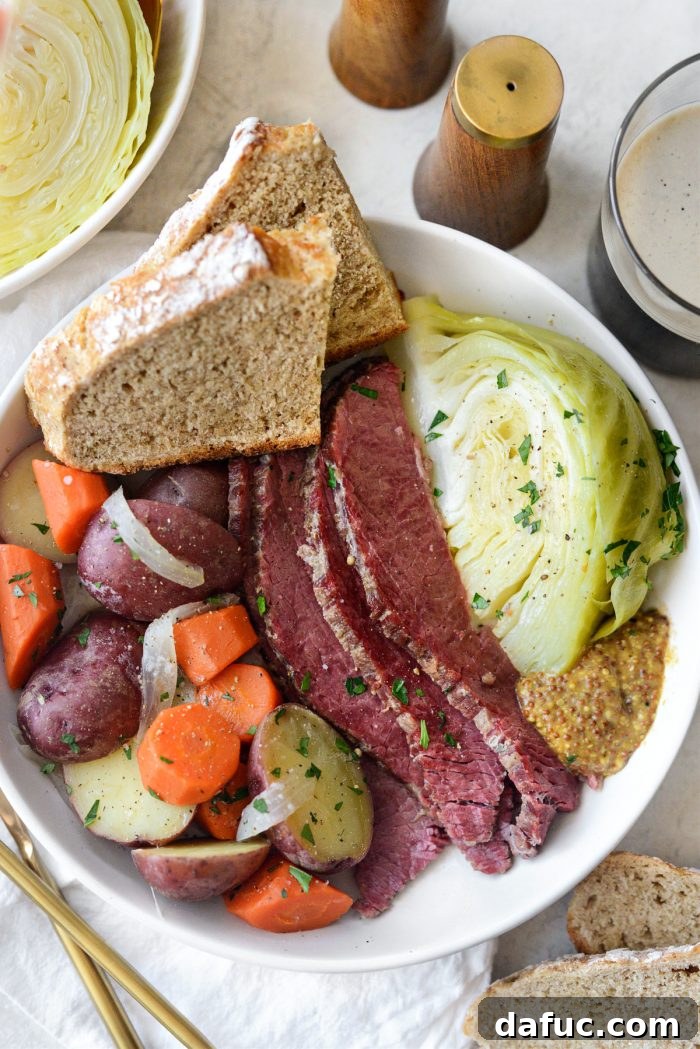
Embracing the Season: The Ultimate Corned Beef and Cabbage Recipe
As the vibrant hues of green begin to emerge, signaling the approach of St. Patrick’s Day, a distinct sense of excitement fills the air. For many, this time of year brings nostalgic memories of celebratory breakfasts, the playful tradition of wearing green to avoid a friendly pinch, and, most importantly, the rich, savory aroma of beef brisket slowly simmering, permeating every corner of the kitchen. This beloved dish isn’t merely food; it’s a sensory experience that ushers in the festive spirit.
I, like countless others, grew up savoring this quintessential American classic. It’s a culinary staple in so many households during St. Patrick’s Day, celebrated for its hearty simplicity and comforting flavors. For those unfamiliar with its charm, corned beef and cabbage is a traditional one-pot boiled dinner. While the term “boiled dinner” might sound unassuming, even a tad plain, the reality is a profoundly satisfying and flavorful meal. A robust corned beef brisket undertakes a journey of low and slow simmering for several hours, patiently tenderizing and infusing the broth with its savory essence. Later, a medley of vibrant carrots, starchy potatoes, and crisp cabbage wedges are introduced to the pot, cooking gently until they achieve a melt-in-your-mouth tenderness, absorbing all the wonderful flavors created during the long simmer.
In our Irish-American home, this dish isn’t just an option; it’s the undisputed meal of choice for St. Patrick’s Day. It’s a way we honor our roots and keep traditions alive. Beyond this classic, I encourage you to explore a wider array of Irish and Irish-inspired recipes to further enrich your St. Patrick’s Day culinary adventures!🍀
Is Corned Beef Truly Irish? Unraveling the History of a St. Patrick’s Day Staple
The question of whether corned beef is authentically Irish often elicits a nuanced answer: yes, and yet, mostly no. While historical records indicate that corned beef was indeed produced in Cork, Ireland, centuries ago—a city that served as a significant hub for the corned beef trade throughout the 17th and 18th centuries—its primary market wasn’t within Ireland itself. This lucrative production was largely destined for the British, a consequence of Ireland benefiting from a comparatively cheaper salt tax. It’s crucial to understand that the corned beef of that era bore little resemblance to the cured meat we recognize today.
The dish’s widespread popularity in America stems from the experiences of Irish immigrants. When they arrived in urban centers like New York City, particularly during the 19th century, beef was a more affordable and accessible option than pork, which was the traditional meat in Ireland. These immigrants often turned to the kosher butcher shops run by their Jewish neighbors, where brisket was readily available and cured in a style similar to what became known as corned beef. This adaptation, born out of necessity and new cultural interactions, is how American households, especially Irish-American ones, embraced corned beef as a celebratory dish for St. Patrick’s Day, creating a new tradition distinct from those in Ireland.
Why Is It Called “Corned Beef”?
The intriguing term “corned” in corned beef doesn’t refer to corn kernels as many might assume. Instead, its origin lies in the large, coarse salt crystals, historically referred to as “corns” of salt, that were used extensively to cure the beef. This ancient preservation method involved rubbing or soaking the beef in a brine solution containing these salt “corns,” effectively curing and tenderizing the meat long before refrigeration was available. This process imparts the characteristic salty, tangy flavor and tender texture that defines corned beef, a tradition passed down through generations.
Do They Make or Eat Corned Beef and Cabbage In Ireland?
Despite its profound association with St. Patrick’s Day in America, corned beef and cabbage is not a traditional or widely consumed dish in Ireland. Historically, and even predominantly today, pork (often as bacon or ham) has been the primary source of meat in Irish cuisine, most famously paired with cabbage in a dish known as “bacon and cabbage.” Cows, on the other hand, were primarily valued for their strength as draft animals and for dairy production. They were typically only slaughtered for meat when they became too old to work the land or produce milk, making beef a less common and more expensive staple than pork for the average Irish household.
For those interested in a deeper dive, while some sources may state the origin of corned beef is unknown, many reputable publications, including detailed accounts from Smithsonian Magazine and Food and Wine, offer fascinating historical insights into this dish. The information shared here is a concise overview, but I highly recommend exploring these resources if you wish to delve into the rich and complex history of corned beef.
The Essential Ingredients for a Hearty Corned Beef Brisket with Boiled Vegetables
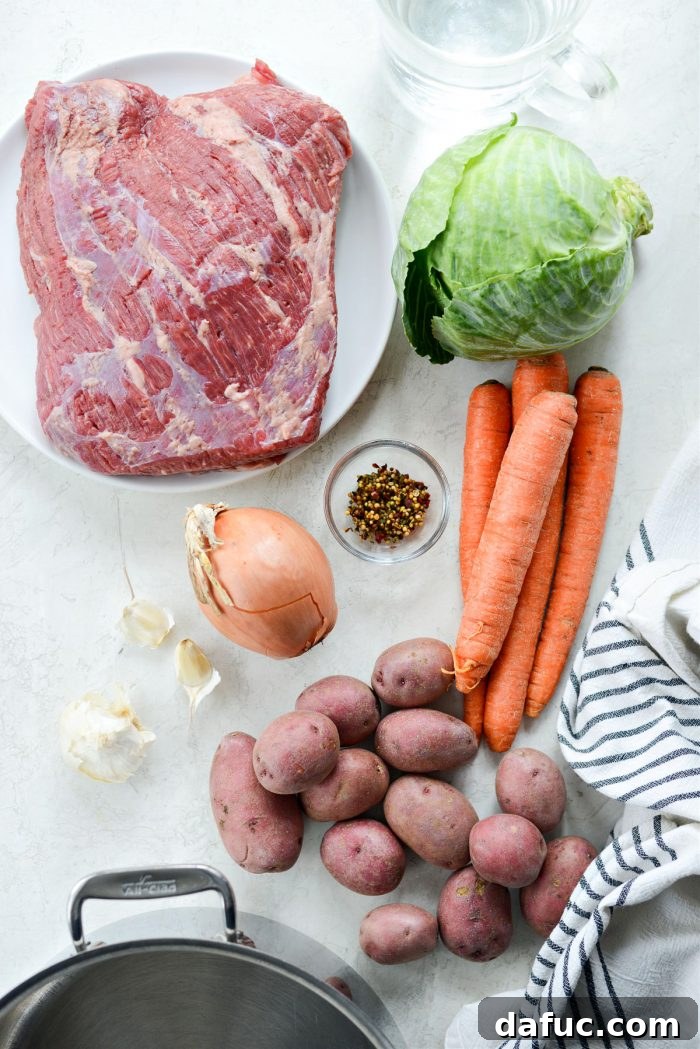
Crafting this comforting Irish-American boiled dinner begins with selecting the right ingredients. Each component plays a vital role in achieving the rich flavors and tender textures that define this classic meal:
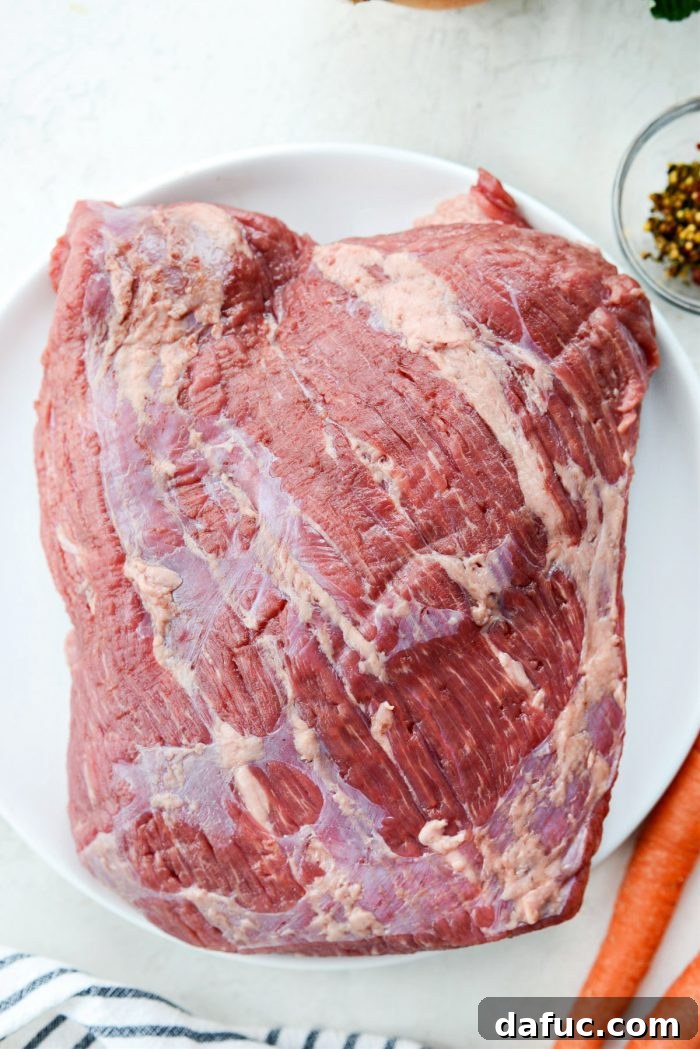
- Corned Beef Brisket: The star of our dish. When choosing your brisket, aim for a cut without an excessively thick fat cap. Both flat cut and point cut briskets work well; the flat cut is leaner and slices more uniformly, while the point cut tends to be more marbled and incredibly tender when slow-cooked.
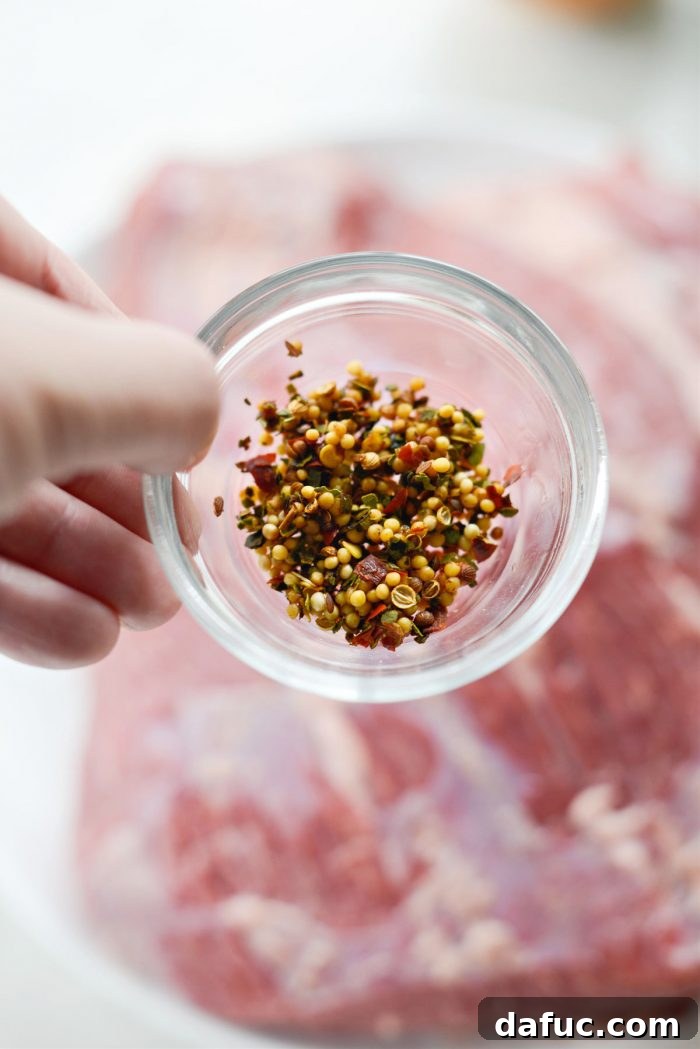
- Seasoning Packet: Most corned beef briskets come with a pre-packaged seasoning blend, often referred to as “pickling spice.” This is primarily for flavoring the cooking liquid and vegetables, as the brisket itself is already cured and seasoned.
- Garlic: Two cloves of smashed garlic add a subtle, aromatic depth to the boiling water, subtly enhancing the flavor profile of both the meat and the vegetables.
- Green Cabbage: Select a small to medium-sized head of green cabbage. A larger head can be cumbersome to fit into a single pot, making uniform cooking a challenge.
- Baby Red Skinned Potatoes: These smaller potatoes hold their shape beautifully and absorb flavor wonderfully. If only larger potatoes are available, simply quarter them to ensure even cooking with the other vegetables.
- Carrots: Large, vibrant carrots not only contribute a delightful pop of color to the final dish but also lend an earthy sweetness that complements the savory brisket.
- Yellow Onion: Halved and vertically sliced, the yellow onion infuses the broth with a sweet and subtle onion flavor, rounding out the overall taste.
Serving Accompaniments (Optional, but highly recommended):
- Salted Butter: A dollop of butter over the hot vegetables adds a luscious richness.
- Kosher Salt & Freshly Ground Black Pepper: Essential for seasoning the finished dish to taste, enhancing all the flavors.
- Coarse Ground Mustard: Offers a delightful piquant bite that beautifully cuts through the richness of the corned beef. Any mustard of your choice will do.
- Irish Soda Bread or Irish Brown Bread: Perfect for soaking up the flavorful broth and completing this authentic meal.
A Note on Pickling Spice:
The seasoning packet typically included with your corned beef brisket is perfectly adequate. However, some cooks prefer to enhance or even replace it with their own blend of pickling spices. A homemade mix might include peppercorns, mustard seeds, bay leaves, allspice berries, coriander seeds, and cloves, offering a more personalized flavor. The primary role of these spices, whether pre-packaged or homemade, is to season the cooking liquid, which in turn flavors the vegetables. Since the corned beef itself is already cured and seasoned, you can confidently stick with the included packet or experiment with additions – you truly can’t go wrong either way!
Step-by-Step Guide to a Tender & Flavorful Corned Beef and Cabbage
Achieving a perfectly tender and flavorful corned beef and cabbage is simpler than you might think, relying on a few key steps:
1. Prepare the Brisket
Begin by thoroughly rinsing your corned beef brisket under cool, lukewarm water. Gently pat it dry with paper towels. This crucial step helps remove any excess brine from the surface, which can often lead to an overly salty finished product. Rest assured, rinsing the exterior will not strip away the deeply embedded flavors from the curing process; the brisket’s interior is already fully infused with the delicious brine.
2. The Initial Simmer
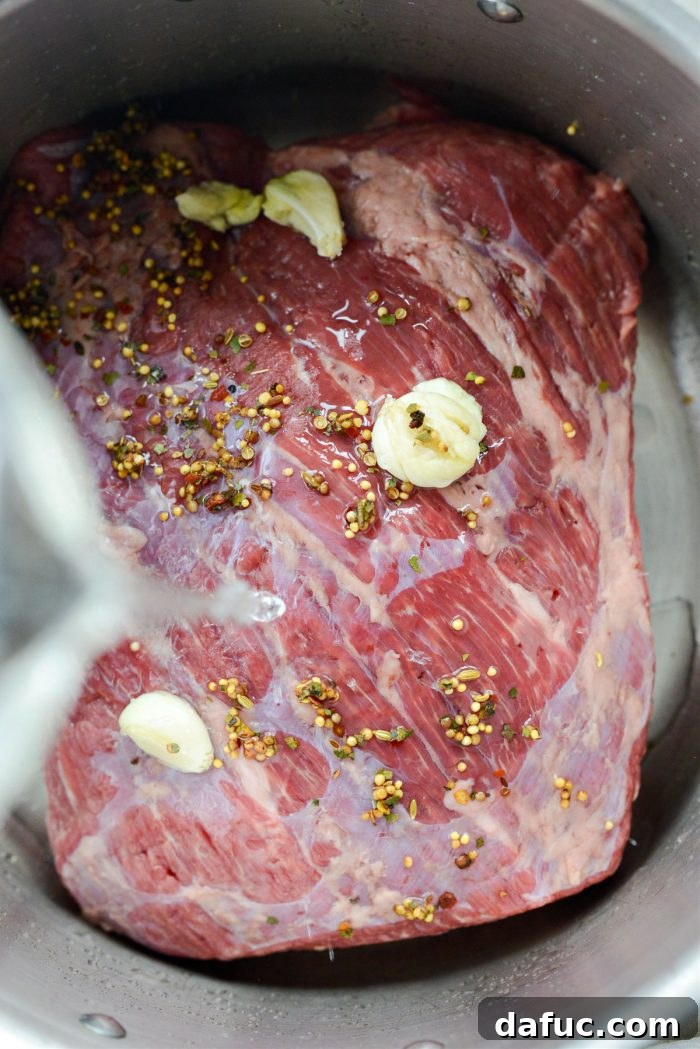
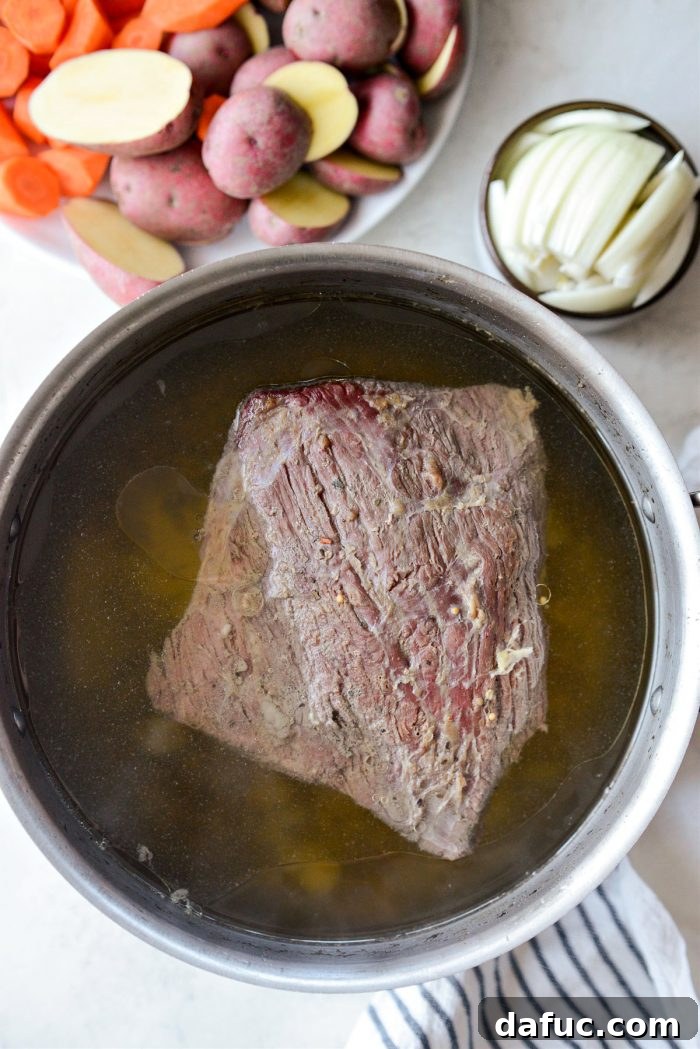
Place the rinsed beef brisket into a large, heavy-bottomed stockpot. Add two cloves of smashed garlic and the seasoning packet (or your homemade pickling spice blend). Cover the brisket with at least 12 cups of water, or enough to completely submerge the meat, ensuring there are still a few inches of space at the top of the pot to prevent boil-overs.
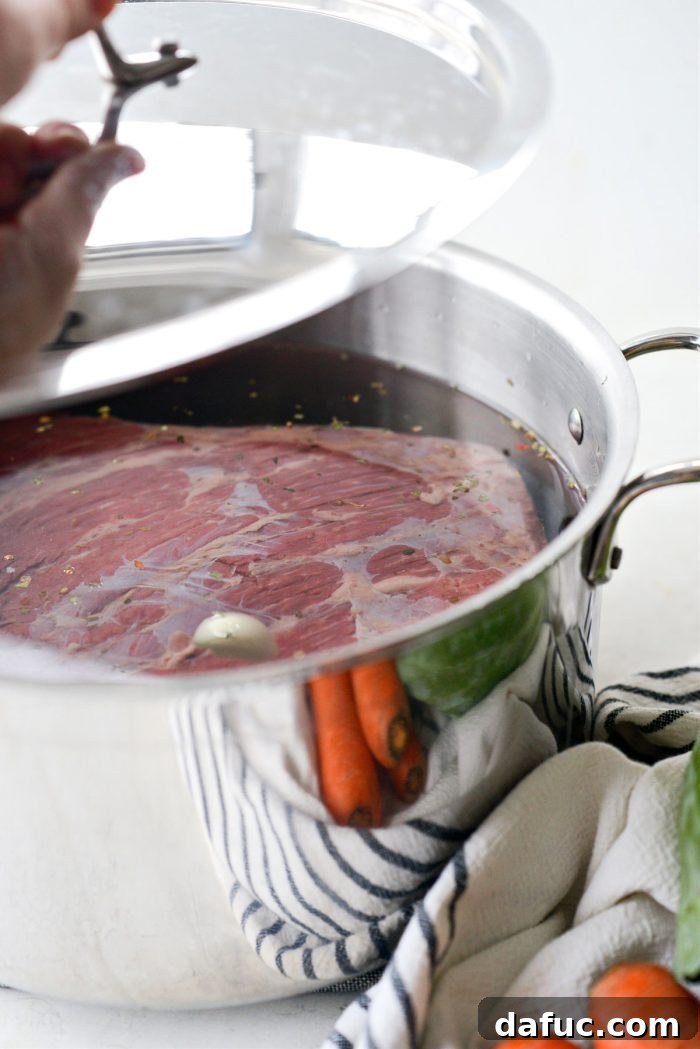
Cover the pot with its lid and bring the water to a near boil over high heat. Watch for the lid to gently rattle, indicating that a simmer is imminent. Once it reaches this point, immediately reduce the heat to low or medium-low. Allow the brisket to simmer gently with the lid slightly askew (to allow steam to escape and prevent over-pressurization) for approximately 50 minutes per pound. For a typical 4-pound corned beef, this translates to roughly 3 to 3.5 hours of cooking. This “low and slow” method is essential for breaking down tough fibers and rendering the brisket incredibly tender. Throughout the cooking process, it’s good practice to check on the water level every hour or so, adding more hot water if needed to keep the brisket submerged, and occasionally turning the meat to ensure even cooking.
3. Preparing the Vegetables
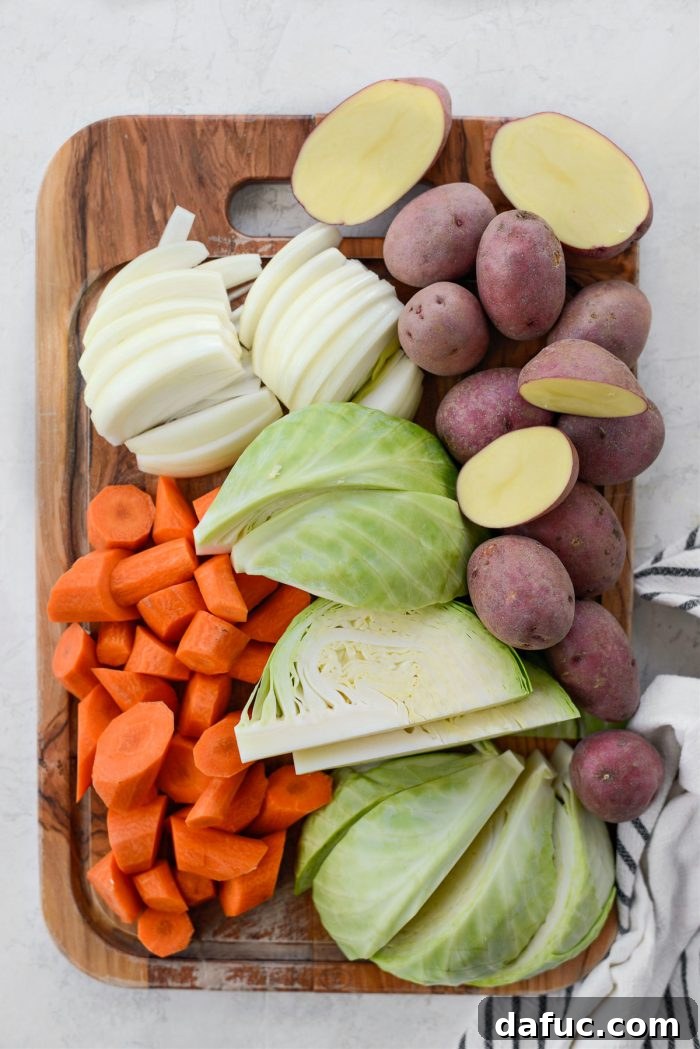
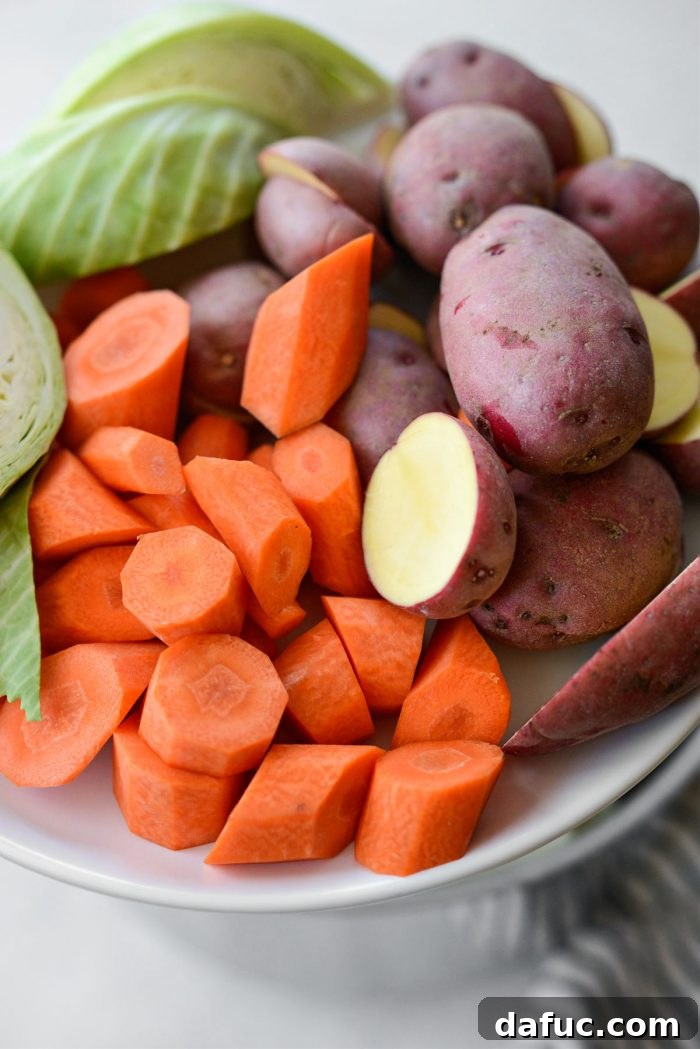
With about 40 minutes remaining on your brisket timer, it’s time to prepare the vegetables. Thoroughly scrub the baby red-skinned potatoes; if they are on the larger side, cut them in half to ensure they cook evenly. Peel the carrots and cut them into 1 to 1½-inch pieces. Finally, take a small head of cabbage and cut it into 8 distinct wedges, making sure to leave a portion of the core intact in each wedge. This helps the cabbage wedges hold their shape during cooking, preventing them from falling apart.
4. Adding the Vegetables to the Pot
Once the corned beef has completed its initial cooking, it will likely appear smaller and perhaps a less vibrant color than when raw – this is perfectly normal and a sign of its tender transformation. Carefully remove the brisket from the pot and set it aside on a carving board, tented loosely with foil to keep it warm while the vegetables cook. Add the prepared onions, carrots, and potatoes to the simmering broth in the pot. Then, gently place the cabbage wedges on top of the other vegetables. Cover the pot once more and allow everything to cook for another 30 to 40 minutes, or until all the vegetables are fork-tender.
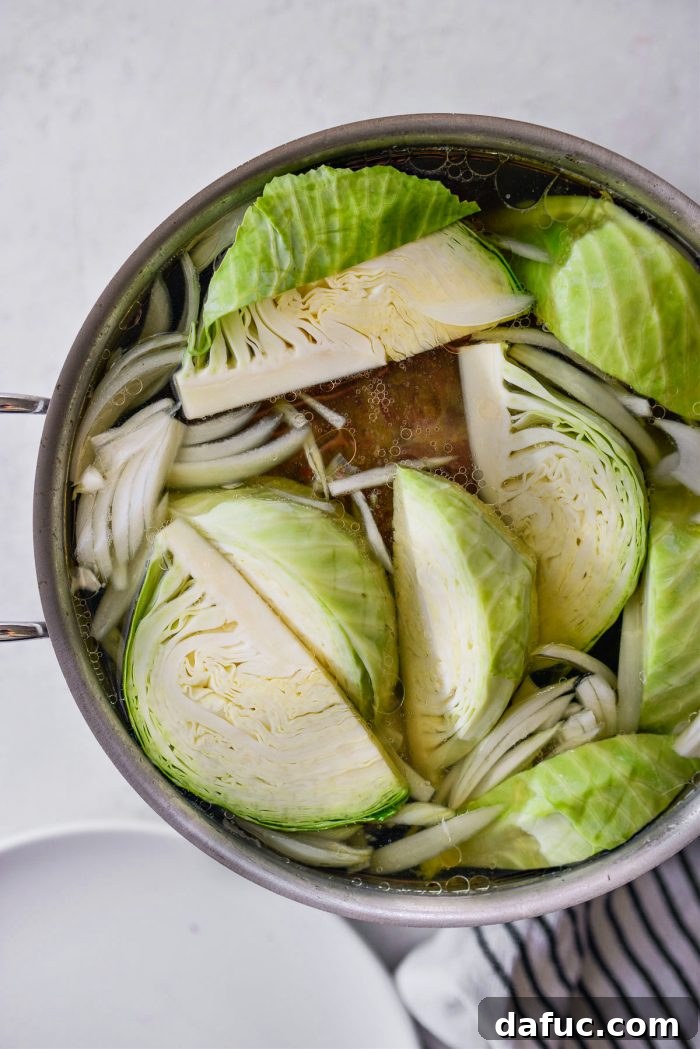
The vegetables are perfectly cooked when a fork glides through them easily, indicating a tender, yielding texture.
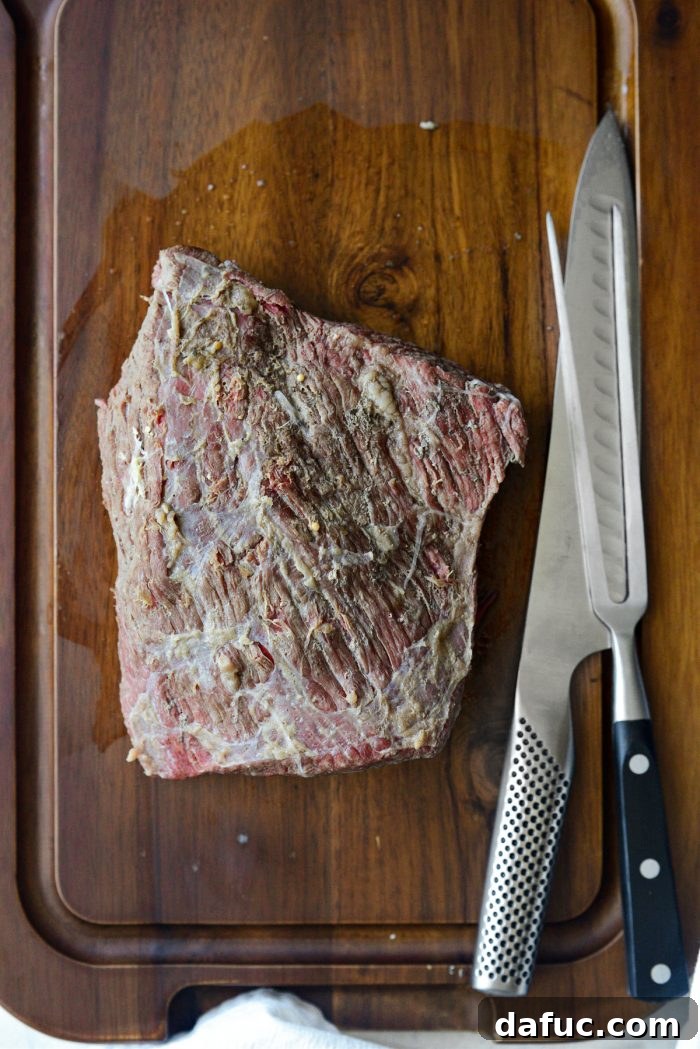
5. Carving the Corned Beef
Believe it or not, there’s a right way and a not-so-right way to carve corned beef. To ensure maximum tenderness and prevent the meat from shredding into stringy pieces, it is imperative to find the grain of the meat and slice against it. For instance, if you observe that the meat fibers run somewhat diagonally across the brisket, you’ll want to position your knife and slice in the opposite, perpendicular direction. This technique shortens the muscle fibers, resulting in wonderfully tender, easy-to-chew slices. If you slice with the grain, the meat will be tough and stringy.
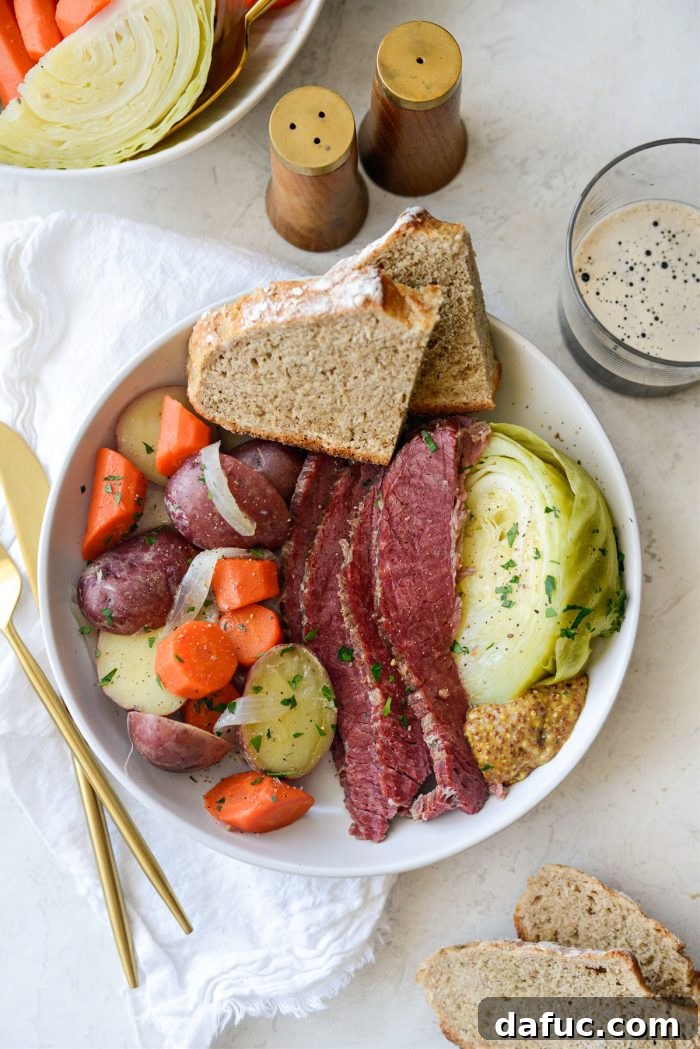
6. Serving Your Boiled Dinner
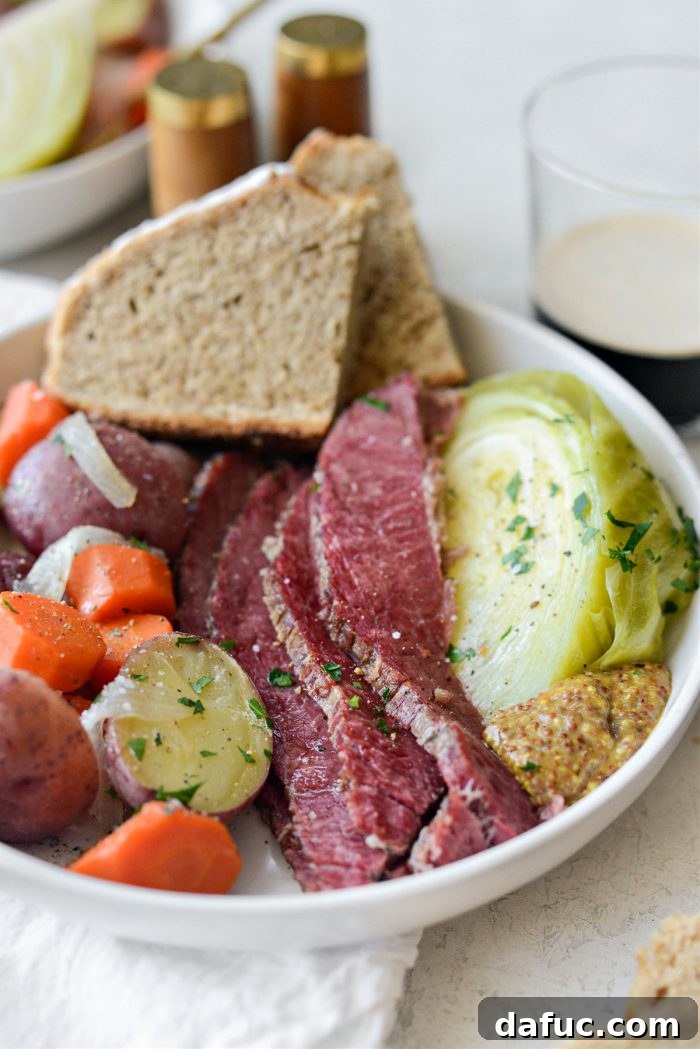
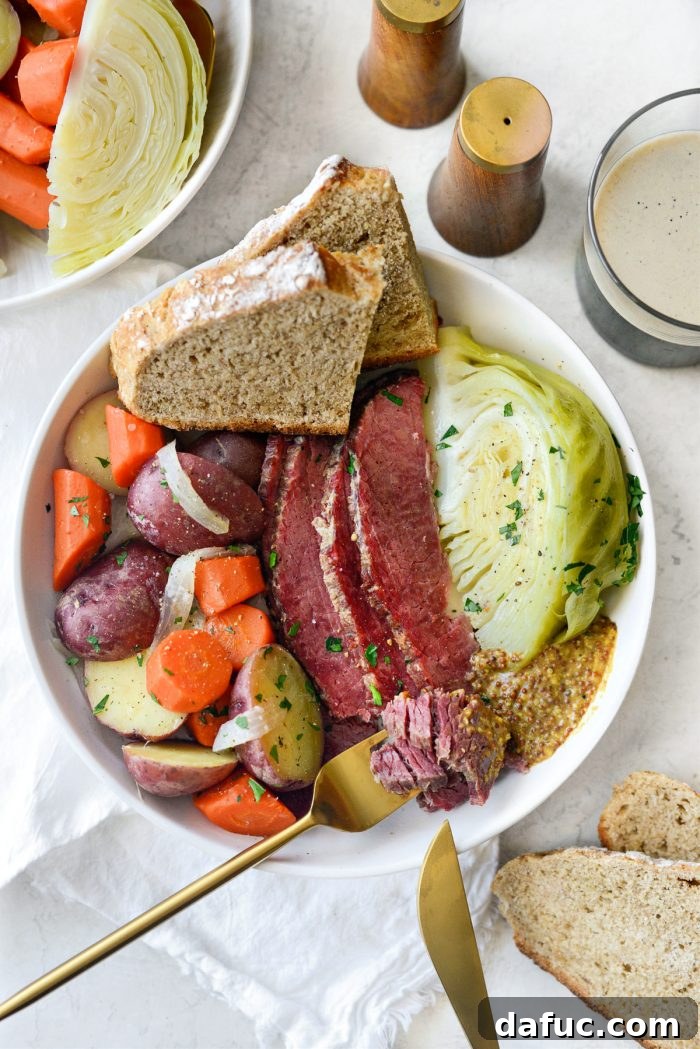
Arrange generous slices of the tender corned beef alongside the beautifully cooked, flavorful boiled vegetables. For an added touch of indulgence and flavor, I love to top the potatoes, carrots, and cabbage with a pat of rich butter, a sprinkle of kosher salt, and a fresh grind of black pepper. A touch of fresh chopped parsley can also add a bright, herbaceous note. And, for an extra layer of savory tang, I always recommend dipping your corned beef into a hearty, grainy mustard. This combination creates a truly satisfying and classic Irish-American meal.
To truly complete this magnificent feast, serve it alongside thick slices of warm Irish soda bread. Its slightly dense texture and subtle sweetness make it the perfect accompaniment for soaking up the delicious broth and flavors. Enjoy every comforting bite!
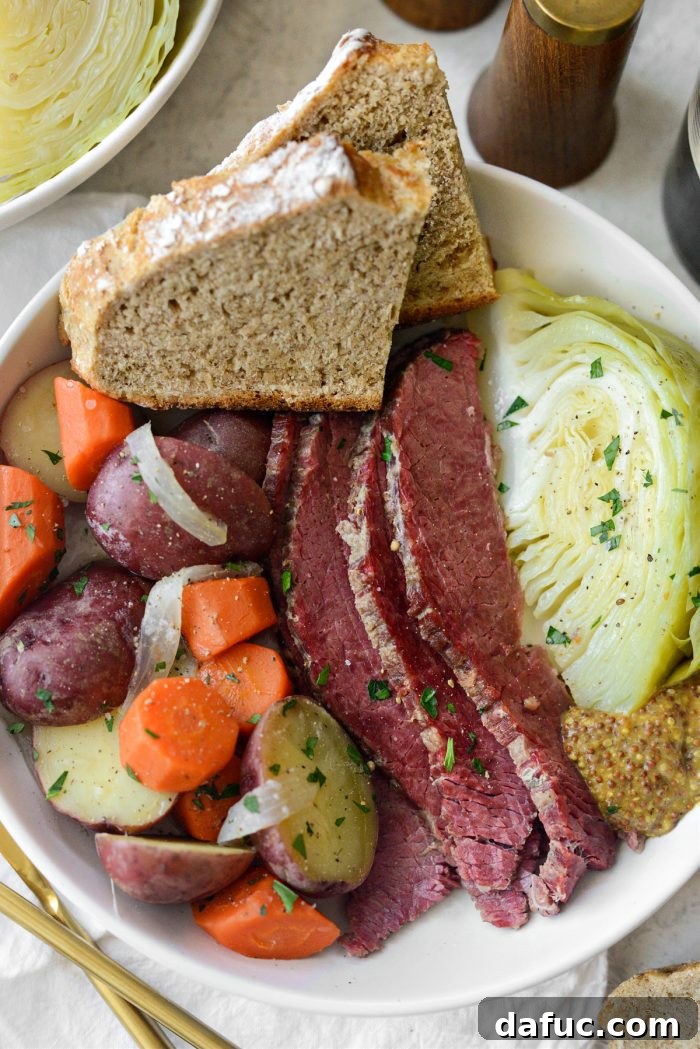
Happy St. Patrick’s Day! May your celebrations be filled with warmth, good company, and delicious food!
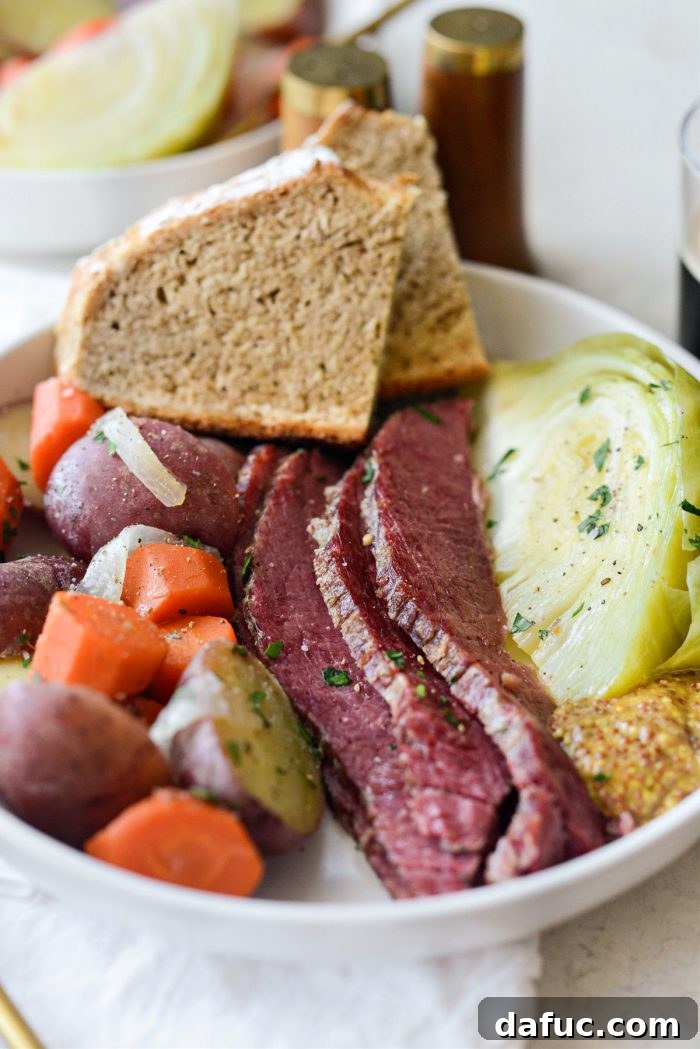
Enjoy this classic Irish-American dish! If you try this Corned Beef and Cabbage recipe, I’d love to hear about it. Share your delicious creations and tag me on Twitter or Instagram!
Print Recipe
Pin Recipe
Average rating: 4.45 from 9 ratings
Leave a Review »
Yield: 8 servings
Corned Beef and Cabbage (Irish Boiled Dinner)
Corned Beef and Cabbage is a classic Irish-American dinner served on St. Patrick’s Day here in the United States. In this post I have a step-by-step post on how best to prepare corned beef brisket with boiled vegetables. This recipe is foolproof and delicious!
Prep Time: 5 mins
Cook Time: 2 hrs
Additional Time: 1 hr
Total Time: 3 hrs 5 mins
Ingredients
- 4 pounds corned beef brisket
- 2 cloves garlic, smashed and peeled
- Seasoning packet, included with the corned beef brisket
- 1½ pounds baby red skinned potatoes, halved if large
- 4 large carrots, peeled and cut into 1-inch pieces
- 1 yellow onion, halved and sliced vertically
- 1 small head cabbage, cut into wedges with the root intact
Instructions
- Rinse your corned beef well and pat dry with paper towel. This removes excess surface brine without affecting the deep internal flavor.
- Place the brisket in a large stock pot with smashed garlic and the pickling seasoning packet. Cover with at least 12 cups of water, ensuring the brisket is fully submerged and leaving a few inches at the top of the pot to prevent overflow.
- Cover the pot and bring the water to a near boil. Once it reaches this point, reduce the heat to a gentle simmer and cook for approximately 50 minutes per pound. For a 4-pound brisket, this will take about 3 to 3½ hours.
- Periodically check the water level and turn the corned beef every hour or so, adding more hot water if necessary to keep it submerged.
- With about 30-40 minutes of cooking time remaining for the brisket, add the potatoes, carrots, and onions to the pot. Gently place the cabbage wedges on top of the other vegetables.
- Continue to cook until all vegetables are tender. You can test for doneness by easily inserting a fork into a potato or carrot.
- Once the corned beef is fully cooked and tender, carefully remove it from the pot and transfer it to a carving board. Allow it to rest for a few minutes before slicing. Slice the corned beef against the grain to ensure tender pieces.
- Serve the sliced corned beef alongside the boiled vegetables. Enhance the flavors by topping the vegetables with butter, salt, and pepper. For an extra kick, dip your corned beef in grainy mustard.
Notes
Nutrition Disclaimer: All information presented on this site is intended for informational purposes only. I am not a certified nutritionist, and any nutritional information shared on SimplyScratch.com should only be used as a general guideline.
Nutrition Information (per serving): Serving: 1g, Calories: 552kcal, Carbohydrates: 24g, Protein: 37g, Fat: 34g, Saturated Fat: 11g, Polyunsaturated Fat: 1g, Monounsaturated Fat: 16g, Cholesterol: 122mg, Sodium: 2817mg, Potassium: 1351mg, Fiber: 5g, Sugar: 6g, Vitamin A: 6108IU, Vitamin C: 105mg, Calcium: 76mg, Iron: 5mg
Author: Laurie McNamara
Course: Mains & Entrees
Cuisine: American, Irish