

Hearty Homemade Bean and Bacon Soup: A Comforting One-Pot Recipe
There’s nothing quite like a steaming bowl of homemade soup to bring warmth and comfort, and this **Hearty Homemade Bean and Bacon Soup** truly delivers. It’s a classic for a reason: incredibly flavorful, surprisingly simple to prepare, and wonderfully satisfying. Imagine tender navy beans simmered with crispy, smoky bacon, complemented by a medley of sautéed onions, carrots, and celery, all bathed in a light, savory broth infused with a touch of tomato and the subtle richness of a Parmesan rind. This isn’t just a meal; it’s an experience. Best of all, it’s a wholesome, protein-packed, and fiber-rich one-pot wonder, perfect for chilly evenings or a nourishing lunch. This recipe yields approximately 8 generous (1½ cup) servings, making it ideal for family dinners or meal prepping throughout the week.

Rediscovering a Childhood Favorite: Why Homemade is Always Best
For many, bean and bacon soup evokes a strong sense of nostalgia, a taste of comforting childhood memories. I vividly remember growing up with the convenience of canned versions, always eagerly searching for every precious piece of bacon in my bowl, often feeling a little disappointed by its scarcity. That longing for more flavor, more texture, and definitely more bacon, is precisely what inspired me to create this homemade version. And let me tell you, once you taste a truly homemade Bean and Bacon Soup, crafted from scratch, there’s simply no going back.
The unparalleled beauty of making your own soup lies in the complete control you have over every ingredient. You dictate the quality, the freshness, and most importantly, the generous amount of savory, smoky bacon. This recipe achieves the perfect balance, ensuring a rich, deeply satisfying depth in every spoonful that far surpasses the often bland and watery experience of store-bought alternatives. Homemade soup, lovingly prepared with fresh, quality ingredients, consistently tastes infinitely better, and this particular recipe stands as a shining testament to that truth. It’s a comforting ritual that transforms simple ingredients into something truly extraordinary.

The Foundation of Flavor: Quality Ingredients Make the Difference
What truly sets this homemade Bean and Bacon Soup apart is the thoughtful selection and combination of its ingredients, each playing a vital role in building complex flavors. The undeniable star, of course, is the bacon, which not only provides a meaty texture but also renders a rich, smoky fat that becomes the foundational flavor for the entire soup. Unlike many canned versions that often lack substantial texture and robust, fresh flavors, our homemade recipe is generously loaded with vibrant, garden-fresh vegetables. These not only contribute essential nutrients but also add layers of earthy, sweet, and aromatic notes that elevate the soup from simple to truly extraordinary. Every component is carefully chosen to create a balanced, deeply savory, and incredibly satisfying meal.
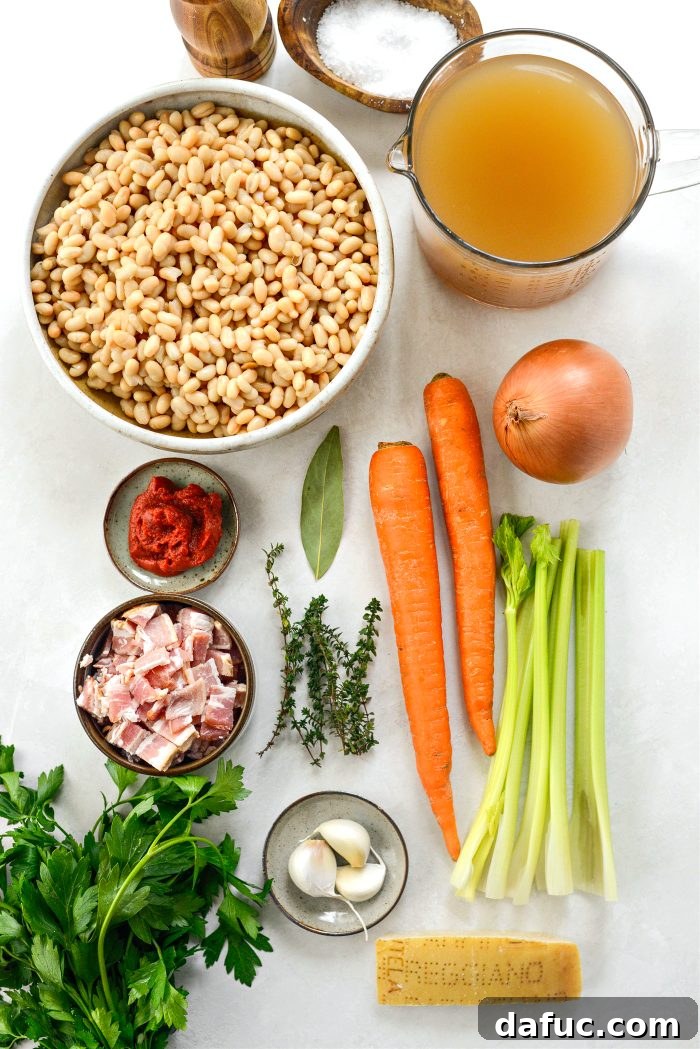
Essential Ingredients for Your Hearty Bean and Bacon Soup
Crafting this delicious and comforting soup requires a selection of fresh, high-quality ingredients. Here’s a detailed look at what you’ll need, along with a bit more insight into their specific roles in developing the rich flavor profile of this recipe:
- Bacon: We highly recommend using **center-cut bacon** for its excellent meat-to-fat ratio. It crisps up beautifully, yielding flavorful morsels while also rendering the essential smoky fat that forms the irreplaceable base of our soup. Feel free to use your preferred variety, but opt for good quality bacon for the best results.
- Yellow Onion: A medium yellow onion, finely diced, forms the critical aromatic foundation. As it slowly softens and caramelizes, it releases a wonderful natural sweetness and subtle onion flavor that deeply enriches the broth.
- Carrots: Diced carrots add a touch of natural, earthy sweetness, a vibrant pop of color, and a pleasant, tender texture to the soup, providing a crucial balance to the savory and smoky notes.
- Celery: Earthy with a hint of bitterness, diced celery provides a vital layer of flavor to the mirepoix (the aromatic vegetable base). It contributes depth and a delightful crisp-tender bite that is characteristic of classic comfort soups.
- Garlic: Freshly minced garlic delivers that unmistakable pungent and incredibly aromatic kick, which is absolutely essential for any savory soup. We add it a bit later in the cooking process to prevent it from burning and to preserve its full, robust flavor.
- Thyme: Fresh thyme sprigs or finely chopped leaves infuse the soup with an earthy, subtly minty, and slightly lemony aroma that pairs exceptionally well with both beans and bacon. It’s a classic and indispensable herb for hearty, rustic soups.
- Tomato Paste: This concentrated ingredient is a true secret weapon for adding deep umami flavor, a rich hue, and a subtle tang to the broth. Cooking it briefly before incorporating liquids helps to deepen its color and caramelize its sugars, which intensifies its flavor profile significantly.
- Navy Beans: For optimal convenience, canned navy beans are perfectly acceptable (just remember to rinse and drain them thoroughly to remove excess sodium and starchy liquid!). However, if you prefer, you can certainly soak and cook your own dried navy beans for an even fresher taste and potentially superior texture. Other white beans like cannellini or great northern beans can also be successfully substituted.
- Bay Leaf: A single bay leaf contributes a subtle yet complex herbal note, often described as a hint of mint or pine with delicate peppery undertones, which thoughtfully rounds out the soup’s overall flavor profile, adding a layer of sophisticated depth.
- Parmesan Rind: Do not discard that precious Parmesan rind! Simmering it directly in the soup is a fantastic chef’s trick to infuse the entire broth with an incredible, rich, and intensely savory umami depth, without making the soup taste overtly cheesy. It’s a flavor enhancer par excellence.
- Low-Sodium Chicken Broth: This is the primary liquid base for our hearty soup. Using low-sodium broth is crucial as it allows you to maintain precise control over the overall saltiness of the finished dish. While homemade chicken broth is always superior for flavor and nutrition, a good quality store-bought version works beautifully. Vegetable broth can also be substituted for a less meaty, vegetarian-friendly option.
- Kosher Salt: Absolutely essential for proper seasoning and for enhancing the natural flavors of all the individual ingredients. We’ll adjust the salt to taste towards the end of the cooking process to ensure perfect balance.
- Freshly Ground Black Pepper: Adds a distinct, piquant bite and aromatic spice, and is always best when freshly ground for maximum impact and fragrance.
- Fresh Parsley: A bright, herbaceous garnish for serving, providing a welcome pop of green color and a burst of fresh, clean flavor that beautifully complements the richness of the soup.
Step-by-Step Guide to Crafting Your Perfect Homemade Bean and Bacon Soup
Follow these comprehensive and detailed instructions to create a truly unforgettable pot of Bean and Bacon Soup, ensuring rich flavor and perfect texture in every spoonful:
1. Prepare and Crisp the Bacon
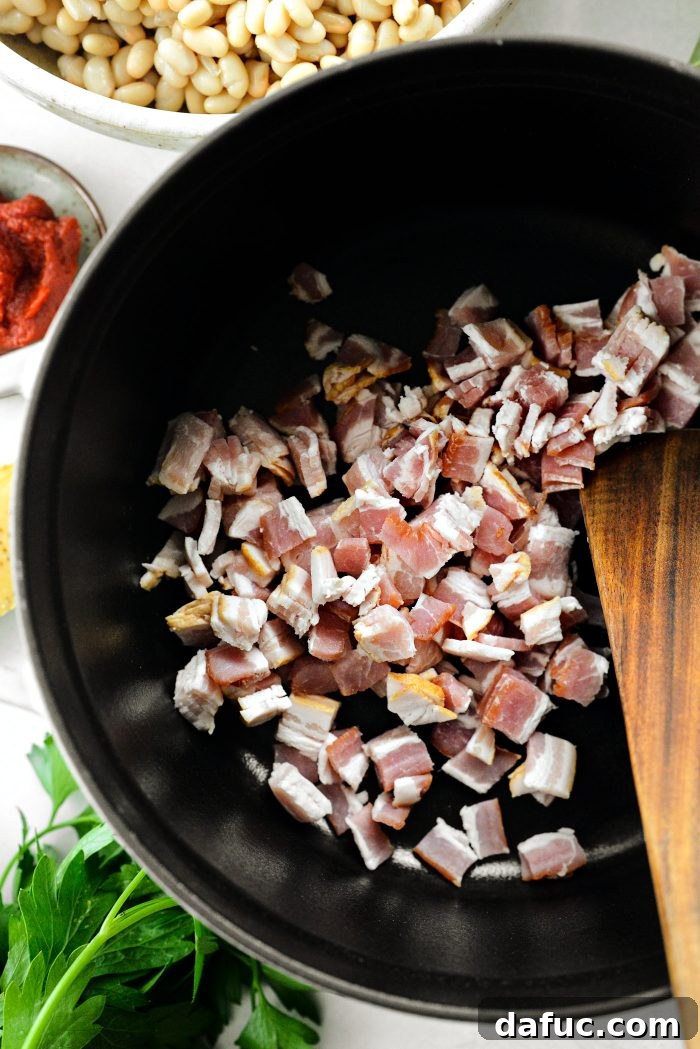
Begin your culinary journey by adding 12 ounces of diced center-cut bacon to a cold 6-quart Dutch oven or any other heavy-bottomed pot. The key to perfectly crispy bacon lies in starting with a cold pan and gradually increasing the heat. This method allows the bacon fat to render slowly and evenly, ensuring each piece achieves that desirable golden brown crispiness. Cook over medium to medium-low heat, stirring occasionally, until the bacon reaches your desired level of crispness. This process typically takes about 8-10 minutes and is absolutely crucial for developing a rich, smoky foundation for your soup.
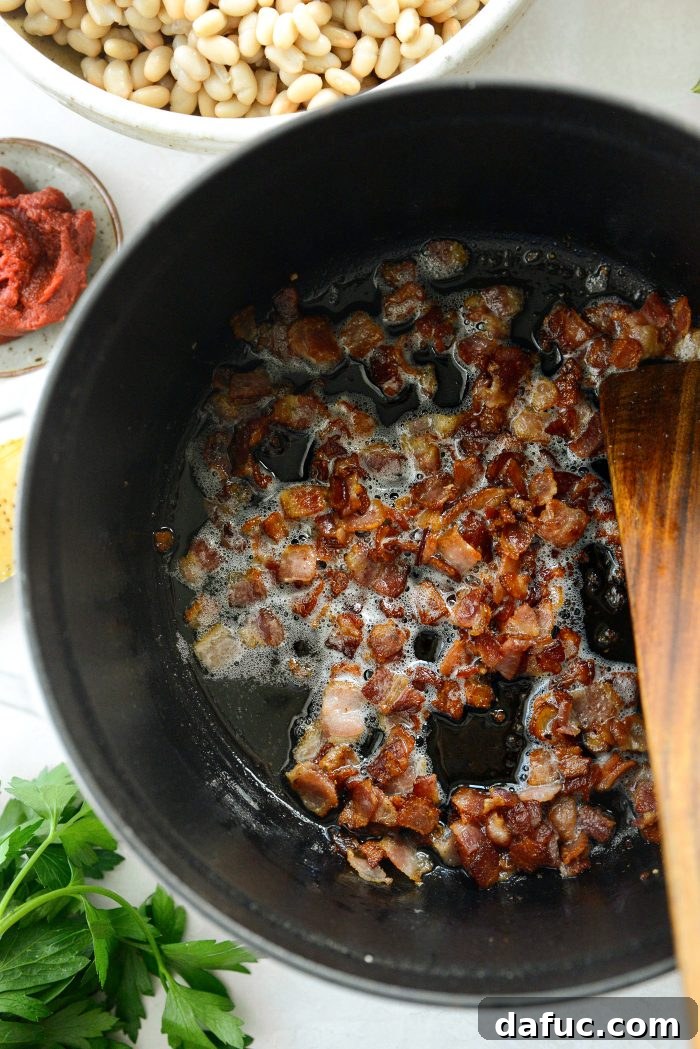
Once your bacon is wonderfully crispy and golden, use a slotted spoon to carefully remove the pieces from the pot. Transfer the cooked bacon to a plate lined with paper towels to drain any excess fat. Set this crispy bacon aside; we’ll incorporate half of it into the soup during the simmering process, and reserve the remaining half for a delightful garnish, ensuring maximum crunch and concentrated smoky flavor in every serving.

Critically, do not discard all that incredibly flavorful rendered bacon fat! Instead, remove and discard all but 2 tablespoons of the fat from the pot. This carefully measured amount of remaining fat will be the foundation for sautéing your vegetables, infusing them with an incredible smoky essence right from the very start. Remember, less is often more here; two tablespoons are perfectly sufficient to impart rich flavor without making the soup overly greasy.
2. Master Your Mise en Place: Preparing the Vegetables
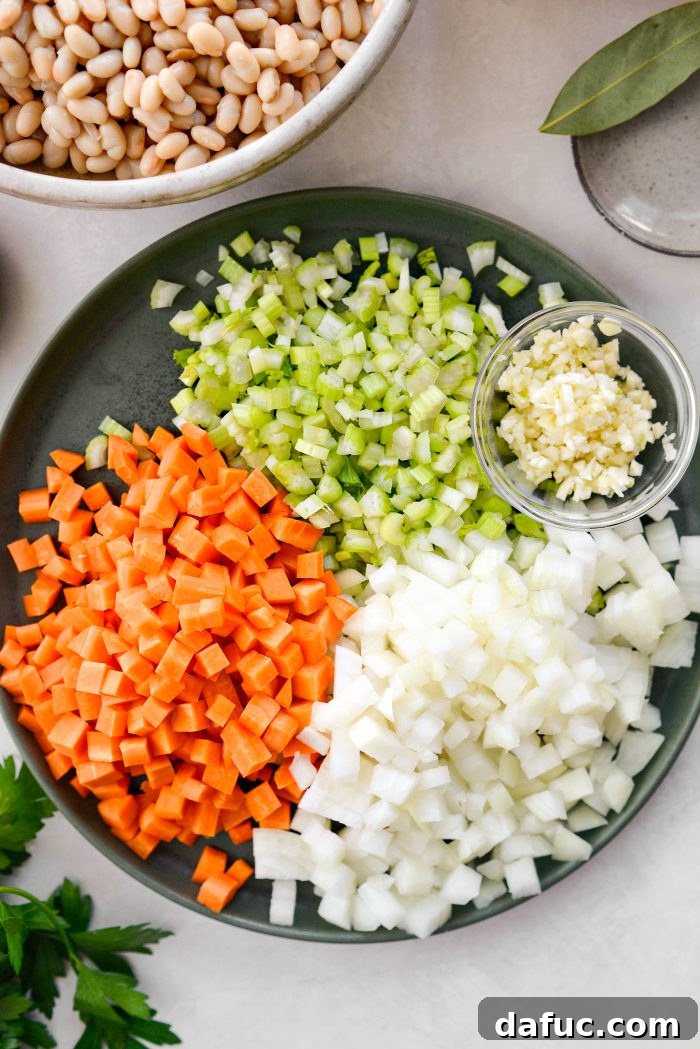
While the bacon is working its magic, it’s the opportune moment to practice your “mise en place” by preparing all your vegetables. This French culinary term, meaning “everything in its place,” ensures a smooth, stress-free cooking process. Finely dice 1 medium yellow onion (this should yield approximately 2 cups), 4 short stalks of celery (resulting in about 1 cup), and 2 large carrots (also roughly 1 cup). Next, mince 3 cloves of fresh garlic and finely chop 2 teaspoons of fresh thyme leaves. Having all your aromatic vegetables precisely prepped and ready to go before you begin building the soup is truly a game-changer, allowing for seamless transitions between cooking steps.
3. Artfully Building the Rich Flavors of Your Soup
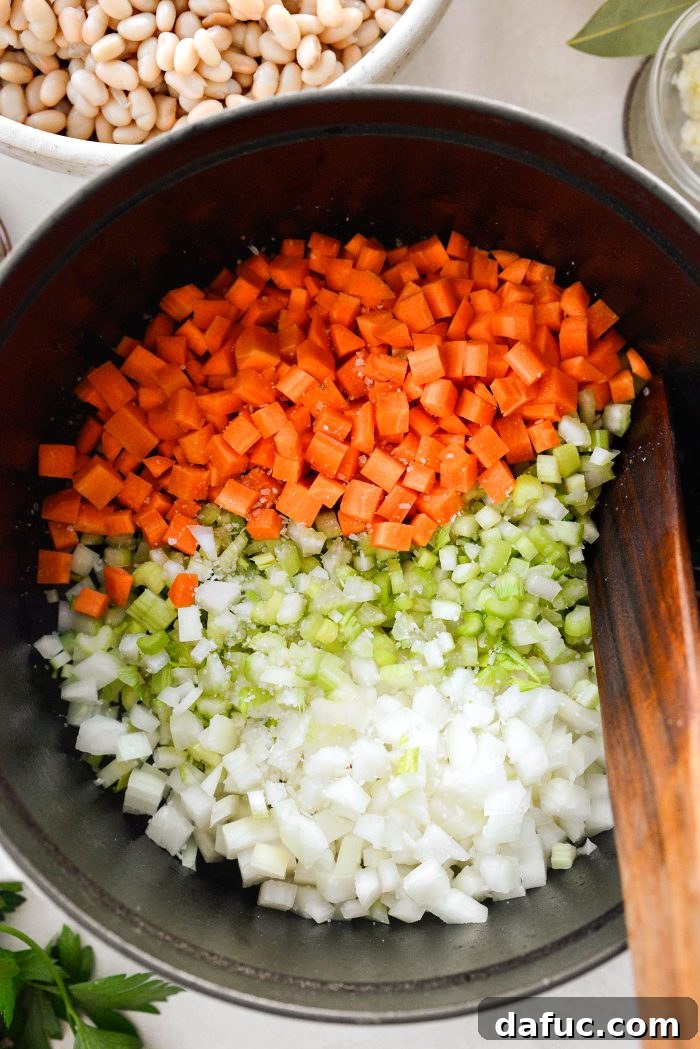
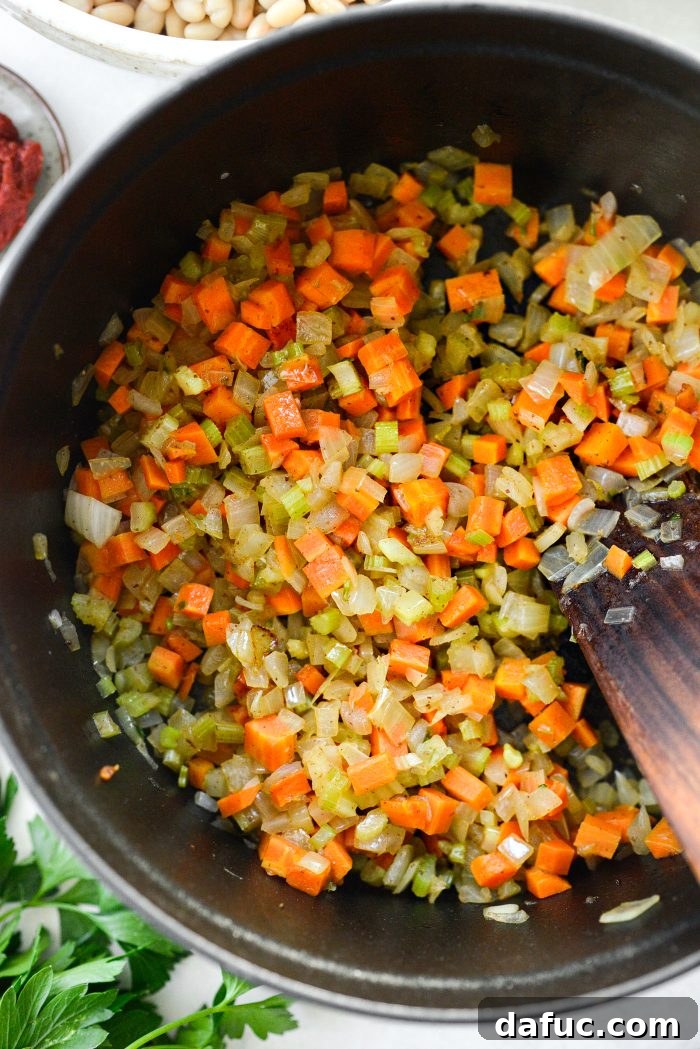
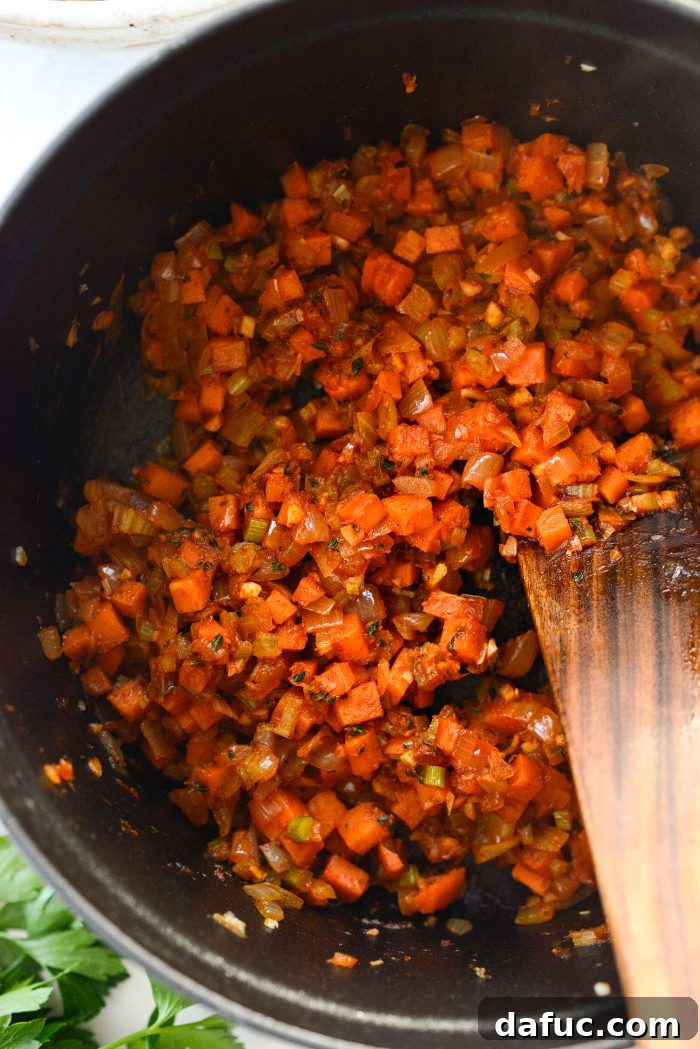
Return to your Dutch oven, which now holds the flavorful reserved bacon fat. Add the diced onion, carrot, and celery, along with a pinch of kosher salt. Stir the vegetables thoroughly, ensuring they are beautifully coated in the smoky bacon fat. Cook over medium-low heat for approximately 8 to 10 minutes, or until the vegetables have softened significantly and become tender, but not browned. Stir often to promote even cooking and to allow the vegetables to release their natural sugars, which contributes immensely to the soup’s eventual depth of flavor.
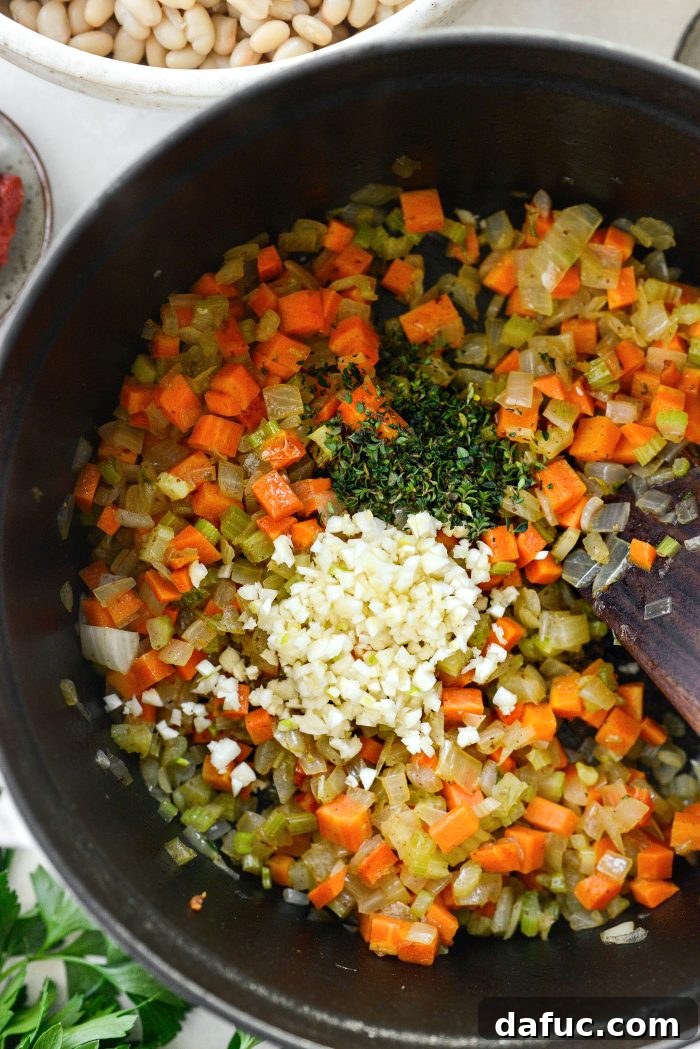
Next, introduce the minced fresh garlic and the aromatic chopped fresh thyme to the softened vegetables. Stir these potent ingredients in and cook for just 1 minute. Exercise caution here to avoid burning the garlic, as burnt garlic can impart a bitter taste to your soup; a quick sauté is all that’s required to fully release its wonderful fragrance and flavor.
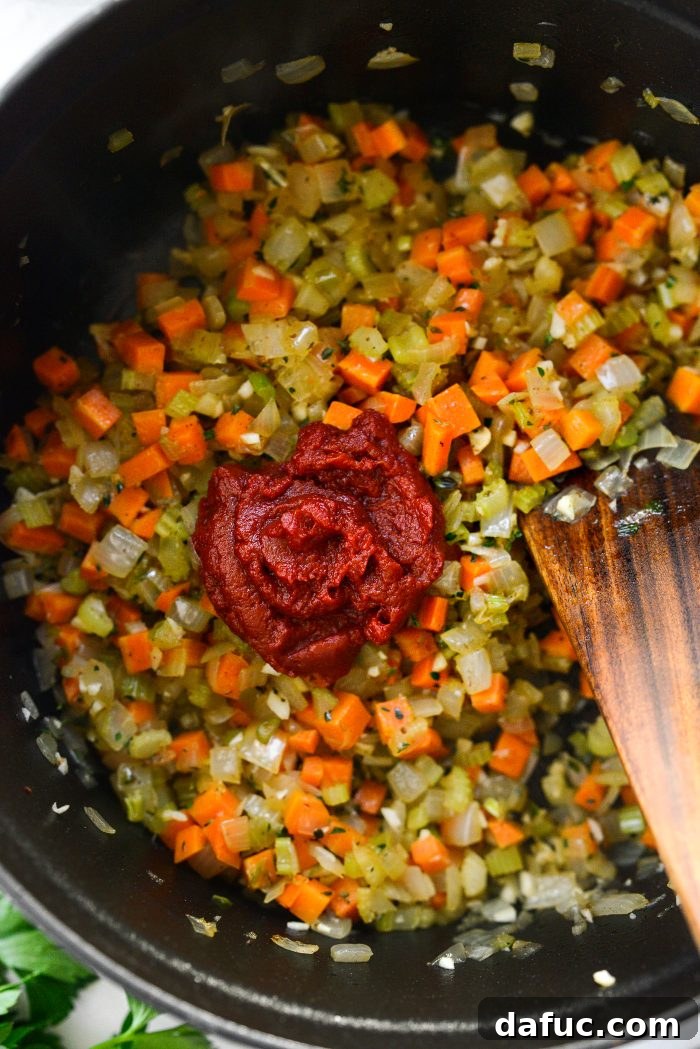
Now, incorporate 2 tablespoons of tomato paste into the pot. Stir it vigorously into the vegetable mixture and continue to cook for another 2 minutes, stirring continuously. This step is pivotal for building complex flavor; cooking the tomato paste helps to deepen its color and caramelize its natural sugars, intensifying its savory notes and eliminating any raw, metallic taste, ultimately resulting in a much richer, more complex broth.
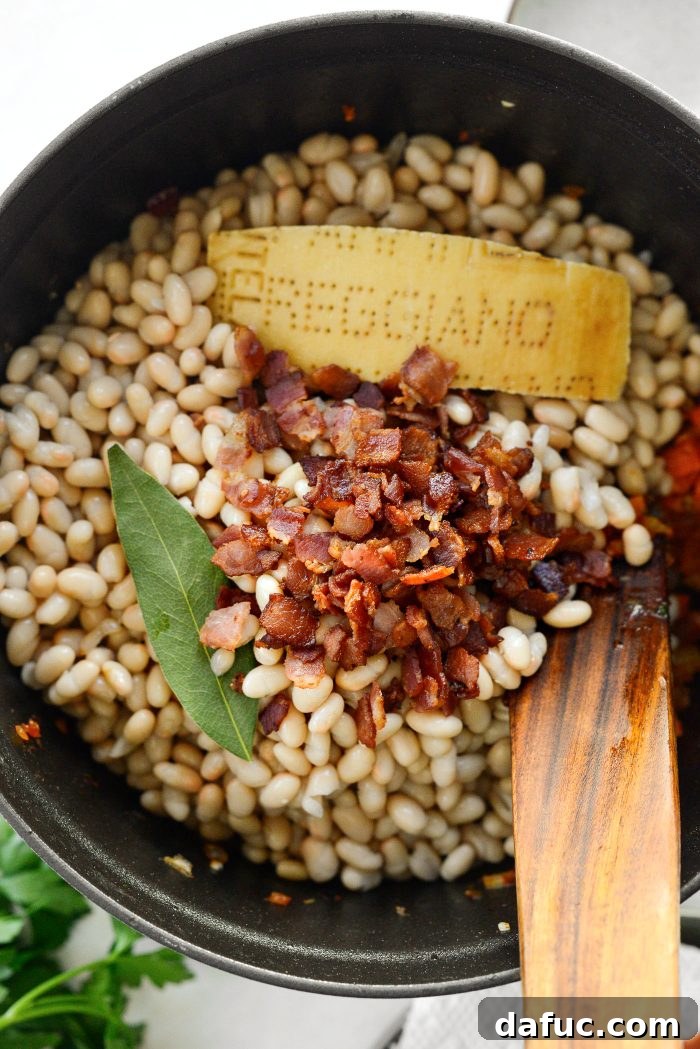
Once the tomato paste has had a chance to cook down and develop its flavor, it’s time to bring in the main players. Add the 3 (15-ounce) cans of thoroughly rinsed and drained navy beans, half of your crispy bacon (remembering to reserve the other half for garnish), 1 fragrant bay leaf, and the precious Parmesan cheese rind. These ingredients are now perfectly positioned to infuse the soup with incredible flavor as it gently simmers.
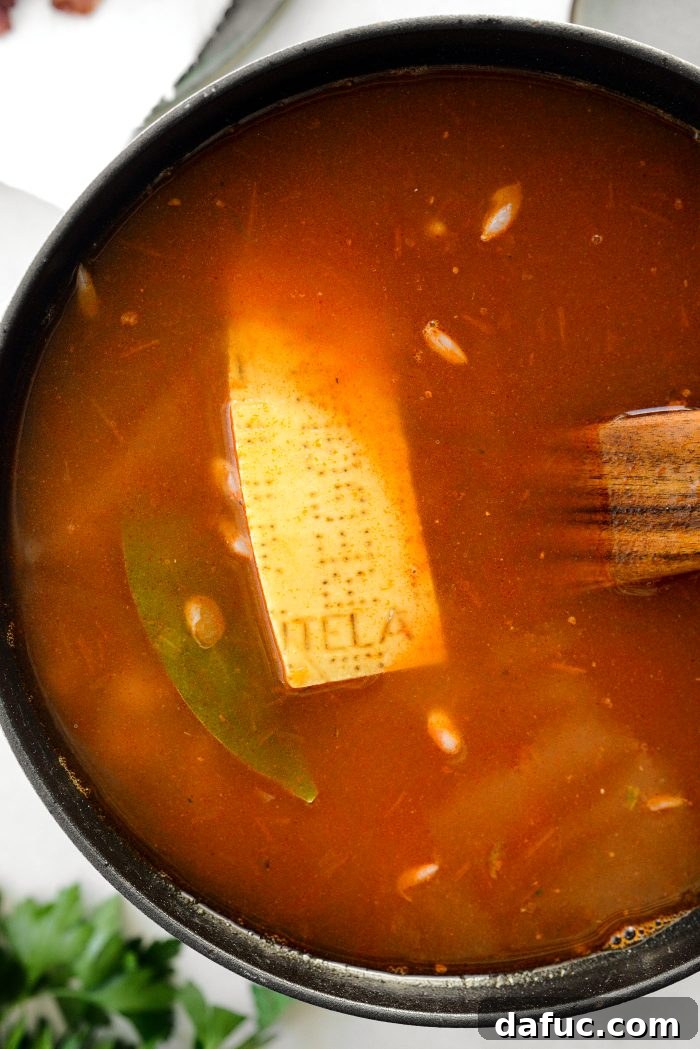
Pour in 8 cups (which equates to 2 quarts) of low-sodium chicken broth. Give everything a good, thorough stir to ensure all the ingredients are well combined and fully submerged in the flavorful liquid. This is the moment where all those wonderful aromas begin to meld and harmonize, promising a delicious outcome.
Cover the Dutch oven and bring the soup to a gentle simmer over medium heat. Once it reaches a steady simmer, slightly askew the lid (leaving a small gap for steam to escape) and reduce the heat to low. Allow the soup to simmer gently for a full 45 minutes, stirring only occasionally to prevent sticking. This slow, patient simmering process is absolutely key to allowing all the complex flavors to meld, deepen, and fully develop, creating a truly rich and harmonious soup. During this time, the Parmesan rind will work its magic, and the navy beans will absorb the savory broth, becoming incredibly tender and flavorful.


4. The Finishing Touches and Perfect Seasoning
After the soup has simmered for the recommended time and its flavors have fully developed, carefully remove and discard both the Parmesan cheese rind and the bay leaf. Their flavor contribution is now complete, and they’ve successfully infused your soup with incredible depth.

Finally, it’s time for the all-important step of seasoning. Taste the soup and carefully adjust the seasoning with kosher salt and freshly ground black pepper to match your personal preference. While this recipe typically calls for about 1.5 to 2 teaspoons of kosher salt and a generous amount (around ½ teaspoon or more) of freshly ground black pepper, your individual taste buds are the ultimate guide. Adjust as needed to bring out the very best in the soup; proper seasoning is key to elevating all the delightful flavors.

Serving Your Hearty Homemade Bean and Bacon Soup
Once seasoned to perfection, your homemade Bean and Bacon Soup is ready to be savored and enjoyed! Ladle the hot, fragrant soup into individual serving bowls. This recipe makes a substantial approximately 12 cups of soup, making it perfect for sharing with loved ones or enjoying delicious leftovers throughout the week.


For the ideal finishing touch, serve each bowl topped with an additional sprinkle of freshly ground black pepper, some of the gloriously reserved crispy bacon for an extra layer of crunch and smoky flavor, and a scattering of vibrant minced fresh parsley. A side of warm, crusty bread, a buttery biscuit, or a classic grilled cheese sandwich makes this hearty soup an unbeatable meal, perfect for a cozy night in or a satisfying lunch.

Tips for the Best Bean and Bacon Soup Every Time
Achieving the perfect homemade Bean and Bacon Soup is simple with these expert tips:
- Don’t Rush the Bacon: Cooking bacon slowly over medium-low heat is paramount for achieving maximum crispiness and for thoroughly rendering its flavorful fat. This slow process ensures that the foundation of your soup’s flavor is robust and well-developed.
- Build Flavor in Layers: Every single step in this recipe—from rendering the bacon fat to gently sautéing the vegetables, and from adding the pungent garlic and fragrant thyme to caramelizing the tomato paste—is designed to build layers of complex flavor. Resist the urge to skip or rush any of these crucial steps, as each contributes significantly to the final taste.
- The Parmesan Rind is a Game-Changer: While technically optional, incorporating a Parmesan rind into your simmering soup is a fantastic chef’s trick. It adds an incredible depth of savory umami without making the soup taste overtly cheesy. If you don’t have one on hand, a dash of Worcestershire sauce or a teaspoon of nutritional yeast can offer a similar savory boost.
- Always Taste and Adjust Seasoning: It’s imperative to taste your soup just before serving and adjust the salt and pepper to perfection. The sodium content in various broths can differ significantly, so always rely on your palate to achieve the ideal balance of flavors.
- Thicken if Desired: If you prefer a slightly thicker, more substantial soup, you can easily achieve this. Simply use the back of a spoon to mash some of the tender navy beans against the side of the pot, or carefully use an immersion blender for just a few seconds to create a creamier consistency.
Delicious Variations and Smart Substitutions
This Bean and Bacon Soup recipe is wonderfully versatile, allowing for easy customization to suit your taste or what you have on hand:
- Explore Different Beans: While navy beans are traditionally used and provide a classic texture, great northern beans or cannellini beans (white kidney beans) work beautifully as excellent substitutes, offering a slightly different but equally delicious character.
- Add More Vegetables: Feel free to enrich your soup with other hearty vegetables. Diced potatoes or sweet potatoes can be added during the initial vegetable sauté, or incorporate chopped spinach, kale, or collard greens in the last 10-15 minutes of simmering for added nutrition and vibrant color.
- Herb Alternatives: For a different aromatic profile, rosemary or sage can be substituted for, or added alongside, the fresh thyme. A blend of Italian herbs could also be a delightful choice.
- Introduce a Spicy Kick: If you appreciate a little heat, add a pinch of red pepper flakes along with the minced garlic and thyme to give your soup a pleasant, fiery warmth.
- Enhance Smoky Flavors: For an even deeper smoky profile, consider adding a teaspoon of smoked paprika when you cook the tomato paste. This intensifies the bacon’s essence without adding more meat.
Storage and Reheating Instructions
This Homemade Bean and Bacon Soup is a fantastic candidate for meal prepping! It stores exceptionally well in the refrigerator and often tastes even better the next day, as all the wonderful flavors continue to meld and deepen. Ensure the soup cools completely to room temperature before transferring it to airtight containers. It will safely keep in the refrigerator for up to 3-4 days. For longer storage options, divide cooled portions into freezer-safe containers or bags and freeze for up to 3 months. When ready to enjoy, thaw overnight in the refrigerator and reheat gently on the stovetop over low heat, or conveniently in the microwave. If the soup appears too thick after chilling or freezing, simply add a splash of extra chicken broth or water to achieve your desired consistency.
Looking for more comforting homemade meals to warm your soul? Click Here For More Delicious Homemade Soup Recipes!

Savor every heartwarming spoonful of this incredible Homemade Bean and Bacon Soup! If you give this cherished recipe a try, we would absolutely love to hear from you. Please share a photo of your culinary creation and tag us on Twitter or Instagram!


Print Recipe
Pin Recipe
Leave a Review »
Homemade Bean and Bacon Soup
Ingredients
- 12 ounces center cut bacon, diced
- 1 medium yellow onion, diced (about 2 cups)
- 2 large carrots, diced (about 1 cup)
- 4 short stalks celery, diced (about 1 cup)
- 3 cloves garlic, minced
- 2 teaspoons chopped fresh thyme
- 2 tablespoons tomato paste
- 3 (15 ounce) cans navy beans, rinsed and drained
- 1 parmesan cheese rind
- 1 bay leaf
- 8 cups low-sodium chicken broth
- 1½ teaspoons kosher salt, more or less to taste
- 1/2 teaspoon freshly ground black pepper, more or less to taste
- 2 tablespoons minced fresh parsley, for serving
Equipment
-
Lodge EC7OD13 Enameled Cast Iron Oval Dutch Oven, 7-Quart, Oyster White
Instructions
-
Add diced bacon to a cold 6-quart dutch oven. Cook over medium to medium-low heat until crispy. Once crispy use a slotted spoon to remove the bacon, and transfer to a paper towel lined plate. Set off to the side.
Remove all but 2 tablespoons of bacon fat from the pot.
-
To the fat in the pan, add the onion, carrot and celery with a pinch of kosher salt. Stir the vegetables, coating them in the bacon fat. Cook over medium-low heat for 8 to 10 minutes or until softened, stirring often.
-
Next, add in the garlic and thyme. Stir and cook for 1 minute. Then, add in the tomato paste. Stir and cook 2 minutes.
-
Next add in the navy beans, half of the crispy bacon, bay leaf and the parmesan cheese rind. Pour in the low-sodium chicken broth. Then give it all a stir. Cover and bring to a simmer over medium heat. With the the lid askew, simmer the soup stirring only occasionally for 45 minutes.
-
Once the soup has simmered, remove the parmesan cheese rind and bay leaf.
-
Lastly, taste and season the soup with kosher salt (about 2 teaspoons) and lots of freshly ground black pepper (about 1/2 teaspoon), or more or less to your personal taste.
-
Lastly, ladle the hot soup into bowls and serve topped with some of the reserved crispy bacon and minced fresh parsley.
Notes
This recipe was originally posted on December 5th, 2016 and has been thoughtfully updated with clear and concise instructions, captivating new photography, and additional helpful information to significantly enhance your cooking experience.