
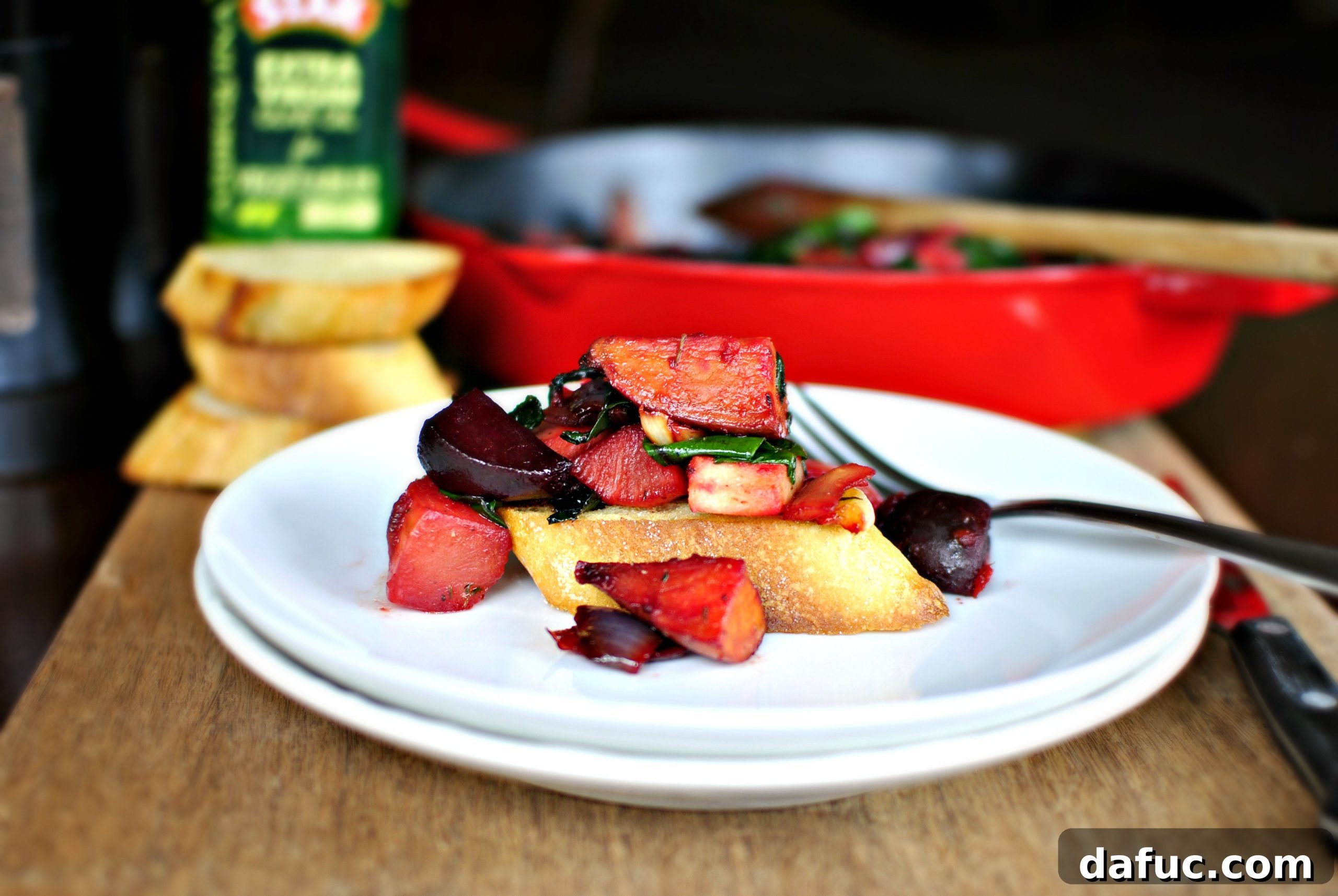
Root Vegetable Skillet Hash: A Hearty & Flavorful Anytime Dish
Transform your meals with this incredibly versatile and robust Root Vegetable Skillet Hash. Featuring a vibrant medley of beets, parsnips, turnips, and sweet potatoes, perfectly cooked with aromatic garlic and fresh thyme, this dish is a testament to the simple elegance of wholesome ingredients. Whether you’re seeking a deliciously healthy side dish, a rustic appetizer served with grilled bread and a dollop of creamy goat cheese, or a satisfying main course, this hash promises a burst of earthy flavors and comforting textures that will delight your palate.
Embracing the Earthy Goodness of Root Vegetables
Are you a fan of root vegetables? If so, you’re in for a treat! There’s something undeniably comforting and deeply satisfying about these subterranean treasures. Often overlooked, root vegetables are powerhouses of nutrition, offering a rich array of vitamins, minerals, and fiber. Their natural sweetness and earthy notes make them incredibly versatile in the kitchen, capable of transforming simple dishes into gourmet experiences.
This recipe celebrates the humble root vegetable by bringing together a harmonious blend of flavors and textures in one skillet. We’re talking about the star-studded cast of carrots (though the original list didn’t include carrots in the ingredient list, the intro mentioned them, so I will re-introduce them as an optional or similar type of root for elaboration, but stick to the recipe card for the specific ingredients: beets, parsnips, turnips, sweet potatoes), parsnips, turnips, and beets. Each vegetable contributes its unique character: the sweet earthiness of beets, the peppery bite of turnips, the nuanced sweetness of parsnips, and the comforting creaminess of sweet potatoes. Cooked to perfection with fragrant garlic, savory red onion, and fresh thyme, seasoned simply with salt and pepper, and a touch of olive oil, the result is a beautifully tender, buttery soft hash that’s ridiculously simple yet utterly delicious.
Imagine piling this warm, savory hash onto a piece of perfectly toasted baguette, perhaps with a generous spread of creamy goat cheese. It’s an experience that speaks to the soul, perfect for a cozy evening or an impressive appetizer for guests. This dish is not just food; it’s a celebration of nature’s bounty, promising a nourishing and flavorful meal.
Gather Your Wholesome Ingredients
One of the beauties of this root vegetable hash is its reliance on fresh, high-quality ingredients that are easily accessible. You won’t find a long, intimidating list here, just pure, unadulterated goodness. To create this rustic and delightful dish, you will need:
- Fresh, small beets (don’t forget to reserve their greens!)
- Medium turnips
- Medium parsnips
- A medium sweet potato
- A medium red onion
- Plump cloves of garlic
- Fresh thyme sprigs
- High-quality olive oil
- Kosher salt and freshly ground black pepper to taste
- And for serving: a crusty baguette and optional goat cheese
These ingredients, when combined and cooked with care, unlock a symphony of flavors that will make you fall in love with root vegetables all over again. The vibrant colors alone are enough to brighten any table, making this dish as visually appealing as it is delicious.
Preparing Your Vegetables for the Perfect Hash
The key to a successful hash lies in uniform chopping and thoughtful preparation. Taking the time to properly prepare each vegetable ensures even cooking and a delightful texture in every bite. Let’s get started on bringing these earthy gems to life.
Sweet Potatoes and Turnips: Foundations of Flavor
Begin by preparing your sweet potato. A quick scrub is all it needs, as we’ll be leaving the skin on. The skin of sweet potatoes is packed with an abundance of vitamins, minerals, and fiber, adding an extra layer of nutrition and a rustic texture to our hash. Once scrubbed, cube the sweet potato into bite-sized pieces. For the turnips, peel them to remove any tough outer layers, then chop them into pieces roughly the same size as your sweet potato cubes. This consistency in size is crucial for even cooking, ensuring all vegetables become tender at approximately the same rate.
Red Onion: The Aromatic Backbone
Next, grab your red onion. Its sweet yet pungent flavor will mellow beautifully as it cooks, creating a fantastic aromatic base for the hash. Cut the onion in half, then peel away the outer layers. Slice and dice the onion into large pieces. While smaller dice might cook faster, larger pieces will soften without disappearing entirely, contributing to the “chunky” and satisfying texture of the hash.
Parsnips: Sweet and Nutty Notes
Next, attend to your parsnips. Peel them to reveal their creamy white interior, then dice them into large, consistent pieces. Parsnips offer a delightful, slightly sweet, and nutty flavor that perfectly complements the other root vegetables in this hash, adding another layer of complexity to the overall taste profile.
Garlic: The Melting Flavor Bomb
For the garlic, we’re going with a wonderfully simple approach: smash and peel six cloves. There’s no need for tedious mincing here. The beauty of smashed garlic in this hash is that it gently infuses the entire dish with its potent flavor as it slowly melts into the vegetables, leaving behind a subtle sweetness rather than a sharp bite.
Beets and Their Greens: Vibrant Color and Unsung Heroes
Beets are truly the gems of the earth! While some might associate them with an “earthy” taste, those of us who adore them know they offer a unique sweetness and an unparalleled vibrant color. For this recipe, small beets are ideal, as they tend to be sweeter and more tender. Trim off the roots, but here’s a pro tip: don’t discard the leafy green tops! Beet greens are incredibly nutritious and delicious, and we’ll be incorporating them into the hash later. Set them aside for now.
Now, back to the beets themselves: quarter them and then dice into bite-sized chunks, keeping them consistent with the other vegetables. Yes, this skillet hash embraces a wonderfully chunky texture! As you handle the beets, you’ll notice a magical transformation: your fingers might turn a charming shade of pink. Don’t worry, it’s a badge of honor for working with fresh beets and will wash out in a few days!
Crafting the Perfect Root Vegetable Skillet Hash
With all your vegetables prepped, it’s time to bring them together in the skillet and transform them into a delicious hash. The cooking process is straightforward, focusing on building layers of flavor and achieving that ideal tender-crisp texture.
Building the Base: Sautéing for Flavor and Texture
Heat two tablespoons of olive oil in a large cast iron skillet over medium-high heat. A cast iron skillet is ideal for this dish as it retains heat exceptionally well, promoting even cooking and helping to form that desirable golden crust on the vegetables. Once the oil is shimmering, add all the prepped root vegetables and the smashed garlic to the skillet. Give them a good toss to ensure they are evenly coated in the oil. The next crucial step is patience: resist the urge to stir! Let the vegetables sit undisturbed for about 6-7 minutes. This allows them to develop a beautiful, flavorful crust on the bottom, adding depth and texture to the hash.
Infusing with Thyme and Steaming to Perfection
After the initial sauté, reduce the heat to medium. Stir the vegetables, then add the fresh thyme leaves. The warmth of the pan will immediately release their fragrant oils, infusing the hash with an herbaceous aroma. Immediately pour in 1/4 cup of water, then cover the skillet with a lid. This steaming process is key to tenderizing the root vegetables, allowing them to cook through without drying out. Let them steam for another 5-7 minutes, until they are fork-tender.
Adding the Beet Greens and Final Seasoning
While the root vegetables are steaming, remember those beet greens you set aside? Now is their time to shine! Give them a quick rinse and pat them dry, then roughly chop them. There’s no need for precision here; a rustic chop is perfect. These greens add a wonderful peppery note, a boost of nutrients, and an even more stunning pop of color to the hash.
Once the root vegetables are tender, remove the lid from the skillet. Stir in the chopped beet greens, cover the skillet again, and let them cook for just 2-3 minutes, until they are beautifully wilted. Finally, remove the lid, season the entire hash generously with kosher salt and freshly ground black pepper to taste, and give it one last stir. Continue to cook for a few more minutes, allowing any remaining water to evaporate, ensuring a perfectly textured hash. The resulting colors are simply outrageous – a true feast for the eyes and the palate!
Why yes, I’ll absolutely take a serving (or seven) of vibrant vitamins and essential minerals, with a generous side of pure deliciousness!
Serving Suggestions & Variations: Elevate Your Hash Experience
This root vegetable skillet hash is incredibly versatile, making it suitable for a variety of meals and occasions. Its robust flavors and satisfying texture lend themselves well to creative serving ideas.
The Classic Pairing: Toasted Baguette and Goat Cheese
For an appetizer that truly shines, grab a crusty baguette and slice it on an angle. Drizzle the slices generously with olive oil and toast them under your broiler for a few minutes until golden and crisp. The warmth and crunch of the bread provide a perfect contrast to the tender hash. For an extra touch of indulgence, spread a smear of tangy goat cheese on each toasted slice before piling the beautiful root vegetable skillet hash on top. Finish with a final drizzle of high-quality olive oil for a truly beauteous and unforgettable bite. This combination is a classic for a reason – the creamy, tart goat cheese perfectly balances the earthy sweetness of the vegetables.
The vibrant colors and artful presentation might make you think it’s dessert, almost too pretty to eat! But trust me, you’ll want to dig in. After all, if something looks this good, it’s practically begging to be enjoyed.
Beyond the Baguette: More Ways to Enjoy
- Hearty Breakfast or Brunch: Top a generous serving of this hash with a fried or poached egg for a truly satisfying start to your day. The runny yolk will create a luscious sauce that coats the vegetables beautifully.
- Accompaniment to Mains: This hash makes an excellent side dish for roasted chicken, pan-seared fish, or grilled steak. Its vibrant flavors and textures can stand up to richer proteins.
- Light Lunch: Serve a larger portion on its own for a wholesome and filling vegetarian lunch. A sprinkle of fresh herbs like parsley or chives can add extra brightness.
- Meal Prep Powerhouse: Make a large batch at the beginning of the week and enjoy it for several days. It reheats wonderfully and can be repurposed in various ways.
Creative Variations to Explore
Feel free to experiment and make this hash your own! Here are a few ideas:
- Add More Veggies: Incorporate other seasonal root vegetables like carrots, celery root, or even a different variety of potato.
- Spice it Up: A pinch of smoked paprika, a dash of cayenne pepper, or a few red pepper flakes can add a lovely kick.
- Herb Swaps: Rosemary or sage would also pair beautifully with these root vegetables, offering a different aromatic profile.
- Protein Boost: For a more substantial meal, stir in some cooked chickpeas, white beans, or even crumbled cooked sausage during the final minutes of cooking.
- Citrus Brightness: A squeeze of fresh lemon juice or a sprinkle of lemon zest at the end can brighten all the flavors.
Nutritional Highlights and Seasonal Appeal
This root vegetable skillet hash is the epitome of wholesome eating, especially during the cooler months. It brings together a symphony of ingredients, each contributing unique nutritional benefits:
- Beets: Rich in fiber, folate, manganese, potassium, iron, and Vitamin C. They are known for their anti-inflammatory and detoxifying properties.
- Sweet Potatoes: An excellent source of beta-carotene (which converts to Vitamin A), Vitamin C, manganese, and fiber. They offer a natural sweetness and complex carbohydrates.
- Parsnips: Provide a good dose of fiber, Vitamin C, Vitamin K, and folate. Their subtle sweetness becomes more pronounced when cooked.
- Turnips: A cruciferous vegetable, turnips are packed with Vitamin C, fiber, and calcium. They offer a slightly peppery flavor that adds depth.
- Beet Greens: Often discarded, these leafy greens are loaded with Vitamins A, C, and K, as well as calcium and iron, making them an incredible nutritional bonus.
- Garlic and Onion: Not only do they add incredible flavor, but they also contain beneficial compounds known for their immune-boosting and anti-inflammatory properties.
This dish is truly a celebration of fall and winter produce, making it the perfect comfort food during these seasons. Its hearty nature and warming flavors are exactly what you crave when the air turns crisp.
Enjoy this delightful Root Vegetable Skillet Hash! We absolutely love it, and we think you will too. If you give this recipe a try, please let us know your thoughts. We’d love to see your creations! Snap a photo and tag us on your favorite social media platforms.

Print Recipe
Pin Recipe
Leave a Review »
Root Vegetable Skillet Hash
Ingredients
- 12 ounce baguette
- 2 tablespoons olive oil, plus more for drizzling
- 6 cloves garlic, smashed and peeled
- 4 small beets, trimmed and quartered, reserve the beet greens
- 2 medium turnips, peeled and chopped into large pieces
- 2 parsnips, peeled and chopped into large pieces
- 1 medium sweet potato, scrubbed and chopped into large pieces
- 1 medium red onion, peeled and chopped into large pieces
- 2 sprigs fresh thyme, leaves removed from stem
- 1/4 cup water
- kosher salt
- freshly ground black pepper, to taste
Instructions
-
Slice the baguette on an angle. Arrange slices on a rimmed baking sheet, drizzle with olive oil, and bake in a preheated 400°F (200°C) oven until lightly toasted. Remove and set aside.
-
In a large cast iron skillet, heat the two tablespoons of olive oil over medium-high heat. Once hot, add the smashed garlic, chopped beets, turnips, parsnips, sweet potato, and onion. Stir to coat in oil, then leave undisturbed for about 6-7 minutes to allow a good crust to form on the bottom.
-
Reduce heat to medium, stir, then add the thyme leaves. Immediately pour in the 1/4 cup of water, cover, and let steam for 5-7 more minutes until vegetables are fork-tender. Remove the lid and add the chopped beet greens, stir, and cover for 2 minutes until wilted. Remove the lid, season generously with kosher salt and fresh ground black pepper, stir, and continue to cook until the vegetables are tender and most of the water has evaporated.
-
Serve the hash on toasted slices of baguette and drizzle with a little bit more olive oil over top. Optional: spread toasted baguette with goat cheese before adding hash.
Serving: 1serving,
Calories: 301kcal,
Carbohydrates: 53g,
Protein: 7g,
Fat: 7g,
Saturated Fat: 1g,
Polyunsaturated Fat: 1g,
Monounsaturated Fat: 4g,
Sodium: 424mg,
Potassium: 590mg,
Fiber: 7g,
Sugar: 9g,
Vitamin A: 5369IU,
Vitamin C: 22mg,
Calcium: 102mg,
Iron: 3mg