
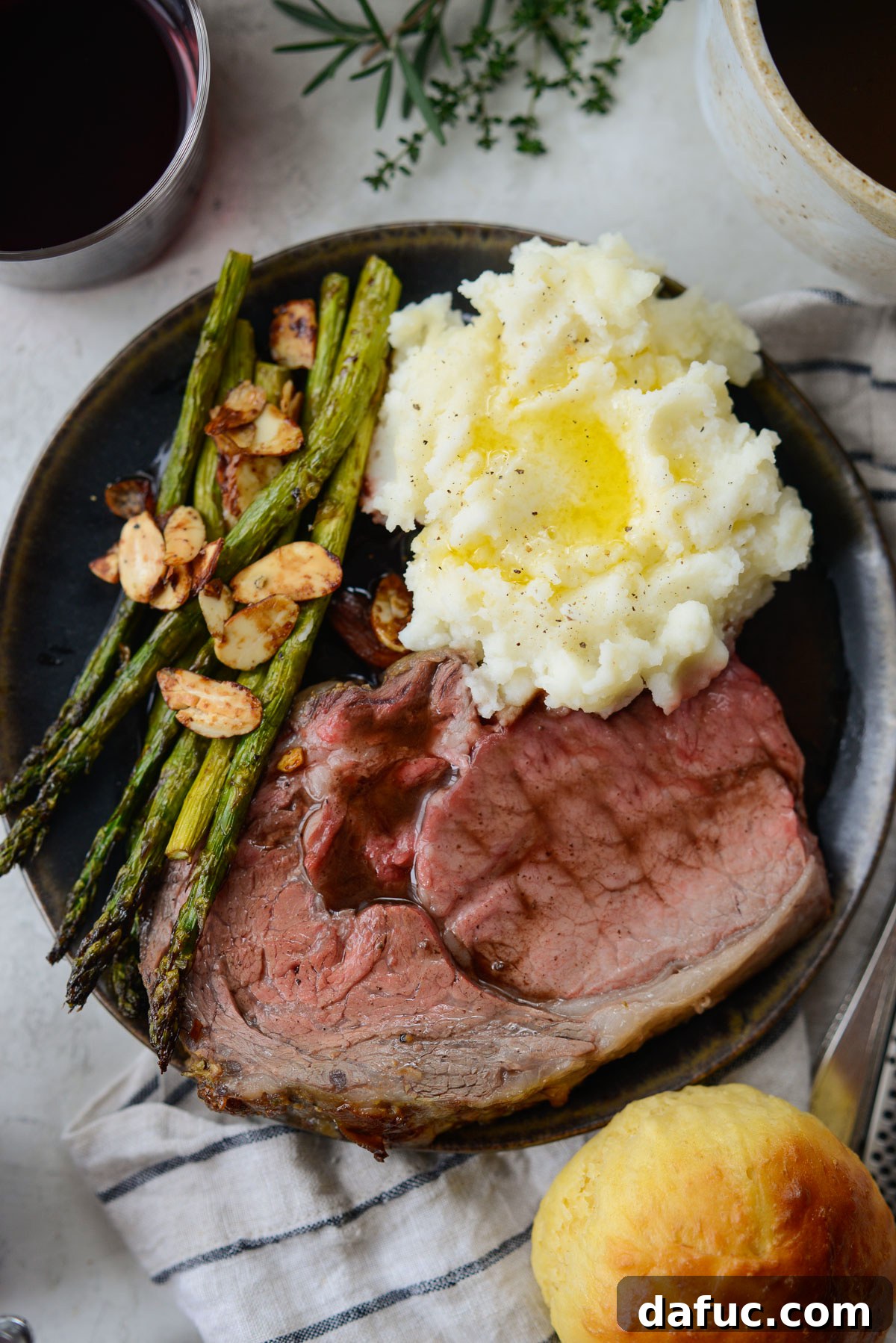
Prepare to impress with the ultimate centerpiece for any special occasion: our exquisite Dijon Rosemary Crusted Prime Rib Roast with Pinot Noir Au Jus. This recipe transforms a simple standing rib roast into a culinary masterpiece, boasting a rich, aromatic herb crust and served with a decadent, wine-infused au jus made from the succulent pan drippings. Perfect for holiday feasts, celebratory dinners, or simply a luxurious family meal, this dish promises an unforgettable dining experience that is surprisingly straightforward to achieve.
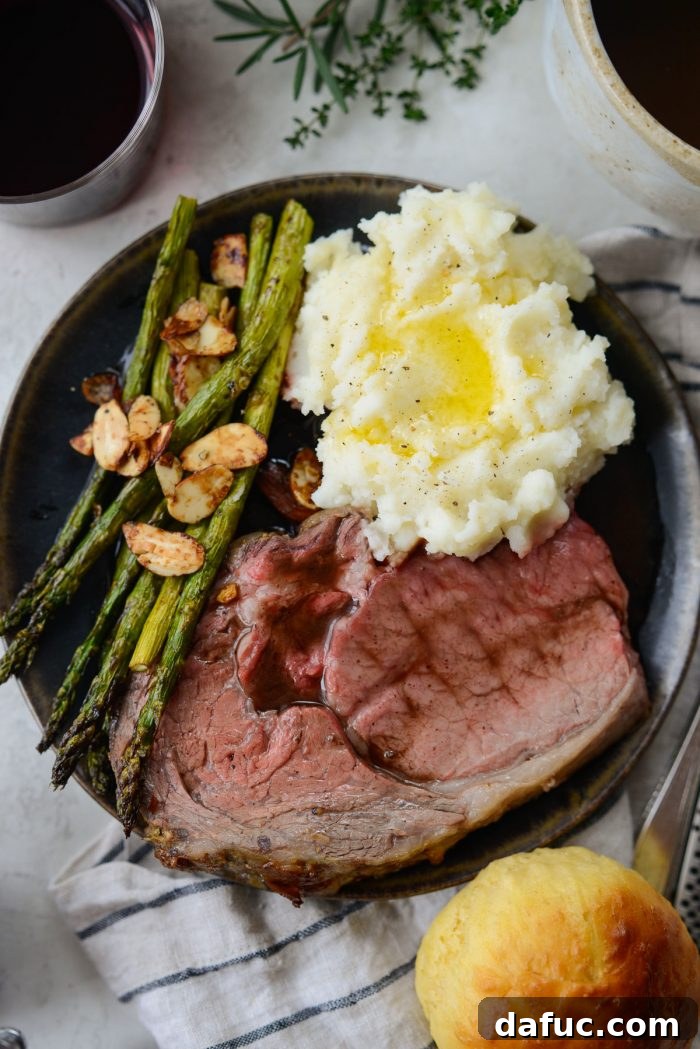
The Irresistible Appeal of Prime Rib
There’s something inherently festive and luxurious about a perfectly roasted prime rib. Its impressive appearance and melt-in-your-mouth tenderness make it the star of any table. Our Dijon Rosemary Crusted Prime Rib recipe elevates this classic by introducing a vibrant, savory herb rub that locks in moisture and develops an incredible crust during roasting. The addition of a rich Pinot Noir au jus takes it over the top, creating a symphony of flavors that will have your guests raving.
A Beloved Family Tradition
This particular prime rib recipe holds a special place in my heart, becoming a cherished holiday tradition for nearly a decade. I first discovered it in a Cooking Light Magazine back in 2011, drawn in by its promise of simplicity and exceptional flavor. From that very first Christmas Eve dinner, it was an instant hit. The ease of preparation combined with consistently delicious results has made it my go-to recipe every festive season since. There’s a comforting familiarity in preparing a dish that everyone anticipates and adores, and this prime rib never fails to deliver.
Understanding Your Prime Rib: Bone-in vs. Boneless
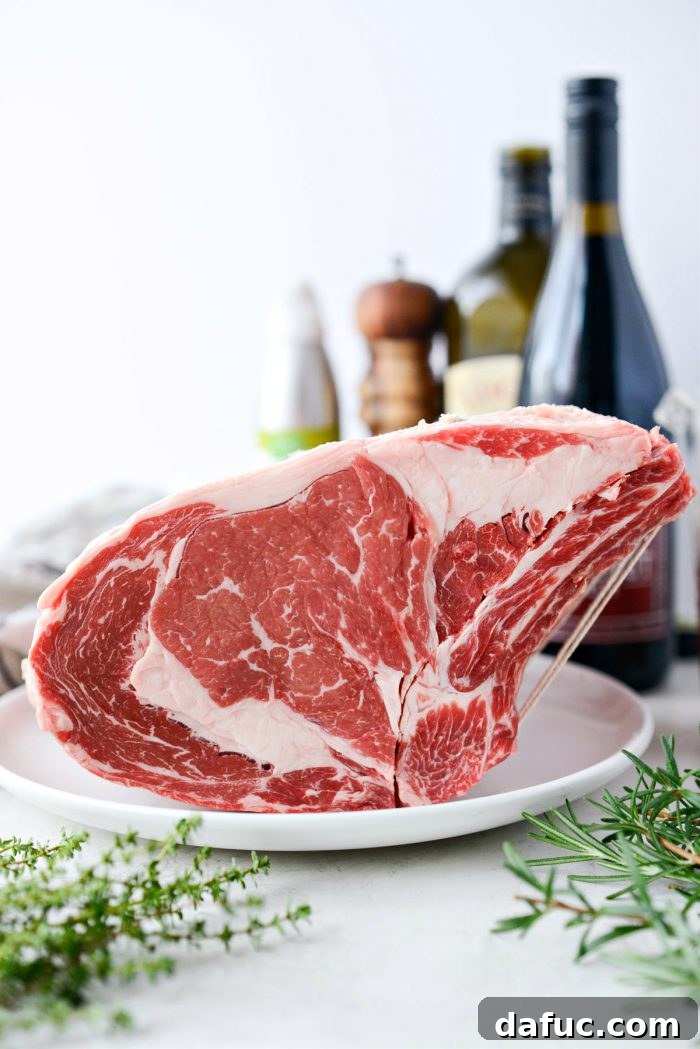
When selecting your prime rib, you’ll typically encounter two main options: bone-in (also known as a standing rib roast) and boneless. Both yield excellent results with this recipe, but there are a few differences to consider:
- Bone-in Standing Rib Roast: The bones contribute significant flavor to the roast and especially to the pan drippings, which are crucial for our Pinot Noir au jus. If opting for bone-in, I highly recommend asking your butcher to remove the bones and then tie them back onto the roast. This makes carving much easier after cooking, while still allowing the bones to impart their flavor. If your butcher is unavailable, a sharp knife and kitchen twine can accomplish this at home. Keep in mind that bone-in roasts generally require a longer cooking time.
- Boneless Prime Rib Roast: This option offers convenience, as it’s easier to carve and typically cooks faster. While you might miss out on some of the bone-derived flavor, the Dijon rosemary crust and the robust au jus will ensure your boneless roast is still incredibly flavorful.
Regardless of your choice, ensuring your roast is brought to room temperature before cooking is a critical step for even cooking. For an 8-pound roast, this usually means letting it sit on the counter for 1 to 1.5 hours.
Gathering Your Essential Ingredients
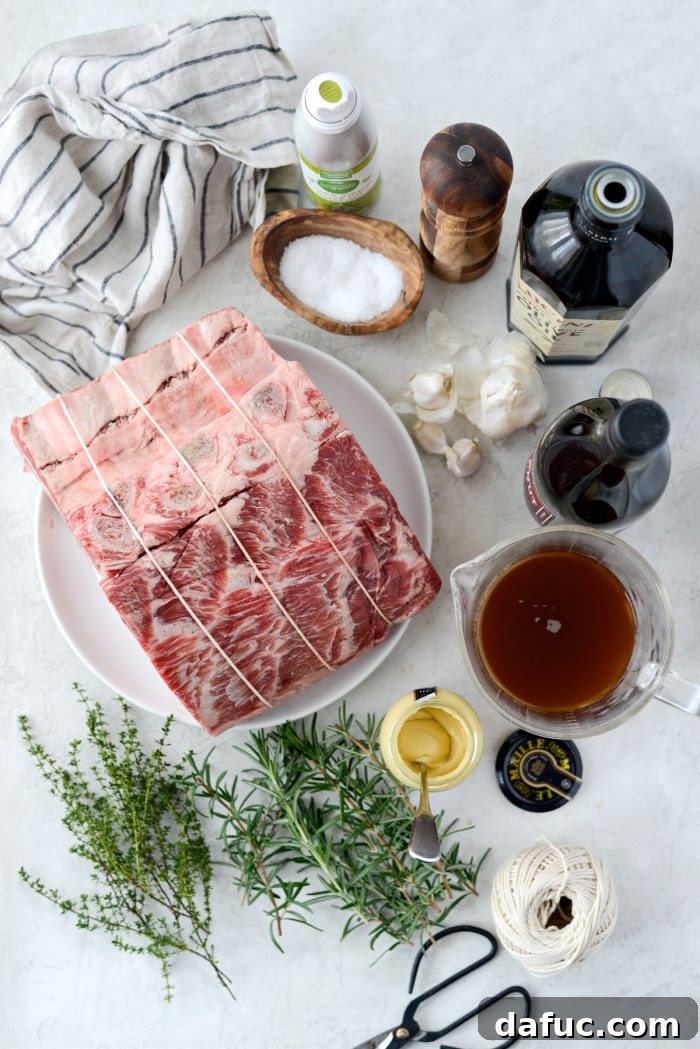
The beauty of this recipe lies in its relatively simple yet incredibly flavorful ingredient list. Here’s what you’ll need to create this show-stopping prime rib:
- Standing Rib Roast: The star of the show, bone-in or boneless, typically an 8-pound cut.
- Garlic: Fresh garlic provides a pungent, aromatic base for the rub.
- Thyme: Earthy and slightly minty, fresh thyme pairs beautifully with beef.
- Rosemary: Piny and highly fragrant, fresh rosemary is a classic accompaniment to prime rib, creating an unforgettable aroma and flavor.
- Dijon Mustard: The secret weapon for the crust! Dijon adds a tangy, savory kick and helps tenderize the meat while ensuring the herbs adhere perfectly, forming a delicious crust.
- Olive Oil: Binds the rub ingredients and contributes to browning.
- Kosher Salt & Coarse Ground Black Pepper: Essential for seasoning the meat generously and enhancing all other flavors.
- Olive Oil Spray: Prevents sticking to the roasting rack.
- Low-Sodium Beef Broth: Used in the roasting pan to create steam and contribute to the au jus.
- Pinot Noir: A dry, fruit-forward red wine that forms the base of the decadent au jus. Choose a quality wine you’d enjoy drinking, as its flavor will concentrate significantly.
Step-by-Step Guide: Crafting Your Masterpiece
Making this Dijon Rosemary Crusted Prime Rib Roast is a rewarding process. Follow these detailed steps to ensure a perfect result every time.
1. Prepare the Roast
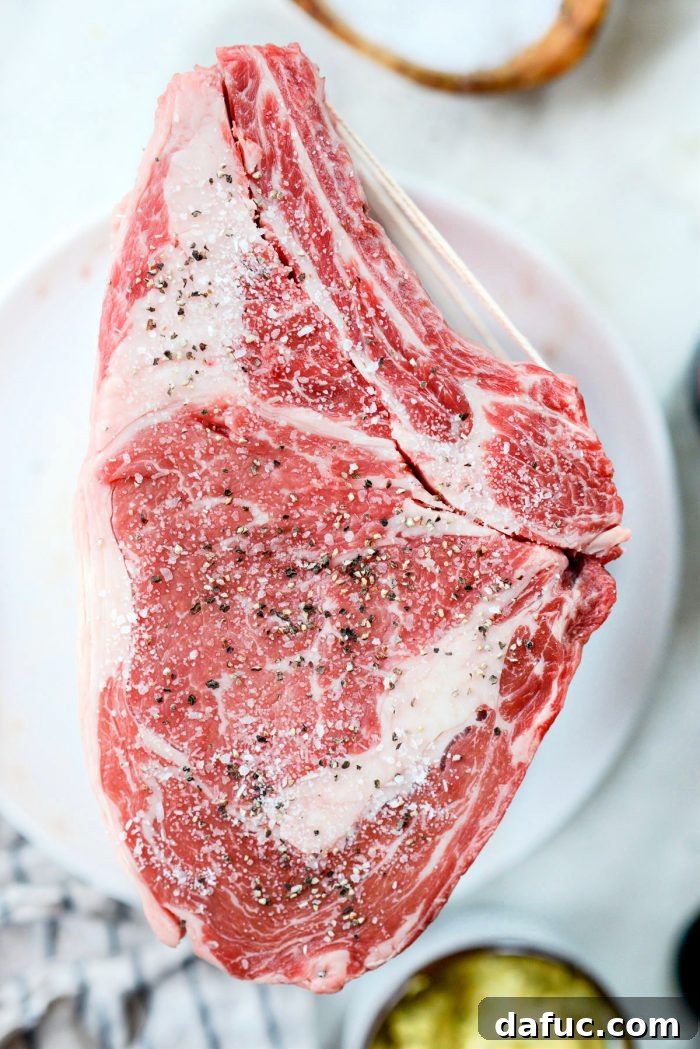
Begin by removing your prime rib roast from the refrigerator and letting it sit on your kitchen counter for 1 to 1.5 hours. This crucial step allows the meat to come closer to room temperature, ensuring it cooks more evenly from edge to center. While the roast is tempering, take this opportunity to trim any excessively thick pieces of exterior fat. A thin layer of fat is desirable for flavor and moisture, but large, untrimmed sections can render excessively and prevent proper crust formation. Season the entire roast generously with kosher salt and freshly ground black pepper. Don’t be shy – this large cut of meat needs ample seasoning!
2. Making the Aromatic Dijon-Herb Rub
The star flavor component of this prime rib is its savory, pungent crust. To prepare the Dijon rosemary mixture:
-
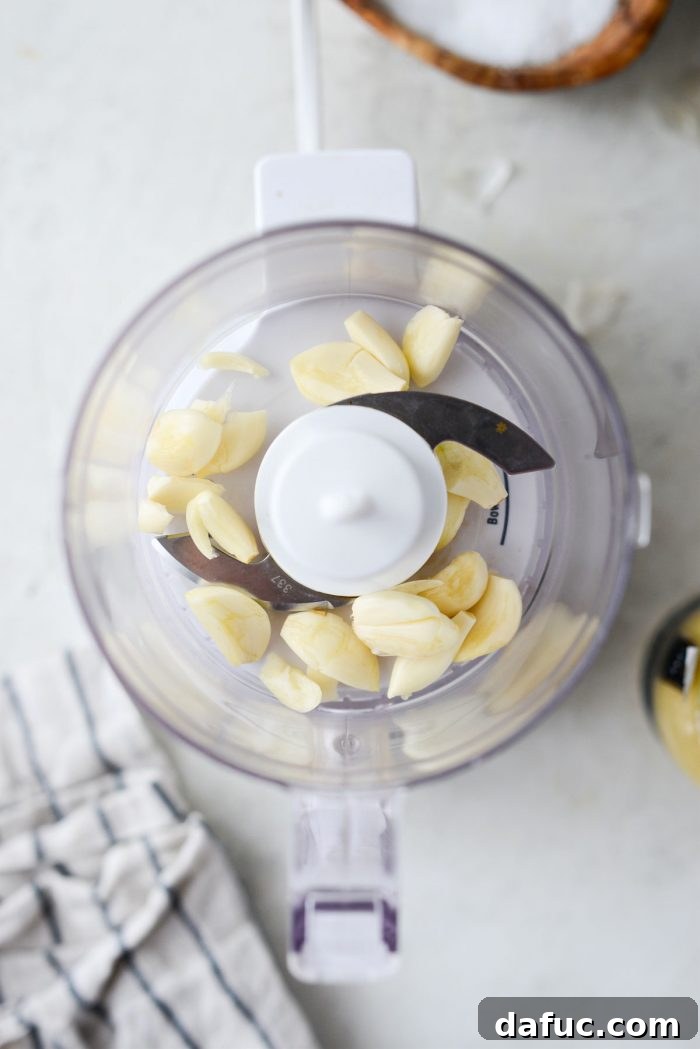
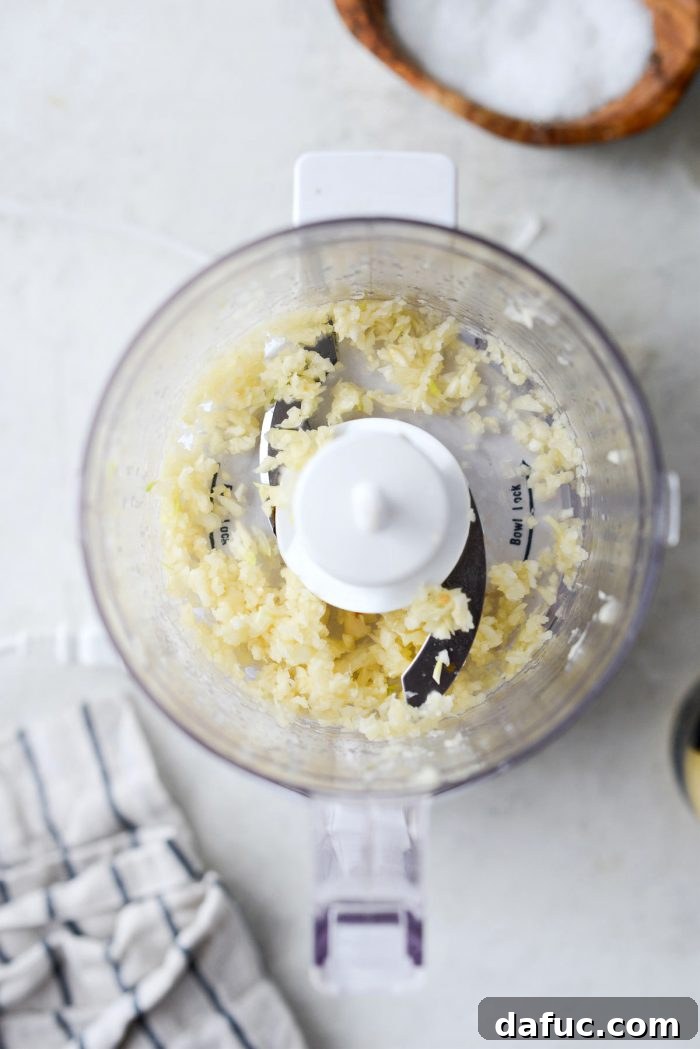
Mince the Garlic: Place 6 smashed and peeled garlic cloves into a mini food processor. Pulse until the garlic is very finely minced. The smaller the pieces, the more evenly distributed the flavor will be.

-
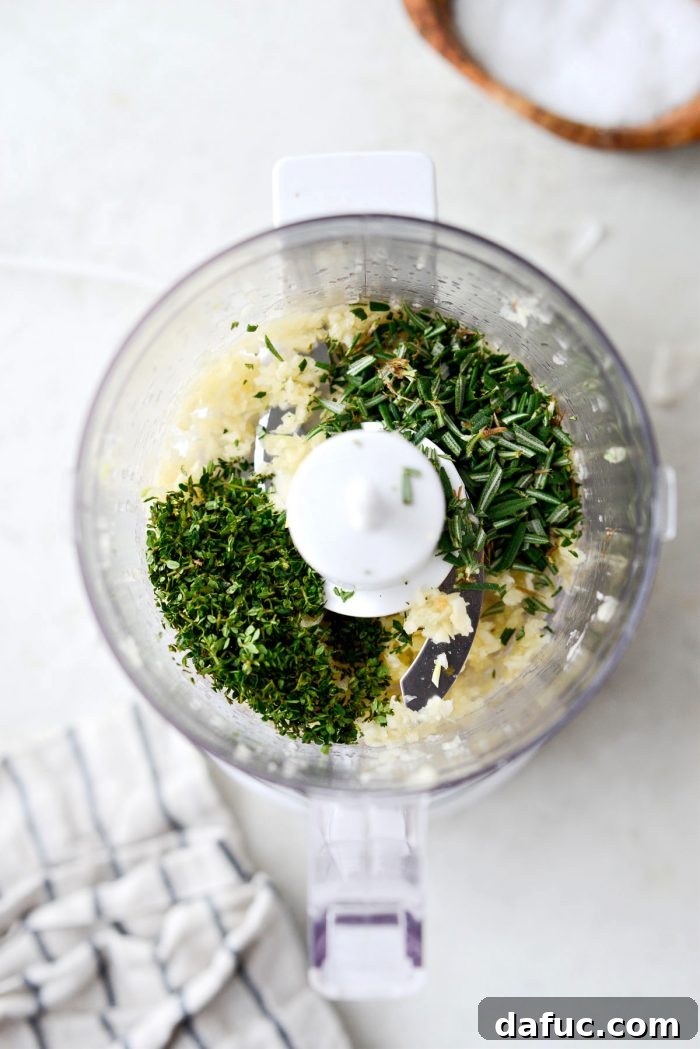
Add Fresh Herbs: To the minced garlic, add 2 tablespoons of chopped fresh thyme leaves and 1.5 tablespoons of chopped fresh rosemary. Fresh herbs are essential here for their vibrant flavor and aroma.
-
Incorporate Dijon and Olive Oil: Pour in 1/3 cup of Dijon mustard and 1.5 tablespoons of olive oil.
-
Blend to Combine: Secure the lid on your food processor and pulse until all the ingredients are thoroughly combined into a fragrant, spreadable paste.
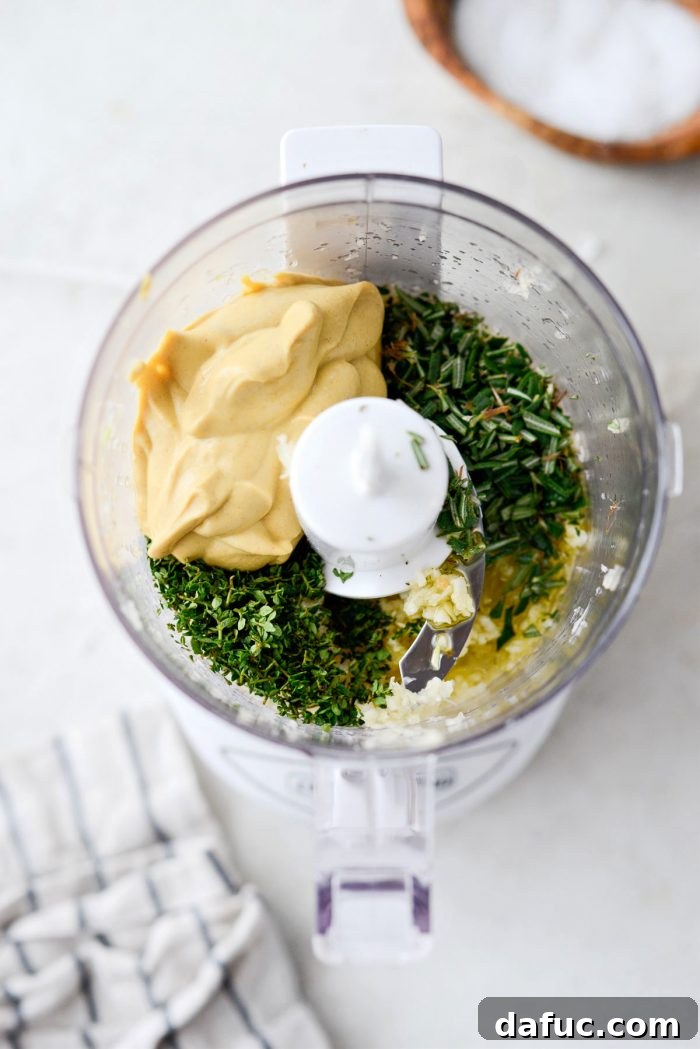
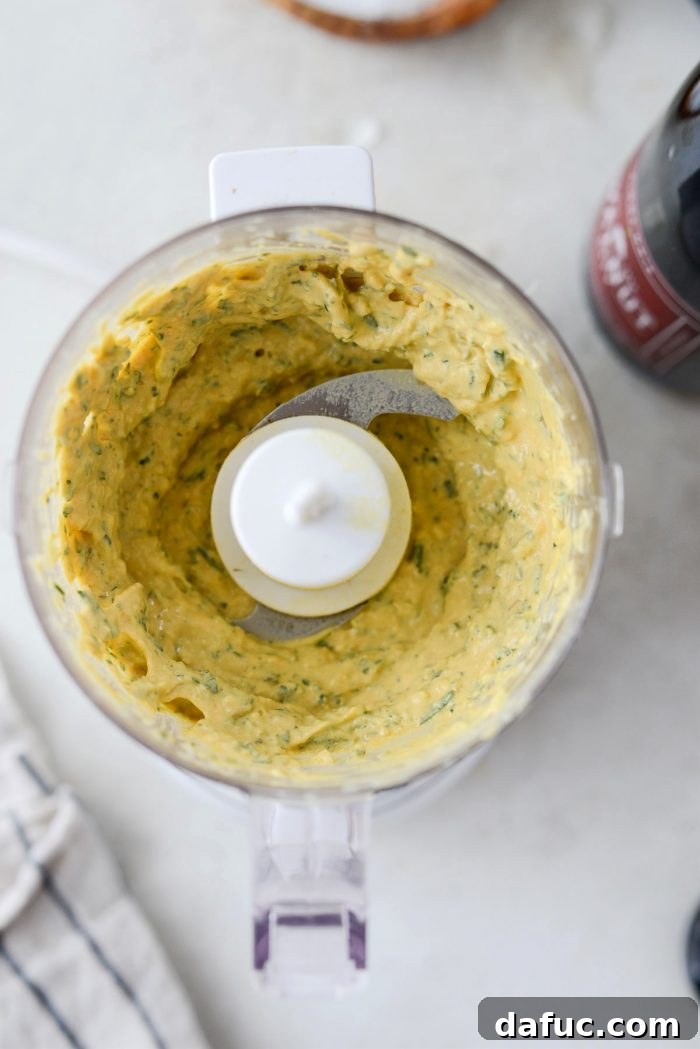
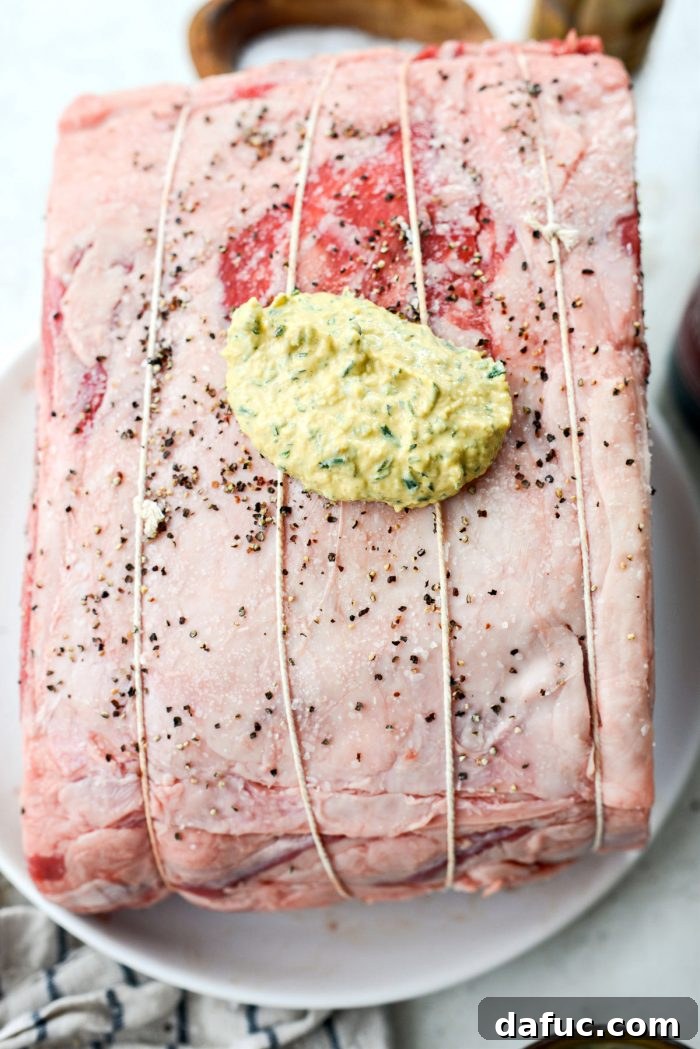
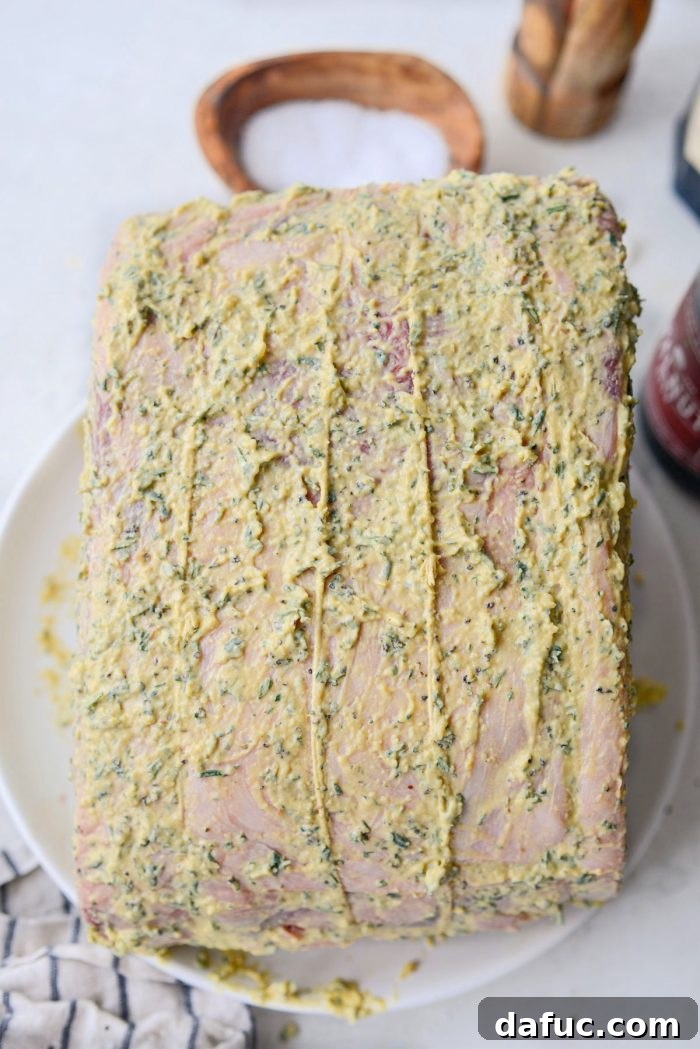
This flavorful rub can be prepared up to a day in advance and stored in the refrigerator, saving you precious time on cooking day. Once the rub is ready, use your clean hands to generously coat the entire prime rib roast. Ensure every surface is covered with the fragrant mixture, forming an even layer. The aroma alone is enough to get your mouth watering!
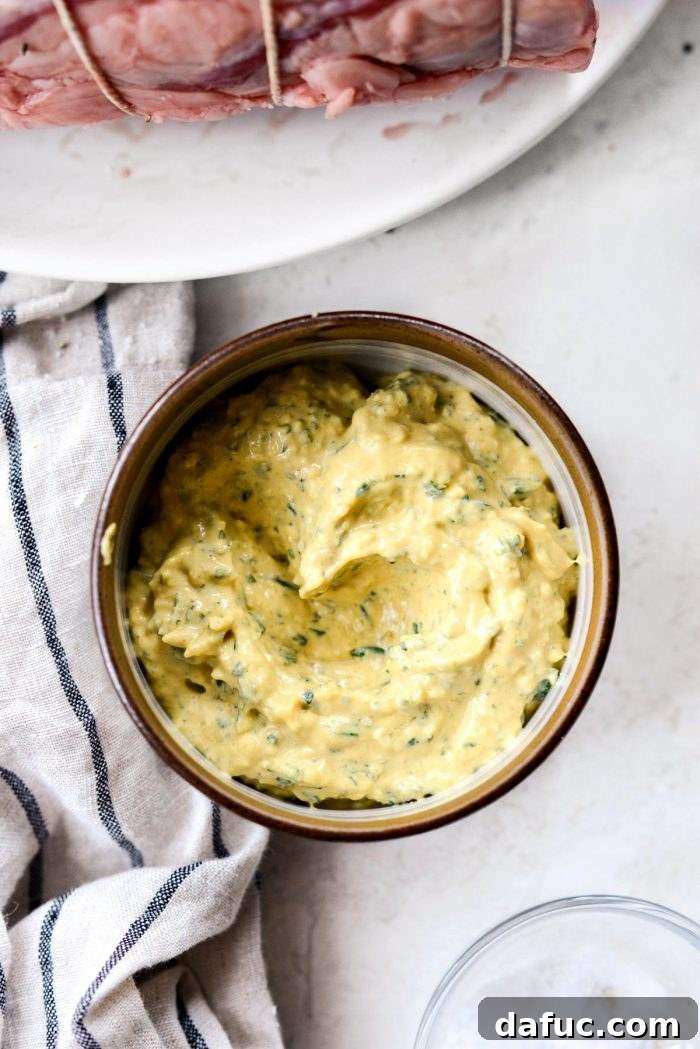
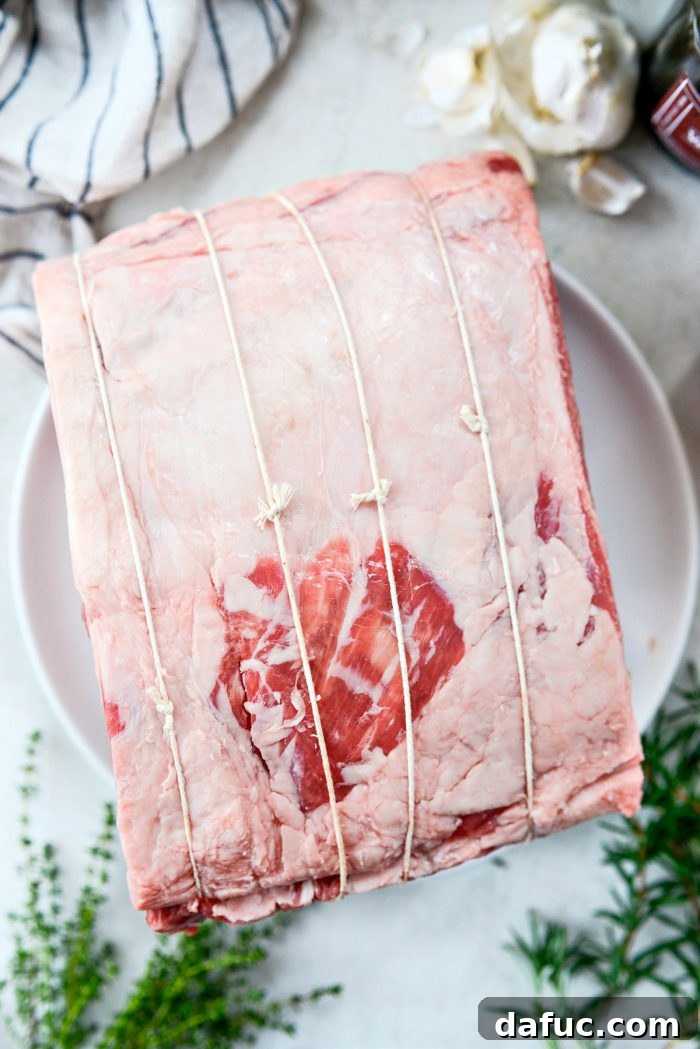
3. Roasting to Perfection
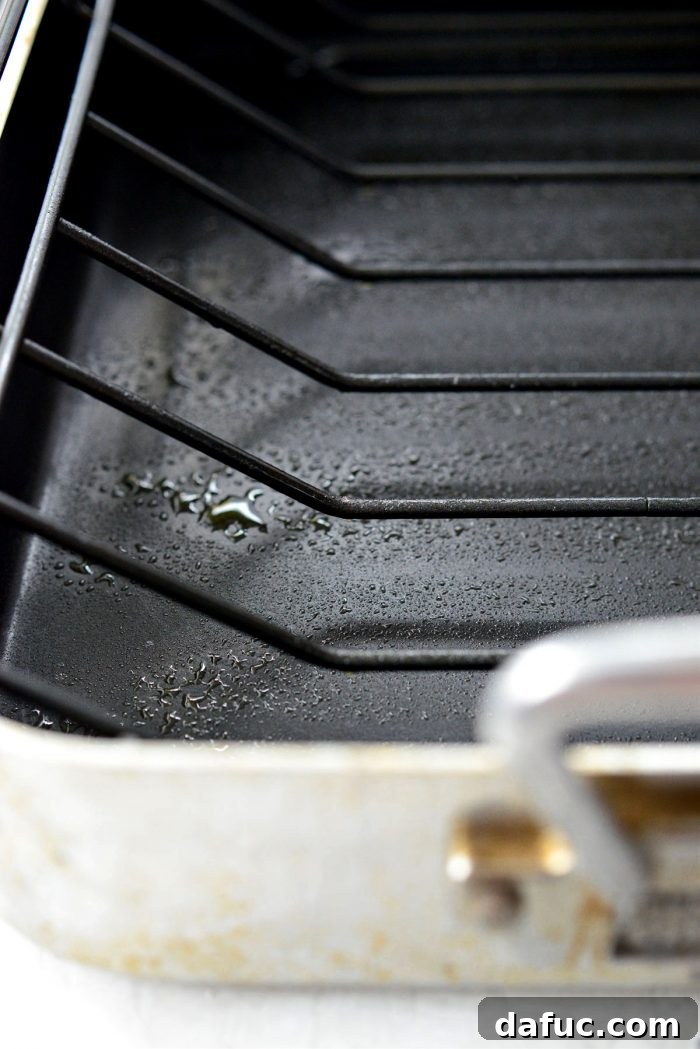
Before you begin roasting, ensure your oven rack is adjusted to accommodate the height of your roasting pan and the prime rib. For smaller ovens, placing the rack on the lowest position is often necessary. Preheat your oven to a high temperature of 400℉ (200℃). While the oven preheats, spray your roasting rack with olive oil spray to prevent the roast from sticking. Place the prepared prime rib, fat-side up, onto the roasting rack set in a large roasting pan.
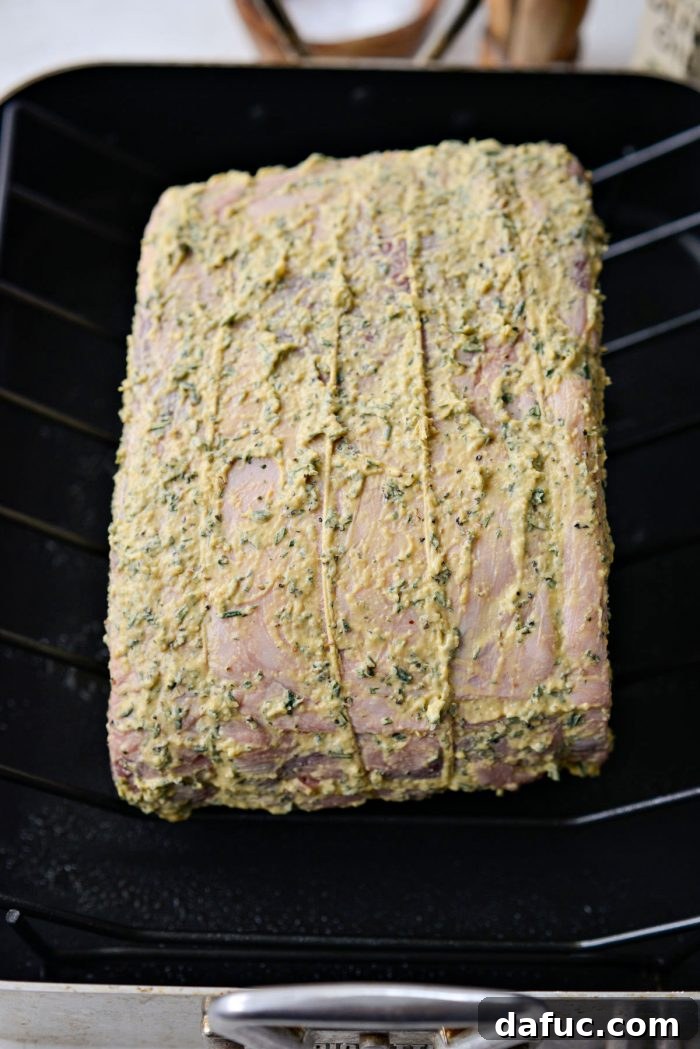
The key to a perfectly cooked prime rib is an accurate internal thermometer. Insert an oven-safe digital thermometer into the thickest part of the roast, making sure it doesn’t touch any bones. Proper insertion is vital for an accurate reading. Set your thermometer to alert you when the internal temperature reaches 135℉ (57℃) for a perfect medium-rare doneness.
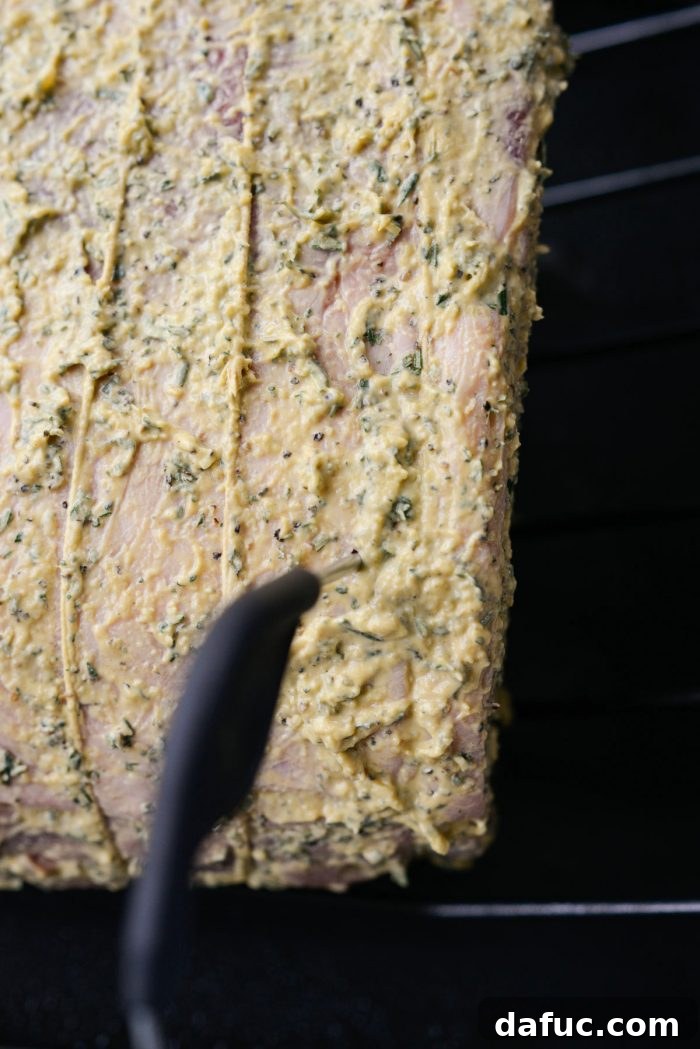
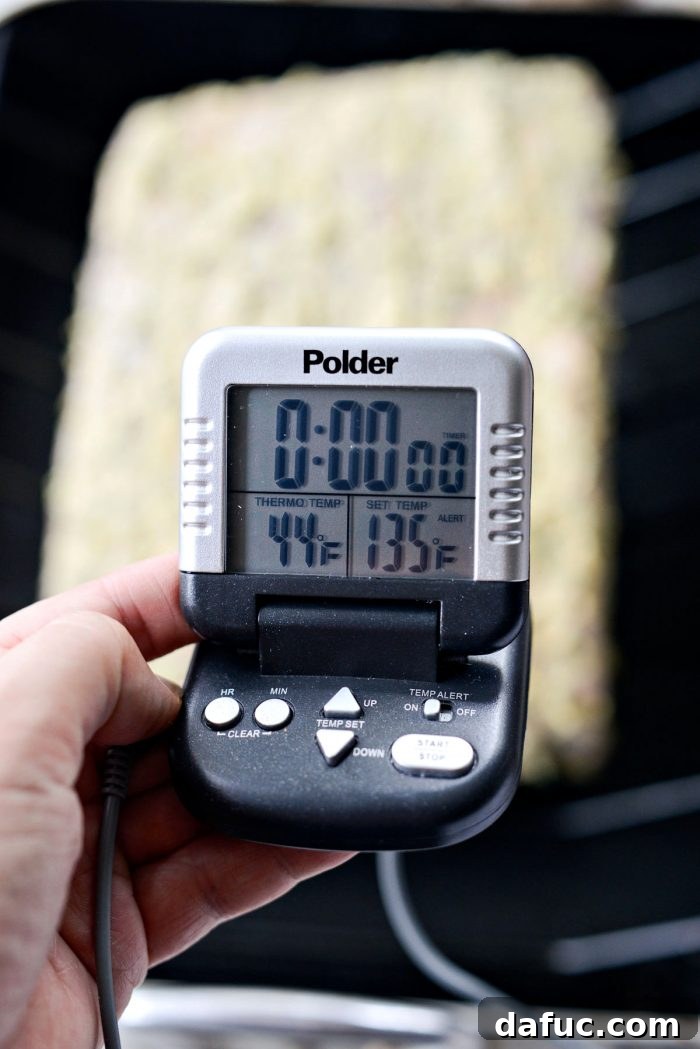
Slide the roast into your preheated oven. Start by roasting at 400℉ (200℃) for 30 minutes. This initial high heat creates a beautiful, flavorful crust on the exterior. Crucially, without opening the oven door, reduce the oven temperature to 350℉ (180℃) and continue roasting for another 30 minutes. Keeping the door closed preserves the internal heat, allowing the crust to fully develop.
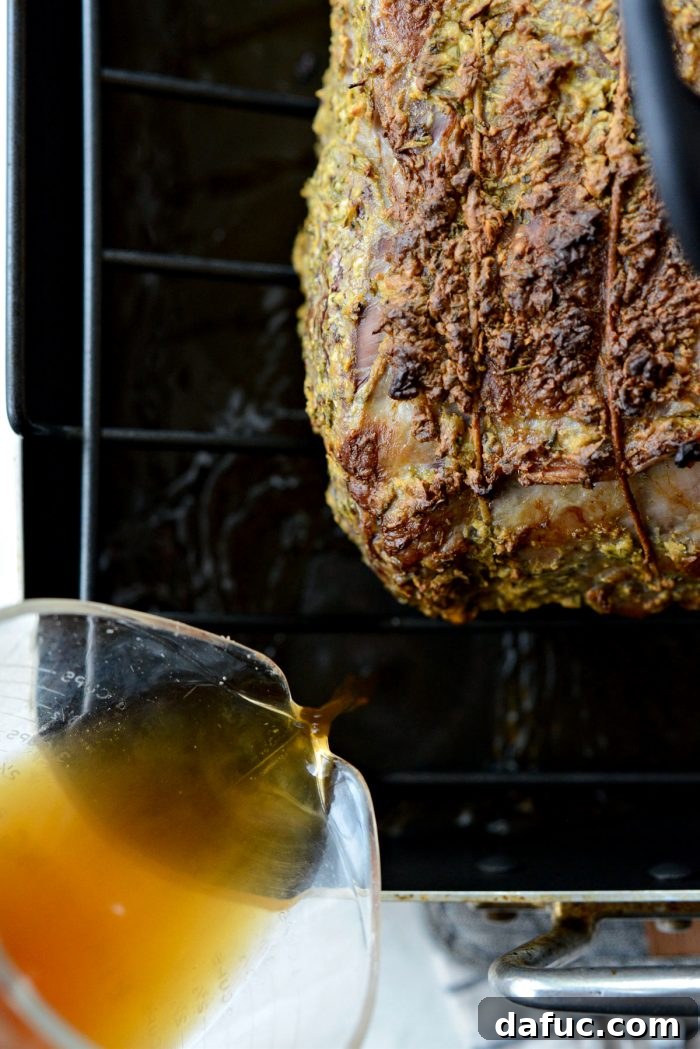
After the first hour of roasting is complete, remove the roast from the oven and carefully pour 2 cups of beef broth into the bottom of the roasting pan. This broth will help moisten the pan drippings and form the foundation for your delicious au jus. Return the roast to the oven and continue cooking until your digital thermometer registers 135℉ (57℃) for medium-rare.
4. The Crucial Resting Period
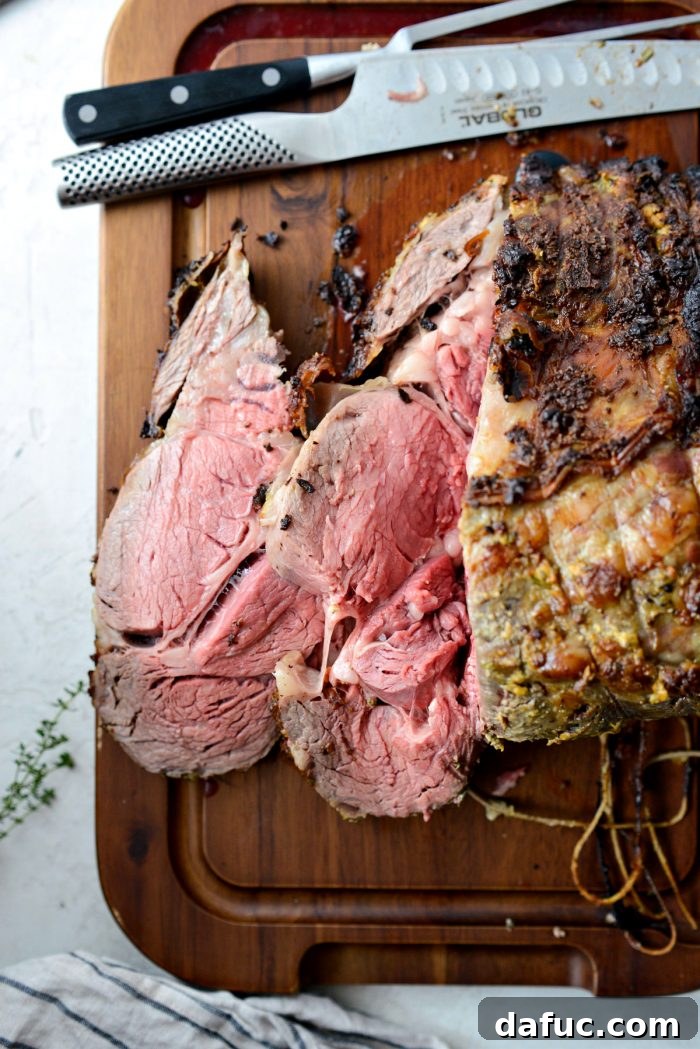
Once your prime rib reaches the desired internal temperature, remove it from the oven and transfer it from the roasting rack to a clean carving board. Loosely tent the roast with aluminum foil and allow it to rest for 15 to 20 minutes. This resting period is non-negotiable! It allows the juices within the meat to redistribute, resulting in a more tender, succulent, and flavorful roast. During this time, the internal temperature of the roast will continue to rise by a few degrees (known as carry-over cooking).
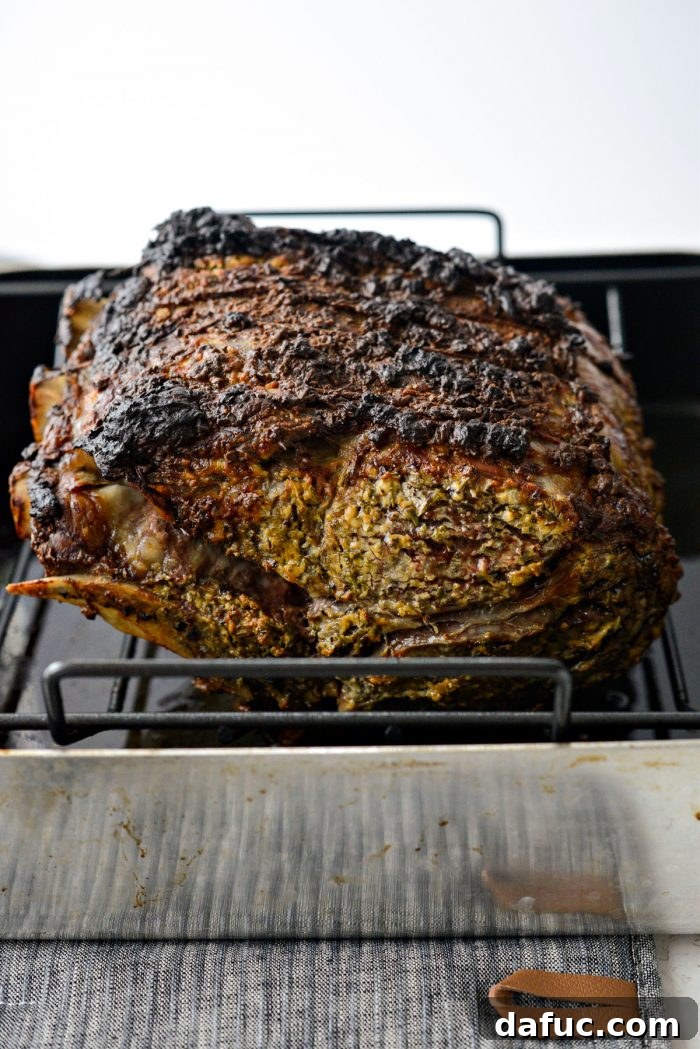
5. Whipping Up the Pinot Noir Au Jus
While the prime rib rests, turn your attention to creating the exquisite Pinot Noir au jus. This rich sauce perfectly complements the beef.
-
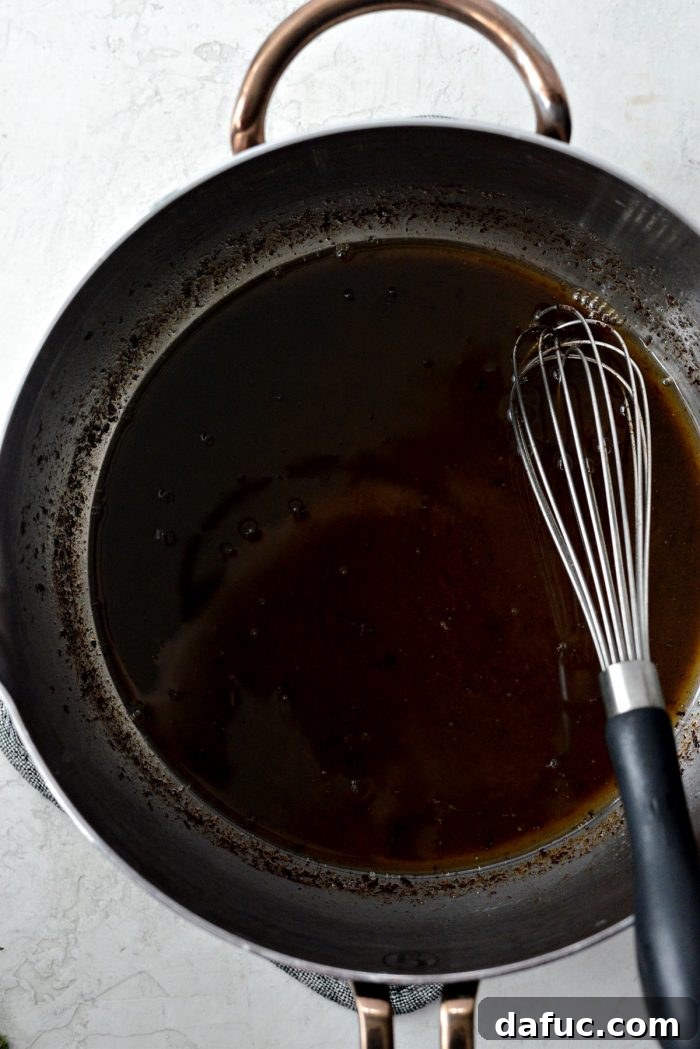
Collect Drippings: Carefully scrape all the flavorful pan drippings from the roasting pan into a medium saucepan. Alternatively, you can make the au jus directly in the roasting pan over two stove burners, but a saucepan often provides more control.
-
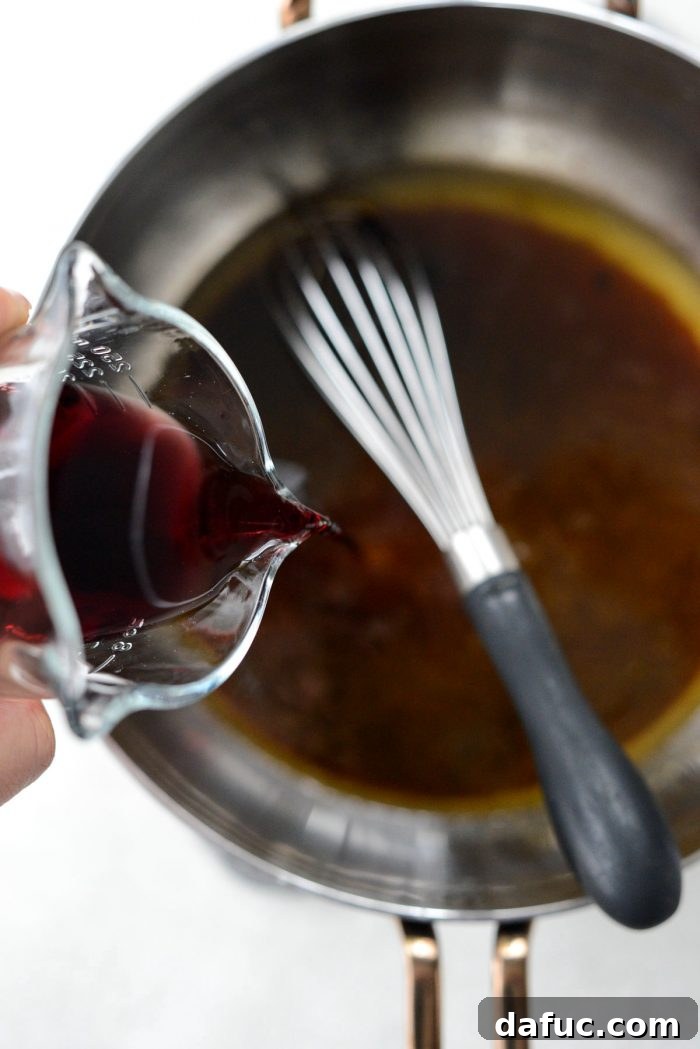
Add Pinot Noir: Bring the drippings to a gentle simmer. Once simmering, pour in 2/3 cup of your chosen Pinot Noir. Remember, the quality of the wine will directly impact the flavor of your au jus, so select one you enjoy drinking.
-
Reduce the Sauce: Continue to simmer, whisking frequently, for about 6 minutes, or until the au jus has reduced by approximately half, reaching a thickness of roughly 3/4 cup. It should be flavorful and slightly thickened, coating the back of a spoon.
6. Carving and Serving
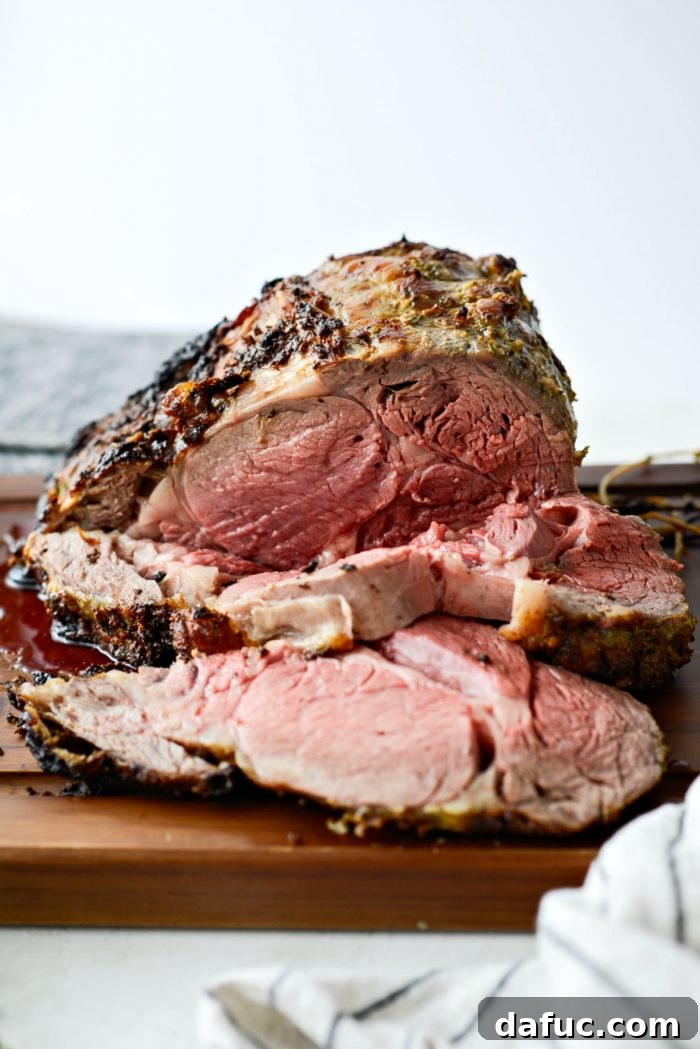
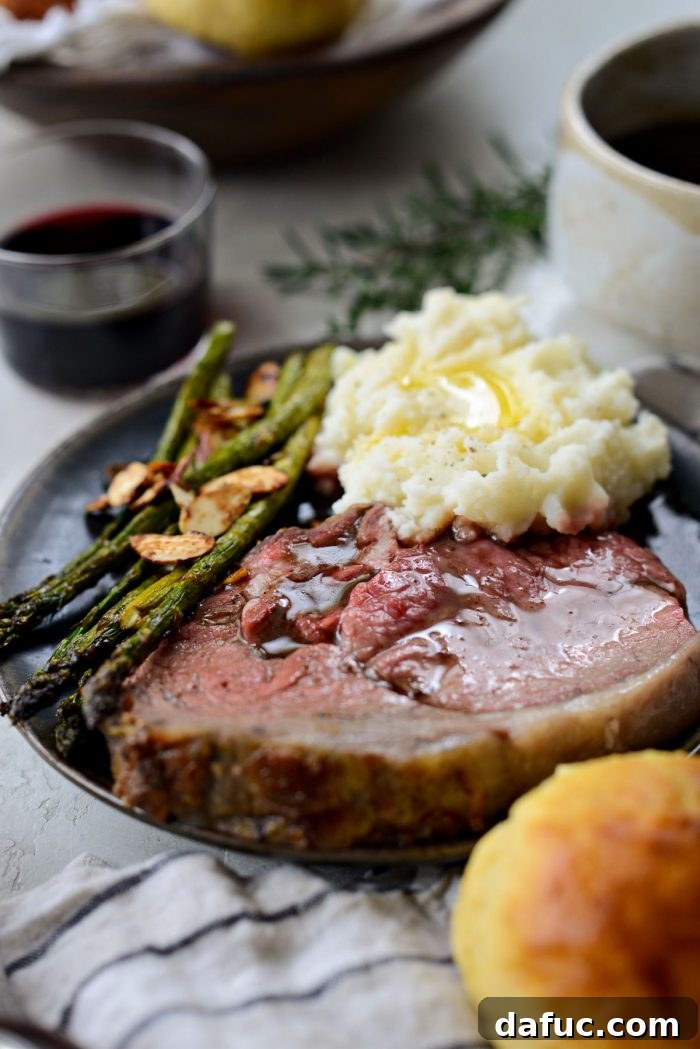
After the prime rib has rested, remove any kitchen twine or bones (if applicable). Slice the roast into generous 1/2-inch thick portions. Serve immediately, drizzling a few spoonfuls of the warm, rich Pinot Noir au jus over each slice. The combination of the succulent prime rib and the savory au jus is simply divine.
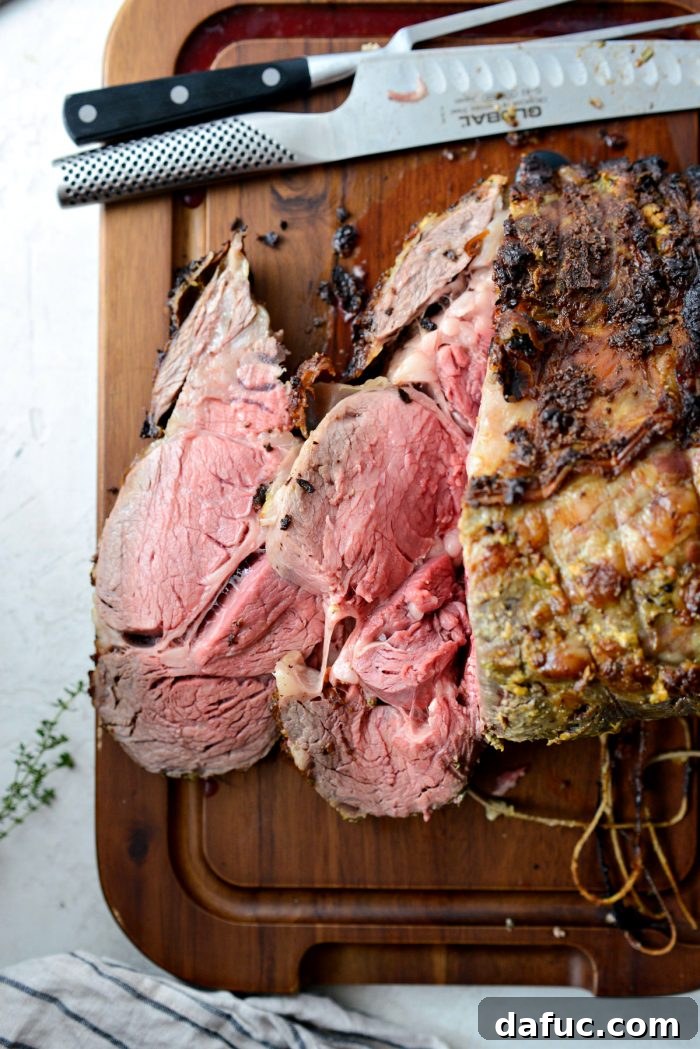
Achieving the Perfect Doneness: Internal Temperature Guide
The key to a perfect prime rib is knowing when it’s done to your preference. Remember that the temperature will rise a few degrees during the resting period. Here’s a quick guide:
- Extra Rare (Bleu): 80℉ to 100℉ (26℃ to 38℃)
- Rare: 120℉ to 125℉ (49℃ to 51℃)
- Medium Rare: 130℉ to 135℉ (55℃ to 57℃)
- Medium: 140℉ to 145℉ (60℃ to 63℃)
- Medium-Well: 150℉ to 155℉ (65℃ to 69℃)
- Well Done: 160℉ and above (71℃ and above)
Expert Tips for Prime Rib Success
- Room Temperature is Key: Don’t skip bringing the roast to room temperature. This ensures even cooking and prevents the exterior from overcooking before the interior is done.
- Invest in a Good Thermometer: An oven-safe digital meat thermometer is your best friend for prime rib. It eliminates guesswork and guarantees your desired doneness.
- Don’t Peek: Resist the urge to open the oven door during the initial high-heat roasting phase. This traps the heat needed to form that beautiful crust.
- Rest, Rest, Rest: The resting period is crucial for a juicy roast. Cutting into it too soon will cause all those delicious juices to run out.
- Choose Your Wine Wisely: For the au jus, use a Pinot Noir that you genuinely enjoy drinking. Its flavor will be concentrated in the sauce.
- Don’t Fear the Crust: A dark, flavorful crust is a hallmark of perfectly roasted prime rib. Any darker spots are typically normal and add to the texture.
Serving Suggestions: What to Pair with Your Prime Rib
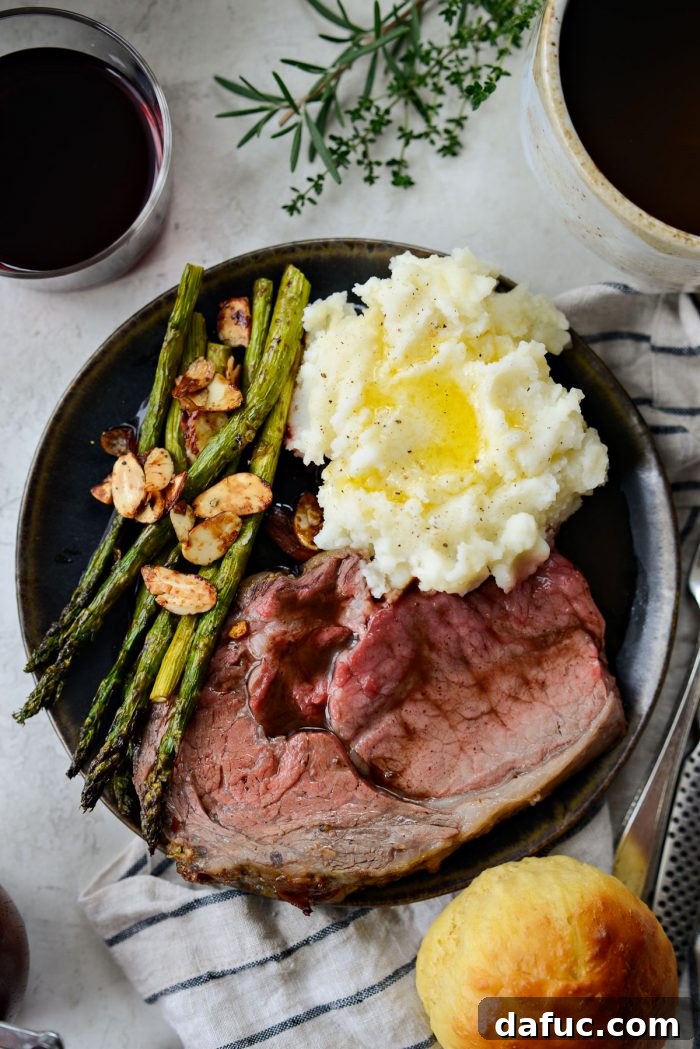
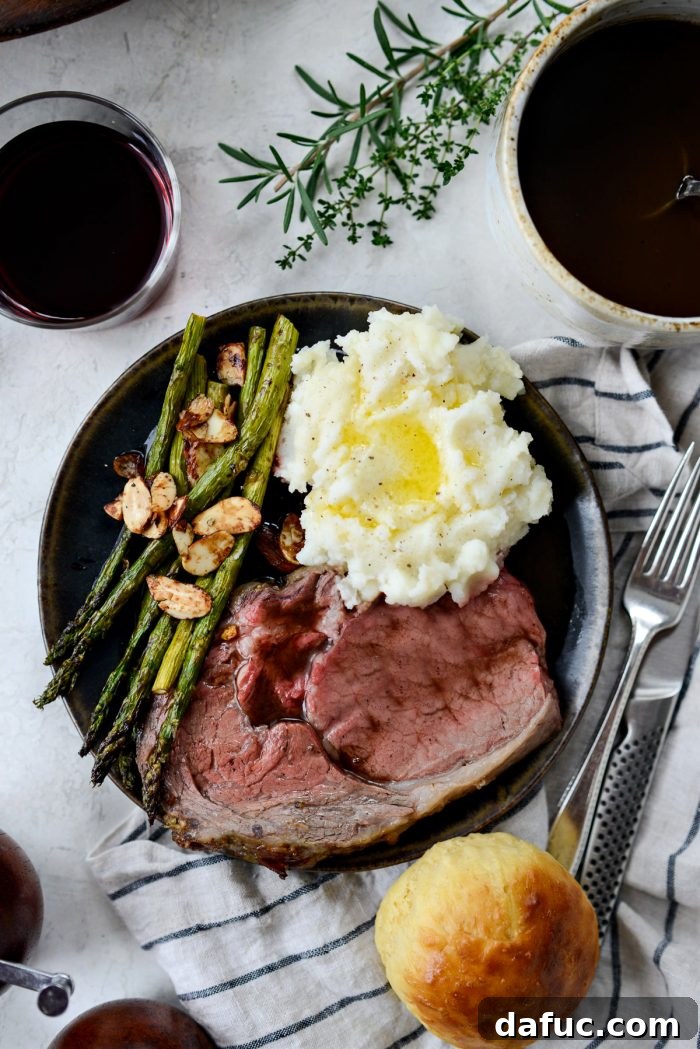
A grand dish like prime rib deserves equally impressive side dishes. Here are some classic and delicious pairings:
- Creamy Classic Mashed Potatoes: The perfect canvas for the rich au jus.
- Loaded Twice Baked Potatoes: A heartier potato option.
- Caramelized Balsamic Glazed Brussels Sprouts: A touch of sweetness and acidity to balance the richness.
- Air Fryer Green Beans or Air Fryer Balsamic Asparagus: Simple, fresh vegetable sides.
- Sea Salt Rosemary Dinner Rolls or Easy Brioche Dinner Rolls: Essential for soaking up every last drop of au jus.
Creative Uses for Leftover Prime Rib
While a prime rib roast is often devoured quickly, any leftovers are a true gift! Here are some fantastic ideas to transform them:
- Sheet Pan Prime Rib Breakfast Hash: A luxurious start to your day.
- Serve rewarmed with fried eggs and toast for a hearty brunch.
- Prime Rib and Barley Soup: Comforting and flavorful.
- Philly Cheesesteaks or French Dip Sandwiches: Epic sandwich creations.
Conclusion
This Dijon Rosemary Crusted Prime Rib Roast with Pinot Noir Au Jus is more than just a meal; it’s an experience. With its savory herb crust, perfectly tender meat, and rich wine sauce, it’s guaranteed to be the highlight of your dining table. Whether for a holiday celebration or a special gathering, this recipe proves that creating an extraordinary dish doesn’t have to be overly complicated. Enjoy the process, savor the flavors, and delight in the applause!
If you try this recipe, we’d love to hear about it! Share your photos and tag us on Twitter or Instagram!
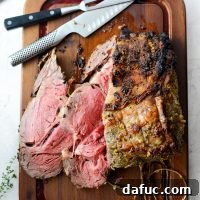
Dijon Rosemary Crusted Prime Rib Roast with Pinot Noir Au Jus
This Dijon Rosemary Crusted Prime Rib Roast is perfect for a cozy family meal or holiday dinner. A standing rib roast is coated in a simple rosemary and dijon mixture before roasting away in the oven. The pan drippings are combined with pinot noir for a delicious Au jus. Serves 10 or more depending on portion size.
Yield: 10 servings
Prep Time: 25 mins
Cook Time: 2 hrs
Additional Time (Resting): 35 mins
Total Time: 3 hrs
Ingredients
- 8 pound standing rib roast (or boneless – cooking times will vary)
- 1 teaspoon kosher salt
- 1 teaspoon freshly ground black pepper
- 6 cloves garlic, smashed and peeled
- 1/3 cup Dijon mustard
- 2 tablespoons chopped fresh thyme
- 1½ tablespoons of chopped fresh rosemary
- 1½ tablespoons olive oil
- Olive oil spray
- 2 cups beef broth
- 2/3 cup quality Pinot Noir
Equipment
- Polder Digital In-Oven Meat Thermometer with Heat Resistant Probe and Digital Timer
- All-Clad Roaster Cookware, 13-Inch by 16-Inch, Black
- Mini food processor
Instructions
- Let the roast sit at room temperature for 1 hour to 1 hour and 30 minutes.
- Adjust oven rack to be certain the roasting pan with the roast will fit before preheating your oven to 400℉ (200℃). For smaller ovens, move the rack to the lowest position.
- Spray your roasting rack with cooking spray to prevent sticking.
- In a mini food processor, pulse the peeled garlic cloves until finely minced. Add in the chopped thyme, chopped rosemary, Dijon mustard, and olive oil. Pulse until all ingredients are well combined into a paste.
- Trim off any excess thick fat from the roast and season the entire cut generously with kosher salt and black pepper. Using your hands, rub the Dijon-herb mixture over the entire roast, ensuring an even coating.
- Place the roast on the prepared roasting rack, which is set into a large roasting pan. Insert an oven-safe digital thermometer into the center of the thickest part of your roast, ensuring it does not touch any bones.
- Cook at 400℉ (200℃) for thirty minutes to develop a good crust. Without opening the oven door, reduce the heat to 350℉ (180℃) and continue cooking for another 30 minutes.
- After the first hour, remove the roast from the oven and pour 2 cups of beef broth into the roasting pan. Return the roast to the oven to continue cooking until the internal temperature registers at 135℉ (57℃) for medium rare.
- Once the desired temperature is reached, remove the roast from the oven and transfer it to a carving board. Cover it loosely with foil and allow it to rest for 15 to 20 minutes. While the roast rests, proceed to make the au jus.
- Pour the flavorful pan drippings into a saucepan (or make it directly in the roasting pan over two burners) and bring to a boil. Pour in the 2/3 cup of quality Pinot Noir and cook, whisking often, for about 6 minutes, or until the au jus reduces to roughly 3/4 of a cup and is slightly thickened.
- Remove any kitchen twine from around the roast and discard. If using a bone-in roast, carefully remove the bones and set them aside (they can be saved for stock).
- Slice the prime rib into 1/2-inch thick portions (or your desired thickness) and serve immediately with a few spoonfuls of the rich Pinot Noir au jus drizzled over the top.
Notes
- If using a bone-in roast, ensure the thermometer probe does not touch the bone, as this will give an inaccurate reading. Proper thermometer placement is key for an perfectly cooked prime rib.
- Cooking times vary depending on the size of your prime rib roast and whether it is bone-in or boneless. Expect anywhere from 1 to 2+ hours, or about 18 to 20 minutes per pound for a medium-rare finish.
Internal Temperature Cooking Chart:
- Extra Rare (Bleu): 80℉ to 100℉ (26℃ to 38℃)
- Rare: 120℉ to 125℉ (49℃ to 51℃)
- Medium Rare: 130℉ to 135℉ (55℃ to 57℃)
- Medium: 140℉ to 145℉ (60℃ to 63℃)
- Medium Well: 150℉ to 155℉ (65℃ to 69℃)
- Well Done: 160℉ and above (71℃ and above)
Nutrition Disclaimer: All information presented on this site is intended for informational purposes only. I am not a certified nutritionist and any nutritional information shared on SimplyScratch.com should only be used as a general guideline.
Serving: 1 serving, Calories: 1127kcal, Carbohydrates: 2g, Protein: 50g, Fat: 99g, Saturated Fat: 41g, Polyunsaturated Fat: 4g, Monounsaturated Fat: 44g, Trans Fat: 1g, Cholesterol: 219mg, Sodium: 667mg, Potassium: 860mg, Fiber: 1g, Sugar: 1g, Vitamin A: 82IU, Vitamin C: 3mg, Calcium: 46mg, Iron: 6mg
Author: Laurie McNamara
Course: Mains & Entrees
Cuisine: American