
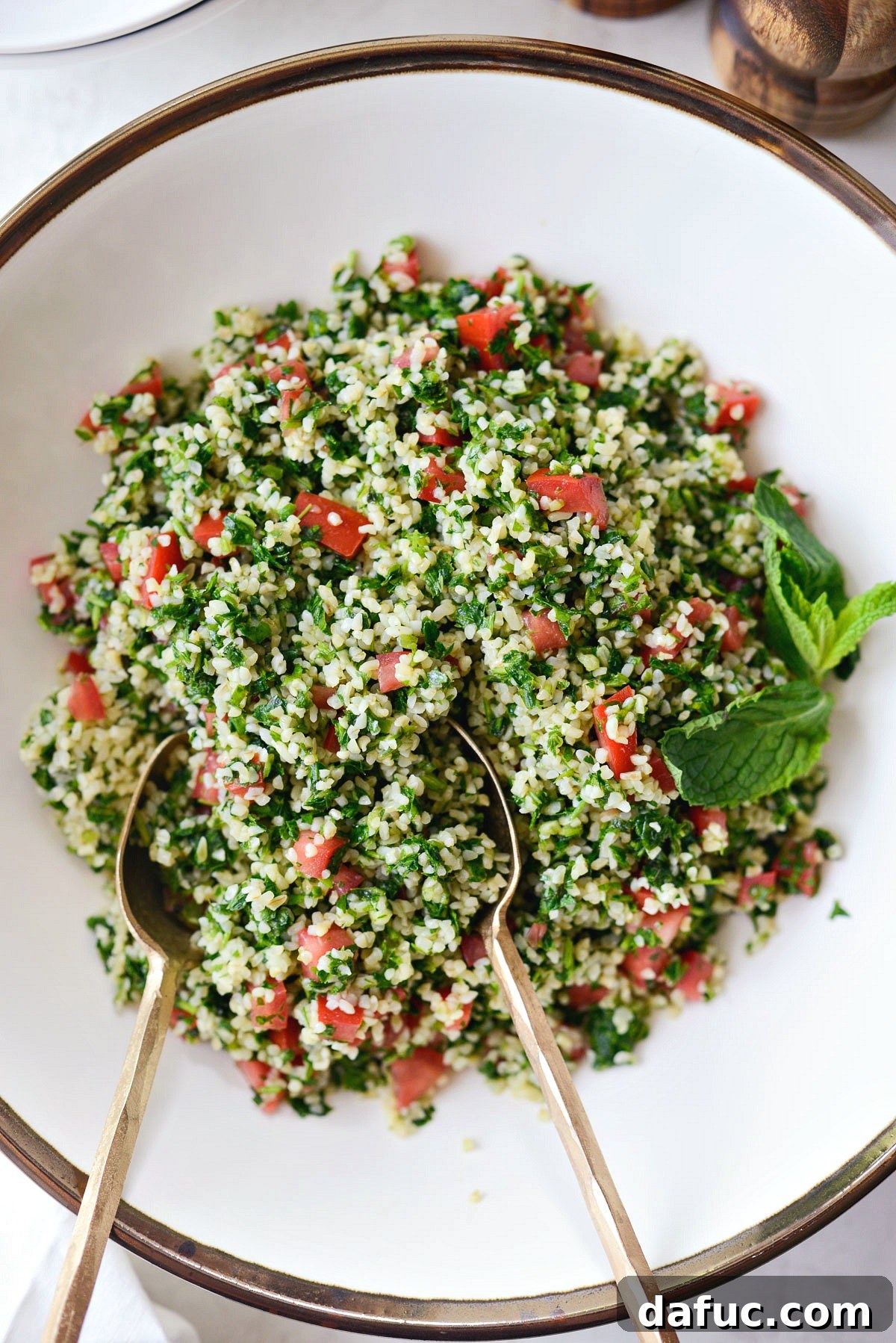
Welcome to the ultimate guide for crafting the most vibrant, fresh, and utterly delicious homemade tabbouleh you’ve ever tasted! This classic Levantine salad, a staple of Middle Eastern cuisine, is a celebration of fresh herbs, wholesome grains, and zesty lemon. It’s a vegetarian delight that promises a burst of flavor with every spoonful, making it an indispensable addition to any meal, from a casual weeknight dinner to a festive gathering.
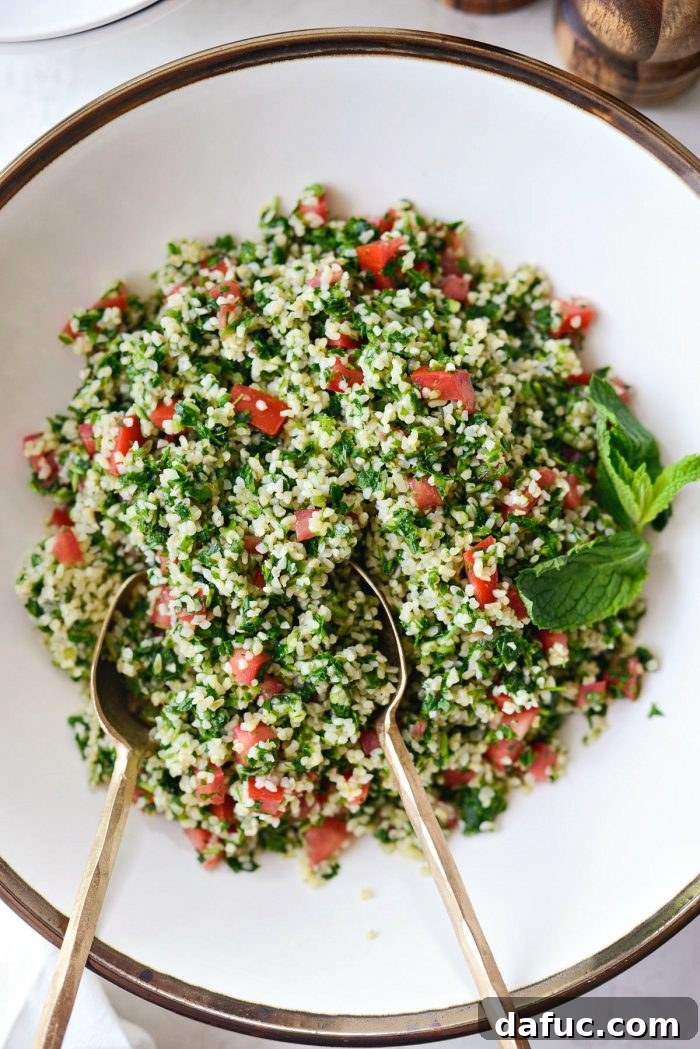
Discover the Irresistible Charm of Authentic Tabbouleh
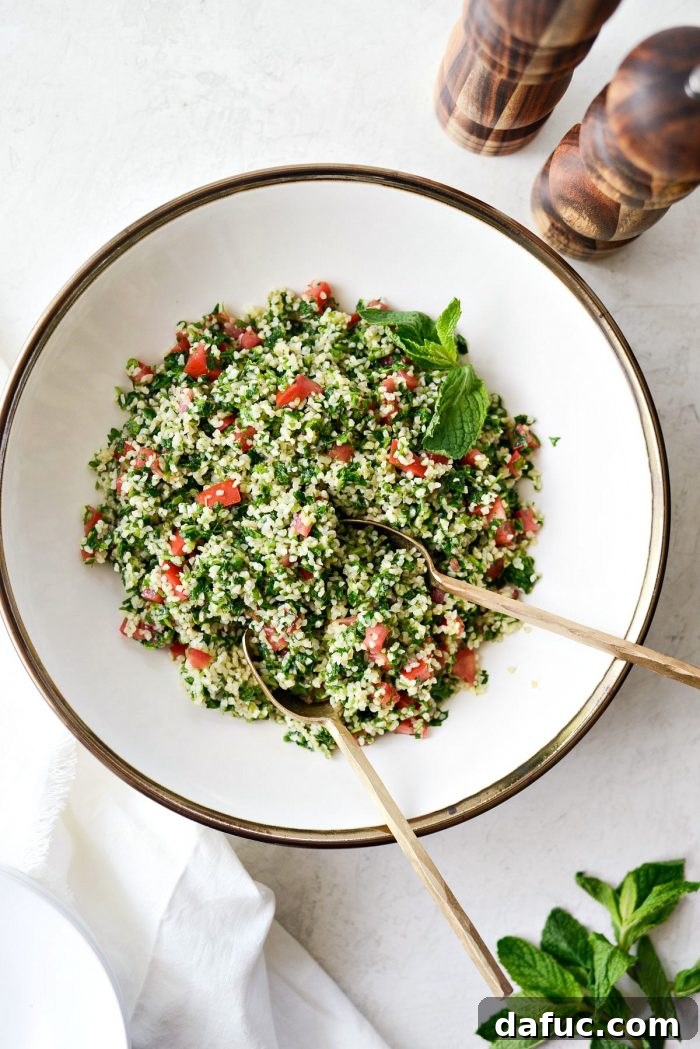
If you’re anything like me, the mere mention of tabbouleh brings a smile to your face. It’s more than just a salad; it’s an experience. Consisting primarily of a generous amount of finely chopped fresh parsley, crisp mint, tender green onions, plump tomatoes, and perfectly soaked bulgur wheat, all lovingly tossed in a bright, invigorating dressing of fresh lemon juice and rich olive oil, tabbouleh stands out for its incredible freshness, health benefits, and surprising ease of preparation.
My first encounter with this culinary gem was many years ago, and it was love at first bite. I remember my sister, Kelly, brought a large bowl of homemade tabbouleh to a family gathering. She served it as an appetizer alongside creamy hummus and warm pita bread, creating an irresistible spread. I found myself glued to that table, scooping up generous portions, unable to resist its vibrant allure. From that day forward, tabbouleh earned a permanent spot in my culinary repertoire.
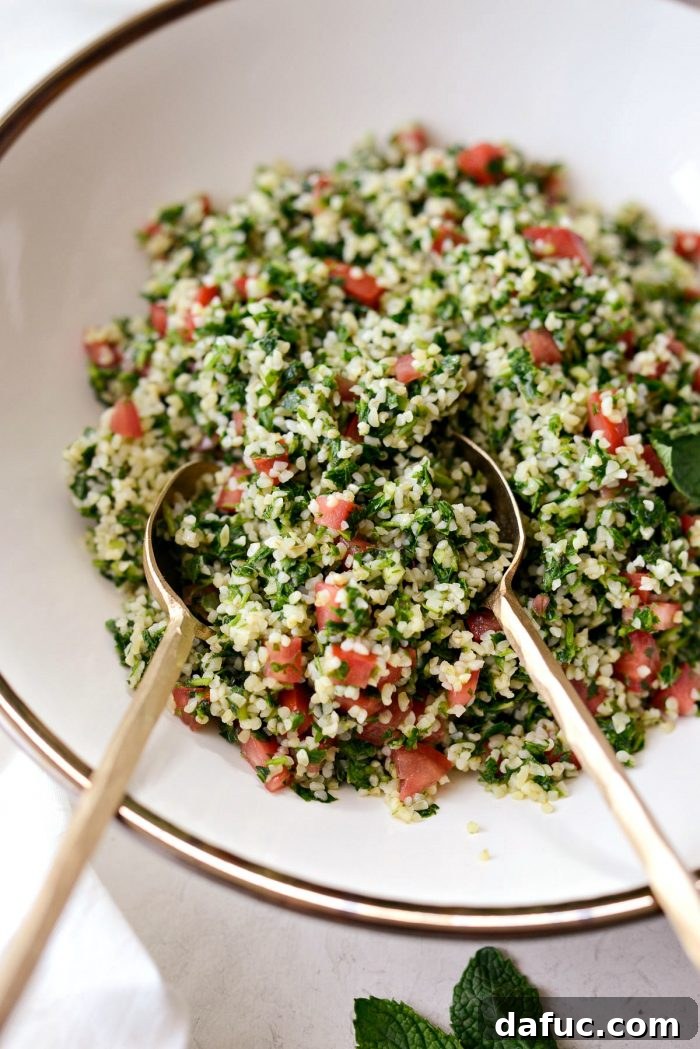
Since that memorable introduction, I’ve prepared this traditional salad countless times. It’s a fantastic side dish for grilled chicken or fish, adds a refreshing touch to any mezze platter, and the leftovers (if there are any!) make an excellent base for a zesty dip. Honestly, I could happily enjoy it on its own for breakfast, lunch, or dinner. Its versatility is truly unmatched, offering a delightful balance of textures and flavors that energizes and satisfies.
Beyond its incredible taste, tabbouleh boasts impressive nutritional benefits. It’s packed with vitamins, minerals, and fiber, thanks to the abundance of fresh herbs and whole grains. Parsley, in particular, is a powerhouse of Vitamin K, Vitamin C, and iron, while bulgur wheat provides sustained energy and aids digestion. This makes homemade tabbouleh not just a delicious choice, but a remarkably healthy one too.
Essential Ingredients for Your Perfect Homemade Tabbouleh
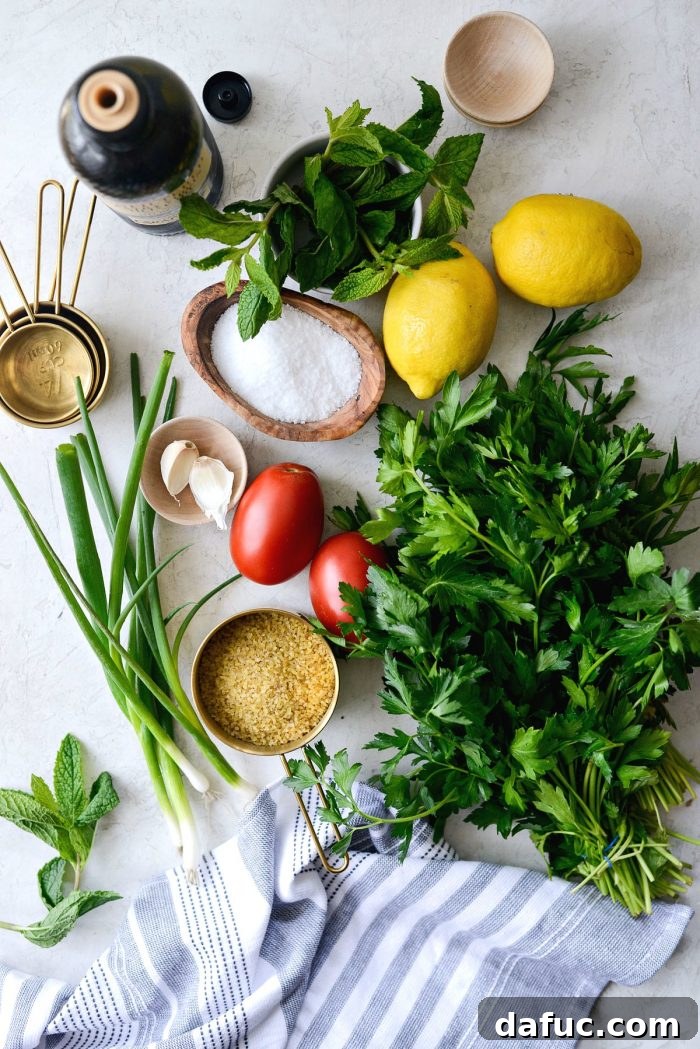
Creating this authentic Lebanese salad requires a few simple yet crucial ingredients. The quality of each component significantly impacts the final flavor, so always opt for the freshest produce available. Here’s what you’ll need to gather to bring this vibrant salad to life:
- Bulgur Wheat: Fine bulgur is traditionally used for its delicate texture and quick preparation. It forms the wholesome base of the salad, absorbing the flavors beautifully.
- Flat Leaf Italian Parsley: This is the star of tabbouleh. You’ll need a substantial amount, as parsley is the dominant ingredient, providing freshness, color, and a distinctive herbaceous note.
- Fresh Mint: A generous handful of fresh mint leaves adds an invigorating coolness and aromatic depth that complements the parsley perfectly.
- Green Onions (Scallions): These provide a mild, slightly pungent onion flavor without overpowering the delicate herbs. Both the white and light green parts are used.
- Garlic: A couple of fresh cloves, finely minced, add a foundational layer of savory flavor that enhances the overall profile.
- Kosher Salt: Essential for seasoning and bringing out the natural flavors of the fresh ingredients. Adjust to taste.
- Extra Virgin Olive Oil: A good quality olive oil is vital for the dressing, contributing a smooth, fruity richness and helping to bind all the elements together.
- Fresh Lemon Juice: The bright, tangy acidity of fresh lemon juice is what truly makes tabbouleh sing, balancing the herbs and grains with its refreshing zest.
- Roma Tomatoes (Optional but Recommended): Diced roma tomatoes add a touch of sweetness, a different texture, and a beautiful splash of red to the salad. Always opt for firm, ripe tomatoes.
Step-by-Step Guide to Crafting Your Perfect Tabbouleh
Follow these simple instructions to prepare a tabbouleh that will impress everyone, including yourself:
Step 1: Preparing the Bulgur Wheat
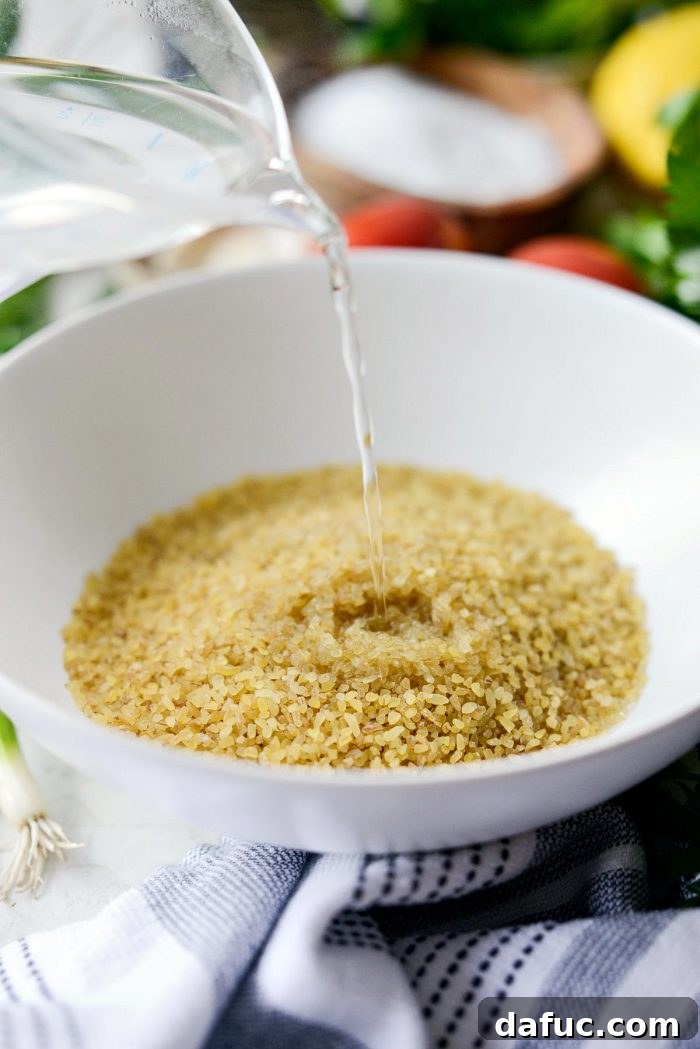
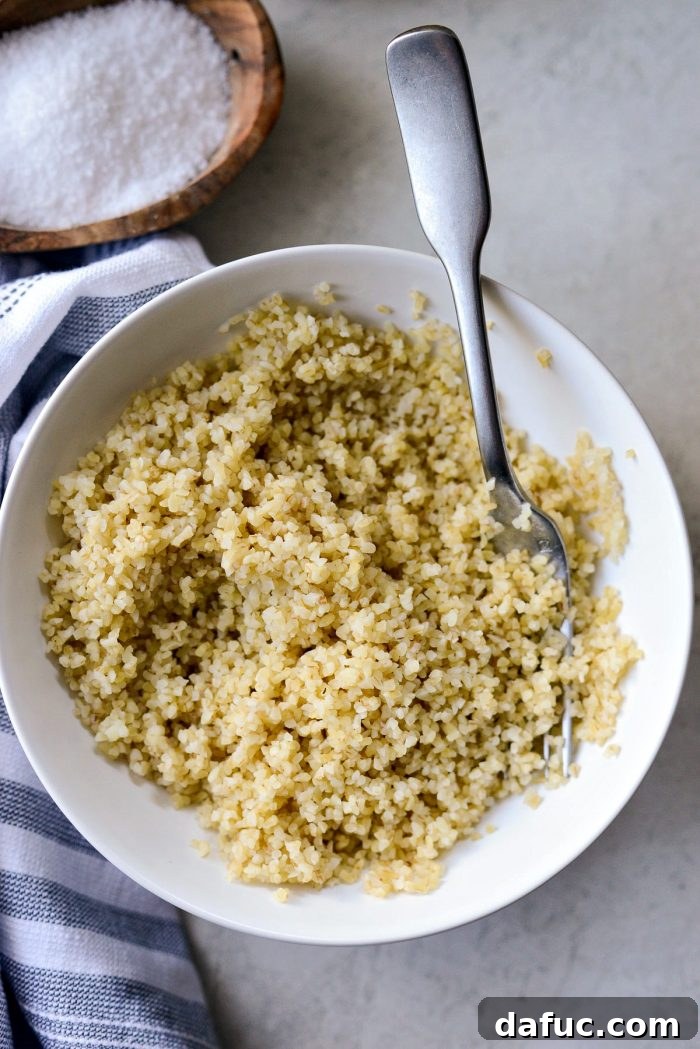
The first crucial step is to prepare your bulgur. Measure out 3/4 cup of fine bulgur wheat into a small, heat-proof bowl. Bring 3/4 cup of water to a rolling boil and immediately pour it over the bulgur. Ensure all the bulgur is submerged. This brief soaking process allows the bulgur to soften and plump up without becoming mushy, perfectly absorbing the hot water. Set the bowl aside for about 30 minutes, allowing it to rehydrate fully. After 30 minutes, the bulgur should be tender. Use a fork to gently fluff it, separating the grains and ensuring it’s light and airy. If there’s any excess liquid, drain it, though fine bulgur usually absorbs it completely.
Step 2: Finely Mincing the Herbs and Aromatics
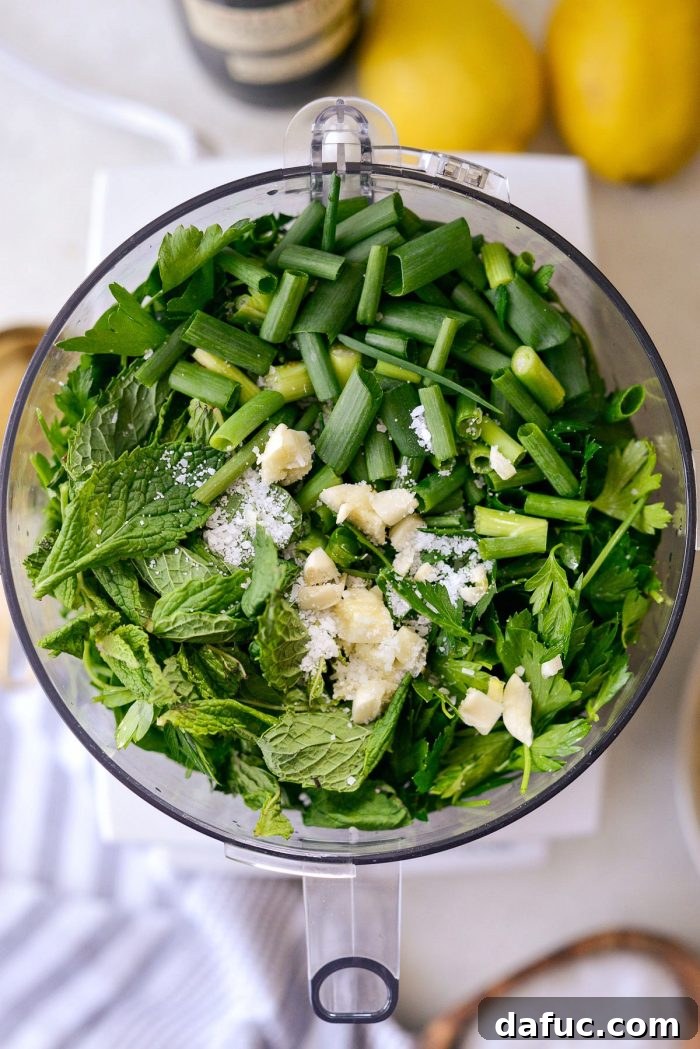
While the bulgur is soaking, you can prepare the fresh herbs and aromatics. This step is critical for achieving the characteristic fine texture of tabbouleh. In your food processor, fitted with the blade attachment, add two large bunches of washed and roughly chopped flat-leaf Italian parsley. When preparing the parsley, ensure you use the leafy tops and any tender stems, discarding only the tough, thicker stems at the very bottom. Next, add 1/4 cup of fresh mint leaves, 4 to 5 roughly chopped green onions (using both white and light green parts), 2 peeled and chopped fresh garlic cloves, and a generous pinch of kosher salt. The salt not only seasons but also helps break down the herbs.
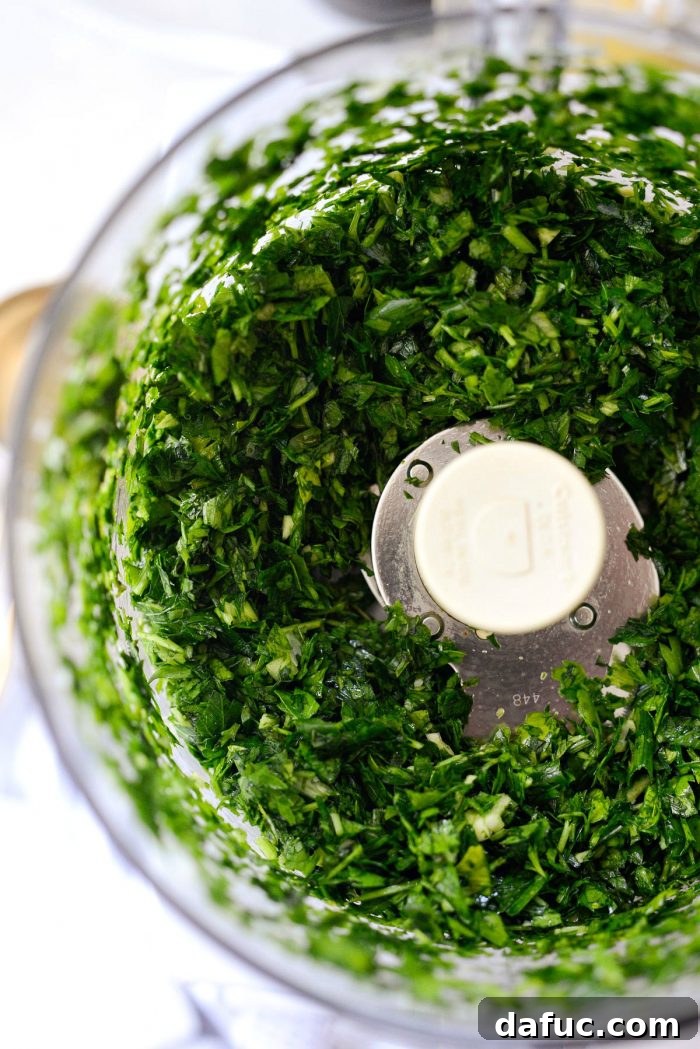
Secure the lid on your food processor and pulse in short bursts until all the ingredients are very finely chopped. It’s important to pulse rather than continuously blend to avoid turning the herbs into a paste. The goal is a fine, uniform mince. As you pulse, you may need to stop occasionally and scrape down the sides of the bowl with a spatula to ensure everything is evenly processed. This step guarantees that the herbaceous flavors are perfectly distributed throughout the salad.
Step 3: Combining All Ingredients
Once your herbs are perfectly minced and your bulgur is fluffed, it’s time to bring everything together. In a large mixing bowl, combine the finely chopped parsley mixture with the rehydrated bulgur wheat. If you’re using them, add two seeded and diced roma tomatoes. Seeding the tomatoes prevents the salad from becoming watery. Next, pour in 1/4 cup of freshly squeezed lemon juice – remember, fresh is best for that vibrant tang – and 1/4 cup of high-quality extra virgin olive oil. These two liquids form the quintessential dressing for tabbouleh, imparting both moisture and a delightful Mediterranean essence.
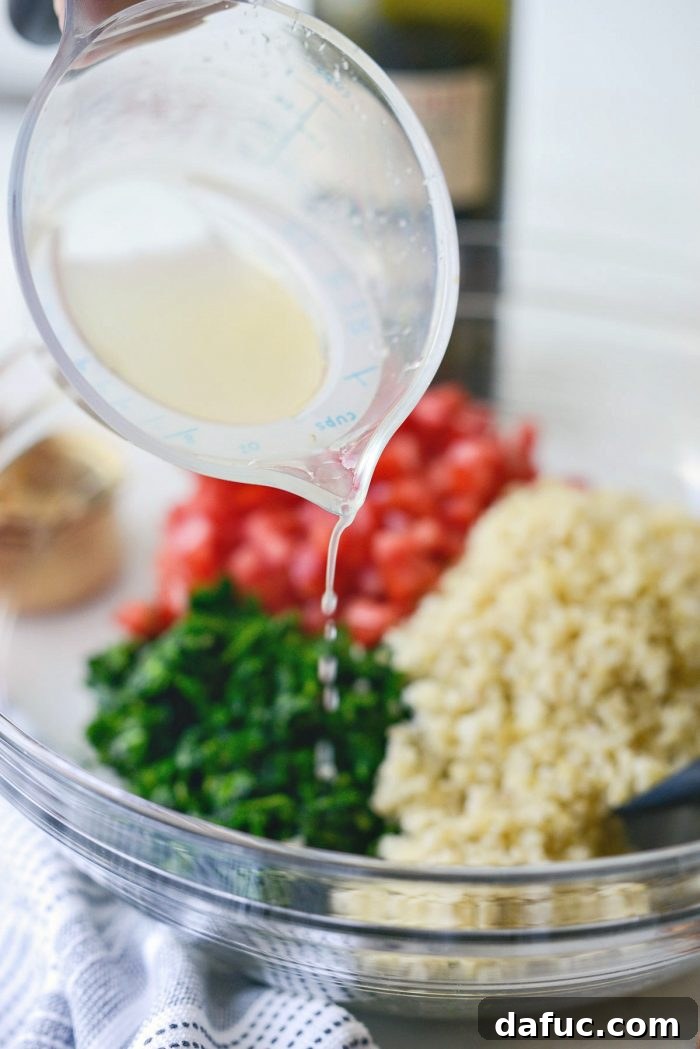
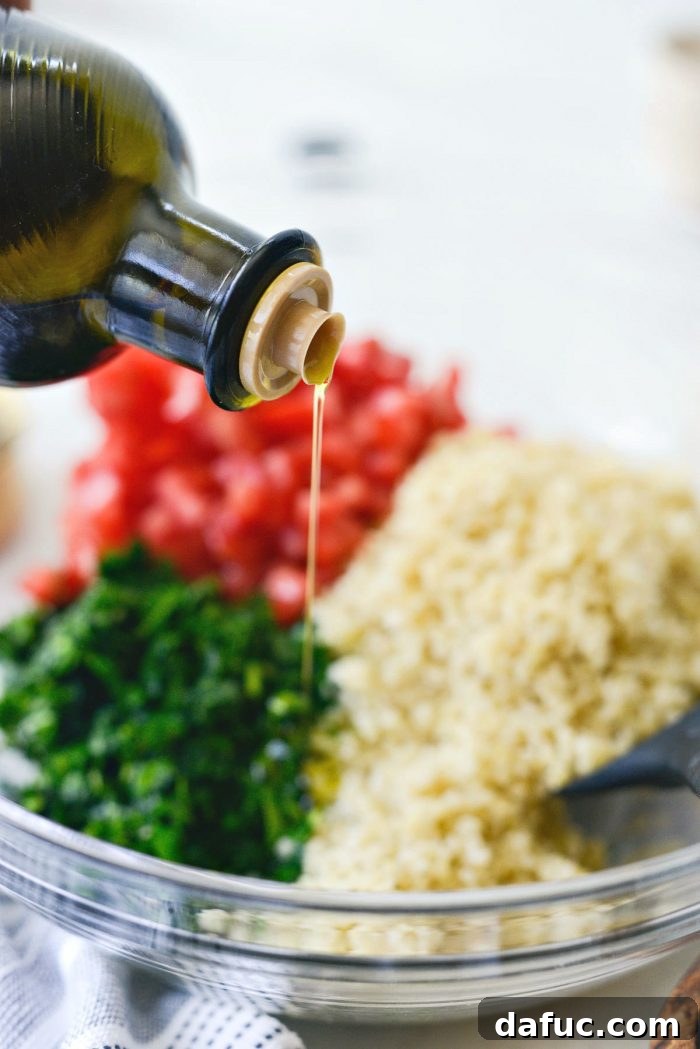
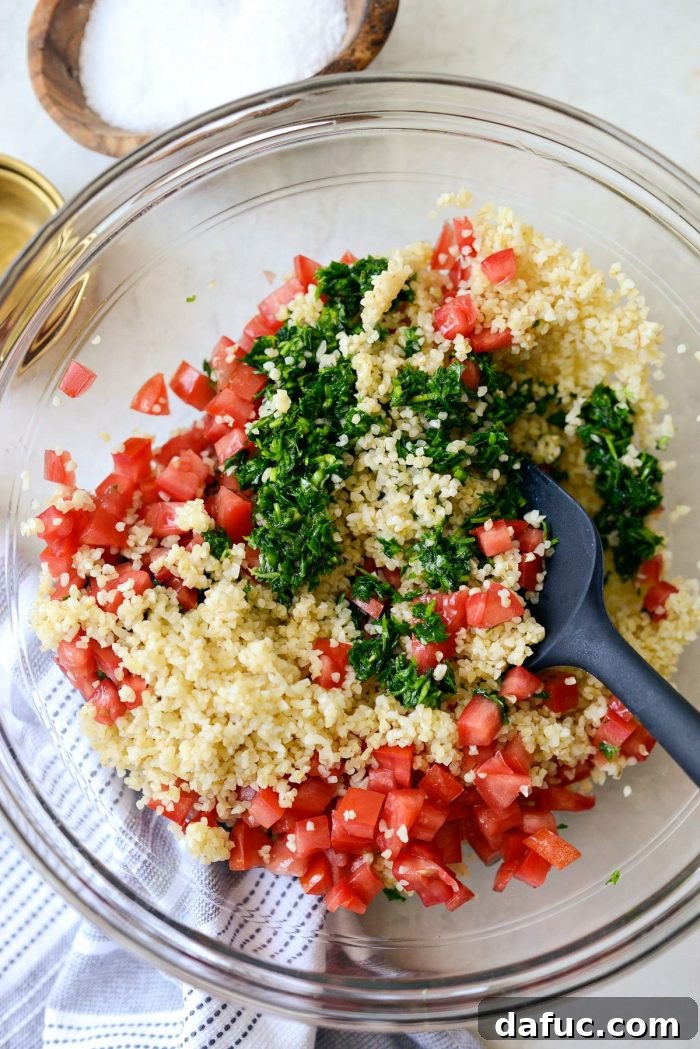
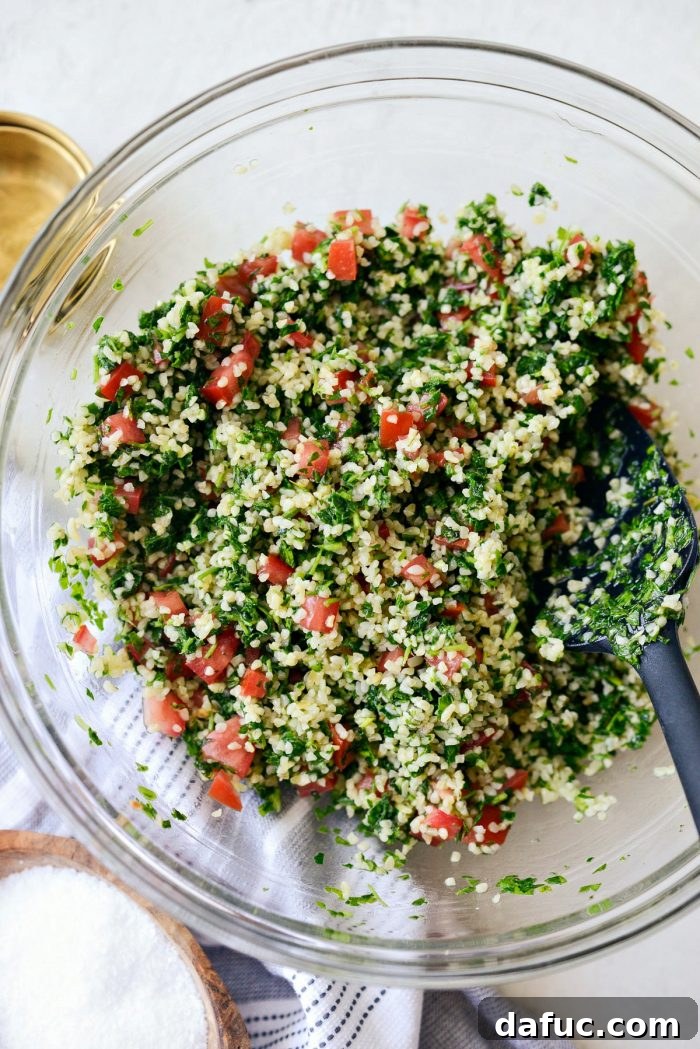
Using a large spoon or your hands (which some chefs prefer for a more even mix), gently toss all the ingredients until they are thoroughly combined. Ensure the dressing coats every grain of bulgur and every piece of herb and tomato. This thorough mixing is essential for a harmonious flavor profile. Taste a small spoonful and adjust the seasoning as needed. You might want to add a bit more kosher salt or a squeeze of extra lemon juice to suit your preference. Don’t be shy about seasoning – it makes all the difference!
Step 4: Chilling for Flavor Development
While tempting to dig in immediately, tabbouleh significantly benefits from a period of chilling. Cover the mixing bowl tightly with plastic wrap and refrigerate for at least 4 hours, or ideally, overnight. This resting time allows the flavors to meld and deepen, transforming individual ingredients into a complex, cohesive, and even more delicious salad. The bulgur will further absorb the dressing, becoming incredibly flavorful, and the herbs will release their aromatic oils, infusing the entire dish with their essence. It’s worth the wait, I promise!
Serving Suggestions and Variations
Your homemade tabbouleh is now ready to shine! It’s incredibly versatile and pairs well with a variety of dishes:
- As a Side Dish: Serve it alongside grilled meats like chicken, lamb, or beef kebabs. It also complements baked fish beautifully.
- Part of a Mezze Platter: Combine it with other Middle Eastern favorites such as hummus, baba ghanoush, falafel, and warm pita bread for an authentic and satisfying spread.
- Light Meal: Enjoy it on its own as a refreshing and healthy lunch. You can even add some grilled halloumi cheese or chickpeas for extra protein.
- Stuffed Pitas or Wraps: Use it as a vibrant filling for pita pockets or lettuce wraps.
If you’re exploring dietary alternatives or simply love trying new things, you might be interested in grain-free options. For instance, my cauliflower tabbouleh recipe substitutes bulgur with finely riced cauliflower, offering a delightful twist that’s equally fresh and flavorful. Other popular variations include adding chopped cucumber, bell peppers, or even a sprinkle of pomegranate seeds for an extra burst of color and sweetness. You can also experiment with different herbs, though parsley and mint are traditionally key. Some people enjoy adding a touch of allspice or cinnamon for a deeper, more aromatic profile.
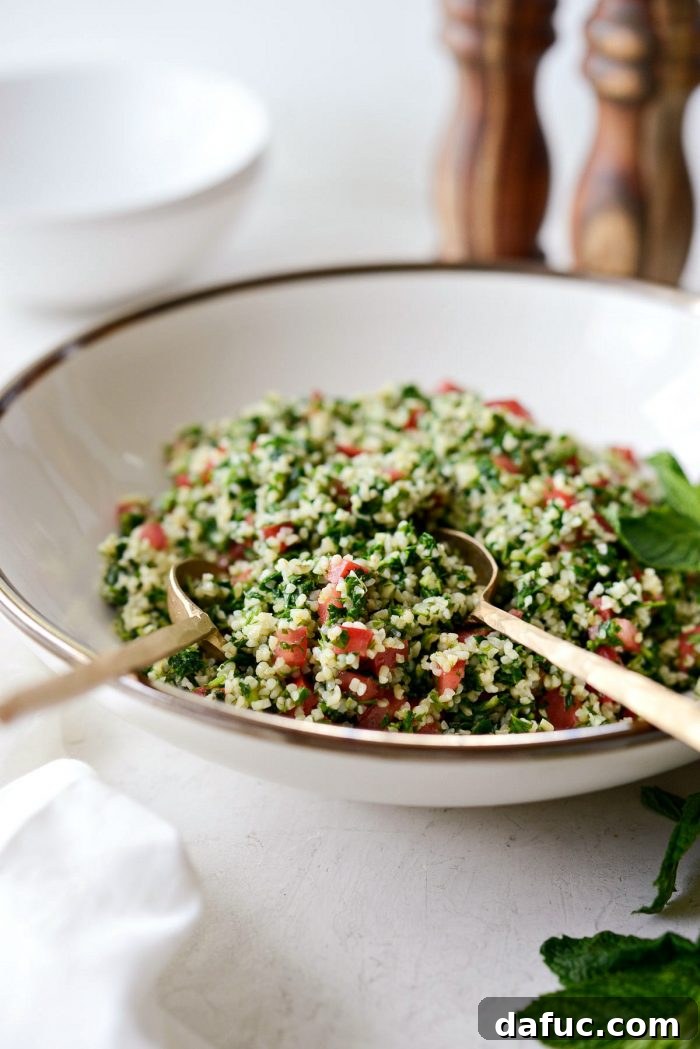
Enjoy! This Homemade Tabbouleh recipe is designed to bring joy and freshness to your table. If you give it a try, I’d love to hear about it! Snap a photo and share your creation on social media, tagging me on Twitter or Instagram!
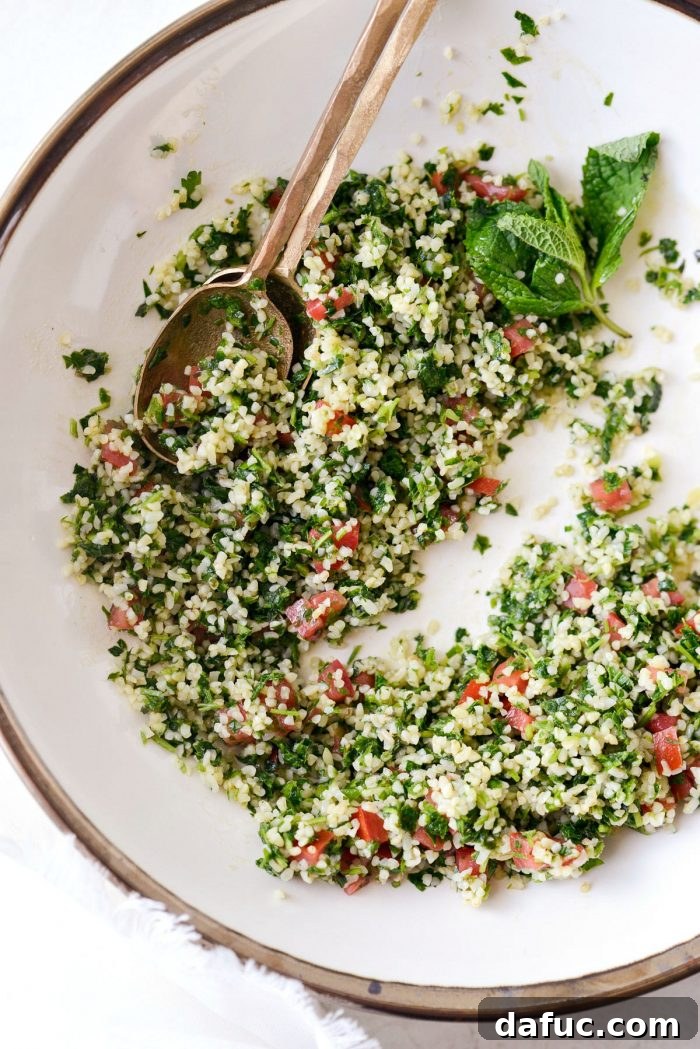
Homemade Tabbouleh Recipe
This Homemade Tabbouleh recipe is fresh and delicious! A vegetarian Levantine salad consisting of finely minced parsley, mint and green onions tossed with soaked bulgur wheat, lemon juice and olive oil.
Yield: 8 servings
Prep Time: 1 hour
Additional Time: 5 minutes
Total Time: 1 hour 5 minutes
Ingredients
- 3/4 cup bulgur wheat
- 3/4 cup boiling water
- 2 large bunches parsley, tough stems removed
- 1/4 cup fresh mint leaves
- 4 to 5 finely chopped green onions
- 2 cloves garlic, chopped
- kosher salt (to taste)
- 2 roma tomatoes, finely chopped (optional)
- 1/4 cup lemon juice
- 1/4 cup olive oil
Equipment
- Cuisinart DLC-8SY Pro Custom 11-Cup Food Processor, White
- Large mixing bowl
- Small heat-proof bowl
Instructions
- Add the bulgur wheat to a small bowl and pour the hot boiling water over top. Set it off to the side to soak for 30 minutes, then fluff with a fork.
- In a large food processor, add the parsley, mint, green onions, garlic and a generous pinch of salt.
- Pulse until finely minced, scraping down the bowl as needed.
- In a large bowl combine the parsley mixture with the fluffed bulgur wheat, diced tomatoes (if using), lemon juice and olive oil. Toss thoroughly to combine all ingredients.
- Taste and season with more kosher salt or lemon juice if needed.
- Cover the bowl and refrigerate for at least 4 hours to overnight. This allows the flavors to develop and meld beautifully.
Nutrition Information (Approximate per 1/2 cup serving)
- Serving: 1/2 cup
- Calories: 113 kcal
- Carbohydrates: 12g
- Protein: 2g
- Fat: 7g
- Saturated Fat: 1g
- Polyunsaturated Fat: 1g
- Monounsaturated Fat: 5g
- Sodium: 6mg
- Potassium: 127mg
- Fiber: 3g
- Sugar: 1g
- Vitamin A: 271IU
- Vitamin C: 7mg
- Calcium: 17mg
- Iron: 1mg
Author: Laurie McNamara
Course: Salads
Cuisine: Middle Eastern