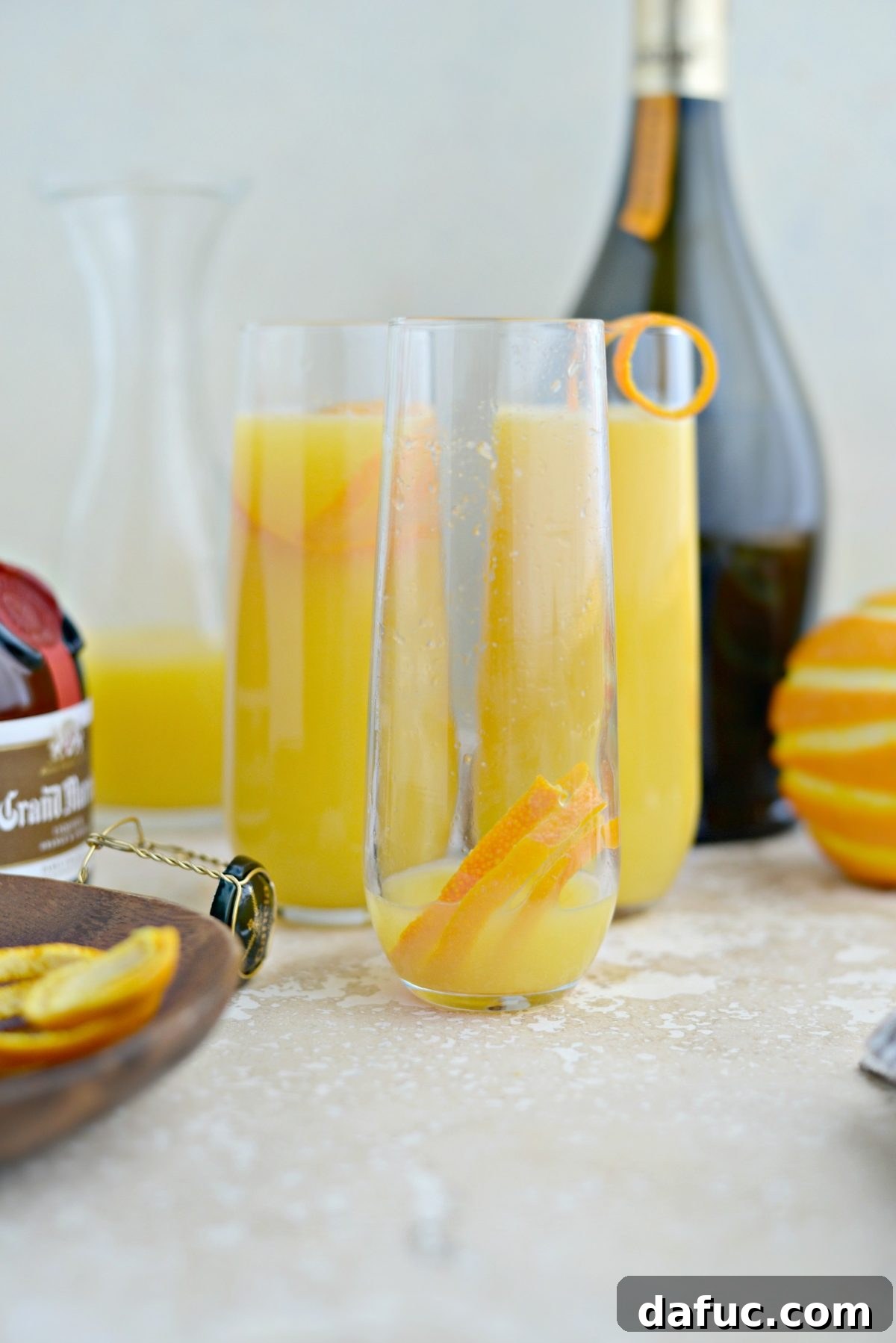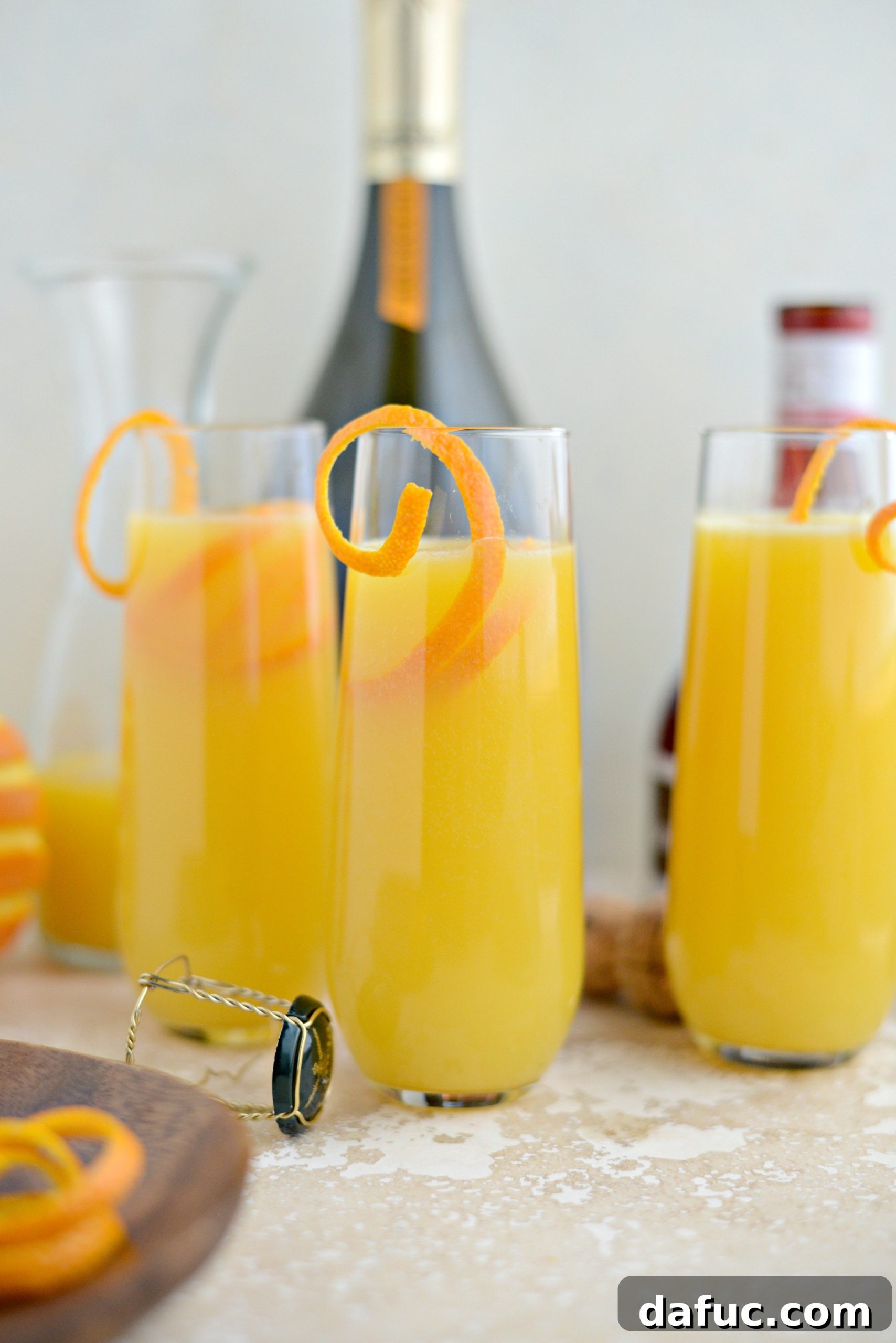
The Ultimate Classic Mimosa Recipe: Bubbly Brunch Perfection for Any Occasion
There’s a certain magic to a mimosa. Whether it’s the centerpiece of a festive Mother’s Day celebration, a chic addition to your wedding day brunch, a sparkling welcome at a gathering with friends, or simply a delightful treat to elevate a mundane Wednesday, a classic mimosa is always in season. This iconic cocktail, with its effervescent Prosecco, a sophisticated hint of Grand Marnier, and a generous pour of fresh orange juice, all crowned with a delicate twist of orange peel, promises a sip of pure joy and elegance.
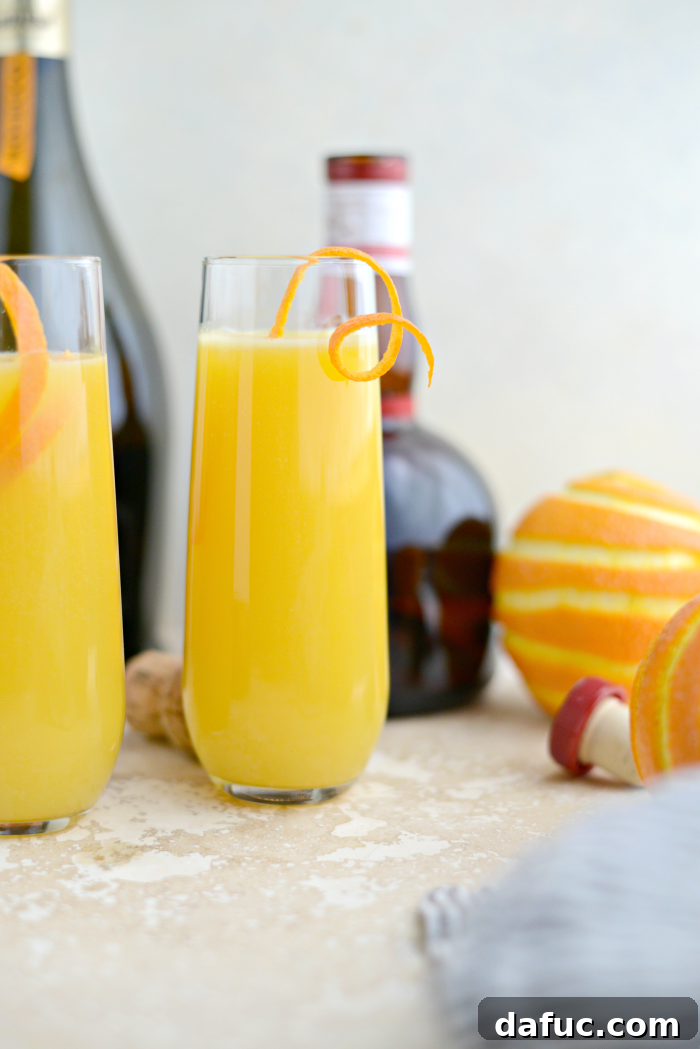
Indeed, embracing the spirit of joyful indulgence, we’re diving headfirst into the world of mimosas! The name itself conjures images of vibrant mornings and relaxed afternoons, rolling off the tongue as smoothly as the drink goes down. This bubbly, bright concoction is more than just a drink; it’s an experience. Imagine waking up on a special morning, perhaps Mother’s Day, to the aroma of French toast and bacon, with an endless supply of coffee and, of course, the promise of a perfect mimosa. While life sometimes calls for balancing these dreams with daily tasks – like capturing photos for future blog posts or rushing to a children’s game – there’s always room to savor these simple pleasures.
The life of a food blogger, they say, is all mimosas on a Wednesday and spirited softball games by night. It sounds rather demanding, doesn’t it? One might even feel a pang of sympathy! But in reality, it’s about finding those moments of delight and sharing them, whether it’s the thrill of a home run or the perfect bubble in a champagne flute.
My Journey to the Perfect Mimosa: A Tale of Bubbly Discovery
My inaugural encounter with a mimosa was at a lively brunch hosted by friends. Each of us contributed a dish to share; I proudly arrived with a vibrant fruit salad and all the components for mimosas. Looking back, my first attempt was a valiant, yet misguided one. I simply free-poured about half a glass of champagne, then casually topped it off with a splash of orange juice. The result, as you might imagine, was undeniably potent and veered far from the harmonious balance a true mimosa should embody. It was a learning experience, to say the least.
Since that memorable (and strong!) brunch, I’ve embarked on a delightful quest, delving into research, experimenting with various ratios, and, naturally, sipping my way through many more mimosas. This dedication has led me to what I believe is the ideal rendition of this beloved cocktail. Today, I am thrilled to share with you my perfected take on the classic mimosa recipe, refined through experience and a genuine appreciation for its delicate balance.
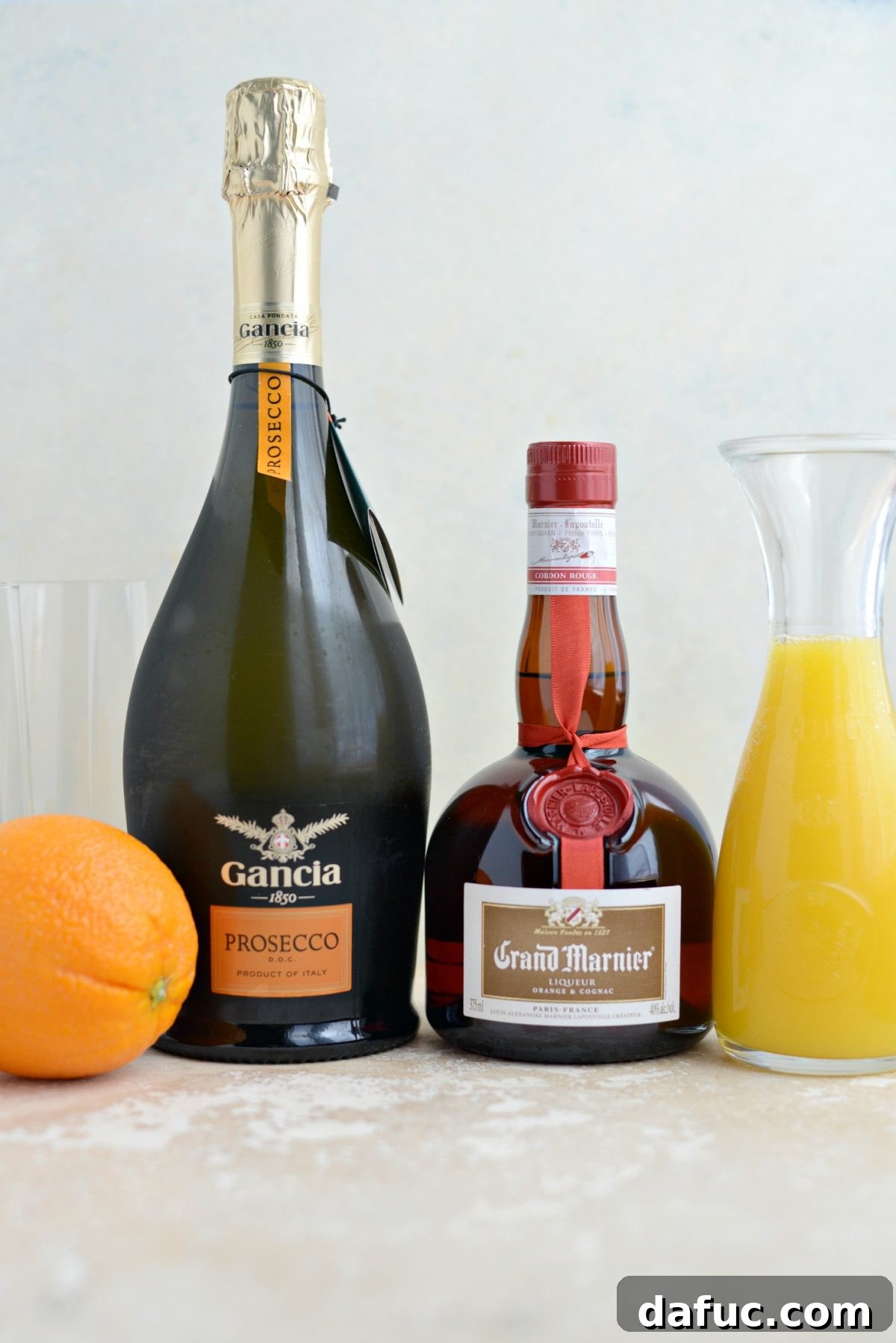
Crafting Your Classic Mimosa: The Essentials
Achieving mimosa perfection begins with selecting the right ingredients and understanding their roles. While seemingly simple, the quality and preparation of each component significantly impact the final taste profile of your sparkling beverage. Here’s what you’ll need to create a truly delightful classic mimosa, along with some insights into why these choices matter:
Key Ingredients for an Unforgettable Mimosa:
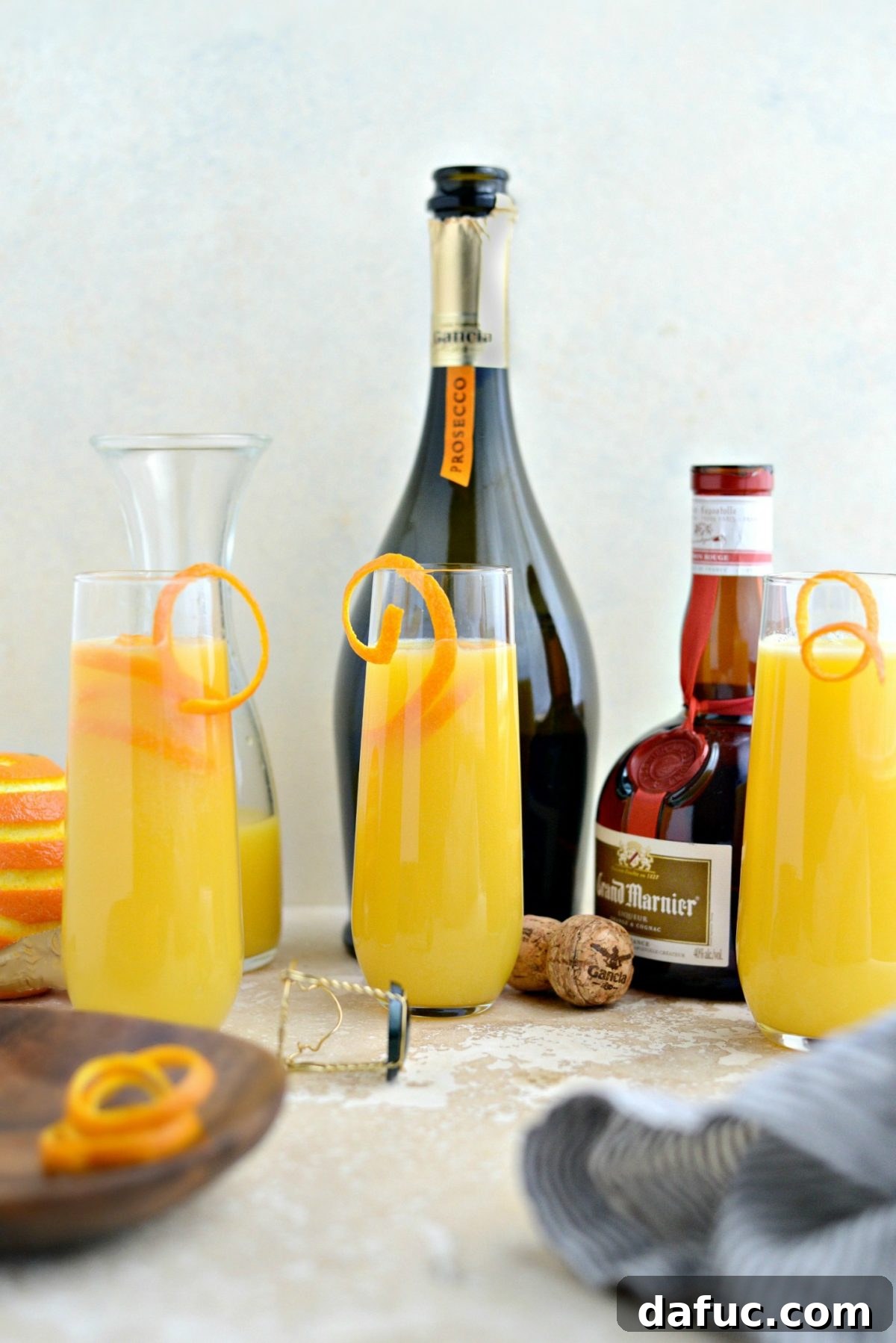
- Fresh Orange Juice (without pulp): This is the soul of your mimosa. Opt for 100% fresh, good-quality orange juice. Pulp-free is generally preferred for a smoother, more elegant drink, ensuring the delicate bubbles of the Prosecco can shine through uninterrupted. The sweetness and acidity of the juice will define the cocktail’s overall balance.
- Grand Marnier (or another premium orange liqueur): This is the secret ingredient that elevates a good mimosa to a great one. Just a splash adds a layer of sophisticated citrus depth and a subtle hint of sweetness that complements both the orange juice and the sparkling wine beautifully. Cointreau or triple sec can also be used as alternatives, but Grand Marnier’s blend of cognacs and distilled bitter orange provides a unique richness.
- Chilled Prosecco (or other sparkling wine): The bubbly component is crucial. Prosecco is an excellent choice due to its light, fruity notes and generally drier profile, which prevents the drink from becoming overly sweet. While Champagne is the traditional choice, a good quality Cava or even a dry sparkling rosé can also be delightful. The key is to ensure it’s well-chilled to maintain its effervescence.
- Fresh Oranges: Primarily for garnish, but also to extract the zest for that elegant twist. Fresh oranges enhance the visual appeal and release a lovely aromatic oil when twisted, adding another sensory dimension to your drink.
- 8 Fluid Ounce Champagne Flutes: The right glassware enhances the experience. Flutes help to showcase the bubbles and maintain the drink’s chill and effervescence for longer.
Preparing these ingredients correctly and having them chilled will ensure your mimosas are crisp, refreshing, and perfectly balanced.
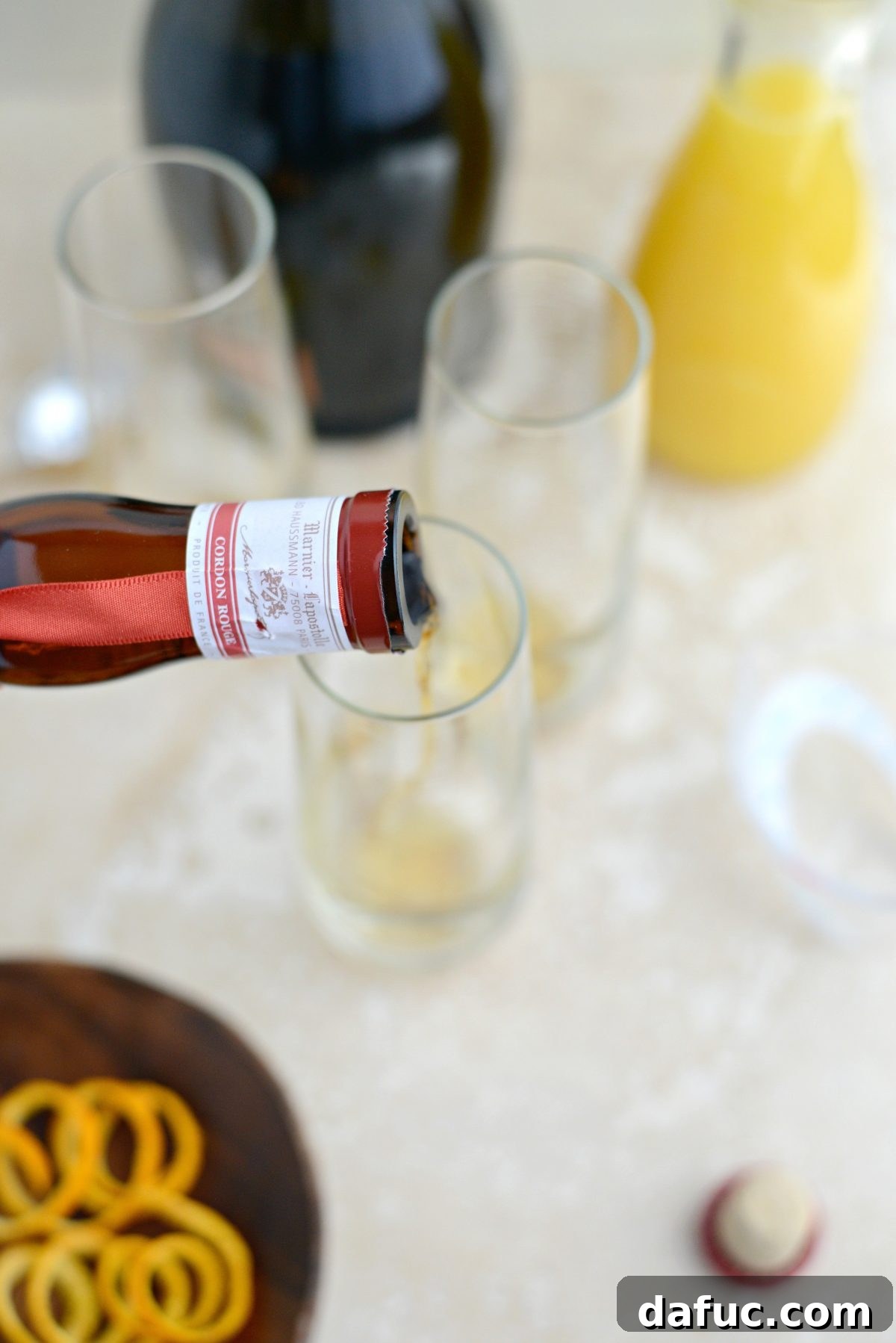
Step-by-Step Guide to Your Classic Mimosa:
Crafting the perfect mimosa is surprisingly simple, yet attention to detail can make all the difference. Always ensure all your ingredients, especially the sparkling wine and orange juice, are thoroughly chilled before you begin. This helps maintain the drink’s crispness and effervescence.
- Start with the Liqueur: Into each 8 fluid ounce champagne flute, add a small splash of Grand Marnier (or your chosen orange liqueur). This step adds a subtle complexity and aroma that truly distinguishes a classic mimosa. About ½ teaspoon per glass is usually sufficient.
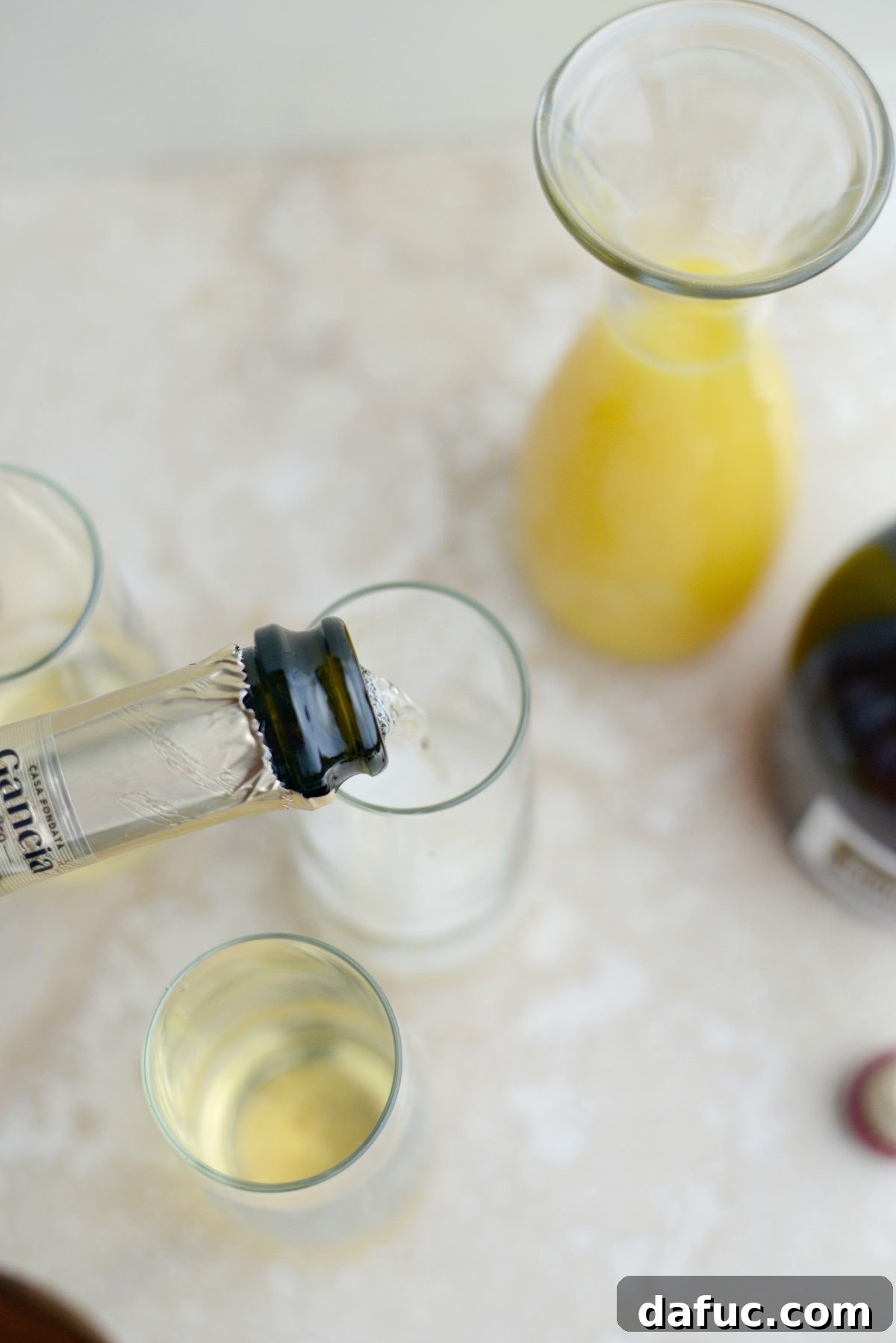
- Add the Sparkling Wine: Next, carefully pour approximately two fluid ounces of chilled Prosecco into each glass. Pour slowly and at an angle to preserve as many bubbles as possible. The delicate fizz is a hallmark of this celebratory drink.
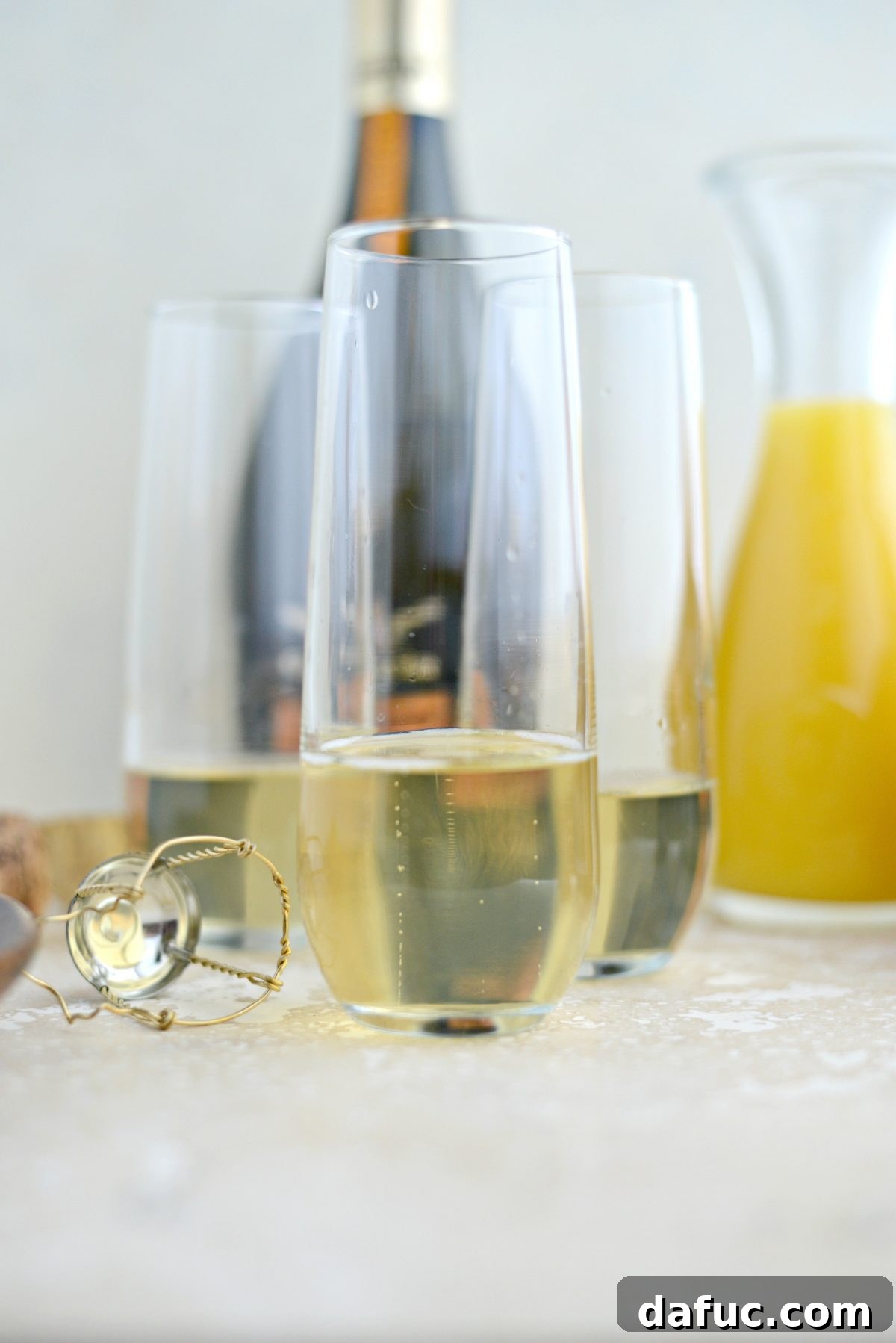
- Top with Orange Juice: Gently top off each glass with the fresh, chilled orange juice. While precise measurements can vary based on personal preference and glass size, aim to fill the glass to about ¾ full, leaving a little room at the top for garnish and to prevent spillage. The ideal ratio is often debated, but a 2:1 or 3:1 ratio of sparkling wine to orange juice is a good starting point for a balanced, not-too-sweet mimosa. However, in this recipe, we’re going with 2 ounces Prosecco and about 6 ounces orange juice to fill an 8-ounce glass, offering a refreshing and slightly less alcoholic option.
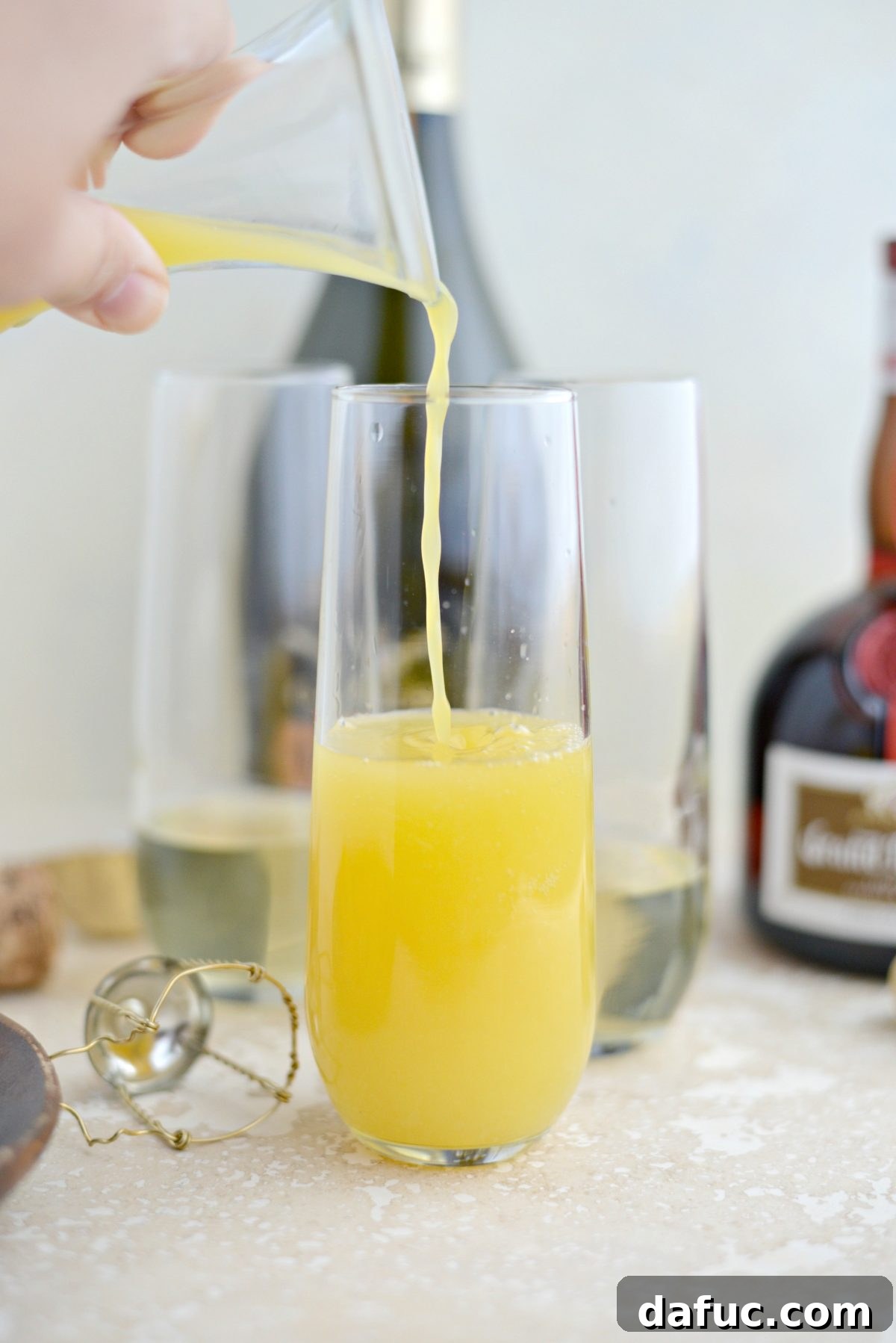
- Garnish with Orange Peel: For a final elegant flourish, carefully peel a small strip of zest from a fresh orange. Twist the peel over the drink to release its aromatic oils, then gently drop it into the glass or perch it on the rim. This not only enhances the presentation but also adds a wonderful citrus aroma with every sip.
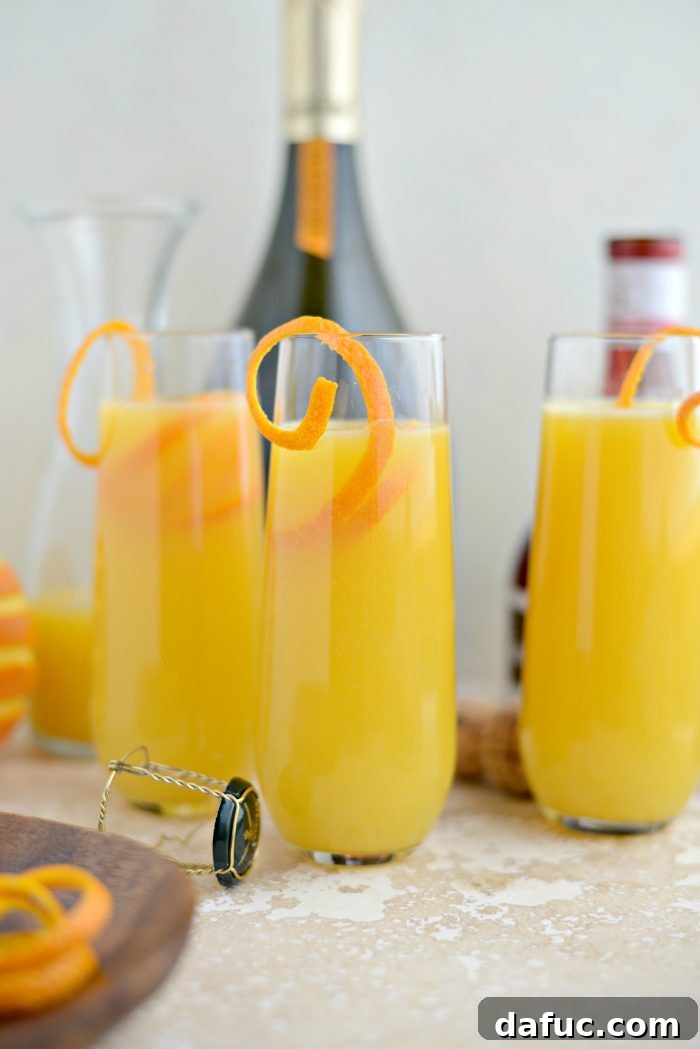
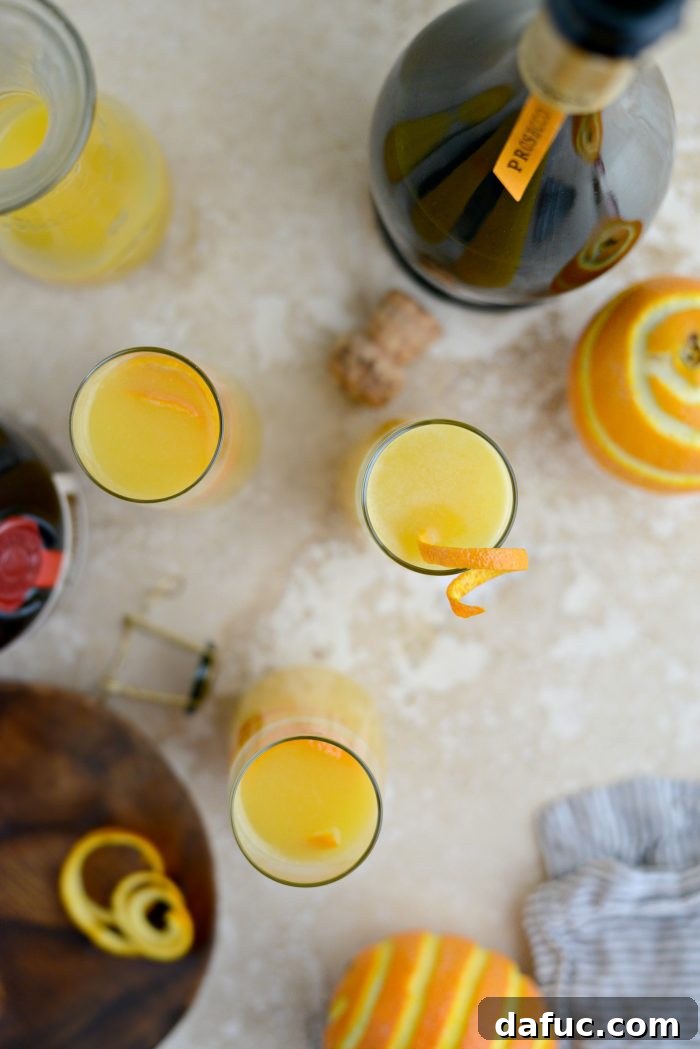
Enjoy this classic concoction! There’s truly nothing quite like a perfectly crafted mimosa to brighten any moment. We’d absolutely love to see your creations! If you give this Classic Mimosa recipe a try, please snap a photo and share it on social media. Tag us on Twitter or Instagram!
Print Recipe
Pin Recipe
Leave a Review »
Classic Mimosa Recipe
Ingredients
- 1 splash Grand Marnier
- 2 ounces Prosecco, chilled
- 6 ounces orange juice, chilled
- orange peel, for garnish
Instructions
-
For one 8-fluid ounce champagne glass: Add 1 splash Grand Marnier, then 2 ounces of chilled Prosecco. Top off the glass with fresh, chilled orange juice, leaving a little room for garnish.
-
Garnish elegantly with a freshly peeled orange rind twist.
Beyond the Classic Mimosa: Variations and Pro Tips
While the classic mimosa is undeniably perfect, its simplicity also makes it a fantastic canvas for creative variations. Exploring different juices and sparkling wines can open up a world of delightful brunch cocktails.
Mimosa Variations to Try:
- Pineapple Mimosa: Swap orange juice for chilled pineapple juice for a tropical twist that’s both sweet and tangy.
- Cranberry Mimosa (Poinsettia): For a festive touch, especially around the holidays, use cranberry juice instead of orange juice. The vibrant red color is stunning.
- Grapefruit Mimosa (Blushing Mimosa): If you prefer something a little less sweet and with a pleasant bitterness, fresh grapefruit juice makes an excellent substitute.
- Bellini: Though technically not a mimosa, a Bellini uses peach purée (or nectar) and Prosecco, offering a luscious, fruity alternative.
- Blood Orange Mimosa: During citrus season, blood orange juice provides a beautiful deep color and a slightly less sweet, more complex flavor.
- Rosé Mimosa: Use a dry sparkling rosé instead of Prosecco for a subtle berry note and a lovely pink hue.
Pro Tips for the Perfect Mimosa Every Time:
- Keep Everything Chilled: This is paramount. Warm ingredients will result in a flat, uninviting drink. Chill your sparkling wine, orange juice, and even your champagne flutes beforehand.
- The Right Ratio: While our recipe leans into a more juice-forward mimosa, the traditional ratio is often 1 part orange juice to 2 parts sparkling wine. Experiment to find your personal preference. Some prefer a 1:1 ratio for a stronger, fruitier drink.
- Pour Gently: Tilt your glass and pour the sparkling wine slowly down the side to minimize the loss of bubbles. Add the juice afterward.
- Juice Quality Matters: Avoid orange juice concentrate or anything with added sugars. Freshly squeezed or high-quality, 100% not-from-concentrate, pulp-free orange juice will make a noticeable difference.
- Choosing Your Sparkling Wine:
- Prosecco: Generally the most popular and affordable choice. It’s Italian, typically a bit sweeter and fruitier than Champagne, with lively bubbles.
- Cava: A Spanish sparkling wine made in the traditional method (like Champagne). It’s usually drier and offers crisp apple and citrus notes, often a great value.
- Champagne: The classic, albeit pricier, option. French Champagne offers complex flavors and finer, more persistent bubbles. Opt for a Brut (dry) style.
- Mimosa Bar: For entertaining, set up a mimosa bar! Provide several chilled sparkling wine options, various fruit juices (orange, cranberry, pineapple, grapefruit, peach nectar), and an assortment of garnishes (berries, orange slices, fresh mint, pomegranate seeds). Let guests customize their own!
The Art of Pairing: What to Serve with Your Mimosa
A mimosa is more than just a drink; it’s a social lubricant and a perfect complement to a wide array of foods. Its bright, effervescent nature makes it incredibly versatile for pairing.
Perfect Brunch Pairings:
- Sweet Brunch Fare: Mimosas beautifully cut through the richness of pancakes, waffles, French toast, and pastries like croissants and muffins. The acidity of the orange juice and the bubbles cleanse the palate.
- Savory Delights: Don’t limit mimosas to sweet foods! They are fantastic with quiches, egg Benedicts, breakfast burritos, and savory tarts. The fruitiness can balance salty and cheesy flavors.
- Fruit & Yogurt: For a lighter option, pair your mimosa with a fresh fruit platter or a yogurt parfait. The flavors will harmonize and enhance each other.
Light Appetizers for Anytime Entertaining:
- Cheese Boards: Opt for softer, milder cheeses like brie, goat cheese, or fresh mozzarella. Pair with crackers, fresh fruit, and a drizzle of honey.
- Shrimp Cocktails or Ceviche: The citrus and bubbles of a mimosa complement seafood wonderfully, especially light, refreshing preparations.
- Finger Sandwiches or Small Bites: Cucumber sandwiches, mini chicken salad croissants, or bruschetta are elegant and light choices that won’t overpower the mimosa.
Frequently Asked Questions About Mimosas (FAQ)
Q: What’s the best sparkling wine for mimosas?
A: While Champagne is the traditional choice, a dry Prosecco or Cava offers excellent value and flavor. Look for “Brut” on the label for a drier taste, or “Extra Dry” for a slightly fruitier, but still dry, option.
Q: What’s the ideal mimosa ratio?
A: The classic ratio is 2 parts sparkling wine to 1 part orange juice. However, many prefer a 1:1 ratio for a stronger, fruitier drink, or even a 3:1 ratio for a lighter touch. Our recipe uses about 2 ounces of Prosecco to 6 ounces of orange juice for an 8-ounce glass, offering a refreshing, less alcoholic option.
Q: Can I make mimosas ahead of time?
A: It’s best to assemble mimosas just before serving to preserve the bubbles in the sparkling wine. You can chill all your ingredients ahead of time, squeeze your orange juice, and have everything ready to pour. This ensures maximum effervescence and freshness.
Q: What kind of orange juice should I use?
A: Always opt for 100% fresh, good-quality orange juice, ideally pulp-free. Freshly squeezed is always best, but a high-quality, not-from-concentrate brand will also work beautifully. Avoid juices with added sugars or artificial flavors.
Q: What’s the difference between a mimosa and a Bellini?
A: A mimosa combines sparkling wine (typically Champagne or Prosecco) with orange juice. A Bellini, on the other hand, is made with Prosecco and peach purée (or peach nectar). Both are delightful brunch cocktails, but they offer distinct flavor profiles.
With this comprehensive guide, you are now equipped to craft the perfect classic mimosa, tailor it to your taste, and even host an impressive mimosa bar. Remember, the key is quality ingredients, proper chilling, and, most importantly, enjoying the process. Cheers to many sparkling moments ahead!