
The Ultimate Guide to Crafting Perfect Soft-Boiled Eggs Every Time
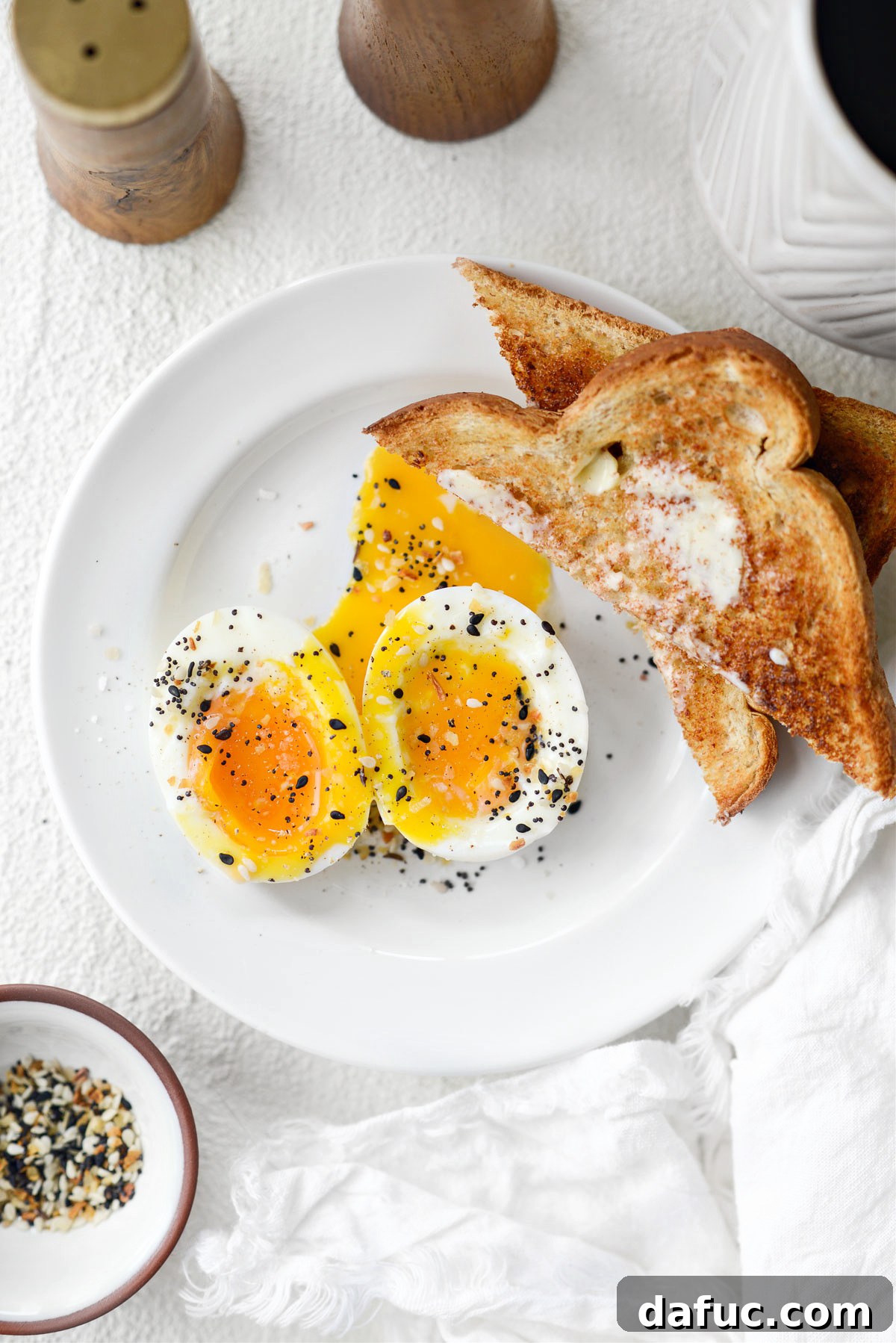
There’s something inherently delightful about a perfectly cooked soft-boiled egg. With its firm, tender whites and a lusciously runny or delightfully jammy yolk, it’s a simple culinary pleasure that elevates countless dishes. Whether nestled in a steaming bowl of ramen, sliced over a vibrant salad, enhancing a hearty soup, or simply served alongside a crisp piece of toast, soft-boiled eggs are a versatile addition to any meal. This comprehensive guide will walk you through the process, ensuring you achieve consistent, mouth-watering results every single time.
What Exactly Are Soft-Boiled Eggs?
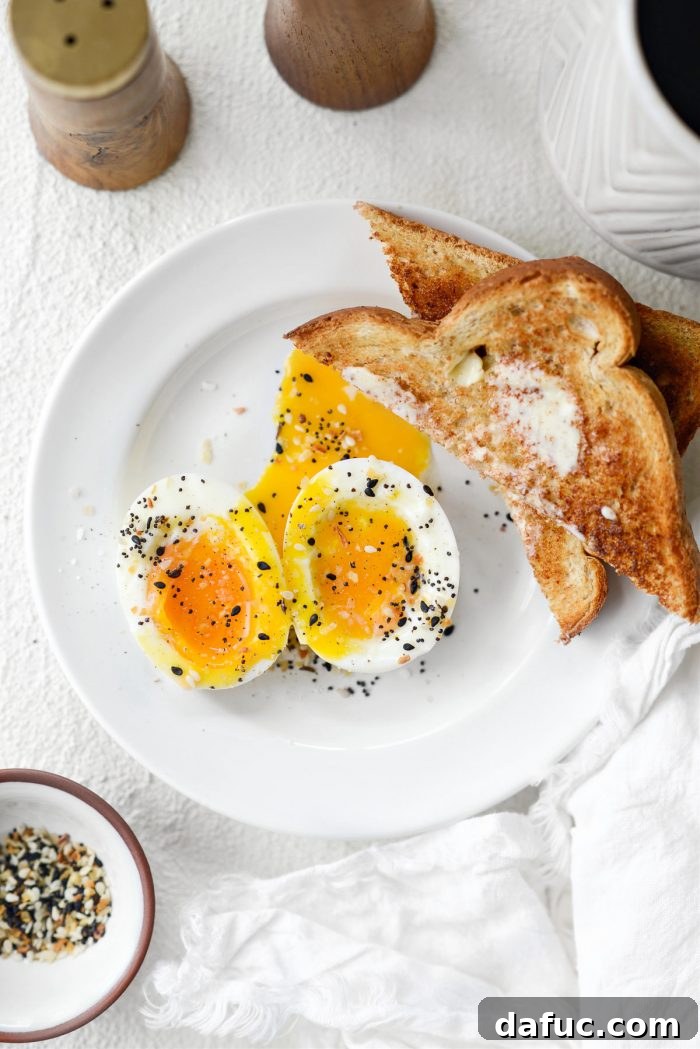
At its core, a soft-boiled egg is an egg cooked just enough so that the egg whites are fully set and firm, yet the yolk remains in a liquid or semi-liquid state. The precise consistency of the yolk – from gloriously runny to a slightly thicker, jam-like texture – is the hallmark of a perfectly executed soft boil and can be precisely controlled by adjusting the cooking time. A shorter cooking duration will yield softer whites and a very liquid yolk, while extending the time by mere seconds can transform that runny center into a rich, velvety jam. Understanding this delicate balance is key to mastering this breakfast staple.
Why Master the Soft-Boiled Egg? The Culinary & Nutritional Benefits
Beyond their sheer deliciousness, soft-boiled eggs offer a myriad of reasons to make them a regular part of your culinary repertoire. Their unique texture adds a luxurious mouthfeel and richness that transforms ordinary dishes into gourmet experiences. Imagine breaking into a soft-boiled egg and watching its golden yolk cascade over crisp avocado toast or mixing it into a savory ramen broth for added creaminess. This isn’t just about taste; it’s about texture and presentation too.
Nutritionally, eggs are a powerhouse. They are an excellent source of high-quality protein, essential for muscle repair and growth, and packed with vital vitamins and minerals like Vitamin D, B12, selenium, and choline, which supports brain health. Cooking them soft-boiled preserves many of these nutrients, offering a wholesome and satisfying addition to any diet. They’re also incredibly quick and easy to prepare, making them an ideal choice for busy mornings or a quick, nutritious snack.
Gathering Your Essentials: Ingredients & Equipment
Making perfect soft-boiled eggs requires minimal ingredients and equipment, making it an accessible recipe for even novice cooks. Here’s what you’ll need:
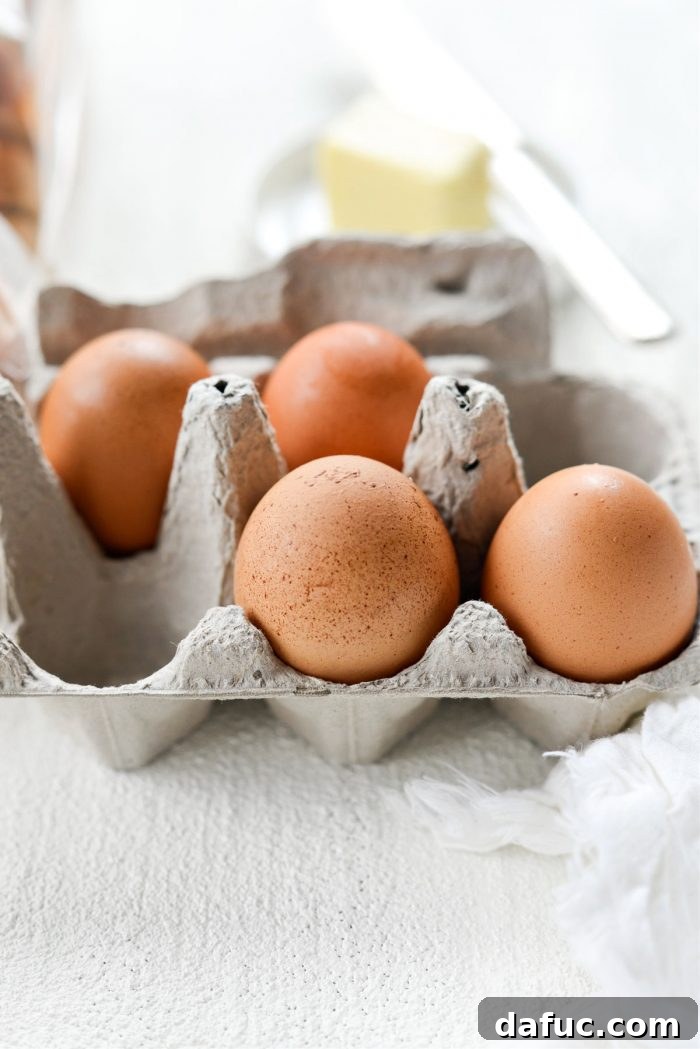
- **Eggs:** Fresh eggs are always best for flavor, but slightly older eggs (about a week or two old) can sometimes be easier to peel. We’ll delve into temperature below.
- **Water:** Enough to submerge your eggs.
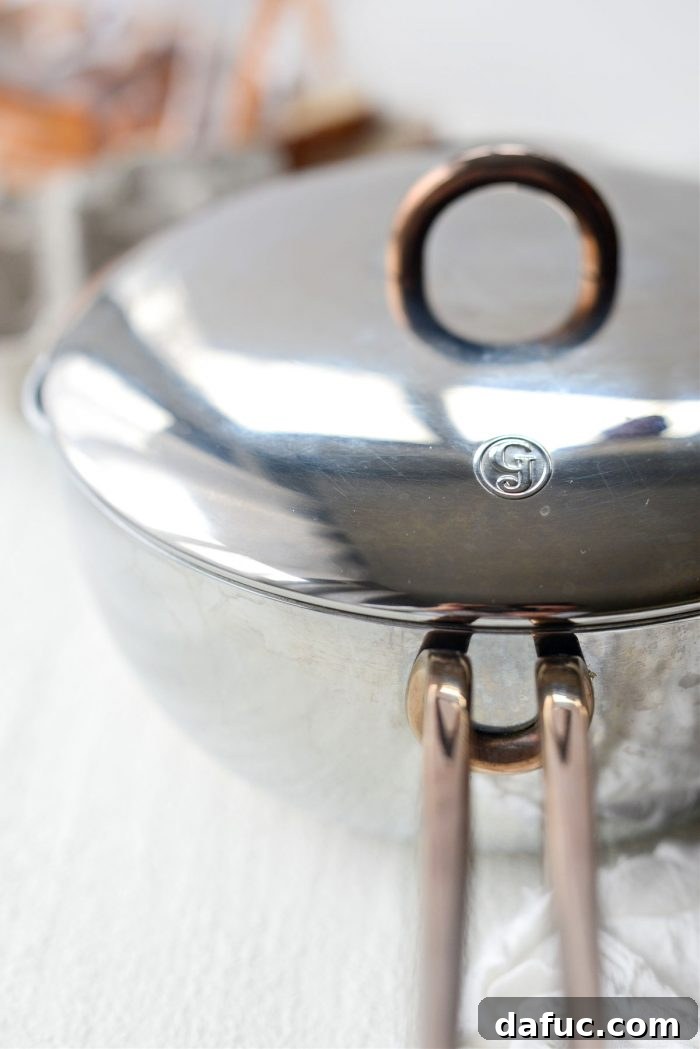
- **Saucepan:** A pot large enough to comfortably hold your eggs in a single layer, with a lid.
- **Slotted Spoon:** Essential for safely lowering and removing eggs from boiling water.
- **Timer:** Precision is crucial for soft-boiled eggs.
- **Colander or Ice Bath:** To immediately stop the cooking process.
Choosing the Right Eggs and Their Temperature
The journey to the perfect soft-boiled egg begins with your selection of eggs and their handling. While freshness contributes to flavor, surprisingly, eggs that are a few days to a week old tend to peel more easily than very fresh ones. This is because as an egg ages, its pH level increases, causing the albumen (egg white) to shrink slightly and separate from the inner membrane, making peeling a smoother task. For best results, I recommend using eggs that have been stored in the refrigerator.
The temperature of your eggs is surprisingly crucial for consistent results. Always use cold eggs, straight from the fridge. Introducing cold eggs into boiling water helps prevent the yolk from overcooking before the whites have set. Pulling them out ahead of time to reach room temperature could slightly alter the cooking times, leading to less predictable outcomes. If you’re cooking multiple eggs at once, try to select eggs that are similar in size. This ensures a more uniform cooking time, resulting in all your eggs reaching the desired level of doneness simultaneously.

Step-by-Step Guide to Perfect Soft-Boiled Eggs
1. Prepare Your Water
Start by filling a medium-sized saucepan with about 1 to 2 inches of water, roughly equivalent to 4 cups, ensuring there’s enough liquid to cover your eggs completely once added. Place the saucepan over high heat and bring the water to a rapid, rolling boil. A strong boil ensures the temperature remains consistent when the cold eggs are introduced.

2. Gently Lower the Cold Eggs
Once your water is at a vigorous boil, it’s time to add the eggs. This step requires care to prevent cracking. Using a slotted spoon, carefully and quickly lower each cold egg directly from the refrigerator into the boiling water. Avoid dropping them in, as this can cause them to crack against the bottom of the pan.
3. The Art of Timing: Cook to Your Desired Doneness
Immediately after adding the eggs, cover the saucepan with a lid and maintain the high heat. Set your timer for the desired doneness:
- For a perfectly runny yolk with tender whites, aim for **6 minutes**.
- For a slightly thicker, “jammy” yolk that’s less runny but still wonderfully creamy, cook for **6 1/2 to 7 minutes**.
These times are based on large eggs. If you are using smaller or larger eggs, you may need to adjust by 30 seconds to a minute accordingly. Altitude can also affect boiling times, so a little experimentation might be needed for your specific location.
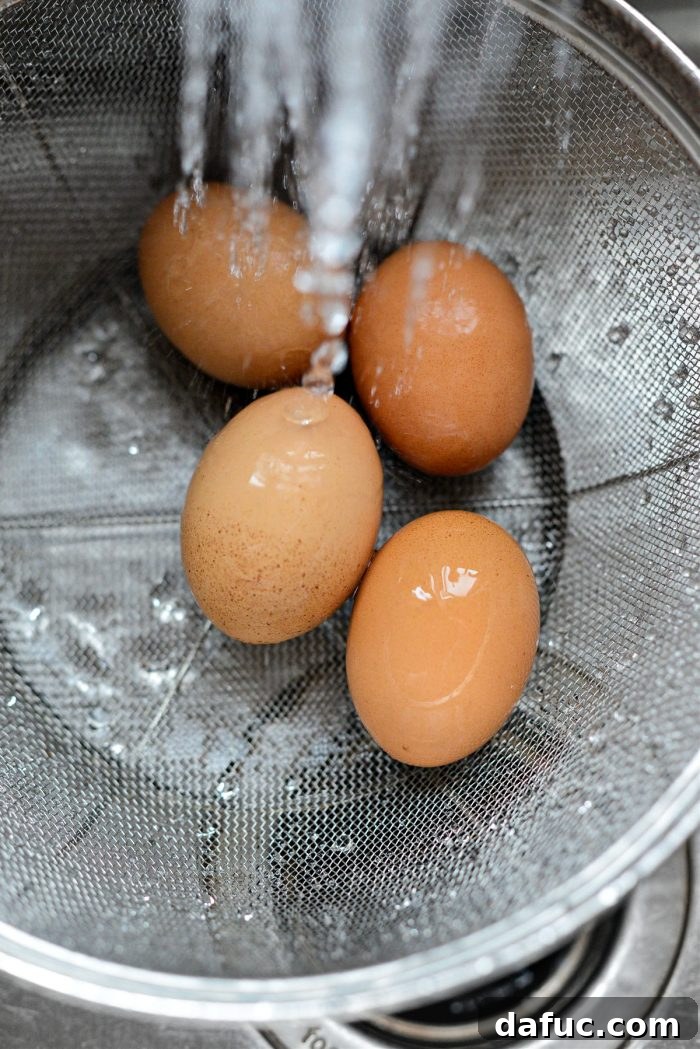
4. The Crucial Chill: Stop the Cooking Process
As soon as the timer goes off, the cooking process must be halted immediately to prevent the eggs from overcooking and losing their desired runny or jammy texture. Use your slotted spoon to quickly remove each egg from the boiling water. Transfer them directly into a colander set in your sink, or, ideally, into a bowl of ice water (an ice bath). Rinsing them under cold running water or submerging them in ice water serves two critical purposes: it rapidly cools the eggs, stopping the cooking, and helps to separate the membrane from the shell, making peeling easier.
5. Peeling Made Easy
Once cooled for a few minutes, gently tap the broader end of the egg on a hard surface to crack the shell. Then, carefully roll the egg between your palms to create more small cracks across the entire surface. For the easiest peeling, submerge the cracked egg back into cold water or peel it under a gentle stream of running water. The water helps to get under the membrane, allowing the shell to slide off smoothly. Start peeling from the broader end, where there’s usually an air pocket, making it easier to get under the shell.
Beyond the Basic: Creative Serving Suggestions
The beauty of a perfect soft-boiled egg lies in its versatility. While delicious on its own, it truly shines when paired with other dishes. Here are some inspiring serving suggestions:
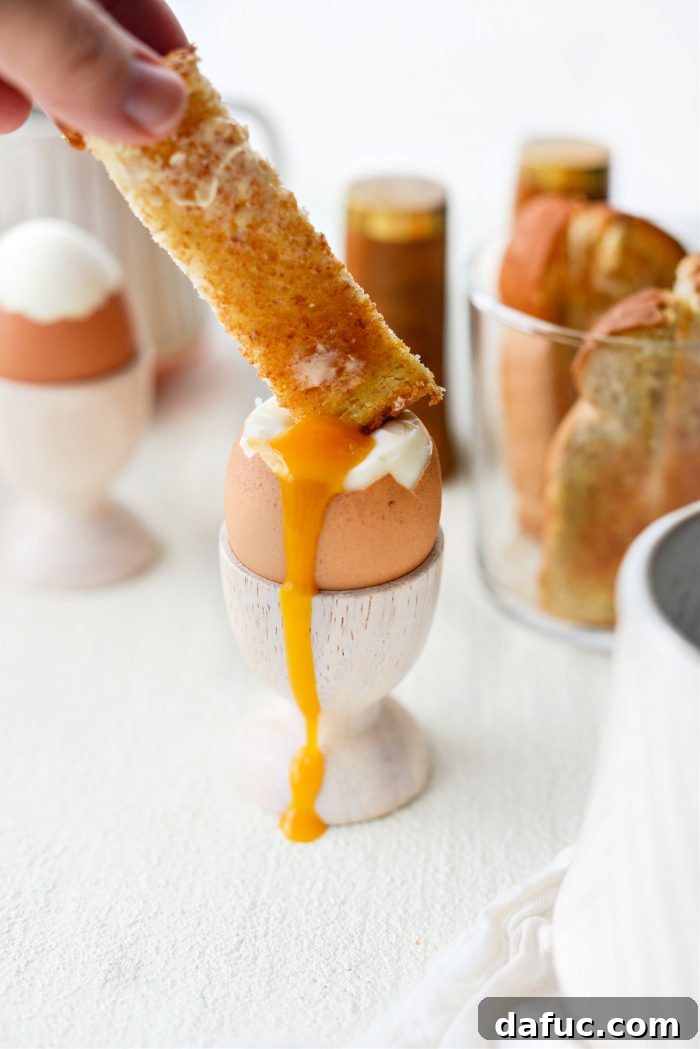
- **Classic Toast Pairing:** Serve in an egg cup alongside thin strips of buttered toast, affectionately known as “toast soldiers,” perfect for dipping into that runny yolk. A sprinkle of sea salt and freshly cracked black pepper is often all you need.
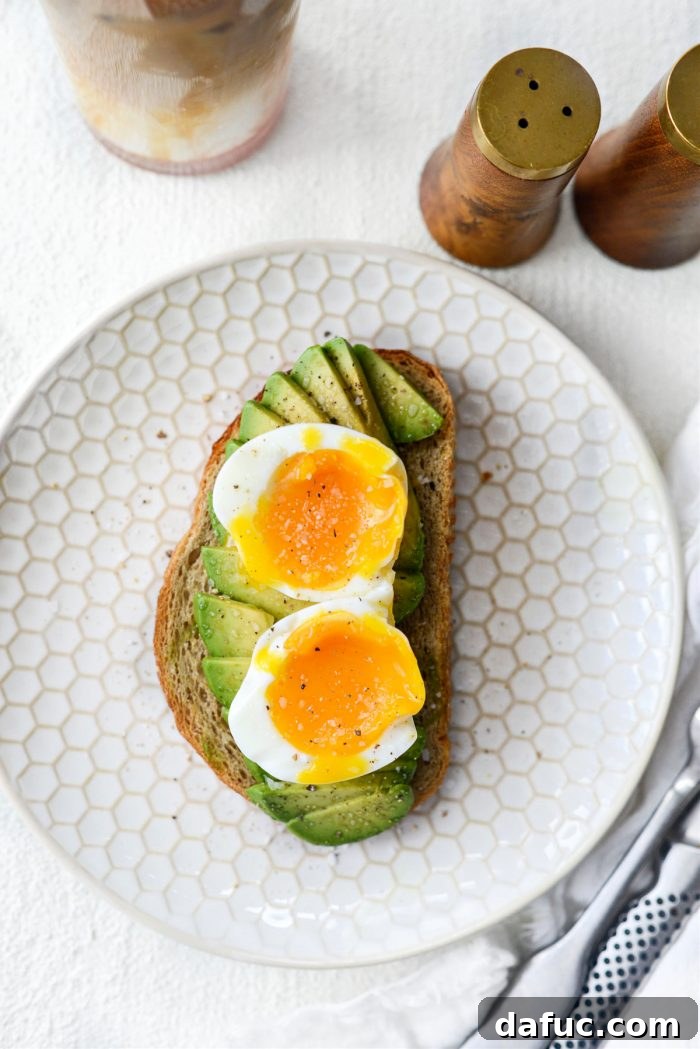
- **Elevated Avocado Toast:** Top your favorite avocado toast with a halved or sliced jammy soft-boiled egg. The creamy avocado and rich yolk create a symphony of textures and flavors. Enhance it with a dash of red pepper flakes or everything bagel seasoning.
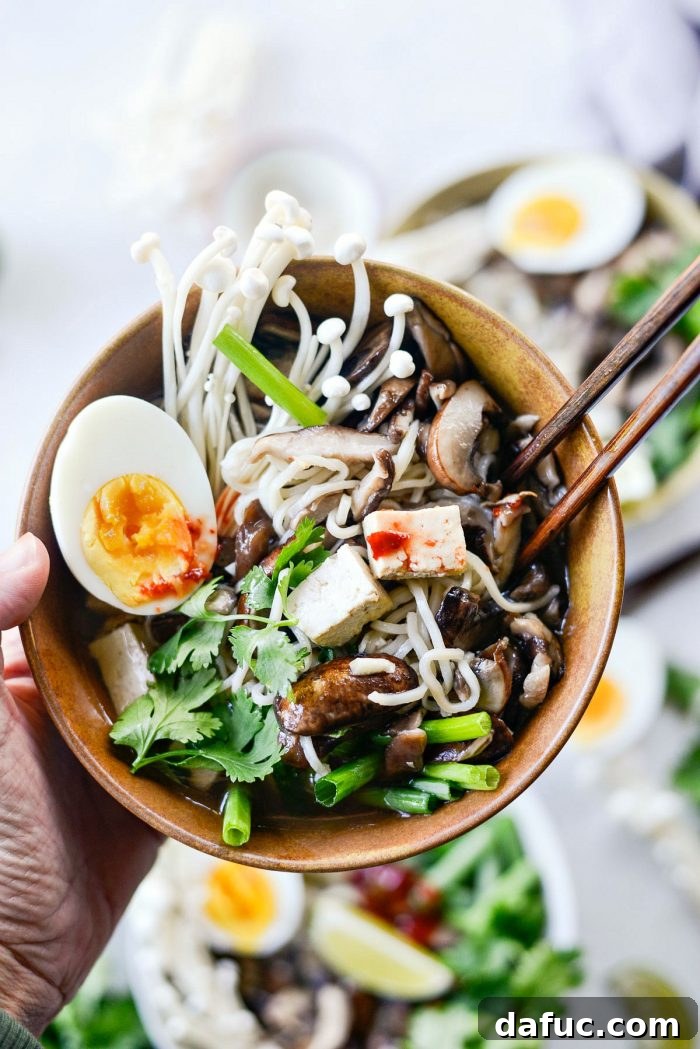
- **Ramen & Noodle Bowls:** A soft-boiled egg is an indispensable component of many ramen and noodle dishes. Its rich yolk enriches the broth, adding a luxurious creaminess and extra protein. Try it in a savory Mushroom Ramen Bowl.
- **Soups & Salads:** Add a soft-boiled egg to a hearty lentil soup, a light vegetable broth, or a crisp green salad for a boost of protein and flavor. It can transform a simple salad into a complete meal.
- **Grain Bowls & Buddha Bowls:** Integrate a soft-boiled egg into your healthy grain bowls alongside roasted vegetables, quinoa, and a flavorful dressing for a satisfying and nutritious lunch or dinner.
- **Savory Breakfast Bowls:** Combine with roasted potatoes, sautéed greens, or even leftovers for a quick, wholesome breakfast.
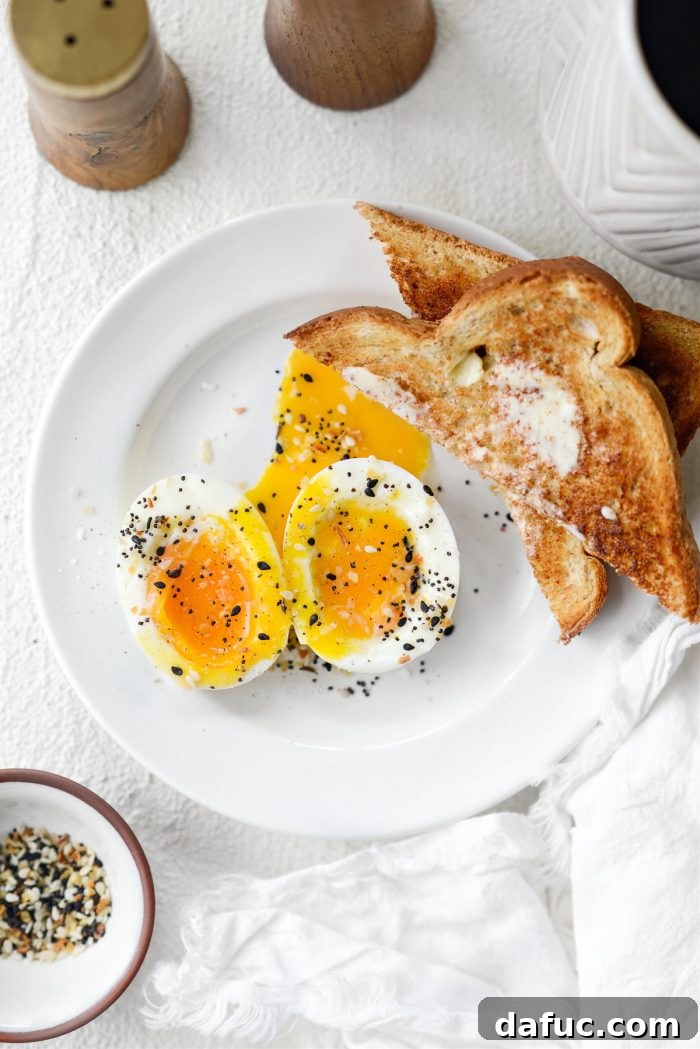
- **Spice It Up:** Beyond salt and pepper, experiment with chili flakes, a drizzle of high-quality olive oil, a sprinkle of fresh herbs like chives, or even a dash of soy sauce for an Asian-inspired twist. My personal favorite is a generous sprinkle of everything but the bagel seasoning.
My daughter, Malloree, particularly loves topping her avocado toast with a jammier soft-boiled egg, seasoned with kosher salt and black pepper.
Troubleshooting Common Issues
Even with a precise method, sometimes things don’t go exactly as planned. Here are some common soft-boiled egg dilemmas and how to address them:
- **Overcooked Eggs:** If your yolk isn’t runny or jammy but solid, the egg was cooked too long. Reduce your cooking time by 30-60 seconds next time.
- **Undercooked Whites:** If the whites are still gooey or translucent, the egg needs more time. This is less common with the boiling method but can happen if the water isn’t at a strong boil or the eggs are too large.
- **Hard-to-Peel Eggs:** This is often a sign of very fresh eggs. While not a problem for the egg’s taste or texture, it can be frustrating. Using slightly older eggs or ensuring a proper ice bath can help. Peeling under running water or in a bowl of water also assists.
- **Cracked Eggs:** Gently lowering eggs with a slotted spoon usually prevents this. If an egg cracks during cooking, the white might seep out a little, but the egg is usually still edible. Adding a teaspoon of vinegar to the boiling water can sometimes help seal small cracks.
Storing Your Soft-Boiled Delights
While best enjoyed immediately, cooked soft-boiled eggs can be stored. Unpeeled soft-boiled eggs can be kept in the refrigerator for up to 2-3 days. Store them in an airtight container to prevent them from absorbing odors from other foods. Peeled soft-boiled eggs should be consumed within a day for optimal freshness and texture.
Mastering the soft-boiled egg is a rewarding skill that opens up a world of culinary possibilities. With this detailed guide, you’re now equipped to achieve perfection every time. Experiment with timings, try different serving suggestions, and most importantly, enjoy the simple pleasure of this versatile kitchen staple.
Enjoy! And if you give this recipe for Perfect Soft Boiled Eggs a try, let me know! Snap a photo and tag me on twitter or instagram!

Print Recipe
Pin Recipe
Leave a Review »
1
Perfect Soft Boiled Eggs
Making the Perfect Soft Boiled Eggs is easy and extremely delicious in ramen noodles bowls, soups and salads and especially with toast.
10 mins
6 mins
16 mins
Ingredients
- eggs, see notes
Instructions
- Fill a saucepan with 1 to 2 inches of water (about 4 cups). Cover and bring to a boil.
- Keep your eggs in the refrigerator until the water is boiling.
- Once boiling, use a slotted spoon to carefully lower the cold egg or eggs into the boiling water. Cover and set a timer for 6 minutes for a runny yolk. 6-1/2 to 7 minutes for a more jammy yolk.
- When the timer is up, carefully transfer the eggs to a colander set into your sink and rinse with cold water to stop the cooking process.
- Serve with toast, or with ramen or in soup and on salads.
Notes
If making several soft-boiled eggs at once, I try to pick eggs that are similar in size to ensure they come out with the same results.
Laurie McNamara
Breakfast & Brunch
American