
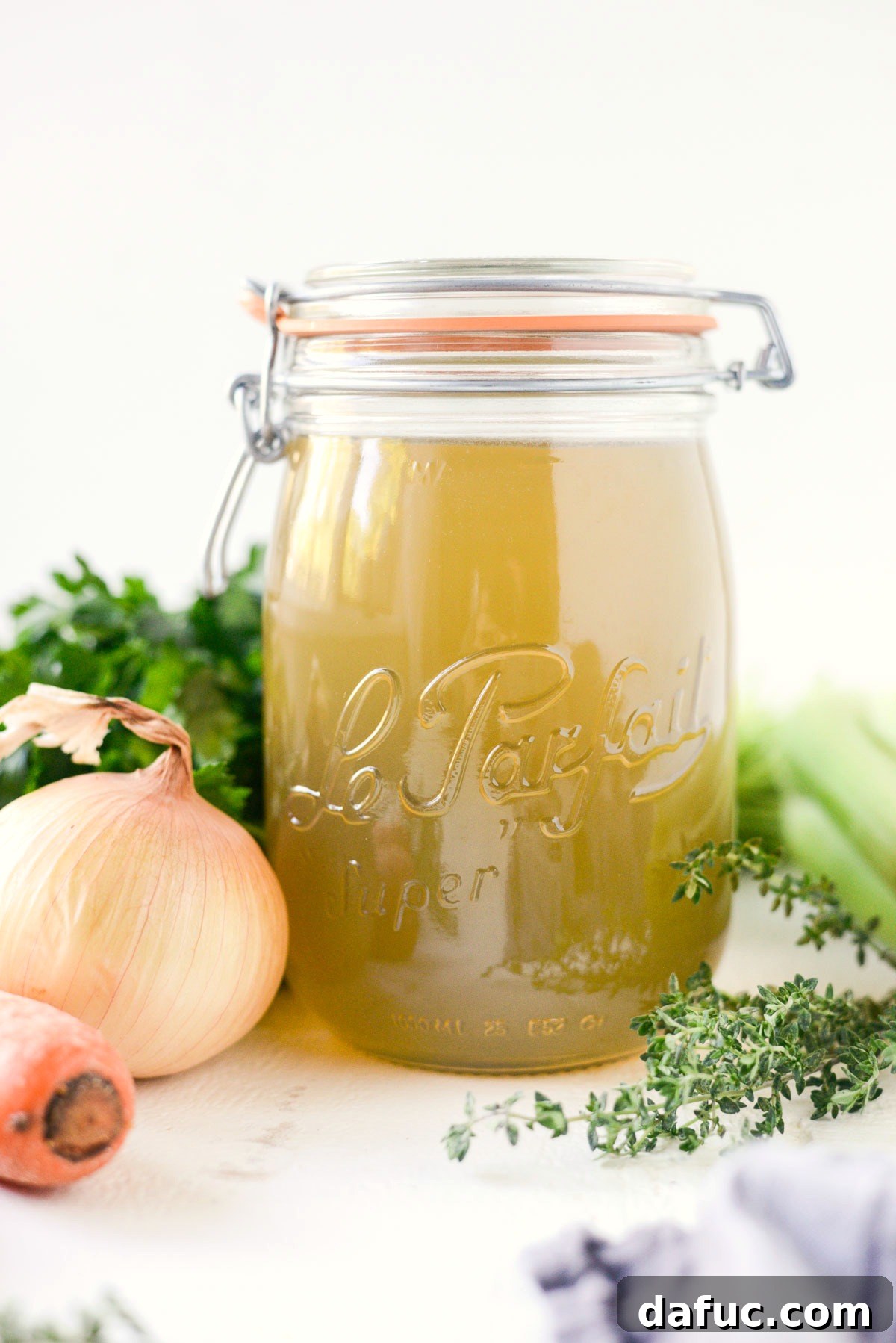
The Ultimate Guide to Homemade Slow Cooker Chicken Stock
Unlock a world of rich, savory flavor with homemade chicken stock, effortlessly prepared in your slow cooker. This comprehensive guide will walk you through creating a deep, nutrient-dense stock, simmering chicken bones with aromatic vegetables for hours until every drop is infused with goodness. Perfect for enhancing your favorite soups, stews, sauces, or even just sipping, this slow cooker method makes preparing a staple kitchen ingredient incredibly simple and rewarding. Say goodbye to store-bought cartons and hello to superior taste and health benefits.
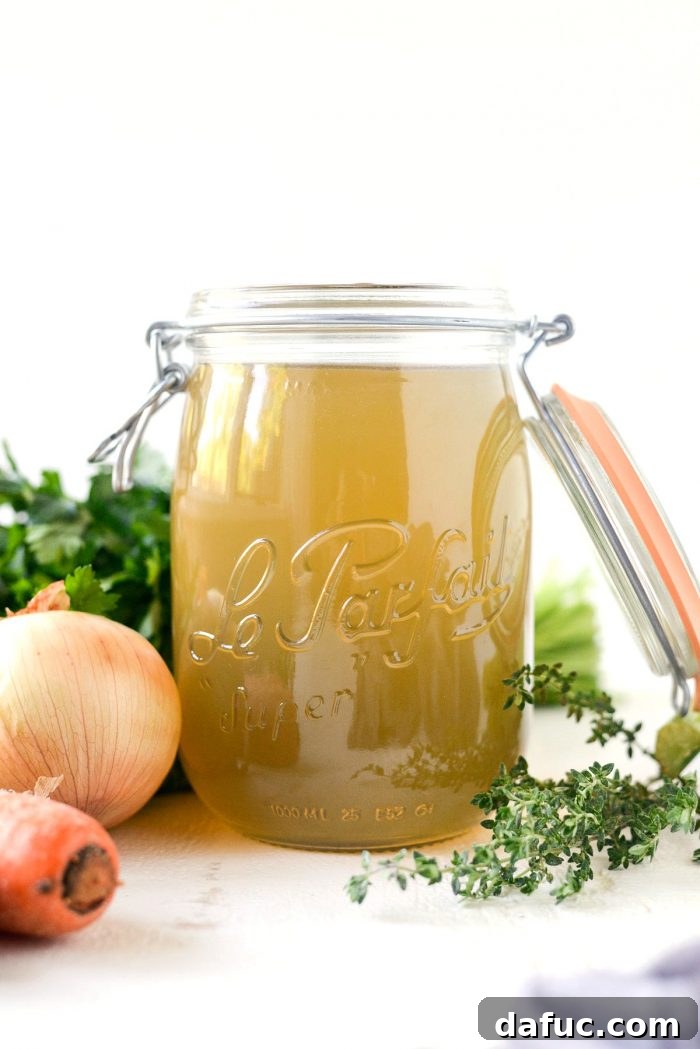
Why Homemade Chicken Stock is a Kitchen Essential
Whenever I cook a whole chicken, whether roasted or in a slow cooker, I always make sure to save the bones. It’s an essential practice for anyone keen on reducing food waste and maximizing flavor in their cooking. Turning those leftover bones into a golden, gelatinous stock is surprisingly simple, especially when you harness the convenience of a slow cooker. This method liberates you from constant monitoring, allowing the magic to happen while you go about your day.
If your schedule doesn’t permit immediate stock-making, don’t fret. Collect those precious bones in a freezer-safe container and store them in your freezer. You can accumulate bones from several meals over time, creating a generous batch when you’re ready. Your future soups, gravies, and sauces will benefit immensely from this foundational ingredient, elevating their taste profile far beyond what store-bought versions can offer.
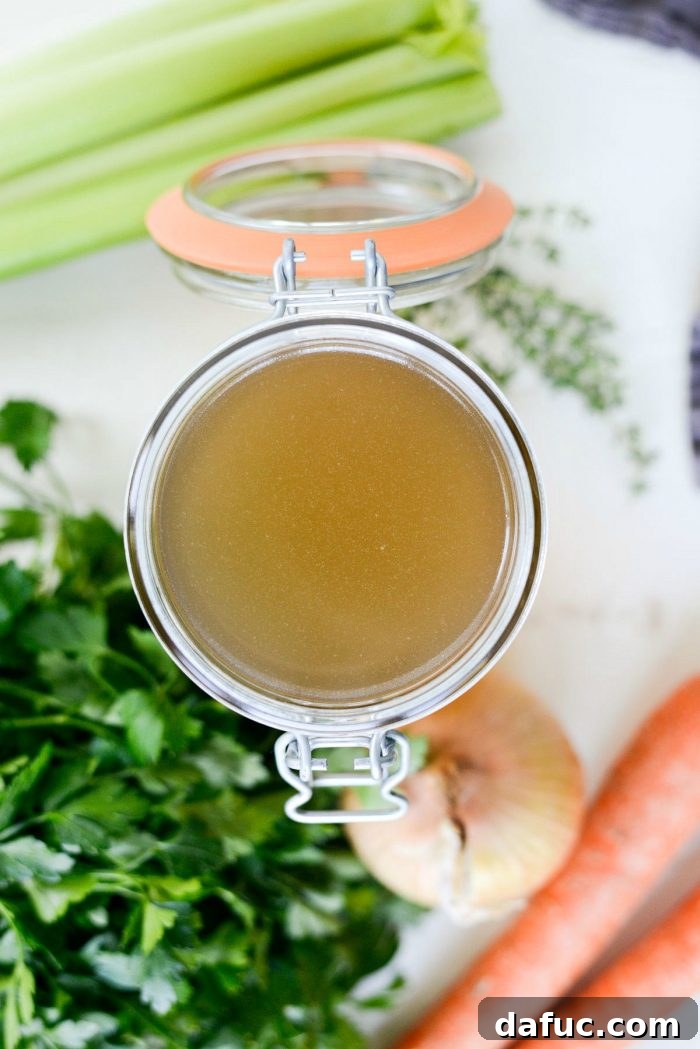
Understanding the Difference: Chicken Stock vs. Chicken Broth
While often used interchangeably, chicken stock and chicken broth are distinct culinary liquids with different characteristics and uses. Knowing the difference can help you make better choices for your recipes:
- Chicken Stock: This is typically made by simmering roasted chicken bones and connective tissues (often from a whole carcass) in water with a few aromatic vegetables and herbs for an extended period, usually 6-24 hours. The goal is to extract collagen from the bones, which gives the stock a richer body and a more gelatinous texture when cooled. Stock is usually unsalted, dark in color, and can appear cloudy due to the emulsified fats and dissolved solids. Its fuller “mouthfeel” makes it an excellent base for gravies, braises, and dishes where a robust flavor and texture are desired.
- Chicken Broth: Broth is generally made by simmering chicken meat (with or without bones) in water, along with vegetables and herbs, for a shorter duration, typically 1-2 hours. Because it’s primarily meat-based, it contains less collagen, resulting in a lighter body and a clearer appearance. Broth is often seasoned with salt and can be enjoyed on its own as a light soup or used in recipes where a more delicate flavor is preferred.
For this recipe, we are focusing on creating a true chicken stock, maximizing the extraction of collagen and minerals from the bones to achieve that sought-after rich, gelatinous consistency.
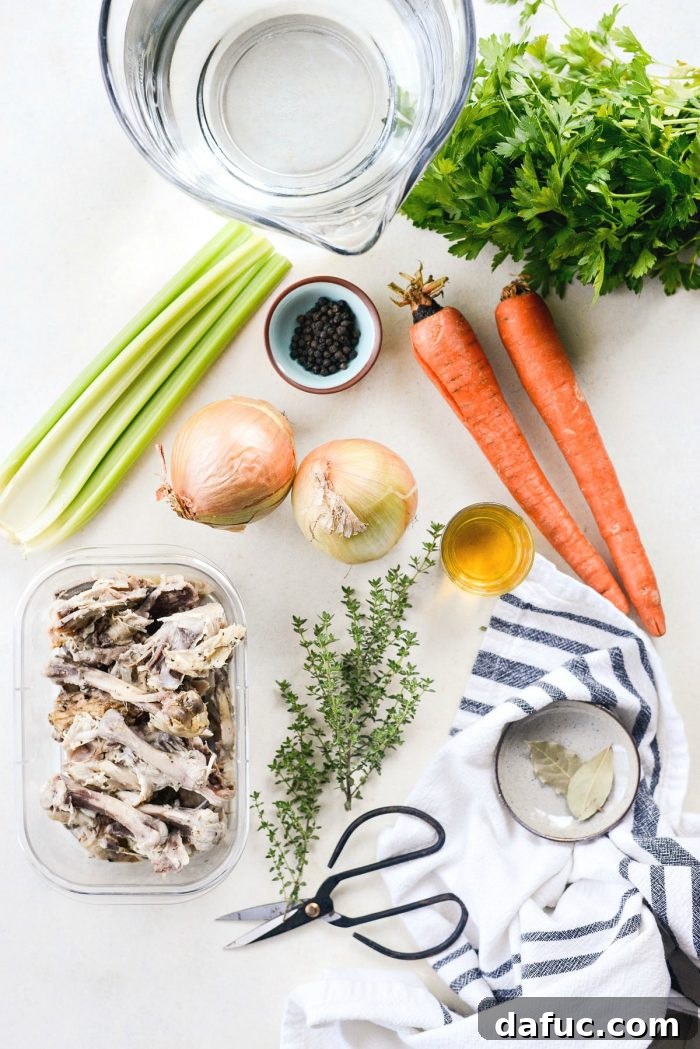
Essential Ingredients for Your Slow Cooker Chicken Stock
Crafting exceptional chicken stock requires only a few simple, wholesome ingredients. The beauty of this recipe lies in its simplicity and the depth of flavor it achieves from humble beginnings:
- Chicken Bones: The foundation of our stock. Bones from 1-2 roasted chicken carcasses are ideal, providing superior flavor and color. The more bones, the richer the collagen and mineral content.
- Onions: Yellow onions are preferred for their sweet and pungent aroma, contributing significantly to the stock’s savory base.
- Carrots: These add a subtle sweetness and beautiful golden hue to the stock.
- Celery: A classic aromatic vegetable, celery provides a fresh, earthy note that complements the other ingredients.
- Parsley: Fresh parsley, particularly the stems, adds a clean, herbaceous aroma without overpowering the chicken flavor.
- Thyme: Earthy and slightly floral, fresh thyme sprigs bring a wonderful depth to the stock.
- Bay Leaves: These fragrant leaves impart a subtle, almost medicinal aroma that enriches the overall flavor profile.
- Black Peppercorns: Whole peppercorns add a mild, earthy spice without making the stock overtly peppery.
- Apple Cider Vinegar: A crucial ingredient, a small amount of vinegar helps to draw out the beneficial minerals and collagen from the bones, enhancing the nutritional value and gelatinous quality of your stock.
- Filtered Water: Using filtered water is important for a clean-tasting stock, free from chlorine or other tap water impurities.
- Cheesecloth (optional but recommended): For a super clear stock, cheesecloth is essential during the straining process.
Step-by-Step: Crafting Your Chicken Stock in the Slow Cooker
Making stock in a slow cooker is incredibly straightforward, allowing you to achieve a deeply flavored liquid with minimal effort. Follow these steps for perfect results:
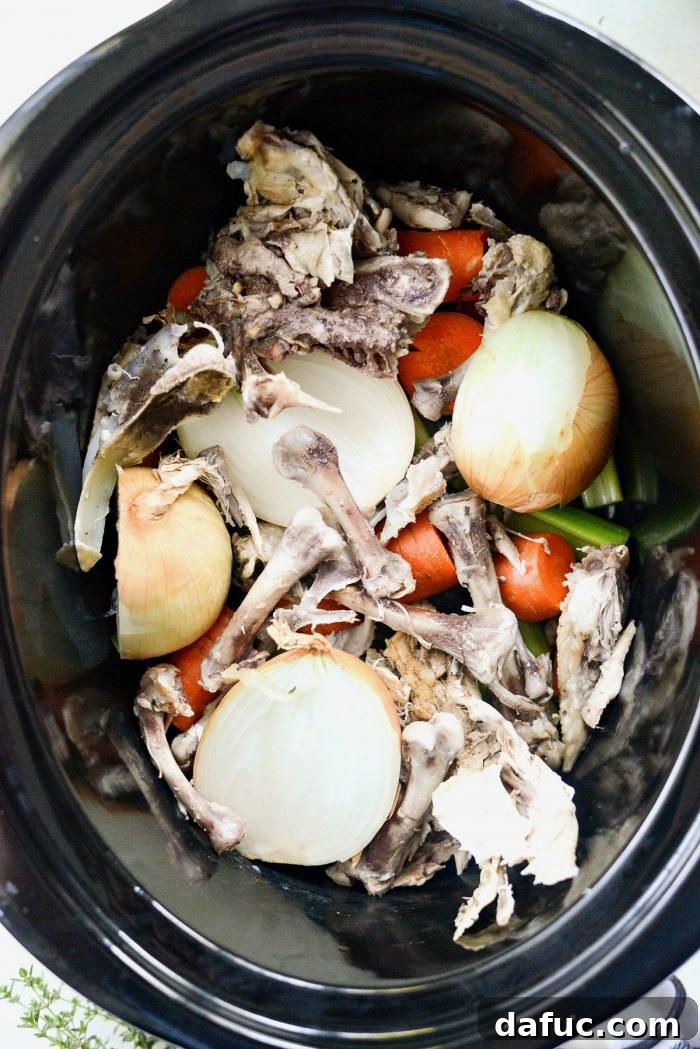
Begin by preparing your aromatic vegetables. Trim the ends off two medium yellow onions, cut them in half, and place them directly into your slow cooker. There’s no need for precise chopping as they will be strained out later. Next, wash and coarsely chop your carrots and celery stalks. The larger pieces prevent them from becoming mush during the long cooking process while still releasing their flavors. Add these to the slow cooker along with the onions.
Now, it’s time for the star ingredient: the chicken bones. If you can physically snap any of the bones, do so. This small action helps expose more surface area, making it easier for the collagen and minerals to be released into the liquid during cooking. Place all the bones into the slow cooker, nestled among the vegetables.
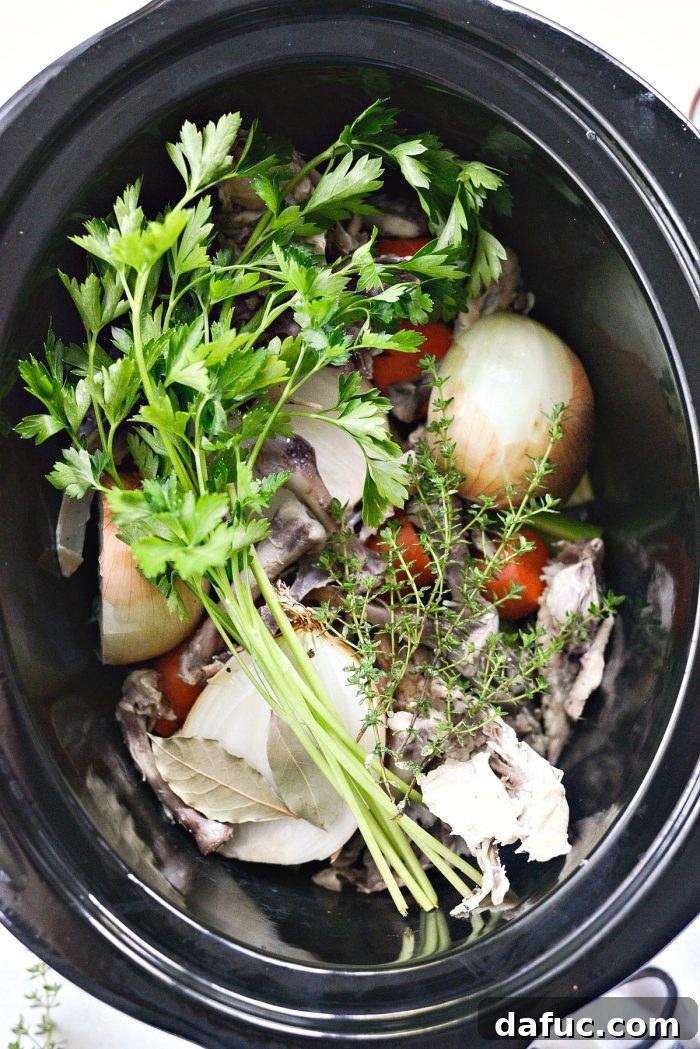
Introduce your herbs and spices. Add about 8 sprigs of fresh parsley, 4 sprigs of fresh thyme, and 2 bay leaves. These aromatics are essential for building the complex flavor profile of your stock. The fresh herbs release their oils slowly, infusing the liquid with their fragrant essence over hours.
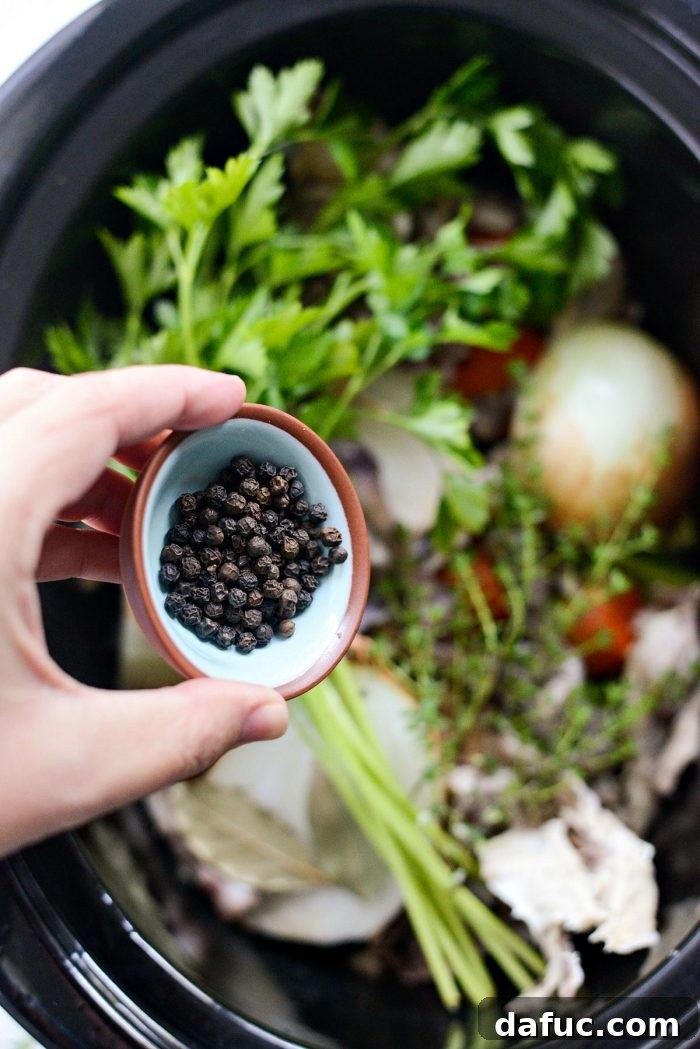
Next, sprinkle in approximately 2 teaspoons of whole black peppercorns. These contribute a mild, subtle warmth and round out the savory notes without adding any heat. Using whole peppercorns prevents the stock from becoming too spicy, allowing their essence to slowly meld with the other ingredients.
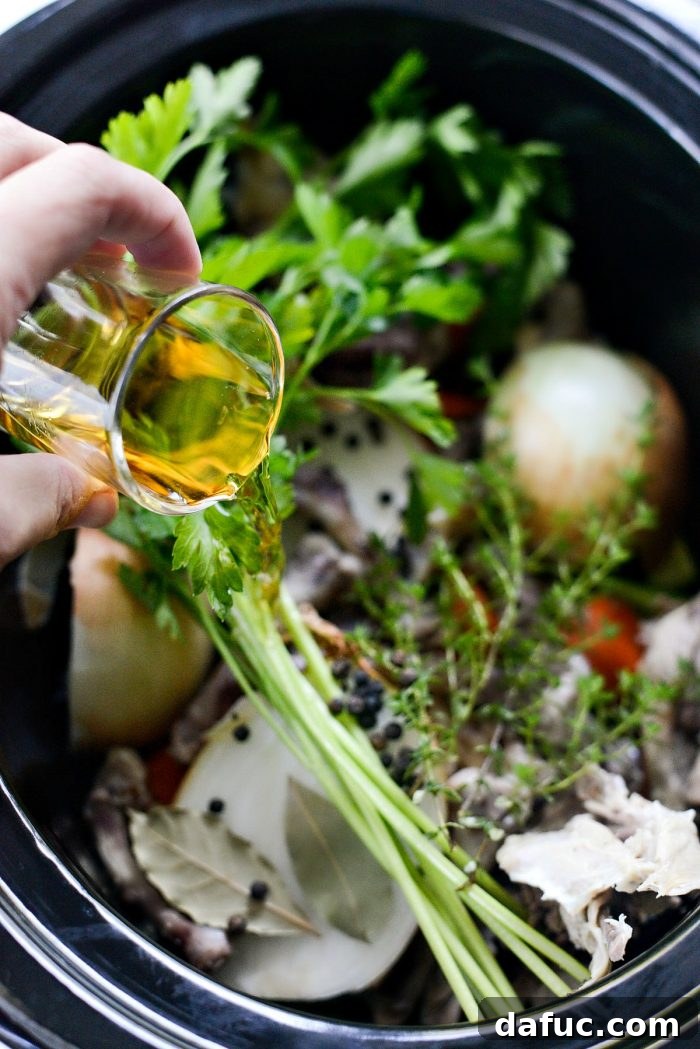
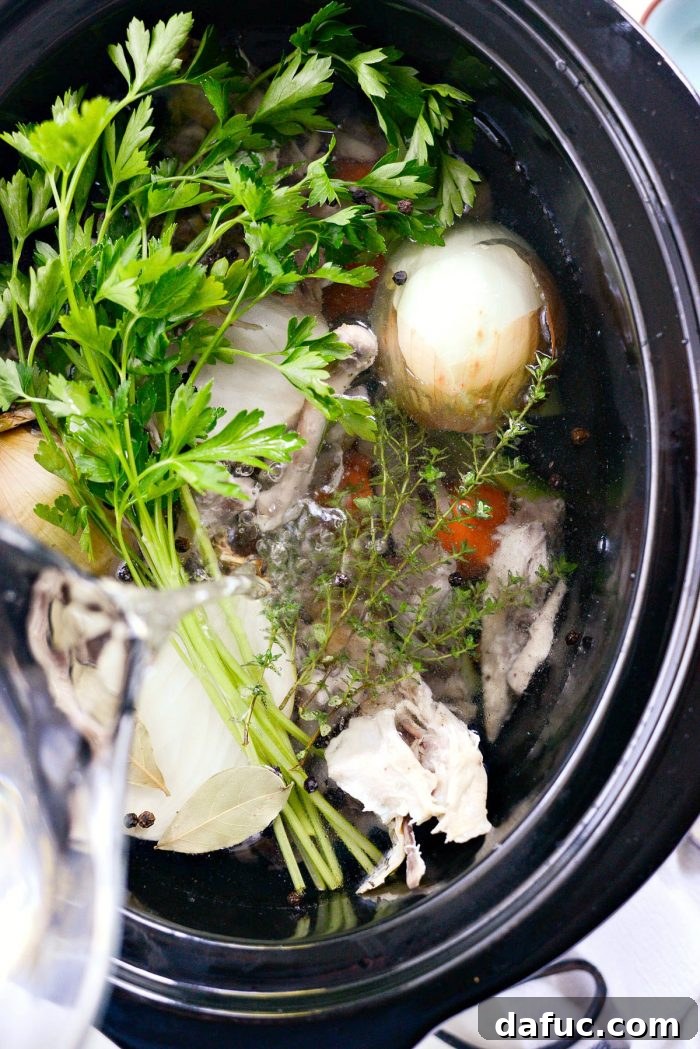
Pour in 2 tablespoons of apple cider vinegar, then add 12 cups of filtered water, ensuring all ingredients are fully submerged. The apple cider vinegar is a small but mighty addition; research suggests it helps extract more nutrients, particularly minerals, from the bones. This results in a more nutrient-dense and flavorful stock. Filtered water is recommended to avoid any off-flavors from tap water.
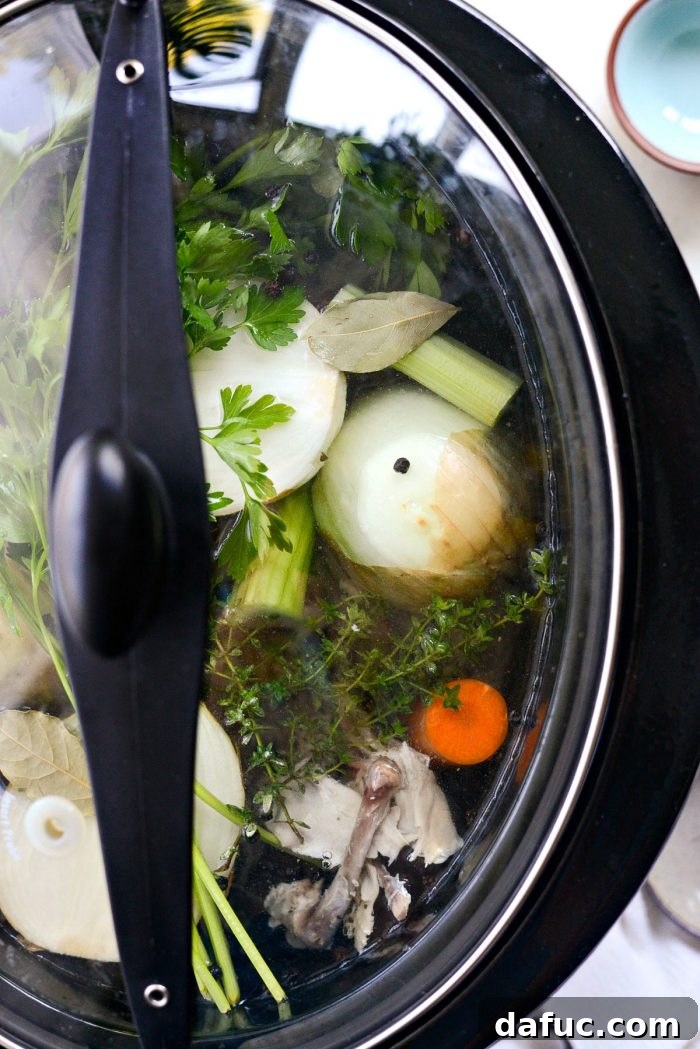
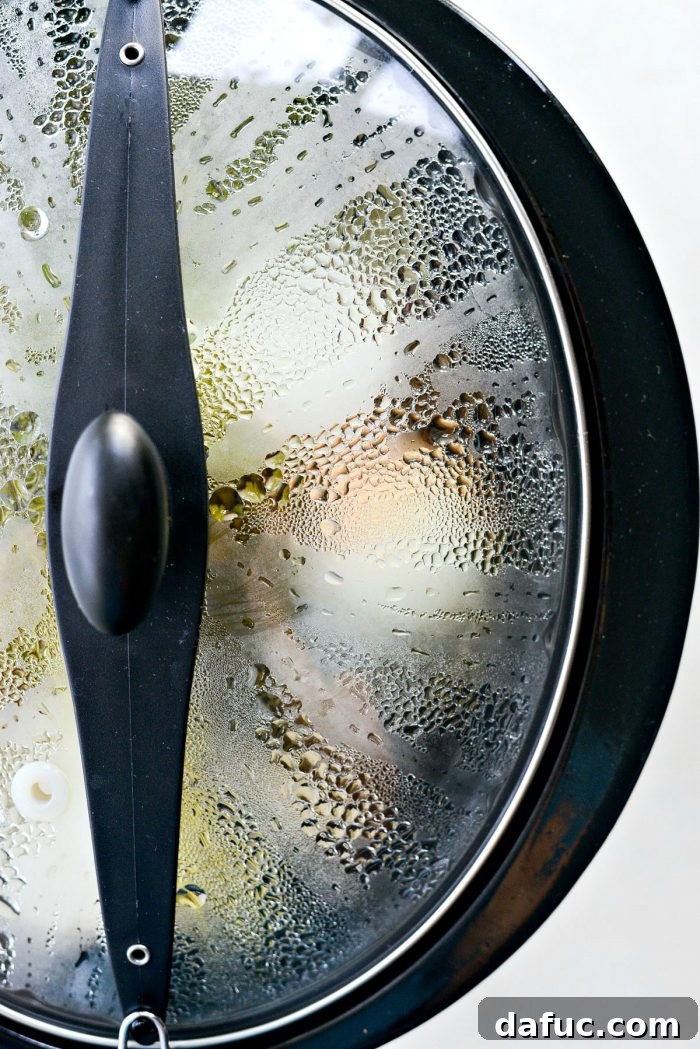
Cover your slow cooker and set it to cook on the low heat setting for a minimum of 12 hours. For an even richer, more potent stock, you can extend the cooking time up to 24 hours. The “low and slow” method is key here, allowing the flavors to meld beautifully and the bones to release maximum collagen and minerals.
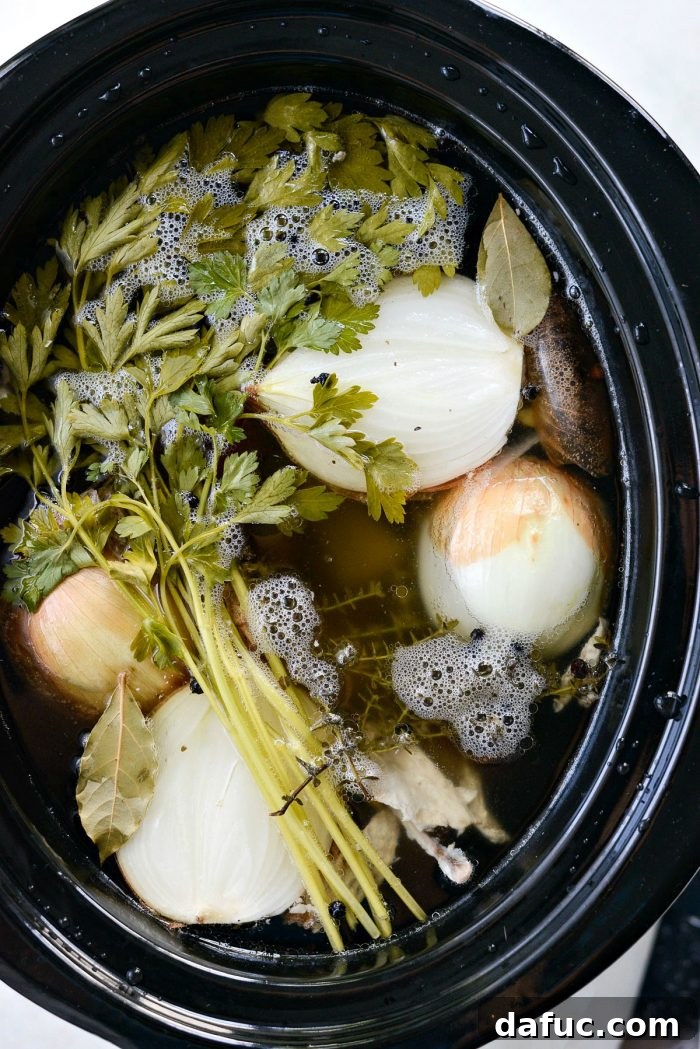
Once the cooking time is complete, it’s time to strain your golden liquid. Using a slotted spoon, carefully remove and discard all the cooked vegetables. Then, use tongs to retrieve and discard the chicken carcass. Set a fine-mesh strainer over a large heat-proof measuring cup or bowl. For an even clearer stock, line the strainer with cheesecloth. Carefully pour the hot stock through the cheesecloth-lined strainer. You may need to do this in batches if your measuring cup isn’t large enough. Allow the stock to cool completely at room temperature before storing. Cooling completely before refrigeration or freezing is crucial for food safety and to prevent rapid temperature changes that could affect your refrigerator.
Storage and Freezing Tips for Homemade Stock
Once your homemade chicken stock has completely cooled, it’s ready for storage. Proper storage ensures its longevity and maintains its quality:
- Refrigeration: Cooled stock can be stored in airtight containers in the refrigerator for up to 3-4 days. You’ll likely notice a layer of fat solidify on top, which acts as a natural seal and can be removed before use, or left for added flavor.
- Freezing for Long-Term Storage: For extended use, freezing is your best option. Pour the cooled stock into freezer-safe containers, leaving about an inch of headspace to account for expansion. Popular options include:
- 2-Cup Containers: Ideal for recipes that call for standard amounts of liquid.
- Ice Cube Trays: Perfect for smaller portions, like sautéing vegetables, deglazing a pan, or adding a flavor boost to sauces. Once frozen solid, transfer the cubes to a freezer bag for easy access.
Store frozen stock in the back of your freezer, where temperatures are most consistent, for up to 12 months. Label your containers with the date of preparation. To thaw, simply run lukewarm water over the container until the stock loosens, or defrost slowly in your refrigerator overnight. For quick thawing, you can also gently heat it in a saucepan on the stove.
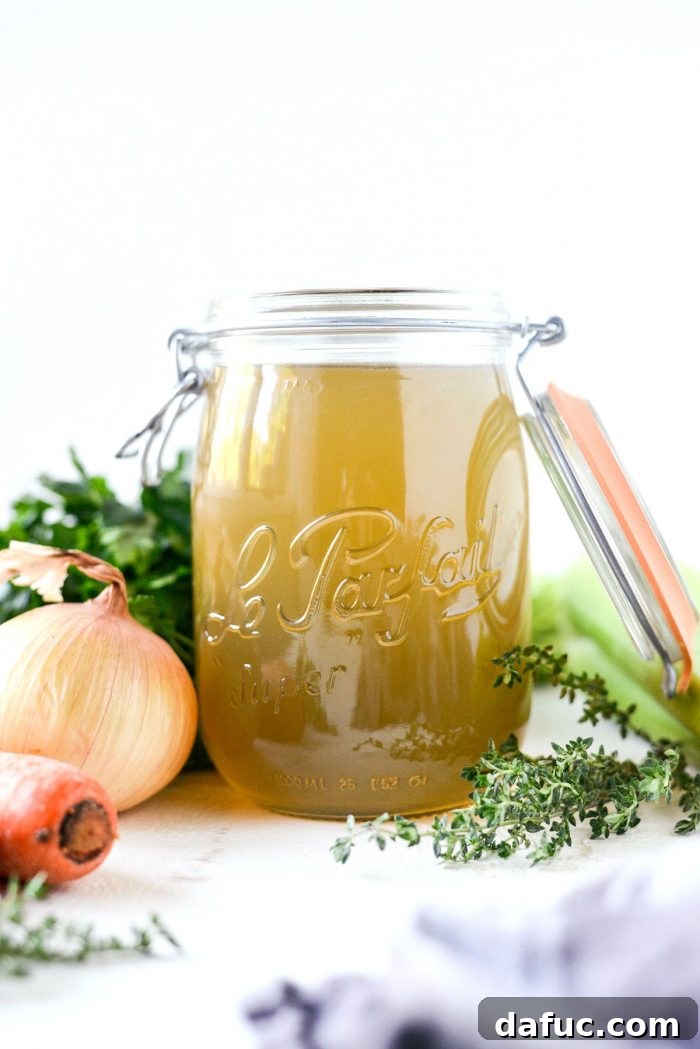
Versatile Uses for Your Homemade Chicken Stock
The beauty of homemade chicken stock lies in its versatility. It’s a culinary workhorse that can elevate countless dishes beyond just soup. Here are just a few ways to incorporate your rich, flavorful stock:
- Soups and Stews: This is its most obvious application. Use it as the base for hearty chicken noodle soup, creamy vegetable stews, lentil soups, or any broth-based recipe to impart unparalleled depth.
- Sauces and Gravies: Replace water or store-bought broth with your homemade stock when making pan sauces for roasted meats, or when whipping up a rich gravy. The collagen adds body and a silky texture.
- Risotto and Grains: Achieve perfectly creamy risotto by using warm chicken stock, adding it gradually as the rice cooks. It also works wonders for cooking quinoa, couscous, or rice, infusing them with savory flavor.
- Braising Liquids: Use it as a flavorful liquid for braising meats like chicken thighs, pot roast, or short ribs. The slow cooking tenderizes the meat while imparting incredible taste.
- Deglazing Pans: After searing meat or vegetables, use a splash of hot stock to deglaze the pan, scraping up all those delicious browned bits to create an instant, flavorful sauce.
- Steaming Vegetables: Steam vegetables with a little stock instead of water for an added layer of flavor.
- Sipping Broth: On a cold day or when feeling under the weather, a warm mug of homemade chicken stock is incredibly comforting and nourishing.
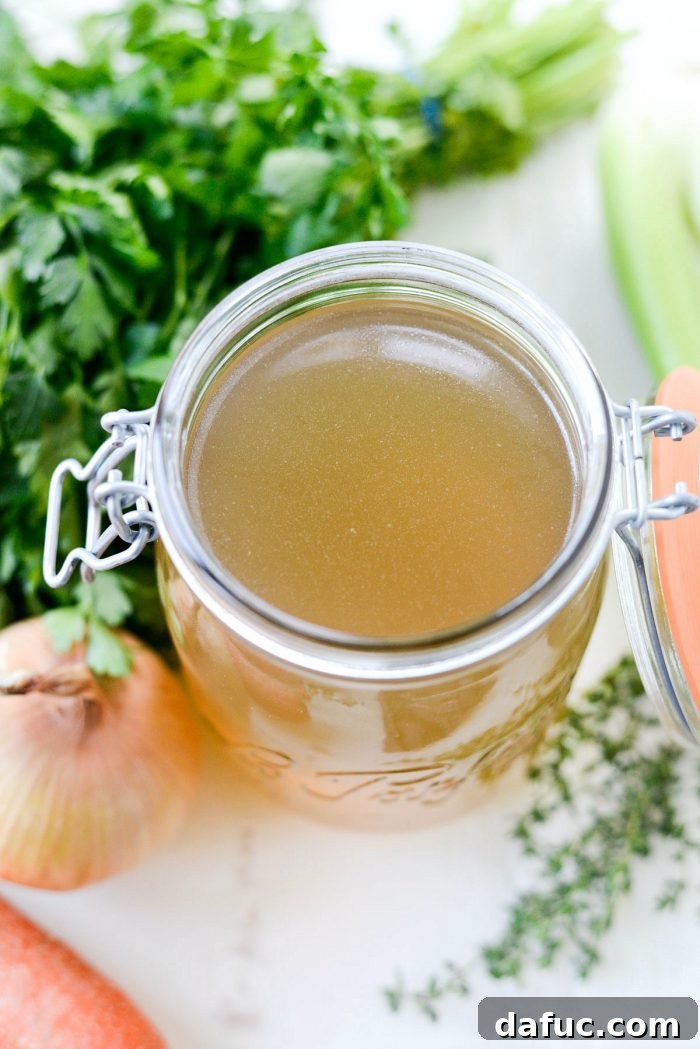
For more homemade stocks and broths, explore our Kitchen Basics section!
Enjoy! And if you give this Slow Cooker Chicken Stock recipe a try, we’d love to hear from you! Snap a photo and share it with us on Twitter or Instagram!
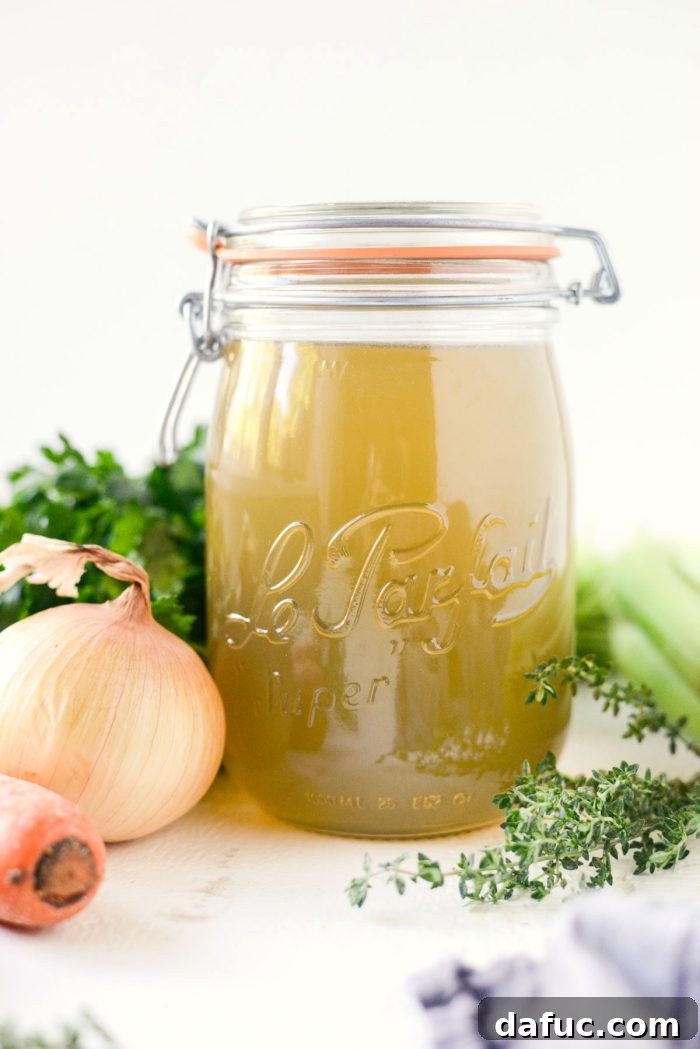
Print Recipe
Pin Recipe
Leave a Review »
12 cups
Slow Cooker Chicken Stock
5 mins
12 hrs
12 hrs 5 mins
Ingredients
- bones from 1 to 2 chicken carcasses
- 2 carrots, chopped
- 2 to 3 celery stalks, chopped
- 2 medium yellow onions, ends trimmed, discarded and onions cut in half
- 8 sprigs parsley
- 4 sprigs thyme
- 2 bay leaves
- 2 teaspoons black peppercorns
- 2 tablespoons apple cider vinegar
- 12 cups filtered water
Equipment
- Hamilton Beach 6-Quart Programmable Slow Cooker
Instructions
- Snap any bones you physically can and add them to your slow cooker along with chopped carrots, celery and onion halves.
- Add in the parsley, thyme, bay leaves and peppercorns.
- Pour in the cider vinegar and water. Cover and cook on low for 12 hours.
- Use a slotted spoon to remove the vegetables and discard the carcass using tongs. Set a mesh strainer into a large measuring cup and line with cheesecloth.
- Carefully pour the stock into the cheesecloth lined strainer. Once filled, move the strainer to another measuring cup to pour the remaining homemade chicken stock through.
- Allow the stock to cool completely before storing.
Notes
For Freezing: Pour the cooled stock into 2-cup freezer safe containers and store in the back of your freezer for up to 12 months. To thaw, run lukewarm water over the container until thawed or defrost in your microwave.
Nutrition Information (per 1 cup serving):
- Calories: 15kcal
- Carbohydrates: 3g
- Protein: 1g
- Fat: 1g
- Saturated Fat: 1g
- Polyunsaturated Fat: 1g
- Monounsaturated Fat: 1g
- Sodium: 21mg
- Potassium: 78mg
- Fiber: 1g
- Sugar: 1g
- Vitamin A: 1779IU
- Vitamin C: 3mg
- Calcium: 21mg
- Iron: 1mg
Laurie McNamara
Kitchen Basics
American