

Ina Garten’s Winter Minestrone: A Hearty & Soul-Warming Soup for Cold Days
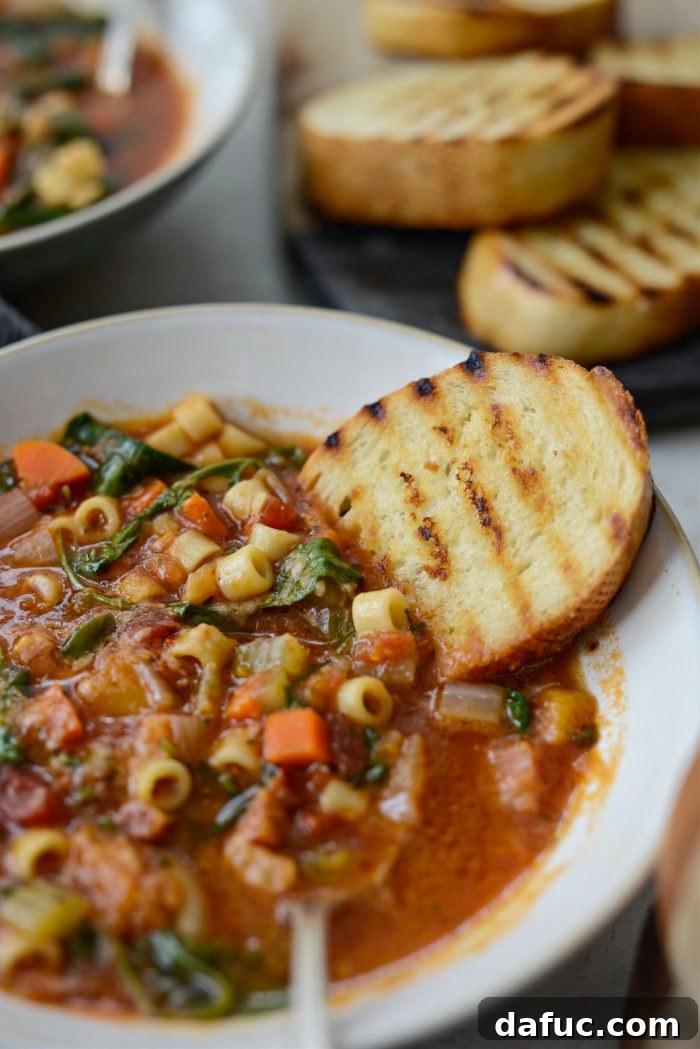
There’s nothing quite like a steaming bowl of homemade soup to chase away the winter chill, and Ina Garten’s Winter Minestrone holds a special place in the pantheon of comforting cold-weather recipes. This particular rendition of the classic Italian soup is a staple in my home, cherished for its rich flavors, abundant textures, and remarkable ability to satisfy. It masterfully combines tender vegetables like sweet carrots, crisp celery, aromatic onion, and creamy butternut squash with savory pancetta, protein-rich cannellini beans, satisfying small pasta, and vibrant fresh spinach. Designed to serve 6 to 8 people, it’s the ultimate antidote to a blustery winter day.

Why This Minestrone Recipe Deserves a Spot in Your Kitchen
Some recipes are simply too good to keep to yourself, and that’s precisely how I feel about Ina Garten’s Winter Minestrone. Over the years, I’ve prepared this soup countless times, and I’ve only ever made the most minor adjustments – perhaps a slight increase in the amount of pancetta, because a truly hearty soup is always a winner in my book. This minestrone never disappoints. Each spoonful is a delightful surprise, bursting with a medley of vegetables, wholesome beans, tender spinach, savory pancetta, and perfectly cooked pasta. It’s a symphony of flavors and textures that ensures no two bites are ever quite the same.
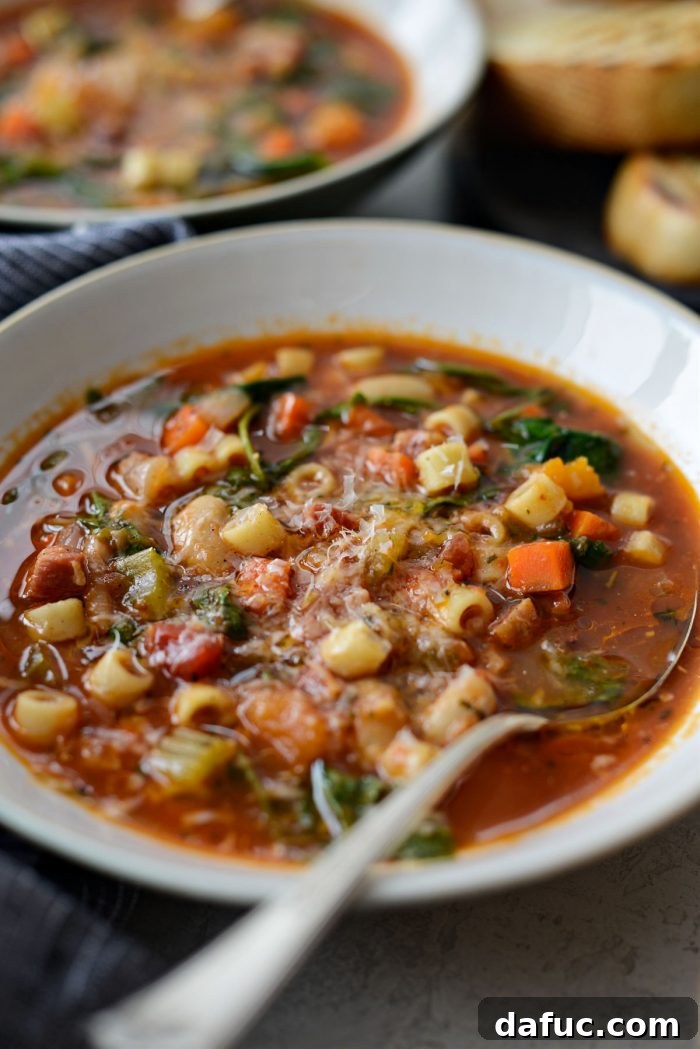
Serve it alongside a crusty piece of grilled bread, perhaps rubbed with garlic, and a generous sprinkle of freshly grated Parmesan cheese, and you have a meal that is pure perfection. Seriously, with its depth of flavor and nourishing ingredients, what’s not to love about this incredible winter soup?
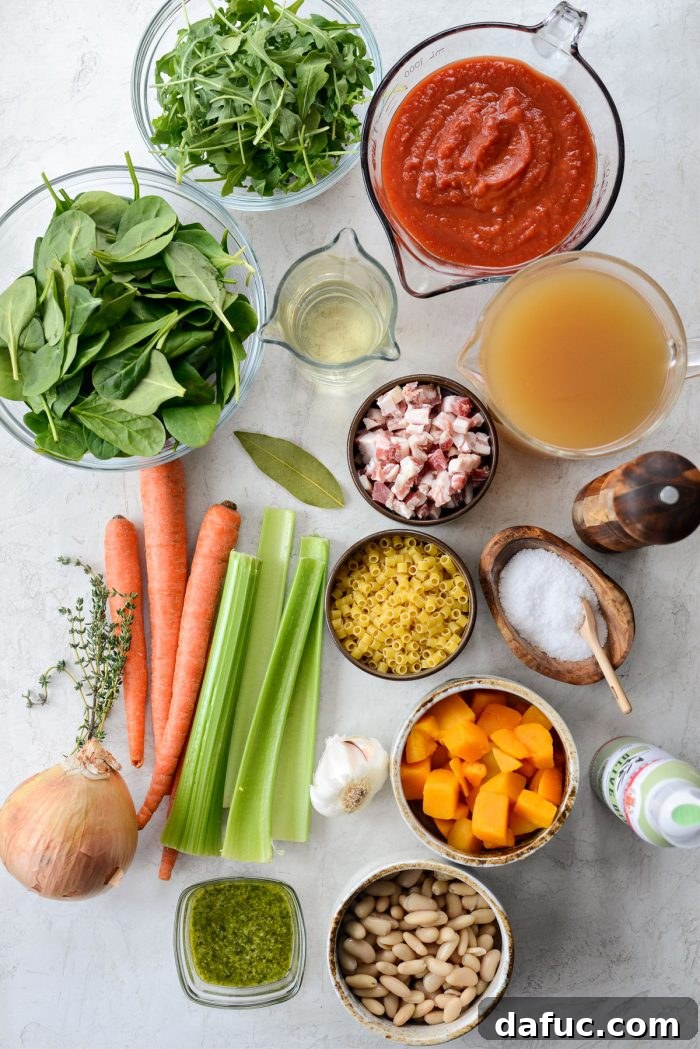
Essential Ingredients for Ina Garten’s Signature Winter Minestrone
Crafting this magnificent minestrone requires a thoughtful selection of fresh, high-quality ingredients. Here’s a comprehensive list of what you’ll need to create this comforting classic:
- Olive oil spray (for initial browning)
- Pancetta, diced (provides a rich, savory base)
- Carrots, diced (adds sweetness and color)
- Onion, diced (a foundational aromatic)
- Celery, diced (contributes a fresh, earthy note)
- Garlic, minced (essential for robust flavor)
- Fresh thyme (its herbaceous aroma is key)
- Kosher salt (to season and enhance flavors)
- Butternut squash, cubed (for creaminess and a touch of sweetness; can be fresh or pre-steamed frozen)
- Crushed tomatoes (forms the rich, acidic backbone of the broth)
- Unsalted chicken stock (the liquid base, allowing you to control saltiness)
- Bay leaf (infuses a subtle, aromatic depth)
- Freshly ground black pepper (for a touch of warmth and spice)
- Cannellini beans, rinsed and drained (adds protein and heartiness)
- Small pasta, such as ditalini (makes the soup filling and comforting)
- Baby spinach (or baby kale/arugula, for fresh greens and nutrients)
- Dry white wine (adds a layer of complexity and brightens the flavors)
- Basil pesto (a secret ingredient for an extra burst of freshness and herbaceousness)
- Parmesan cheese, for serving (the perfect salty, umami garnish)
Step-by-Step Guide to Crafting the Perfect Winter Minestrone
Creating this delicious Ina Garten minestrone is a rewarding experience. Follow these detailed steps to achieve a perfectly balanced and flavorful soup:
1. Prepare the Pancetta
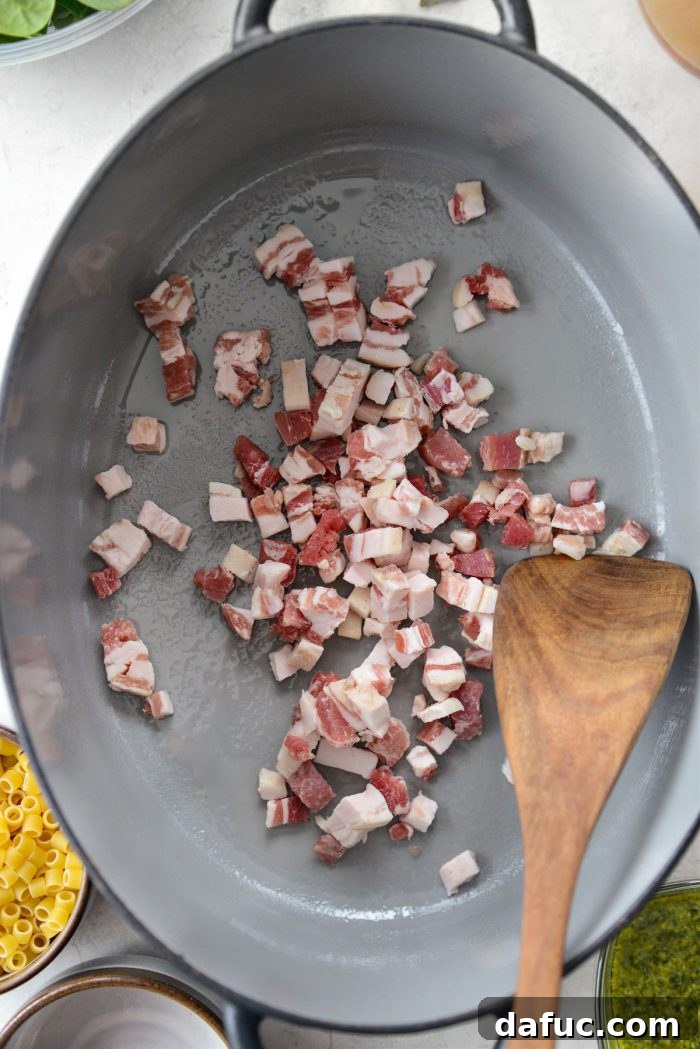
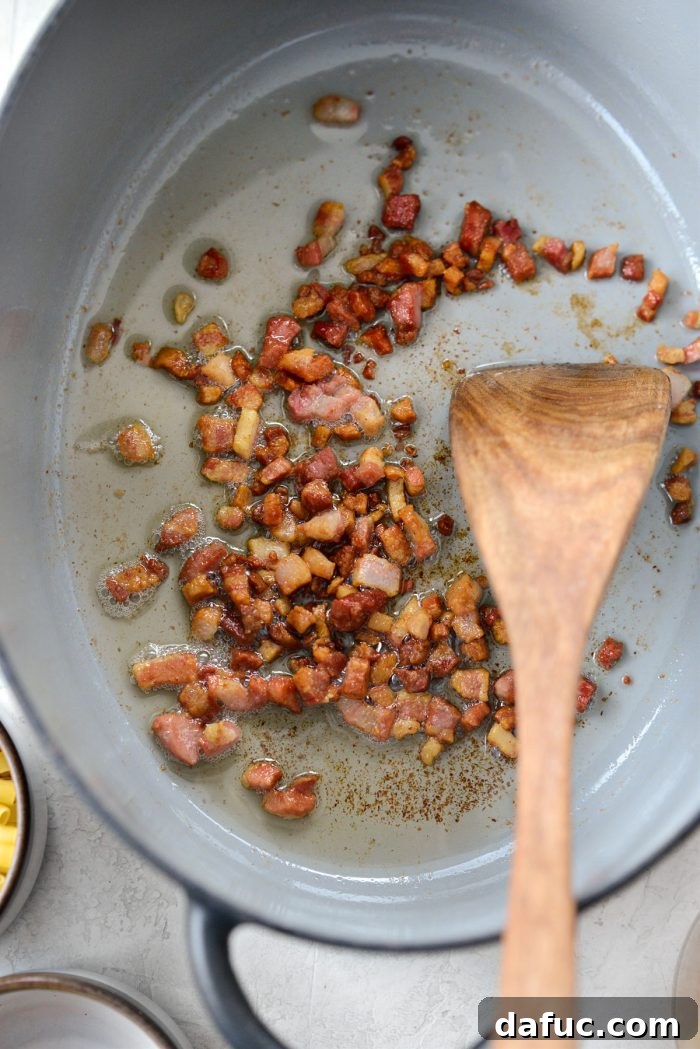
Begin by lightly spraying the bottom of a large Dutch oven or heavy-bottomed pot with olive oil spray. Add 5 ounces of diced pancetta. Cook the pancetta over medium heat, stirring occasionally, until it becomes wonderfully crispy. This usually takes about 8 to 10 minutes. The rendering fat from the pancetta will form a foundational layer of flavor for your soup. Once the pancetta is crisp, carefully transfer it with a slotted spoon to a plate lined with paper towels, leaving the flavorful rendered fat in the pot. This crispy pancetta will be added back to the soup later for an irresistible textural contrast.
2. Sauté the Aromatics and Vegetables
While the pancetta is cooking, take this time to prep your vegetables. You’ll need 2 cups each of diced carrots and celery, roughly 2-1/2 cups of diced yellow onion (about one large onion), 4 cloves of minced fresh garlic, and 2 teaspoons of finely chopped fresh thyme leaves.
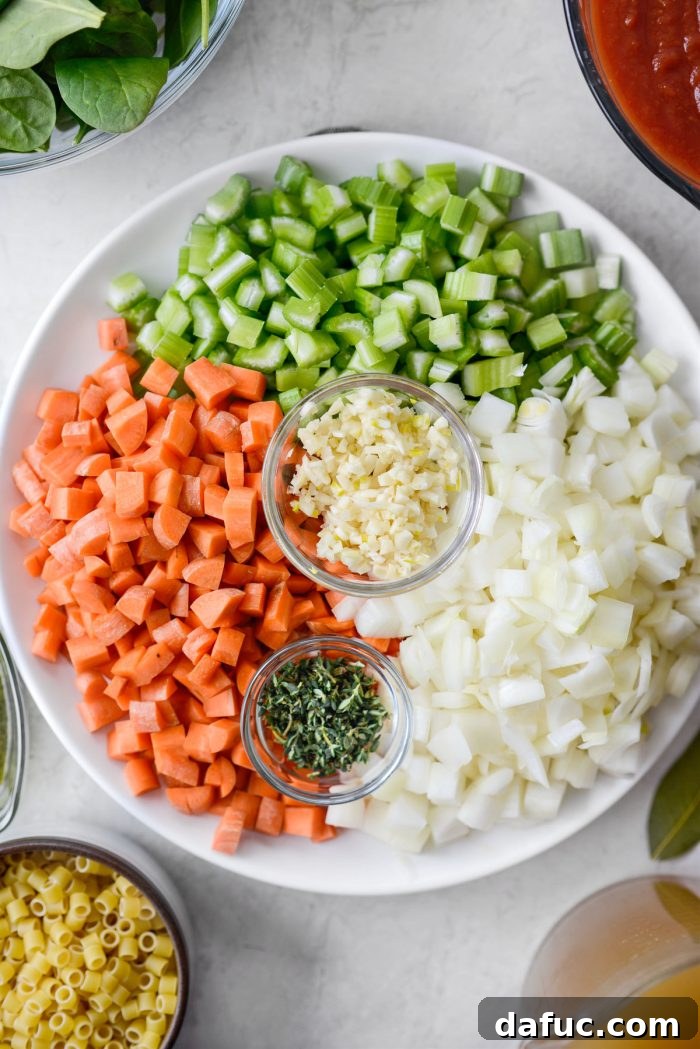
Once the crispy pancetta is removed, add all the prepared carrots, celery, onion, minced garlic, and fresh thyme to the pot with the reserved pancetta fat. Add a generous pinch of kosher salt to help draw out the moisture and soften the vegetables. If you are using fresh butternut squash (approximately 12 ounces or 2-1/2 cups cubed), now is the time to add it in with the other vegetables. However, if you’re using pre-steamed frozen butternut squash, it’s best to add it later in the process, as it requires less cooking time.
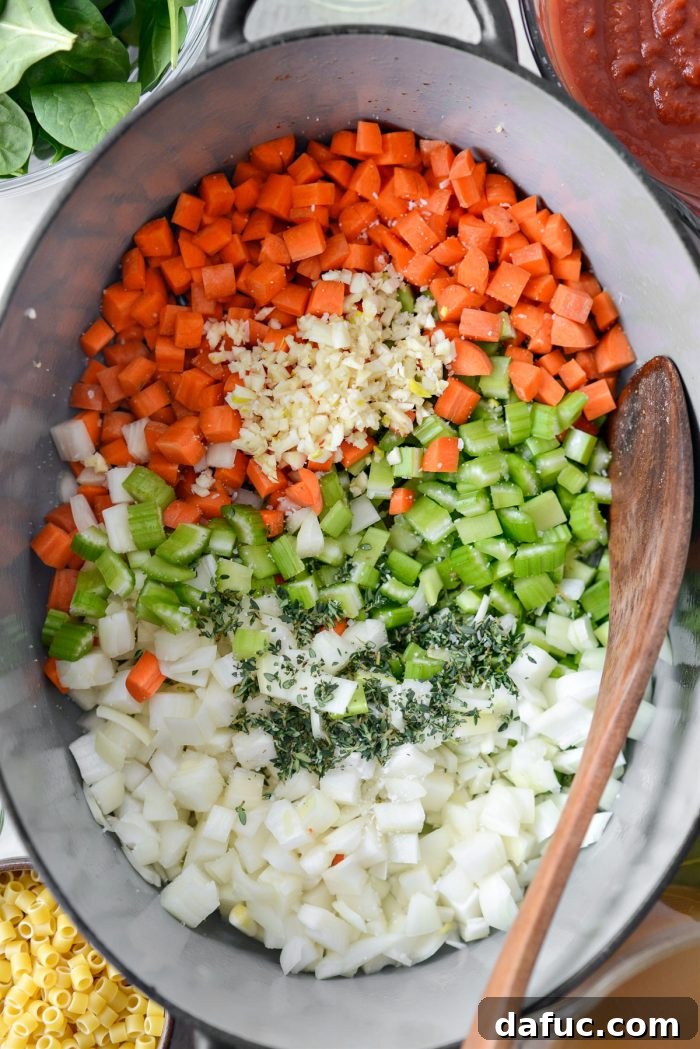
Stir the vegetables frequently and cook for 8 to 10 minutes, or until they have softened and become fragrant, creating a deeply aromatic base for your minestrone.
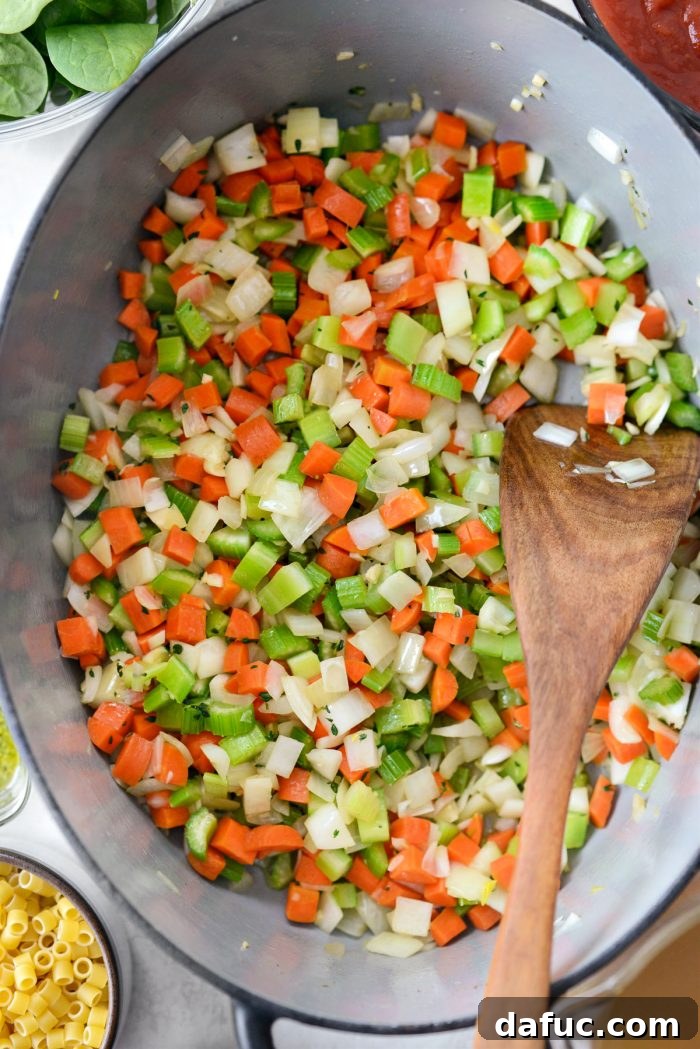
3. Build the Broth and Simmer
Next, it’s time to create the flavorful broth. Add 2-1/2 cups (or 12 ounces) of diced butternut squash (if using the pre-steamed frozen variety, or if you just skipped adding fresh squash earlier), 6 cups of unsalted chicken stock, one 28-ounce can of crushed tomatoes, 1 bay leaf, 2 teaspoons of kosher salt, and a generous amount of freshly ground black pepper to the pot.
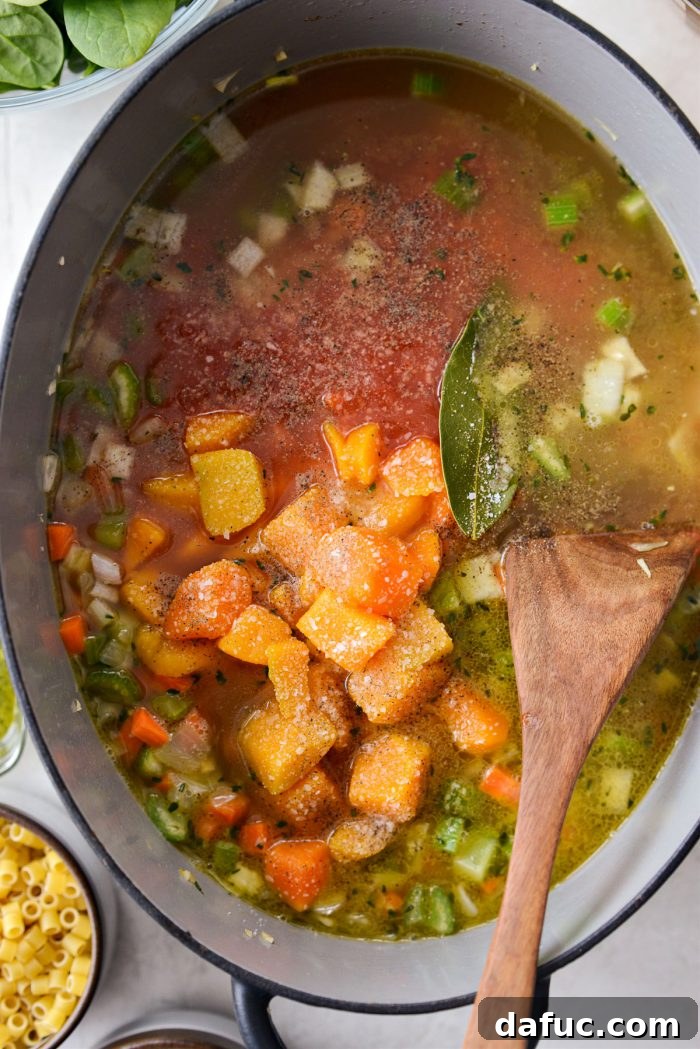
Stir all the ingredients together to combine them thoroughly. Place the lid askew on the pot, allowing some steam to escape, and bring the mixture to a rolling boil. Once boiling, reduce the heat to low, cover partially, and let the soup gently simmer for 30 minutes. This simmering time is crucial for the flavors to meld and deepen.
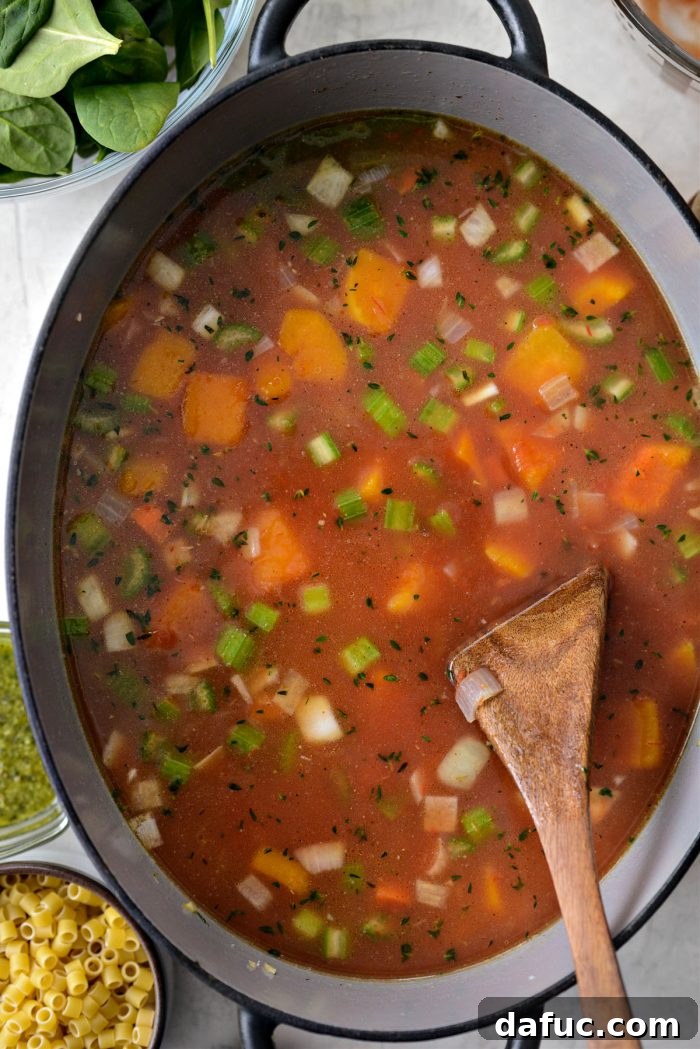
4. Cook the Pasta Separately
About halfway through the soup’s simmering time, begin cooking your pasta. Bring a medium pot of generously salted water (a small palmful of sea salt works well) to a boil. Add 1 cup of small pasta, such as ditalini, and cook according to the package directions until al dente. It’s best to time this so the pasta finishes cooking just as the soup’s 30-minute simmer is complete. Cooking the pasta separately prevents it from becoming overly soft or mushy in the soup, and also keeps the broth from getting too starchy.
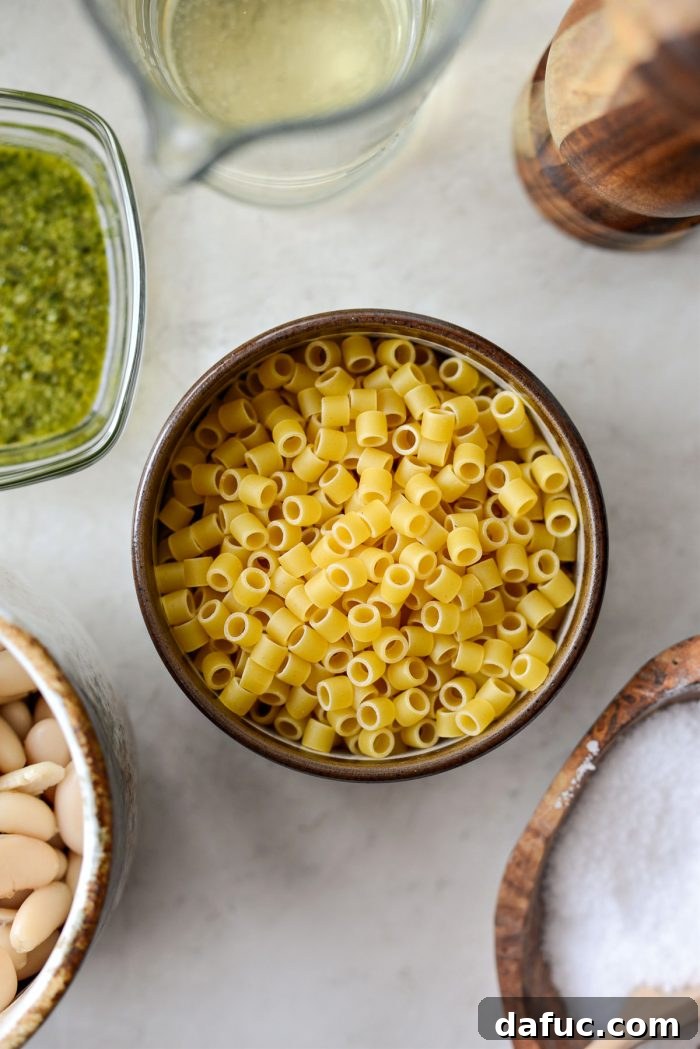
Once the pasta is al dente, drain it thoroughly into a colander. This careful timing ensures all components are perfectly cooked when combined.
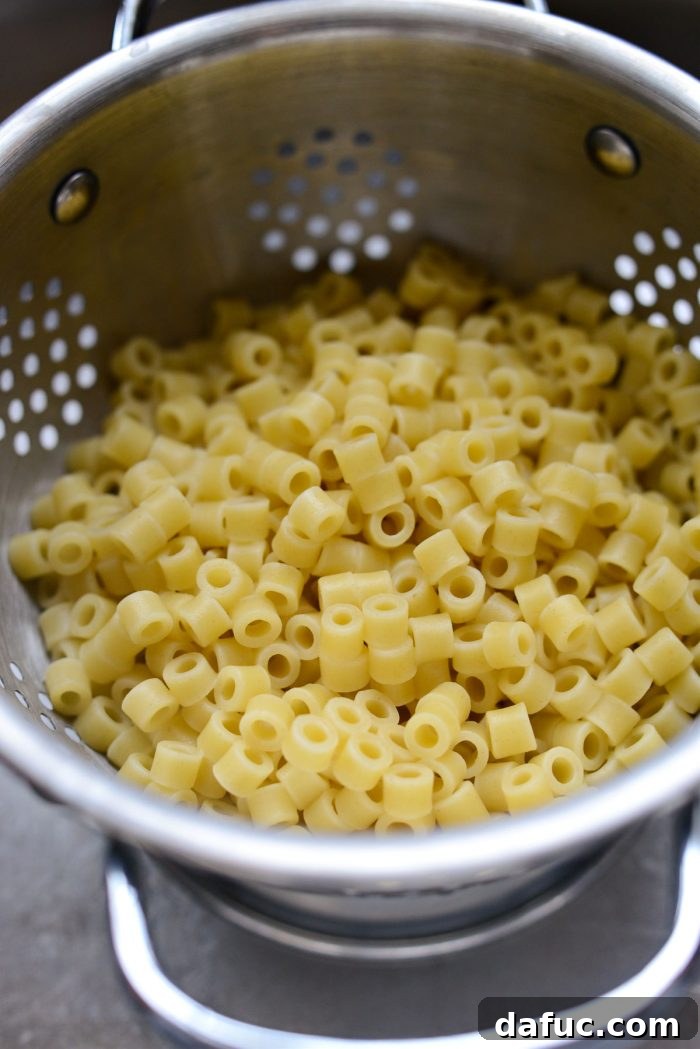
5. Combine and Finish the Soup
After the soup has simmered for 30 minutes, remove the bay leaf from the pot. Next, add the cooked pasta, one 15-ounce can of cannellini beans (which you’ve thoroughly rinsed and drained), and the crispy pancetta you set aside earlier. Give everything a good stir.
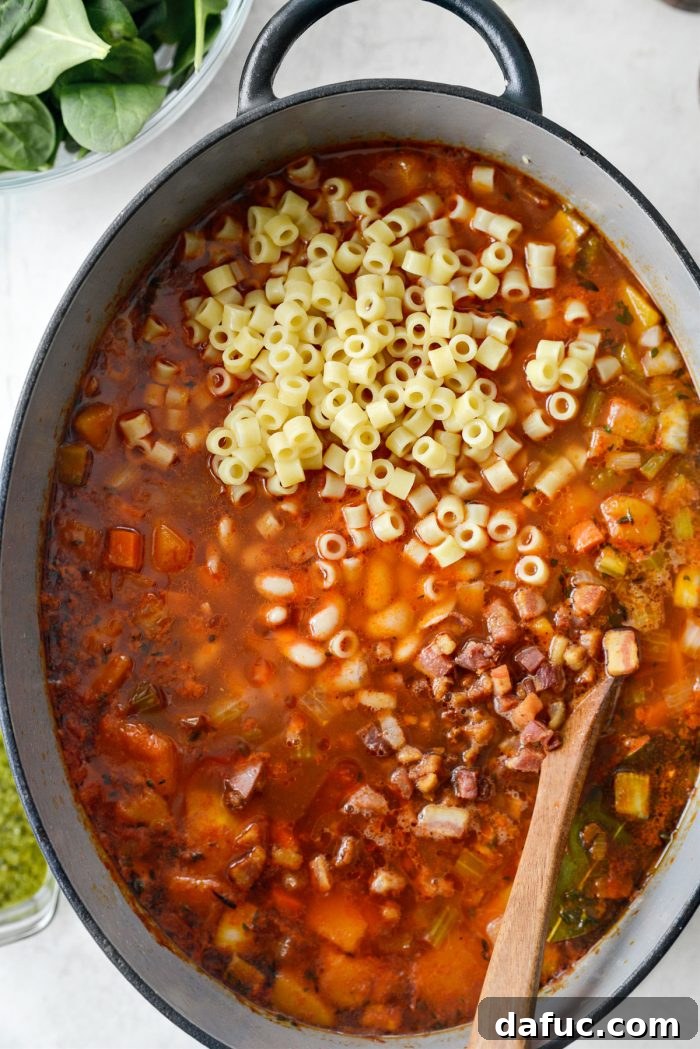
Now, incorporate 5 ounces of fresh baby spinach. While spinach is my usual go-to for its mild flavor and quick wilting, baby kale or even baby arugula can also be used. If you happen to have arugula on hand that needs to be used, it works in a pinch, though personally, I find baby spinach or kale offers a more classic minestrone experience. Stir the greens into the hot soup until they are just wilted.
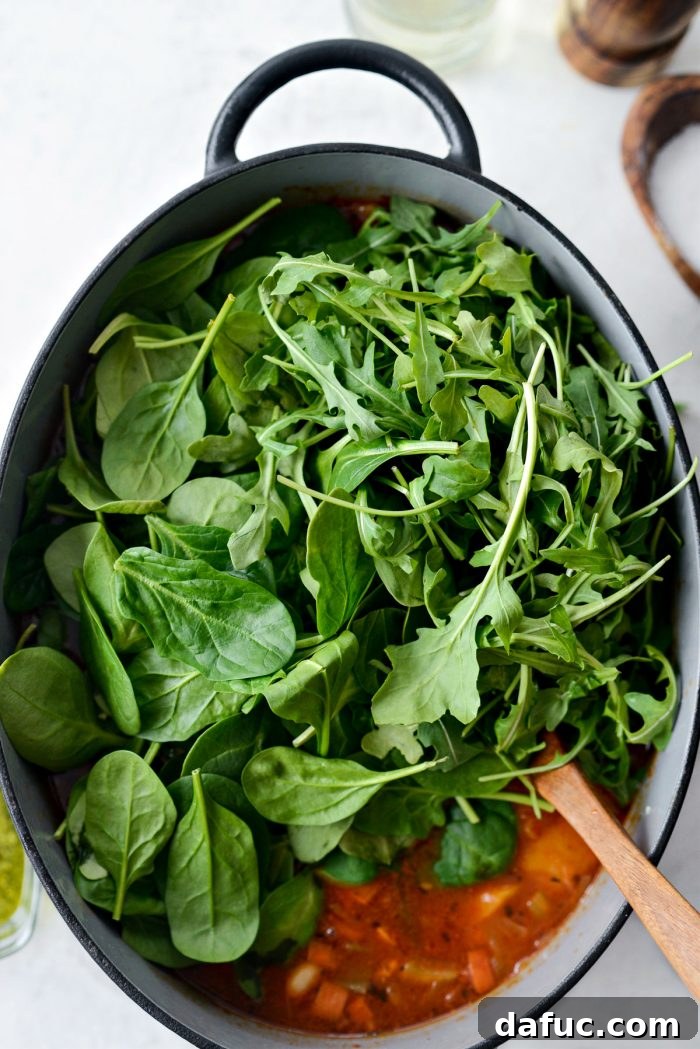
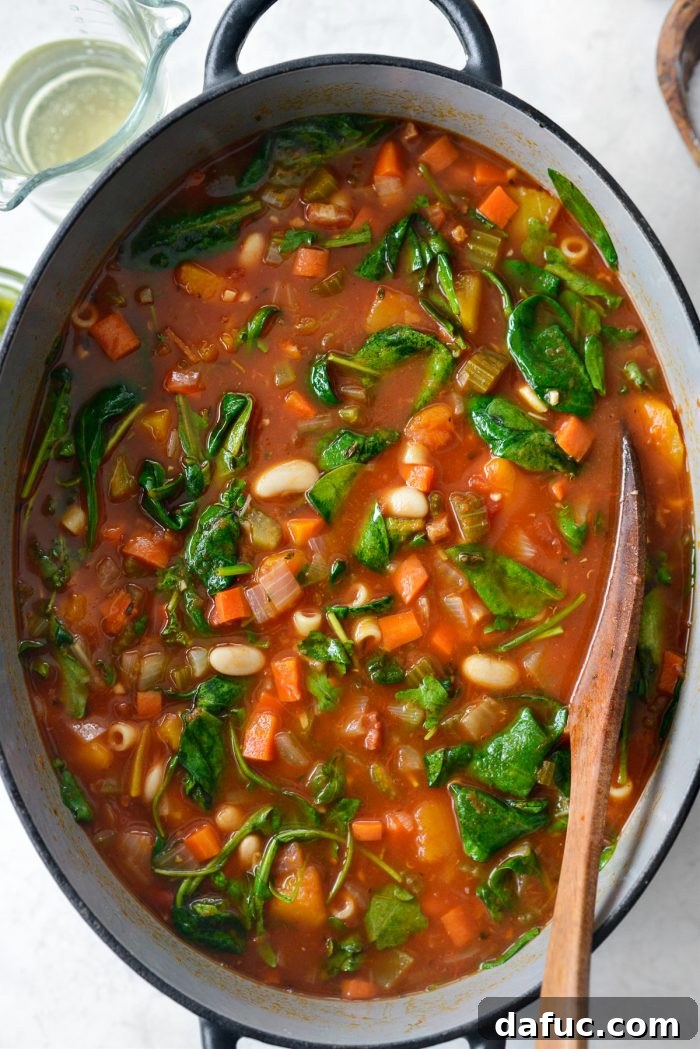
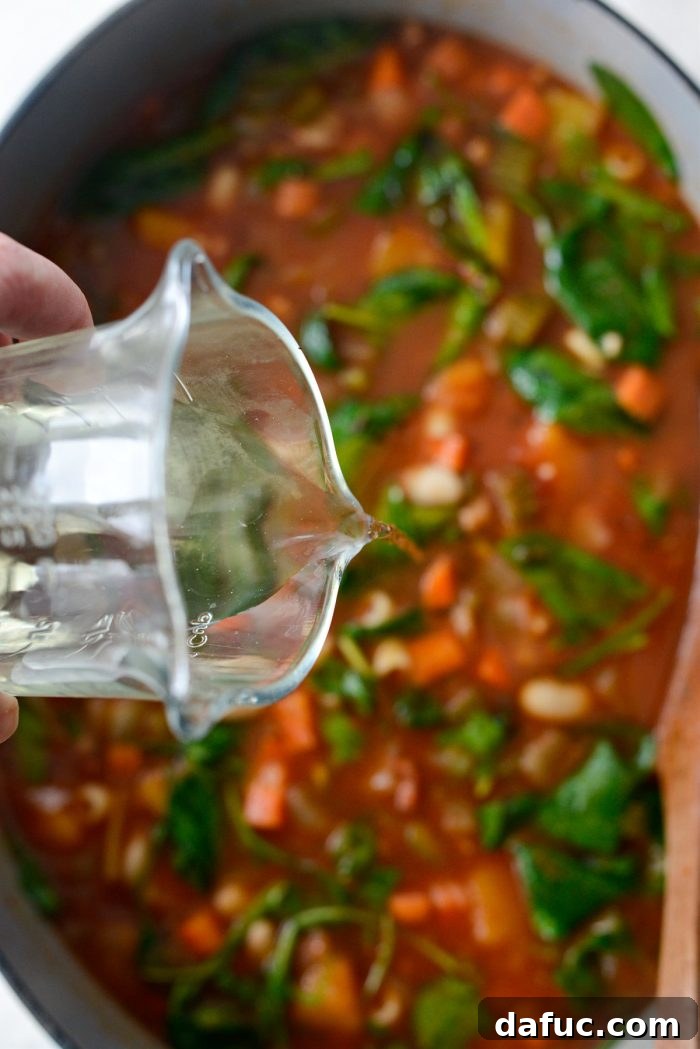
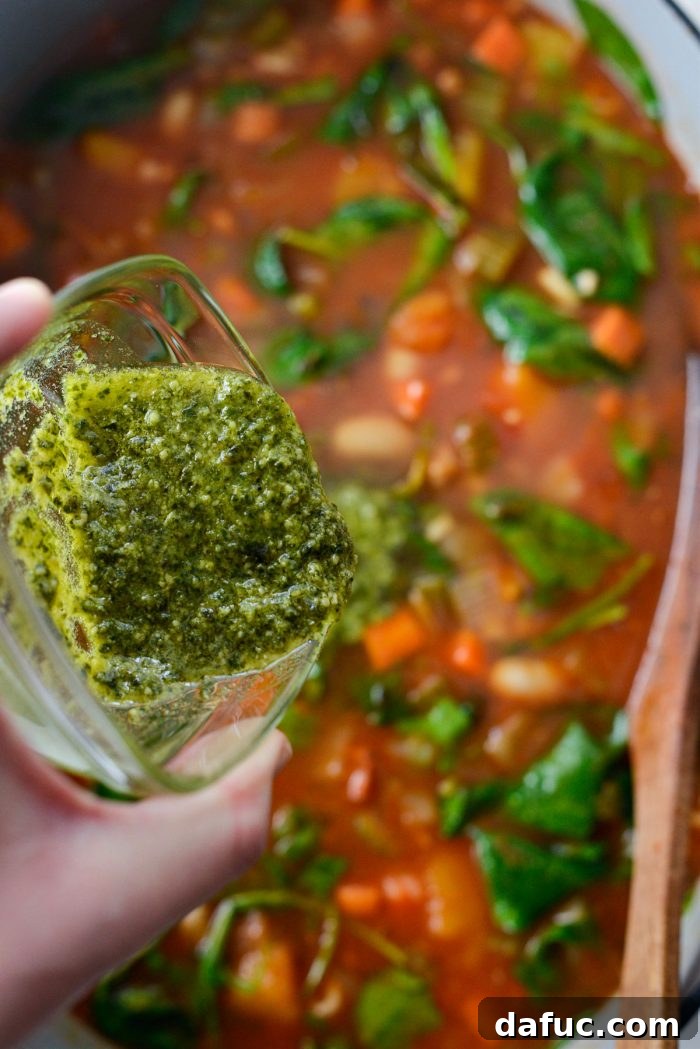
Finally, pour in 1/2 cup of dry white wine. A crisp Sauvignon Blanc or a Chardonnay you enjoy sipping will both work beautifully, adding a subtle tang and enhancing the overall complexity. Stir in 2 tablespoons of basil pesto. If you’re like me, you might make a big batch of homemade pesto every summer and freeze it in ice cube trays to enjoy its fresh taste all year round. The pesto is a fantastic way to brighten the soup with herbaceous, garlicky notes.
Give the minestrone one last good stir and taste. This is your chance to adjust the seasonings. I often find myself adding another teaspoon of kosher salt and a few more grinds of fresh black pepper to bring out all the flavors, but always season to your personal preference.
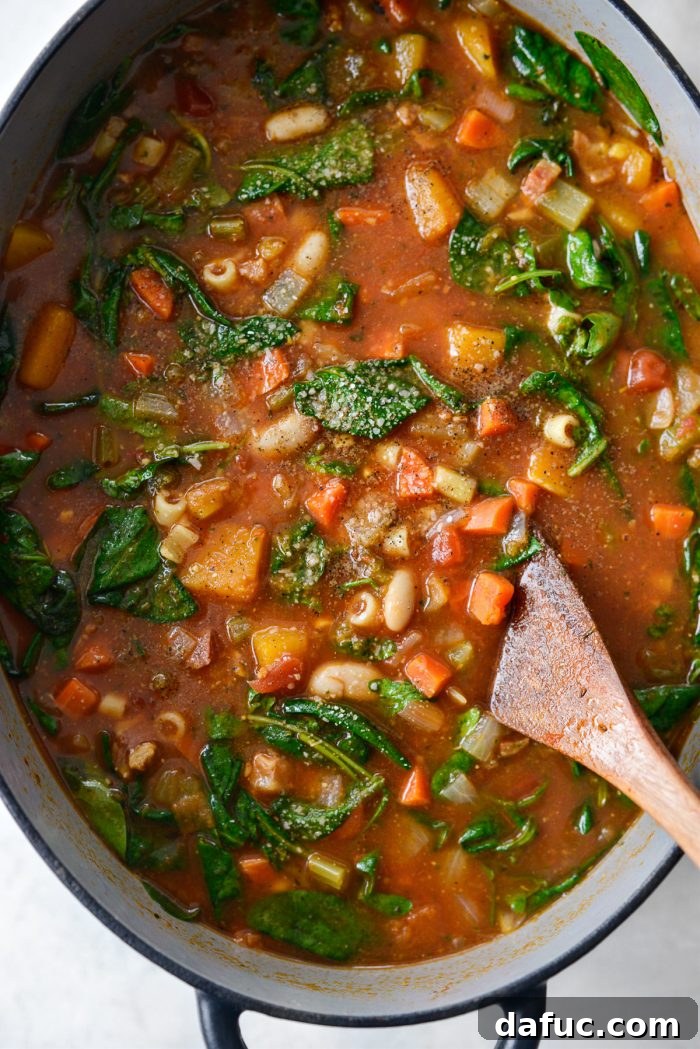
Serving and Storage Tips for Your Minestrone
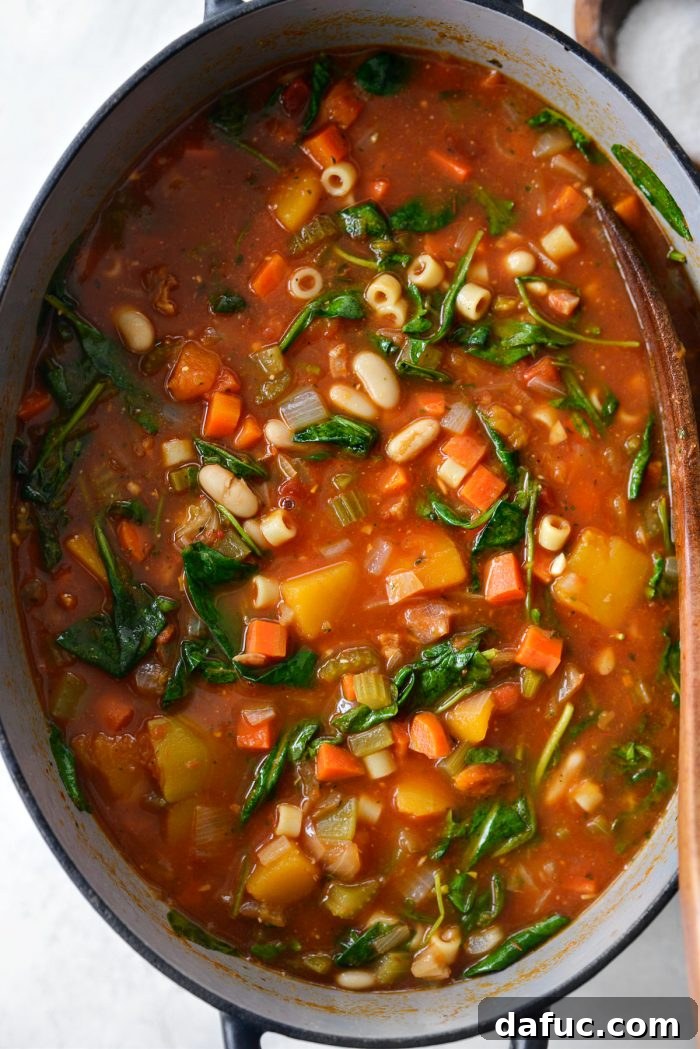
This minestrone is designed to be thick and hearty, perfect for a satisfying meal. However, if you prefer a thinner consistency, feel free to add some or all of the remaining 2 cups of chicken broth that you initially held back, stirring until you reach your desired consistency. Serve the soup hot, ensuring it’s thoroughly heated through.
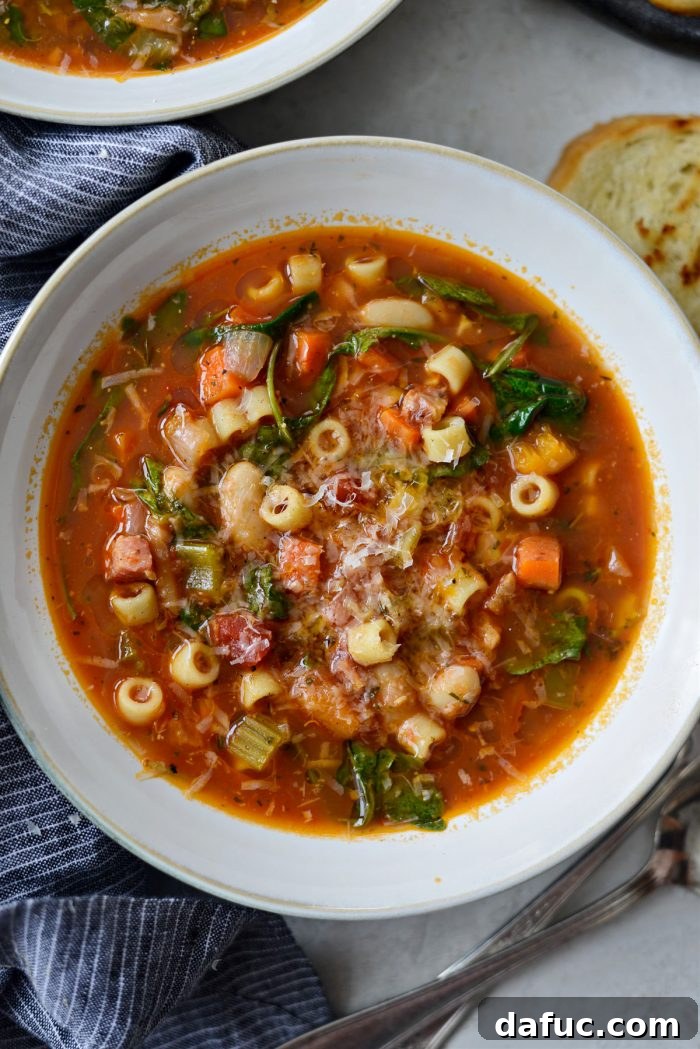
Ladle generous portions into bowls and top each serving with a shower of freshly grated Parmesan cheese. The sharp, salty cheese adds another layer of deliciousness.
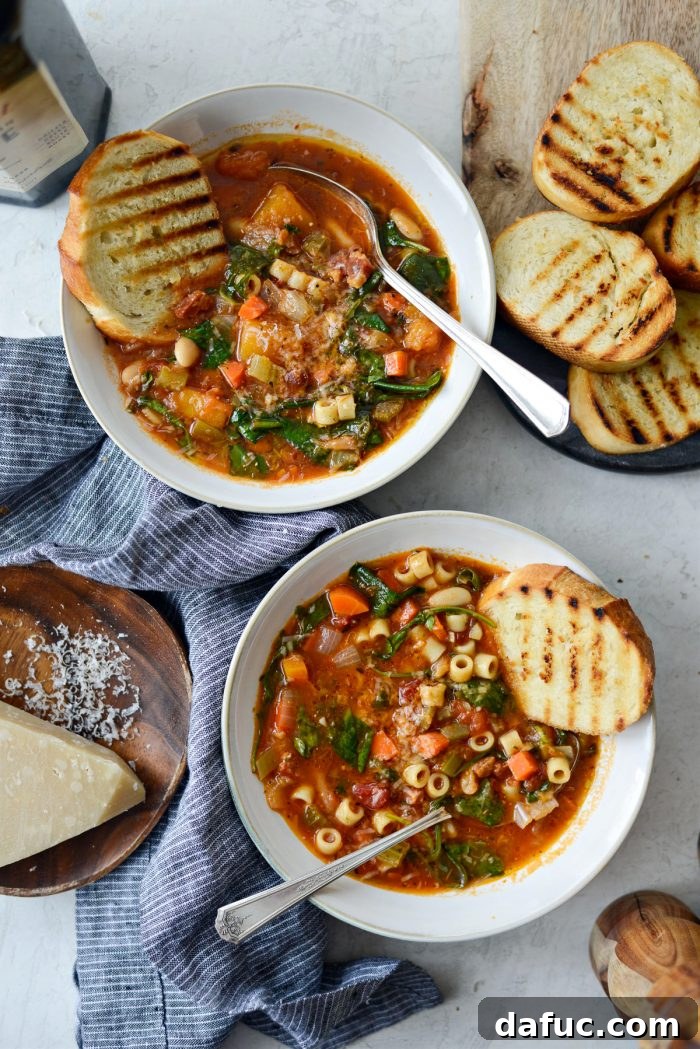
For an authentic Italian experience, I adore serving this minestrone with simple grilled bread. The crisp texture and subtle char complement the rich soup beautifully. Alternatively, this cheesy garlic bread would also be an absolutely delicious accompaniment, adding extra indulgence to your meal.
Why Ina Garten’s Minestrone is a Winter Must-Have
This soup isn’t just a meal; it’s an experience. It’s soul-warming, incredibly hearty, and packed with wholesome goodness. The addition of butternut squash is a stroke of genius, lending a creamy sweetness that balances the savory pancetta and robust tomatoes. And, of course, the pasta and beans contribute to that satisfying, full feeling that only a truly great minestrone can provide. It’s a comforting classic that tastes like home, perfect for cozy evenings or feeding a crowd.

If you’re looking for an impressive yet surprisingly simple winter soup recipe, Ina Garten’s Minestrone is an absolute must-try. Its balanced flavors and diverse textures make it a culinary delight that will have everyone asking for seconds.
Enjoy this fabulous winter minestrone! And if you give this recipe a try, I’d love to hear about it. Snap a photo and tag me on Twitter or Instagram!

Print Recipe
Pin Recipe
Ina Garten’s Winter Minestrone
Ina Garten’s Winter Minestrone is a beloved recipe in my home. Tender vegetables like carrots, celery, onion and butternut squash with pancetta, cannellini beans, pasta and spinach. It’s the perfect soup for a cold winter’s day. Yields 6 to 8 servings.
Yield: 6 servings
Prep Time: 35 mins
Cook Time: 35 mins
Total Time: 1 hr 10 mins
Ingredients
- Olive oil spray
- 5 ounces diced pancetta
- 2 cups diced carrots
- 2 cups diced celery
- 2½ cups yellow onion, diced (about 1 large)
- 4 cloves garlic, minced
- 2 teaspoons fresh thyme, chopped
- 2 to 3 teaspoons kosher salt
- 2½ cups butternut squash, cubed (see notes)
- 28 ounces canned crushed tomatoes
- 6 to 8 cups unsalted chicken stock
- 1 bay leaf
- Black pepper, freshly ground, to taste
- 15 ounce canned cannellini beans, rinsed and drained
- 1 cup small pasta (like ditalini)
- 5 ounces baby spinach, or baby kale
- 1/2 cup dry white wine, like Sauvignon Blanc or Chardonnay
- 2 tablespoons basil pesto
- Parmesan cheese, for serving
Equipment
- Lodge EC7OD13 Enameled Cast Iron Oval Dutch Oven, 7-Quart
Instructions
- Start by lightly spraying the bottom of your Dutch oven with olive oil spray. Add in the diced pancetta. Cook until crispy (about 8 to 10 minutes). Once the pancetta is crisp, transfer it to a paper towel-lined plate, leaving the fat in the pot.
- Next, add in all the carrots, celery, onion, garlic, and thyme with a pinch of kosher salt. If using fresh butternut squash, add it in here. Stir and cook for 8 to 10 minutes.
- Add in diced butternut squash (if using steamable frozen), 6 cups unsalted chicken broth, crushed tomatoes, bay leaf, 2 teaspoons kosher salt, and lots of freshly ground black pepper.
- Give it a stir to combine. Cover with the lid askew and bring to a boil. Reduce to low and simmer for 30 minutes.
- Halfway through, bring a (covered) medium pot of salted water to a boil. Add in 1 cup ditalini pasta and cook following the package directions. Time it so it’s done when the soup is done simmering.
- Once al dente, drain the pasta into a colander and add to the soup with the beans and crispy pancetta.
- Stir before adding in the baby spinach (or other greens), stir and cook until wilted.
- Lastly, pour in the dry white wine and add the basil pesto. Give it a stir and a taste. Adjust seasoning with more kosher salt and black pepper to your personal taste.
- Ladle soup into bowls and top with grated fresh Parmesan cheese.
Notes
If you’re using frozen (steam-able) butternut squash, it’s typically pre-steamed. In this case, add it in later with the broth to prevent it from getting too soft.
Nutrition Information (per serving)
Serving: 1 serving, Calories: 334kcal, Carbohydrates: 37g, Protein: 13g, Fat: 15g, Saturated Fat: 4g, Polyunsaturated Fat: 3g, Monounsaturated Fat: 7g, Trans Fat: 0.03g, Cholesterol: 17mg, Sodium: 1126mg, Potassium: 988mg, Fiber: 6g, Sugar: 8g, Vitamin A: 15801IU, Vitamin C: 30mg, Calcium: 132mg, Iron: 3mg
Author: Laurie McNamara
Course: Soups & Stews
Cuisine: American, Italian