
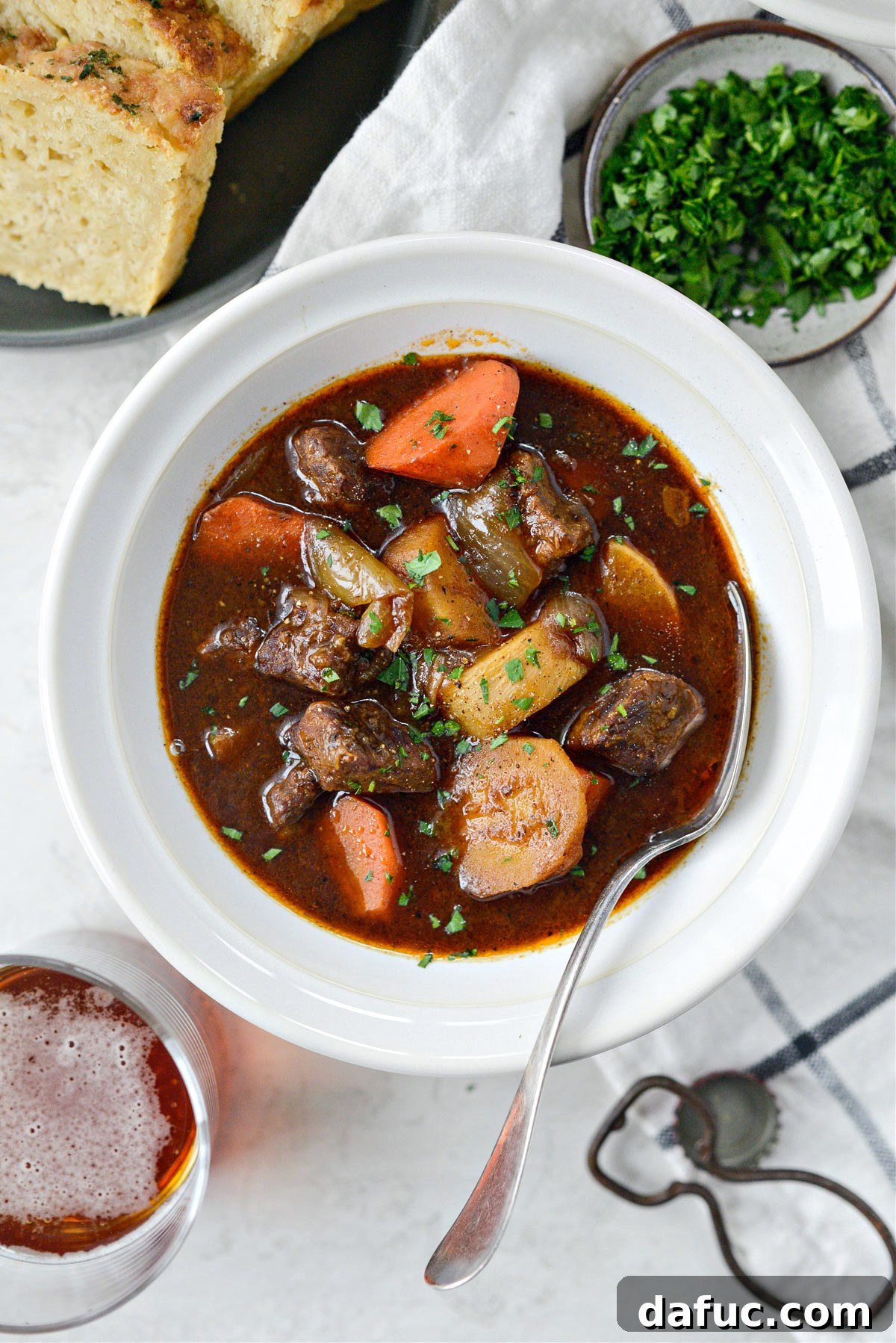
As the days grow shorter and a crisp chill fills the air, there’s nothing quite as comforting as a steaming bowl of homemade stew. And when St. Patrick’s Day rolls around, the craving for hearty, traditional Irish fare becomes almost irresistible. Forget the green beer and leprechaun hats for a moment, and instead, imagine savoring a deeply flavorful, rich, and warming Irish Stout Beef Stew. This isn’t just any stew; it’s a culinary hug, a celebration of rustic ingredients transformed into an unforgettable meal that serves 6 to 8 people. Made with succulent browned cubed beef, robust Irish stout, sweet onions, and an assortment of wholesome root vegetables, this stew promises to be the star of your St. Paddy’s Day feast. For an even more authentic and delightful experience, pair it with slices of homemade Irish soda bread, perfect for soaking up every last drop of the savory gravy.
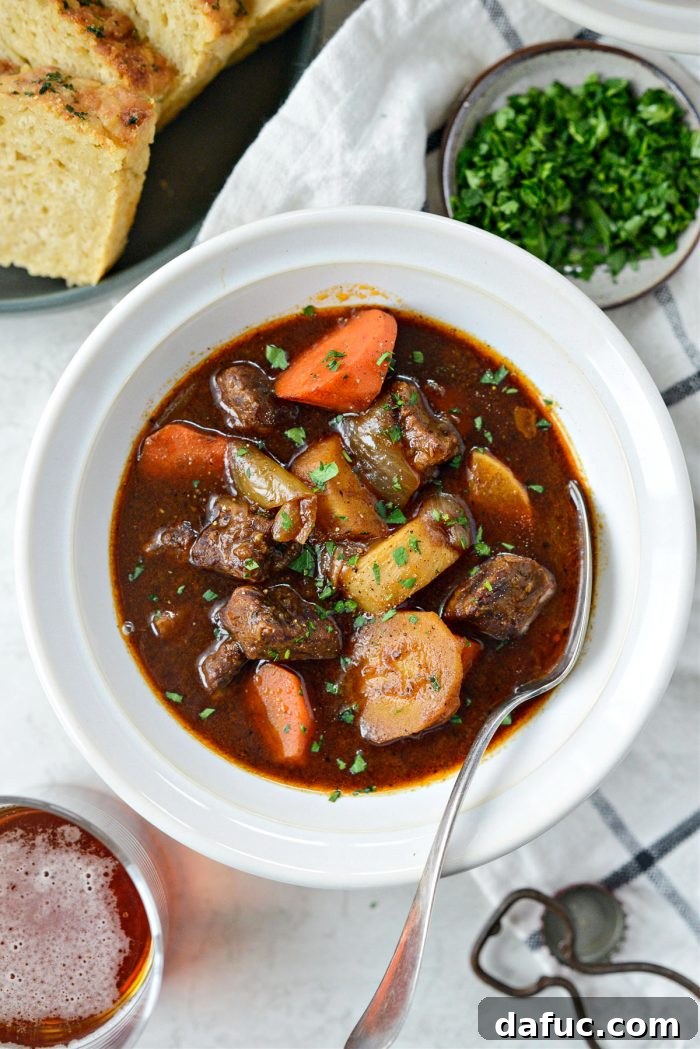
For many, St. Patrick’s Day traditions often revolve around the classic corned beef and cabbage. While that dish holds a special place in our hearts (especially for those with Irish roots, like my McNamara family!), sometimes it’s wonderful to explore a different facet of Irish cuisine. This year, I embarked on a journey to craft an Irish stew with a distinct twist – the addition of a rich stout beer. The stout not only imparts a magnificent, robust depth of flavor to the stew but also creates an incredibly dark, luxurious gravy that clings beautifully to every ingredient. Beyond the tender beef and the beer’s embrace, you’ll discover a delightful medley of carrots, parsnips, and turnips, each adding its earthy sweetness. And for a truly unexpected yet harmonious touch, golden raisins are incorporated into the mix. These little gems absorb all the incredible flavors of the stew, plumping up to release a subtle, delightful sweetness that balances the savory richness perfectly.
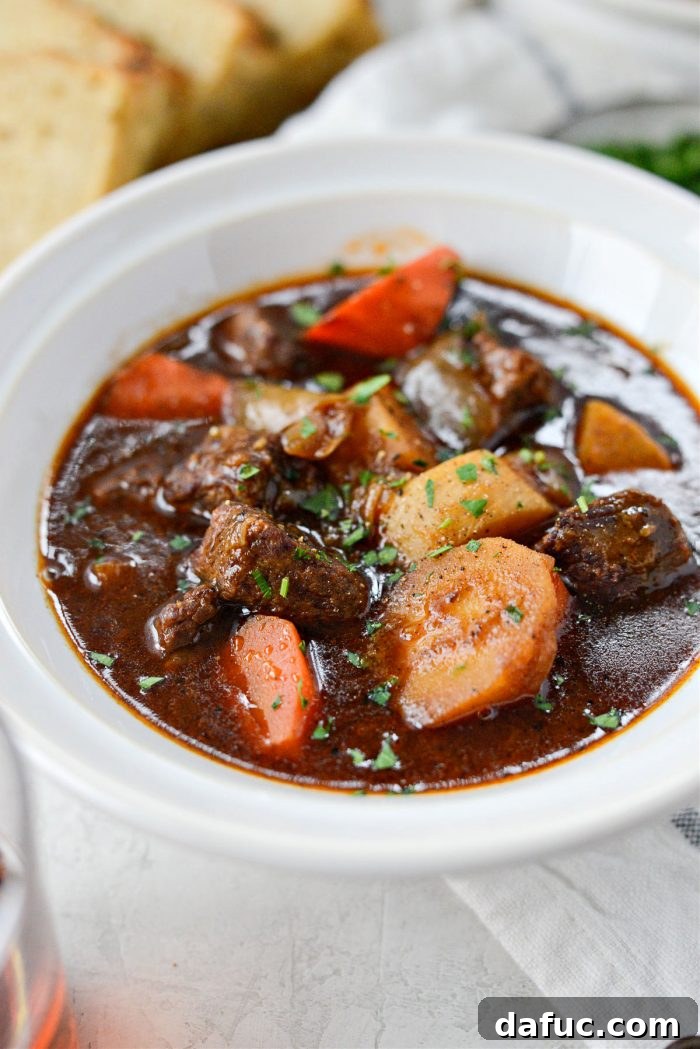
Truly, I cannot overstate my affection for this stew! It’s a symphony of flavors and textures that will leave you completely satisfied. The beef is incredibly tender, practically melting in your mouth after hours of slow simmering. Each spoonful delivers a hearty, deeply flavorful experience, making it the ultimate comfort food for a chilly March evening. Your St. Patrick’s Day celebration simply wouldn’t be complete without this spectacular Irish Stout Beef Stew gracing your table. It’s a dish that warms you from the inside out, fostering a sense of warmth and conviviality that defines the spirit of the holiday.
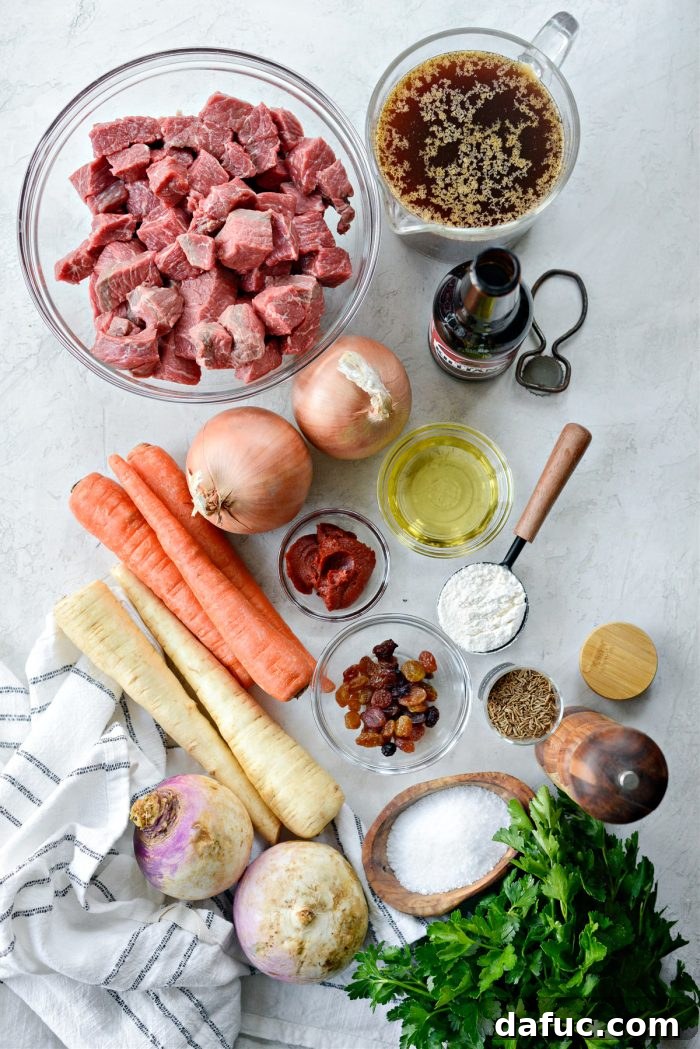
Essential Ingredients for Crafting Your Irish Stout Beef Stew:
To embark on this culinary adventure, gather these key ingredients, each playing a vital role in creating a balanced and flavorful stew:
- **Olive Oil:** For searing the beef and sautéing aromatics, a good quality olive oil or avocado oil is perfect.
- **Beef Chuck Roast:** The star of the show. Chuck roast is ideal for slow cooking, becoming incredibly tender and flavorful.
- **Kosher Salt:** Essential for seasoning the beef and the stew to perfection.
- **Unbleached All-Purpose Flour:** Used to coat the beef, it helps create a beautiful crust and later thickens the stew.
- **Diced Yellow Onion:** Provides a foundational sweetness and aromatic base.
- **Tomato Paste:** Adds a touch of umami and deepens the stew’s color and flavor.
- **Caraway Seeds:** A unique spice that brings an earthy, slightly peppery note, characteristic of some traditional Irish and European cooking.
- **Irish Stout Beer:** The signature ingredient. Brands like Killian’s or Guinness are excellent choices, imparting a rich, malty flavor.
- **Beef Broth:** The liquid base for the stew, adding further savory depth.
- **Golden Raisins:** A surprisingly delightful addition, offering a subtle sweetness that brightens the stew’s overall profile.
- **Carrots:** Classic stew vegetable, providing sweetness and texture.
- **Parsnips:** A wonderful root vegetable, similar to carrots but with a distinct, slightly spicier sweetness.
- **Turnip:** Adds a slight peppery bite and earthy flavor, contributing to the stew’s root vegetable medley.
- **Ground Black Pepper:** For seasoning and a touch of warmth.
- **Fresh Parsley:** A vibrant garnish that adds freshness and color to the finished dish.
Preparing Your Beef for the Perfect Stew:
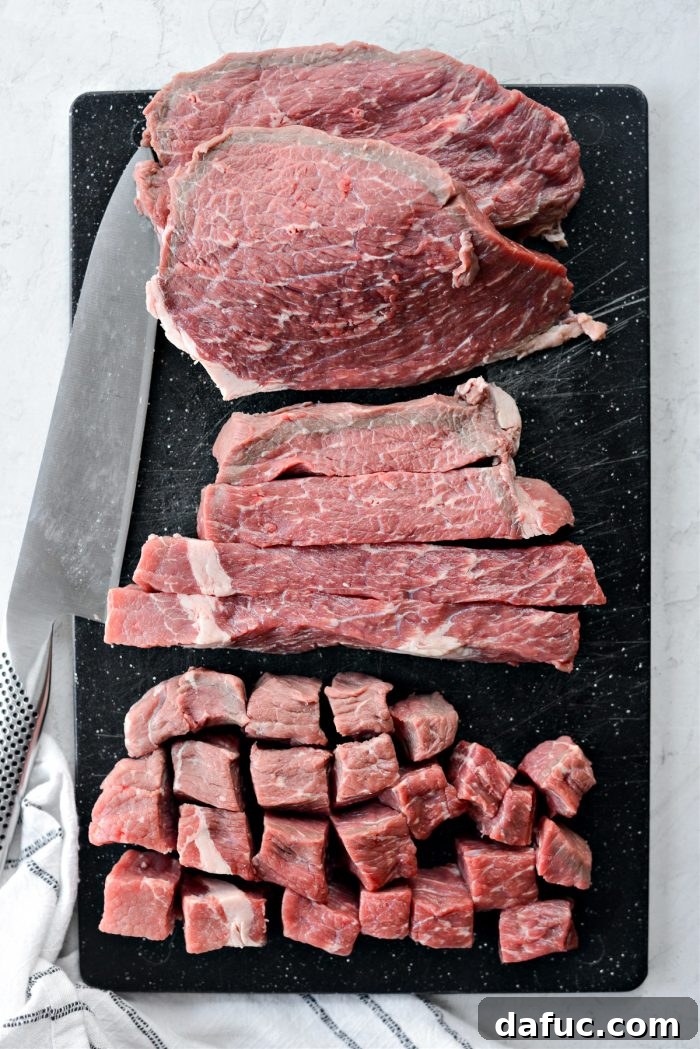
One of the secrets to a truly outstanding beef stew is the quality and preparation of the meat. While pre-cubed stew meat is convenient, I highly recommend purchasing a 2½ to 3-pound beef chuck roast or bottom round roast and cubing it yourself. This approach offers several advantages: you can select a high-quality piece of meat with good marbling, and you have complete control over the size and consistency of your beef cubes. For this recipe, I aim for generous, bite-sized pieces that will hold up beautifully during slow cooking.
The process of cutting the roast is straightforward. Begin by slicing the roast into thick 1-inch steaks. Then, take each steak and slice it into strips approximately 1½ inches wide. Finally, cube these strips into uniform, bite-sized pieces. This ensures even cooking and a delightful texture in every spoonful.
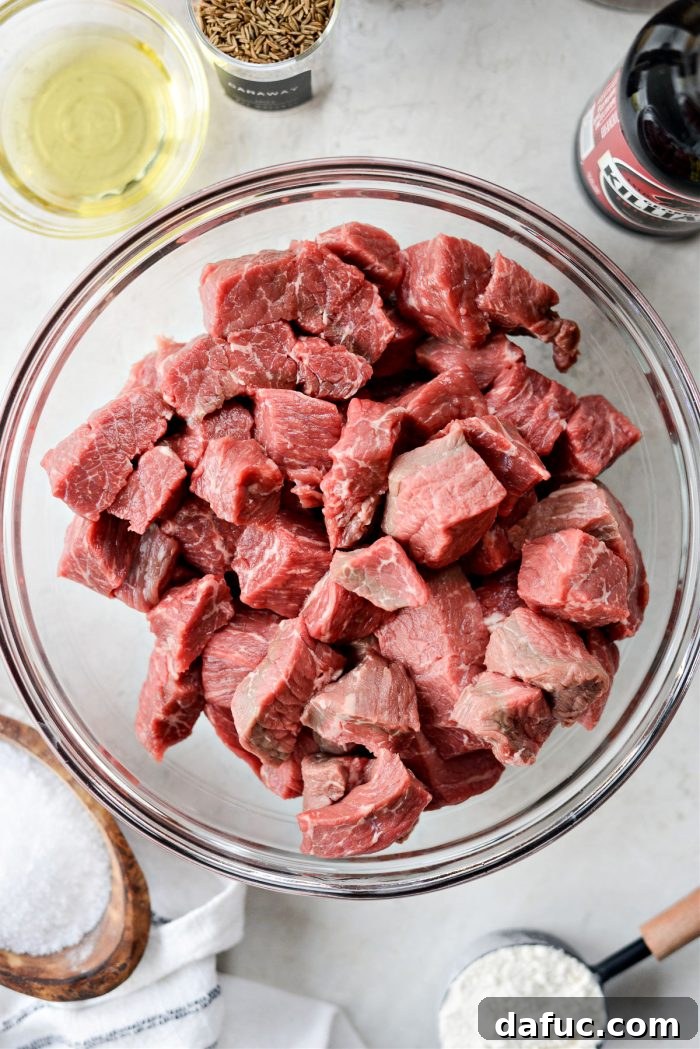
Once your beef is perfectly cubed, transfer the pieces into a large mixing bowl. This is where the initial seasoning and coating magic happens.
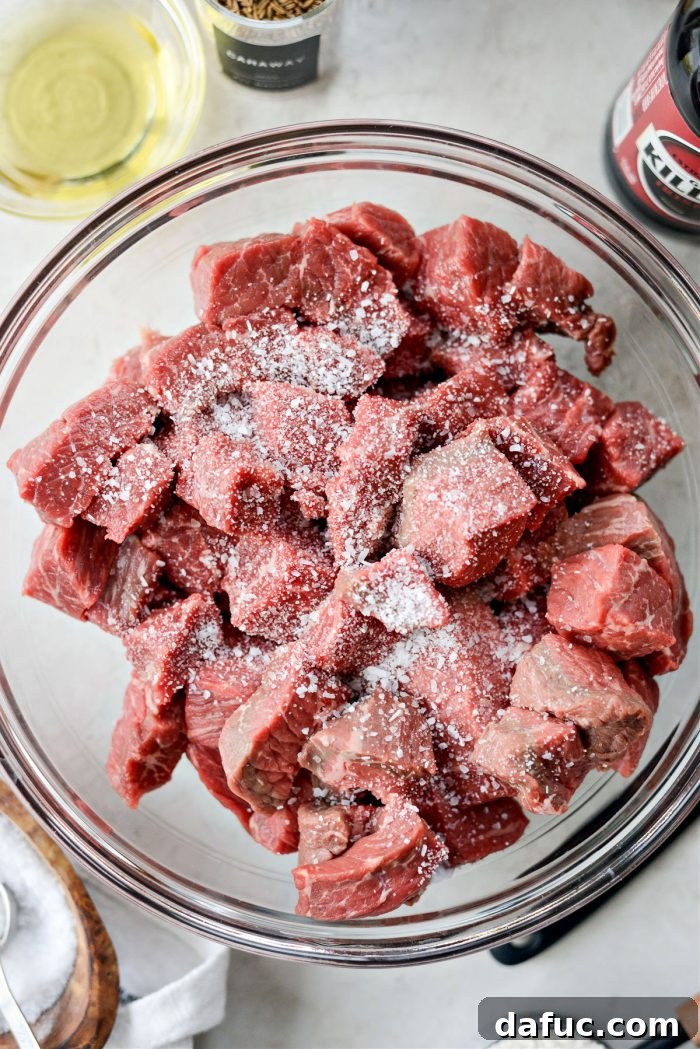
Evenly sprinkle 1½ teaspoons of kosher salt over the beef. It’s crucial to toss the meat thoroughly, ensuring that every single piece is seasoned. This initial salting penetrates the meat, enhancing its flavor from the inside out and preparing it for the searing process.
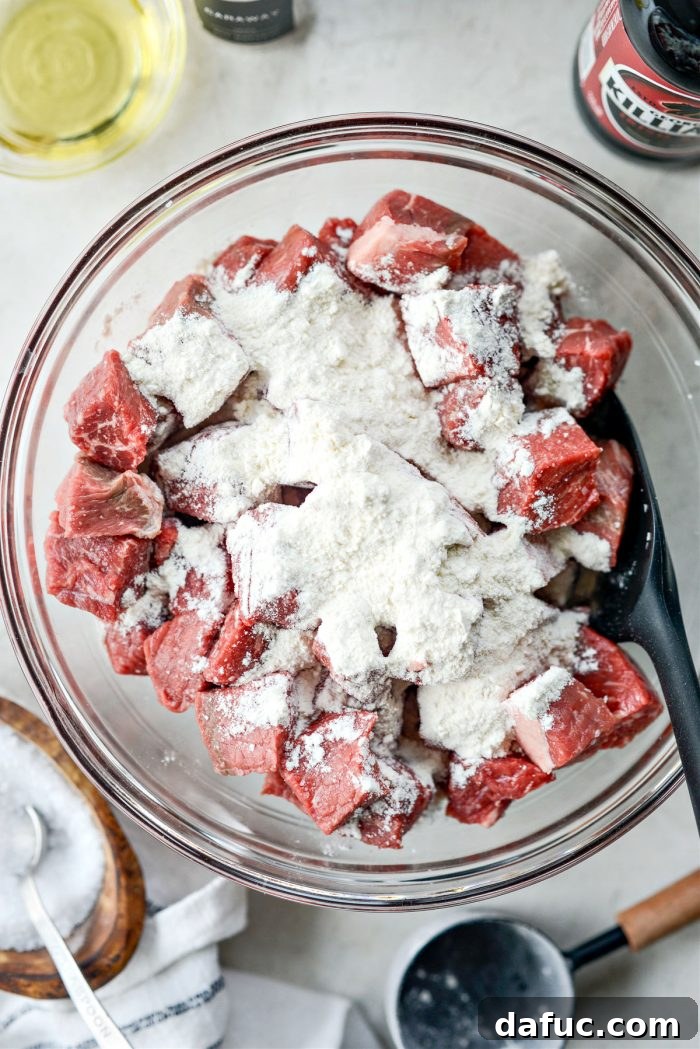
Next, measure out ¼ cup of unbleached all-purpose flour and add it to the bowl with the seasoned beef.
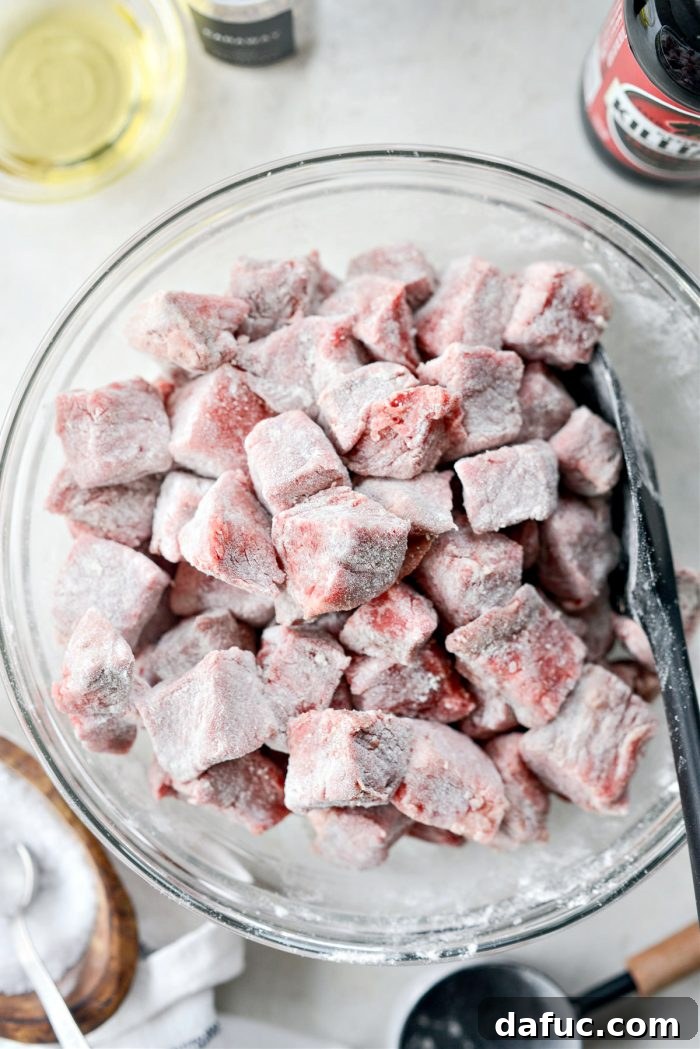
Toss the beef once more until each cube is lightly and evenly coated with flour. This flour coating serves a dual purpose: it helps create a beautiful brown crust during searing (the Maillard reaction!), and it contributes to the thickening of the stew’s gravy later on.
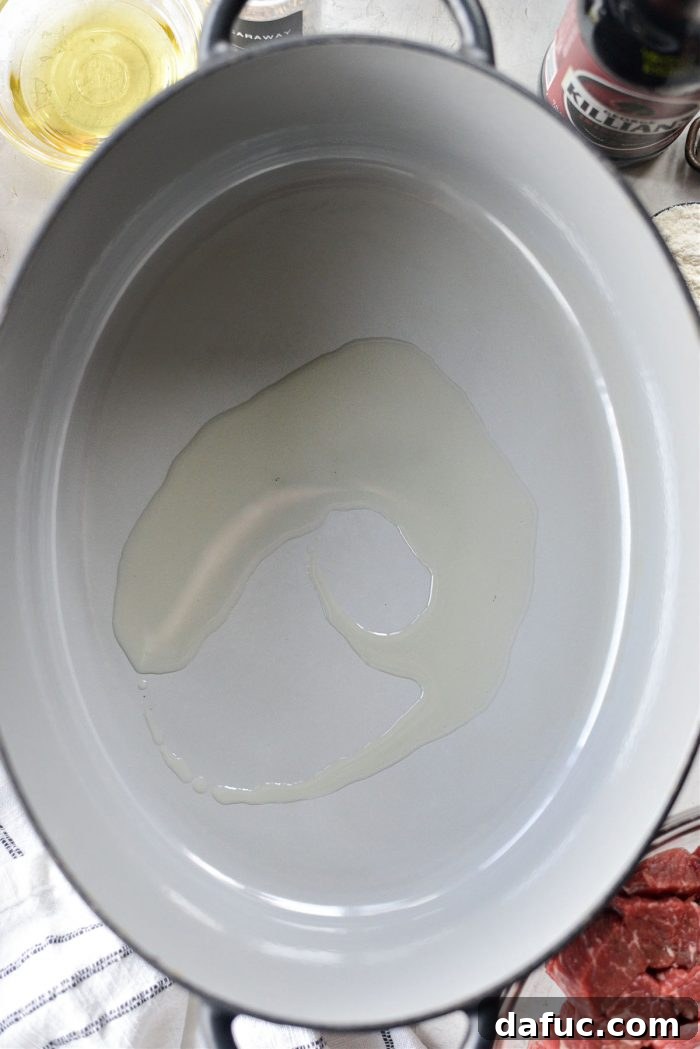
In a large, heavy-bottomed Dutch oven, heat 1 tablespoon of olive oil over medium-high heat. Ensure the oil is shimmering before adding the beef – this high heat is key for a proper sear.
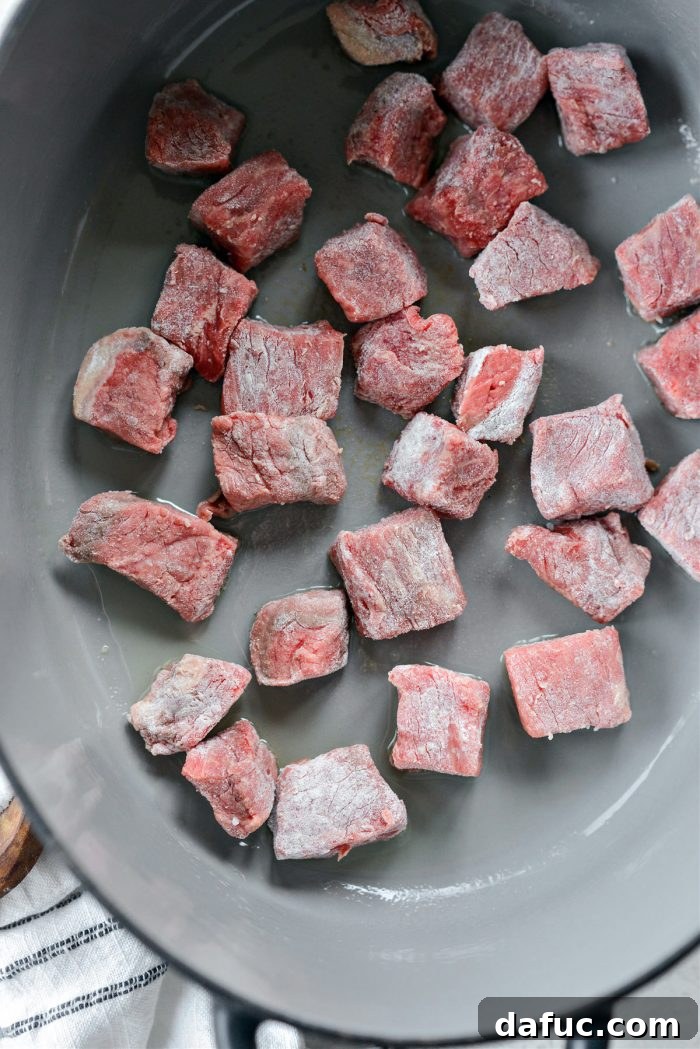
Once the oil is hot, work in batches (about ⅓ of the beef at a time) to avoid overcrowding the pot. Sear the beef until a deep golden-brown crust forms on all sides. This step is critical for developing rich flavor. Overcrowding will steam the meat instead of searing it, resulting in a less flavorful stew. Remove the browned beef to a clean bowl and repeat the process for the remaining batches, adding another tablespoon of oil for each new batch if needed.
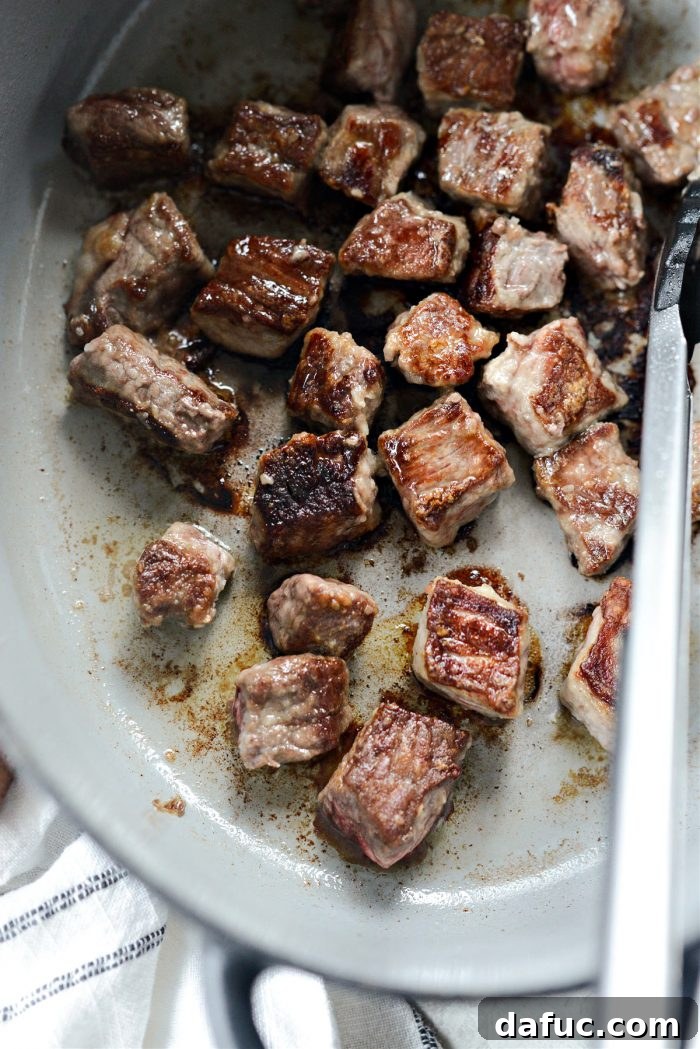
Continue searing all the beef in batches, ensuring each piece achieves that desirable golden-brown crust. Transfer the browned beef to a clean bowl as you go, setting it aside temporarily.
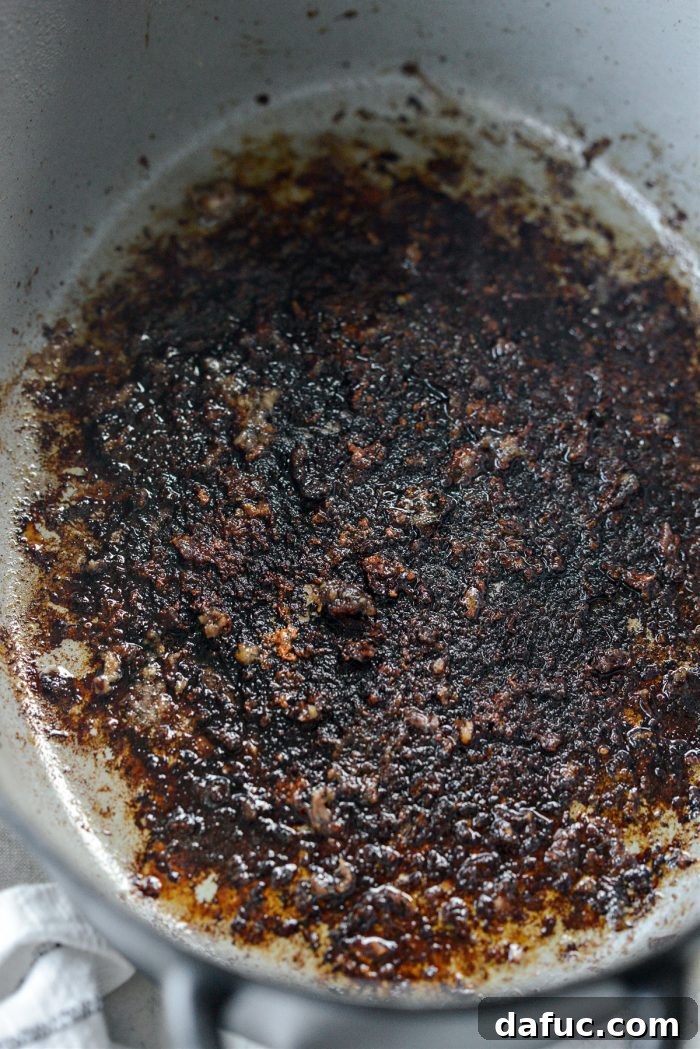
Do not be alarmed if the bottom of your Dutch oven appears to have a layer of browned bits stuck to it. These flavorful remnants are called “fond” and are a treasure trove of concentrated flavor, essential for a truly exceptional stew. They will be scraped up and incorporated into the sauce later, adding immense depth.
The secret to a dark, rich, and intensely flavorful gravy lies in deeply browning the beef. This crucial step, known as the Maillard reaction, develops complex savory notes that cannot be replicated.
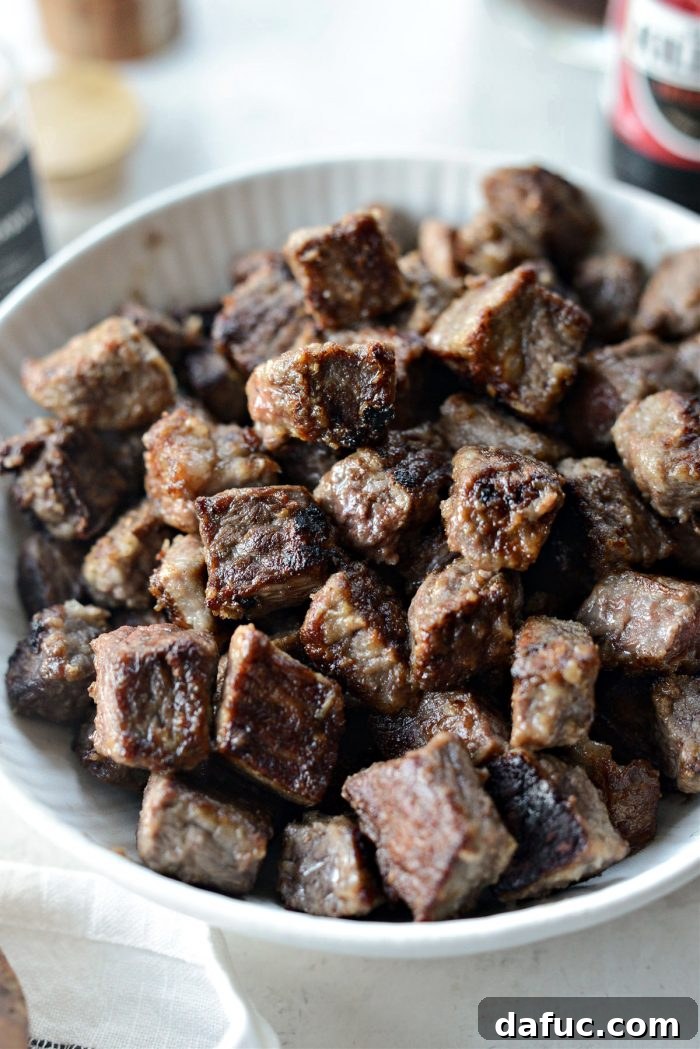
Ensure all the beautifully browned beef is transferred to a clean bowl and set aside while you prepare the aromatic base for your stew.
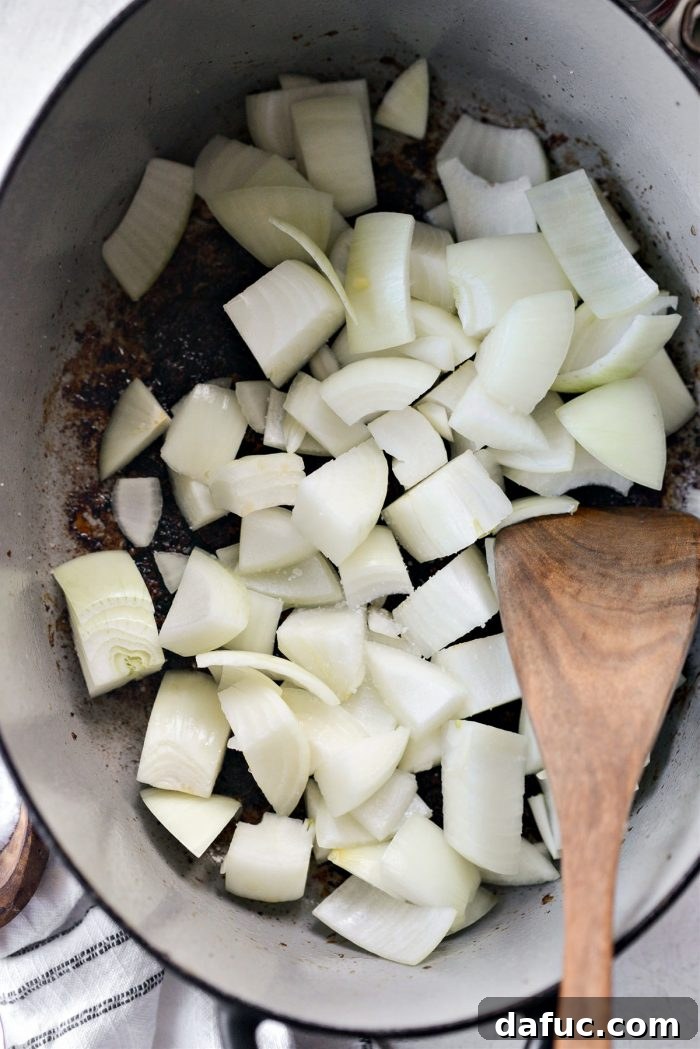
Reduce the heat of the pot to medium-low. Add 2 medium chopped yellow onions (approximately 4 cups) to the Dutch oven. You might need to add a tiny splash more oil if the pot is too dry, but typically there will be enough rendered fat and residual oil.
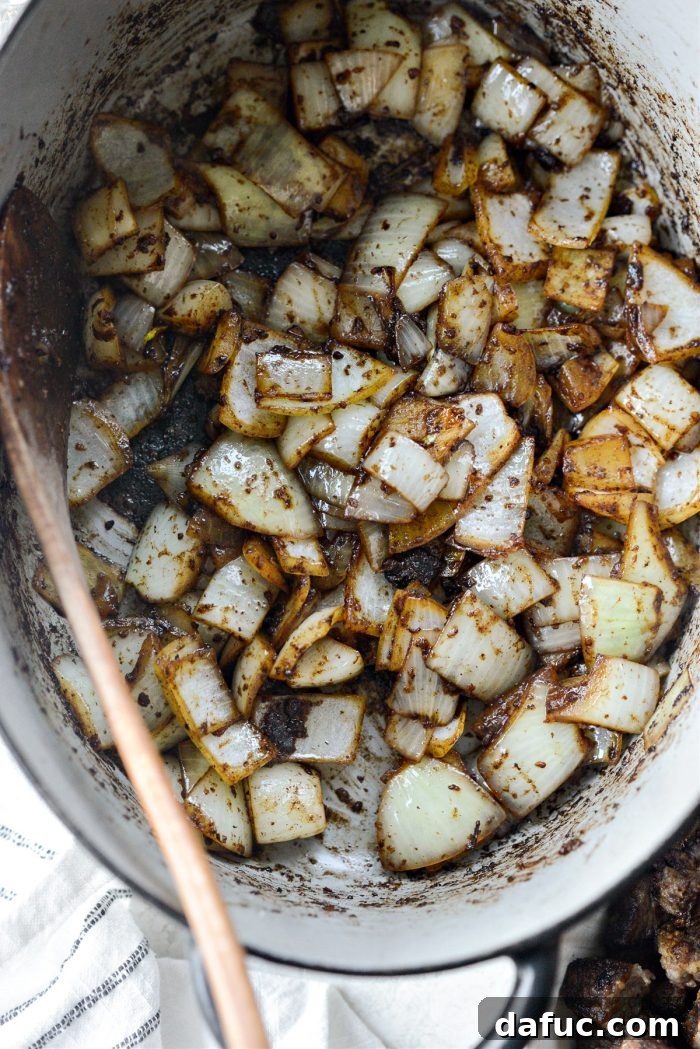
Sauté the onions for 5-8 minutes, stirring occasionally, until they become soft, fragrant, and translucent. As the onions cook and release their moisture, they will naturally help release some of the flavorful brown bits (fond) from the bottom of the pot, integrating them into the stew’s foundation.
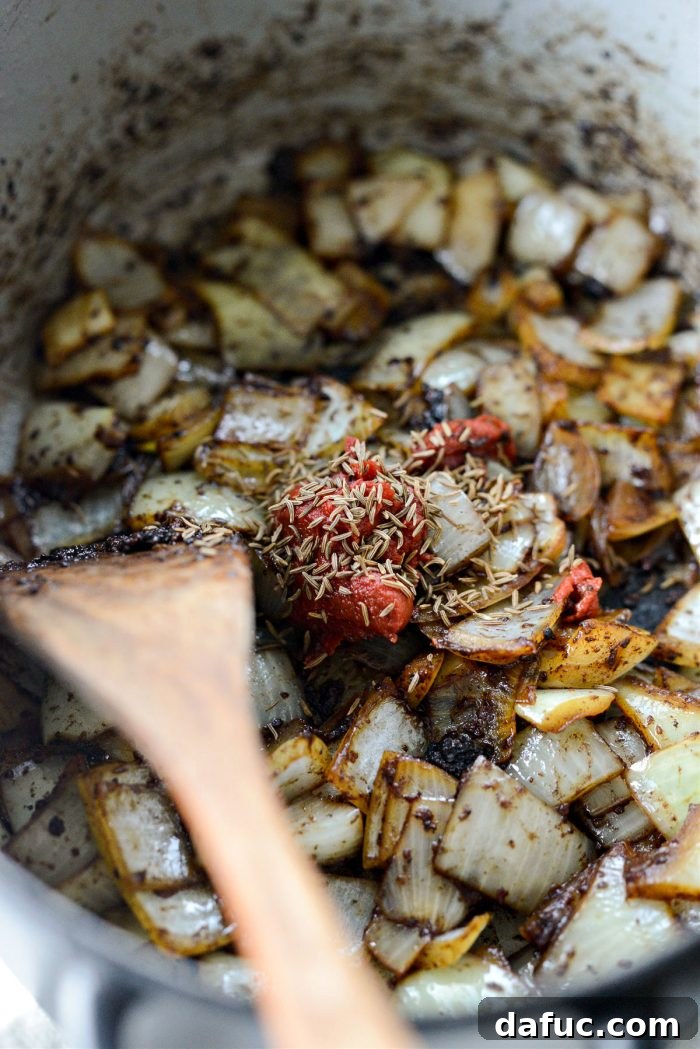
Next, add 1½ tablespoons of tomato paste and ¾ teaspoon of caraway seeds to the softened onions. The tomato paste will add a concentrated tomato flavor and rich color, while the caraway seeds will introduce a distinctive, slightly peppery and earthy aroma that complements the stout and beef beautifully.
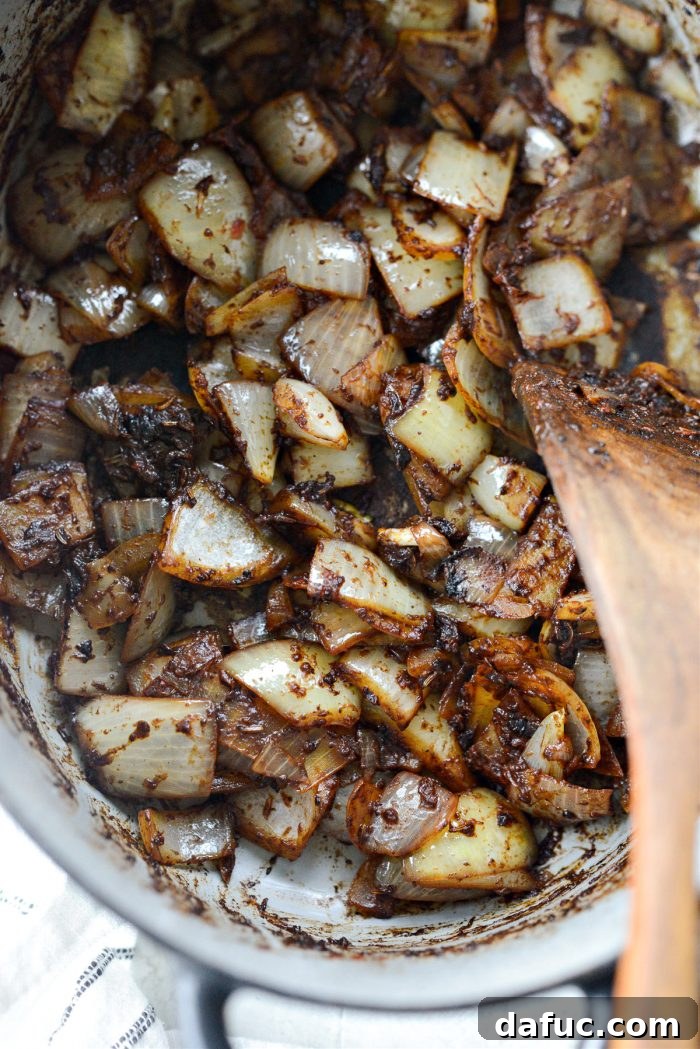
Stir everything together thoroughly, ensuring the tomato paste is well incorporated and coating the onions. Cook for just one minute, allowing the tomato paste to caramelize slightly and deepen its flavor, releasing its full potential.
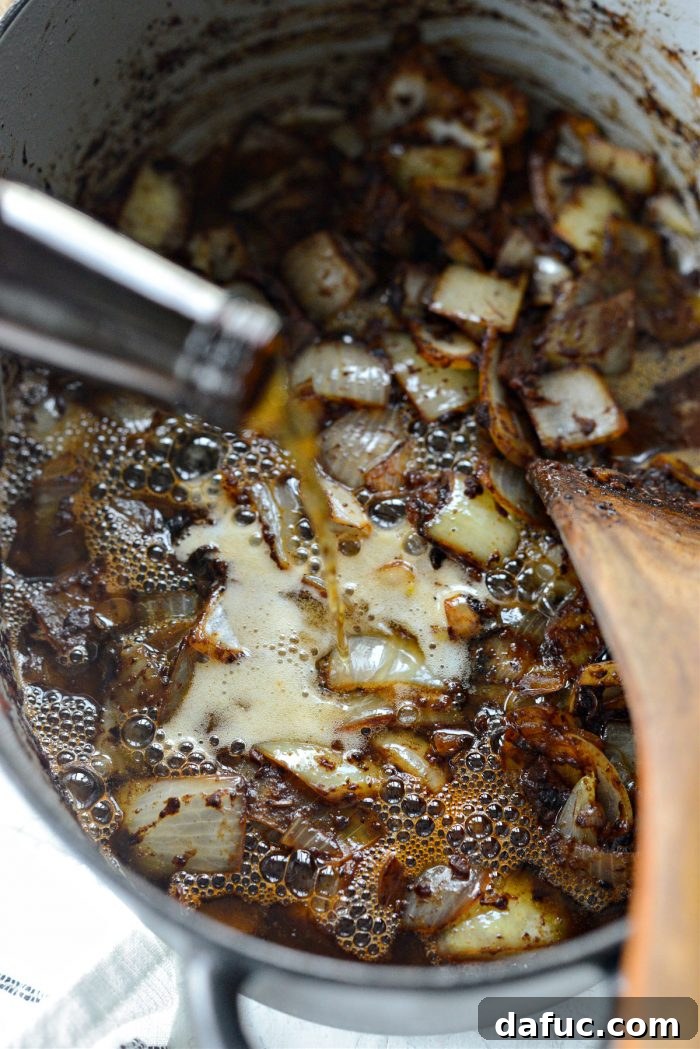
Now for the star liquid! Carefully pour in the entire 11 or 12-ounce bottle of Irish stout. I typically reach for Killian’s for its balanced flavor, but a rich Guinness would also work wonderfully, adding its characteristic roasty notes. The beer will sizzle as it hits the hot pot, beginning the deglazing process.
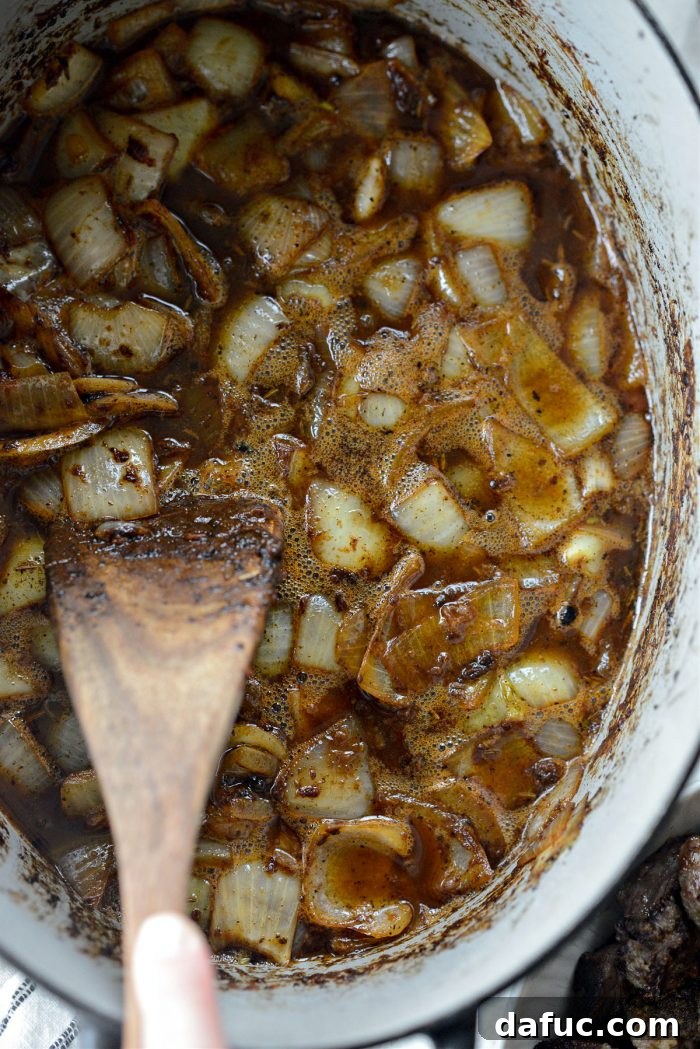
Using a sturdy wooden spoon or spatula, scrape the bottom of the pot vigorously. The stout will help release all those precious brown bits (fond) that accumulated during the beef searing. This deglazing step is paramount; it dissolves the concentrated flavors into the liquid, forming the incredibly rich and complex foundation of your stew’s gravy.
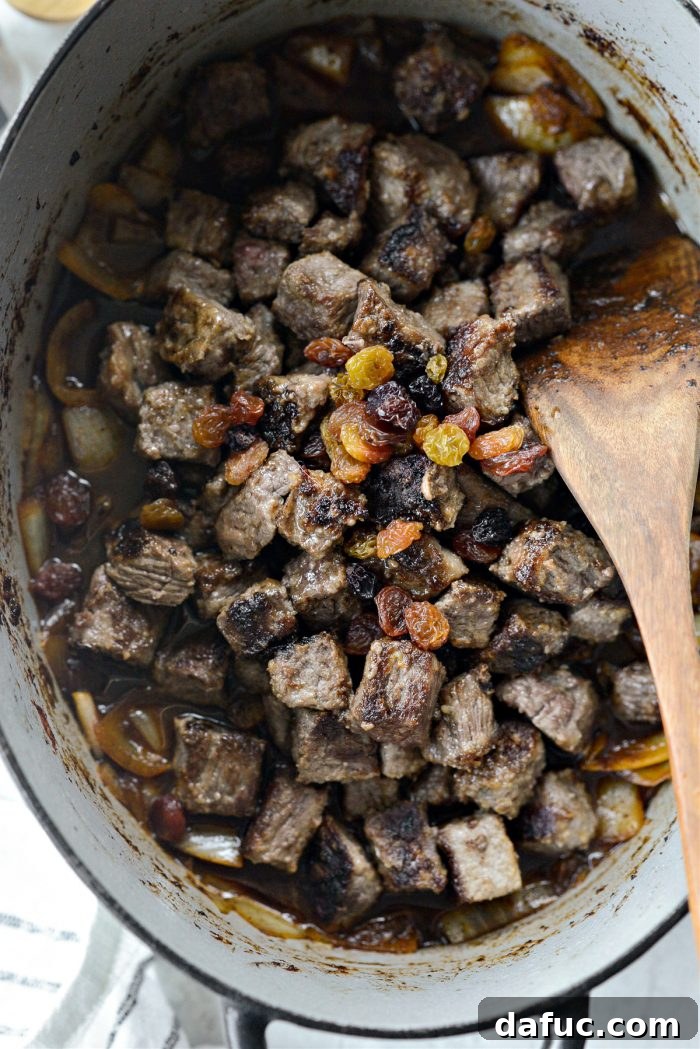
Return the browned beef back into the pot, nestling it into the aromatic liquid. At this point, add 2 tablespoons of golden raisins. While some might find raisins an unusual addition to a savory stew, they contribute a subtle, often surprising, touch of sweetness that beautifully complements the deep flavors of the stout and beef, creating a well-rounded taste profile.
The golden raisins add a subtle yet delightful touch of sweetness, elevating the complexity of the stew’s flavor.
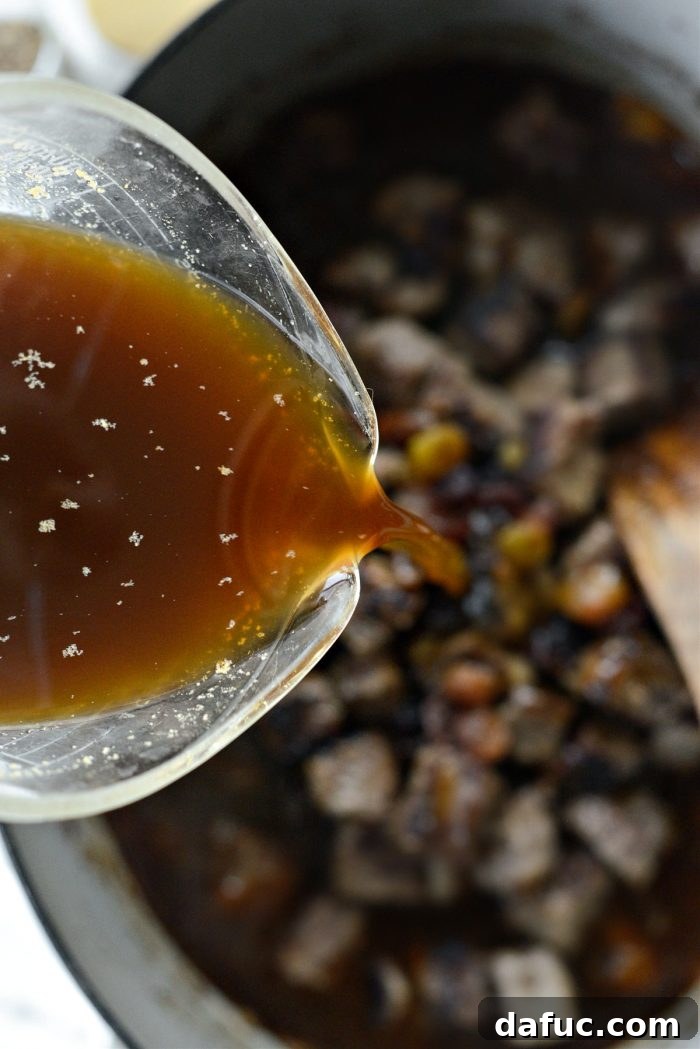
Finally, pour in 4 cups of good quality beef broth. This liquid, combined with the stout and deglazed fond, will form the savory broth that will tenderize the beef and infuse all the ingredients with its rich essence.
Give everything a good stir to combine all the ingredients. Bring the stew to a boil over medium-high heat, then immediately reduce the heat to a gentle simmer. Place the lid securely on the Dutch oven and let it simmer away for an initial 50 minutes. This slow cooking period is crucial for the beef to begin tenderizing and for the flavors to meld.
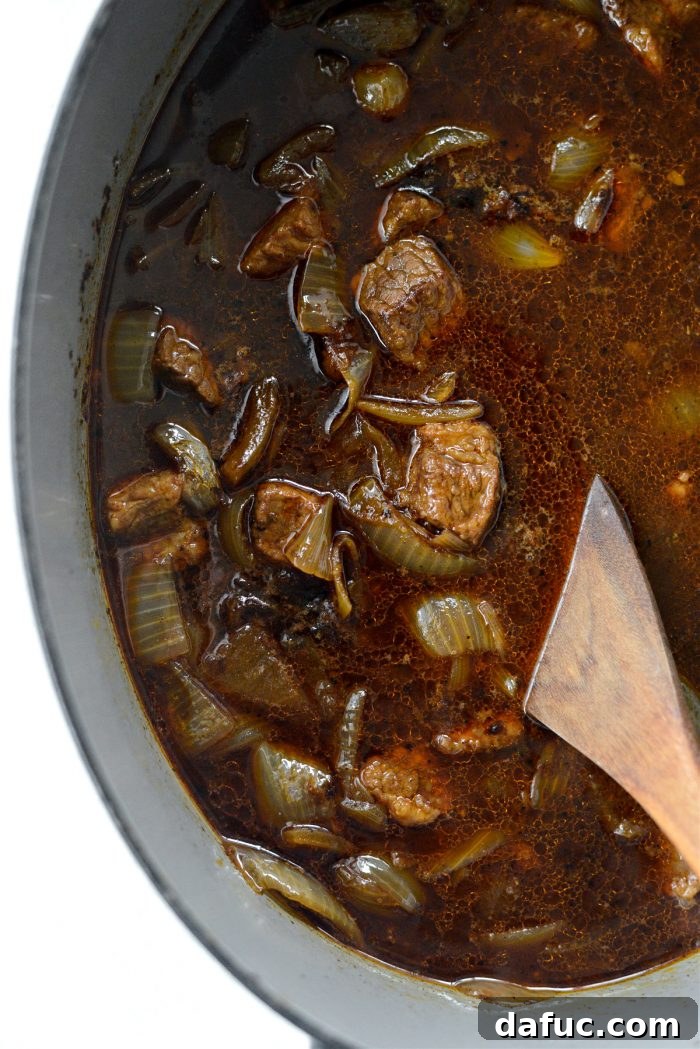
After the first 50 minutes of simmering, lift the lid and give the stew another thorough stir. Then, place the lid back on the pot, but leave it slightly askew, allowing some steam to escape. Continue to simmer the stew for an additional 45 minutes. This slightly uncovered simmering helps to gently reduce the liquid, concentrating the flavors and thickening the gravy.
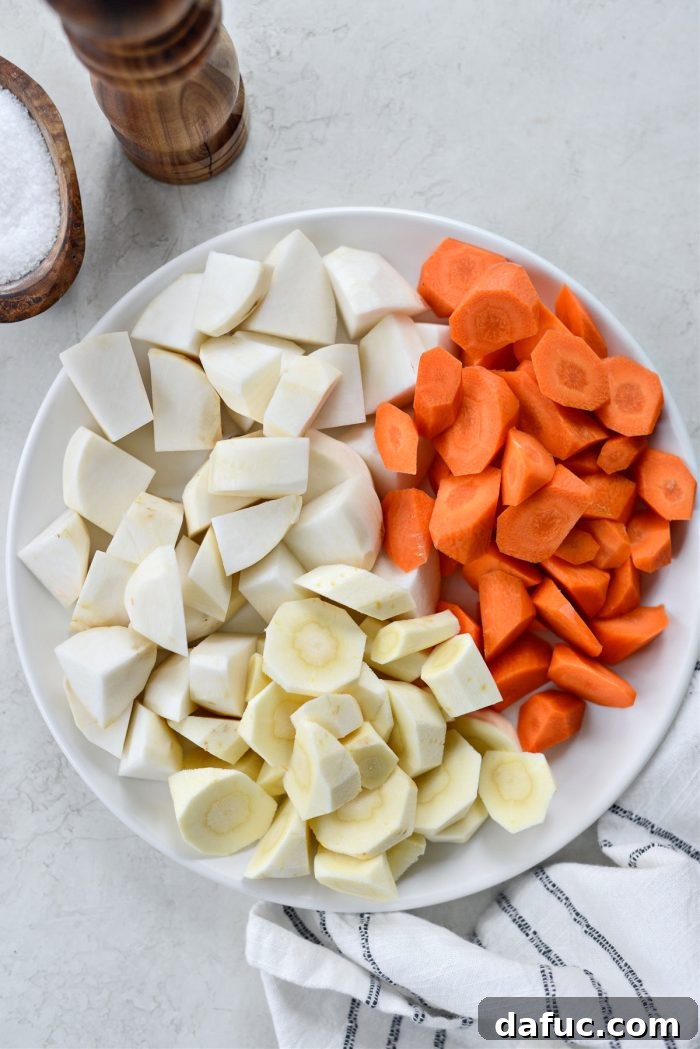
While the beef continues its tenderizing journey, it’s the perfect time to prepare the remaining vegetables. For this recipe, I peeled and roughly chopped 3 carrots, 2 parsnips, and 1 medium turnip into consistent, bite-sized pieces. These hearty root vegetables add not only vibrant color and texture but also a wonderful earthy sweetness that makes the stew truly comforting and nutritious.
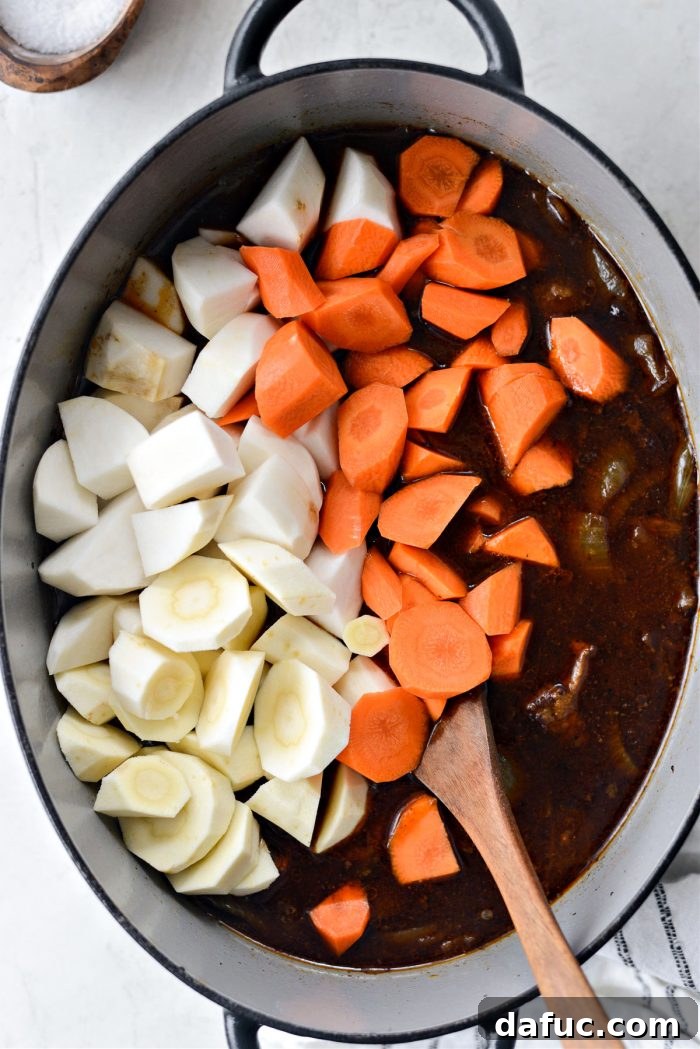
Add the chopped carrots, parsnips, and turnip to the pot. Stir them into the simmering stew, ensuring they are submerged in the rich liquid. Cover the pot again, leaving the lid askew as before, and continue to cook until the vegetables are fork-tender, which typically takes about 35 to 40 minutes. The exact time will depend on the size of your vegetable pieces, so check for tenderness frequently.
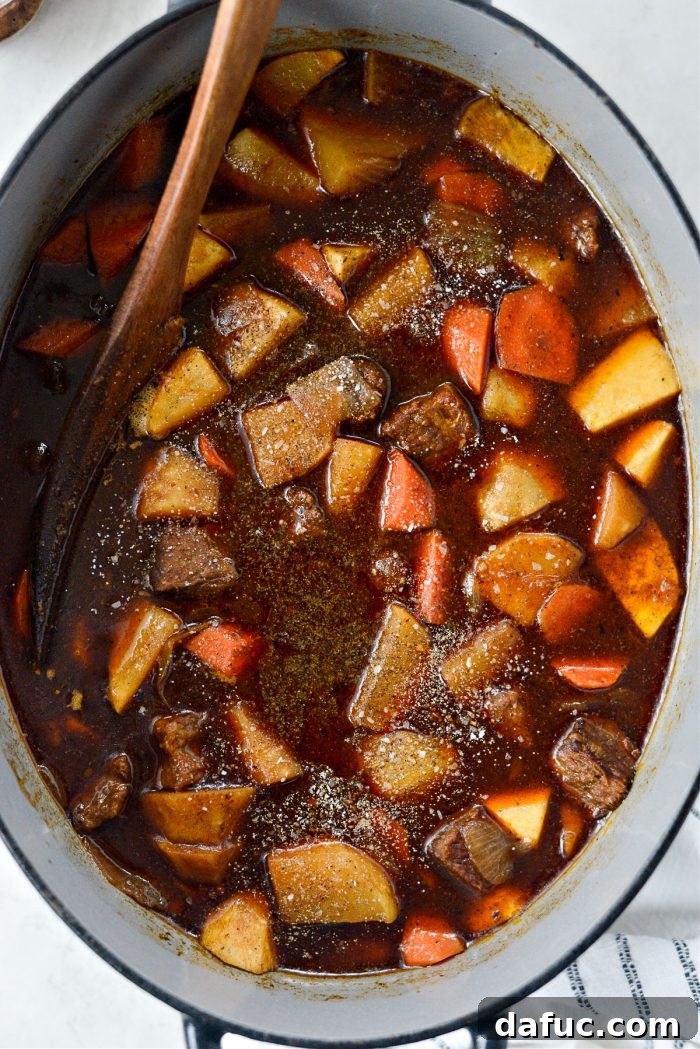
Once the vegetables are perfectly tender, it’s time for the final crucial step: tasting and seasoning. Taste the stew and adjust with more salt if needed. Then, add ½ teaspoon of freshly ground black pepper. Freshly ground pepper makes a significant difference, offering a more vibrant and aromatic kick. This final seasoning ensures all the flavors are balanced and harmonious.
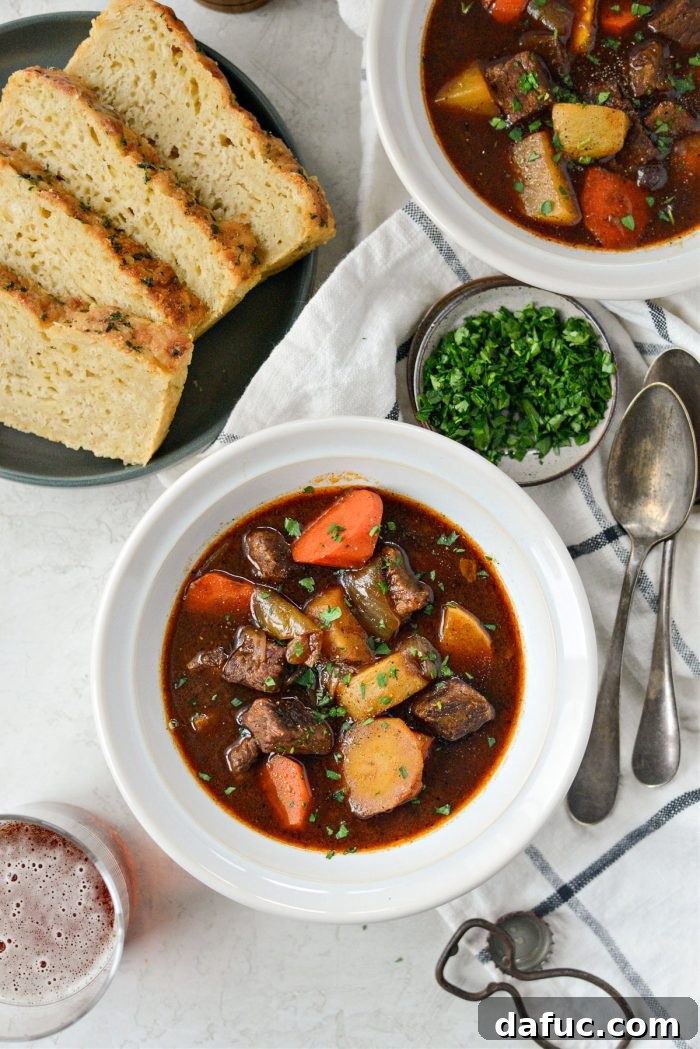
Serving Your Magnificent Irish Stout Beef Stew:
When your Irish Stout Beef Stew is bubbling, fragrant, and perfectly tender, it’s ready to be served. Ladle generous portions into individual bowls, ensuring each serving gets a delightful mix of beef, vegetables, and rich gravy. Finish each bowl with a sprinkle of fresh, minced parsley – its vibrant green color and herbaceous notes provide a lovely contrast and freshness. A final grind of black pepper can also be added for an extra flourish of flavor.
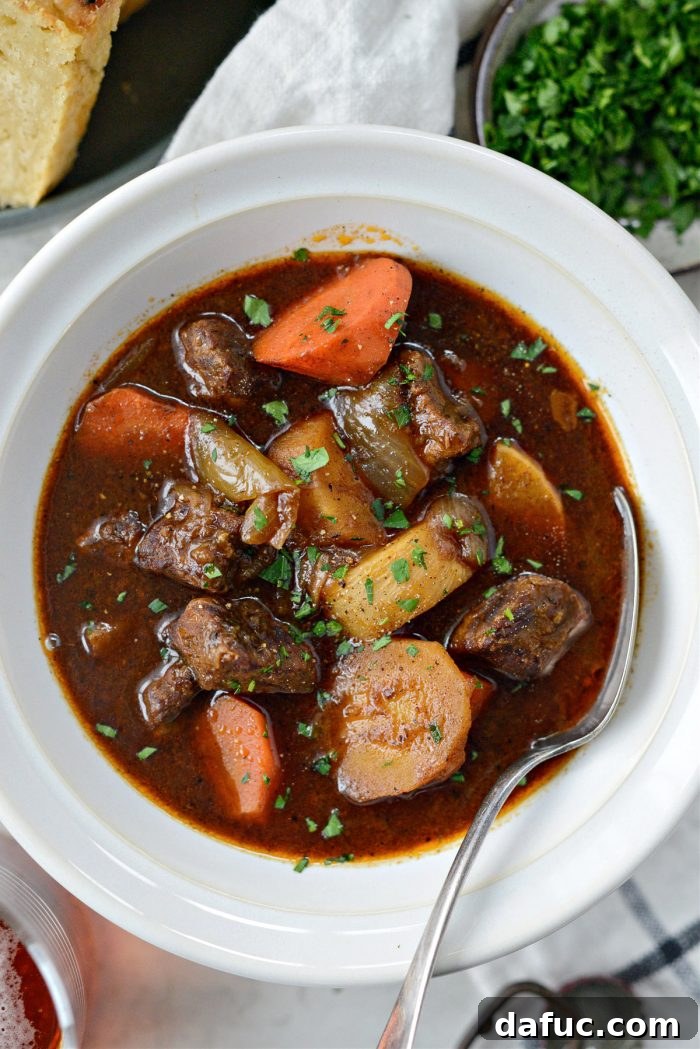
This Irish Stout Beef Stew is, simply put, absolutely amazing. The stout is subtle, adding depth and complexity without being overpowering, allowing the natural richness of the beef to shine. The beef itself is incredibly tender and melty, practically dissolving in your mouth. I particularly love the unique switch-up of root vegetables in this stew – the parsnips and turnips offer a delightful departure from the usual potatoes, bringing their distinct flavors and textures. Perhaps the best part? Leftovers are often even better the next day, as the flavors continue to deepen and meld, making it an excellent meal prep option for a few days of comforting dinners.
Perfect Pairings: The Best Breads to Serve with Irish Stew
No hearty stew is complete without a delicious bread to accompany it. Here are some fantastic choices that pair wonderfully with Irish Stout Beef Stew, perfect for soaking up all that incredible gravy:
- Traditional Irish Soda Bread: The quintessential pairing! Its slightly dense, crusty texture and mild flavor make it ideal for hearty stews.
- No-Knead Rye Bread: A rustic choice with a lovely tangy flavor that complements the richness of the stew.
- Rustic Loaf (No-Knead): A simple, crusty bread with a soft interior is always a winner with any stew.
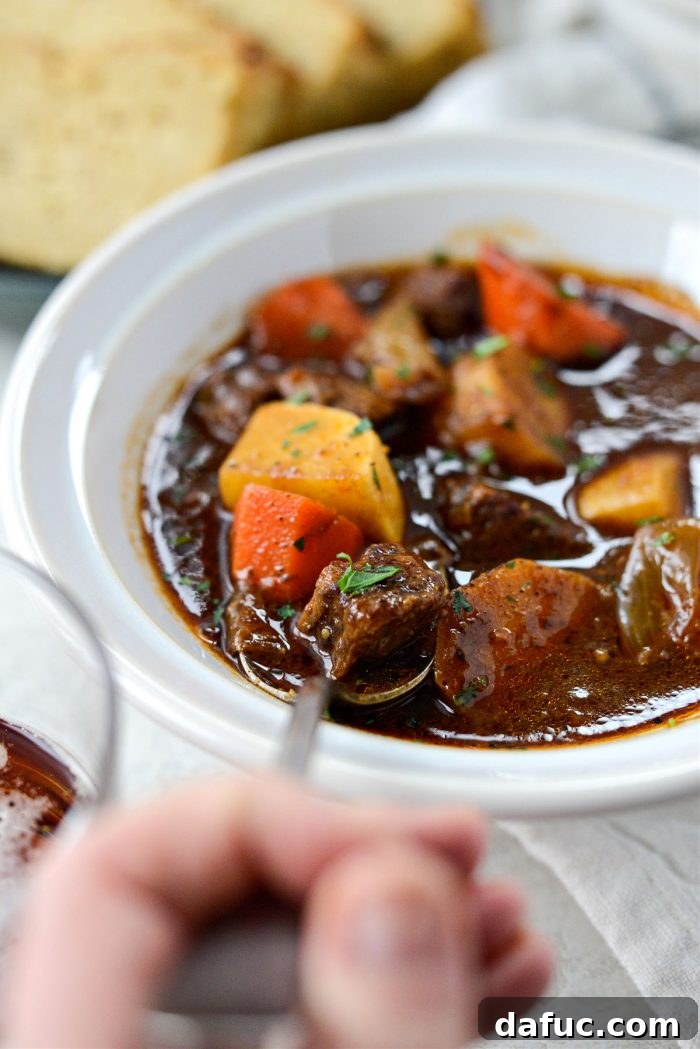
Enjoy your homemade Irish Stout Beef Stew! This recipe is a labor of love, designed to bring warmth and authentic Irish flavors to your home. If you give this recipe a try, please share your experience! We’d love to see your creations – snap a photo and tag me on Twitter or Instagram!
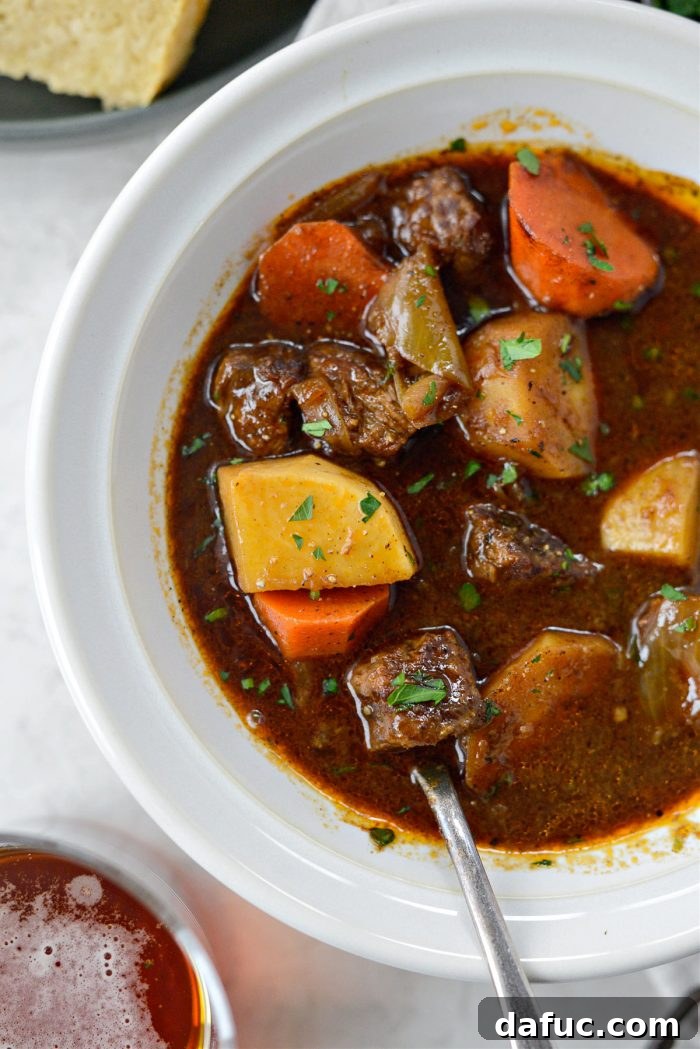
Print Recipe
Pin Recipe
Leave a Review »
Irish Stout Beef Stew
Ingredients
- 3 tablespoons avocado oil, or extra light olive oil
- 3 pounds beef chuck roast, or bottom round roast, cut into 1½ inch cubes
- 1½ teaspoons kosher salt, plus more to taste
- 1/4 cup unbleached all-purpose flour
- 2 medium yellow onions, chopped (about 4 cups)
- 1½ tablespoons tomato paste
- 3/4 teaspoon caraway seeds
- 11 ounces Irish stout beer, like Killian’s or Guinness
- 2 tablespoons golden raisins
- 4 cups beef broth
- 3 carrots, peeled and chopped
- 2 parsnips, peeled and chopped
- 2 medium turnips, peeled and chopped
- 1/2 teaspoon freshly ground black pepper
- 2 tablespoons minced parsley, for garnish
Equipment
- Lodge EC7OD13 Enameled Cast Iron Oval Dutch Oven, 7-Quart, Oyster White
Instructions
- Toss the cubed beef chuck roast with kosher salt. Add in the flour and toss until the beef is lightly coated.
- Heat 1 tablespoon oil in a large Dutch oven over medium-high heat. Working in batches of 3, sear ⅓ of the beef until a deep golden crust forms on all sides. Remove and repeat, adding 1 tablespoon of oil and ⅓ beef for two more batches. Transfer the browned beef to a clean bowl as you go and set off to the side.
- Add the chopped onion into the Dutch oven and cook for 5-8 minutes until just soft and translucent.
- Stir in the tomato paste and caraway seeds, cook for 1 minute.
- Pour in the beer and use a wooden spatula to scrape up the browned bits on the bottom of the pot.
- Next add the beef back into the pot. Add the raisins and pour in the beef broth. Stir, cover and bring to a boil. Then reduce the heat and simmer (covered) for 50 minutes.
- After the first 50 minutes: stir, leave the lid askew and continue simmering for an additional 45 minutes.
- Next add in the carrots, parsnips and turnips. Stir and cook with the lid askew for 30 to 40 minutes or until the vegetables are fork tender.
- Taste and season with more salt if needed and 1/2 teaspoon freshly ground black pepper.
- Serve ladled into bowls with a sprinkle of parsley.
Notes
Nutrition Information (Approximate per serving)
- Serving: 1g
- Calories: 462kcal
- Carbohydrates: 22g
- Protein: 36g
- Fat: 25g
- Saturated Fat: 9g
- Polyunsaturated Fat: 2g
- Monounsaturated Fat: 14g
- Trans Fat: 1g
- Cholesterol: 117mg
- Sodium: 1086mg
- Potassium: 1019mg
- Fiber: 4g
- Sugar: 8g
- Vitamin A: 3976IU
- Vitamin C: 19mg
- Calcium: 80mg
- Iron: 5mg