
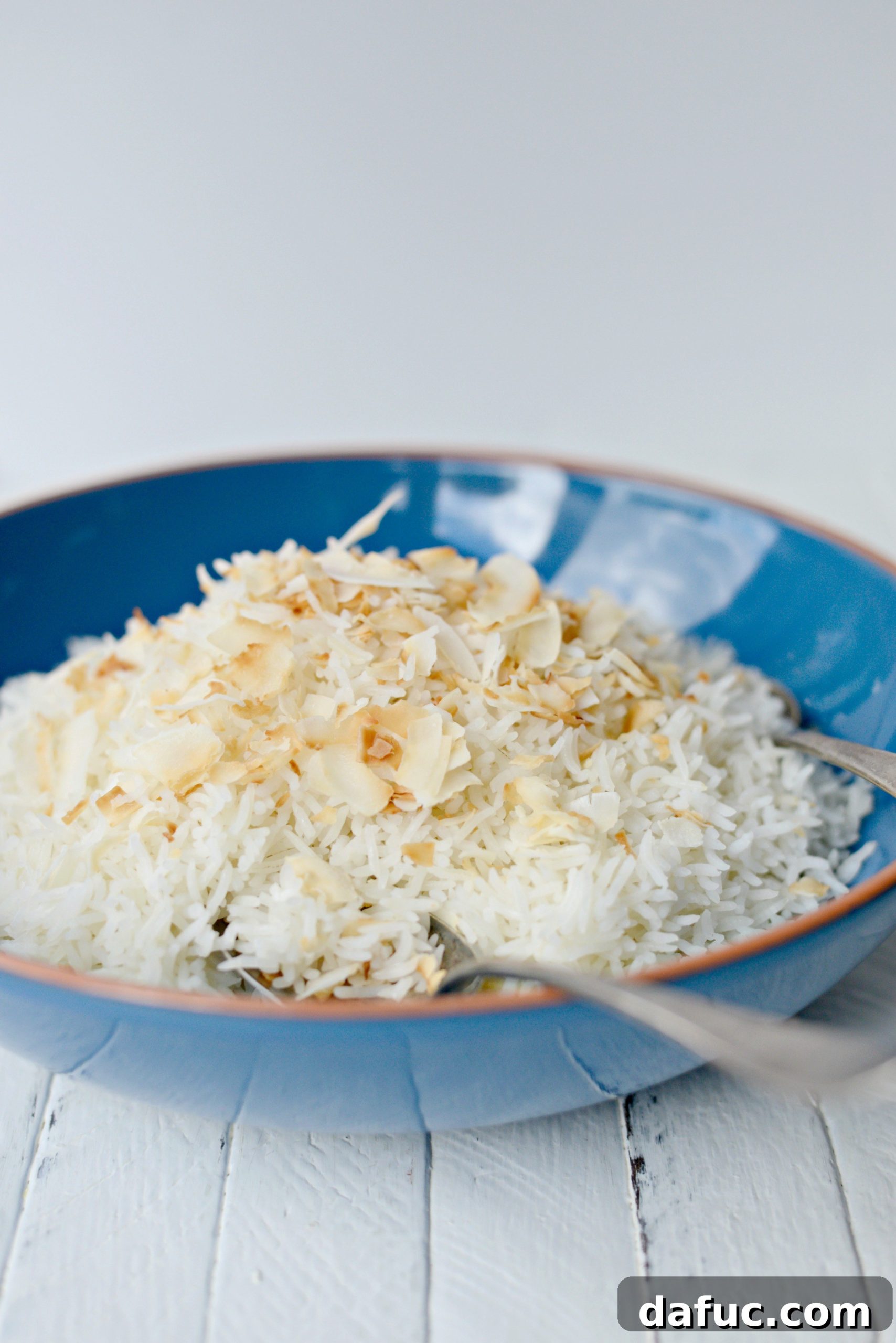
Transform your kitchen experience and elevate your meals with the ultimate secret to perfectly cooked rice: the humble rice cooker. For years, the quest for fluffy, tender rice seemed like an elusive culinary mystery. From scorched bottoms to undercooked grains and gummy messes, preparing rice on the stovetop often felt like a gamble. But with the advent of a reliable rice cooker, that struggle becomes a distant memory. This guide will not only introduce you to the magic of rice cooker cooking but also provide a foolproof recipe for aromatic and irresistibly delicious coconut rice that will quickly become a household favorite.
Embrace the Simplicity: Why Every Kitchen Needs a Rice Cooker
For many home cooks, the idea of consistently making perfect rice can be daunting. The delicate balance of water, heat, and timing required for stovetop rice often leads to inconsistent results. I can personally attest to the frustration of attempts that resulted in either a crunchy, uncooked batch or an overcooked, sticky, clumpy disaster. Watching chefs on television effortlessly whip up perfect rice always left me wondering, “How do they do it?” The answer, for many, lies in a dedicated appliance designed specifically for this task: the rice cooker.
A rice cooker takes the guesswork out of rice preparation. It maintains a precise temperature, ensures even cooking, and automatically switches to a “keep warm” setting once the rice is done, preventing overcooking and keeping it ready until you’re prepared to serve. This hands-off approach frees up valuable stovetop space and allows you to focus on other components of your meal, making it an indispensable tool for busy weeknights and elaborate dinner parties alike.
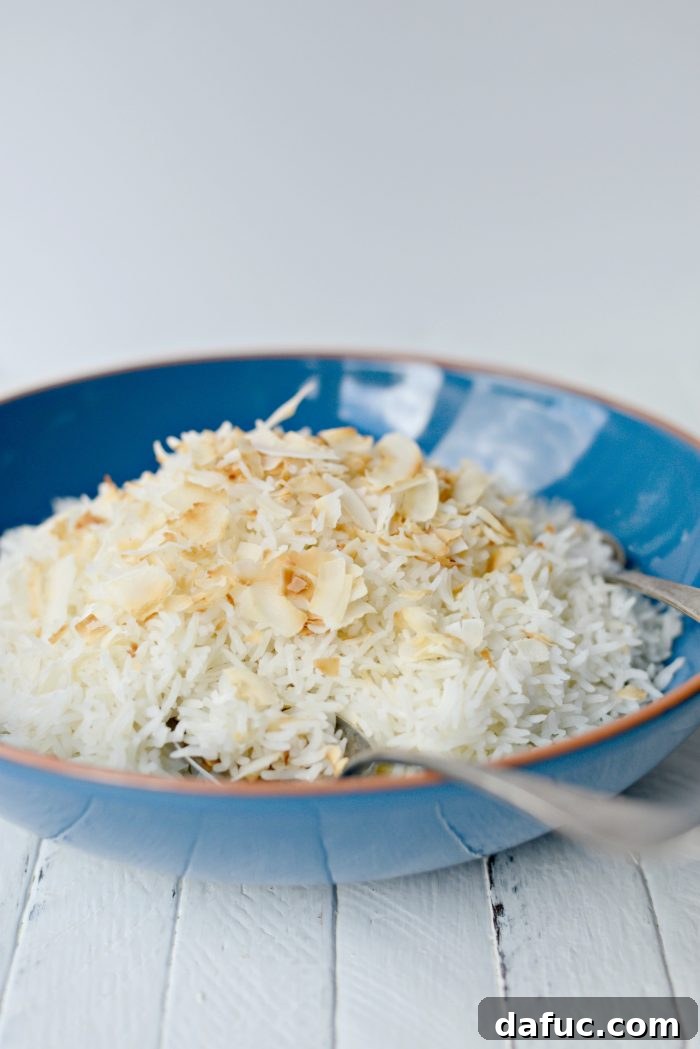
My own journey to rice perfection began with a basic Aroma rice cooker, which served faithfully for years. Recently, I upgraded to a newer, digital model, and the enhanced features have only deepened my appreciation. From fluffy brown rice for a vibrant vegetable fried rice to classic jasmine, the results are consistently impeccable. The latest triumph? This incredible rice cooker coconut rice, a dish that perfectly showcases the appliance’s capabilities.
The Allure of Coconut Rice: A Fragrant and Flavorful Twist
Coconut rice is a culinary delight that transcends cultural boundaries, cherished in cuisines from Southeast Asia to the Caribbean. It transforms ordinary rice into an aromatic, slightly sweet, and wonderfully creamy side dish that complements a vast array of main courses. What makes it truly exceptional, especially when prepared in a rice cooker, is its incredible ease. The process is astonishingly simple: combine rice, coconut milk, water, and a pinch of salt, close the lid, and press a button. The result is a fragrant masterpiece with perfectly separated, tender grains – a far cry from the sticky or dry rice of stovetop woes.
Choosing the Right Rice for Coconut Infusion
The type of rice you select plays a significant role in the final texture and flavor of your coconut rice. While long-grain white rice varieties generally work well, basmati and jasmine rice are particularly favored for their distinct aromatics and ability to cook up light and fluffy. Basmati, with its nutty fragrance, is a staple in Indian and Middle Eastern cooking, offering a slightly firmer texture. Jasmine rice, known for its delicate floral aroma and soft, slightly sticky texture when cooked, is a cornerstone of Thai and other Southeast Asian cuisines.
For this recipe, I often opt for basmati rice due to its beautiful separation of grains and delightful aroma, which pairs wonderfully with the coconut. However, feel free to use jasmine rice if you prefer a slightly softer, more clingy texture. The key is to rinse your chosen rice thoroughly before cooking to remove excess starch. This crucial step helps prevent the rice from becoming overly gummy or sticky, ensuring each grain is distinct and fluffy.
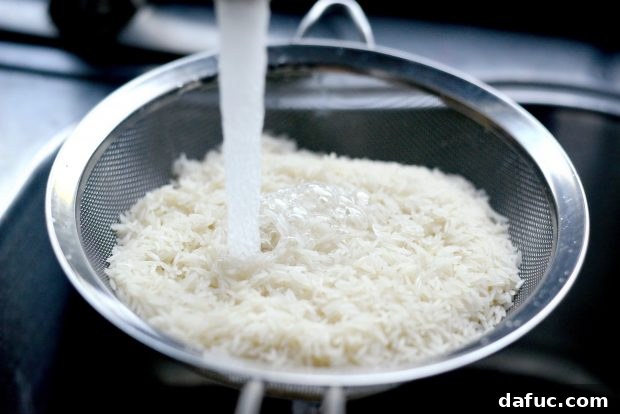
To prepare your rice, measure out the desired amount (for our recipe, we’ll use 4 cups*). Place the rice in a large mesh strainer and rinse it under cool running water. Continue rinsing for a few minutes, gently swirling the rice, until the water draining from the bottom runs clear. This visible change indicates that much of the surface starch has been removed, setting the stage for perfectly fluffy rice.
*A Note on Rice Cooker Measurements
Most rice cookers come with their own proprietary measuring cup, which often differs from a standard US measuring cup (typically closer to 3/4 of a standard cup). If you have misplaced your rice cooker’s cup, or it didn’t come with one, measure out four 3/4-cup portions using a standard measuring cup to achieve the equivalent of “4 rice cooker cups.” This small detail is essential for achieving the perfect water-to-rice ratio that your appliance is calibrated for.
Assembling Your Coconut Rice: A Simple Symphony of Flavors
Once your rice is meticulously rinsed, the next steps are remarkably straightforward. Transfer the clean rice into the inner pot of your rice cooker. Now it’s time to introduce the star ingredient: full-fat coconut milk. Using full-fat coconut milk is highly recommended as it imparts a richer flavor and a more luxurious, creamy texture to the rice. While light coconut milk can be used, it will result in a less robust coconut flavor and a slightly thinner consistency.
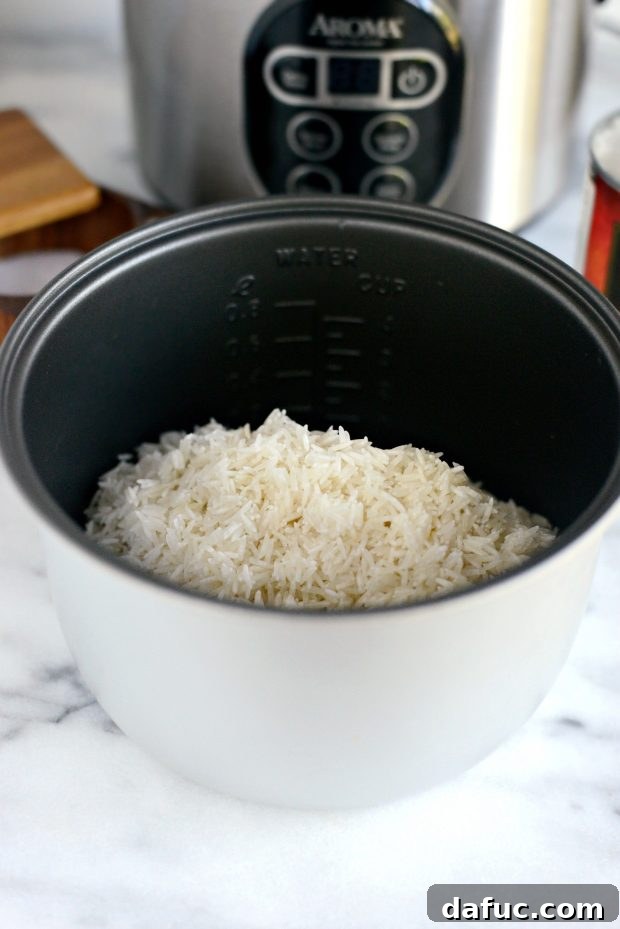
Pour the entire can of full-fat coconut milk into the rice cooker pot. Next, add a generous pinch of kosher salt to enhance the overall flavor profile. While coconut milk provides a natural sweetness, salt balances this out and truly brings out the depth of the coconut. Then, fill the pot with water up to the 4-cup waterline indicated on your rice cooker’s inner pot. This combination of coconut milk and water, measured to the correct line, ensures the ideal liquid absorption for perfectly cooked rice.

Flavor Enhancements and Variations
For those who prefer a more savory coconut rice, consider adding a finely minced clove of garlic to the pot along with the rice and liquids. A small piece of ginger or a pandan leaf can also infuse the rice with additional aromatic complexity, popular in many traditional Asian preparations. These simple additions can dramatically transform the dish, allowing you to tailor it to your specific tastes or to complement the main dish you plan to serve.
The Effortless Cooking Process
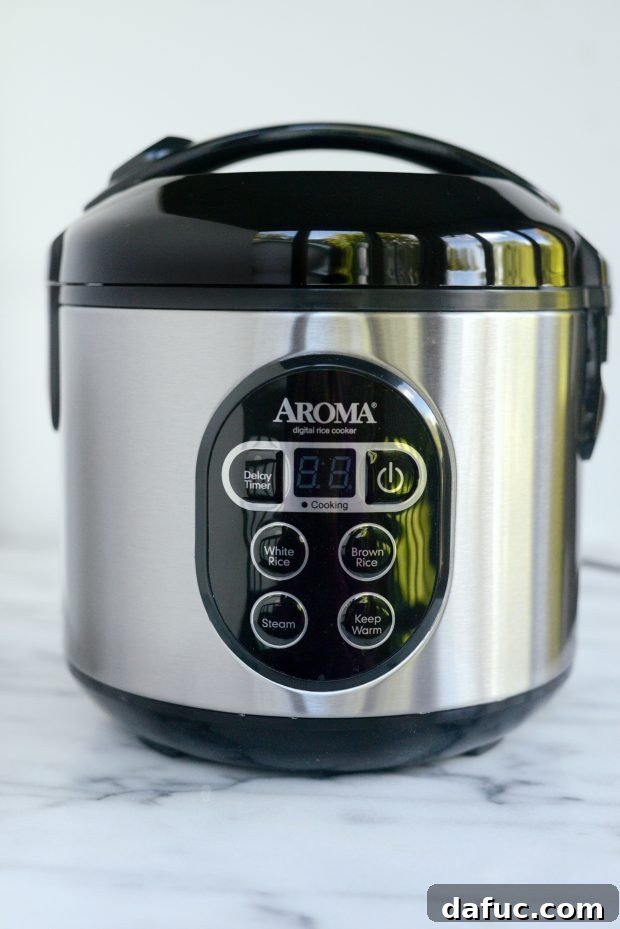
With the ingredients in place, simply close the lid of your rice cooker, plug it in, and select the “white rice” or “start” button, depending on your model. The rice cooker will handle the rest, precisely controlling the cooking cycle to deliver perfect results every time. Typically, this process takes just under 30 minutes, followed by an automatic switch to a “keep warm” setting. This allows the rice to steam gently and finish cooking, ensuring it’s never rushed and always perfectly textured.
The beauty of the rice cooker is truly in its hands-off operation. You can walk away, attend to other tasks, and return to find a pot full of beautifully cooked, fragrant coconut rice. While I missed capturing a photo of the freshly cooked rice in the cooker itself, I can assure you that the outcome is consistently outstanding: fluffy, distinct grains, never clumpy or sticky, and infused with an intoxicating aroma that fills the entire kitchen.
The Grand Finale: Toasted Coconut and Serving Suggestions
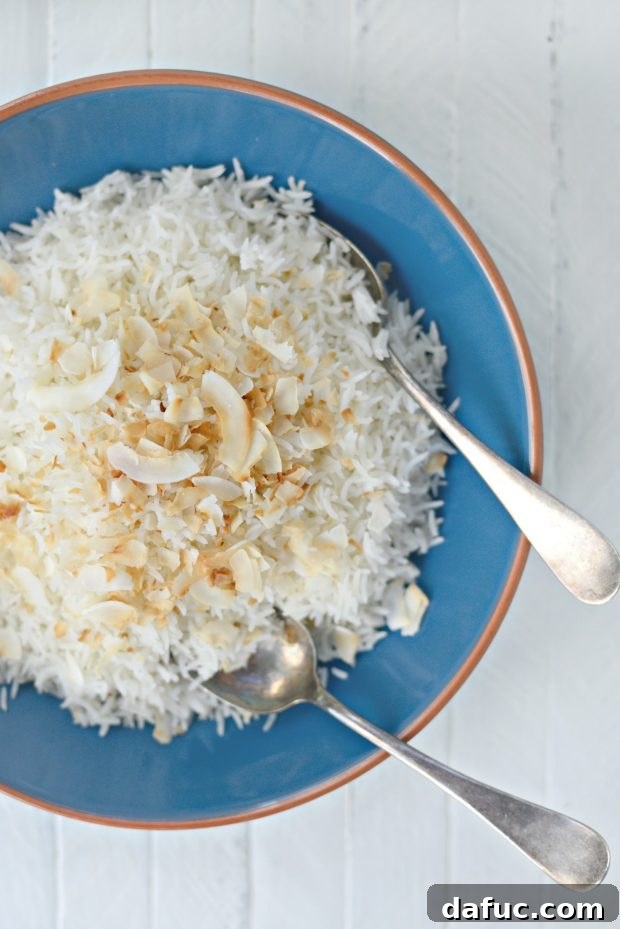
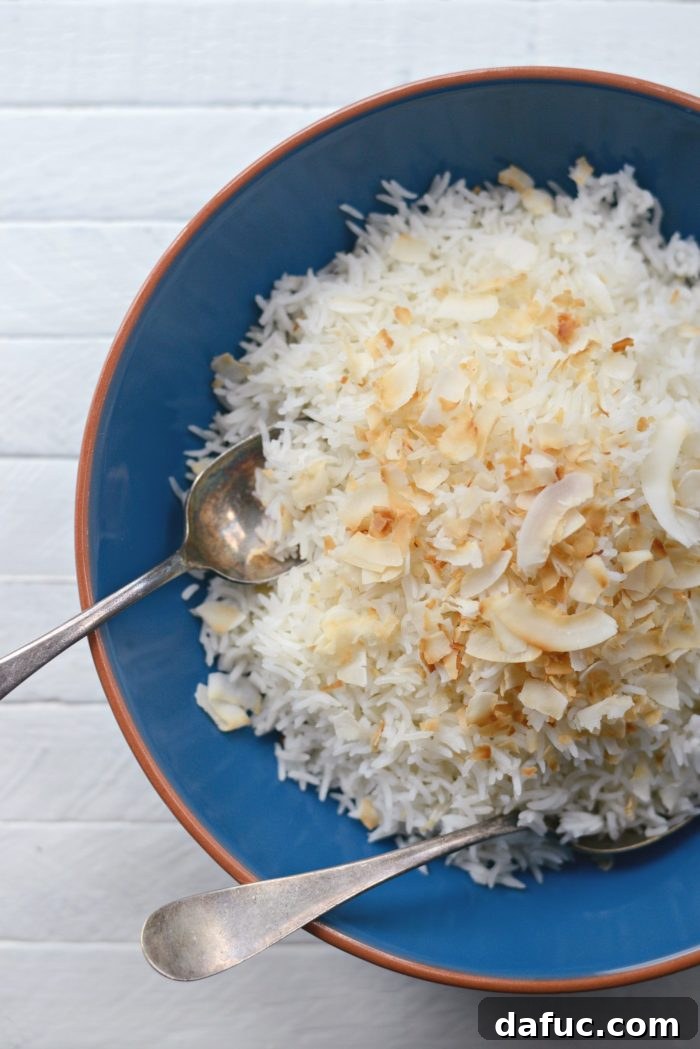
For an extra layer of flavor and delightful texture, I highly recommend sprinkling toasted unsweetened coconut flakes over your finished coconut rice. To toast the coconut, simply spread the flakes in a dry skillet over medium heat, stirring frequently, until they turn golden brown and fragrant. This takes only a few minutes, so watch them closely to prevent burning. The toasted coconut adds a satisfying crunch and intensifies the coconut flavor, making each spoonful an even more exquisite experience. It also adds a visually appealing garnish, making your dish look as good as it tastes.
This fragrant coconut rice is incredibly versatile. It makes an ideal accompaniment to a variety of dishes, from spicy Thai curries and rich Indian stews to grilled fish, roasted chicken, or simple stir-fries. Its subtle sweetness and creamy texture provide a wonderful contrast to savory main courses, creating a balanced and satisfying meal. You’ll find yourself reaching for this recipe again and again, not just for its ease but for its irresistible taste.
As my husband, Pat McNamara, once remarked in 2012 after enjoying a perfectly cooked batch, “It’s been so long since I’ve enjoyed perfectly cooked rice that I forgot how much I like it.” This sentiment perfectly encapsulates the transformative power of a good rice cooker and this simple, yet incredibly rewarding, coconut rice recipe.
Make this Rice Cooker Coconut Rice a staple in your kitchen and rediscover the joy of perfectly cooked rice. Enjoy every fluffy, fragrant grain!
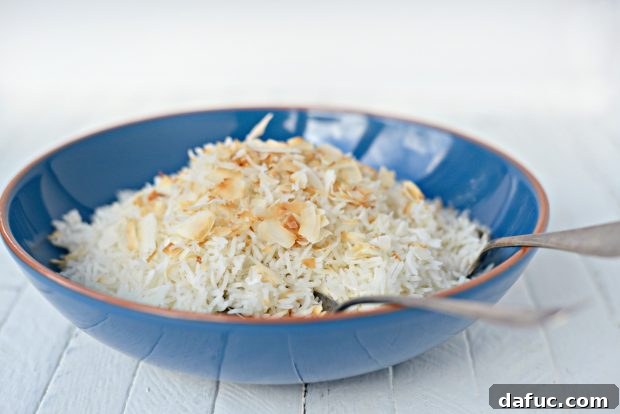
Rice Cooker Coconut Rice Recipe
It’s as easy as adding (rinsed) rice, coconut milk, water, and salt into a rice cooker and pressing start. Prep is minimal, and you get to set it and forget it for just under a half hour. This coconut rice is fluffy, fragrant, and delicious!
Yield: 12 servings (1/3 cup portions)
Prep Time: 5 mins
Cook Time: 30 mins
Total Time: 35 mins
Ingredients
- 4 cups basmati rice (see notes below for measuring)
- 1 (15 ounce) can full-fat coconut milk
- Water
- Kosher salt, to taste
- 1/4 cup unsweetened flaked coconut, optional (for garnish)
Equipment
- Aroma Housewares ARC-914SBD 2-8-Cups (Cooked) Digital Cool-Touch Rice Cooker and Food Steamer, Stainless Steel (or similar rice cooker)
- Fine mesh strainer
- Dry skillet (for toasting coconut, optional)
Instructions
- Measure rice into a fine mesh strainer and rinse under cool water for a few minutes, until the water runs clear. This removes excess starch and helps achieve fluffy rice.
- Place the rinsed rice into the rice cooker pot. Add the entire can of full-fat coconut milk and a pinch of kosher salt.
- Fill the pot with water up to the 4-cup waterline indicated on your rice cooker’s inner pot.
- Close the lid securely. Depending on your brand of rice cooker, press the start or “white rice” button.
- While the rice is cooking, if desired, quickly toast the unsweetened flaked coconut in a dry skillet over medium heat, stirring frequently, until golden brown. Set aside.
- Once the rice cooker finishes its cycle and switches to the “warm” setting, let the rice rest for a few minutes before serving.
- Serve the fluffy coconut rice in a large bowl, topped with the toasted coconut flakes (if using).
Notes
*Most rice cookers come with their own specific measuring cup. If you don’t have one or have lost it, measure out four 3/4-cup portions using a standard measuring cup. This 3/4 cup measurement is equivalent to the “cup” typically used with most rice cookers.
For a savory twist, consider adding a minced clove of garlic or a small piece of ginger to the rice cooker along with the liquids.
Nutrition Information (per serving)
Calories: 307kcal, Carbohydrates: 51g, Protein: 5g, Fat: 9g, Saturated Fat: 8g, Polyunsaturated Fat: 1g, Monounsaturated Fat: 1g, Sodium: 8mg, Potassium: 158mg, Fiber: 1g, Sugar: 1g, Vitamin C: 1mg, Calcium: 24mg, Iron: 2mg
Recipe Details
Author: Laurie McNamara
Course: Side Dish
Cuisine: American (with Asian influences)
If you give this Rice Cooker Coconut Rice recipe a try, don’t forget to let me know! Snap a photo and share it on Twitter or Instagram!