
Authentic Dublin Coddle: A Hearty Irish One-Pot Comfort Food
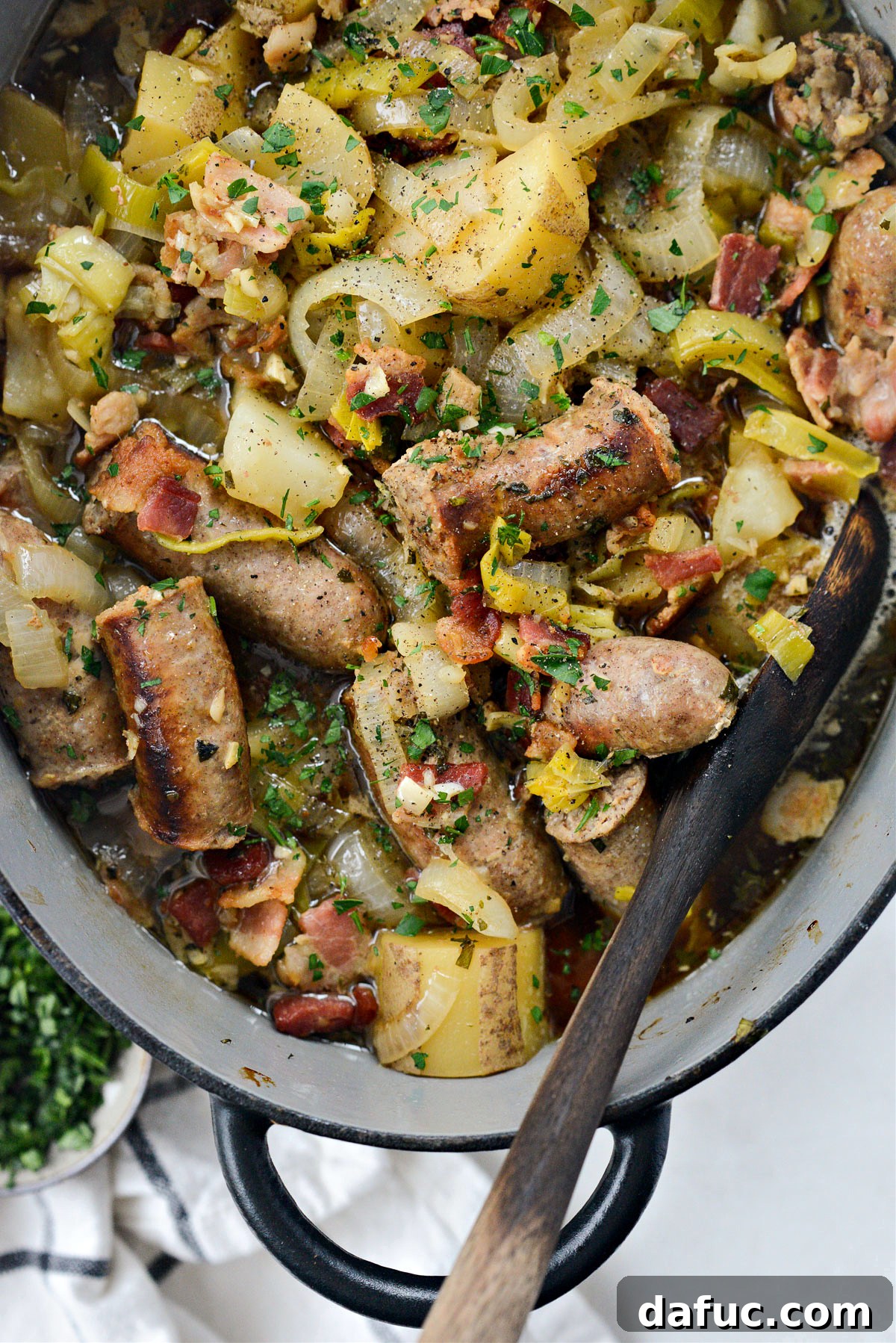
There’s nothing quite like a warm, comforting meal that brings people together, especially one steeped in history and flavor. Dublin Coddle is exactly that – a beloved Irish one-pot dish, cherished for its simplicity, heartwarming taste, and ability to turn basic ingredients into a culinary masterpiece. This traditional Irish stew, hailing from the bustling capital of Dublin, features tender potatoes, succulent pork sausage, savory bacon, and sweet onions, all simmered in a light yet deeply flavorful broth. It’s the ultimate cozy-comfort in a pot, perfect for a chilly evening or a celebratory St. Patrick’s Day feast. This recipe serves 6 to 8 people, making it ideal for family gatherings or a satisfying meal with friends.
What Exactly is Dublin Coddle?
For those unfamiliar with this delightful dish, let me introduce you to what I affectionately call “cozy-comfort in a pot.” Officially known as Dublin Coddle, its name tells a story. “Dublin” because it originates from Ireland’s capital city, and “Coddle” because it’s cooked low and slow, or “coddled,” allowing the flavors to meld beautifully and the ingredients to become incredibly tender. Essentially, Dublin Coddle is an Irish culinary collaboration featuring bacon, quality pork sausage, hearty potatoes, and aromatic onions. The beauty of this dish lies in its humble origins and its incredible ability to transform simple pantry and fridge staples into something truly extraordinary.
I first discovered Dublin Coddle a few years ago while searching for unique St. Patrick’s Day dinner ideas online. Intrigued by its rustic charm and promise of deep flavor, I bookmarked it in my brain with the intention of making and sharing it. Over time, I’ve lovingly adapted the recipe slightly, enhancing its deliciousness (if that’s even possible!) to create what I believe is the perfect rendition of this soul-warming classic. While some purists may debate what constitutes “authentic,” this is my heartfelt take on a dish that embodies the very essence of Irish comfort food.
Why You’ll Love This Dublin Coddle Recipe
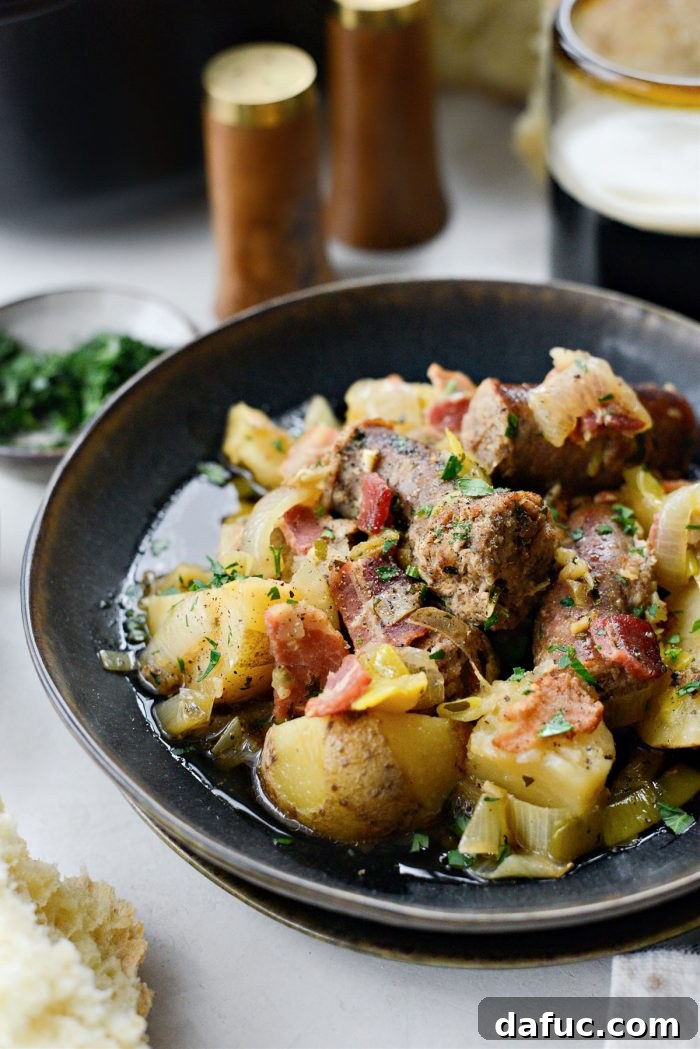
Beyond its historical charm, Dublin Coddle offers a multitude of reasons to become a staple in your kitchen. First, it’s a true one-pot wonder, minimizing cleanup and maximizing flavor. The combination of crispy bacon and savory pork sausage in one meal is, frankly, food nirvana. But it’s more than just a meat and potato dish; the slow cooking process ensures that the potatoes absorb all the delicious broth, becoming wonderfully tender without turning mushy. The onions and leeks sweeten and deepen the flavor profile, creating a broth that you’ll want to savor to the last drop. It’s a meal that feels both special and incredibly accessible, perfect for a cozy family dinner or entertaining guests. The aroma alone will transport you to a quaint Irish kitchen, promising warmth and satisfaction with every spoonful.
Essential Ingredients for Your Dublin Coddle

To create this magnificent Dublin Coddle, you will need a selection of fresh, high-quality ingredients that come together to create its signature rich and comforting flavor profile:
- Thick-cut Applewood Smoked Bacon: This isn’t just for texture; it’s a fundamental flavor builder. The applewood smoke infuses the dish with a distinct smoky depth, and rendering its fat provides a flavorful base for cooking the sausage and vegetables.
- Garlic: A few cloves of minced garlic add an aromatic and pungent kick, balancing the richness of the meats and vegetables.
- Good Quality Pork Sausage Links: The type of sausage can truly elevate your coddle. I highly recommend using your favorite butcher’s best quality pork sausages. Their freshness and superior flavor will make a noticeable difference in the final dish. Look for rustic, traditional varieties if possible.
- Russet Potatoes: These starchy potatoes are perfect for slow cooking as they hold their shape well while absorbing the broth, becoming incredibly tender and flavorful. A rough peel leaves a little skin on for a rustic appearance and added texture.
- Kosher Salt: Essential for seasoning, it enhances and balances all the individual flavors in the dish. Adjust to your taste, remembering that bacon and broth contribute some salinity.
- Freshly Ground Black Pepper: Provides a subtle bite and aromatic warmth, complementing the savory ingredients.
- Fresh Parsley: Used both in the layering and as a garnish, fresh parsley adds a vibrant pop of green and a herbaceous, clean flavor that brightens the entire stew.
- Yellow Onions: When slow-cooked, yellow onions transform, lending a foundational sweetness and savory depth to the broth.
- Leek: A less common addition to some coddle recipes, but a fantastic one in my opinion! Leeks contribute a delicate, sweet, and slightly earthy oniony flavor that adds another layer of complexity and depth to this dish.
- Low-Sodium Chicken Broth: This forms the base of our flavorful broth. Using low-sodium broth allows you to control the overall saltiness. You can also substitute with low-sodium bone broth or vegetable stock for a slightly different flavor profile.
The Art of Coddling: Step-by-Step Preparation
Preparation is Key: Setting Up Your Oven and Dutch Oven
Begin by adjusting your oven rack to the lower third position. This helps ensure even cooking for a hearty dish like coddle. Preheat your oven to a gentle 300°F (150°C). This low and slow temperature is crucial for tenderizing the ingredients without boiling them, allowing the flavors to develop richly.
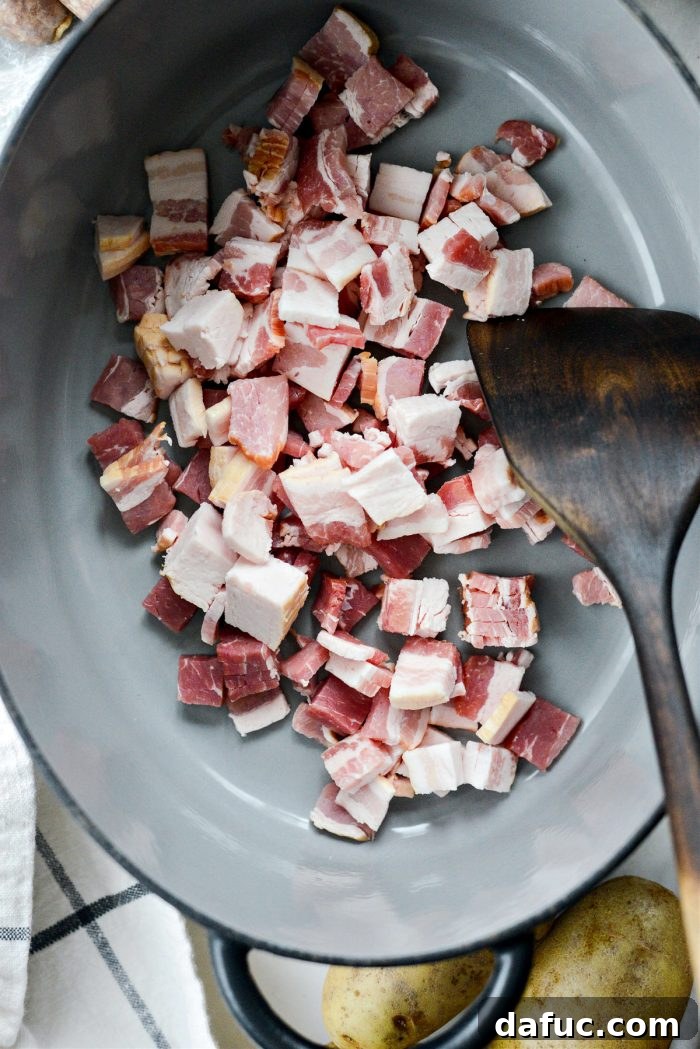
In a sturdy 7-quart Dutch oven (the ideal vessel for a one-pot meal like this), add the diced thick-cut applewood smoked bacon. Place it over medium to medium-low heat. The goal here is to slowly render the bacon fat until the bacon pieces are wonderfully crispy, about 18-20 minutes. Rendering the fat first is a critical step in building flavor; it creates a delicious base in which to cook the sausage and imparts a smoky essence throughout the dish. While some might consider this a deviation from certain “authentic” methods, for me, developing layers of flavor is the name of the game. To each their own, I suppose, but you won’t regret this step!
While the Bacon Renders: Vegetable Prep
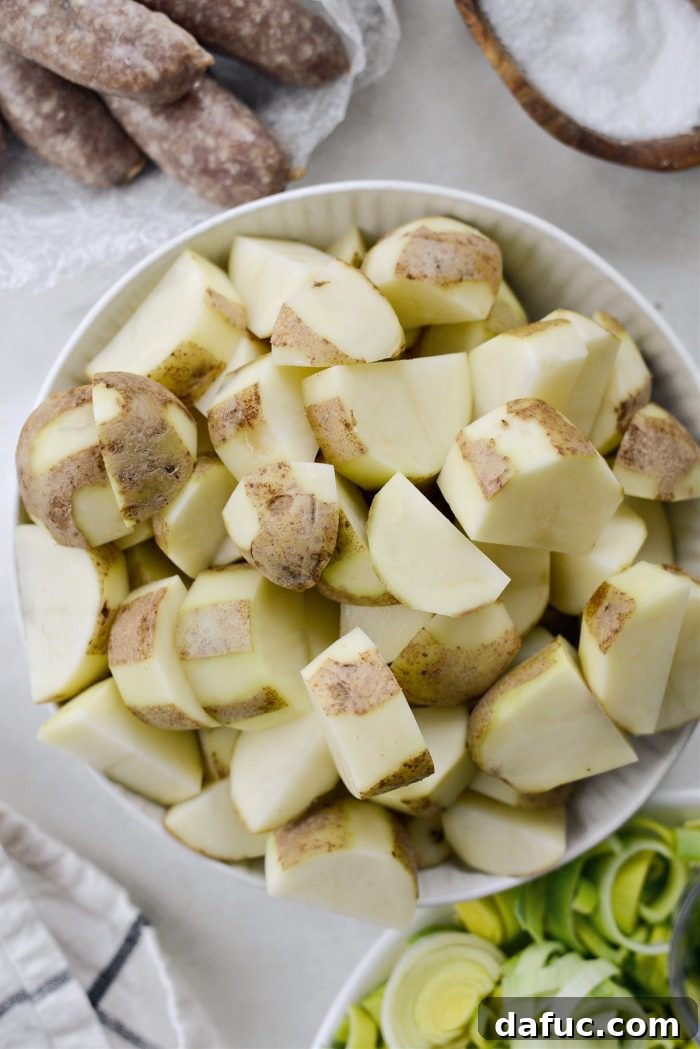
While your bacon is busily crisping up, it’s the perfect time to prep your vegetables. Start by roughly peeling 3 pounds of russet potatoes. I like to leave a little bit of the skin on for a more rustic, home-style appearance and a touch of texture. Once peeled, slice each potato in half, then cut them into 3 or 4 larger pieces, depending on the potato’s original size. The key here is to keep them generously large; this prevents them from turning into absolute mush during the long, slow braise in the oven. They should be substantial enough to absorb the broth and remain distinct pieces.
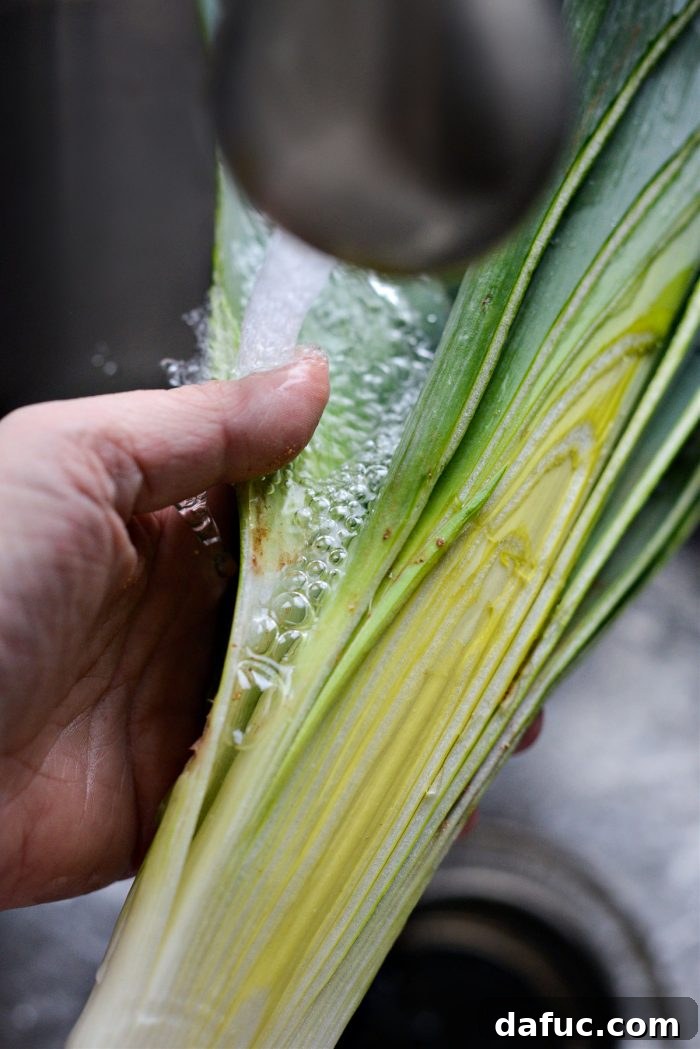
Next, turn your attention to the leeks. Thoroughly washing leeks is crucial, as they can often harbor dirt and sand between their layers.
What’s the Easiest Way to Clean Leeks?
Cleaning leeks doesn’t have to be a chore! Start by trimming off any tough outer leaves and the dark green tops. You only want the white and light green parts. Slice the leek in half lengthwise from top to bottom, making sure to keep the root end intact. Now, fan each half under a steady stream of cool running water. Use your fingers to gently brush away any trapped sand or dirt from between the layers. Once clean, pat them dry with a clean kitchen towel or paper towel before slicing, dicing, or roughly chopping them according to your recipe’s needs.
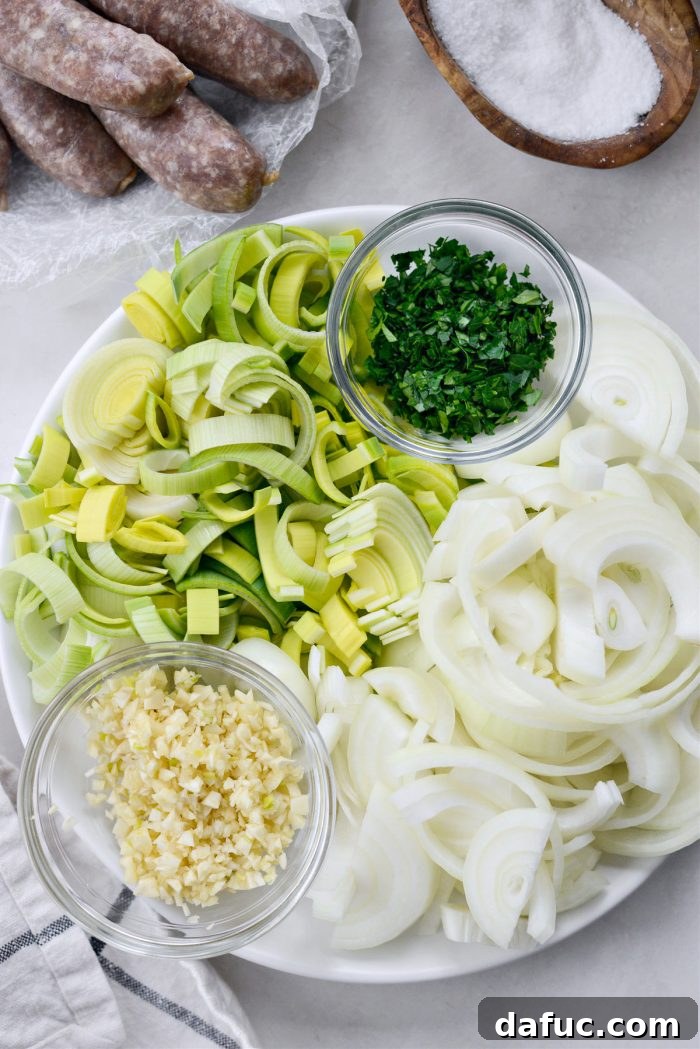
To complete your vegetable prep, halve and slice 2 yellow onions into uniform pieces. Slice the white and light green parts of your cleaned leek halves. Finally, mince 6 cloves of garlic and measure out 2 tablespoons of fresh parsley, which will be used for layering.
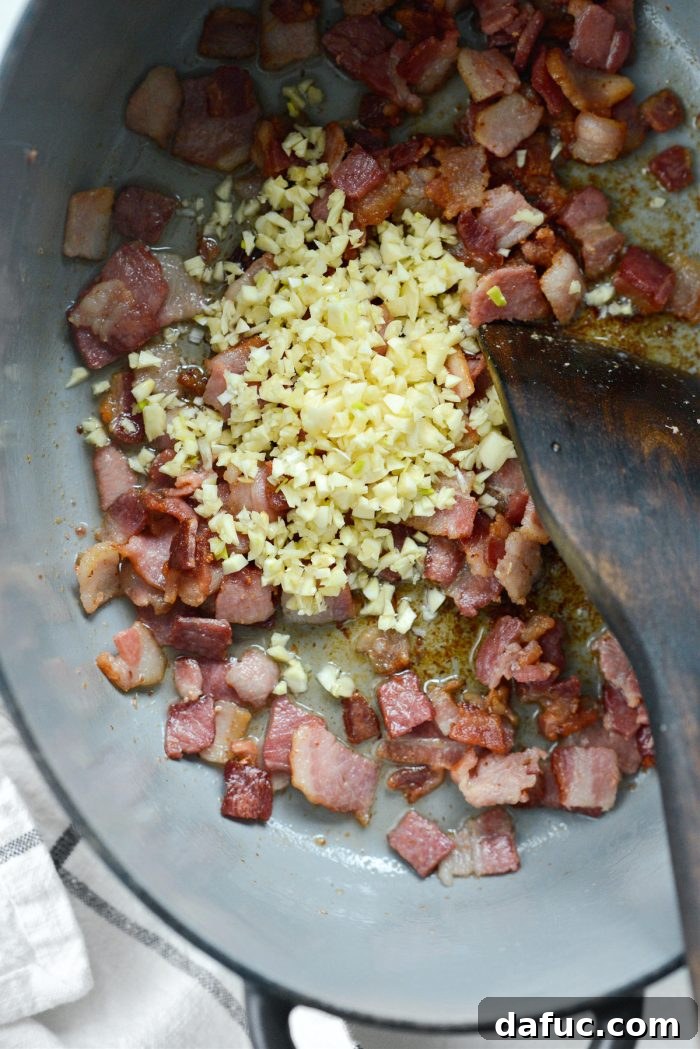
Once the bacon has rendered and is cooked to a delightful crispiness, add the 6 cloves of minced garlic to the Dutch oven with the bacon and its rendered fat. Cook for just about 2 minutes, stirring constantly, until the garlic is fragrant but not browned or burnt. This quick sauté infuses the fat with an incredible aroma.
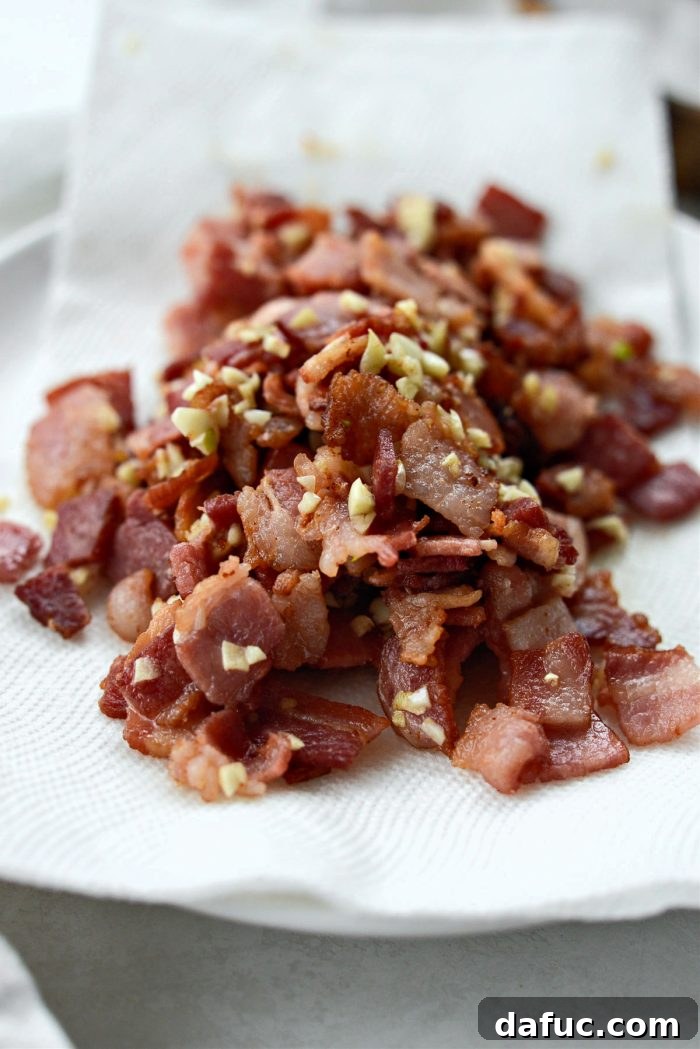
Using a slotted spoon, carefully transfer the crispy bacon and fragrant garlic to a plate lined with paper towels. This will allow any excess fat to drain off, keeping the bacon crisp, and sets it aside to be added back into the coddle later, preserving its texture and flavor.

With the flavorful bacon fat remaining in the Dutch oven, add 2 pounds of good quality pork sausage links (typically about 6 links). Sear each side of the sausages for 3 to 4 minutes, allowing them to develop a beautiful golden-brown color. This searing step is vital as it builds a deeper flavor through the Maillard reaction and contributes to the richness of the final broth.

Choosing the Best Pork Sausage for Dublin Coddle
The quality of your pork sausage makes a significant difference in Dublin Coddle. Don’t skimp here! I always make a point to stop by my favorite local butcher or market. They often carry a variety of different sausages, and I particularly love their house-made rustic versions. However, the most important thing is to use a pork sausage that you genuinely enjoy. Whether it’s a mild breakfast sausage, a herbed variety, or something with a touch of pepper, choose your favorite to ensure the best possible flavor in your coddle!

Once the sausages are nicely browned, remove the Dutch oven from the heat and turn off the burner. Transfer the seared sausages to a cutting board. Once slightly cooled, cut each sausage into thirds. This size ensures they are bite-sized and distribute well throughout the stew.
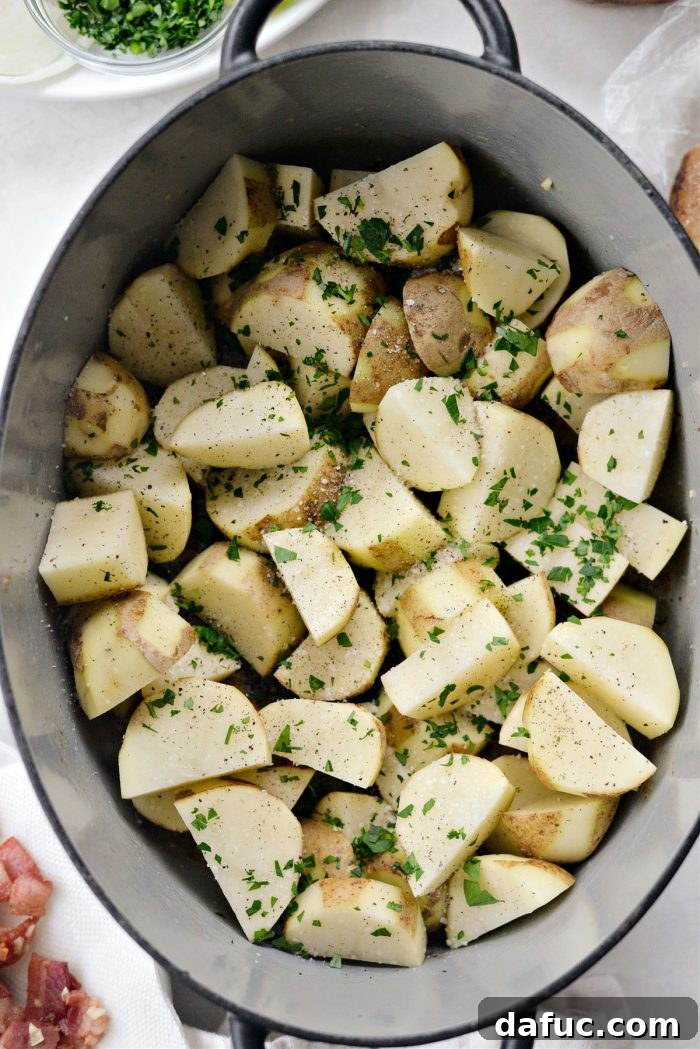
Now, it’s time to assemble the coddle layers in the Dutch oven, which has been emptied of its meats but retains all the flavorful drippings. Start by layering in the prepared russet potatoes. Season them generously with a good pinch (or two!) of kosher salt, some freshly ground black pepper, and half of the minced fresh parsley. Layering the potatoes first ensures they sit in the flavorful broth and drippings, allowing them to absorb maximum flavor as they cook.

Following the potatoes, add the sliced yellow onions, the fragrant leeks, and the cut sausages. Make sure to scrape in any accumulated juices from the cutting board with the sausages – these are precious flavors you don’t want to lose!
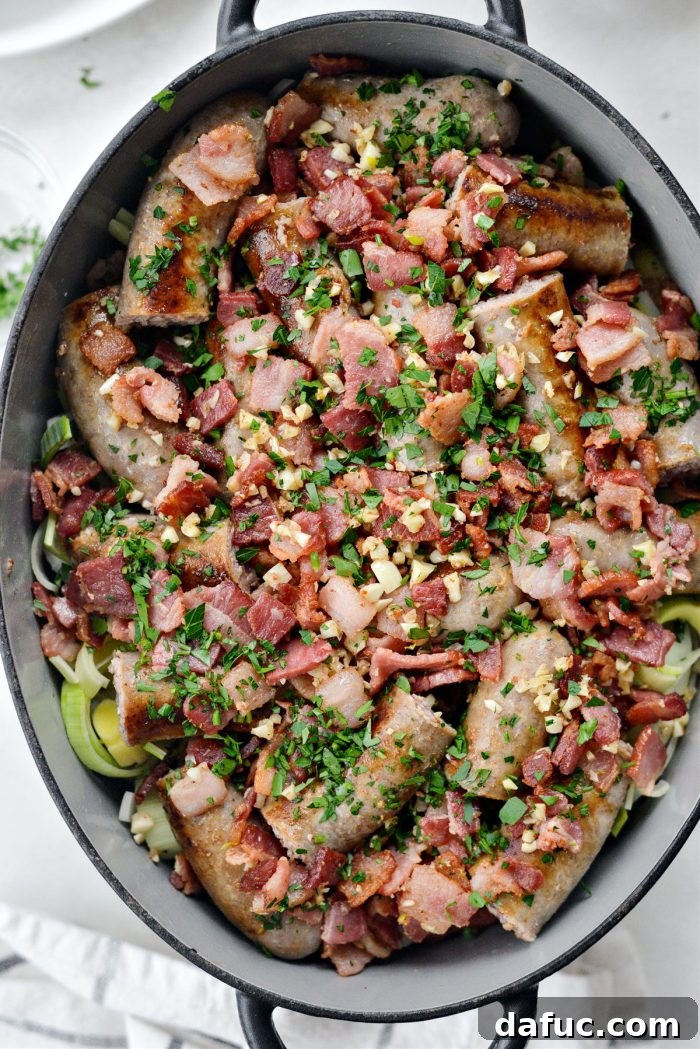
Lastly, distribute the crispy bacon and cooked garlic evenly over the top of the layers. Sprinkle with the remaining fresh parsley. This thoughtful layering ensures that all the ingredients contribute to the overall flavor of the broth as the coddle slowly cooks.
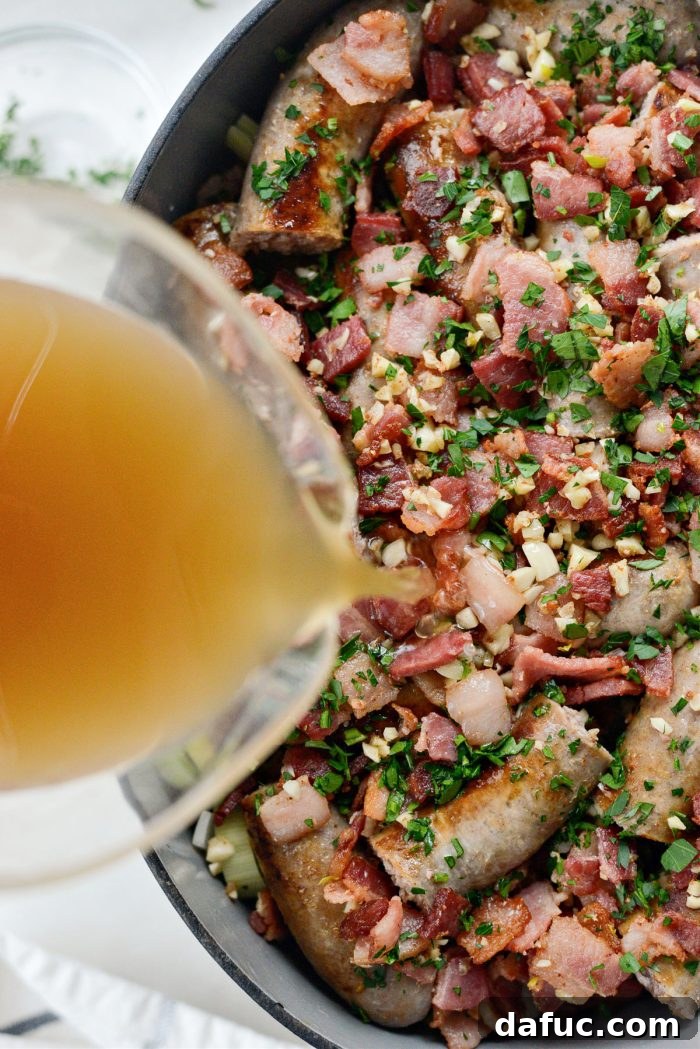
Carefully pour 2 to 3 cups of low-sodium chicken broth (or bone broth or stock) over all the layered ingredients. The amount depends on your preference for a brothier coddle. We personally enjoy our Dublin Coddle with plenty of broth, so I tend to use the full 3 cups. Ensure the broth just covers the potatoes and other ingredients.

Securely place the lid on your Dutch oven, creating a tight seal. Carefully slide the covered pot into your preheated 300°F (150°C) oven. Let it “coddle” for 1 hour and 30 minutes. This extended, gentle cooking time is where the magic truly happens, allowing all the robust flavors to intertwine and the potatoes to become perfectly fork-tender.
The Magic Unfolds: From Oven to Table
This is indeed when the magic happens! As the Dublin Coddle slowly bakes, your home will fill with the most incredible, comforting aromas. The savory scent of bacon and sausage mingling with sweet onions and earthy potatoes is truly intoxicating. After 1 hour and 30 minutes, carefully remove the Dutch oven from the oven. The contents will be bubbling gently, and the broth will have deepened in color and flavor.
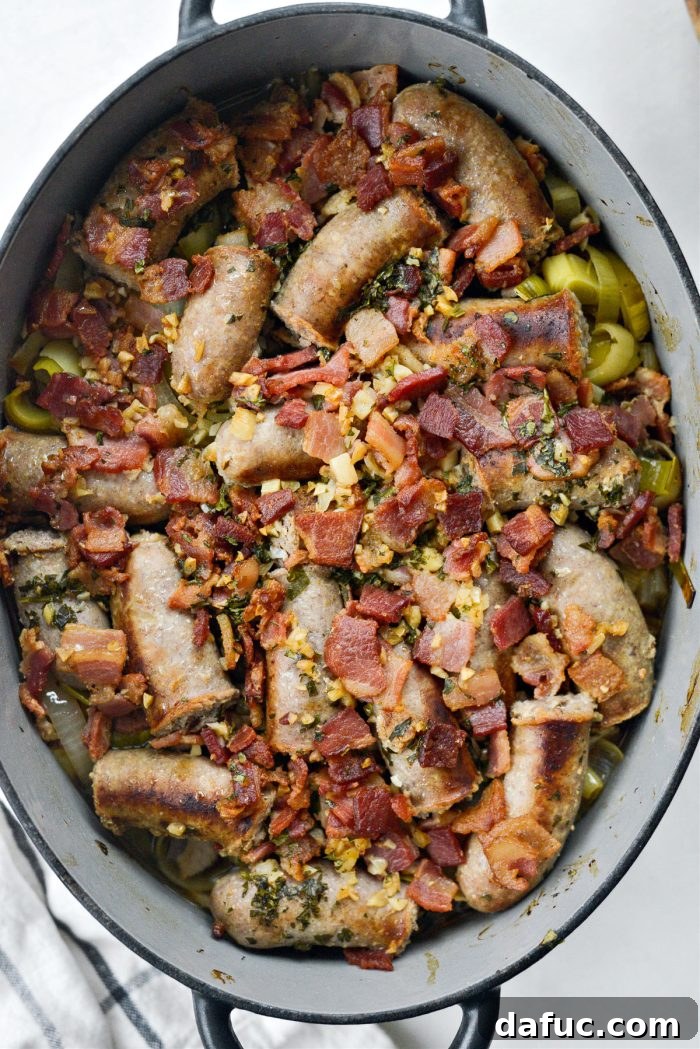
By now, the irresistible aroma filling your kitchen should be proof enough of the deliciousness within!
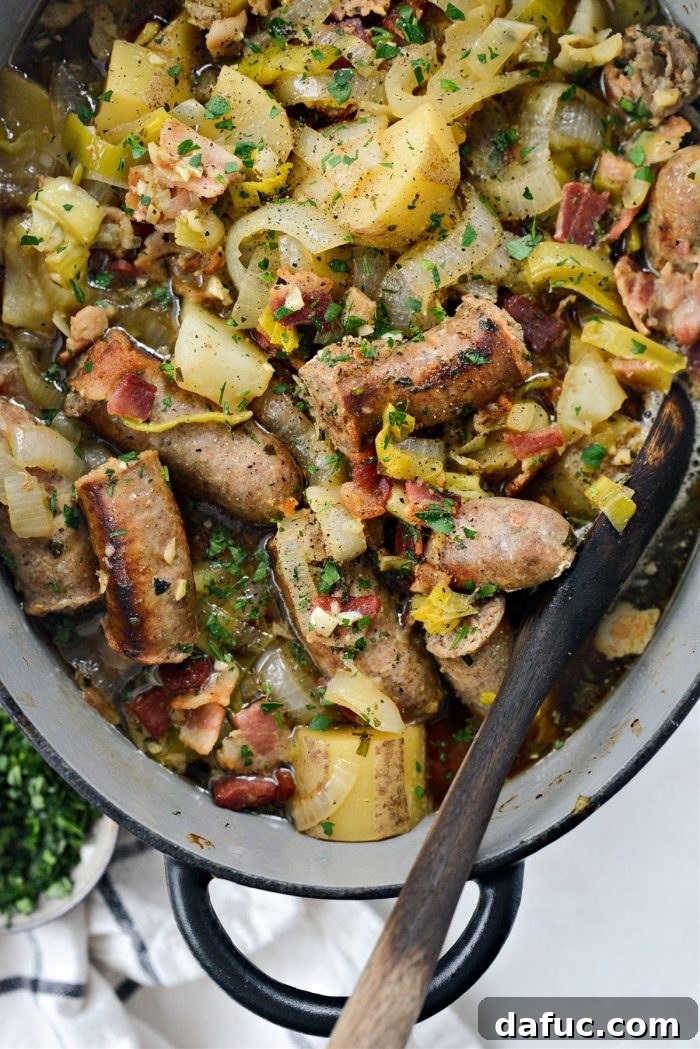
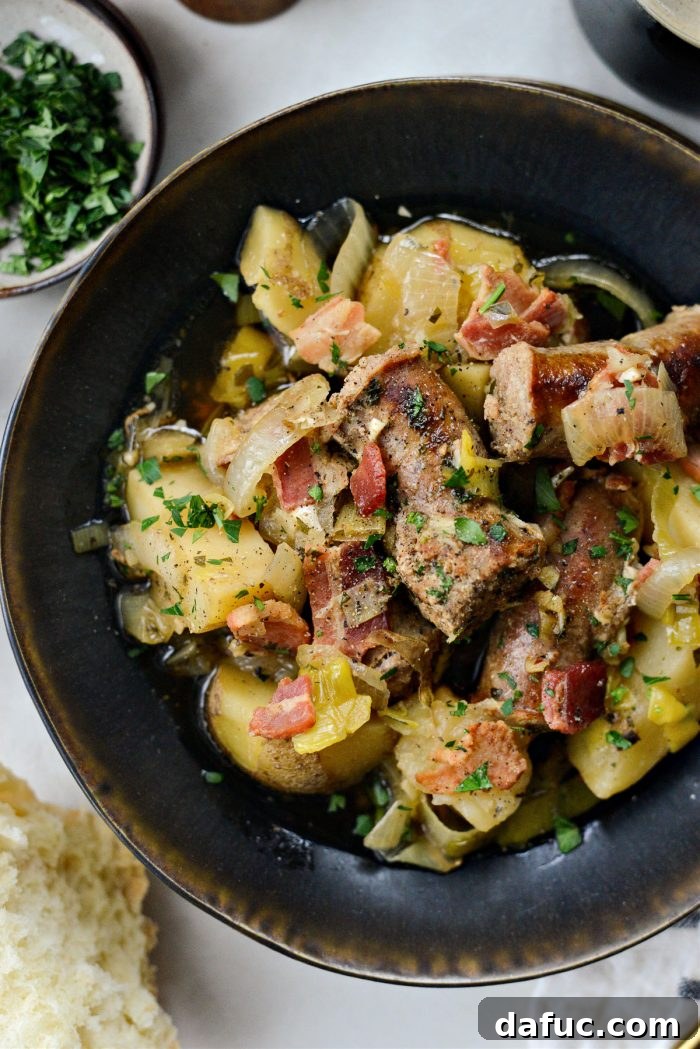
Give the Dublin Coddle a gentle stir to mix all the delicious components. Sprinkle with a little more fresh parsley for a final pop of vibrant green and a dash of coarse ground black pepper for extra zest. Taste and season with additional salt as needed; remember, the bacon and broth already contribute saltiness. Serve immediately while it’s piping hot, ensuring everyone gets a generous helping of potatoes, sausage, bacon, and that heavenly broth.
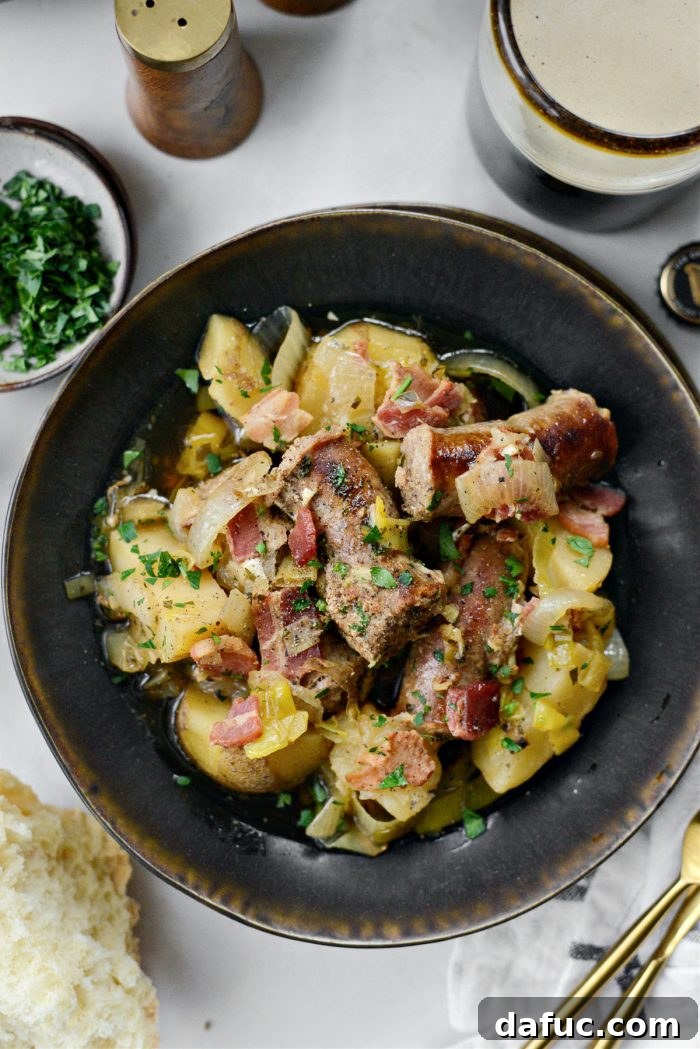
Ladle all this delicious goodness into individual bowls. You can serve it as is, a complete meal in itself, or enhance the experience with a side of roasted Brussels sprouts or perfectly steamed cabbage. A crucial accompaniment, however, is a generous loaf of crusty bread. This isn’t just an optional extra; crusty bread is an absolute must for sopping up every last drop of the rich, flavorful broth. Unless, of course, you prefer to tip your bowl back and sip it – which, honestly, is also a perfectly acceptable way to enjoy this comforting masterpiece. You truly can’t go wrong either way!
After indulging in such a satisfying meal, I often find myself wanting to curl up on the couch under a stack of blankets and nap it off. If that’s even a thing. (Please let it be a thing!)
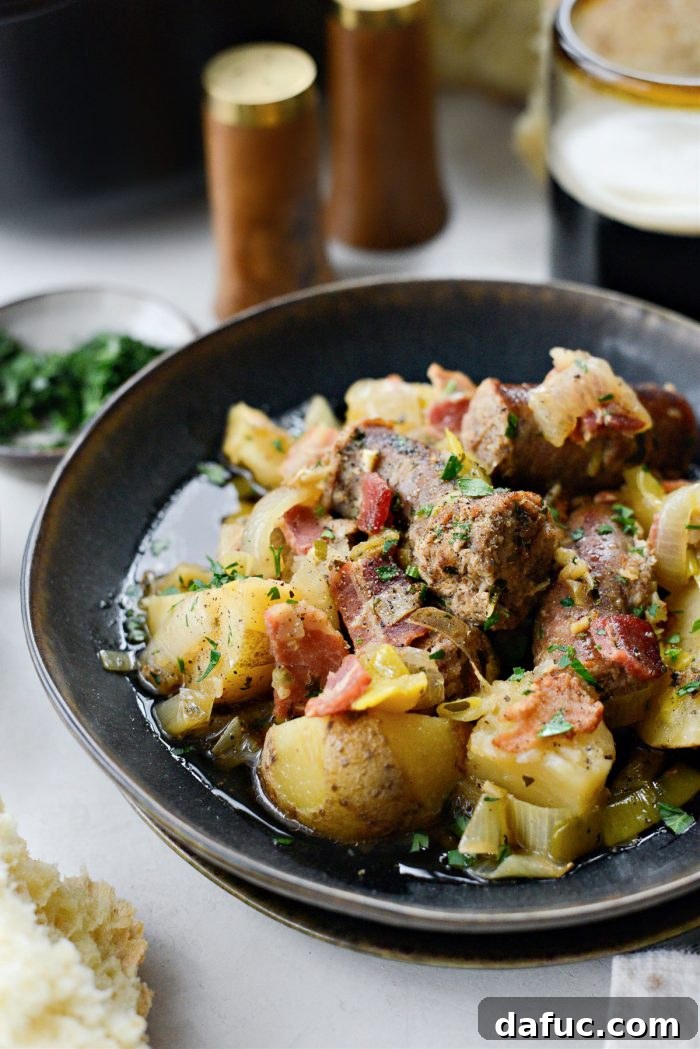
Perfect Pairings: What To Serve With Dublin Coddle
While Dublin Coddle is undeniably a hearty and complete meal on its own, certain accompaniments can elevate the dining experience, making it even more authentic and enjoyable. Here are some of my favorite recommendations:
- Traditional Irish Soda Bread: This classic bread is a perfect match, offering a slightly dense texture that stands up beautifully to the rich broth.
- Wholesome Brown Bread: Another Irish favorite, brown bread adds an earthy, nutty flavor and substantial texture that complements the coddle wonderfully.
- Crispy Roasted Brussels Sprouts: The slight bitterness and texture of roasted Brussels sprouts provide a delightful contrast to the richness of the stew.
- Tender Roasted Cabbage Steaks: Cabbage is a traditional Irish vegetable, and roasting it brings out its natural sweetness, making it a fantastic, comforting side.
- A Pint of Stout: For adults, a classic Irish stout like Guinness is an excellent beverage pairing, complementing the savory notes of the coddle.
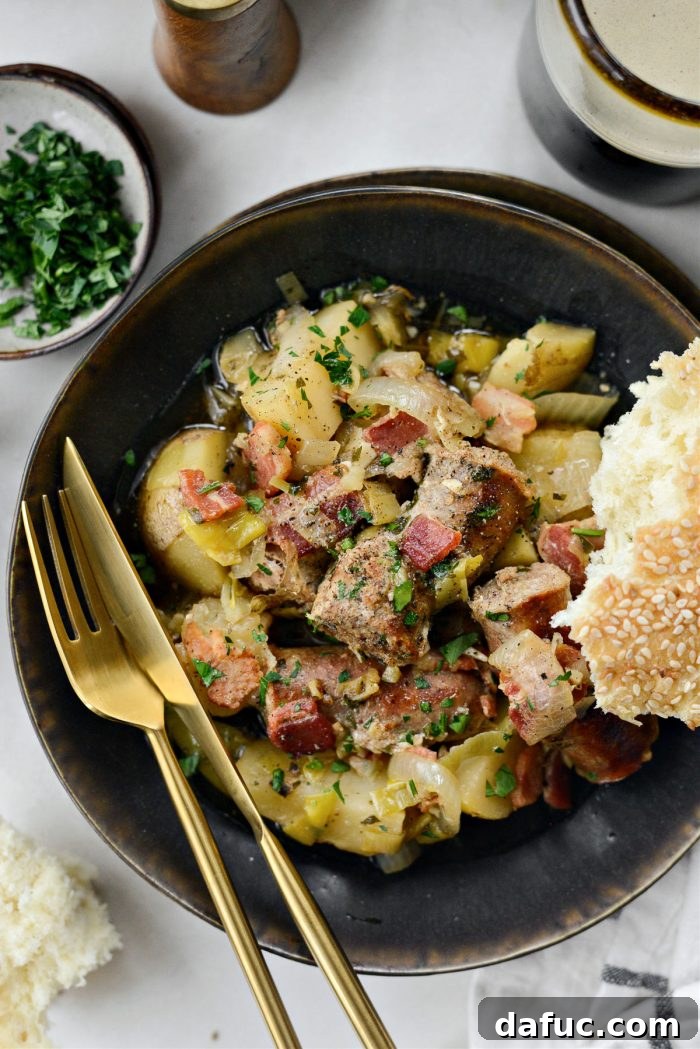
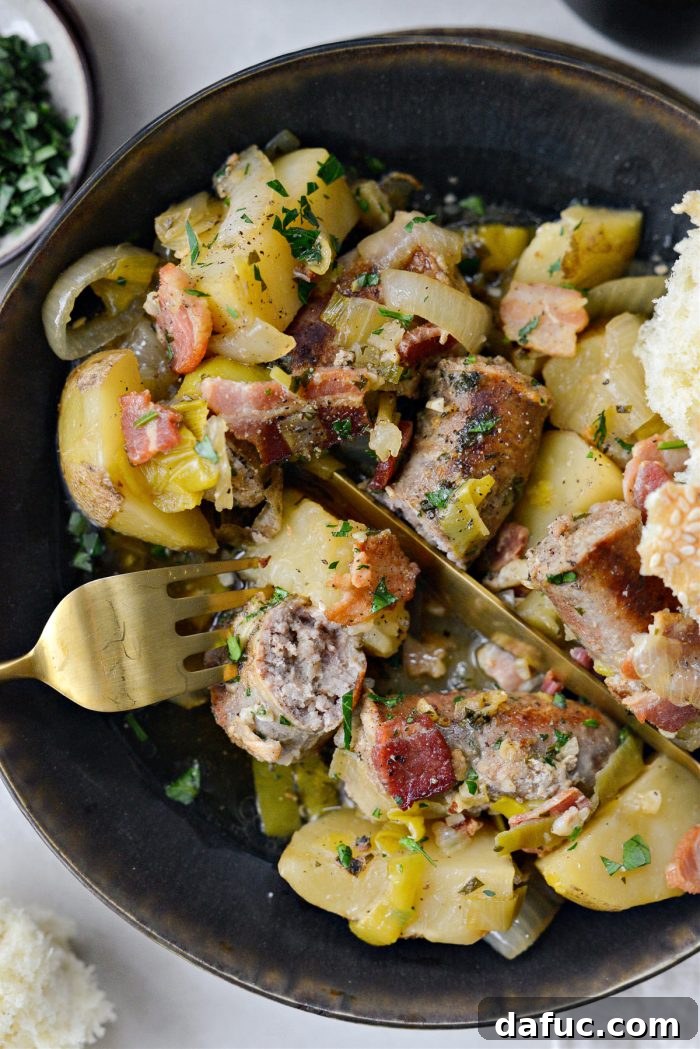
Enjoy this taste of Ireland! If you try this Dublin Coddle recipe, I would absolutely love to hear from you. Please snap a photo and share your culinary creation by tagging me on Twitter or Instagram! Your feedback and shares mean the world.

Print Recipe
Pin Recipe
Leave a Review »
Dublin Coddle
Ingredients
- 8 slices thick cut applewood bacon, chopped
- 6 cloves garlic, minced
- 2 pounds quality pork sausage, about 6 links
- 2 small yellow onions, sliced 1/4-inches thick
- 1 large leek, cleaned and sliced 1/4-inches thick
- 2 tablespoons fresh parsley, minced
- 3 pounds russet potatoes, roughly peeled and cut into large bite-size pieces
- kosher salt, to taste
- black pepper, to taste
- 2 to 3 cups low-sodium chicken broth, low-sodium bone broth or stock
Equipment
-
Lodge EC7OD13 Enameled Cast Iron Oval Dutch Oven, 7-Quart, Oyster White
Instructions
-
Move your oven rack to the lower third of your oven and preheat to 300°F (150°C).
-
Place chopped bacon into a 7-quart Dutch oven and heat over medium to medium-low. Stir occasionally, cooking until crispy, about 18-20 minutes. Add minced garlic and cook for an additional 2 minutes until fragrant. Use a slotted spoon to remove and transfer the crispy bacon and garlic to a paper towel-lined plate; set aside.
-
While the bacon cooks, prepare all your vegetables: roughly peel and cut potatoes into large bite-size pieces. Clean and slice leeks. Halve and slice yellow onions. Mince fresh parsley.
-
In the same Dutch oven with the rendered bacon fat, add the pork sausage links. Sear each side for 3 to 4 minutes to achieve a nice golden-brown color. Transfer the sausages to a cutting board and slice each into thirds.
-
Remove the pot from the burner. Layer in the potatoes, seasoning with a generous pinch (or two) of kosher salt, some freshly ground black pepper, and half of the minced parsley. Next, add the sliced onions, leeks, sliced sausages (and any accumulated juices from the cutting board), and finally, the cooked bacon and garlic, along with the remaining parsley.
-
Pour 2 to 3 cups of low-sodium chicken broth (or bone broth/stock) over the layered ingredients. If you prefer extra broth, use 3 cups. Cover the Dutch oven with its lid and place it into your preheated oven for 1 hour and 30 minutes, or until the potatoes are thoroughly fork-tender.
-
Carefully remove the coddle from the oven. Ladle generously into bowls, ensuring each serving includes plenty of broth, potatoes, sausage, and bacon. Top with a sprinkle of fresh minced parsley and freshly ground black pepper. Serve immediately with crusty bread and butter, and perhaps a side of roasted vegetables.