
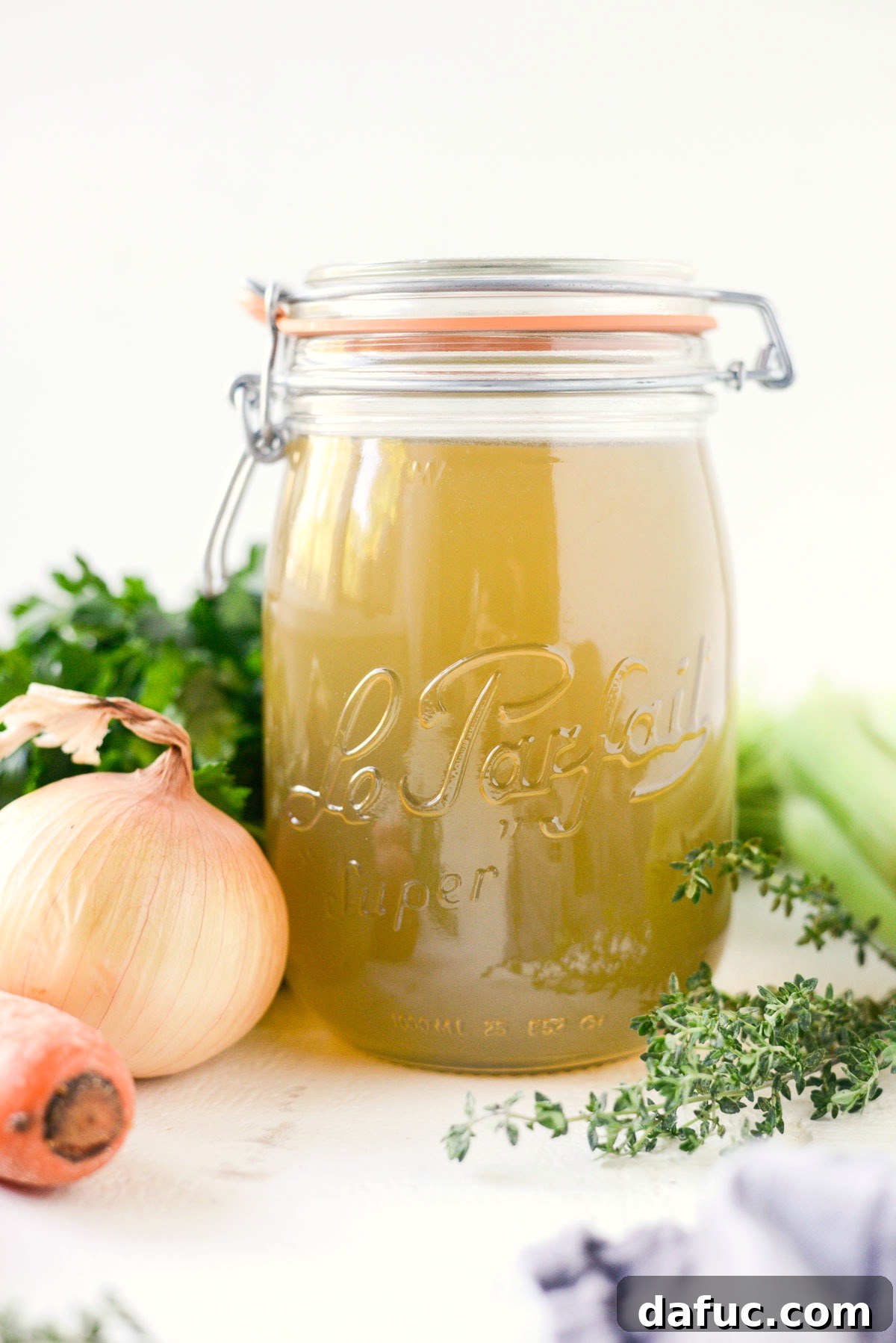
In the world of culinary delights, few things compare to the rich, comforting depth that homemade chicken stock brings to your dishes. Our Slow Cooker Chicken Stock recipe transforms humble chicken bones into a golden elixir, simmering gently with aromatic vegetables for hours to yield a profoundly flavorful and nutrient-dense liquid. This isn’t just a basic ingredient; it’s the secret weapon of home cooks, a fundamental building block for countless delicious meals. Imagine having a ready supply of this liquid gold, perfectly frozen and waiting to elevate your favorite soups, stews, sauces, and gravies. With minimal effort and the magic of your slow cooker, you can achieve a gourmet foundation that far surpasses anything you’ll find in a carton at the grocery store.
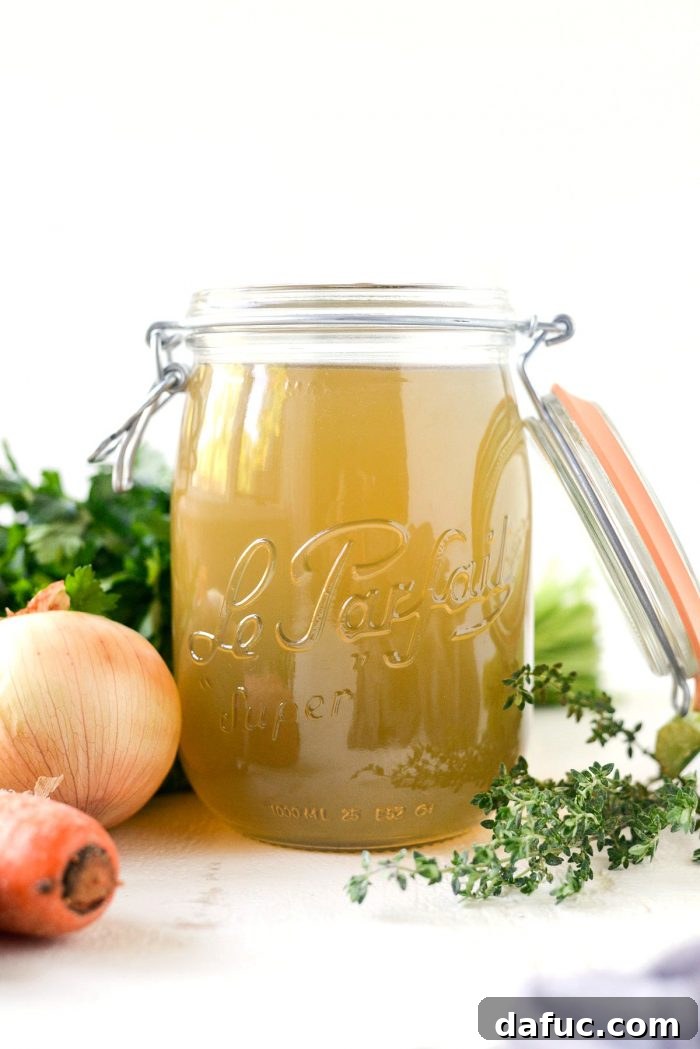
The Magic of Homemade Slow Cooker Chicken Stock
There’s an undeniable satisfaction in creating something from scratch, especially when it’s as foundational and versatile as chicken stock. Every time you roast a whole chicken or enjoy a bone-in meal, you’re left with a treasure trove of bones that are practically begging to be repurposed. Discarding them would be a missed opportunity, as making homemade stock is remarkably simple, particularly when you harness the convenience and safety of a slow cooker. The “set it and forget it” nature of slow cooking means you can achieve a deeply flavored stock with very little hands-on time, allowing the bones and aromatics to meld together into a truly extraordinary culinary base.
If your schedule doesn’t permit immediate stock-making, don’t fret! Simply collect your chicken bones and store them in a freezer-safe container. Accumulate them over time until you have enough for a substantial batch. This simple habit ensures that a rich, homemade stock is always within reach, ready for those chilly evenings when a hearty soup is exactly what you need. Your future soups, savory gravies, and exquisite sauces will undoubtedly thank you for the foresight.
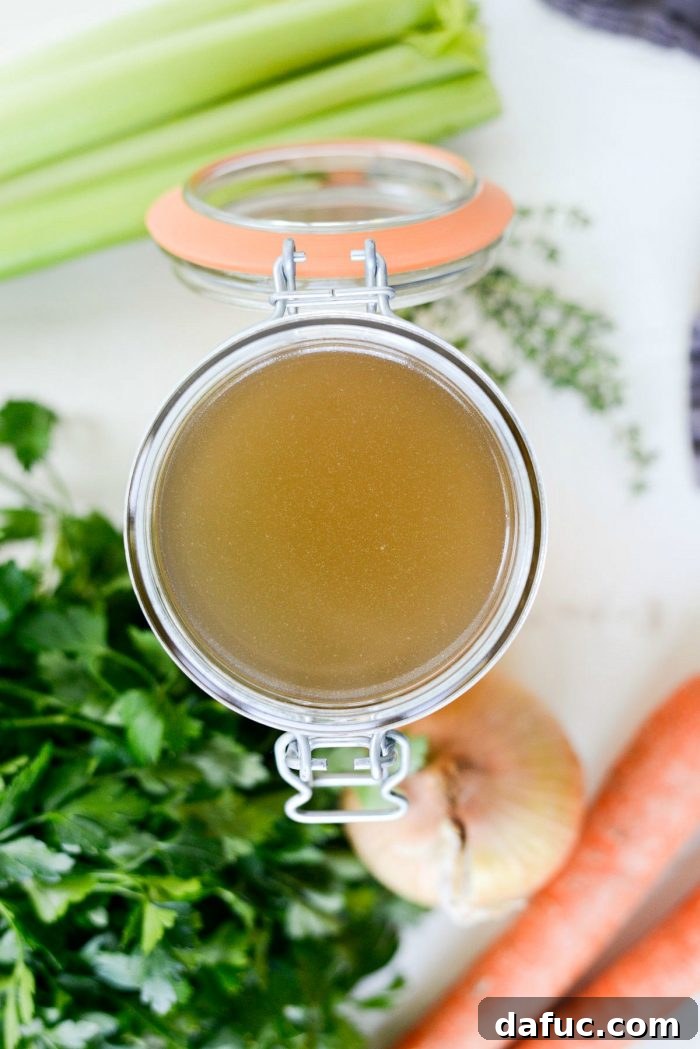
Stock vs. Broth: Understanding the Difference
While often used interchangeably, chicken stock and chicken broth have distinct characteristics that influence their flavor and texture, and ultimately, their best culinary applications. Knowing the difference empowers you to choose the right liquid for your recipe or to appreciate the unique qualities of your homemade creations.
- Chicken Stock: At its heart, stock is what you get after a chicken carcass, primarily bones, has simmered in water for many hours. The long cooking time allows the collagen from the bones, connective tissues, and even some residual meat to break down and release into the liquid. This collagen is what gives stock its characteristic “mouthfeel” – a slightly gelatinous, full-bodied texture when cooled. Stock is typically unsalted, making it a neutral base that you can season precisely to your recipe’s needs. Its color tends to be darker and often cloudy, reflecting the rich extraction of bone marrow and other components. It’s the preferred choice when you want a deep, foundational flavor and a thicker texture for sauces and gravies.
- Chicken Broth: Broth, on the other hand, is generally made by simmering actual chicken meat (often with some bones) in water, along with a medley of herbs and vegetables, for a shorter duration. Because it focuses more on meat and aromatics and less on bone collagen, chicken broth is typically lighter in color, clearer in appearance, and has a more delicate flavor profile. It often contains some seasoning, making it suitable for sipping on its own or for recipes where a lighter, seasoned liquid is desired, such as for cooking grains or a light consommé.
In essence, stock offers a more robust, collagen-rich base, perfect for building layers of flavor, while broth provides a lighter, more seasoned liquid. Our slow cooker recipe focuses on creating a true stock, harnessing the power of bones for that unparalleled depth and body.
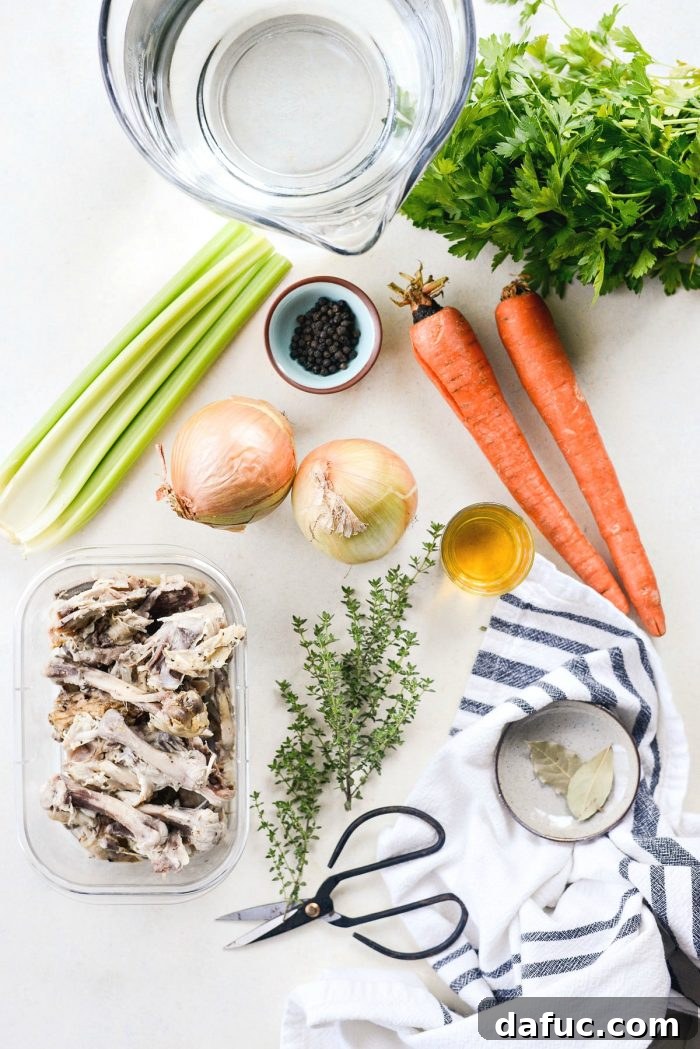
Essential Ingredients for a Rich Slow Cooker Chicken Stock
Creating a truly exceptional chicken stock doesn’t require a long list of exotic ingredients. Instead, it relies on a few humble staples that, when slow-cooked together, create an astonishing depth of flavor. Here’s what you’ll need to embark on your homemade stock journey:
- Chicken Bones: The star of the show! These can be from a whole roasted chicken carcass, raw chicken backs, necks, or wing tips. The more bones, the richer your stock.
- Onions: A foundational aromatic, adding sweetness and depth. Yellow onions are typically used.
- Carrots: Contribute natural sweetness and a lovely color to the stock.
- Celery: Completes the classic “mirepoix” trinity, lending a fresh, savory note.
- Fresh Parsley: Adds a bright, herbaceous, and slightly peppery flavor. Don’t be shy with the sprigs!
- Fresh Thyme: Aromatic and earthy, thyme is a perfect complement to chicken.
- Bay Leaves: Offer a subtle, almost floral bitterness that enhances overall complexity.
- Black Peppercorns: Provide a gentle, aromatic warmth without making the stock spicy.
- Apple Cider Vinegar: A crucial ingredient that helps extract more minerals and collagen from the bones.
- Filtered Water: The medium in which all these flavors will meld. Using filtered water ensures a cleaner-tasting stock.
- Cheesecloth: Essential for fine-straining your finished stock, ensuring a clear and pure liquid.
Step-by-Step Guide to Your Perfect Slow Cooker Chicken Stock
Making chicken stock in a slow cooker is a set-it-and-forget-it process that yields incredible results with minimal effort. Follow these simple steps to create a deeply flavorful and nutritious base for all your culinary endeavors.
1. Prepare Your Aromatics and Bones
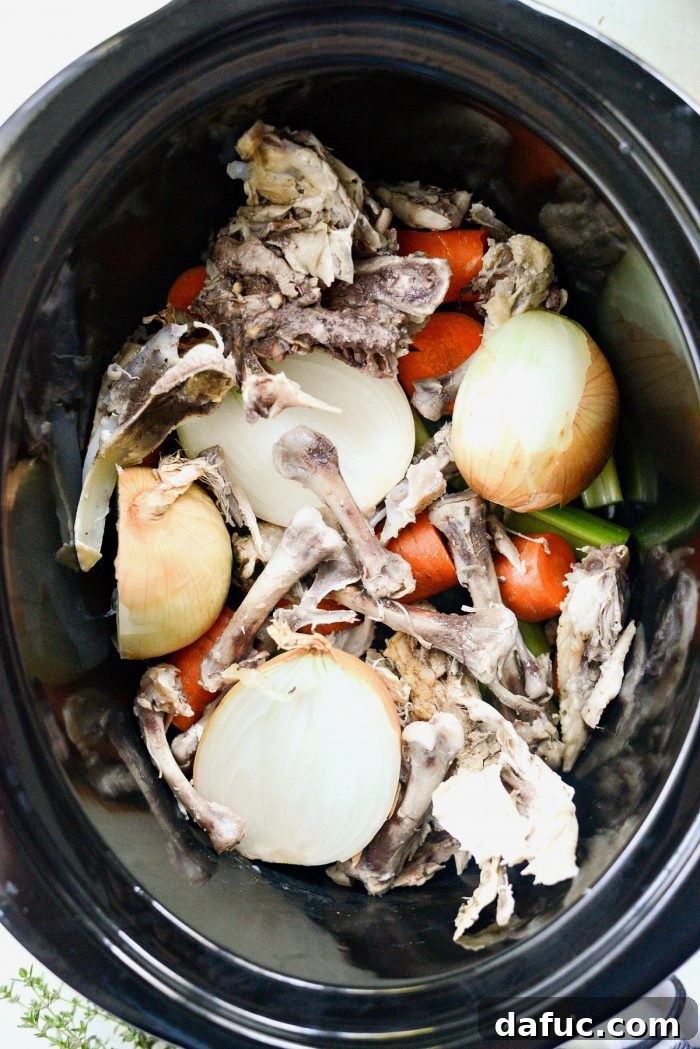
Begin by preparing your vegetables. Take two medium yellow onions, trim off the ends, and cut them in half. There’s no need for fine dicing; large pieces are perfectly fine as they will be strained out later. Place these onion halves directly into the bottom of your slow cooker. Next, wash and coarsely chop your carrots and celery. Again, precision isn’t necessary here, as these vegetables are primarily for flavor extraction. Add them to the slow cooker with the onions. This trio of onion, carrot, and celery is often referred to as “mirepoix” – the classic aromatic base for many French dishes, and it provides the fundamental savory notes for your stock.
Finally, gather your chicken bones. If you have larger bones, like those from a whole carcass, take a moment to snap any you can physically break. This seemingly small step is quite important, as it exposes more surface area and bone marrow, which helps in the efficient release of collagen and other nutrients during the long cooking process. Add all your snapped and unsnapped bones into the slow cooker, nesting them among the vegetables.
2. Infuse with Herbs and Spices
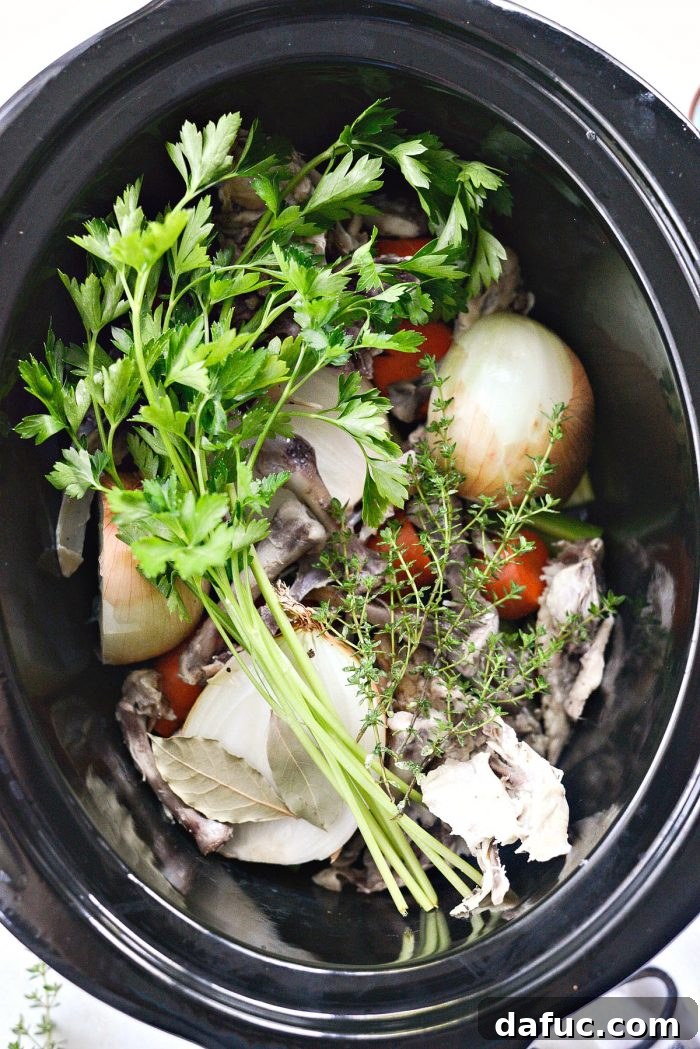
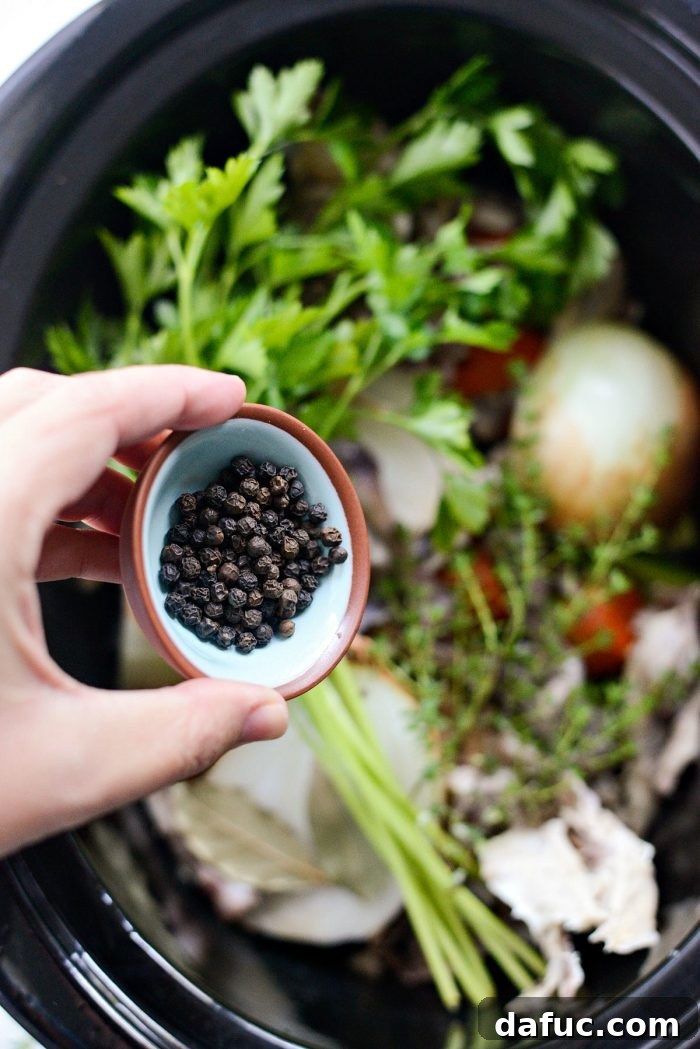
Now it’s time to add the aromatic herbs that will elevate your stock’s flavor profile. Add approximately eight sprigs of fresh parsley and four sprigs of fresh thyme to the slow cooker. These herbs contribute earthy and slightly peppery notes that are classic pairings with chicken. Tuck in two bay leaves, which impart a subtle, almost floral complexity. While these herbs will be discarded later, their contribution to the overall depth of flavor is immense. Finally, sprinkle in about two teaspoons of whole black peppercorns. Using whole peppercorns rather than ground pepper allows for a gentle, slow release of their pungent warmth without overwhelming the delicate flavors of the stock.
3. The Crucial Liquid Components
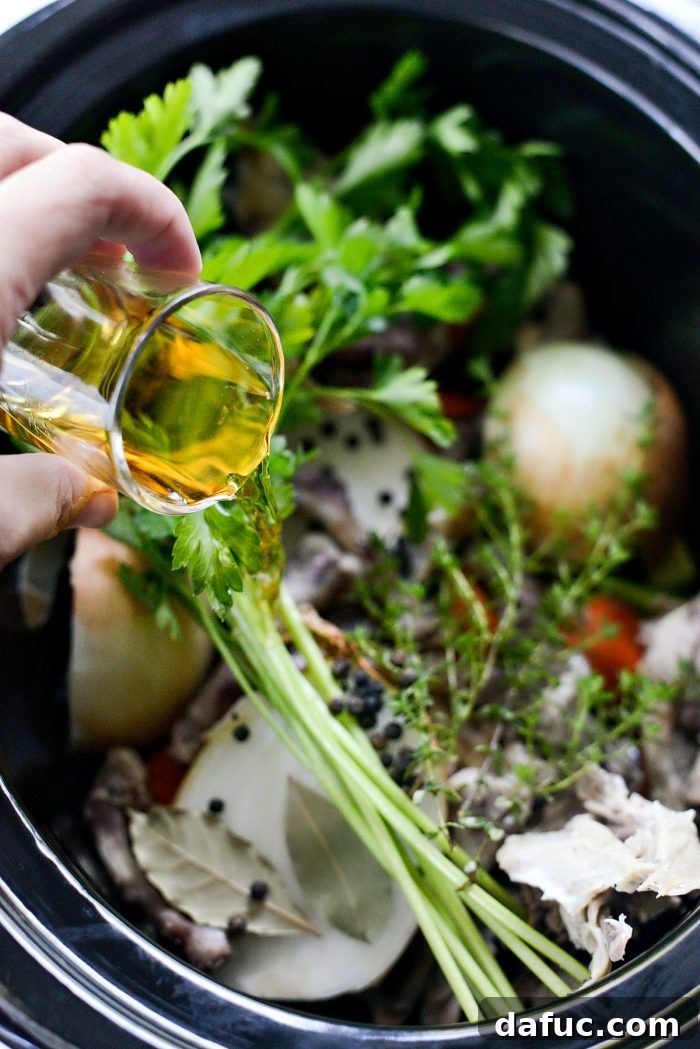
To fully extract all the goodness from your ingredients, you’ll need the right liquid base. Pour in two tablespoons of apple cider vinegar. This isn’t just for flavor; research suggests that the acidity of the vinegar plays a vital role in drawing out more nutrients, particularly minerals and collagen, from the bones. It aids in the demineralization process, ensuring your stock is as nutrient-dense as possible. Finally, add twelve cups of filtered water, ensuring all the ingredients are submerged. Using filtered water is recommended to avoid any off-flavors that might come from tap water, guaranteeing a cleaner, purer-tasting stock.
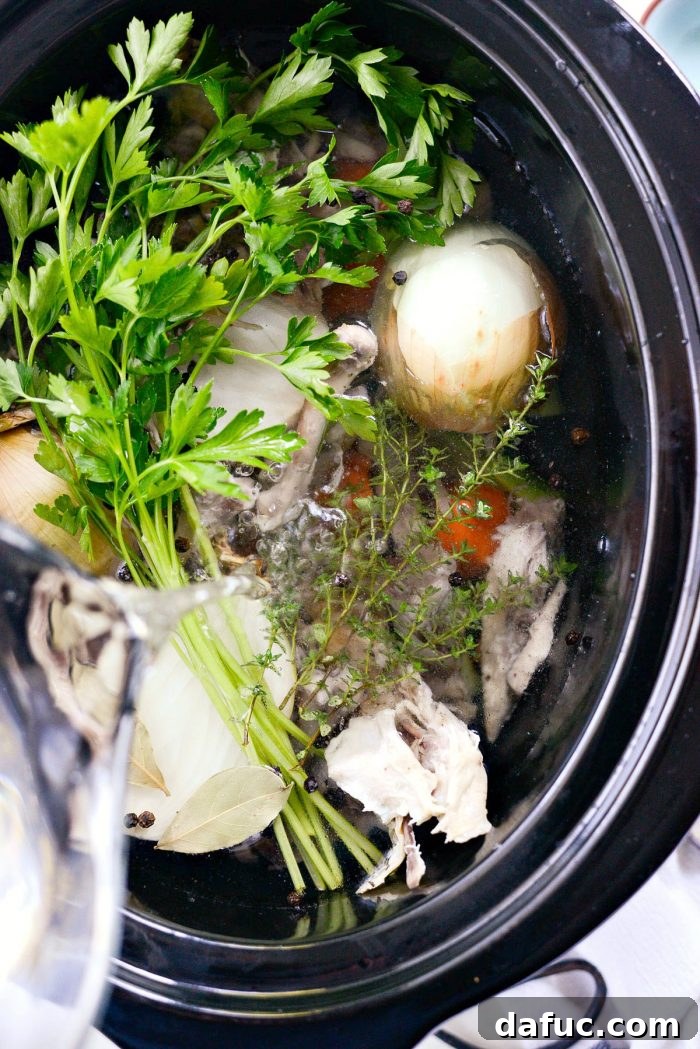
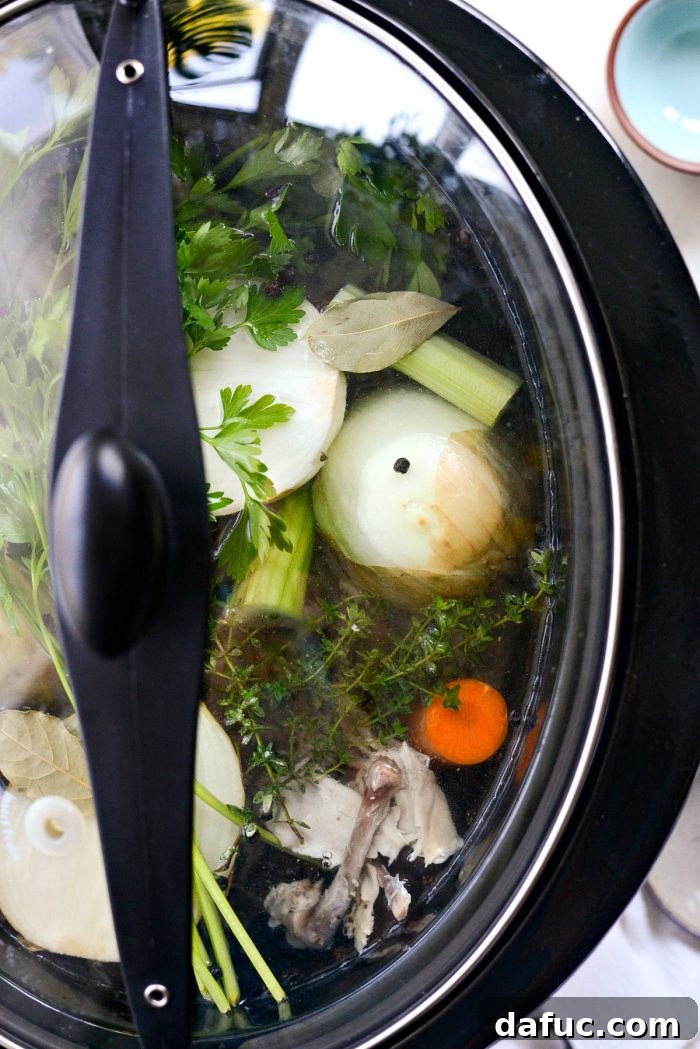
4. The Long, Slow Simmer
Once all your ingredients are in the slow cooker, place the lid firmly in position. Set your slow cooker to the “low” heat setting and allow it to work its magic for a full twelve hours. This extended, gentle simmer is the secret to a truly exceptional stock. The low heat prevents rapid boiling, which can lead to a cloudy stock and can degrade some of the delicate aromatics. Instead, it encourages a slow, steady extraction of flavors, minerals, and collagen, resulting in a deep, rich, and beautifully colored stock. The beauty of the slow cooker is that you can often let it simmer overnight or while you’re at work, returning to a kitchen filled with an incredible aroma.
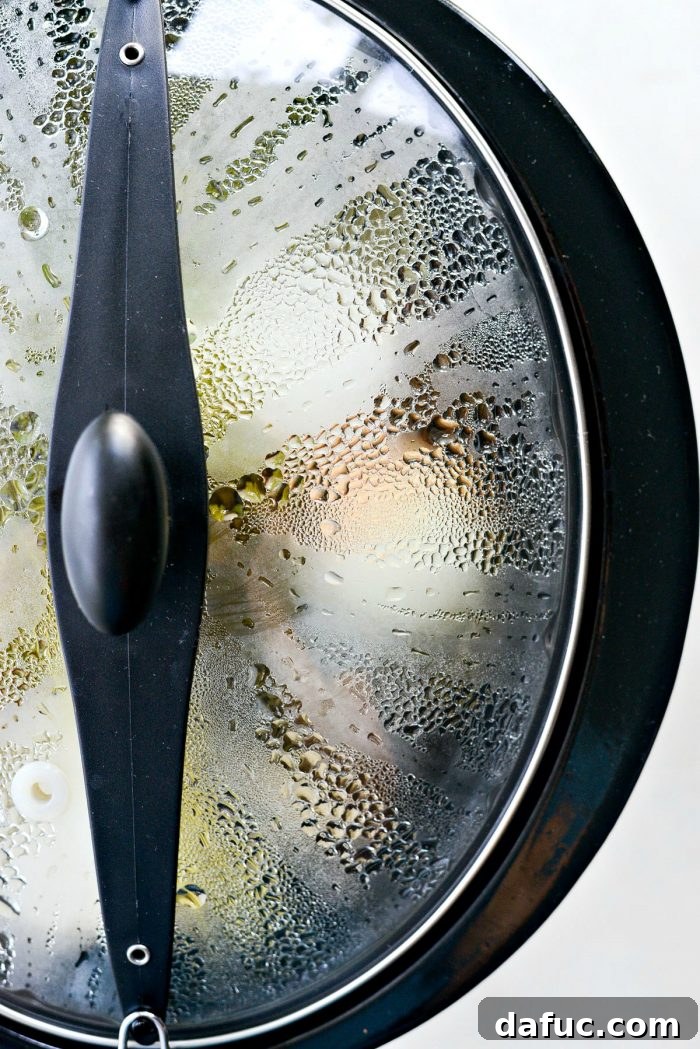
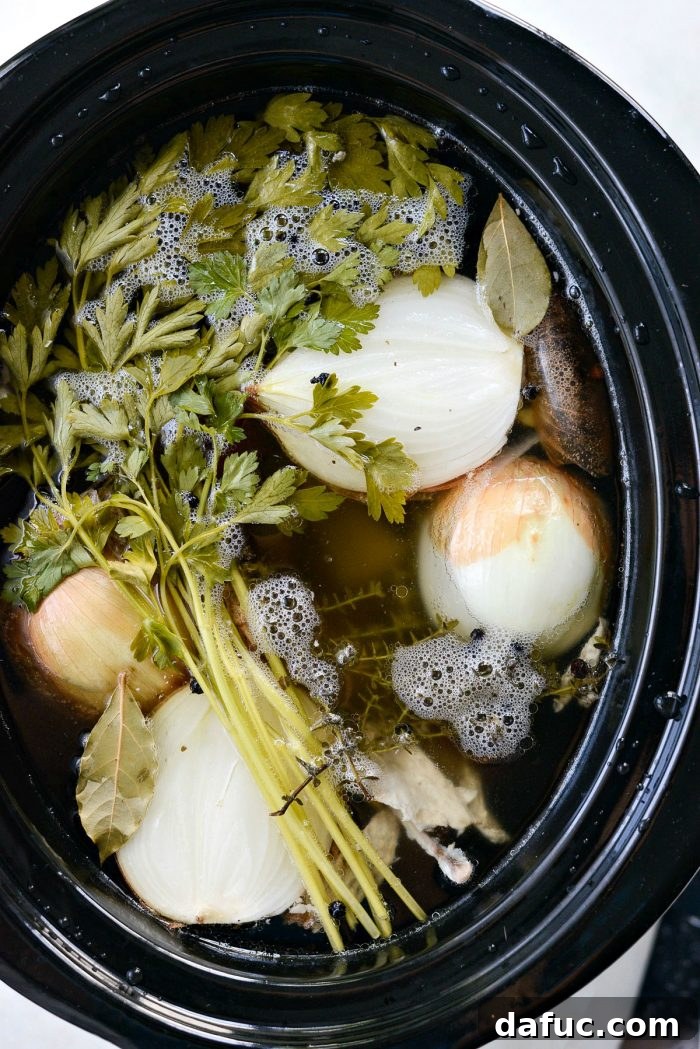
5. Straining for Clarity and Purity
After twelve hours, your kitchen will be filled with an intoxicating aroma, and your slow cooker will hold a treasure. It’s time to strain the stock. First, use a slotted spoon to carefully remove the larger vegetables from the slow cooker and discard them. Then, use tongs to retrieve and discard the chicken carcass and any remaining bones. These have given all their goodness to the stock and are no longer needed.
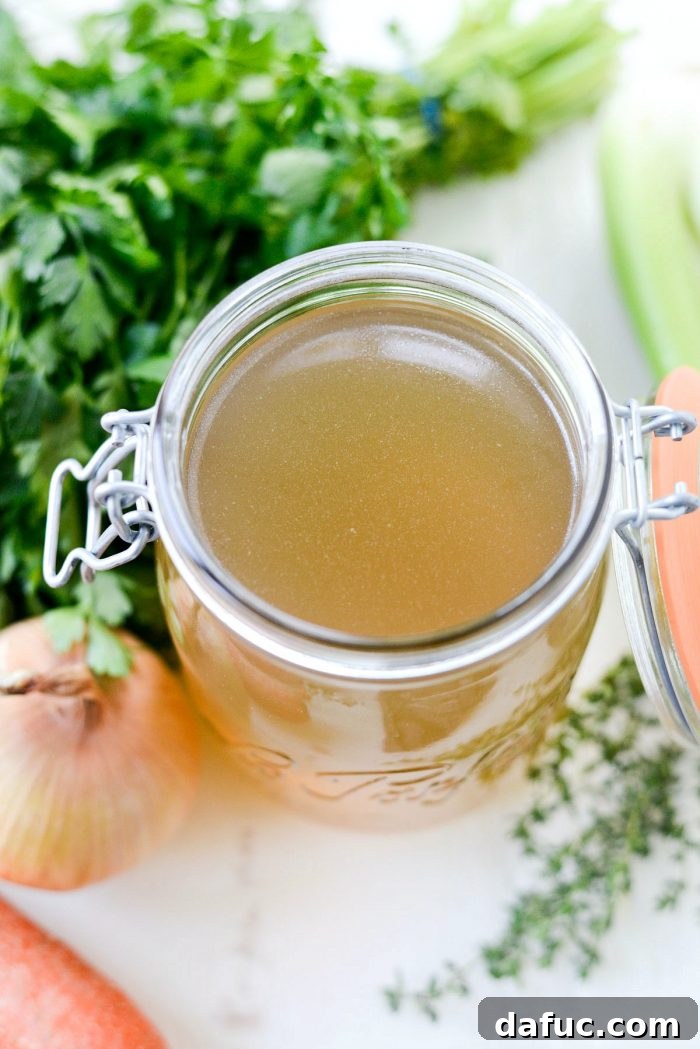
Next, prepare your straining setup. Place a fine-mesh strainer over a large heat-proof measuring cup or a large bowl. For an even clearer stock, line the mesh strainer with a piece of cheesecloth. This double-straining method will catch any small bits of bone, herb, or vegetable sediment, resulting in a beautifully clear and smooth liquid. Carefully pour the hot stock into the cheesecloth-lined strainer. Depending on the volume of your stock, you might need to do this in batches, moving the strainer to an empty measuring cup or bowl as the first one fills. Allow the stock to cool completely before proceeding to storage. Cooling it down before storing is essential for food safety.
6. Cooling and Storing Your Golden Elixir
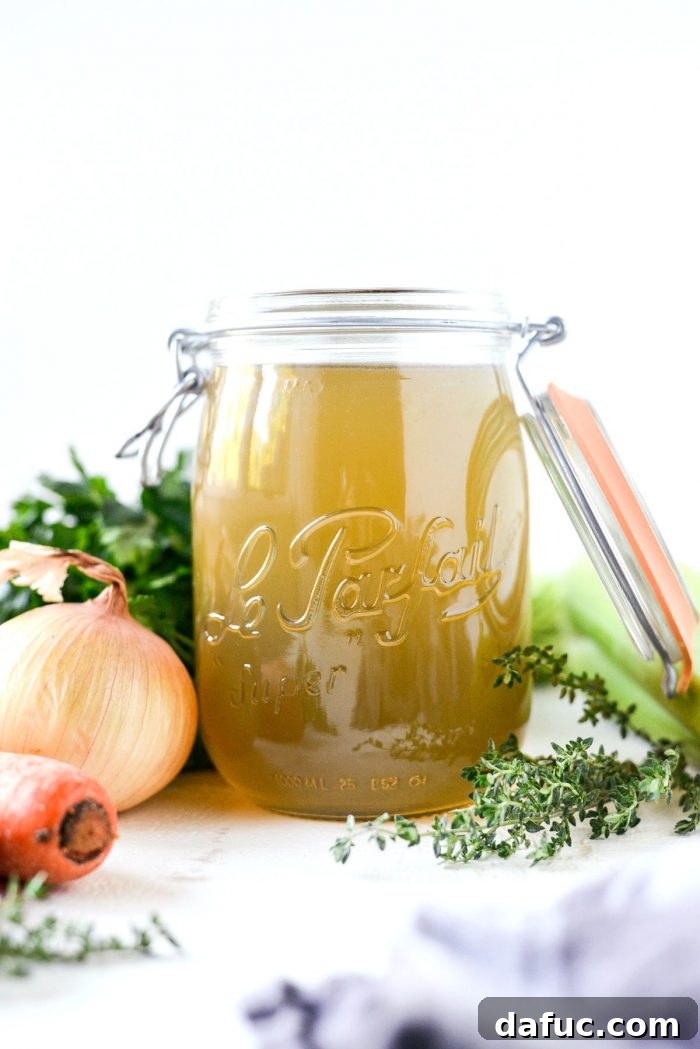
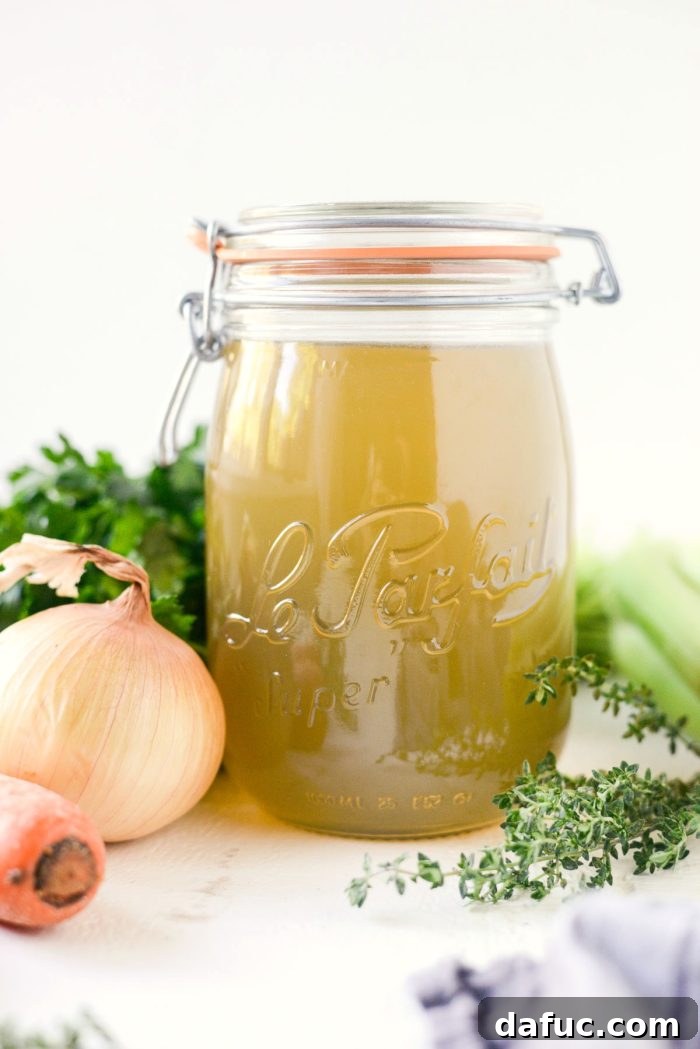
Once your rich, homemade chicken stock has completely cooled, it’s ready for storage. For immediate use, pour the stock into airtight containers and refrigerate for up to 4-5 days. You’ll notice a layer of fat may solidify on top; this acts as a natural seal, helping to preserve the stock. You can skim it off before using or leave it for extra flavor and richness.
For longer-term storage, freezing is your best friend. Divide the cooled stock into 2-cup freezer-safe containers or even ice cube trays for smaller portions. This allows you to thaw only what you need, reducing waste. Store these containers in the back of your freezer, where temperatures are most consistent, for up to 12 months. When you’re ready to use it, simply run lukewarm water over the container until the stock loosens, or defrost it slowly in your microwave or by placing it in the refrigerator overnight. This homemade slow cooker chicken stock is a game-changer for any dish, offering unparalleled depth and natural goodness.
Creative Ways to Use Your Delicious Homemade Chicken Stock
Now that you’ve mastered the art of making slow cooker chicken stock, the culinary possibilities are endless! This versatile liquid gold is far more flavorful and nutritious than store-bought alternatives, and it will elevate virtually any dish it touches. Here are just a few ideas to inspire your kitchen adventures:
- Soups and Stews: This is the most obvious and beloved application. Whether it’s a hearty chicken noodle soup, a comforting lentil stew, or a vibrant vegetable minestrone, your homemade stock will provide an unmatched depth of flavor that becomes the soul of the dish.
- Risottos and Grains: Use chicken stock instead of water when cooking rice, quinoa, couscous, or pasta. For risottos, it’s absolutely essential, slowly incorporating it to create that creamy, rich texture and savory taste.
- Sauces and Gravies: A good stock is the foundation of many classic sauces. Reduce it down for a pan sauce, or use it as the liquid base for a rich gravy to accompany roasted meats. The collagen in your homemade stock will naturally contribute to a luxurious mouthfeel.
- Braising Meats: When braising short ribs, pot roasts, or chicken thighs, use your stock as the primary liquid. The long, slow cooking process will infuse the meat with incredible flavor and tenderness.
- Pan Frying and Deglazing: After searing meat or vegetables, deglaze the pan with a splash of hot stock to capture all those delicious browned bits, creating an instant, flavorful sauce.
- Vegetable Dishes: Sauté vegetables in a little stock instead of oil for a lighter, more flavorful option. It’s also excellent for steaming or blanching vegetables.
- Flavor Base for Roasts: Add a cup or two of stock to the bottom of your roasting pan when cooking a whole chicken or turkey. It will keep the meat moist and contribute to a fantastic pan drippings for gravy.
- Healthy Sipping: Warm up a mug of your homemade stock and sip it as a comforting, nutrient-rich beverage, especially beneficial when you’re feeling under the weather.
By incorporating your homemade slow cooker chicken stock into your cooking, you’re not just adding liquid; you’re adding a layer of rich, wholesome flavor that transforms ordinary meals into extraordinary culinary experiences.
Click Here for more homemade stocks and broths!
Enjoy! And if you give this Slow Cooker Chicken Stock recipe a try, let me know! Snap a photo and tag me on twitter or instagram!
Print Recipe
Pin Recipe
Leave a Review »
Slow Cooker Chicken Stock
Ingredients
- bones from 1 to 2 chicken carcasses
- 2 carrots, chopped
- 2 to 3 celery stalks, chopped
- 2 medium yellow onions, ends trimmed, discarded and onions cut in half
- 8 sprigs parsley
- 4 sprigs thyme
- 2 bay leaves
- 2 teaspoons black peppercorns
- 2 tablespoons apple cider vinegar
- 12 cups filtered water
Equipment
-
Hamilton Beach 33969A 6-Quart Programmable Set & Forget w/Temperature Probe Slow Cooker, Stainless Steel
Instructions
-
Snap any bones you physically can and add them to your slow cooker along with chopped carrots, celery and onion halves.
-
Add in the parsley, thyme, bay and peppercorns.
-
Pour in the cider vinegar and water. Cover and cook on low for 12 hours.
-
Use a slotted spoon to remove the vegetables and discard the carcass using tongs. Set a mesh strainer into a large measuring cup (I needed two 8-cup measuring cups) and line with cheesecloth.
-
Carefully pour the broth into the cheesecloth lined strainer. Once filled, move the strainer to the other measuring cup to pour the remaining homemade turkey stock through.
-
Allow the stock to cool completely before storing.
Notes
Pour the cooled stock into 2-cup freezer safe containers and store in the back of your freezer for up to 12 months. To thaw, run lukewarm water over the container until thawed or defrost in your microwave.