
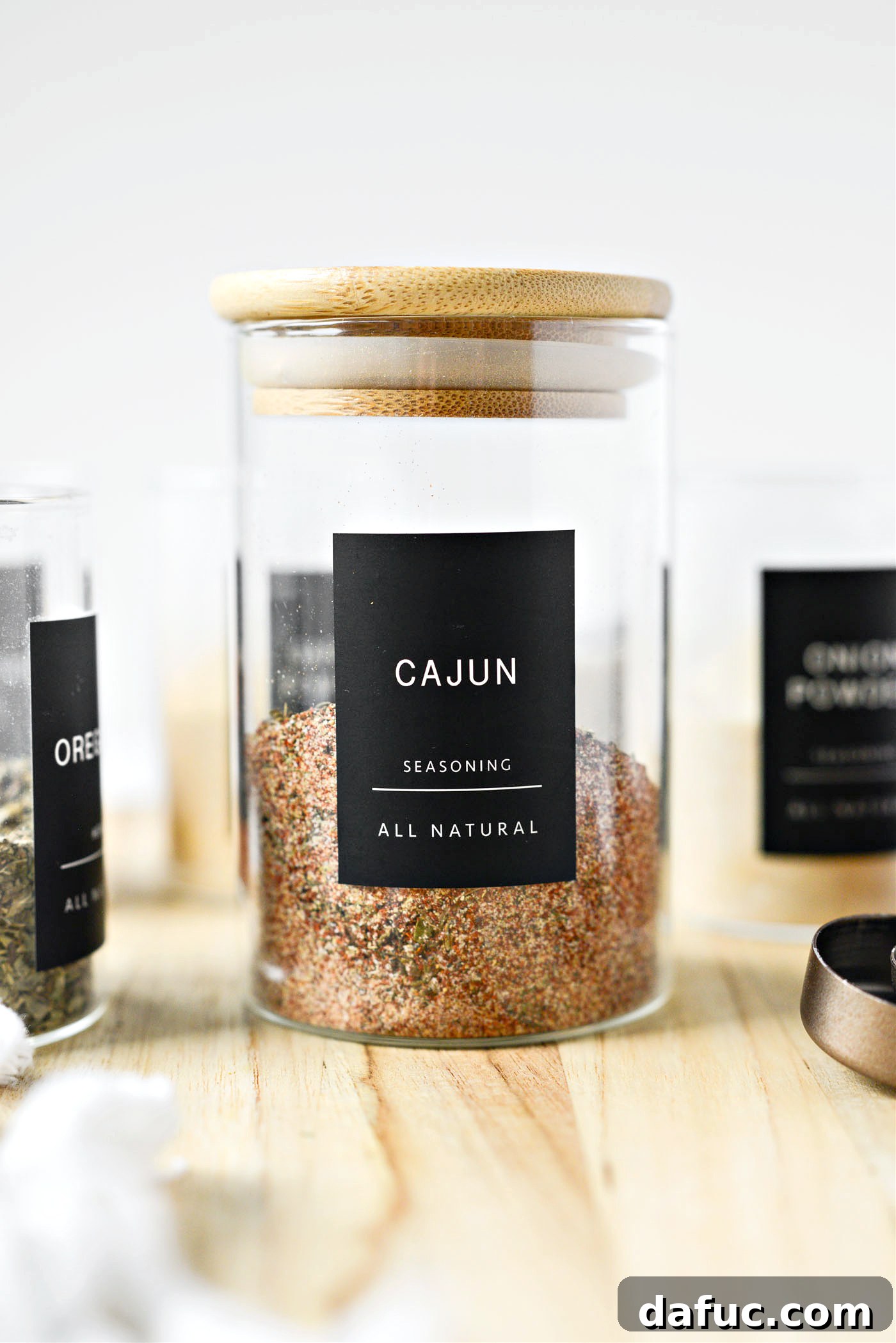
Homemade Cajun Seasoning: Craft Your Own Authentic Louisiana Flavor
Craving the vibrant, spicy, and deeply savory flavors of authentic Louisiana cuisine? Look no further than your own kitchen! Preparing your own Homemade Cajun Seasoning is surprisingly simple, allowing you to control every aspect of the blend, from its heat level to its freshness. Forget bland, store-bought mixes laden with excessive salt or anti-caking agents; with a few basic spices from your pantry, you can create a potent, aromatic Cajun blend that will elevate countless dishes. This guide will walk you through crafting the perfect spice mix, ensuring maximum flavor and versatility for all your culinary adventures.
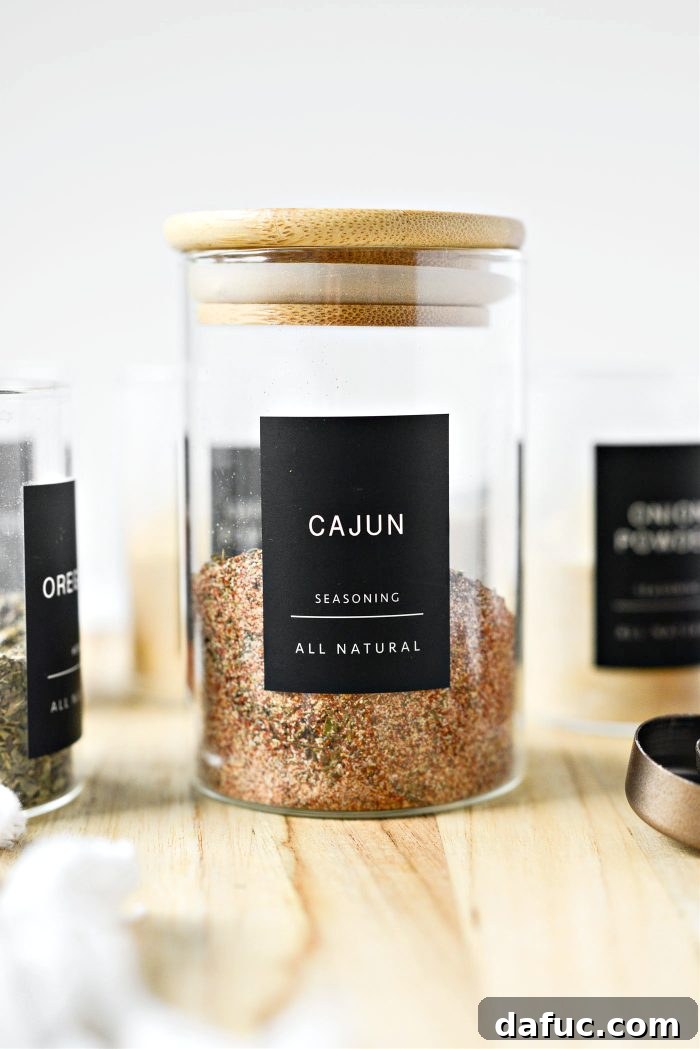
The Allure of Cajun Flavor: Why Go Homemade?
Cajun cuisine, originating from the French Acadian settlers in Louisiana, is renowned for its bold, rustic flavors. At its heart lies a well-balanced seasoning blend that provides warmth, depth, and a characteristic kick. For many, like my husband Pat, who loves anything spicy – hot sauce, habaneros, and especially Cajun seasoning – this blend is a kitchen essential. He even customizes his pizza crust with it, a testament to its irresistible appeal! While commercial options are readily available, making your own offers several undeniable advantages:
- Unmatched Freshness and Potency: Spices begin to lose their potency as soon as they’re ground. By mixing your own blend at home, you ensure the freshest, most vibrant flavors possible.
- Complete Ingredient Control: Avoid unwanted additives, preservatives, excessive sodium, or anti-caking agents often found in store-bought versions. You know exactly what goes into your food.
- Customizable Heat: The beauty of DIY seasoning is the power to adjust the cayenne pepper to your preferred spice level. Want a mild warmth? Reduce the cayenne. Craving fiery intensity? Amp it up!
- Cost-Effectiveness: Buying individual spices and blending them yourself is often more economical in the long run than purchasing pre-made mixes, especially if you use Cajun seasoning frequently.
- Dietary Flexibility: Easily adapt the recipe to suit specific dietary needs, such as reducing salt for a low-sodium diet, though this particular recipe is already low in sodium.
Once you experience the superior taste of homemade Cajun seasoning, you’ll wonder why you ever bought it pre-made. It’s a game-changer for anyone who appreciates truly flavorful cooking.
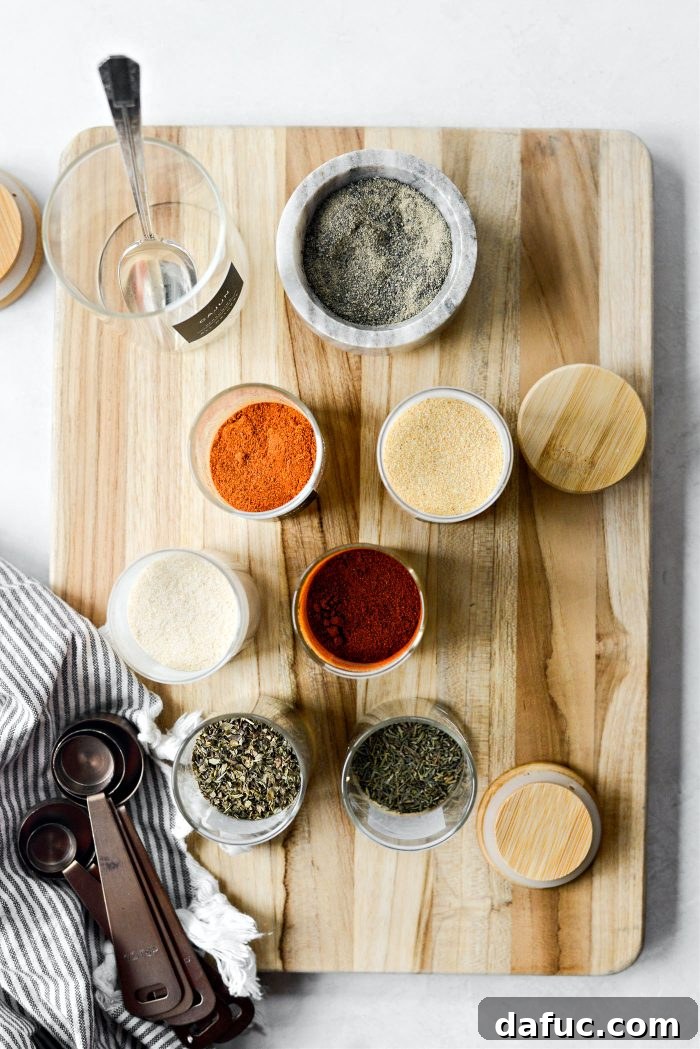
Essential Ingredients for Your Cajun Spice Blend
This classic Cajun seasoning blend relies on a harmonious combination of staple herbs and spices, most of which are likely already in your pantry. Each ingredient plays a crucial role in building the distinctive flavor profile:
- Cayenne Pepper: This is the primary source of heat in Cajun seasoning. Derived from dried and ground cayenne chili peppers, it provides a clean, sharp spice. Adjust the amount to control the overall pungency of your blend.
- Paprika: More than just a vibrant red color, paprika (preferably Hungarian sweet paprika for a classic flavor, or hot paprika for an extra kick) adds a foundational earthy, slightly sweet, and mild peppery note. It deepens the flavor profile without adding excessive heat.
- Garlic Powder: A cornerstone of savory flavor, garlic powder contributes a potent, aromatic, and slightly pungent essence. It’s crucial for that robust, savory backbone of Cajun cuisine.
- Onion Powder: Complementing the garlic, onion powder adds another layer of fundamental savory depth and a subtle sweetness. Together, garlic and onion powders form the aromatic heart of this blend.
- Dried Oregano: This robust herb brings earthy, slightly bitter, and peppery notes. It’s a common herb in Mediterranean and Creole cooking, lending a classic, savory aroma that is essential to Cajun blends.
- Dried Thyme: With its subtle minty, earthy, and slightly floral notes, dried thyme adds an aromatic complexity that beautifully balances the other spices. It’s another herb integral to Southern and Cajun cooking.
- Freshly Ground Black Pepper: Adding a sharp, woody, and subtly spicy kick, black pepper enhances the overall spice profile and provides a warm, lingering finish. Grinding it fresh just before mixing can significantly boost its aroma and flavor.
These seven ingredients, when combined in the right proportions, create a wonderfully balanced and versatile seasoning that truly captures the spirit of Cajun cooking.
Selecting Quality Spices: A Foundation for Flavor
Just as a great chef emphasizes fresh ingredients, the quality of your spices directly impacts the flavor of your homemade blend. While there’s no single “best” brand, a good rule of thumb is that you often get what you pay for. Investing in high-quality spices can make a noticeable difference.
I personally favor brands like Morton & Bassett for their consistent quality, evident in the vibrant color, robust aroma, and superior texture of their products. Their commitment to quality control and charitable work also aligns with my values. Other fantastic brands I’ve used and recommend over the years include Simple Organic, Frontier Co-op, and Penzys. When selecting your spices, look for:
- Vibrant Color: Dull or faded spices indicate age and reduced potency.
- Strong Aroma: Fresh spices should have a distinct, pungent aroma. If you can barely smell it, it’s likely past its prime.
- Reputable Brands: Choose brands known for their commitment to quality. Organic options often provide excellent flavor.
- Whole vs. Ground: For ultimate freshness, consider buying whole spices and grinding them yourself just before use, though for convenience, high-quality pre-ground spices are perfectly fine for this recipe.
By prioritizing quality, you’re setting yourself up for a truly exceptional homemade Cajun seasoning.
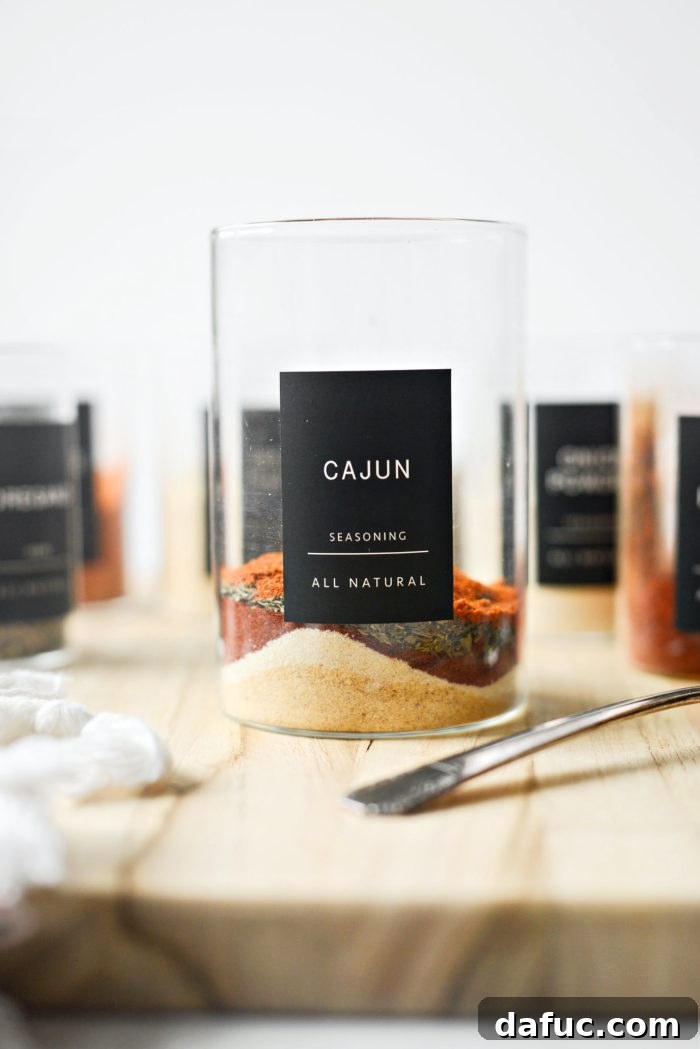
Crafting Your Cajun Seasoning: A Simple Process
Making this blend is incredibly straightforward. It’s essentially a three-step process: measure, combine, and store. No special equipment is required beyond measuring spoons and a container.
Instructions:
- Gather Your Ingredients: Ensure you have all the necessary spices measured out according to the recipe card below.
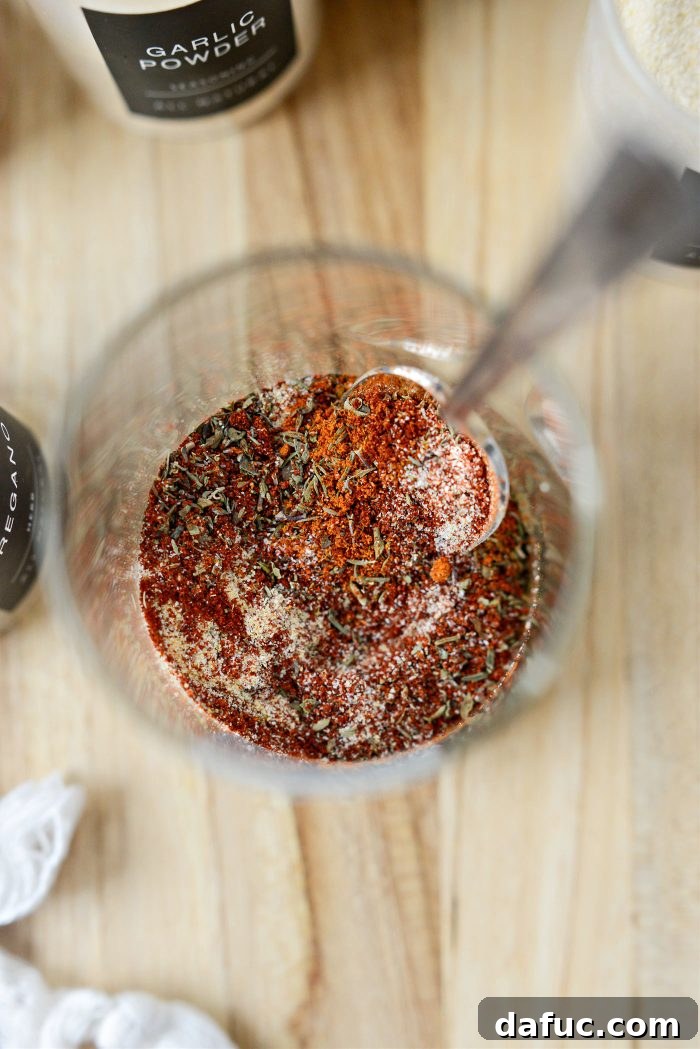
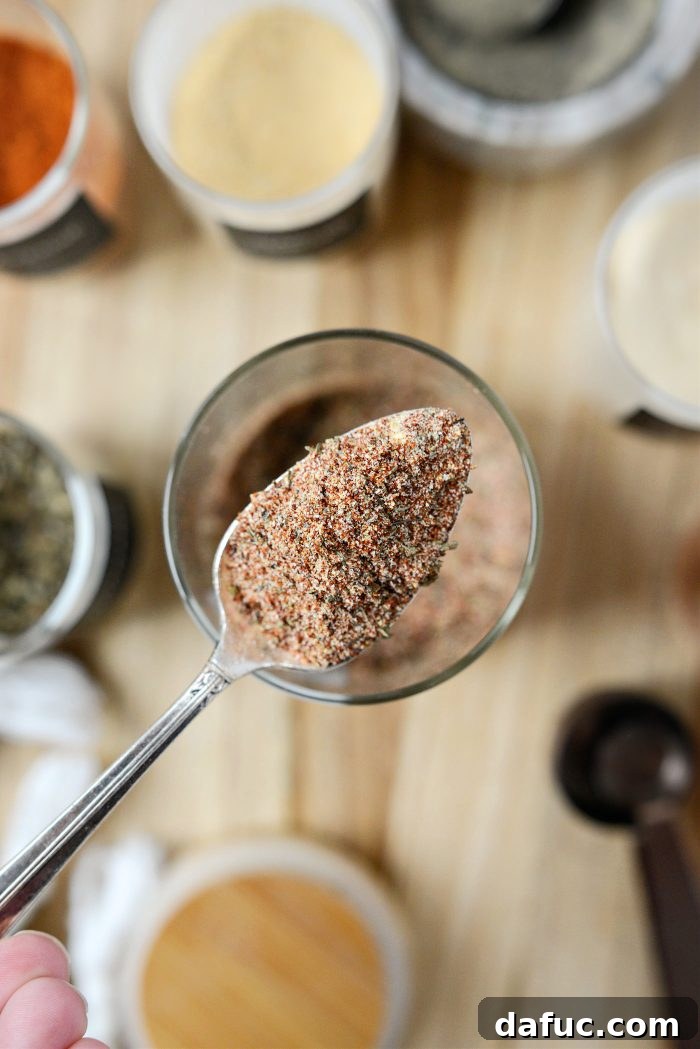
- Combine: Add 1 teaspoon of cayenne pepper, 1 tablespoon each of garlic powder and onion powder, 1½ tablespoons of paprika, and 1½ teaspoons each of dried oregano, dried thyme, and freshly ground black pepper into an airtight container or a small glass jar.
- Mix Thoroughly: Close the container and shake vigorously, or stir with a small spoon, until all the spices are completely combined and evenly distributed. This ensures that every pinch of your seasoning delivers a balanced flavor profile.
Storage for Maximum Freshness
Proper storage is key to preserving the potency and flavor of your homemade Cajun seasoning. Spices are sensitive to light, heat, and air, which can cause them to lose their aromatic compounds over time.
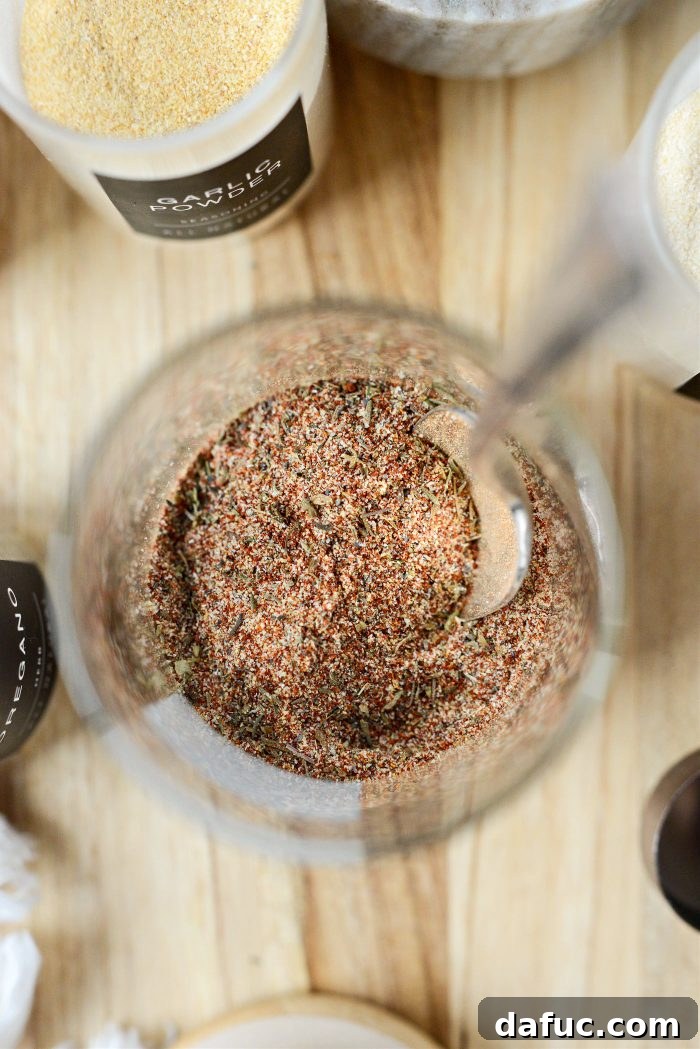
To keep your blend fresh for 1 to 2 years:
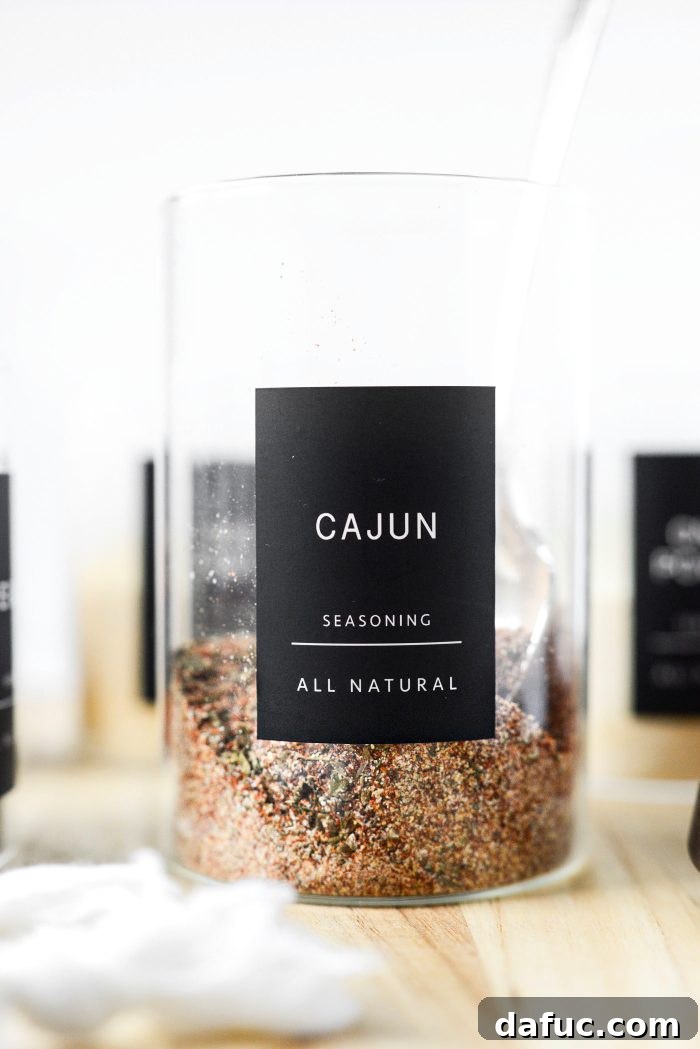
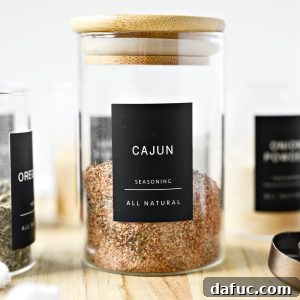
- Airtight Container: Always store your seasoning in an airtight container. Glass jars with tight-fitting lids are ideal, as they don’t absorb odors and are easy to clean. I often double the recipe and store it in glass jars for convenience.
- Cool, Dark Place: Keep the container away from direct sunlight, heat sources (like stoves or ovens), and moisture. A pantry, cupboard, or drawer is the best place.
- Avoid Refrigeration: While some people refrigerate spices, it’s generally not necessary and can even introduce moisture, which can lead to clumping or mold.
- Check for Freshness: Over time, even properly stored spices will lose some of their potency. If the blend no longer smells strongly aromatic, it’s time to make a fresh batch.
Unleash the Flavor: Ways to Use Your Cajun Seasoning
The beauty of homemade Cajun seasoning lies in its incredible versatility. Once you have a batch ready, a world of flavorful possibilities opens up in your kitchen. Here are just a few ideas for incorporating this stellar blend into your cooking:
- Proteins:
- Chicken: Rub it generously on chicken breasts, thighs, or a whole chicken before grilling, baking, or pan-frying. It’s fantastic in dishes like Cajun Chicken Pasta, adding a robust, spicy depth.
- Seafood: Sprinkle it on shrimp, fish (such as Cajun Tilapia), or scallops before searing, grilling, or broiling for an authentic Southern seafood experience. Perfect for Cajun Shrimp and Andouille Skewers.
- Pork and Beef: Use it as a rub for pork chops, ribs, or steak to infuse a spicy, savory crust.
- Vegetables:
- Roasted Vegetables: Toss potatoes (Roasted Cajun Potatoes), corn, bell peppers, or okra with olive oil and Cajun seasoning before roasting for a flavorful side dish.
- Grilled Veggies: Elevate your summer barbecue by seasoning zucchini, onions, and asparagus before grilling.
- Soups, Stews, and Grains:
- Classic Dishes: It’s an essential component for iconic dishes like One Pot Jambalaya or gumbo, providing the core flavor.
- Rice Dishes: Stir it into plain rice or create a flavorful base for dishes like Andouille Cajun Rice Skillet.
- Everyday Enhancements:
- Popcorn and Snacks: Sprinkle it over popcorn, homemade potato chips, or nuts for a zesty, spicy snack.
- Eggs: Add a dash to scrambled eggs, omelets, or deviled eggs for a unique breakfast kick.
- Marinades and Dressings: Incorporate it into homemade marinades for meat or poultry, or whisk it into salad dressings for an unexpected burst of flavor.
All these recipes are incredibly easy to make and guaranteed to be fabulous and flavorful, thanks to a little help from this stellar homemade Cajun seasoning recipe.
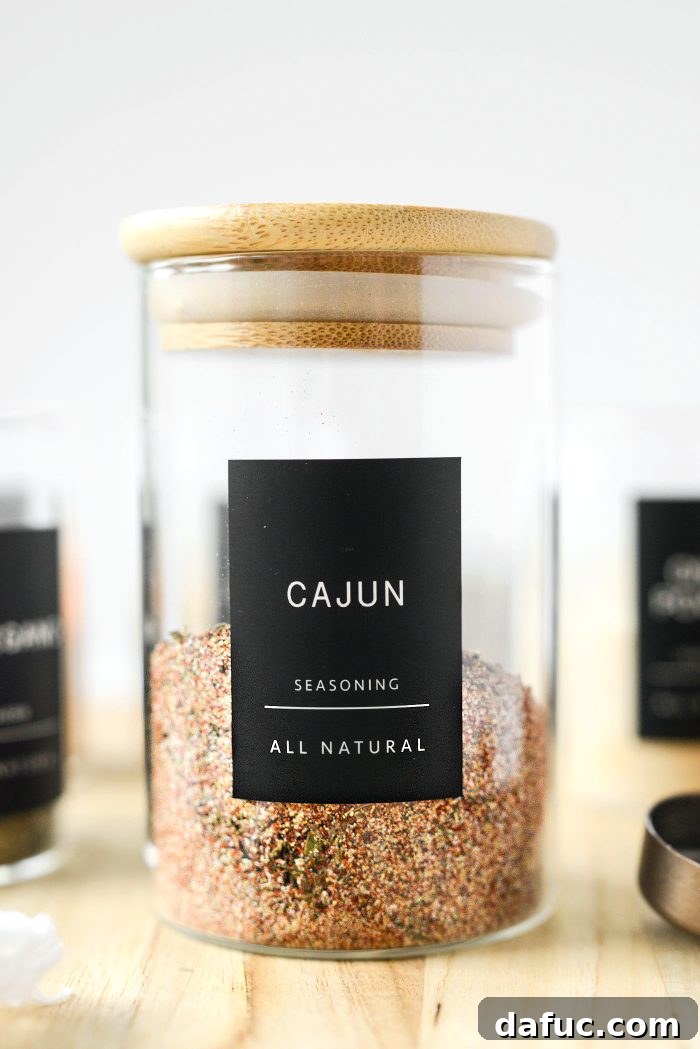
Enjoy the Process! Making your own spice blends is a rewarding experience that connects you more deeply with your food. If you give this Homemade Cajun Seasoning recipe a try, don’t hesitate to share your creations! Snap a photo and tag me on Twitter or Instagram!
Print Recipe
Pin Recipe
Leave a Review »
1 recipe
Homemade Cajun Seasoning Blend
5 mins
5 mins
Ingredients
FOR THE CAJUN SEASONING:
- 1 teaspoon cayenne pepper, more or less depending on how spicy you prefer it
- 1 tablespoon garlic powder
- 1 tablespoon onion powder
- 1½ tablespoons paprika
- 1½ teaspoons dried oregano
- 1½ teaspoons dried thyme
- 1½ teaspoons freshly ground black pepper
Equipment
- Large (8.5oz) Spice Jars with Bamboo Lid
- Spice Labels
Instructions
- Combine all ingredients in an airtight container or small jar. Stir or shake thoroughly until well combined. Store in a cool, dry place for 1 to 2 years.
Nutrition Facts (per 1g serving)
Serving: 1g,
Calories: 81kcal,
Carbohydrates: 18g,
Protein: 3g,
Fat: 1g,
Saturated Fat: 1g,
Polyunsaturated Fat: 1g,
Monounsaturated Fat: 1g,
Sodium: 13mg,
Potassium: 324mg,
Fiber: 5g,
Sugar: 2g,
Vitamin A: 1393IU,
Vitamin C: 22mg,
Calcium: 127mg,
Iron: 4mg
Laurie McNamara
homemade
American