
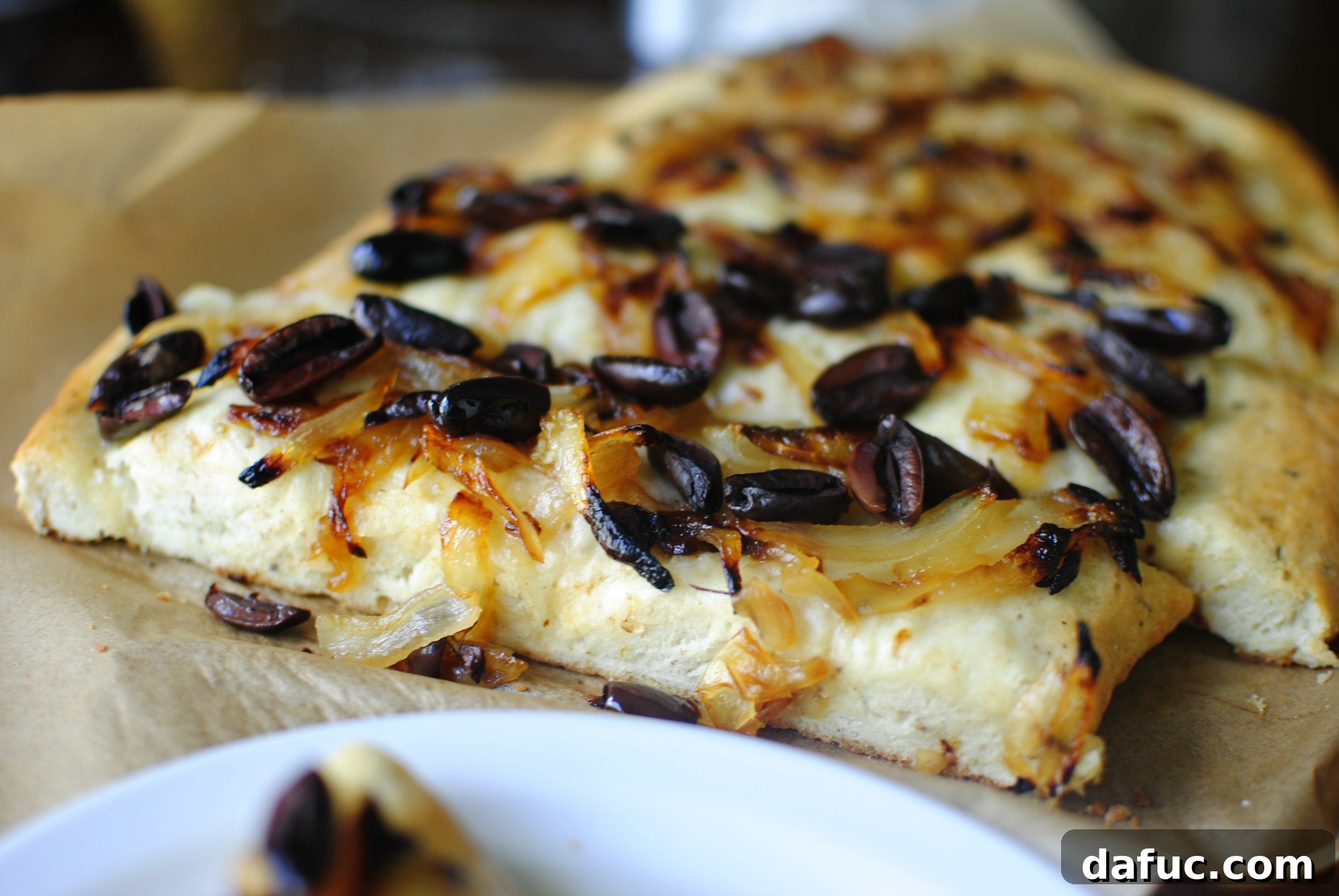
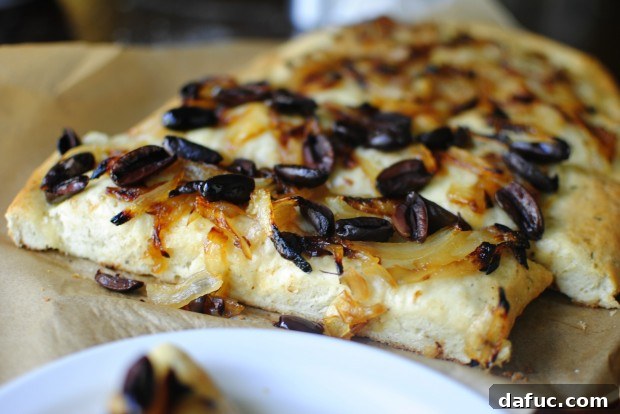
Welcome to a culinary journey where rustic charm meets gourmet flavor: our Herbed Focaccia with Caramelized Onions and Kalamata Olives. This isn’t just bread; it’s an experience, a symphony of savory notes that will captivate your senses and elevate any meal. Imagine a soft, airy crumb infused with fragrant herbs, crowned with the sweet, sticky richness of slow-cooked caramelized onions and the briny punch of Kalamata olives. Each bite offers a delightful contrast of textures and tastes, making this focaccia an unforgettable centerpiece for your table.
There are few things in the kitchen more comforting and rewarding than baking bread from scratch. The process itself is therapeutic, and the aromas that fill your home are simply intoxicating. When the warm, earthy scent of baking bread mingles with the sweet, savory fragrance of onions caramelizing slowly in butter, you know you’re in for something truly special. This Herbed Focaccia brings together these incredible smells and flavors, transforming simple ingredients into a sophisticated yet incredibly approachable dish.
Focaccia, with its dimpled surface and golden crust, is a versatile Italian flatbread that can be adapted to countless toppings and occasions. Our recipe takes it to a new level by incorporating herbs directly into the dough and topping it generously with two powerhouses of flavor: caramelized onions and Kalamata olives. This combination is a classic for a reason, offering a perfect balance of sweetness, saltiness, and aromatic depth that makes this focaccia not just a side, but a star.
Discover the Magic of Homemade Herbed Focaccia
Baking homemade bread might seem daunting, but focaccia is remarkably forgiving and rewarding, even for novice bakers. The simple act of combining flour, water, yeast, and a few other ingredients, then watching it transform into a fragrant, golden loaf, is incredibly satisfying. This recipe guides you through each step, ensuring a successful and delicious outcome. The beauty of focaccia lies in its rustic charm; perfection isn’t the goal, but rather a flavorful, tender bread with a delightfully chewy crust.
The Allure of Caramelized Onions
Caramelized onions are a culinary marvel, transforming from pungent, sharp bulbs into sweet, tender, and deeply flavorful strands through a process of slow cooking. This magical transformation concentrates their natural sugars, creating a rich, almost jam-like consistency that adds incredible depth to any dish. For our focaccia, these golden jewels provide a sweet counterpoint to the savory herbs and salty olives, making each bite balanced and complex.
Kalamata Olives: The Perfect Salty Counterpart
Kalamata olives, with their distinct almond shape, deep purple hue, and rich, fruity, and briny flavor, are a Mediterranean staple. Their intense taste stands up beautifully to the sweetness of the caramelized onions and the herbaceous dough. Halved and scattered across the focaccia, they burst with flavor, adding a pleasant saltiness and a tender texture that truly rounds out the profile of this exceptional bread.
The combination of these three elements – a fragrant, herbed dough, sweet caramelized onions, and briny Kalamata olives – creates a synergy of flavors that is simply irresistible. This focaccia is perfect as an appetizer, a side with your favorite Italian meal, or even as a base for gourmet sandwiches. Prepare to be enchanted by its simplicity and depth.
Crafting Your Perfect Focaccia: Ingredients You’ll Need
Gathering your ingredients is the first step towards creating this delightful Herbed Focaccia. Each component plays a crucial role in developing the rich flavors and perfect texture of the bread. Don’t worry if you need to adjust or substitute; focaccia is wonderfully adaptable!
- Yellow Onions: We prefer yellow onions for their balanced sweetness when caramelized, but red onions can also be used for a slightly sharper, more dramatic color.
- Butter & Olive Oil: The combination of butter and olive oil is key for perfectly caramelizing the onions, adding richness and depth. Use good quality olive oil for the best flavor, especially for drizzling.
- Kosher Salt: Essential for seasoning both the onions and the dough, enhancing all the other flavors.
- Warm Water (110 degrees F): The ideal temperature to activate your active dry yeast, ensuring a good rise.
- Honey: A touch of honey not only adds a subtle sweetness to the dough but also feeds the yeast, helping it become active and bubbly.
- Active Dry Yeast: The leavening agent that makes our focaccia light and airy.
- Bread Flour: High in protein, bread flour develops strong gluten, which is crucial for focaccia’s characteristic chewy texture and open crumb. All-purpose flour can work in a pinch, but bread flour is highly recommended.
- Italian Seasoning: A blend of dried herbs like oregano, basil, thyme, and rosemary, adding an aromatic Mediterranean essence to the dough. You can use homemade Italian seasoning for an extra fresh taste.
- Garlic Powder: Infuses the dough with a mild, savory garlic flavor that complements the other ingredients beautifully.
- Black Pepper: A hint of freshly ground black pepper adds a subtle warmth and spice.
- Kalamata Olives, Halved: These briny, fruity olives are the perfect topping, offering a burst of Mediterranean flavor and a lovely texture.
- Roasted Garlic Olive Oil (Optional): A drizzle of this aromatic oil over the finished focaccia adds another layer of gourmet flavor. If unavailable, use a high-quality extra virgin olive oil.
Remember, while these ingredients create a fantastic loaf, focaccia is incredibly versatile. Feel free to experiment! You could swap the onions and olives for thin slices of Roma tomatoes and fresh basil after baking, or simply sprinkle with mozzarella for a cheesy delight. The adaptable nature of this recipe is truly one of its greatest strengths!
Step-by-Step Guide to Baking Herbed Focaccia
Part 1: Preparing the Irresistible Toppings
Our journey to the perfect focaccia begins with preparing the flavorful toppings, specifically the caramelized onions. This step requires patience, but the rich, sweet results are absolutely worth it.
First, take three medium yellow onions. Halve them, peel away the outer layers, and then slice them vertically into thin, uniform strips. Separating the layers as you go will help them cook more evenly. Place the separated onion strips into a bowl and set aside.
In a medium skillet, melt 2 tablespoons of unsalted butter over medium heat. Once melted, add 1 tablespoon of olive oil. The combination of butter and olive oil provides a rich base for caramelization and helps prevent burning.
Add the sliced onions to the skillet and sprinkle with 1 to 2 pinches of kosher salt. The salt helps to draw out moisture from the onions, aiding in the caramelization process. Stir the onions to coat them evenly with the butter and oil.
Cover the skillet and cook the onions over medium-low heat, stirring occasionally. Caramelizing onions is a slow and gentle process, typically taking 30 to 40 minutes. You want them to soften, sweeten, and turn a beautiful deep golden-brown, not burn. Keeping the lid on initially helps them soften before truly caramelizing. This is the perfect time to start preparing your focaccia dough, as the onions can cook simultaneously.
While the onions are working their magic, drain about 1/4 cup of Kalamata olives. These olives typically come packed in brine, so draining them prevents excess moisture from making your focaccia soggy.
Slice each olive in half. This not only makes them easier to eat but also helps distribute their flavor evenly across the focaccia. The exact quantity doesn’t have to be precise; adjust to your liking.
Part 2: Mastering the Focaccia Dough
Now, let’s turn our attention to the heart of our focaccia: the dough. A well-made dough is the secret to a light, airy, and flavorful bread.
In a small measuring cup or bowl, combine 1 teaspoon of honey with 1 cup of warm water (around 110°F, which is warm to the touch but not too hot). Sprinkle a 1/4 ounce packet of active dry yeast (which is typically 2-1/4 teaspoons) over the water. Stir gently, then let it sit for about 10 minutes. This process, called “proofing,” activates the yeast. You’ll know it’s ready when the mixture becomes foamy and bubbly, indicating the yeast is alive and ready to work its magic.
In a large mixing bowl, combine the dry ingredients: 2-3/4 cups of bread flour, 1 teaspoon of kosher salt, 2-1/2 teaspoons of Italian seasoning, 1 teaspoon of garlic powder, and 1/4 teaspoon of black pepper. Whisk these together thoroughly to ensure the herbs and spices are evenly distributed throughout the flour.
Once your yeast mixture is proofed, pour it into the bowl with the dry ingredients. Use a sturdy spoon or a dough whisk to stir the mixture. Continue stirring until all the flour is incorporated and a shaggy dough forms.
The dough will look a bit rough and sticky at this stage, but that’s perfectly normal. Just ensure there are no dry pockets of flour remaining.
Turn the dough out onto a lightly floured surface. Now it’s time to knead! Kneading is essential for developing the gluten in the flour, which gives focaccia its characteristic chewiness and open structure. Knead for about 8-10 minutes, using a gentle push, fold, and turn motion.
You’ll know the dough is sufficiently kneaded when it becomes smooth, elastic, and springy. A good test is the “windowpane test”: you should be able to stretch a small piece of dough thin enough to see light through it without tearing. Another indicator, as the original recipe aptly describes, is when the dough develops a slightly wrinkled, aged look, signifying good gluten development and elasticity.
Lightly oil a clean, large bowl with olive oil. Place the kneaded dough ball into the bowl, then turn it to coat all sides evenly with the oil. This prevents the dough from sticking and helps keep it moist during rising. Cover the bowl with a damp cloth or plastic wrap and place it in a warm, draft-free spot to rise for 30 to 45 minutes. The dough should roughly double in size. A warm oven (turned off, but slightly warmed) or a sunny spot on your counter are ideal locations.
While your dough is rising, don’t forget about your onions! Keep checking on them, stirring occasionally, until they are beautifully caramelized to a deep golden-brown, soft, and fragrant. Their sweet aroma should be permeating your kitchen, building anticipation for the delicious focaccia to come.
Once the dough has risen significantly, gently “punch it down” by pressing your fist into the center to release the air. This helps to redistribute the yeast and creates a finer crumb. At this point, preheat your oven to a high temperature of 450°F (230°C).
Part 3: Assembling and Baking Your Focaccia
The final steps involve shaping, topping, and baking your focaccia to golden perfection.
Lightly grease a rimmed baking sheet generously with olive oil. Transfer the punched-down dough to the prepared baking sheet. Using your fingertips, gently spread the dough out to form a rectangle about 1/2-inch thick. Don’t worry about making it perfectly uniform; focaccia is meant to be rustic. Once spread, use your knuckles to make dimples (indentations) across the entire surface of the dough, about an inch or two apart. These dimples help create focaccia’s characteristic texture and hold the toppings and olive oil during baking.
By now, your caramelized onions should be ready – a fragrant, sweet, and deeply colored topping that promises incredible flavor. If you haven’t already, take a moment to savor their aroma!
Evenly spread the caramelized onions over the dimpled focaccia dough, ensuring every part gets a generous helping of this delicious topping.
Now, scatter the halved Kalamata olives over the onions. If you have guests (or family members!) who aren’t olive fans, feel free to top only half the focaccia with olives, leaving the other half purely caramelized onion focaccia. This way, everyone gets to enjoy their preferred flavor combination.
Carefully transfer the baking sheet to your preheated 450°F (230°C) oven. Immediately reduce the oven temperature to 375°F (190°C). This initial blast of high heat helps create a beautiful crust, while the reduced temperature ensures the focaccia cooks through evenly without burning. Bake for 17-20 minutes, or until the focaccia is golden brown on top and cooked through. Keep a close eye on it, as oven temperatures can vary.
Once baked, pull the focaccia from the oven. At this stage, it looks fantastic, but there’s one final touch that can elevate it even further. A little something extra to bring all the flavors together and add moisture.
We recommend a generous drizzle of roasted garlic infused olive oil over the warm focaccia. The aromatic garlic oil seeps into the dimples and softens the crust, adding an incredible layer of flavor. If you don’t have roasted garlic olive oil, a good quality extra virgin olive oil will work wonderfully, but the infused oil truly makes it special.
Allow the focaccia to cool slightly before slicing. This allows the internal structure to set and makes for cleaner cuts. Slice into generous squares or rectangles, perfect for sharing.
Serve warm and prepare for it to disappear quickly!
Enjoy every savory bite! If you try this Herbed Focaccia recipe, we’d love to hear about it. Snap a photo and tag us on Twitter or Instagram!
Tips for Focaccia Perfection
Achieving a consistently delicious focaccia is easy with a few key tips:
- Quality Ingredients Matter: Especially for olive oil and fresh herbs, better quality means better flavor.
- Yeast Activation: Ensure your water temperature is just right (105-115°F or 40-46°C) for activating yeast. Too cold, it won’t activate; too hot, it will kill it.
- Don’t Skimp on Kneading: Proper kneading develops gluten, which is crucial for the focaccia’s characteristic chewy texture. Use the windowpane test to check if it’s ready.
- Warm Proofing Spot: A slightly warm, draft-free environment is essential for a good rise. A turned-off oven with the light on, or a warm spot near a window, works well.
- Generous Olive Oil: Focaccia loves olive oil. Don’t be shy when greasing the pan or drizzling before/after baking. It contributes to flavor, texture, and a beautiful golden crust.
- High Initial Heat: Starting with a high oven temperature then reducing it helps achieve a crisp crust and a soft interior.
- Don’t Overbake: Keep an eye on your focaccia to prevent it from becoming dry. It should be golden brown and sound hollow when tapped.
Creative Focaccia Variations and Serving Suggestions
This Herbed Focaccia with Caramelized Onions and Olives is fantastic on its own, but its versatility truly shines when exploring other possibilities:
- Rosemary and Sea Salt: A classic and simple variation. Dimple the dough, drizzle with olive oil, sprinkle with fresh rosemary and flaky sea salt before baking.
- Cherry Tomato and Garlic: Press halved cherry tomatoes and thinly sliced garlic into the dimples of the dough before baking for a fresh, vibrant flavor.
- Cheese Lovers: Add grated Parmesan or mozzarella along with your chosen toppings during the last few minutes of baking for a melted, cheesy crust.
- Sun-Dried Tomato and Feta: A tangy and salty combination that pairs wonderfully with the herbed dough.
- Serving Ideas:
- Appetizer: Cut into small squares and serve with a bowl of good quality olive oil for dipping.
- Side Dish: Perfect alongside Italian stews, roasted chicken, or any Mediterranean-inspired meal.
- Sandwich Bread: Slice horizontally and fill with cured meats, cheeses, and fresh greens for an incredible sandwich.
- Soup Companion: Ideal for soaking up hearty soups and chili.
Storing Your Delicious Focaccia
Freshly baked focaccia is always best enjoyed on the day it’s made. However, if you have leftovers, here’s how to store them:
- Room Temperature: Wrap cooled focaccia tightly in plastic wrap or foil and store at room temperature for up to 2-3 days.
- Freezing: For longer storage, slice the focaccia, wrap individual pieces tightly in plastic wrap, then place them in a freezer-safe bag. It can be frozen for up to 1 month. Thaw at room temperature and reheat in a warm oven for a few minutes to restore its crispness.
- Reheating: To refresh day-old focaccia, place it on a baking sheet and warm it in a 350°F (175°C) oven for about 5-10 minutes, or until heated through and slightly crisp.
Print Recipe
Pin Recipe
Herbed Focaccia with Caramelized Onions and Olives
Ingredients
- 3 small yellow onions
- 2 tablespoons butter
- 1 tablespoon olive oil
- 1 to 2 pinches kosher salt
- 1 cup warm water, 110 degrees F
- 1 teaspoon honey
- 1¼ ounce packet (2-1/4 teaspoons) of active dry yeast
- 2¾ cups of bread flour
- 1 teaspoon kosher salt
- 2½ teaspoons Italian seasoning
- 1 teaspoon garlic powder
- 1/4 teaspoon black pepper
- 1 tablespoon olive oil (for greasing pan)
- 1/4 cup kalamata olives, halved
- Roasted garlic olive oil, optional for drizzling over finished bread
Instructions
-
Halve and peel 3 small onions and slice into vertical strips.
-
Heat butter and one tablespoon of olive oil in a medium skillet over medium heat. Add in the onions and sprinkle with a pinch or two of salt. Cover, stirring occasionally until a deep golden. Remove and set aside.
-
Meanwhile; Mix the honey, warm water, and yeast in a small measuring cup or bowl. Let proof for 10 minutes.
-
In a large bowl, stir together flour, salt, Italian seasoning, garlic powder, and black pepper.
-
Add the yeast/water mixture to the dry ingredients, stirring to combine.
-
When dough has pulled together, turn out onto a lightly floured surface and knead until smooth and elastic.
-
Lightly oil a large bowl, place dough in bowl, and turn to coat with oil (going up and around the sides of the bowl).
-
Cover with a damp cloth and let rise in a warm/dry place for 30-45 minutes.
-
Preheat oven to 450 degrees F (230°C) and generously grease a rimmed baking sheet with olive oil.
-
Punch dough down, place on the well-oiled, rimmed baking sheet, and spread out using your fingertips. Pat the dough into a 1/2-inch thick rectangle (keep it rustic looking).
-
Using your knuckle, make indentations in the dough about 1/2-inch apart. (If making plain focaccia without toppings, prick the dough with a fork in addition to making the indentations).
-
Top the dough with the caramelized onions and olives. Slide the focaccia into your oven and immediately reduce the temperature to 375 degrees F (190°C). Bake for 17-20 minutes or until the focaccia is golden brown.
-
Let cool slightly, drizzle with roasted garlic olive oil, slice, and serve!
Nutrition Info
Calories: 245 kcal,
Carbohydrates: 38g,
Protein: 6g,
Fat: 8g,
Saturated Fat: 3g,
Polyunsaturated Fat: 1g,
Monounsaturated Fat: 4g,
Trans Fat: 1g,
Cholesterol: 8mg,
Sodium: 435mg,
Potassium: 153mg,
Fiber: 4g,
Sugar: 2g,
Vitamin A: 192IU,
Vitamin C: 2mg,
Calcium: 98mg,
Iron: 2mg
Conclusion
Baking this Herbed Focaccia with Caramelized Onions and Kalamata Olives is more than just following a recipe; it’s an act of love and a celebration of flavor. The rich aroma that fills your home, the satisfying process of working with dough, and finally, the incredible taste of a freshly baked loaf topped with sweet onions and salty olives – it’s an experience that truly nourishes the soul. We hope you enjoy every moment of making and devouring this exceptional bread. Happy baking!