
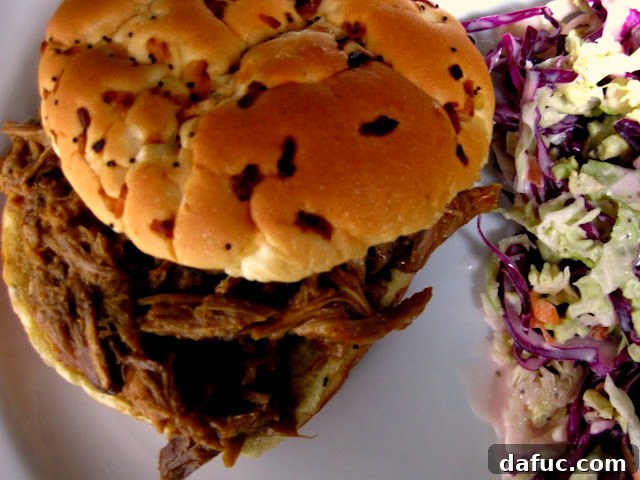
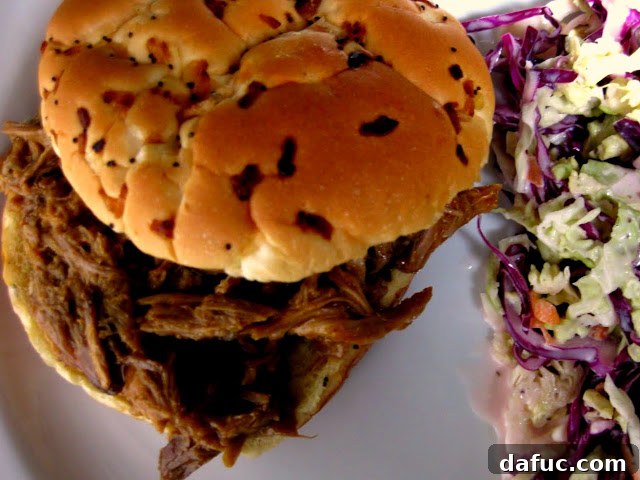
There are few culinary delights as universally loved and deeply satisfying as a classic Barbecue Pulled Pork Sandwich. For many, including myself, it’s the epitome of comfort food – a wonderfully messy, flavor-packed experience that always hits the spot. Imagine tender, succulent pulled pork, slow-roasted to perfection, then generously coated in a vibrant, tangy homemade barbecue sauce. Nestled between a sturdy, fresh roll and crowned with a cool, crisp coleslaw, each bite is a symphony of textures and tastes. This isn’t just a meal; it’s an event, a celebration of low and slow cooking that transforms a humble cut of meat into an unforgettable feast for family and friends.
This comprehensive guide dives deep into creating pulled pork that’s not only incredibly flavorful but also remarkably simple to achieve, primarily thanks to the magic of slow roasting. The journey begins long before the first bite, as the rich aroma of spices and slowly cooking pork fills your kitchen, building anticipation. Forget dry, bland pork – we’re aiming for a melt-in-your-mouth tenderness that practically shreds itself, ready to soak up every drop of that irresistible homemade BBQ sauce. And while I might be juggling baking thirty-plus cupcakes for my daughter’s school party (yes, even after many hours of roasting pork, the oven keeps working overtime!), dedicating time to this pulled pork recipe is always a worthwhile endeavor, promising delicious rewards.
Crafting the Perfect Rub: The Foundation of Flavor for Pulled Pork
The secret to truly outstanding pulled pork starts with a robust, aromatic spice rub. This isn’t just about adding flavor to the surface; it’s about building a foundation that penetrates deep into the meat during the long cooking process, creating a delicious crust, or “bark,” and enhancing the natural richness of the pork. Our homemade rub is a harmonious blend of sweet, savory, and subtly smoky notes, designed to complement the pork without overpowering its natural taste. Each carefully chosen ingredient plays a crucial role in achieving this perfect balance, transforming a simple piece of meat into a deeply flavorful experience.
To Make The Rub for this Recipe You Will Need:
- **Paprika:** Adds a beautiful reddish hue and a mild, sweet pepper flavor. For a smoky twist and enhanced depth, consider using smoked paprika.
- **Garlic Powder:** Provides a savory depth that pairs wonderfully with pork, delivering intense garlic notes without the risk of burning fresh garlic during slow roasting.
- **Brown Sugar:** Essential for caramelization, which contributes to that desirable slightly sweet crust (the “bark”) and perfectly balances the savory spices.
- **Dry Mustard:** Offers a subtle tang and a hint of pungent spice that helps brighten the overall flavor profile of the rub and the finished pork.
- **Coarse Sea Salt:** Crucial for seasoning the meat thoroughly and aiding in the creation of a flavorful bark by drawing out moisture from the surface.
To prepare the rub, simply combine all these spices – paprika, garlic powder, brown sugar, dry mustard, and coarse sea salt – into a small bowl. Whisk them together thoroughly until you have a uniform blend. This ensures that every part of the pork receives an even distribution of flavor. Feel free to adjust the ratios slightly to suit your personal preference, perhaps a little more brown sugar for a sweeter bark or an extra pinch of cayenne (not in the original rub, but a good addition for heat) for some spice, creating a rub that is uniquely yours.
Selecting and Preparing Your Pork Shoulder for Ultimate Tenderness
The cut of meat is paramount for achieving truly succulent pulled pork, and a 5-pound Boston pork shoulder roast (also widely known as pork butt) is the absolute ideal choice. Despite its misleading name, the “Boston butt” actually comes from the upper part of the pig’s front shoulder, not the rear. This particular cut is perfect because it contains a desirable balance of flavorful meat, marbled fat, and rich connective tissue. The fat marbles through the meat, acting as an internal basting agent, keeping the pork incredibly moist and adding an incredible depth of flavor as it slowly renders down during cooking. The abundant connective tissue, which can make other cuts tough, breaks down into luscious gelatin during long, slow cooking, resulting in that signature tender, fall-apart texture that defines truly great pulled pork.
For the best possible outcome, I highly recommend using a bone-in pork shoulder if you can find one at your local butcher or grocery store. The bone not only adds even more profound flavor to the meat but also helps to conduct heat slowly and evenly throughout the roast, contributing to a consistently more tender and juicy final product. If a boneless pork shoulder is all that’s available, don’t worry – the results will still be absolutely delicious, though you might adjust cooking time slightly.
Once you have your Boston pork shoulder, it’s time for the critical step of applying the rub. Take the homemade spice blend you just prepared and generously apply it to every inch of the meat. Don’t be shy – really get in there and massage the rub into all the crevices, ensuring complete coverage. The goal is to create a complete, flavorful coating that will develop into that irresistible savory “bark.” For an even deeper flavor penetration and a more pronounced crust, consider covering the rubbed pork and refrigerating it for at least an hour, or ideally, overnight (up to 24 hours). This dry brining process allows the salt and spices to work their magic, tenderizing the meat and infusing it with flavor from the inside out.
After the pork has been thoroughly rubbed and, if desired, allowed to marinate, it’s ready for its long, slow journey in the oven. Preheat your oven to a steady 300°F (150°C). Place the pork shoulder in a sturdy roasting pan, ideally fat-side up. This strategic placement allows the fat to slowly render and baste the meat below, keeping it exceptionally moist and adding crucial flavor. Roast the pork for approximately 6 to 8 hours. The exact timing will vary depending on your oven’s calibration and the specific size and shape of your roast. The key to success here is patience; resist the urge to peek too often, as opening the oven releases heat and extends cooking time. You’re looking for an internal temperature of around 170-190°F (77-88°C) in the thickest part of the roast, but more importantly, the pork should be incredibly tender, practically falling off the bone with minimal effort when probed with a fork. This low and slow cooking method ensures that the tough collagen in the meat breaks down completely, resulting in that characteristic shreddable texture that makes pulled pork so irresistible.
The Irresistible Homemade Barbecue Sauce
While the pork slowly transforms in the oven, filling your home with an intoxicating aroma, it’s the perfect time to prepare the star of the show’s supporting cast: the homemade barbecue sauce. A truly exceptional pulled pork sandwich demands a sauce that is bold, balanced, and bursting with flavor. Making your own sauce from scratch allows you to control the ingredients and tailor the taste to your exact preferences, consistently delivering a superior result that far surpasses any store-bought alternative. This sauce strikes a perfect balance between tangy, sweet, and a touch of heat, complementing the rich pork beautifully.
To Make the Barbecue Sauce You Will Need:
- **Apple Cider Vinegar:** Provides that essential tangy backbone, cutting through the richness of the pork and brightening the overall flavor profile of the sauce.
- **Mustard (Yellow or Brown Mustard):** Adds a distinct pungent and savory note. Yellow mustard is classic for BBQ, but brown mustard can offer a deeper, spicier kick.
- **Ketchup:** Forms the sweet and savory base of the sauce, offering a familiar, comforting flavor that defines many classic barbecue sauces. You can even make homemade ketchup for an extra touch.
- **Dark Brown Sugar:** Contributes to the sauce’s sweetness, helps create a rich, syrupy consistency, and aids in caramelization.
- **Garlic Cloves (smashed):** Fresh garlic infuses the sauce with aromatic depth. Smashing them helps release their oils and maximum flavor during simmering.
- **Kosher Salt:** Balances the sweetness and acidity of the sauce, enhancing all the other flavors without making it overtly salty.
- **Black Pepper:** Adds a mild, earthy spice and a subtle warmth to the sauce.
- **Cayenne Pepper:** Delivers a customizable kick of heat. Adjust the amount to your desired spice level – a little goes a long way!
- **Reserved Juices from Pork Roast (optional):** A fantastic addition for an extra layer of savory pork flavor and body, if available after cooking the pork.
In a medium saucepan, combine the apple cider vinegar, mustard, ketchup, dark brown sugar, smashed garlic cloves, kosher salt, black pepper, and cayenne pepper. Whisk all the ingredients together thoroughly until well combined and the mixture is smooth. Place the saucepan over medium heat, stirring occasionally, until the brown sugar has completely dissolved and the sauce is hot and gently simmering. Allow it to simmer for about 10 minutes to allow the flavors to meld and deepen, creating a harmonious blend. Once simmering, remove the smashed garlic cloves if you prefer a smoother sauce and texture, and reduce the heat to low to keep the sauce warm until you’re ready to use it. Before serving, taste and adjust as needed – if it tastes too vinegary, a little more brown sugar can mellow it out; for more heat, add another pinch of cayenne; for more tang, a splash more vinegar. Achieving your perfect balance is key!
Shredding the Pork and Assembling Your Masterpiece Sandwich
After its lengthy stay in the oven, your pork shoulder should be beautifully tender, a testament to the slow-roasting process. Carefully remove the roasting pan from the oven and transfer the pork shoulder to a large platter or carving board. Allow it to rest for about 10 minutes. This resting period is absolutely crucial; it allows the juices within the meat to redistribute throughout the roast, ensuring maximum succulence and preventing a dry outcome. Skipping this step can result in a significant loss of moisture and flavor.
Once rested, grab two sturdy forks and begin the satisfying process of “pulling” the pork. The meat should be so incredibly tender that it practically falls apart with ease, requiring minimal effort to separate into luscious strands. As you shred, take care to identify and discard any large pieces of excess fat or connective tissue that haven’t fully rendered. While some rendered fat is desirable for flavor and moisture, large unrendered chunks are best removed for the best eating experience and texture.
Now, it’s time to bring all the delicious components together. Place the freshly shredded pork into a large bowl. Begin to pour your warm homemade barbecue sauce over the pork, a little at a time. Stir gently to coat the meat evenly, ensuring every strand is infused with that wonderful BBQ flavor. The goal is to generously sauce the pork without making it overly saturated or soupy. You want the pork to be moist and flavorful, not swimming in sauce. Taste a small piece of sauced pork and adjust the sauce quantity until it’s perfect for your palate. Remember, you can always serve any extra barbecue sauce on the side for those who prefer an extra saucy sandwich or for dipping other sides.
With your perfectly sauced pulled pork ready, it’s time to build your ultimate Barbecue Pulled Pork Sandwiches! Select your favorite sturdy buns – onion rolls, brioche buns, or classic kaiser rolls work wonderfully. Lightly toast them if you desire a bit of extra texture. Spoon a generous helping of the warm, saucy pulled pork onto the bottom bun. For the quintessential experience, pile on a spoonful of chilled, creamy coleslaw. The cool, crisp texture and tangy dressing of the coleslaw provide a fantastic contrast to the rich, warm pork, creating a truly balanced and unforgettable sandwich. Top with the other half of the bun and get ready to dive into a delightfully messy, flavor-packed masterpiece.
Enjoy this incredible homemade Barbecue Pulled Pork Sandwich! There’s nothing quite like the flavor of slow-cooked meat and homemade sauce. If you create this recipe, we’d love to see your delicious results. Snap a photo and share it with us on Twitter or Instagram!

Print Recipe
Pin Recipe
Leave a Review »
Barbecue Pulled Pork Sandwiches
Ingredients
FOR THE RUB:
- 3 tablespoons coarse sea salt
- 2 tablespoons paprika
- 1 tablespoon garlic powder
- 1 tablespoon dry mustard
- 1 heaping tablespoon dark brown sugar
- 5 pounds boston pork shoulder roast
FOR THE BARBECUE SAUCE:
- 1 cup apple cider vinegar
- 1 cup mustard, yellow or brown mustard
- 1/2 cup ketchup
- 1/2 cup dark brown sugar
- 2 garlic cloves, smashed
- 1 teaspoon kosher salt
- 1 teaspoon cayenne
- 1/2 teaspoon black pepper
- reserved juices from pork roast, optional
Instructions
MAKE THE RUB:
-
In a small bowl combine salt, paprika, garlic powder, dry mustard and sugar. Rub the spice blend all over the pork.
*Optional: cover and refrigerate for at least an hour up to overnight.
MAKE THE PORK SHOULDER:
-
Preheat the oven to 300°F (150°C).
-
Place pork in a roasting pan and in to the oven for 6-8 hours. An instant thermometer should read 170-190°F (77-88°C) when inserted in to the thickest part of the roast… but really it should be falling off the bone.
-
When the pork is done, remove it to a platter or carving board to rest for 10 minutes.
MAKE THE BARBECUE SAUCE:
-
Meanwhile in a saucepan combine the vinegar, mustard, ketchup, brown sugar, garlic, salt, cayenne and black pepper and stir over medium heat.
-
Simmer gently for 10 minutes until the sugar is dissolved. Remove smashed garlic cloves and reduce heat to low until ready to use.
SERVE THE PULLED PORK:
-
While the pork is still warm, you will want to “pull” the meat using a couple of forks.
-
Place the shredded meat in to a large bowl, and pour half of the barbecue sauce over it, stir and repeat if necessary or until the pork is covered. Serve on top of onion rolls or any bun of your choice.
Notes