
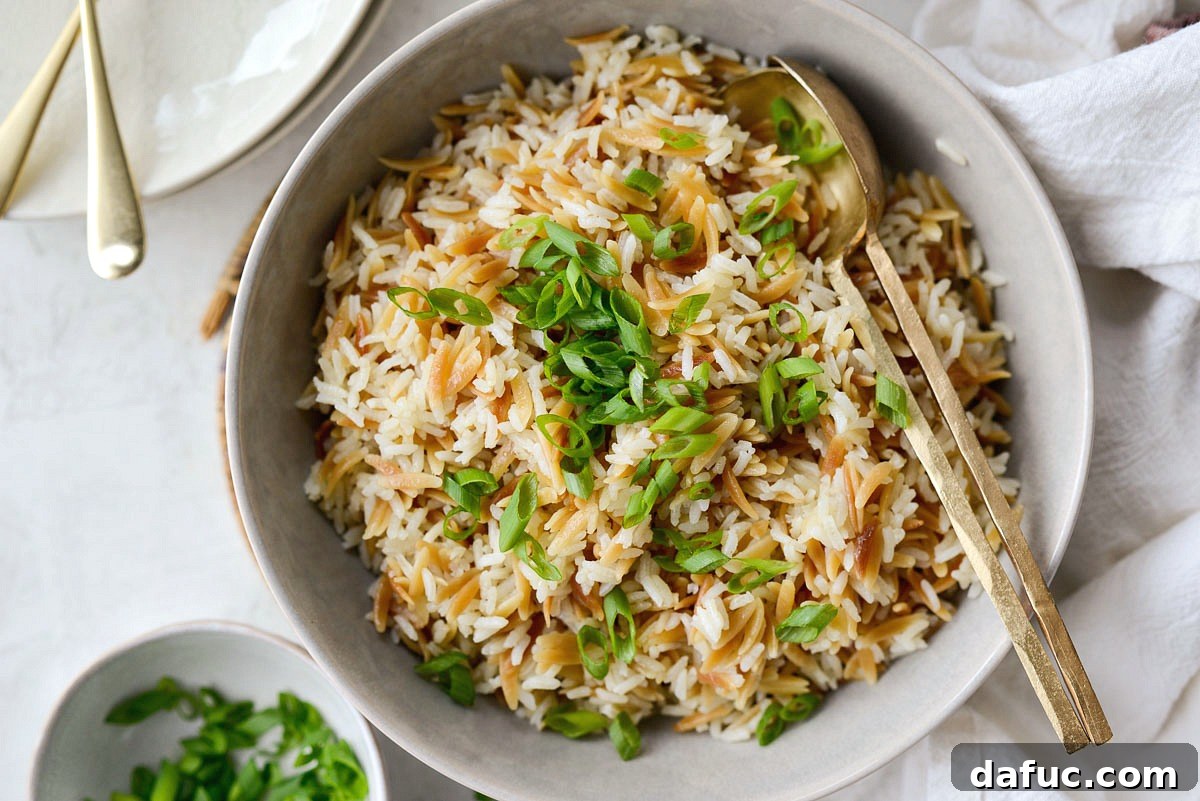
Welcome to the ultimate guide for crafting a simple yet incredibly delicious rice pilaf! This classic side dish, elevated with perfectly toasted orzo pasta, is surprisingly easy to make and promises a wonderfully tender, fluffy texture that complements nearly any main course. Forget bland, sticky rice; this recipe infuses every grain with rich, buttery flavor and a subtle nutty aroma, making it an instant family favorite. Whether served with succulent roasted chicken, flaky pan-seared fish, or a vibrant vegetarian entrée, this homemade rice pilaf is about to become your go-to side dish for any occasion.
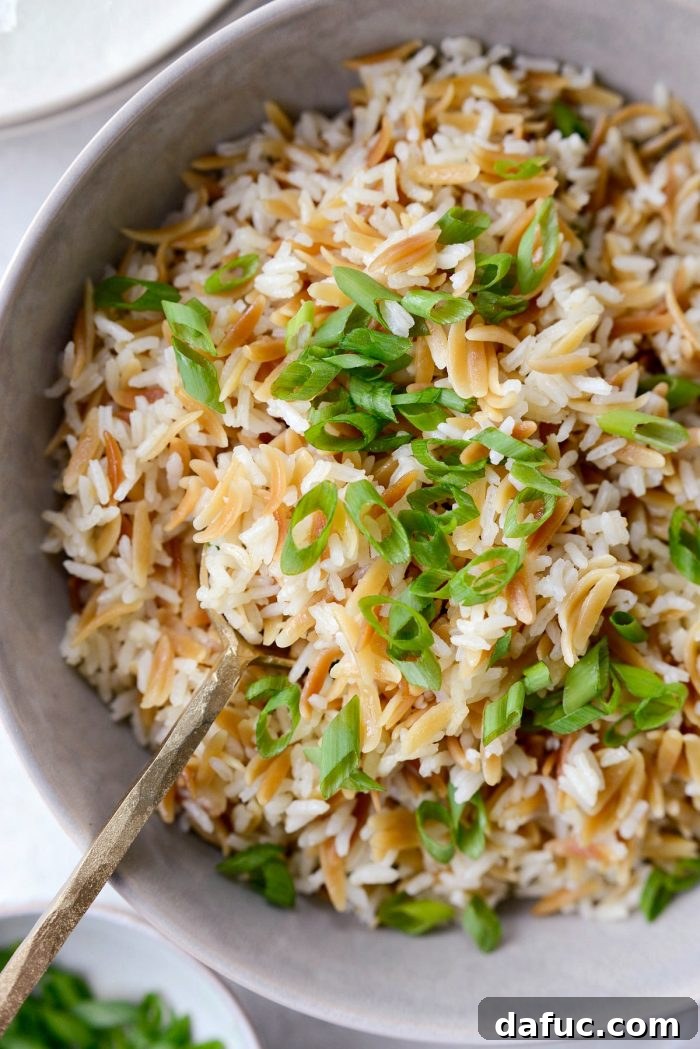
My Childhood Misconception: The Mysterious Allure of Pilaf
For a significant portion of my childhood, the very name “rice pilaf” held an almost intimidating and unfamiliar aura. It wasn’t that I’d ever actually tasted it – quite the contrary. My limited understanding led me to believe it was something exotic, perhaps overly complex, or even potentially unappetizing to a young, unadventurous palate. My imagination conjured up images of unfamiliar spices or strange textures that I was convinced I wouldn’t enjoy. So, with the unwavering logic only a child can possess, I instinctively avoided it. Looking back, I can’t help but chuckle and wonder, was I just a ridiculously judgmental kid, or did the name itself truly deter me from what I now know is a culinary delight?
This culinary avoidance continued for several years, firmly shaping my perception without any real-world experience. It wasn’t until much later in life that I stumbled upon a crucial piece of information, a game-changer that completely flipped my perspective and opened my eyes to the true magic of pilaf: the glorious realization that the pasta in traditional rice pilaf is *first toasted in copious amounts of butter*. Yes, you read that right – butter, rich and golden butter! Need I elaborate further? The moment those words registered, I was utterly, completely, irrevocably sold. All my preconceived notions evaporated. If only someone had revealed this simple, buttery secret to my younger, more skeptical self, I would have embraced the wonderful world of pilaf years ago, saving myself from years of missed culinary joy!
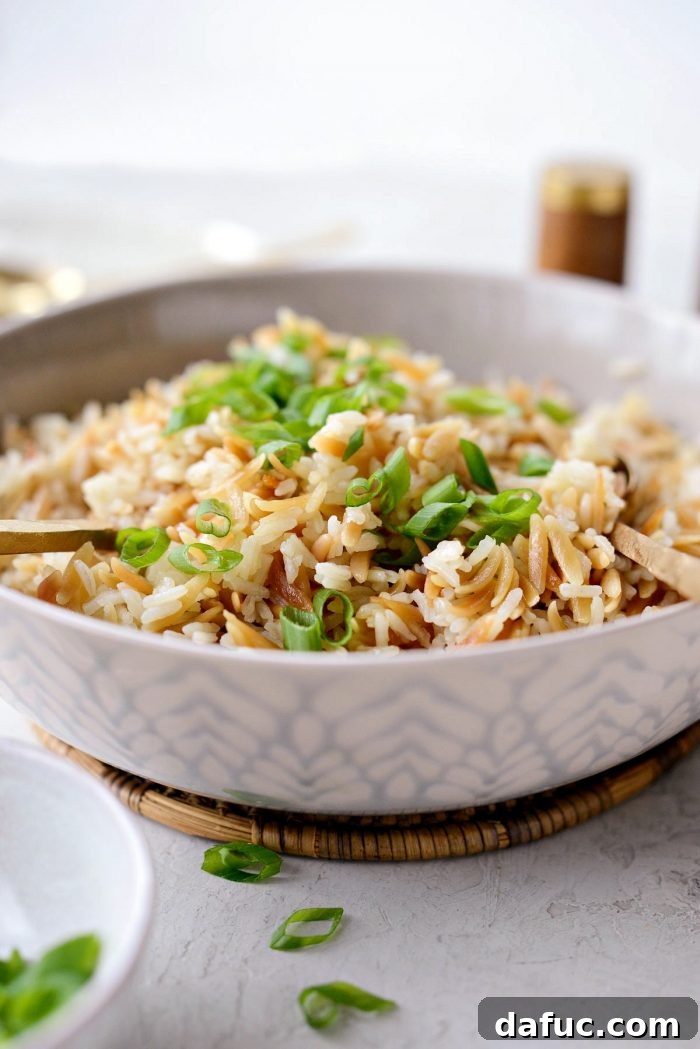
What Exactly is Rice Pilaf? A Culinary Journey Through History
Rice pilaf, often simply referred to as pilaf, is a beloved and ancient dish found in countless cuisines across the globe, with particular prominence in Middle Eastern, Central Asian, South Asian, and Mediterranean regions. At its core, pilaf involves a distinct cooking technique where rice is prepared in a seasoned broth, often with the addition of other ingredients like vegetables, meat, or, as in our recipe, pasta. The defining characteristic of pilaf is the initial step: the rice (and sometimes the pasta) is first sautéed in a fat, such as butter or oil, until it becomes lightly toasted and fragrant, before any liquid is introduced.
This crucial toasting step, often referred to as “sautéing” or “browning,” is what sets pilaf apart. It works by creating a protective barrier around each grain of rice, sealing in its starches. This process prevents the grains from clumping together during cooking, resulting in a beautifully fluffy, separate, and non-sticky texture – a hallmark of a perfectly executed pilaf. Without this initial sauté, the rice would simply absorb the liquid and become more akin to a sticky rice dish.
While the fundamental technique remains consistent, the specific ingredients, spices, and flavor profiles of pilaf can vary dramatically from one region to another. Turkish pilaf, for instance, frequently features orzo or vermicelli pasta alongside rice, often seasoned with simple salt and pepper, allowing the rich butter flavor to shine. Persian pilaf, known as “polow,” can be more elaborate, incorporating various meats, dried fruits, nuts, and aromatic spices like saffron and cardamom. Indian “pulao” is similar to pilaf but can be even richer and more intensely aromatic, often featuring whole spices and various vegetables or proteins. Our recipe, a simpler and comforting version, primarily highlights the delightful combination of tender long-grain rice and nutty, toasted orzo, making it an accessible and incredibly satisfying entry point into the wonderful and diverse world of pilaf.
Why Orzo Pasta is My Secret for the Perfect Pilaf
Traditionally, many authentic rice pilaf recipes, particularly those from the Middle East, commonly utilize thin vermicelli noodles. These are typically broken into small, approximately inch-long pieces before being toasted alongside the rice. If you have vermicelli on hand or simply prefer that classic touch, you absolutely can follow that route – it makes for a wonderful pilaf!
However, over the years, I’ve developed a particular fondness for using orzo pasta in my pilaf. Its small, grain-like shape is an ideal aesthetic and textural match for long-grain rice, blending seamlessly into the dish and creating a harmonious bite that feels both substantial and light. Beyond its visual appeal, there’s a practical advantage that truly seals the deal for me: no more dealing with tiny, broken noodle “shrapnel” scattering across the counter or getting stuck to your fingers while you’re trying to mix! Orzo provides that perfect hint of pasta, toasted to a beautiful golden perfection, without any fuss or mess. It complements the rice beautifully, adding a delightful chewiness and subtle flavor that elevates the entire dish, creating a truly irresistible and easy-to-manage side.
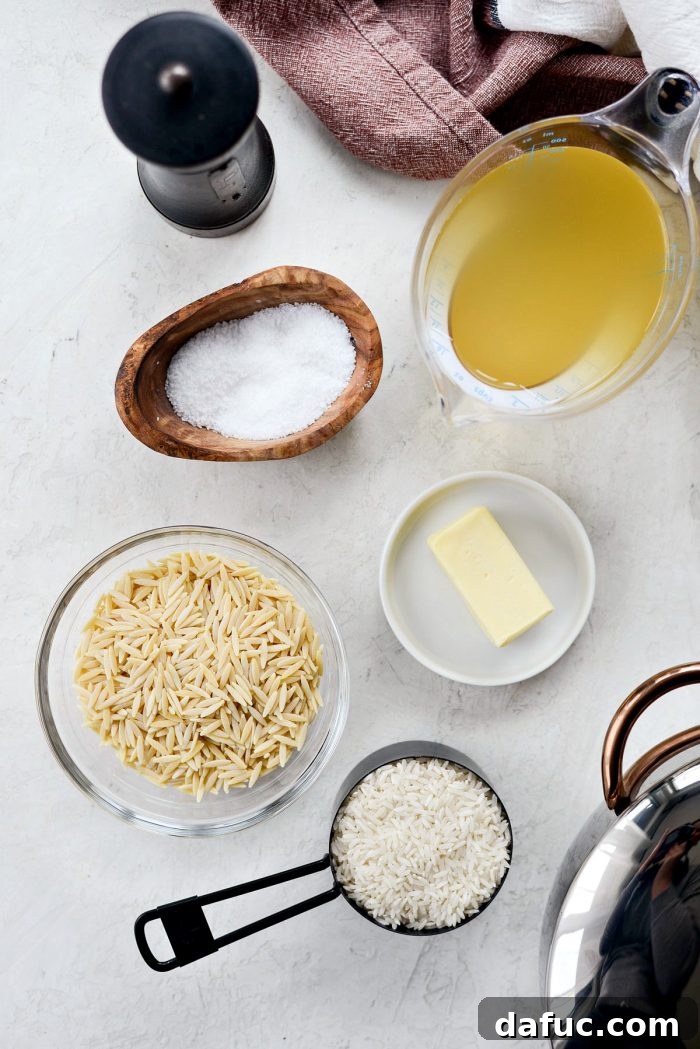
Essential Ingredients for a Simple & Flavorful Rice Pilaf:
- **Unsalted Butter:** The undeniable star ingredient! Butter is crucial for effectively toasting the orzo, imparting a rich, nutty depth, and infusing the entire pilaf with its luxurious flavor. Using unsalted butter grants you precise control over the overall saltiness of your finished dish.
- **Orzo Pasta:** These small, rice-shaped pasta pieces are perfect for adding a delightful chewiness and helping to achieve that classic pilaf texture. They toast beautifully and blend seamlessly with the rice.
- **Long Grain Rice:** Varieties such as Basmati or Jasmine rice are highly recommended. These types of rice are renowned for cooking up exceptionally fluffy and ensuring that individual grains remain separate, which is ideal for a light and tender pilaf.
- **Low-Sodium Chicken Broth:** This liquid provides an incredible depth of savory flavor and essential moisture for cooking. Opting for low-sodium broth is key, as it allows you to season the pilaf to your exact preference without risking it becoming overly salty.
- **Water:** Used in conjunction with the chicken broth, water helps to balance the richness of the broth and ensures the rice and pasta cook perfectly without becoming overly concentrated in flavor.
- **Kosher Salt:** An absolute essential for seasoning. Salt brings out and enhances all the delicious flavors of the butter, rice, and broth, tying the entire dish together.
- **Green Onions (for serving):** These vibrant, freshly sliced green onions serve as a beautiful garnish. They add a striking pop of color, a refreshing aroma, and a mild, piquant oniony bite that brightens the pilaf just before serving.
Step-by-Step Guide to Crafting Your Perfect Fluffy Rice Pilaf:
Follow these straightforward and easy-to-understand steps to create a truly irresistible rice pilaf that will impress your family and friends at any meal. Precision and patience are key to achieving that desired fluffy texture!
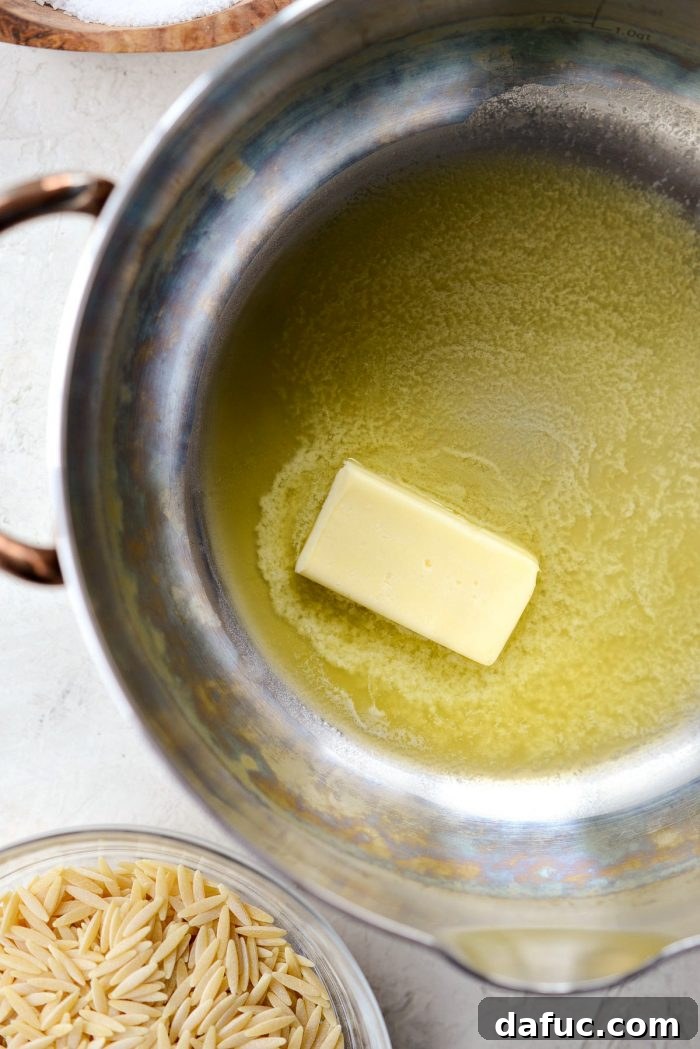
1. **Melt the Butter:** In a sturdy 2-quart saucepan or a similar-sized pot with a tight-fitting lid, begin by melting 4 tablespoons of unsalted butter over medium heat. Keep a watchful eye as the butter gently transforms, becoming hot and subtly bubbly, indicating it’s perfectly ready to welcome the pasta. This initial step is critical for building the foundational flavor of your pilaf.
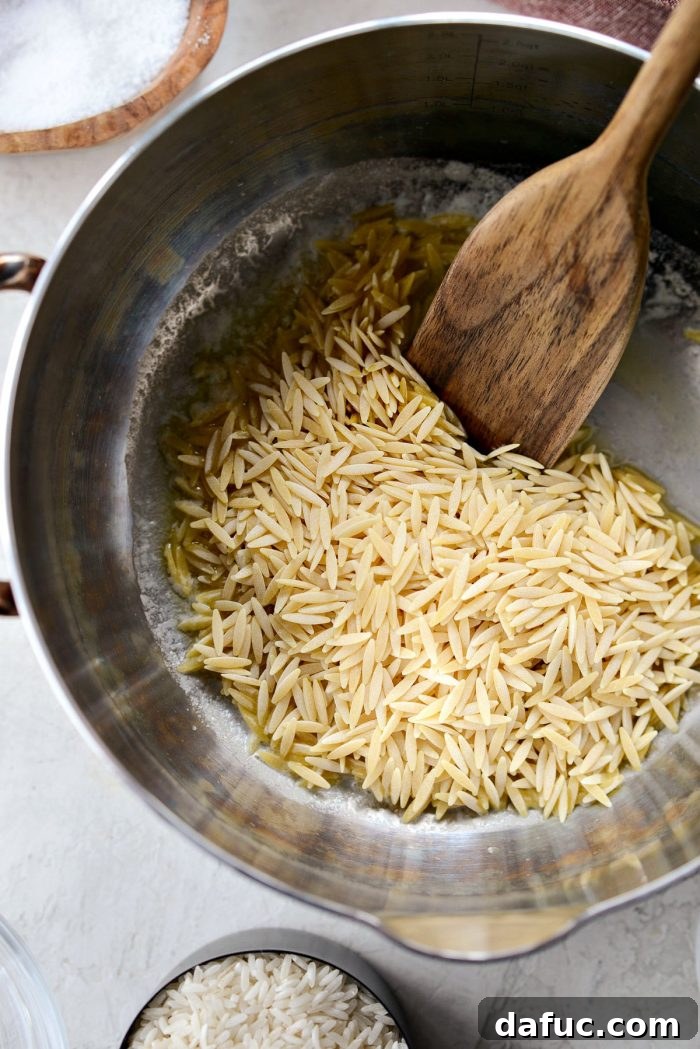
2. **Add Orzo Pasta:** Once the butter is completely melted and shimmering with warmth, carefully pour 1 cup of dry orzo pasta into the saucepan. Spread it evenly across the bottom of the pot.
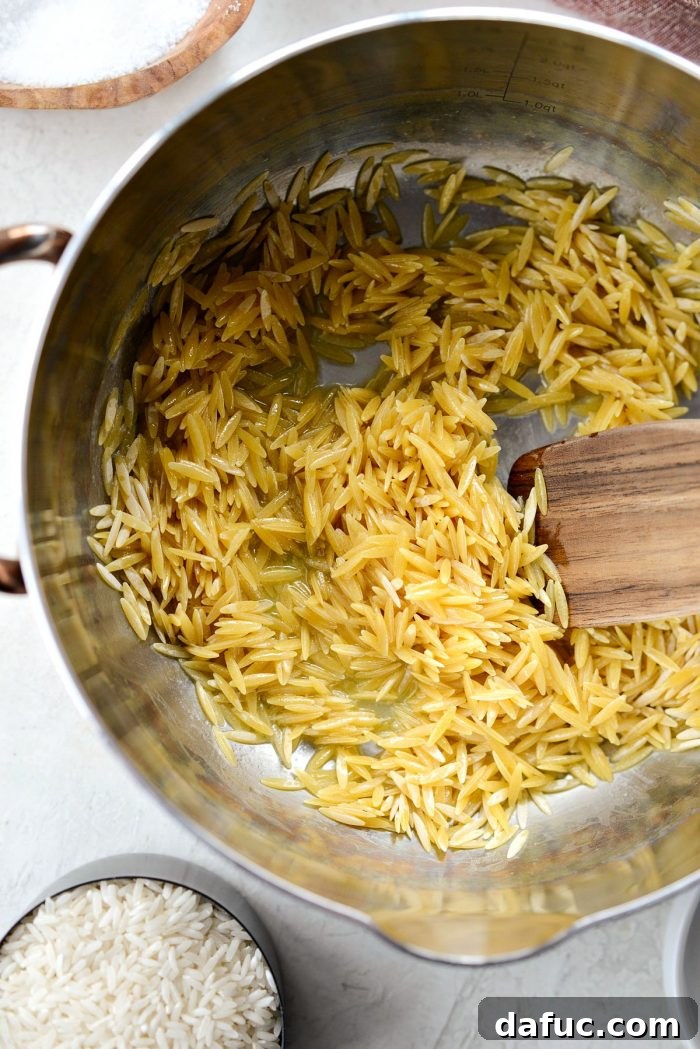
3. **Coat the Orzo:** Stir the orzo continuously with a wooden spoon or spatula, ensuring every tiny piece is thoroughly coated in the luxurious melted butter. This initial coating is key to achieving that signature nutty flavor and a beautiful, uniform golden color during the toasting process.
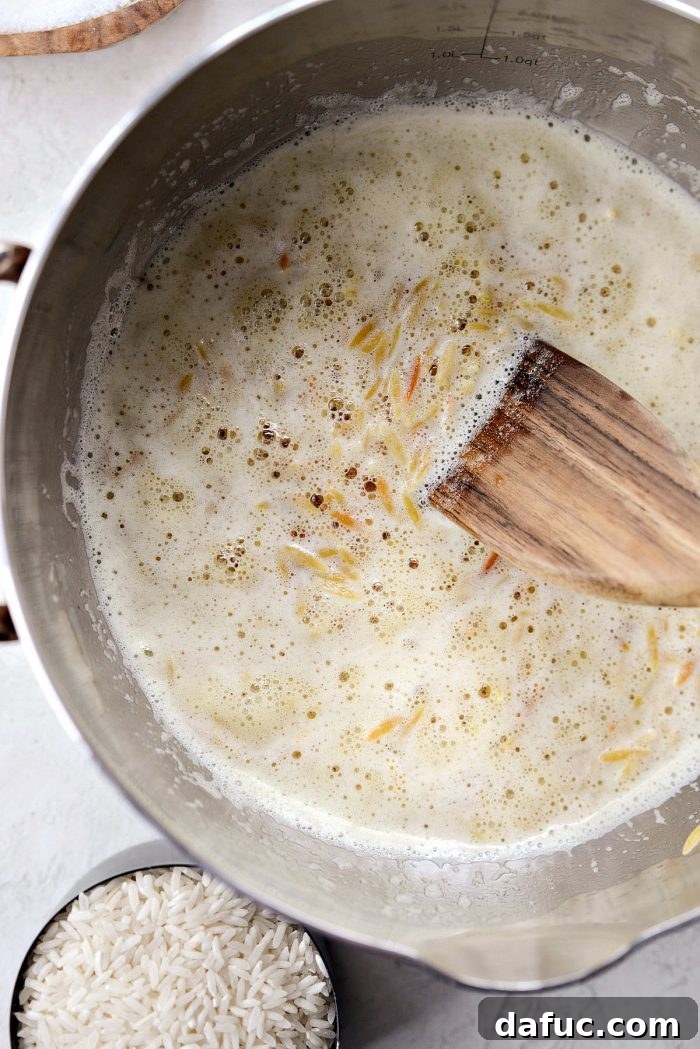
4. **Toast the Orzo:** Continue toasting the orzo over medium heat, stirring very often to prevent any uneven browning or, worse, burning. The butter will likely froth and bubble up around the pasta, which is a good sign of activity! Keep going until the orzo develops a beautiful, rich golden brown hue. This toasting step is absolutely vital for developing its deep, nutty flavor and creating a firm texture that prevents the pasta from becoming mushy in the final dish. This process typically takes approximately 5-7 minutes. Pay close attention, as it can transition from perfectly golden to burnt quite quickly!
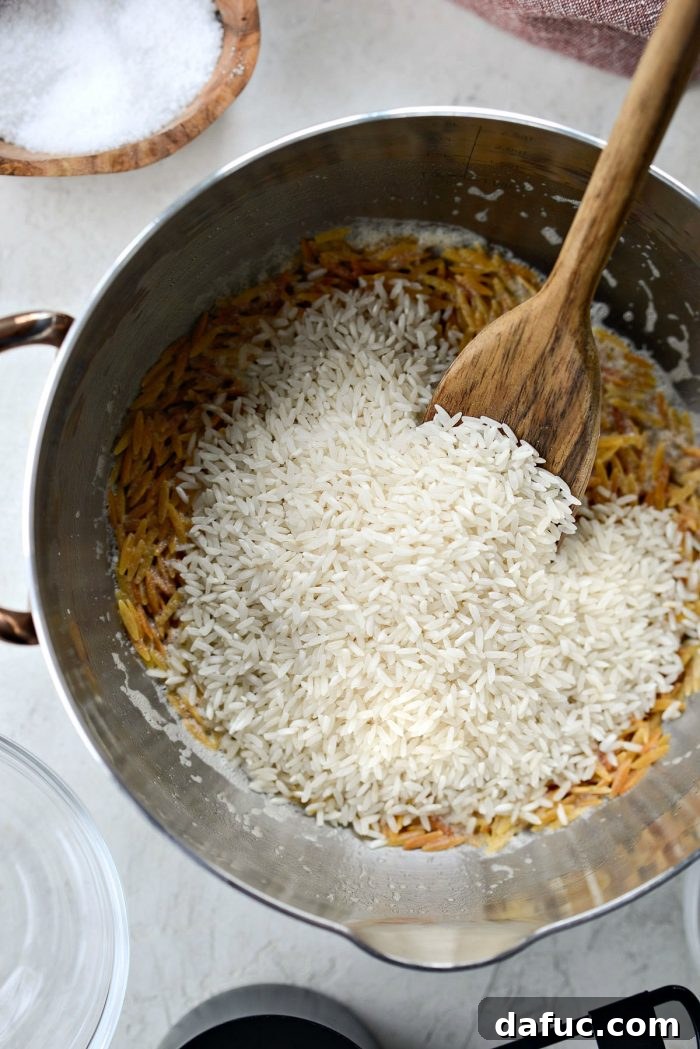
5. **Add Rice (and Optional Garlic):** For an extra layer of aromatic flavor, consider this delicious variation: once the orzo pasta has achieved its perfect golden toast, add one minced clove of garlic to the pan. Sauté the garlic for about 30 seconds, stirring constantly, until it becomes wonderfully fragrant but does not burn. This quick step adds a wonderful depth before the rice joins the party. Otherwise, once your orzo is beautifully golden, it’s time to add 1 cup of rinsed long-grain rice to the saucepan.
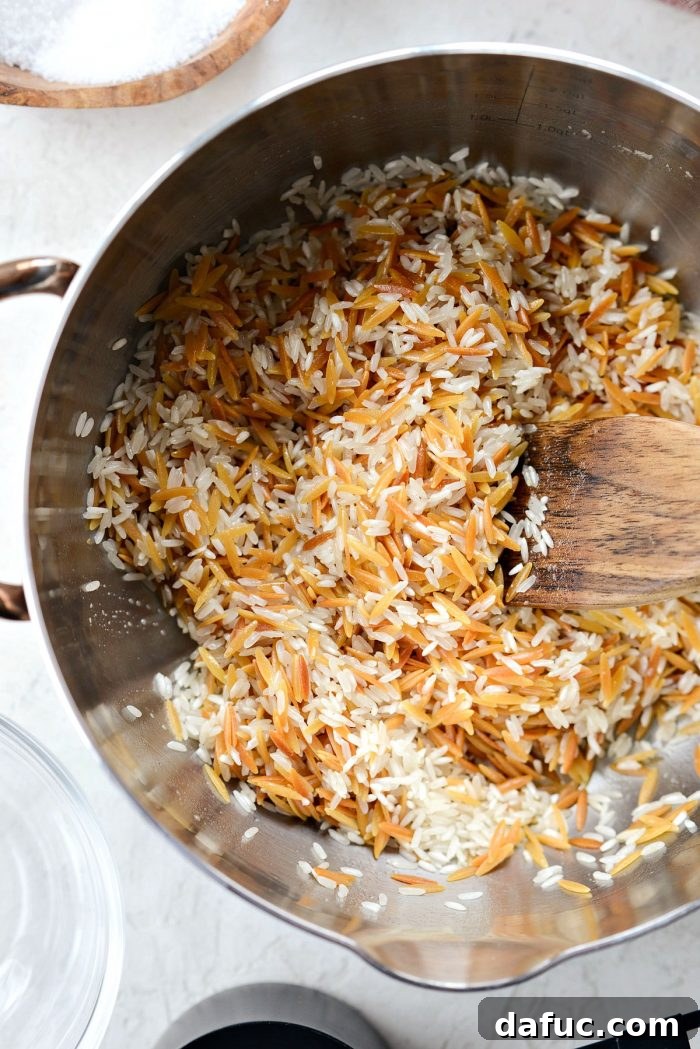
6. **Combine Ingredients:** Stir the rice thoroughly with the toasted orzo (and garlic, if used), ensuring everything is well combined and coated in any remaining butter. This light sauté of the rice helps it absorb flavors and begin its own toasting process.
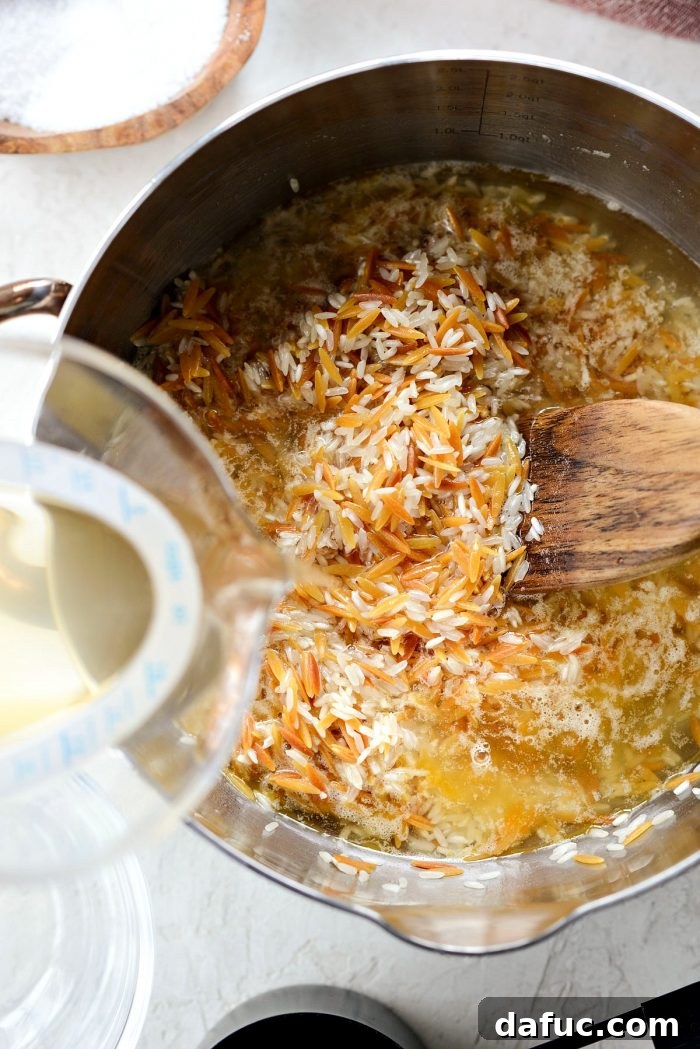
7. **Add Liquids and Seasoning:** Now, carefully pour in 1 ¾ cups of low-sodium chicken broth and ¾ cup of water. Add a generous pinch of kosher salt at this stage – remember, you can always adjust more later. Stir everything together gently, just enough to distribute the ingredients evenly in the liquid.
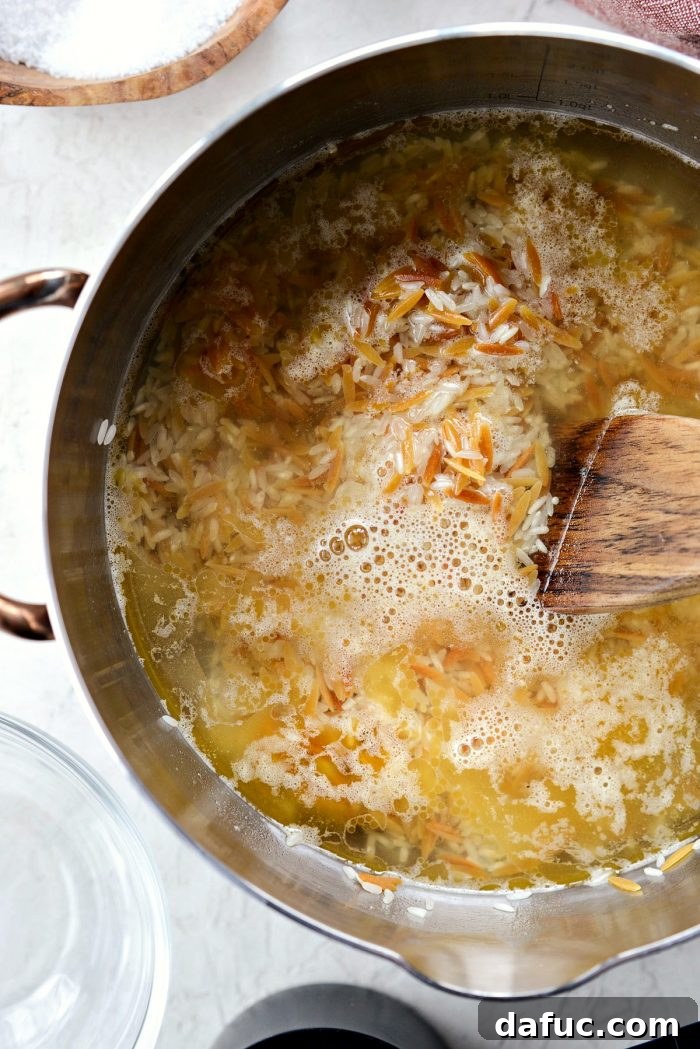
8. **Boil and Simmer:** Cover the saucepan tightly with its lid. Increase the heat to high and bring the liquid to a strong, rolling boil. As soon as it reaches a vigorous boil, immediately reduce the heat to its lowest setting. Allow the pilaf to simmer gently, still covered and undisturbed, for exactly 20 minutes. It is crucial to resist the urge to lift the lid during this simmering period – letting the steam do its work is absolutely essential for perfectly cooked, separate rice grains.
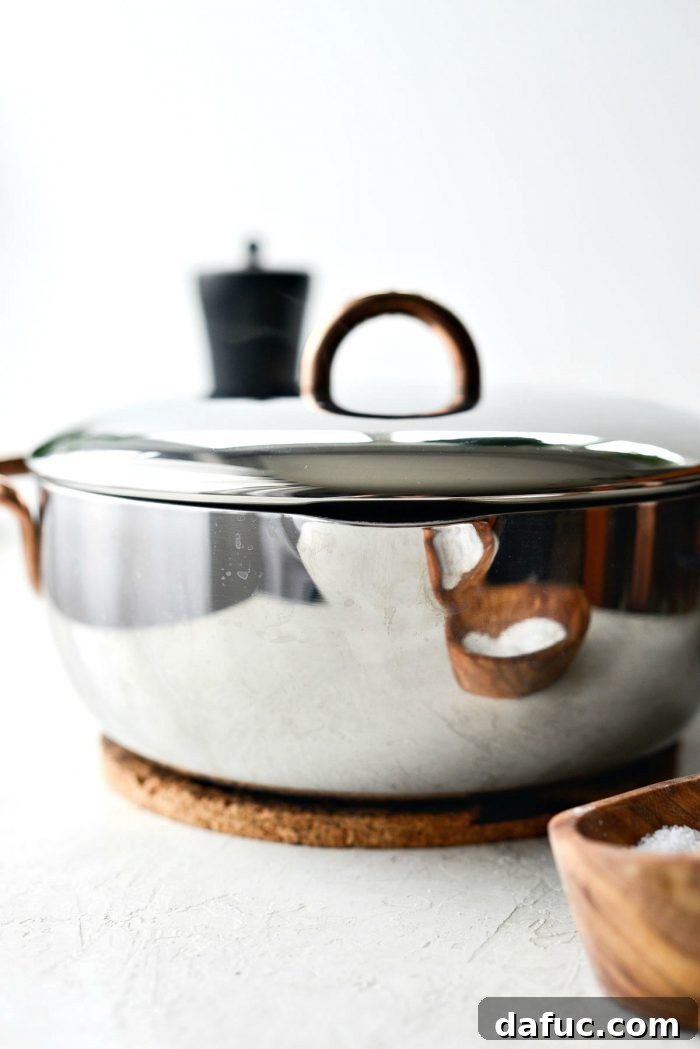
9. **Rest the Pilaf:** After the 20 minutes of simmering are complete, turn off the heat entirely and remove the saucepan from the hot burner. Crucially, keep the lid on and let the pilaf rest undisturbed for an additional 10 minutes. This essential resting period allows the steam to redistribute throughout the pot, ensuring every grain of rice and orzo is plump, fully cooked, and wonderfully tender – preventing any mushiness or dryness.
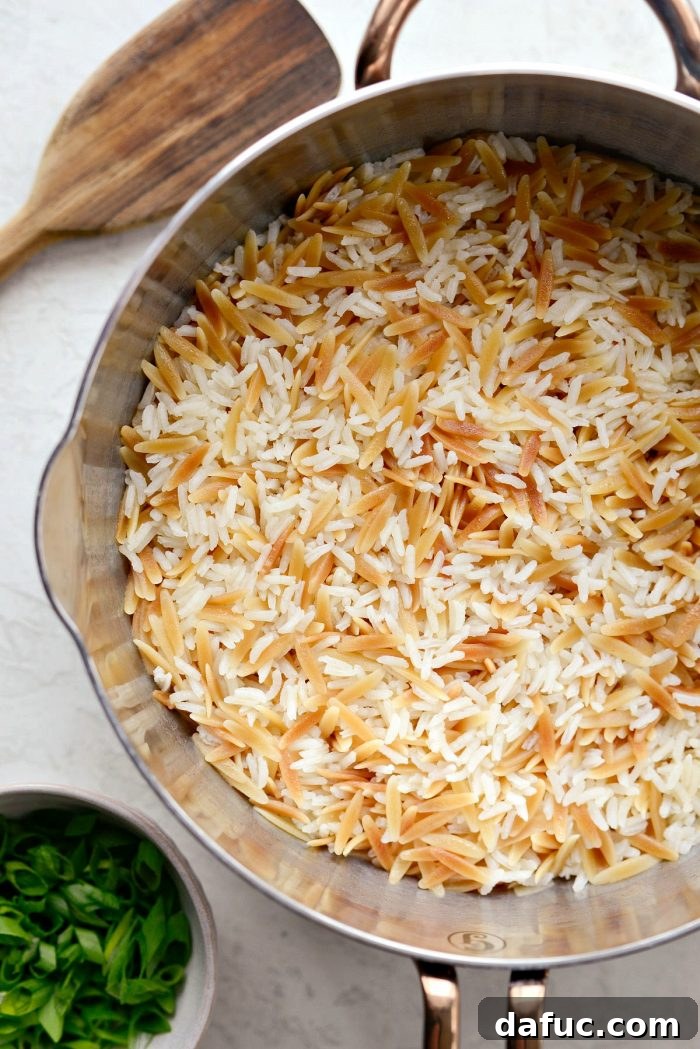
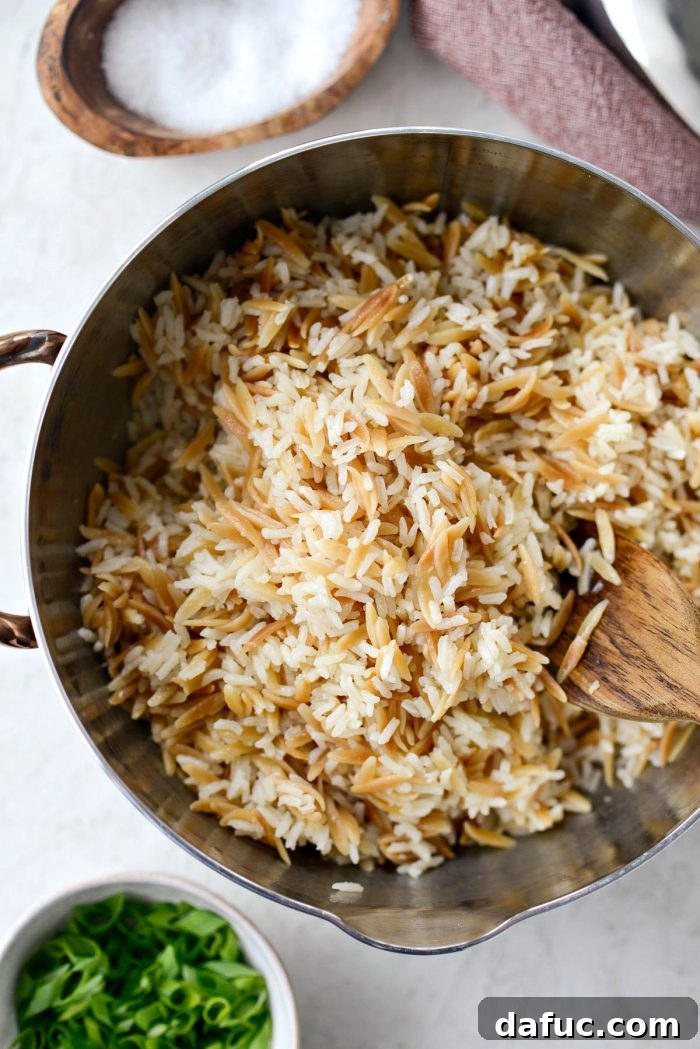
10. **Fluff and Season:** The moment you finally lift the lid after the resting period is truly a glorious one – a fragrant cloud of steam rises, revealing beautifully cooked, perfectly fluffy rice pilaf. It’s the delightful reveal you’ve been patiently waiting for! Using a fork or a spatula, gently fluff the rice pilaf to separate the grains and release any remaining steam. Taste a spoonful and adjust the seasoning with more kosher salt if desired, to perfectly suit your personal preference.
Expert Tips for Achieving the Perfect Fluffy Rice Pilaf Every Time:
- **Embrace the Toasting:** This initial step of toasting the orzo (and sometimes the rice) in butter is not merely optional; it is the absolute secret to achieving that coveted fluffy, separate grain texture. Ensure your orzo develops a beautiful, nutty golden brown hue. This prevents mushiness and adds depth of flavor.
- **Resist the Urge to Peek:** Lifting the lid during the simmering process releases vital steam, which is absolutely essential for the rice to cook evenly and thoroughly. Trust the process and keep that lid on tight!
- **Maintain a Gentle Simmer:** Once the liquid comes to a boil, immediately reduce the heat to its lowest setting. A gentle, low simmer is crucial to prevent scorching the bottom of the pot and to ensure the rice cooks slowly and perfectly, rather than boiling too rapidly.
- **The Power of Resting is Paramount:** The 10-minute resting period off the heat, with the lid still on, is non-negotiable. This critical step allows the residual steam to continue its work, further hydrating the rice and allowing the grains to become perfectly tender, plump, and separate without becoming sticky.
- **Fluff, Don’t Stir Aggressively:** After the resting period, use a fork to gently fluff the pilaf. Avoid stirring aggressively with a spoon, as this can break the delicate rice grains and release excess starch, leading to a mushy texture.
- **Always Adjust Seasoning to Taste:** Broths can vary significantly in their sodium content. Therefore, it’s always best to taste your pilaf after it’s cooked and fluffed, and then adjust with additional kosher salt if desired, ensuring it perfectly suits your palate.
Serving Suggestions & Perfect Pairings:
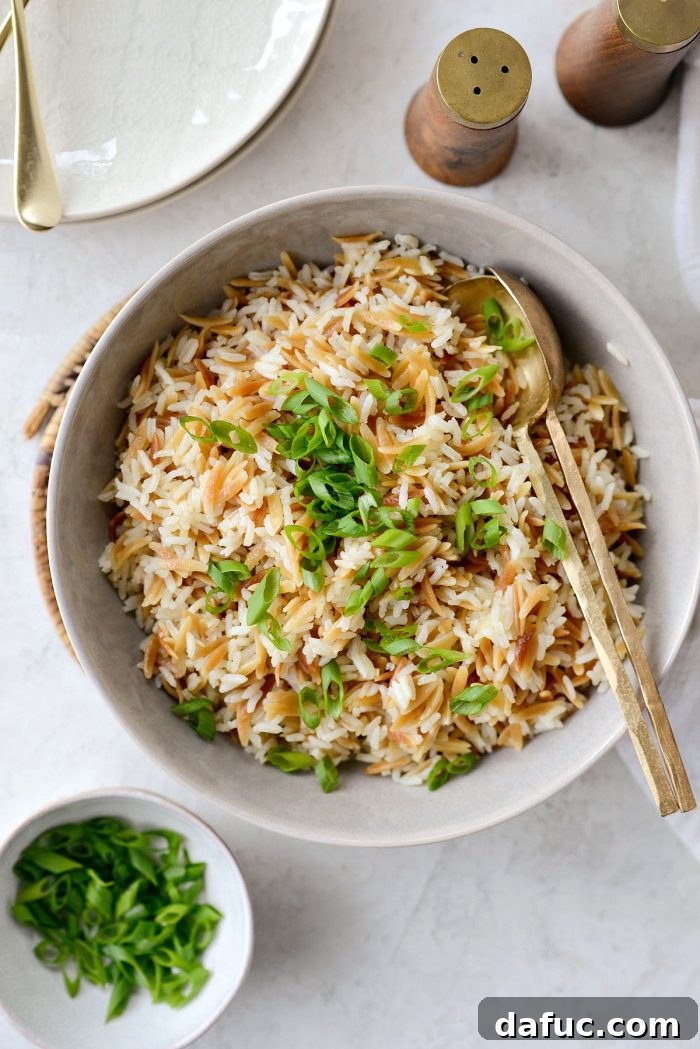
This buttery, aromatic, and wonderfully fluffy rice pilaf is incredibly versatile, making it a fantastic accompaniment to a wide array of dishes. Its subtle, savory flavor profile is designed not to overpower, but rather to enhance and complement your main course. I particularly love to garnish my rice pilaf with freshly sliced green onions. They add a vibrant pop of green color, a wonderful fresh aroma, and a mild, piquant onion flavor that beautifully cuts through the richness of the butter and broth, adding a delightful freshness to each bite.
Serve this simple, humble, yet utterly satisfying side dish with:
- **Roasted or Grilled Chicken:** This is arguably the most classic and beloved pairing! The pilaf beautifully soaks up any delicious pan juices from the chicken.
- **Pan-Seared or Baked Fish:** A light and flavorful complement to delicate flaky white fish like cod or tilapia, or richer fish such as salmon.
- **Lamb or Beef Dishes:** A hearty and comforting addition to savory stews, flavorful kebabs, or succulent roasted meats.
- **Vegetarian Mains:** The pilaf can stand deliciously on its own as a light meal, or alongside roasted vegetables, hearty lentil dishes, or various bean-based stews.
- **Alongside a Fresh Green Salad:** For a perfectly balanced and complete meal that feels both satisfying and refreshing.
This easy rice pilaf recipe truly elevates any meal, transforming a simple weeknight dinner into a comforting, delightful, and memorable culinary experience.
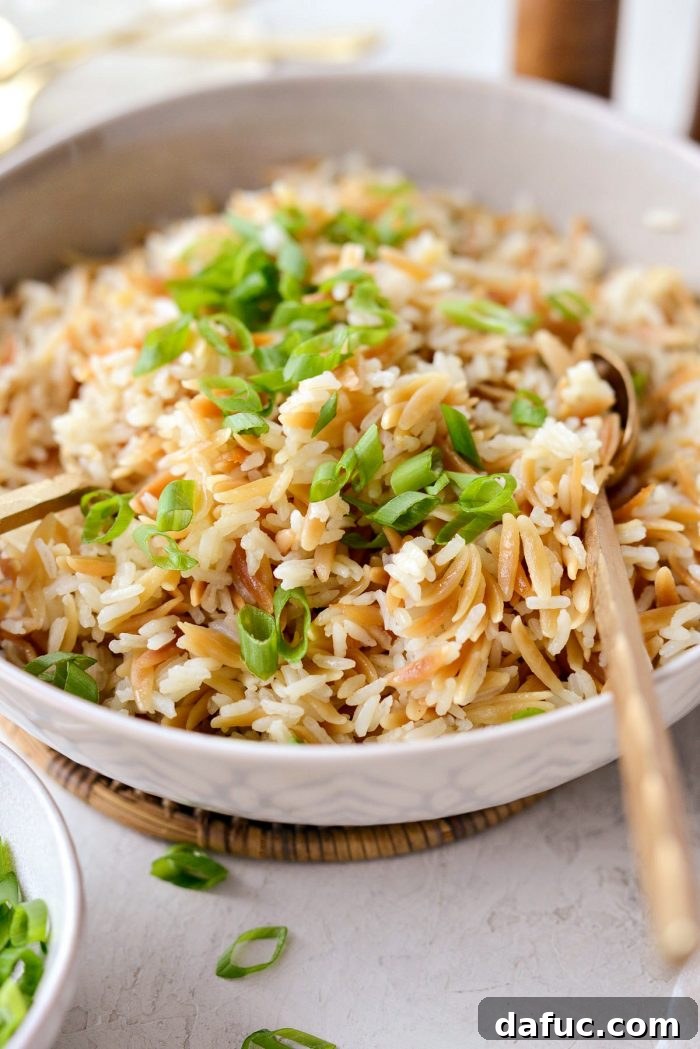
Enjoy your homemade Rice Pilaf! We sincerely hope you love making and sharing this delightful recipe with your loved ones. If you give it a try, please don’t hesitate to let us know how it turned out! We’d love to see your creations – snap a photo and tag us on Twitter or Instagram!
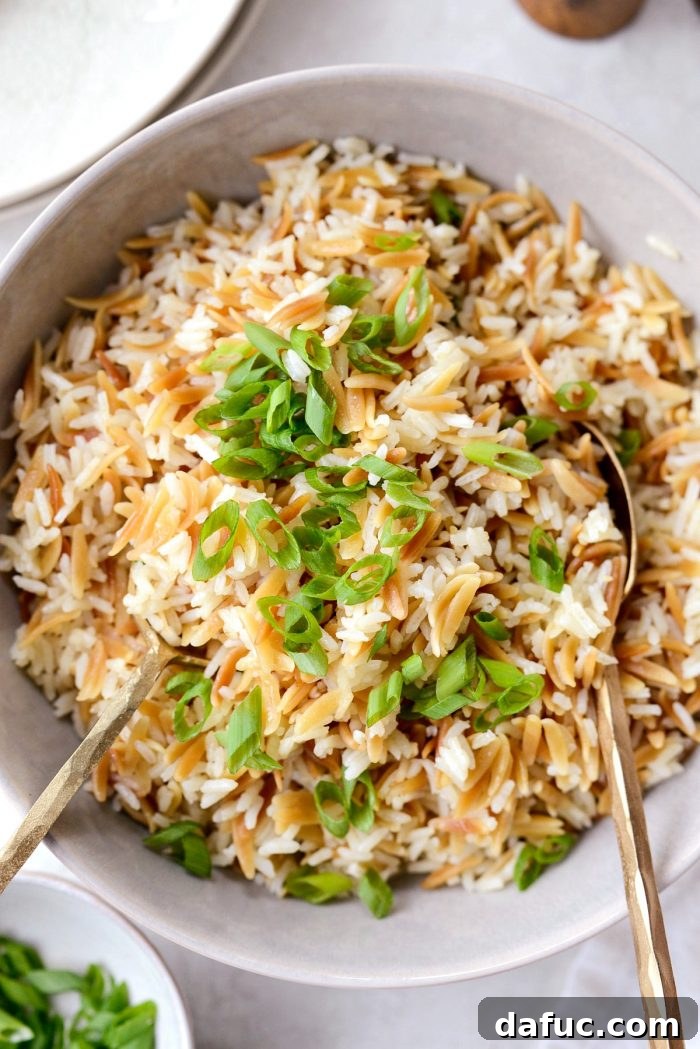

Print Recipe
Pin Recipe
Leave a Review »
8
servings
Simple Rice Pilaf
10
20
30
Ingredients
- 4 tablespoons unsalted butter
- 1 cup orzo pasta
- 1 cup long grain rice
- 1¾ cups low-sodium chicken broth
- 3/4 cups water
- kosher salt
- sliced green onions, for serving
Instructions
-
In a 2-quart saucepan, melt the butter over medium heat until hot and bubbly.
-
Pour in the orzo pasta, toss to coat in the butter and toast until lightly golden in color. Stir often to avoid burning, about 5-7 minutes.
-
Add the cup of long grain rice and stir to combine well with the toasted orzo.
-
Pour in the chicken broth and water with a generous pinch of kosher salt. Stir gently, cover tightly, and bring to a boil over high heat.
-
Once boiling, immediately reduce heat to low and simmer (covered, without lifting the lid) for 20 minutes.
-
After 20 minutes, remove the pan off the heat and let it sit (still covered) for 10 additional minutes. Do not remove the lid during this time.
-
Remove the lid, then gently fluff the pilaf with a fork. Taste and season with more salt if desired, to your preference.
-
Serve immediately, garnished with freshly sliced green onions for a pop of color and fresh flavor.
Notes
Carbohydrates: 33g,
Protein: 5g,
Fat: 6g,
Saturated Fat: 4g,
Polyunsaturated Fat: 1g,
Monounsaturated Fat: 2g,
Trans Fat: 1g,
Cholesterol: 15mg,
Sodium: 20mg,
Potassium: 114mg,
Fiber: 1g,
Sugar: 1g,
Vitamin A: 175IU,
Calcium: 15mg,
Iron: 1mg
Laurie McNamara
Side Dishes
Middle Eastern
Frequently Asked Questions About Rice Pilaf
- What is the key difference between pilaf and regular boiled rice?
- The primary distinction lies in the cooking technique. For pilaf, the rice (and often pasta) undergoes an initial sauté in fat, like butter or oil, until it’s lightly toasted before any liquid is added. This crucial step prevents the grains from clumping together, resulting in a beautifully fluffy, separate-grain texture. Regular boiled rice, conversely, is typically added directly to boiling water or broth without this prior sauté.
- Can I prepare rice pilaf in advance?
- Absolutely! Rice pilaf is an excellent make-ahead dish. You can prepare it 1-2 days in advance. Once cooked and cooled, store it in an airtight container in the refrigerator. When ready to serve, reheat gently in a saucepan over low heat with a splash of extra broth or water to help rehydrate and fluff, or simply warm it in the microwave.
- Which type of rice is best for making pilaf?
- For the best results in rice pilaf, long-grain rice varieties such as Basmati or Jasmine are highly recommended. These types of rice cook up exceptionally fluffy and tend to keep their individual grains separate, which is essential for achieving the desired light and tender pilaf texture. Medium or short-grain rice varieties, being starchier, are more prone to becoming clumpy and sticky.
- Is it possible to make a vegetarian or vegan version of this pilaf?
- Yes, certainly! For a delightful vegetarian pilaf, simply substitute vegetable broth for the chicken broth. To make it entirely vegan, ensure you use a plant-based butter alternative or, for a different flavor profile, use olive oil instead of butter for sautéing the orzo.
- Why did my rice pilaf turn out mushy or sticky?
- Mushy or sticky pilaf is a common issue often attributed to a few factors: using too much liquid, cooking the rice at too high a heat, or repeatedly lifting the lid during the simmering process, which allows steam to escape. To prevent this, ensure precise liquid measurements, maintain a consistent low simmer, and allow the pilaf to rest undisturbed with the lid on after cooking.
- How can I enhance the flavor of my rice pilaf even further?
- There are several wonderful ways to boost the flavor! Beyond the optional minced garlic, you could add a bay leaf to the pot during simmering for a subtle herbal note, or a pinch of dried herbs like thyme or oregano. For a brighter finish, a squeeze of fresh lemon juice and a scattering of fresh chopped parsley at the very end can work wonders. Sautéing finely diced yellow onions or shallots with the orzo pasta also creates a fantastic aromatic base.