
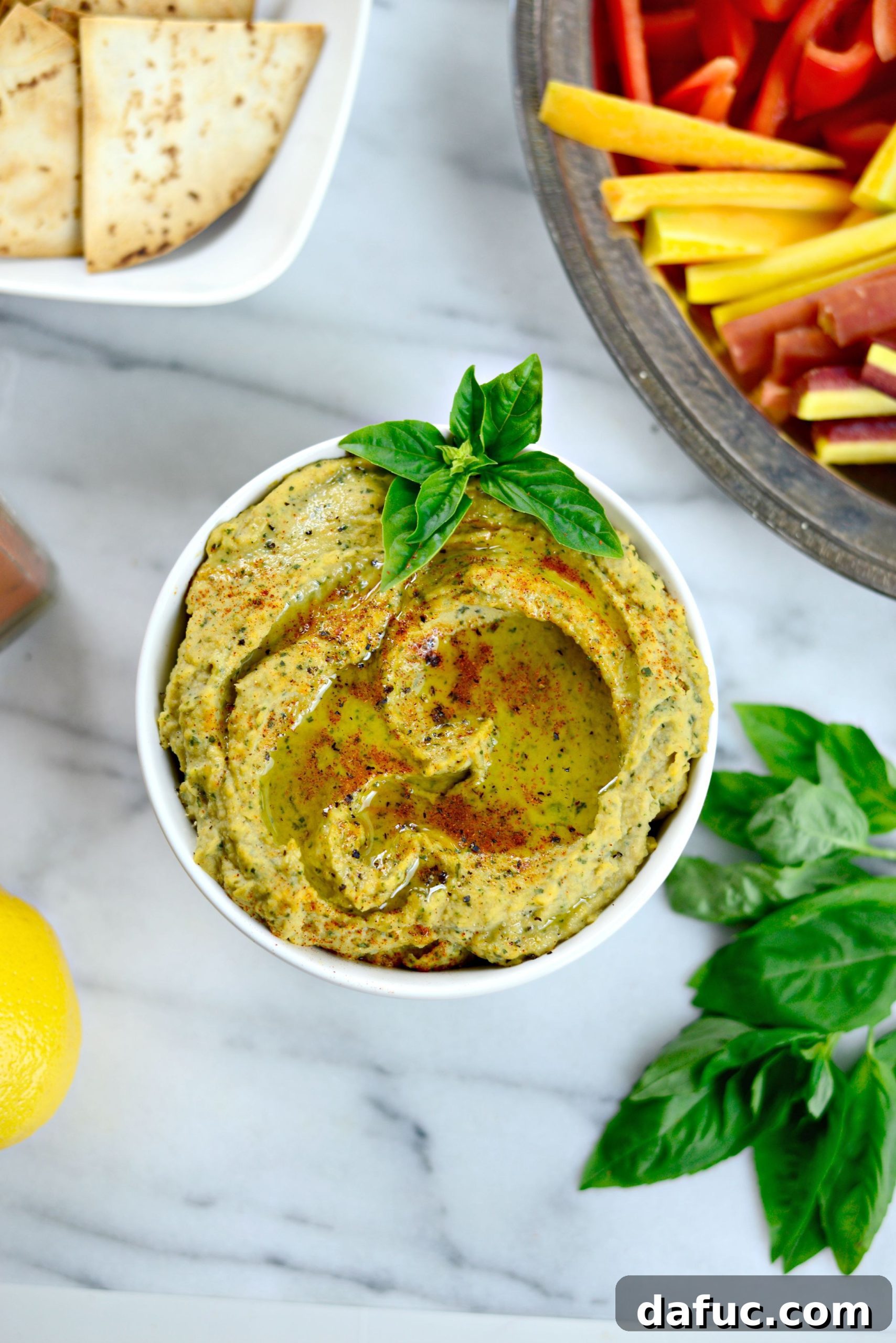
The Ultimate Homemade Lemon Basil Hummus: A Zesty & Aromatic Delight
Prepare to elevate your snacking experience with this vibrant Lemon Basil Hummus. Bursting with the fresh, aromatic essence of basil and the bright tang of lemon, this silky-smooth dip is a testament to how simple ingredients, expertly combined, can create something truly extraordinary. Fresh lemon juice, fragrant basil leaves, and a thoughtful blend of spices are harmoniously whipped with garbanzo beans, resulting in a healthy, irresistible spread that’s perfect for any occasion.
For those who frequent this corner of the internet, it’s no secret that my culinary adventures often revolve around a few beloved staples. And just as I’ve shared countless variations of grilled cheese, my collection of hummus recipes continues to grow. What can I say? I’m undeniably a fan of this versatile, healthful dip.
Harvesting the Flavor: The Magic of Fresh Basil
As the warmer months gracefully transition, many of us find ourselves bidding farewell to our bountiful gardens. I’ve already had my annual heart-to-heart with my cherry tomato plant, and this weekend, it’s my beautiful, lush basil plants’ turn to contribute their final, glorious harvest. While the thought of winter approaching brings a touch of melancholy, it also sparks creativity in preserving these summer flavors. My plans for the remaining basil are ambitious: a large batch of homemade pesto to freeze for future meals, crispy baked basil chips for a unique snack, and I’m even experimenting with drying and crushing the leaves to infuse soups and sauces with their distinctive aroma throughout the colder months. I promise to keep you updated on my drying endeavors!
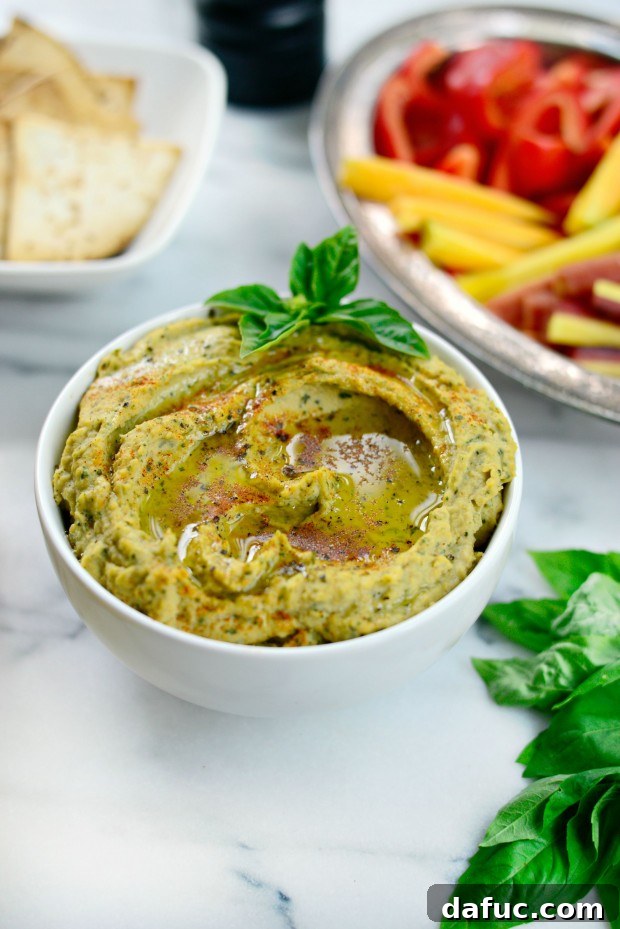
However, beyond these traditional preservation methods, there’s another absolutely fantastic way to utilize that abundance of fresh basil: by incorporating it into a batch of homemade hummus. This recipe offers a brilliant and vibrant twist on conventional hummus, leveraging the peppery-sweet notes of fresh basil, a generous squeeze of bright lemon juice, and a carefully selected medley of spices. Alongside these star ingredients, you’ll find the usual suspects that form the backbone of any great hummus: creamy chickpeas (also known as garbanzo beans), rich tahini, and pungent garlic. All these elements come together in perfect harmony, creating a dip that’s truly remarkable, ideal for dipping crunchy pita chips and fresh vegetables, or for spreading generously on sandwiches and wraps.
The Anatomy of Perfect Hummus: Key Ingredients Explained
Crafting the perfect hummus begins with understanding the role each ingredient plays. This Lemon Basil Hummus recipe highlights the freshest flavors, making every bite a delight.
Chickpeas (Garbanzo Beans)
Chickpeas are the heart and soul of hummus. While dried chickpeas, soaked and cooked from scratch, can yield an incredibly creamy texture, canned chickpeas offer a convenient and equally delicious alternative for a quick recipe. Always opt for good quality canned chickpeas. A crucial step often overlooked is reserving the liquid from the can, known as aquafaba. This magical liquid acts as a natural emulsifier and helps achieve that desired smooth consistency without adding extra water, which can dilute the flavor.
Tahini
Tahini, a paste made from ground sesame seeds, is indispensable for authentic hummus. It contributes a distinctive nutty flavor and a luxurious, velvety texture that can’t be replicated. When choosing tahini, look for brands with a smooth consistency and a mild, not bitter, taste. A good quality tahini will make a noticeable difference in the final product.
Fresh Lemon Juice
The “lemon” in Lemon Basil Hummus is not just for show; it’s essential. Freshly squeezed lemon juice provides a crucial acidity that brightens all the flavors, cutting through the richness of the tahini and chickpeas. It’s important to use fresh lemons – bottled lemon juice simply won’t deliver the same vibrant zest. To get the most juice from your lemon, roll it firmly on a counter before slicing and squeezing.
Fresh Basil
Basil is the aromatic star of this particular hummus. Its slightly sweet, peppery, and herbaceous notes infuse the dip with a unique freshness that distinguishes it from traditional recipes. Always use fresh basil leaves for the best flavor and vibrant green color. Rinse them thoroughly and pat them dry before use to ensure no excess water dilutes your hummus.
Garlic & Spices
Garlic provides a pungent depth that is fundamental to hummus. Here, a single smashed and peeled clove offers a subtle warmth without overpowering the delicate basil and lemon. The spices – sea salt, freshly ground black pepper, paprika, and onion powder – are carefully chosen to enhance the overall flavor profile, adding savory layers and a hint of smoky sweetness (from the paprika). Using high-quality, fresh spices ensures the most aromatic and flavorful results.
Olive Oil
A good quality extra virgin olive oil not only contributes to the hummus’s smooth texture but also adds a fruity, slightly peppery richness. It’s drizzled in slowly during blending to emulsify and finish the dip, and a final swirl on top before serving adds both flavor and an appealing sheen.
Step-by-Step Guide to Silky Smooth Lemon Basil Hummus
Making this incredible hummus is simpler than you might think. Follow these easy steps to achieve a perfectly smooth and flavorful dip.
Preparation is Key
Start by thoroughly draining two 15-ounce cans of chickpeas (garbanzo beans). I find my trusty strainer invaluable for this task. Set it over a bowl to collect the liquid from the cans, as you’ll want to reserve at least 1/2 to 1 full cup of this valuable chickpea liquid. This liquid, often called aquafaba, is key to achieving that smooth, creamy texture. Next, measure out one full cup of fresh basil leaves. Be sure they are thoroughly rinsed and gently patted dry to remove any excess moisture.
Building the Flavor Base
Now, it’s time to assemble your ingredients in the food processor. Begin by adding the rinsed and dried basil leaves and the peeled clove of garlic to the bowl of your food processor, fitted with the blade attachment. These aromatics will create the vibrant foundation of your hummus.
Next, add the drained chickpeas to the food processor. Following that, spoon in 1/4 cup of tahini. Tahini is crucial for that characteristic creamy texture and nutty depth of flavor.
Adding the Zest and Spice
Now for the star citrus! Slice a large, juicy lemon in half. I’ve found that choosing softer lemons usually means they’re juicier, yielding more of that essential bright flavor. Position the same strainer you used for the beans over your food processor’s work bowl, and squeeze both halves of the lemon directly into the processor. The strainer will neatly catch any seeds, allowing you to extract every last drop of juice with both hands for maximum yield.
Next, add the sea salt, freshly ground black pepper, paprika, and onion powder to the mixture in the food processor. These spices will layer in the savory and aromatic notes that complement the lemon and basil so beautifully.
Blending to Perfection
Secure the lid on your food processor and pulse the ingredients until they are coarsely chopped and beginning to come together. This initial pulsing helps to break down the basil and garlic before adding the liquid components.
With the food processor running, slowly drizzle in the olive oil. This slow addition allows the oil to emulsify with the other ingredients, contributing to a smooth and creamy texture. At this point, the mixture will likely be quite thick and possibly a bit lumpy. This is perfectly normal and exactly what you want before the final adjustment.
Achieving the Perfect Consistency
To reach that desired silky-smooth consistency, add about 1/2 cup of the reserved chickpea liquid (aquafaba) to the hummus. Continue to process until the hummus is perfectly smooth. The beauty of homemade hummus is its adaptability: feel free to add more of the reserved liquid for a thinner, creamier hummus, or less if you prefer a thicker, more rustic texture. Scrape down the sides of the bowl as needed to ensure all ingredients are thoroughly incorporated. Give it a few final pulses to confirm everything is beautifully smooth, then it’s ready to serve!
The Picky Eater’s Seal of Approval
You might be wondering if basil in hummus could be a bit… unusual. Let me share a little story about my daughter, Haileigh, affectionately known as “The Hummus Hater.” At fourteen, Haileigh is a fantastic eater who loves salads, fruits, and vegetables, but for some reason, hummus has always been her nemesis. Perhaps it’s a texture thing, I’m not entirely sure. However, it’s a rule in our house to always try new things, and from personal experience (goat cheese, anyone?), I know sometimes it takes more than one try to develop a taste for something.
So, you can imagine my surprise when SHE LOVED THIS HUMMUS! I am not exaggerating! Her exact words were, and I quote, “This tastes like hummus meets pesto.” (She’s a big fan of pesto, so this was high praise.) She then followed up with, “This is really good, Mom.” It was a triumphant moment! I’d successfully converted yet another hummus skeptic, one delicious recipe at a time. Her approval truly speaks volumes for this unique flavor combination.
Serving Suggestions: More Than Just a Dip
This Lemon Basil Hummus is incredibly versatile and can be enjoyed in numerous ways:
- Classic Dip: Serve it alongside an assortment of crisp, fresh vegetables like cucumber slices, carrot sticks, bell pepper strips, or cherry tomatoes. It’s also fantastic with toasted pita bread, warm naan shards, or your favorite crackers.
- Sandwich & Wrap Spread: Ditch the mayonnaise and spread a generous layer of this hummus on your sandwiches, burgers, or wraps for a burst of flavor and added creaminess. It pairs wonderfully with grilled chicken, roasted vegetables, or falafel.
- Layered Dip Base: Use it as the foundational layer for an impressive 7-layer hummus dip, adding your favorite toppings like diced tomatoes, cucumbers, olives, feta, and fresh herbs.
- Salads & Grain Bowls: Dollop a spoonful onto your salads or grain bowls when you desire a touch of rich creaminess and an extra layer of flavor. It complements both leafy greens and hearty grains beautifully.
- Salad Dressings: Whisk it into your homemade vinaigrettes or creamy dressings for an herbaceous, lemony kick that adds body and complexity.
Love hummus? Discover even more exciting and delicious hummus recipes here to expand your repertoire!
Why High-Quality Spices Make a Difference
This recipe was crafted with a focus on fresh, vibrant flavors, and the quality of your ingredients truly shines through. While I’ve developed this recipe specifically for my friends at Simply Organic, it’s worth noting that I consistently choose their spices in all my cooking. This isn’t a paid endorsement; it’s simply a testament to the superior aroma, flavor, and freshness their products bring to every dish. Using high-quality spices ensures that every spoonful of this lemon basil hummus is as delicious and aromatic as it should be. So, confidently grab your favorite high-quality spices, especially the paprika and onion powder, and prepare to be amazed by the depth of flavor they contribute to this delightful dip.
Tips for Success & Troubleshooting
Achieving the Perfect Smoothness
For an ultra-smooth hummus, ensure your food processor is powerful enough. Some people also prefer to remove the skins from the chickpeas, which can be tedious but results in an even silkier texture. If your hummus isn’t as smooth as you’d like, continue processing and gradually add more reserved chickpea liquid until it reaches your desired consistency.
Adjusting Consistency
If your hummus is too thick, simply add more reserved chickpea liquid, one tablespoon at a time, while the food processor is running, until it thins out to your liking. If it’s too thin, you can try adding a few more chickpeas, or a tablespoon more tahini, and re-blending. Sometimes, simply letting it chill in the fridge for an hour can also firm it up slightly.
Flavor Adjustments
Taste your hummus as you go! If it needs more zing, add a little extra lemon juice. If it feels bland, a pinch more salt or a dash more pepper can make a huge difference. For a more garlicky kick, you can add another small clove of garlic, but be mindful not to overpower the basil. Don’t be afraid to experiment to suit your palate.
Storage & Make-Ahead Tips
Homemade Lemon Basil Hummus is fantastic for meal prep. Store it in an airtight container in the refrigerator for up to 5-7 days. The flavors tend to meld and deepen over time, making it even more delicious the next day. Before serving chilled hummus, you might want to give it a quick stir and add an extra drizzle of olive oil or a sprinkle of fresh basil for garnish to refresh its appearance and flavor.
Enjoy! I truly hope you give this lemon basil hummus recipe a try this weekend. If you do, please let me know! Snap a photo and tag me on Twitter or Instagram!
Lemon Basil Hummus Recipe
In this lemon basil hummus, fresh lemon juice, basil leaves and an array of spices are blended with garbanzo beans for a silky and tasty hummus.
Prep Time: 10 mins
Total Time: 10 mins
Yield: 16 servings
Ingredients
- 2 (15 ounce) cans chickpeas, drained (reserve the bean liquid)
- 1 cup fresh basil leaves, stems removed
- 2 cloves garlic, smashed and peeled
- 1/4 cup tahini
- 1½ teaspoons salt
- 1 teaspoon paprika, plus more for garnish
- 1/2 teaspoon onion powder
- 1/4 teaspoon freshly ground black pepper, plus more for garnish
- 1 lemon, juiced
- 1/2 cup olive oil, plus more for garnish
Instructions
- In your food processor, fitted with the blade attachment, combine the basil, garlic, tahini, salt, paprika, onion powder, and black pepper.
- Squeeze in the lemon juice and add the olive oil.
- Secure the lid and process until smooth. Add 1/4 cup or more of the reserved bean liquid to reach your desired consistency.
- Spoon into a serving dish and create swoops with the back of your spoon. Drizzle with a little extra olive oil and garnish with additional paprika and black pepper.
- Serve immediately with cut vegetables and/or toasted pita wedges.
Nutrition Information
Serving: 2 tablespoons, Calories: 85kcal, Carbohydrates: 2g, Protein: 1g, Fat: 9g, Saturated Fat: 1g, Polyunsaturated Fat: 2g, Monounsaturated Fat: 6g, Sodium: 220mg, Potassium: 35mg, Fiber: 1g, Sugar: 1g, Vitamin A: 93IU, Vitamin C: 5mg, Calcium: 11mg, Iron: 1mg
Author: Laurie McNamara
Course: Appetizers & Snacks
Cuisine: Mediterranean