
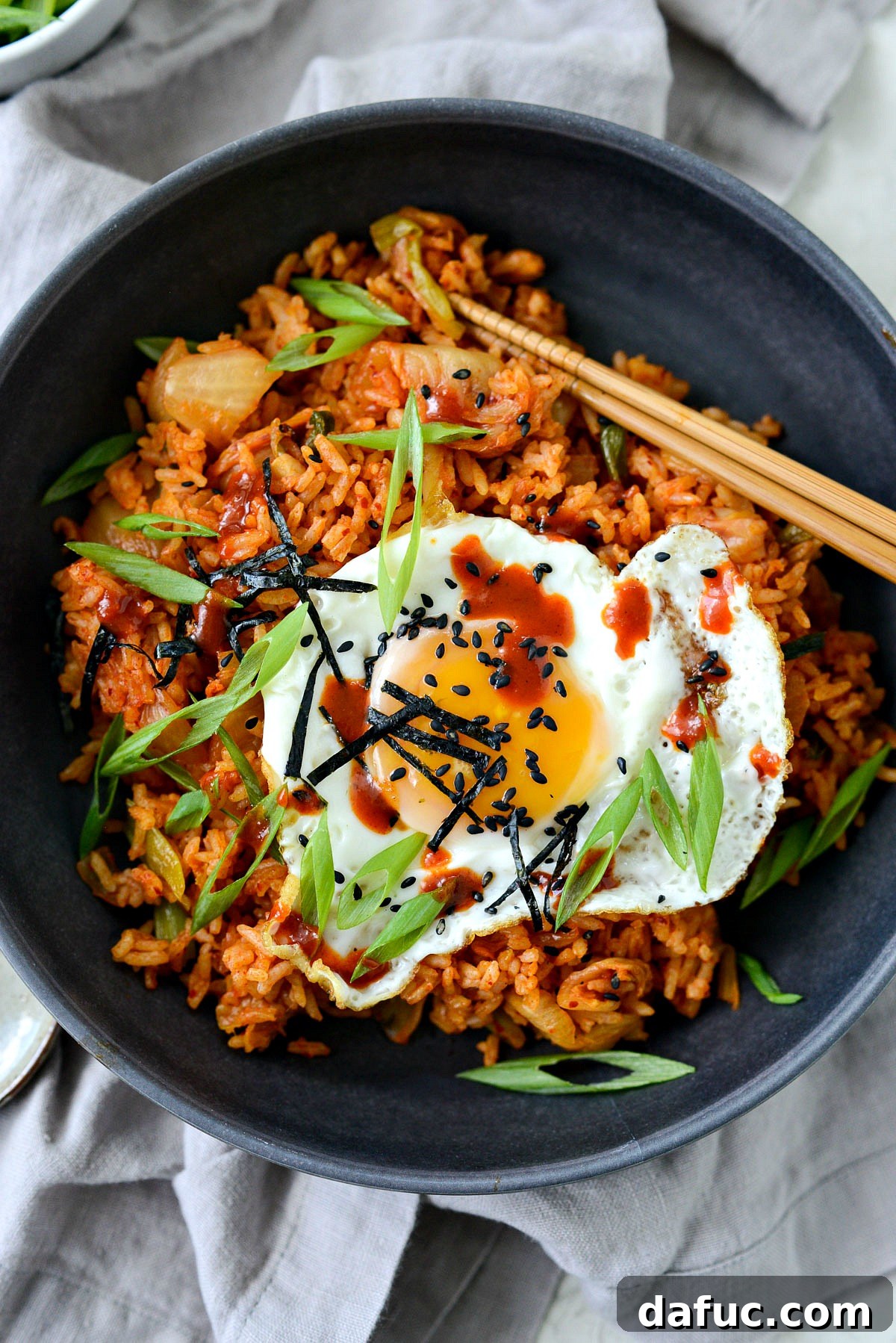
The Ultimate Kimchi Fried Rice Recipe: Spicy, Flavorful & Easy Korean Delight
Prepare your taste buds for an unforgettable culinary journey with our ultimate Kimchi Fried Rice recipe. This beloved Korean dish is a symphony of flavors, combining the fermented tang of kimchi with the smoky depth of gochujang, aromatic ginger and garlic, and perfectly textured day-old rice. It’s incredibly quick to whip up, intensely flavorful, and undeniably addictive – truly a meal that transcends simple fried rice and becomes a memorable dining experience.
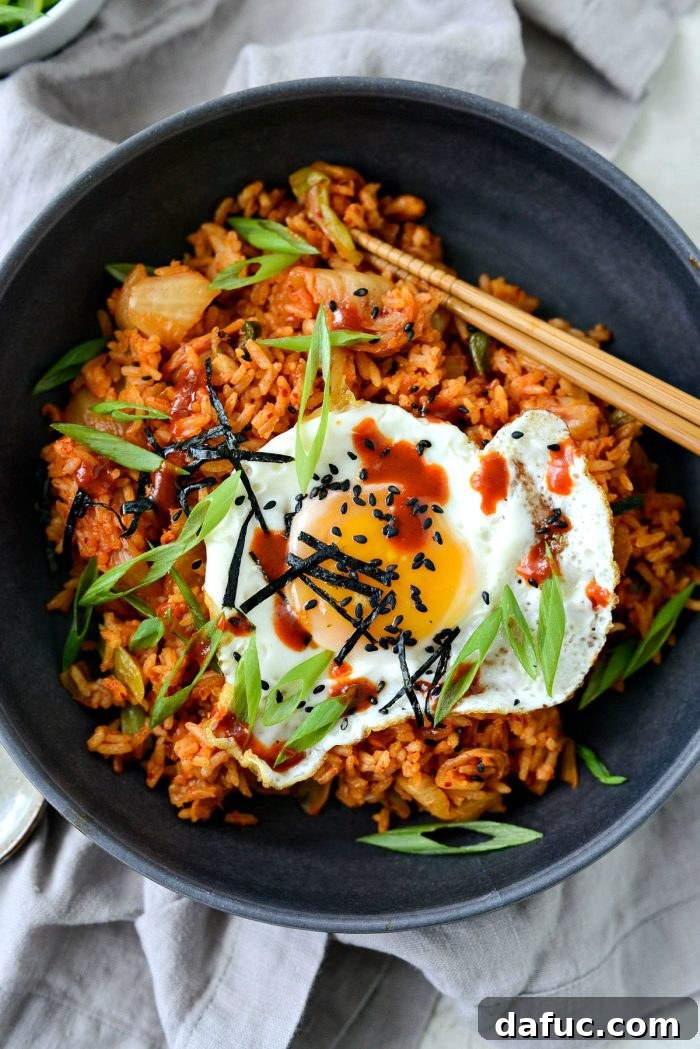
Why Kimchi Fried Rice Will Be Your New Favorite Meal
My first encounter with kimchi was a revelation. It happened a few years ago at a bustling Korean BBQ restaurant. I had ordered bibimbap, a delightful mixed rice dish, and alongside it came an array of small, vibrant side dishes – collectively known as banchan. Among them was a bowl of fiery red, intensely flavorful kimchi. It was love at first spicy, tangy bite. I confess, I probably ate everyone else’s kimchi at the table that night! The complex layers of flavor, the satisfying crunch, the subtle yet persistent heat – it was a true culinary awakening.
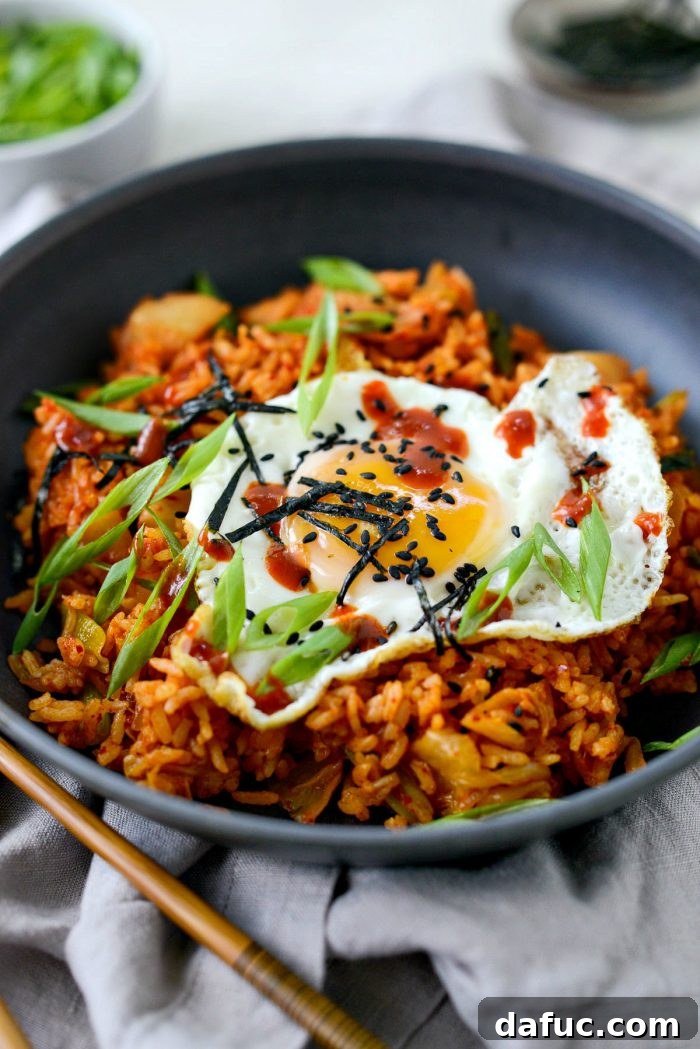
So, when I later discovered Kimchi Fried Rice, a dish that brilliantly combines two of my absolute favorite things – savory fried rice and that incredible kimchi – I knew I had stumbled upon culinary heaven. This dish brings unparalleled comfort, excitement, and a burst of vibrant Korean flavors to your table with surprisingly minimal effort. Whether you’re a long-time enthusiast of Korean cuisine or just beginning your flavorful exploration, this recipe is a fantastic and accessible entry point that promises to delight your senses.
What Exactly Is Kimchi? Unpacking This Korean Superfood
At its heart, kimchi is a traditional Korean side dish made from salted and fermented vegetables, most commonly Napa cabbage and Korean radish. The meticulous fermentation process is not merely for preservation; it’s a culinary art that develops a complex flavor profile that is deeply savory, umami-rich, tangy, and often spicy. Essential ingredients like gochugaru (Korean chili powder), fresh garlic, pungent ginger, crisp green onions, and sometimes jeotgal (salted seafood) are often added during fermentation, contributing to its distinctive taste, aroma, and vibrant red color.
A Brief History and Cultural Significance
Kimchi has been a staple in Korean cuisine for centuries, with its origins tracing back to ancient preservation techniques. Historically, Koreans would prepare large quantities of kimchi during late autumn, fermenting it in large earthenware jars (onggi) often buried in the ground to keep it fresh throughout the harsh winter months. This communal event, known as ‘kimjang’, is recognized by UNESCO as an Intangible Cultural Heritage of Humanity, underscoring its profound cultural significance. Kimchi is more than just a food; it’s a symbol of Korean identity, community, and the resilience of its people, with countless regional variations and cherished family recipes passed down through generations.
The Health Benefits of Kimchi
Beyond its incredible taste, kimchi is highly renowned for its impressive health benefits. As a fermented food, it’s a powerhouse of probiotics, the beneficial bacteria that play a crucial role in maintaining a healthy gut microbiome and aiding digestion. It’s also remarkably rich in essential vitamins (including A, B, and C), vital minerals, and powerful antioxidants, all while being low in calories. Regular consumption of kimchi is associated with improved immunity, reduced inflammation, and even potential anti-cancer properties, truly earning its global status as a superfood.
Choosing the Best Kimchi for Your Fried Rice
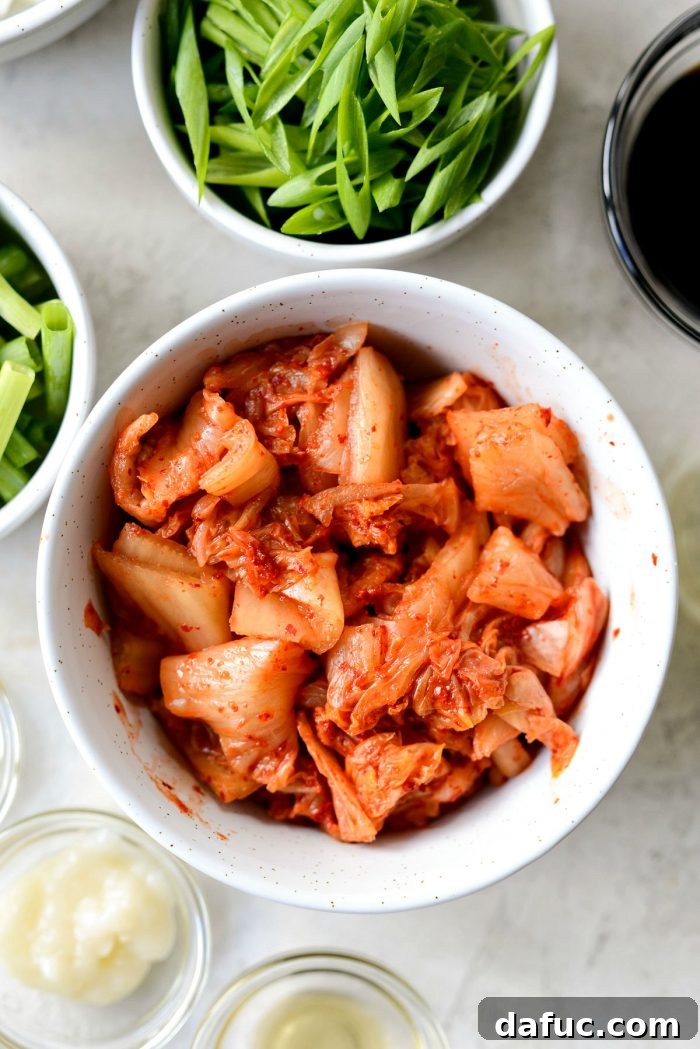
The quality and flavor profile of your kimchi will directly impact the deliciousness of your fried rice. Not all kimchis are created equal, and selecting the right one can truly make all the difference. During the development of this recipe, I extensively tested five different brands from various grocery stores. My experiments included shelf-stable options (which I strongly advise against for quality fried rice, as they often lack depth) and several refrigerated varieties.
My clear favorite emerged as “Mother In Law’s Kimchi.” I sampled both their “spicy” and traditional Napa cabbage versions. While I absolutely adored the extra kick of the spicy variety, I found the traditional, less spicy option provided a more balanced base for this particular recipe, especially since we’ll be adding gochujang for a controlled and customizable level of heat. However, always feel free to use your preferred level of spiciness! When shopping, look for kimchi that is vibrant in color, boasts a fresh, pleasantly sour fermented aroma, and is always stored in the refrigerated section. If you happen to have a fantastic homemade kimchi recipe or a local brand you swear by, please do share your recommendations!
Essential Ingredients for Kimchi Fried Rice
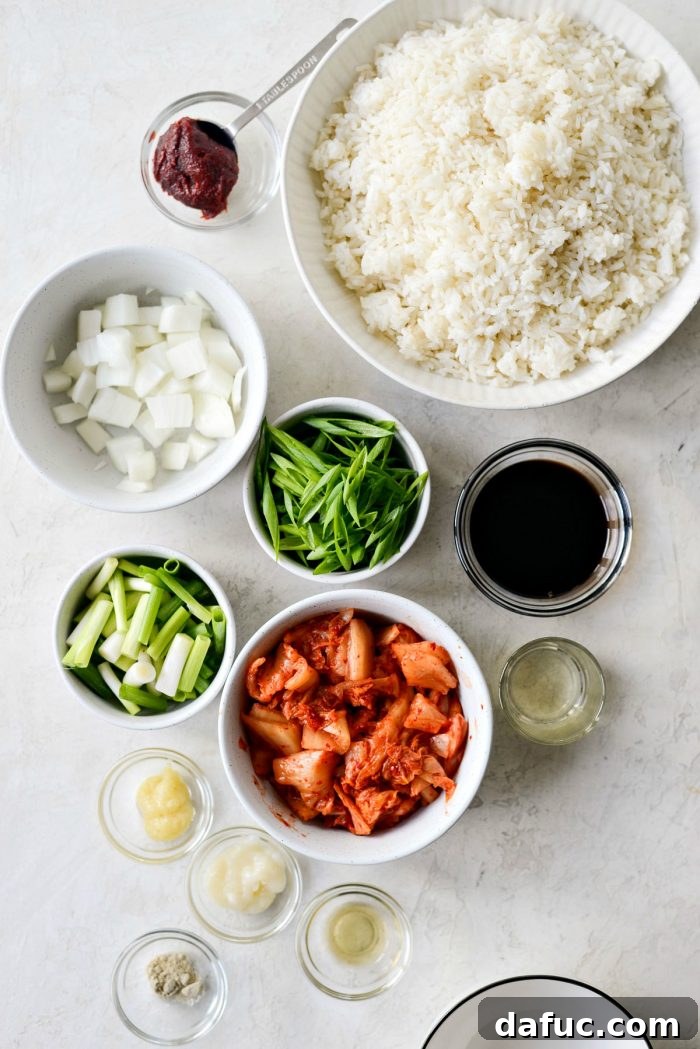
Crafting the perfect Kimchi Fried Rice begins with gathering fresh, high-quality ingredients. Each component plays a vital role in building the dish’s signature complex flavor. Here’s a detailed look at what you’ll need to create this incredibly satisfying and flavorful meal:
- Light Olive Oil: Or any neutral high-heat cooking oil such as canola, vegetable, or grapeseed oil, perfect for sautéing without overpowering other flavors.
- Yellow Onion: Diced, provides a fundamental sweet and savory aromatic base when sautéed.
- Green Onions (Scallions): You’ll use both the white and light green parts for sautéing with other aromatics, contributing a mild onion flavor, and the dark green parts, thinly sliced, for a fresh, vibrant garnish.
- Fresh Garlic: Two cloves, freshly grated or finely minced. Fresh garlic is indispensable for that pungent, aromatic kick that defines many Korean dishes.
- Fresh Ginger: One teaspoon, freshly grated. Ginger adds a warm, spicy, and slightly peppery aroma that beautifully complements the other flavors.
- Kimchi: One cup, coarsely chopped. As previously discussed, a good quality, well-fermented kimchi is paramount. Its tangy, spicy, and probiotic-rich character is the star of this dish.
- Gochujang (Korean Chili Paste): One tablespoon. This thick, sticky, savory, and spicy fermented condiment is a cornerstone of Korean cooking. It imparts a distinctive umami depth, a pleasant sweetness, and a controlled heat to the fried rice.
- Low-Sodium Soy Sauce (or Tamari): Two tablespoons. Used for salty, umami depth without making the dish overly salty. Tamari is an excellent gluten-free alternative if needed.
- Toasted Sesame Oil: Half a teaspoon. This is a finishing oil, added near the end of cooking. It provides a distinct, deep, nutty aroma and flavor that ties all the components together.
- Ground White Pepper: Quarter of a teaspoon. Offers a subtle, earthy heat and is traditional in many Asian fried rice preparations, providing a more refined spice than black pepper.
- Day-Old Cooked Jasmine Rice: Four cups. This is arguably the most critical ingredient for achieving perfect fried rice texture. Leftover rice loses moisture and becomes firmer, preventing it from clumping and allowing individual grains to absorb flavors beautifully, resulting in a desirable crispness rather than a mushy texture.
Optional Toppings and Garnishes to Elevate Your Dish
While Kimchi Fried Rice is utterly delicious on its own, a few simple additions can instantly elevate it to the next level, adding delightful texture, enriching the flavor profile, and enhancing visual appeal.
- Fried Eggs: A perfectly fried egg, especially one with a slightly runny yolk, cascading over the spicy rice is a game-changer. It adds incredible creaminess, richness, and a boost of protein.
- Sesame Seeds: A sprinkle of toasted black or white sesame seeds offers a subtle nutty crunch and an appealing visual contrast.
- Fresh Green Onions: The reserved dark green parts, thinly sliced, provide a fresh, pungent bite and a vibrant pop of color.
- Sliced Nori (Seaweed): Thin strips or crumbles of roasted seaweed add a delicate umami flavor, a crisp texture, and a hint of the ocean.
- Gochujang Hot Sauce: A drizzle of this less viscous version of gochujang paste (distinct from the thicker paste used in the recipe) can add an extra layer of nuanced heat and flavor complexity for those who love an extra kick.
Step-by-Step Guide: How to Make Irresistible Kimchi Fried Rice
Making Kimchi Fried Rice is a surprisingly straightforward and incredibly rewarding culinary endeavor. Follow these detailed steps for a perfect batch that tastes like it came straight from a Korean eatery, right in your own kitchen.
1. Prepare Your Aromatics and Heat the Wok
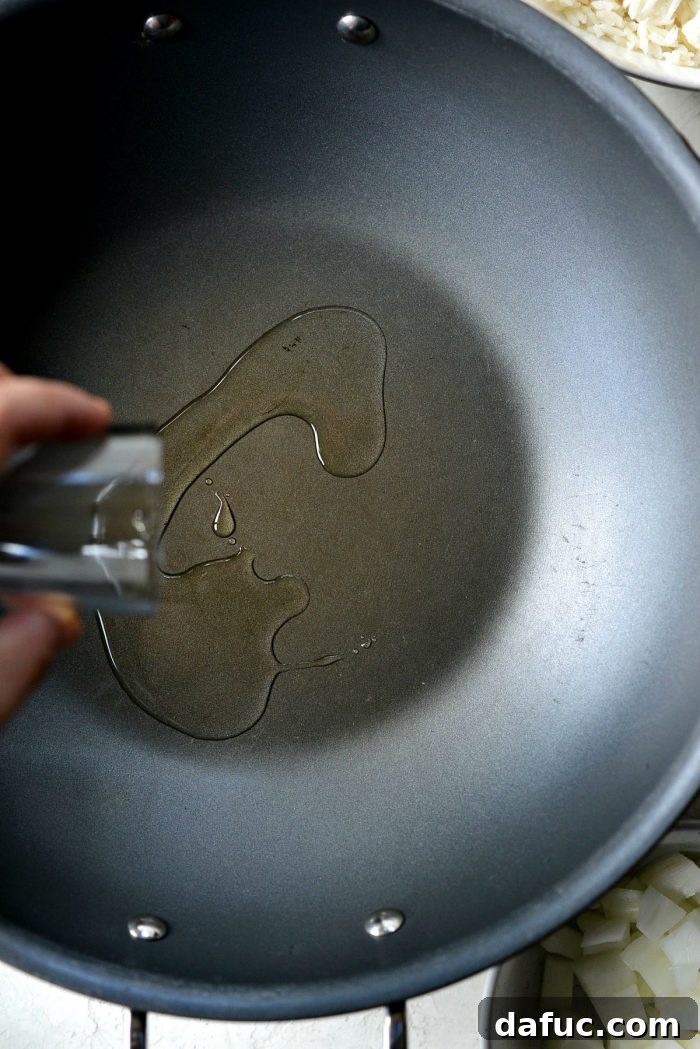
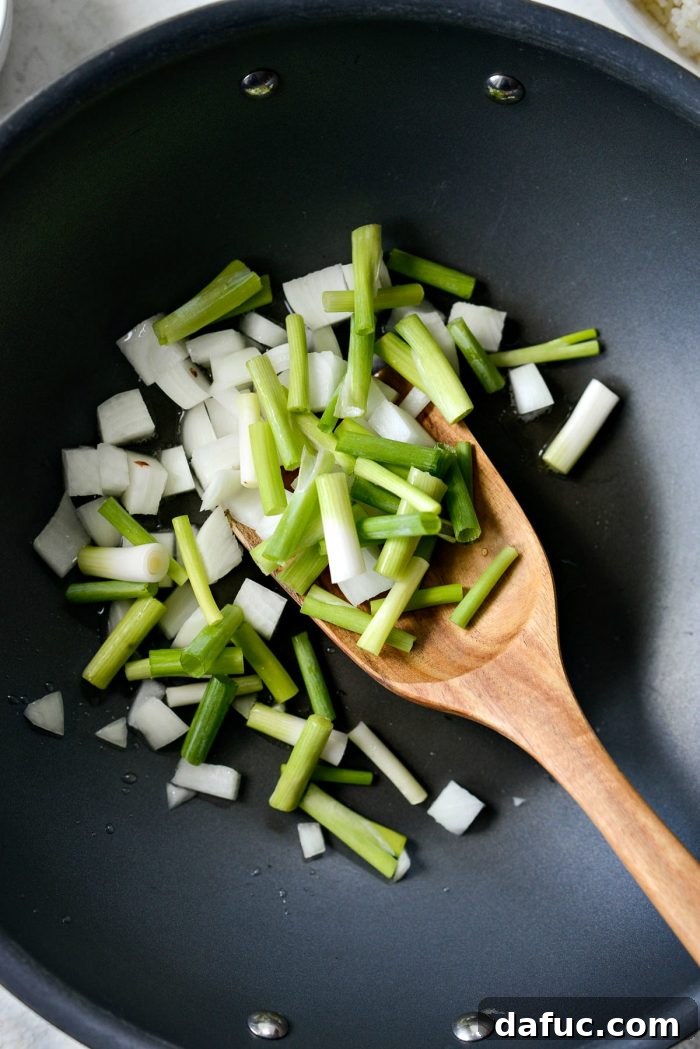
Begin by heating 1 tablespoon of light olive oil in a large chef’s pan or a traditional wok over medium-high heat. It’s crucial to let the oil get shimmering hot before adding any ingredients; high heat is key to achieving that authentic fried rice texture and preventing the ingredients from steaming. Once the oil is ready, add 1/2 cup of diced yellow onion and the white and light green parts from your bunch of green onions, cut into roughly 1-inch pieces. Sauté these aromatics for 2-3 minutes, stirring frequently, until they begin to soften and release their fragrant essence. Remember to thinly slice the dark green parts of your green onions and set them aside; these vibrant green pieces will serve as your fresh garnish later.
2. Infuse with Garlic and Ginger
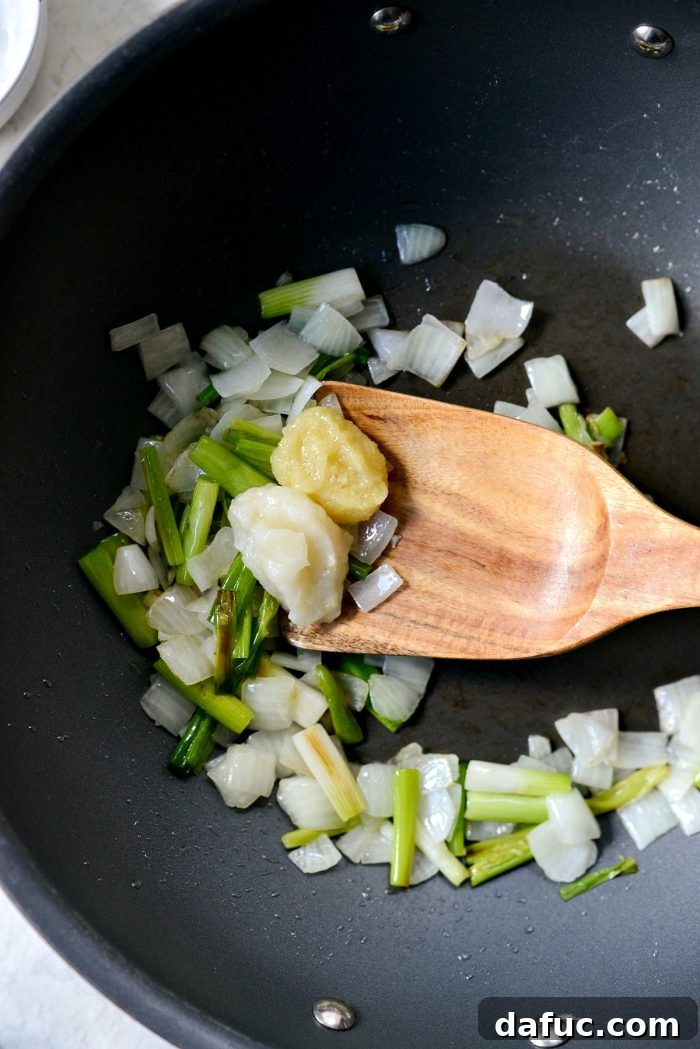
Once your onions and green onion whites are tender and translucent, it’s time to introduce the powerful flavor duo: 1 teaspoon of freshly grated ginger and 2 cloves of freshly grated garlic. Stir them into the sautéed vegetables and cook for just about 1 minute. Be vigilant during this step, as garlic and ginger can burn quickly; their aroma should be pronounced and fragrant, but not browned or bitter.
3. Introduce the Kimchi and Flavor Boosters
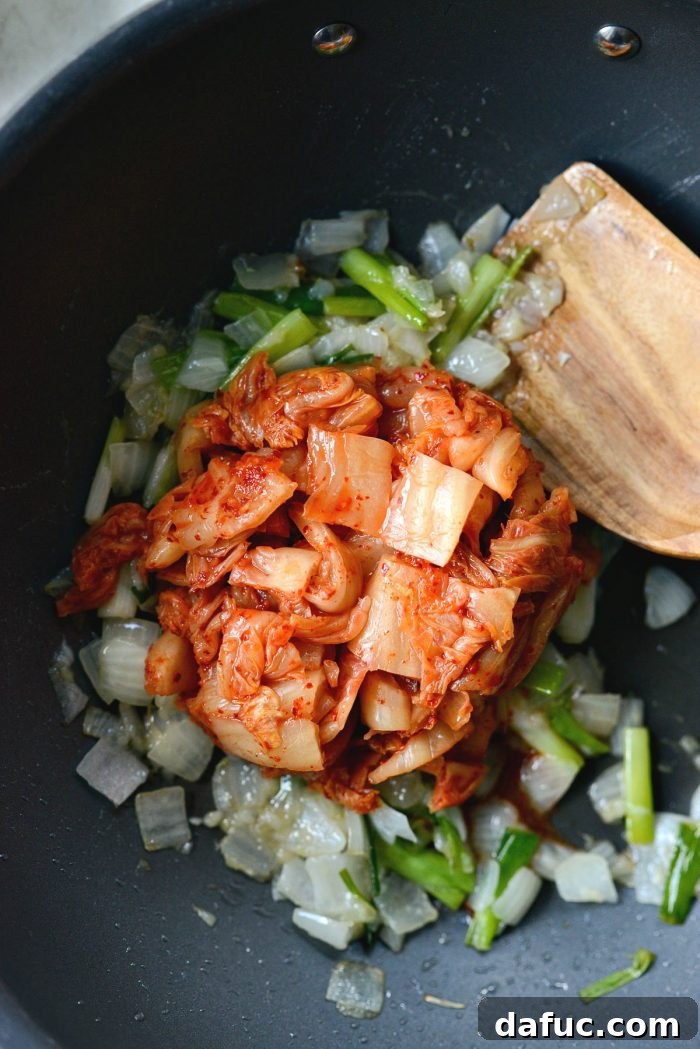
Now, add 1 cup of coarsely chopped kimchi to the wok. The vibrant red kimchi will immediately start to sizzle and release its tantalizing, fermented aroma. Stir it vigorously with the sautéed aromatics for 2-3 minutes, allowing its complex flavors to deepen and meld with the ginger and garlic.
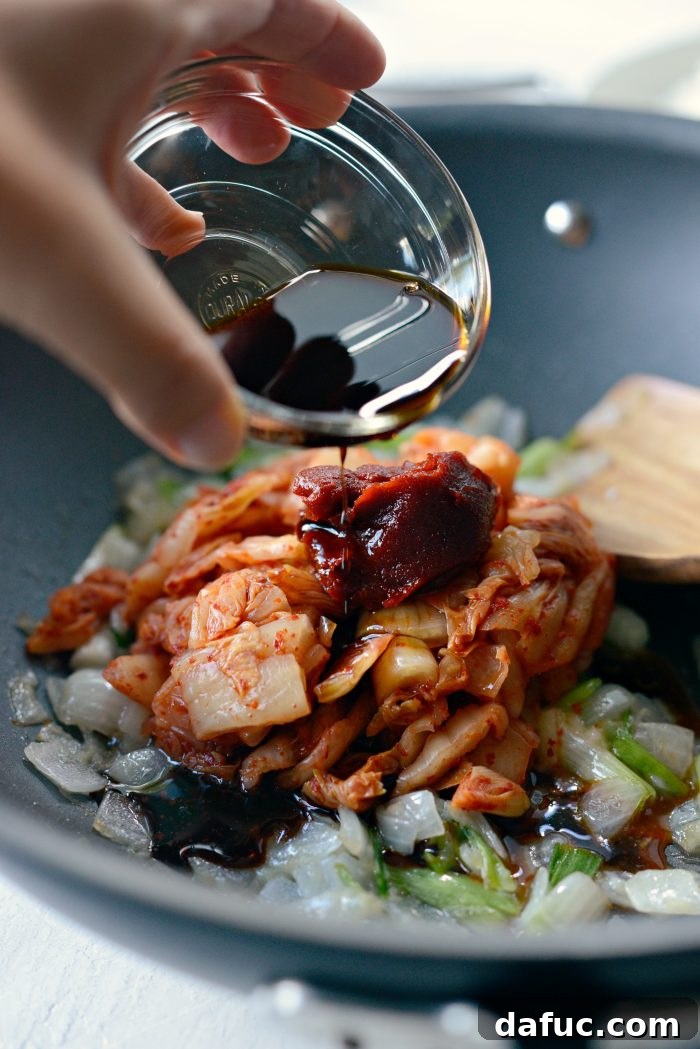
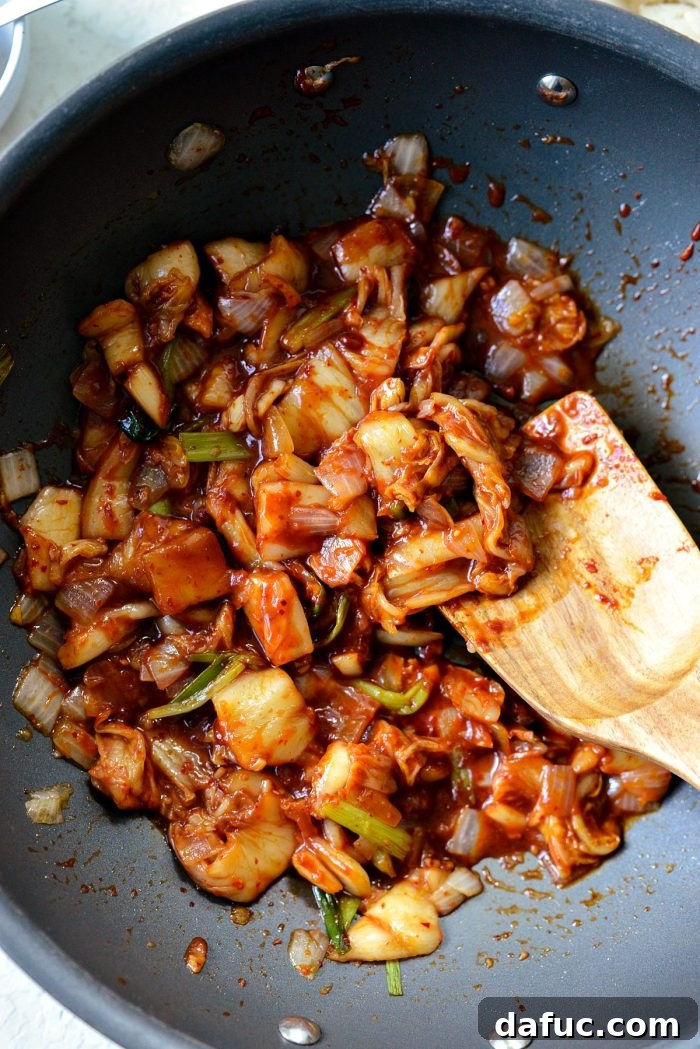
Next, it’s time to build the rich and savory sauce that defines this fried rice. Carefully measure and add 1 tablespoon of gochujang paste, 2 tablespoons of low-sodium soy sauce, 1/2 teaspoon of toasted sesame oil, and 1/4 teaspoon of ground white pepper. Stir everything thoroughly to combine, ensuring the kimchi and vegetables are beautifully coated in this flavorful mixture. Continue to cook for another 2-3 minutes, stirring occasionally, until all the ingredients are well integrated, the sauce has thickened slightly, and the entire mixture is heated through and wonderfully fragrant.
4. Incorporate the Day-Old Rice
Finally, gently add 4 cups of leftover cooked jasmine rice (or any preferred white rice) to the wok. This is where the magic of day-old rice truly shines; its drier texture prevents clumping and allows for individual grains to toast beautifully, creating that desirable crispy-chewy texture.
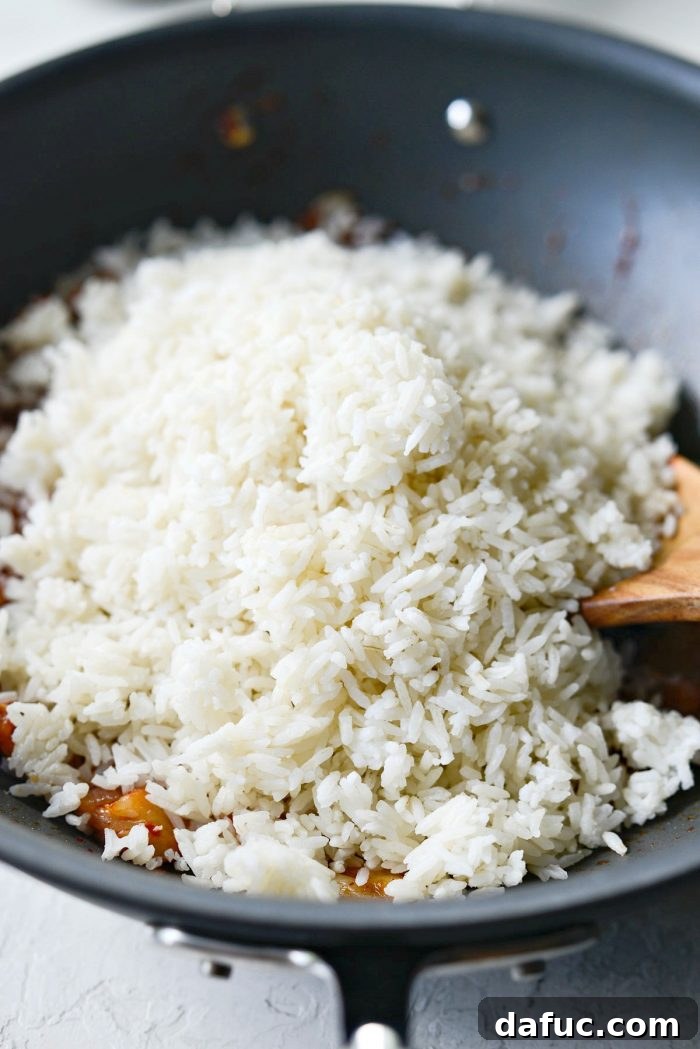
Toss and stir vigorously, using a spatula or rice paddle to break up any clumps and ensure every single grain of rice is thoroughly coated with the vibrant, flavorful kimchi mixture. Continue to cook for 5-7 minutes, stirring periodically, allowing the rice to heat through and slightly crisp up. For an extra irresistible crispy rice texture, spread the fried rice in an even layer across the bottom of the wok and let it cook undisturbed for a few minutes until golden brown and slightly caramelized in spots, then stir and repeat the process.
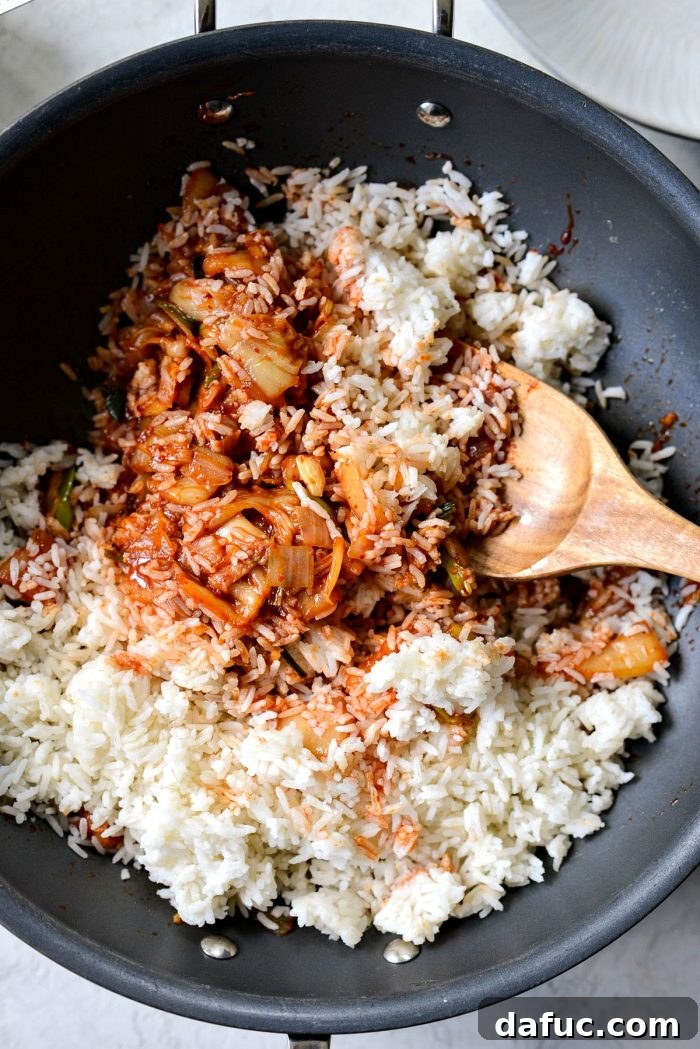
By now, the incredible aroma filling your kitchen will be absolutely intoxicating – a clear and delicious sign that you’re on the right track and your Kimchi Fried Rice is nearly perfect!
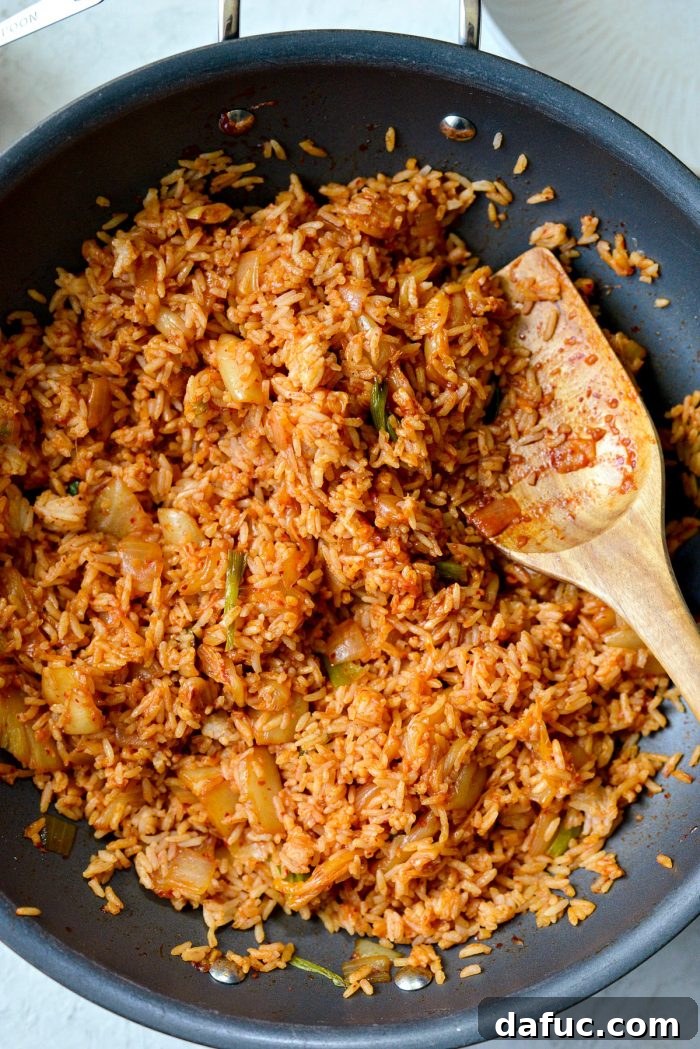
5. Serve and Garnish for the Ultimate Experience
Your extraordinary Kimchi Fried Rice is now ready to be devoured! You can certainly serve it as is, and it will be utterly delicious. However, to truly elevate the experience, enhance it further with your favorite toppings. A spoonful of this savory, spicy, and perfectly textured rice is incredibly hard to resist – I may or may not have taken a secret bite (or two, or three) directly from the pan. But my lips are sealed!
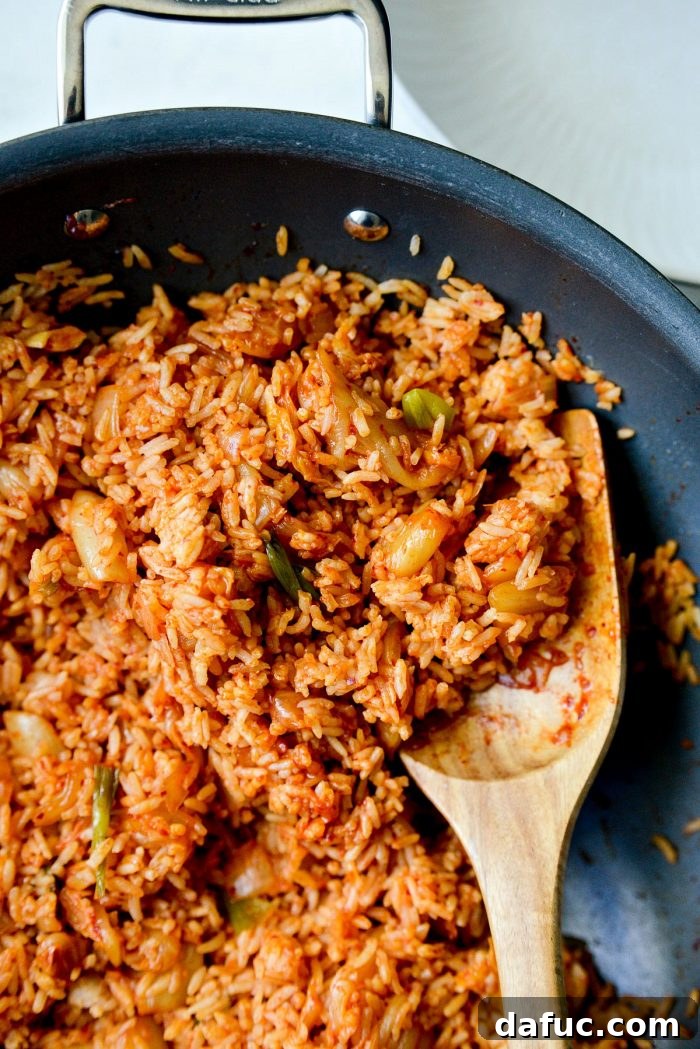
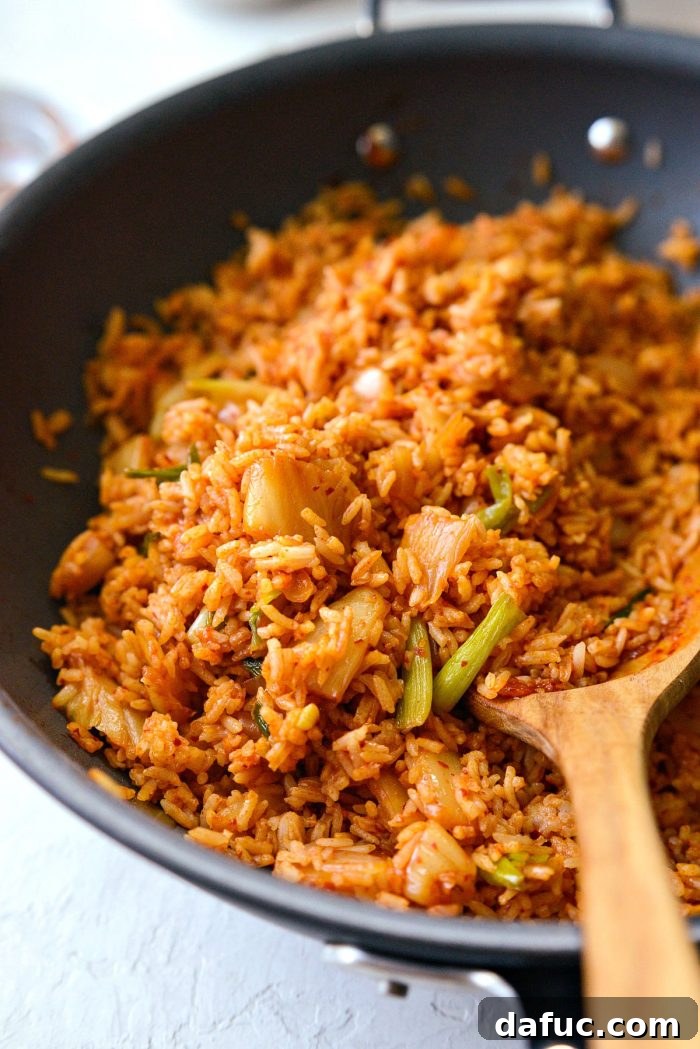
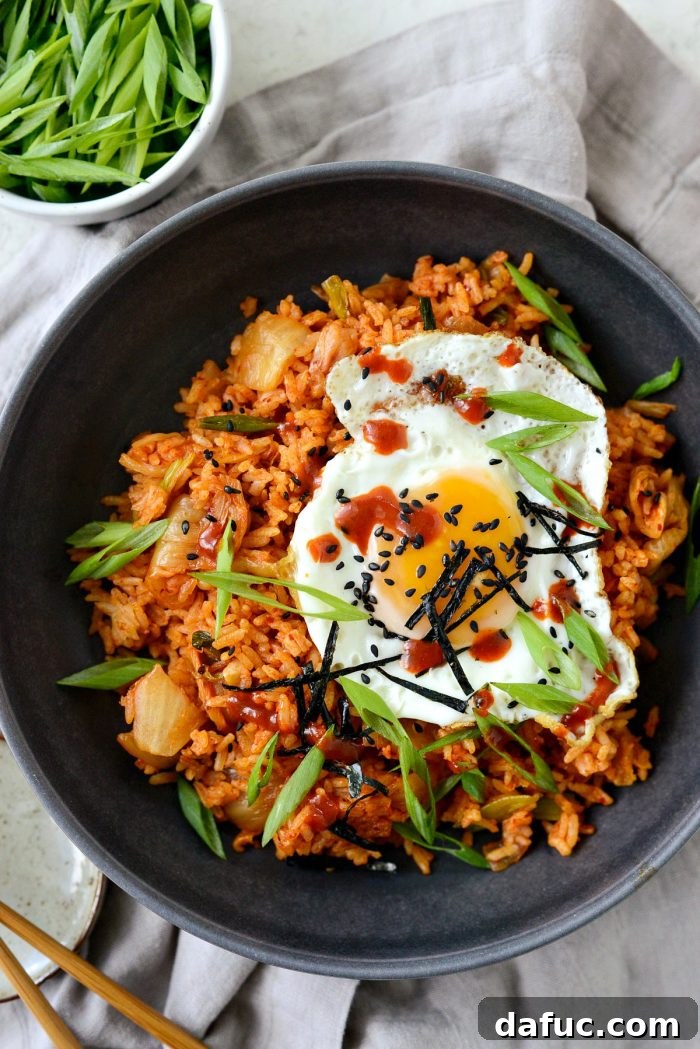
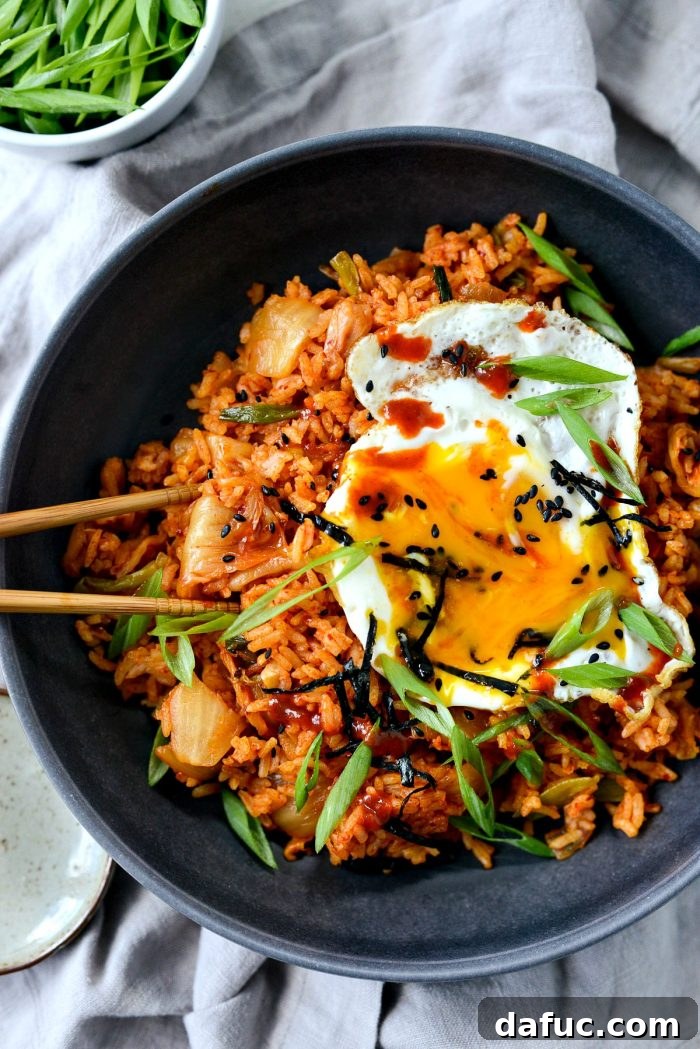
For the ultimate, restaurant-quality experience, serve your Kimchi Fried Rice topped with a perfectly fried egg (with a delightfully runny yolk!), a generous sprinkle of black sesame seeds, thinly sliced fresh green onions, and delicate strips of nori (roasted seaweed). The harmonious combination of textures – creamy yolk, crisp nori, tender rice – and the burst of fresh flavors is truly divine.
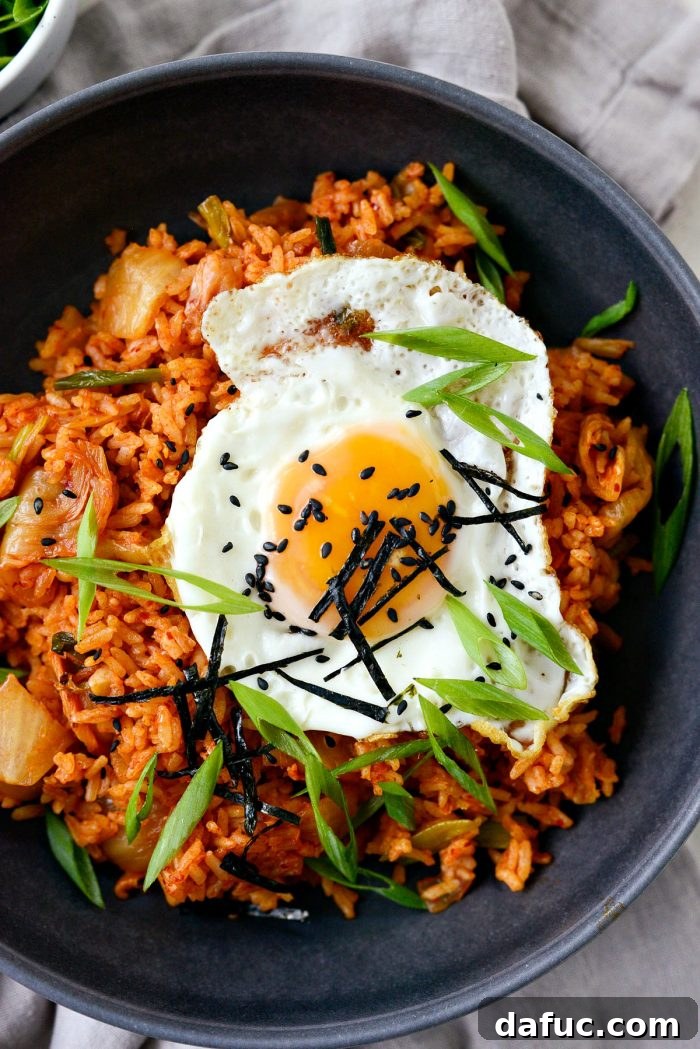
Break that luscious runny yolk and let it mix into the warm, spicy rice – it adds an incredible richness and creaminess that perfectly complements the tangy and piquant flavors. This versatile dish also serves as an excellent base for other Korean delights, such as our recommended Korean BBQ Beef Bowls. So much complex and satisfying flavor is packed into this seemingly simple recipe; it’s beyond incredible and guaranteed to become a household favorite.
Expert Tips for Making the Best Kimchi Fried Rice
Achieving restaurant-quality Kimchi Fried Rice at home is easier than you think, especially with these insider tips:
- Always Use Day-Old (or Even Two-Day-Old) Rice: This is the golden rule of fried rice and cannot be emphasized enough. Freshly cooked rice retains too much moisture and will result in a soggy, clumpy, and unappetizing fried rice. Older rice is drier, making it ideal for separating into individual grains that can toast beautifully and absorb flavors without becoming mushy.
- High Heat is Your Best Friend: Authentic fried rice demands high heat to achieve that coveted “wok hei” (the smoky, charred aroma often translated as the “breath of the wok”) flavor and prevent the ingredients from steaming instead of frying. Don’t be shy about cranking up your stove to medium-high or high heat.
- Avoid Overcrowding the Pan: This is another crucial tip. If your pan is too full, the temperature will drop significantly, causing the ingredients to steam rather than fry. If you’re making a larger batch, cook the fried rice in two separate portions to ensure everything gets properly seared and crisped. Give the rice ample room to breathe and develop those delicious crispy edges.
- Invest in Good Quality Kimchi: As the star ingredient, the quality of your kimchi directly dictates the overall flavor of your dish. Seek out a well-fermented kimchi from the refrigerated section of your grocery store or a Korean market. The older and more fermented the kimchi, the deeper, tangier, and more complex its flavor will be, enriching your fried rice significantly.
- Chop Kimchi Coarsely: Ensure your kimchi is chopped into manageable, bite-sized pieces. Smaller, coarser pieces integrate much better into the rice, guaranteeing that every spoonful delivers that essential tangy and spicy kimchi flavor.
- Adjust Spice to Your Liking: The recipe provides a fantastic starting point for the amount of gochujang. However, spice preference is highly personal. Feel free to add more or less gochujang, and consider the inherent spice level of your chosen kimchi, to tailor the heat to your preference.
- Achieve Optional Crispy Edges: For an irresistible textural contrast, after thoroughly mixing the rice and sauce, press the fried rice down lightly into an even layer across the bottom of the pan. Let it cook undisturbed for a few minutes until a golden-brown, crispy crust forms on the bottom. Then, stir and repeat the process in different sections for maximum crunch.
Kimchi Fried Rice Variations & Customizations
One of the greatest beauties of Kimchi Fried Rice is its incredible versatility. Once you’ve mastered the foundational recipe, you can easily adapt it to incorporate various proteins, introduce additional vegetables, or even transform it into a completely plant-based meal, making it perfect for any dietary preference or craving.
- Elevate with Protein:
- Pork Belly or Spam: These are classic and highly recommended Korean additions. Cook diced pork belly until crispy or pan-fry cubes of Spam before adding the onions, then proceed with the recipe as directed. Their savory, fatty notes are a perfect match.
- Chicken or Beef: For a leaner option, thinly slice chicken breast, thigh, or beef (such as sirloin or flank steak). Marinate it briefly in a touch of soy sauce and sesame oil, then stir-fry it separately until cooked through. Add it back into the wok with the rice at the final mixing stage.
- Tofu: To create a delicious vegetarian or vegan protein boost, press extra-firm tofu to remove excess moisture, cube it, and pan-fry until all sides are golden and slightly crispy before adding it to your fried rice.
- Shrimp: Quick-cooking shrimp can be a fantastic addition. Add peeled and deveined shrimp towards the end of the cooking process, stirring until they are just pink and opaque.
- Incorporate Extra Vegetables: Enhance the nutritional value, color, and texture of your fried rice by adding finely diced carrots, bell peppers (any color), sliced mushrooms, or even a handful of frozen peas and corn. Add them with the onions or slightly later, ensuring they cook until tender-crisp, maintaining a pleasant bite.
- Indulge with Cheese Kimchi Fried Rice: This is a incredibly popular and deliciously gooey variation! During the last minute of cooking, simply stir in some shredded mozzarella, cheddar, or a blend of your favorite melting cheeses, allowing it to melt into a rich, savory, and incredibly satisfying gooey goodness.
- Vegan/Vegetarian Option: To make this dish completely plant-based, ensure your chosen kimchi is vegan-friendly (as some brands contain fish sauce or shrimp paste). Use tamari instead of regular soy sauce if a gluten-free option is desired, and simply skip the fried egg or replace it with pan-fried, seasoned tofu scramble.
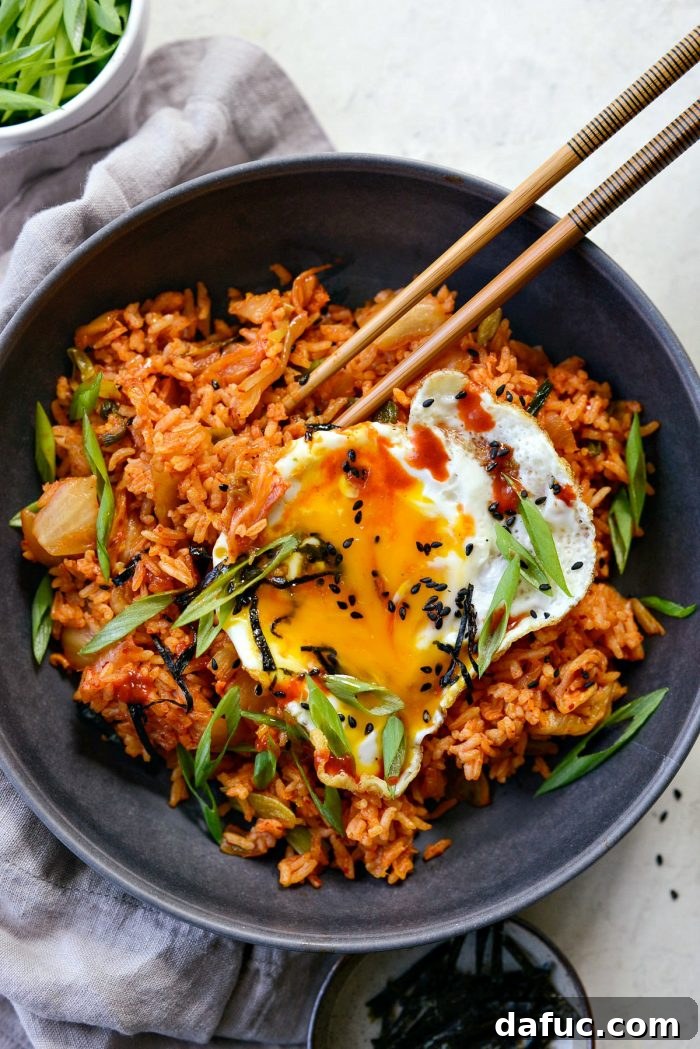
Enjoy this incredible Kimchi Fried Rice! We wholeheartedly encourage you to try this recipe and make it your own. If you do, we’d absolutely love to see your delicious creations! Snap a photo of your masterpiece and tag us on Twitter or Instagram! Happy cooking!
Kimchi Fried Rice Recipe
This recipe for Kimchi Fried Rice delivers a deliciously flavorful and quick-to-prepare meal that’s both comforting and exciting. Day-old rice is expertly tossed with aromatic garlic, spicy ginger, tangy, well-fermented kimchi, and savory gochujang for a subtly spicy yet profoundly addictive Korean fried rice experience.

Yield: 8 servings
Prep Time: 5 mins
Cook Time: 15 mins
Total Time: 20 mins
Author: Laurie McNamara
Course: Side Dishes, Main Course
Cuisine: Korean
Ingredients
For the Fried Rice:
- 1 tablespoon light olive oil (or neutral high-heat oil)
- 1/2 cup yellow onion, diced
- 1 bunch green onions, white and light green parts cut into 1-inch pieces (dark green parts reserved for garnish)
- 2 cloves fresh garlic, grated or minced
- 1 teaspoon fresh ginger, grated
- 1 cup kimchi, coarsely chopped (ensure good quality, well-fermented)
- 1 tablespoon gochujang paste (Korean red chili paste)
- 2 tablespoons low-sodium soy sauce (or low sodium tamari for gluten-free)
- 1/2 teaspoon toasted sesame oil
- 1/4 teaspoon ground white pepper
- 4 cups cooked jasmine or white rice (day-old is essential for best texture)
For Serving & Garnish (Optional but Highly Recommended):
- The dark green parts of green onions, thinly sliced on the bias
- Eggs, for frying (1 per serving)
- Nori, thinly sliced or crumbled
- Black sesame seeds
- Gochujang hot sauce (a less viscous version of the paste, for drizzling)
Instructions
- Heat 1 tablespoon of light olive oil in a large chef’s pan or wok over medium-high heat until shimmering. Add the diced yellow onion and the white and light green parts of the green onions. Sauté for 2-3 minutes until tender and fragrant. Thinly slice the dark green parts of the green onions and set aside for garnish.
- Add 1 teaspoon of grated ginger and 2 cloves of grated garlic to the pan. Stir and cook for 1 minute until aromatic, being careful not to burn them.
- Stir in 1 cup of coarsely chopped kimchi. Cook for 2-3 minutes, allowing its flavors to develop and deepen.
- Add 1 tablespoon of gochujang paste, 2 tablespoons of low-sodium soy sauce, 1/2 teaspoon of toasted sesame oil, and 1/4 teaspoon of ground white pepper. Stir well to combine all ingredients thoroughly and cook for another 2-3 minutes, ensuring the mixture is heated through and fragrant.
- Add 4 cups of day-old cooked jasmine rice to the wok. Toss and stir vigorously, breaking up any clumps, until the rice is fully coated with the kimchi mixture and heated through. For crispy rice, spread it into an even layer and cook undisturbed for a few minutes until golden brown spots appear, then stir and repeat.
- Serve the kimchi fried rice hot. Garnish generously with the reserved thinly sliced dark green onions, black sesame seeds, and thinly sliced nori. For a truly satisfying meal, top each serving with a freshly fried egg, allowing the runny yolk to mix into the spicy rice. A drizzle of gochujang hot sauce can be added for an extra layer of heat and flavor.
Nutrition Information (per serving)
Calories: 177 kcal | Carbohydrates: 29g | Protein: 5g | Fat: 5g | Saturated Fat: 1g | Polyunsaturated Fat: 4g | Cholesterol: 23mg | Sodium: 563mg | Fiber: 1g | Sugar: 3g
(Nutritional values are estimates and may vary based on specific ingredients and preparation methods.)