
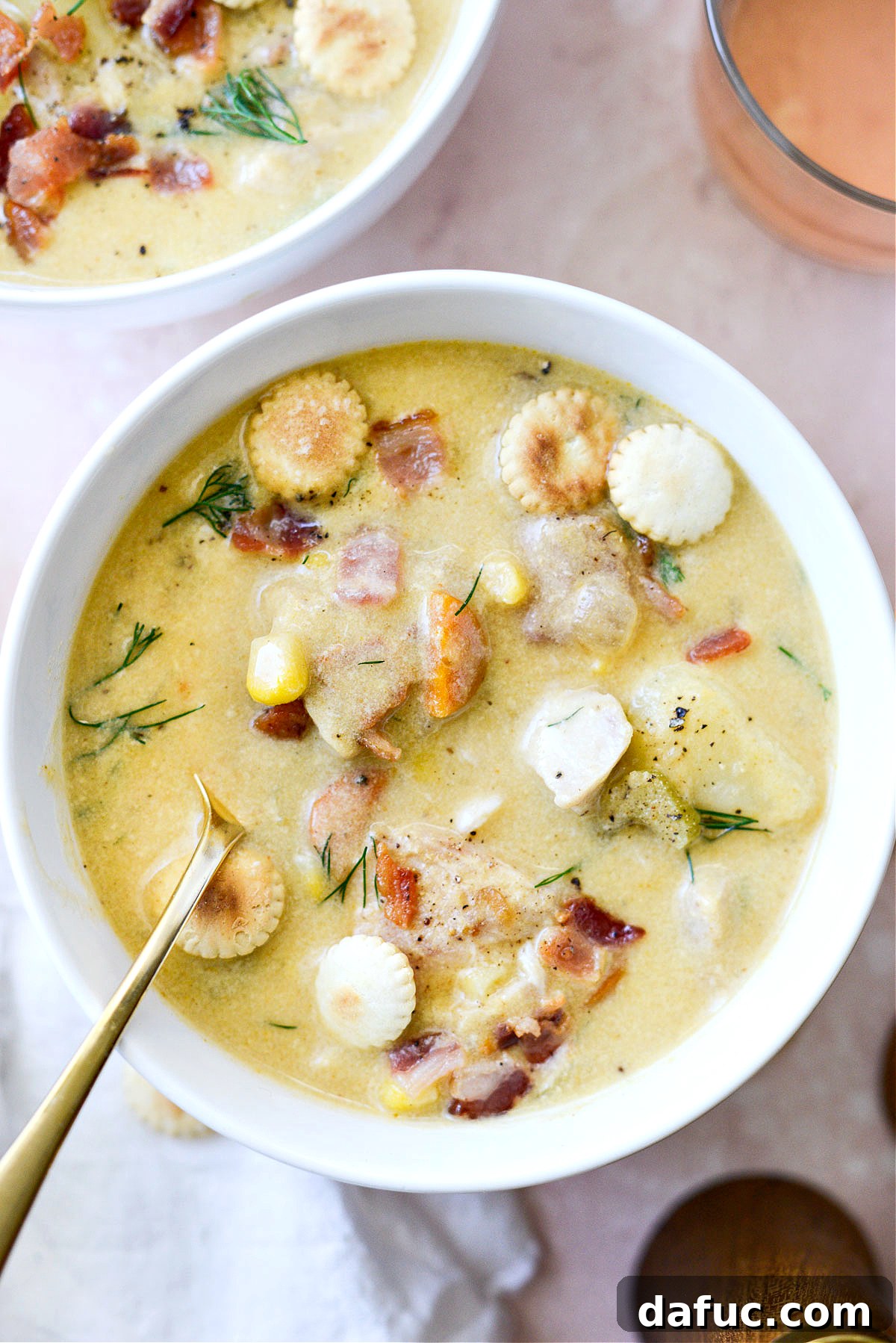
There’s a special kind of warmth and satisfaction that only a truly comforting meal can provide. Among these culinary treasures, Salmon Chowder stands out as a quintessential classic, a hearty embrace in a bowl. Imagine succulent, flaky salmon nestled amongst tender, creamy potatoes, vibrant sweet corn, and a medley of garden vegetables like crisp carrots, aromatic celery, sweet onion, and pungent garlic. All bathed in a rich, velvety broth seasoned with the iconic kick of Old Bay, finished with a fresh flourish of dill, and crowned with a delightful crunch of crispy bacon. This isn’t just a soup; it’s an experience designed to soothe the soul and tantalize the taste buds, making it the perfect antidote to a chilly day or a welcome centerpiece for any family meal.
Embracing the Catch: My Journey to Salmon Chowder Perfection
For years, my perception of salmon was largely limited to what I saw at the grocery store. That all changed a few late Septembers ago when my husband, Pat, embarked on his annual salmon fishing trip. For two years, his efforts yielded little. But on his third expedition with his long-time friends (a shout-out to Craig and Mike!), fishing the scenic Manistee River by day and enjoying a casino by night, luck was finally on our side. He returned home with an astonishing bounty: pounds upon pounds of fresh salmon! The excitement was palpable, and I truly regret not weighing the impressive haul. This unexpected windfall sparked a culinary adventure, transforming how I viewed and prepared this magnificent fish.
It was through Pat’s fishing escapades that I discovered Michigan’s vibrant salmon population. Up until then, the idea of salmon swimming in the Great Lakes felt somewhat foreign. I’ve since learned that Chinook salmon, often referred to as “King” salmon, are Pacific salmon species that were introduced to the Great Lakes decades ago. Each year, typically in mid to late August, these remarkable fish undertake an incredible journey, swimming upstream into Michigan’s rivers to spawn. It’s a bittersweet cycle, as they sadly pass away after fulfilling their vital role in the ecosystem. Understanding their journey only deepened my appreciation for every single fillet.
With such a magnificent fresh salmon stash, my mind immediately raced with possibilities. What better way to celebrate this incredible catch than by transforming it into a luxurious, heartwarming homemade Salmon Chowder? This recipe became my new favorite thing, marrying the delicate flavor of fresh salmon with a rich, comforting, and deeply satisfying soup. It’s a dish that embodies the spirit of comfort food while offering a taste of the wild, bringing together the best of land and sea in every spoonful.
The Allure of This Velvety Salmon Chowder
What makes this particular Salmon Chowder so utterly irresistible? It’s a symphony of textures and flavors. Each spoonful delivers tender, perfectly cooked chunks of wild-caught salmon, offering a delicate sweetness that perfectly complements the creamy base. Soft, starchy potatoes provide substance, while vibrant sweet corn bursts with freshness. The aromatic foundation of sautéed carrots, celery, onion, and garlic forms the backbone of flavor, enhanced by the smoky, salty crunch of crispy bacon bits. The broth itself is a masterpiece – a velvety smooth, rich liquid, achieved through a clever technique of pureeing a portion of the potato mixture, giving it an unparalleled consistency without relying solely on heavy cream. This thoughtful blend ensures a chowder that is both decadent and balanced, a true testament to the simple elegance of well-chosen ingredients. It’s a dish that warms you from the inside out, making it an instant classic for any meal.
Essential Ingredients for Your Perfect Salmon Chowder
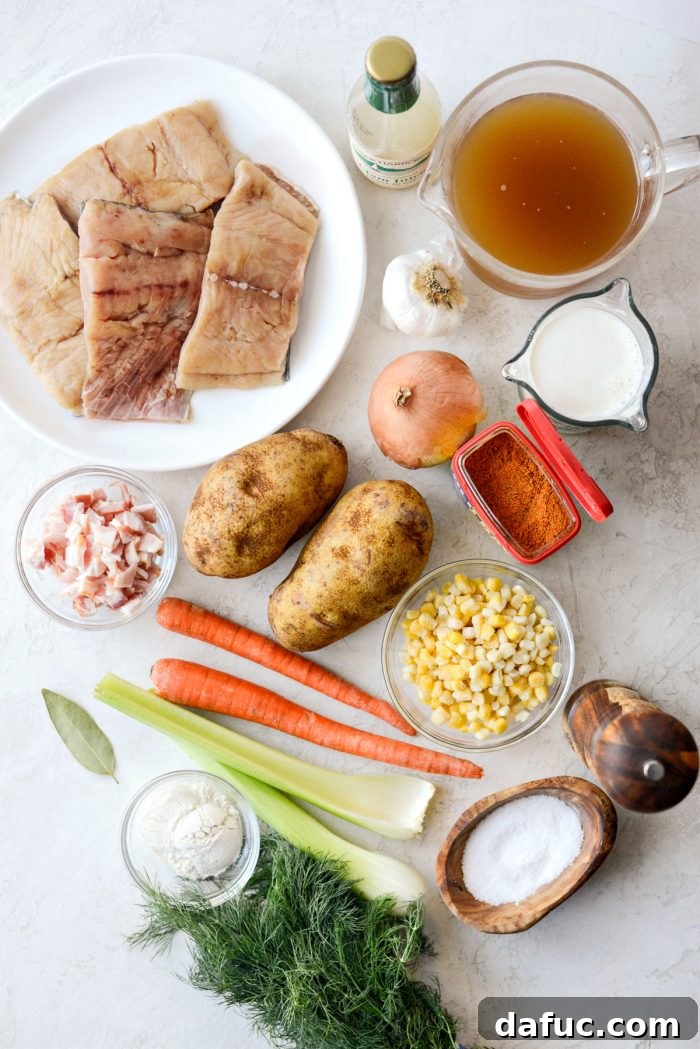
Crafting this delightful Salmon Chowder begins with gathering fresh, high-quality ingredients. Each component plays a crucial role in building the layered flavors and luxurious texture of this comforting soup. While the list might seem comprehensive, every item is carefully selected to ensure a harmonious and incredibly delicious end result. Here’s what you’ll need to bring this culinary vision to life:
- Olive Oil Spray: For lightly greasing your pot and preventing sticking.
- Center Cut Bacon: Diced and cooked until crispy, providing essential smoky depth and a delightful crunchy topping.
- Aromatics (Onion, Celery, Carrot, Garlic): The foundational trio that builds a rich flavor base for the chowder. Fresh is always best here.
- Kosher Salt & Freshly Ground Black Pepper: To season each layer of the chowder, enhancing all the natural flavors.
- All-Purpose Flour: A small amount creates a roux, thickening the chowder to that perfect, comforting consistency.
- Unsalted Chicken Stock: Forms the primary liquid base, offering a savory foundation without overpowering the seafood. Using unsalted allows you to control the seasoning precisely.
- Clam Juice: A secret weapon for any seafood chowder, it amplifies the oceanic flavors and adds a remarkable depth, making the chowder taste even more authentic.
- Russet Potatoes: Their starchy nature makes them ideal for chowder, as they break down slightly during cooking, contributing to the creamy texture.
- Bay Leaf: Infuses the broth with a subtle, aromatic complexity during simmering.
- Old Bay Seasoning: The indispensable spice blend that gives this chowder its signature zesty, savory, and slightly spicy kick.
- Half & Half: Creates the luxurious, creamy body of the chowder. You can substitute with a mix of heavy cream and whole milk for similar richness.
- Sweet Corn: Adds a pop of natural sweetness and vibrant color. Fresh corn cut from the cob is fantastic, but frozen works perfectly too.
- Wild Caught Salmon: The star of the show. Aim for high-quality fillets, diced into substantial pieces that will remain tender and flaky.
- Fresh Dill: A bright, herbaceous garnish that provides a lovely counterpoint to the richness of the chowder, adding a touch of elegance and freshness.
Crafting Your Delicious Salmon Chowder: A Step-by-Step Guide
Follow these detailed steps to create a rich and flavorful Salmon Chowder that will impress everyone at your table. Precision and attention to detail at each stage ensure a truly exceptional bowl of comfort.
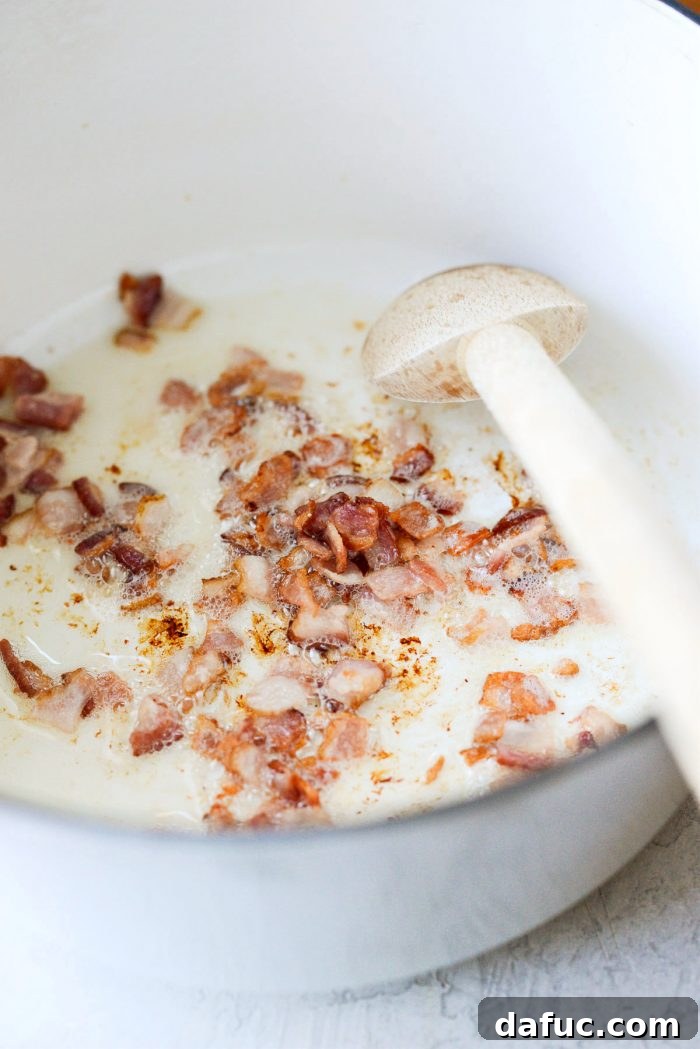
Step 1: Crisping the Bacon to Perfection
Begin by lightly spraying the bottom of a heavy-bottomed Dutch oven or large pot with olive oil. Add 4 strips of center-cut bacon, which you’ve already diced into small pieces. Cook the bacon over medium to medium-low heat, stirring occasionally, until it reaches a beautiful crispness. This slow rendering process not only makes the bacon deliciously crunchy but also creates flavorful bacon fat that will be used to sauté your vegetables. Once crispy, use a slotted spoon to transfer the bacon bits to a paper towel-lined plate. This allows the excess grease to drain, keeping them perfectly crisp for garnish. Leave the rendered bacon fat in the pot – it’s crucial for the next step.
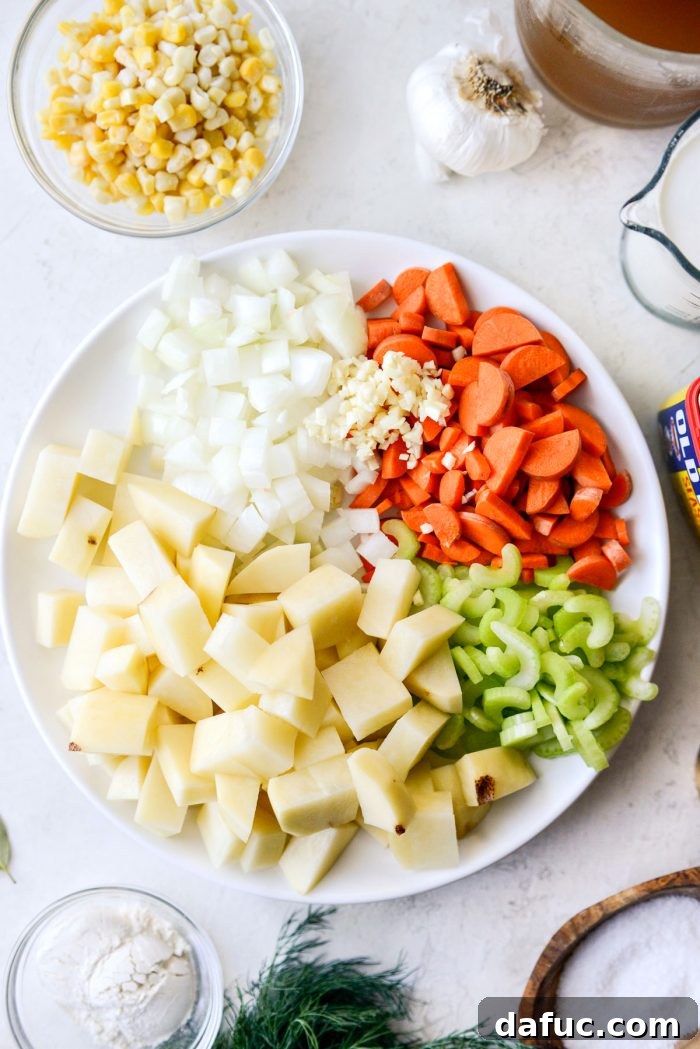
Step 2: Preparing Your Aromatic Vegetables
While the bacon is cooking, it’s the perfect time to prep your vegetables. Dice 1 medium onion, slice 2 short stalks of celery, and cut 2 medium carrots into attractive half-moons. Mince 2 cloves of garlic. Finally, peel and dice 2 medium russet potatoes into 1 ½ to 2-inch pieces. Ensuring all your vegetables are prepped and ready before you start sautéing, known as mise en place, will make the cooking process much smoother and more enjoyable.
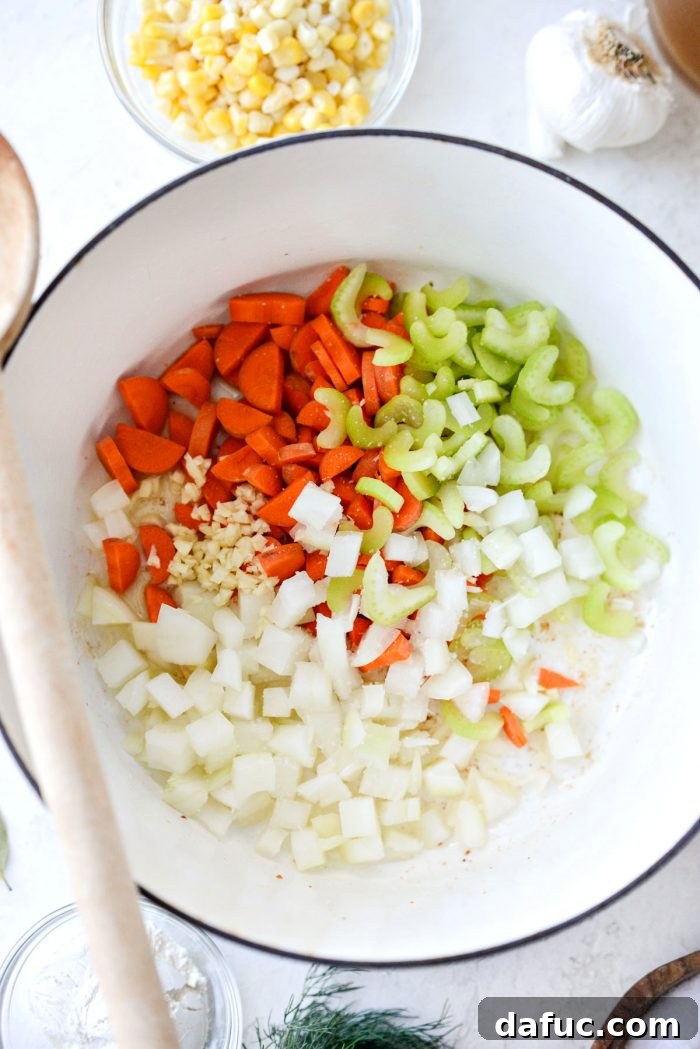
Step 3: Sautéing the Flavor Base
With the bacon fat still in the Dutch oven, add the diced onion, celery, carrots, and minced garlic. Sprinkle in a pinch of kosher salt at this stage; salt helps draw out moisture from the vegetables, intensifying their flavors as they soften. Stir the mixture well to coat the vegetables evenly in the bacon fat.
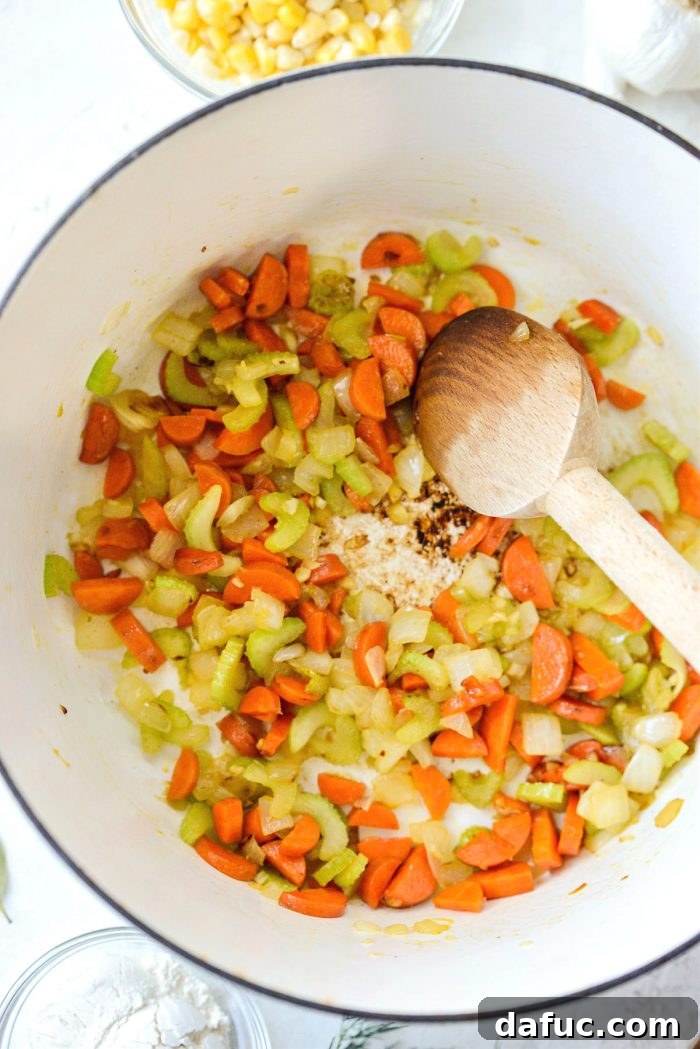
Step 4: Softening the Vegetables
Continue to stir and sauté the vegetables over medium heat until they are tender and slightly softened, a process that usually takes about 8 to 10 minutes. The goal here isn’t to brown them heavily, but to soften them and allow their natural sweetness to develop, creating a rich aromatic foundation for your chowder.
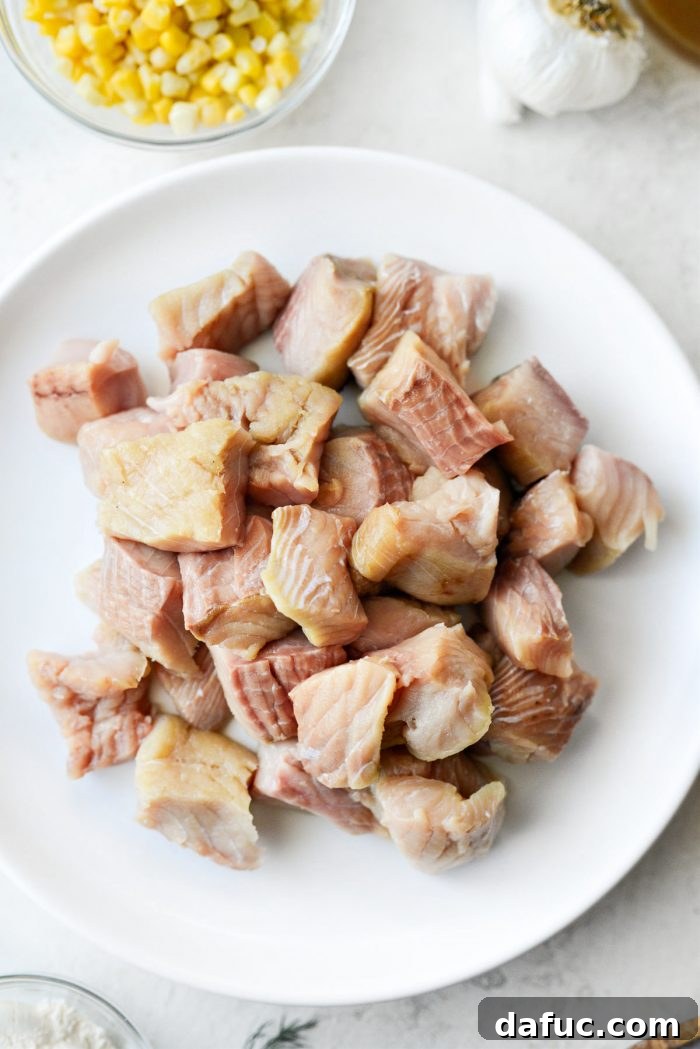
Step 5: Preparing the Salmon
While your vegetables are sautéing, prepare your salmon. If your salmon fillets have skin, carefully remove it. Then, cut the salmon into uniform 1 to 1 ½-inch chunks. Keeping the pieces roughly the same size ensures they cook evenly in the chowder.
Understanding Salmon Flesh Color: Red vs. White Chinook
You might have noticed that some Chinook salmon, particularly those from certain regions or specific Great Lakes catches, can have white flesh rather than the vibrant red-orange we typically associate with King salmon. This difference often sparks curiosity, but rest assured, it’s the same type of fish. The flesh color of Chinook salmon, and other salmon species, is primarily determined by their diet. Salmon naturally consume crustaceans like shrimp and krill, which are rich in astaxanthin, a naturally occurring carotenoid pigment. This pigment is what gives their flesh its characteristic pink or red hue. However, some individual salmon, due to genetic variations, are less efficient at metabolizing and storing this pigment in their muscle tissue. This results in white-fleshed salmon, often referred to as “Ivory King” salmon. Nutritionally, there’s no significant difference between red and white-fleshed Chinook; it’s purely an aesthetic distinction based on their metabolic pathways regarding dietary pigments. Both varieties offer the same delicious flavor and health benefits.
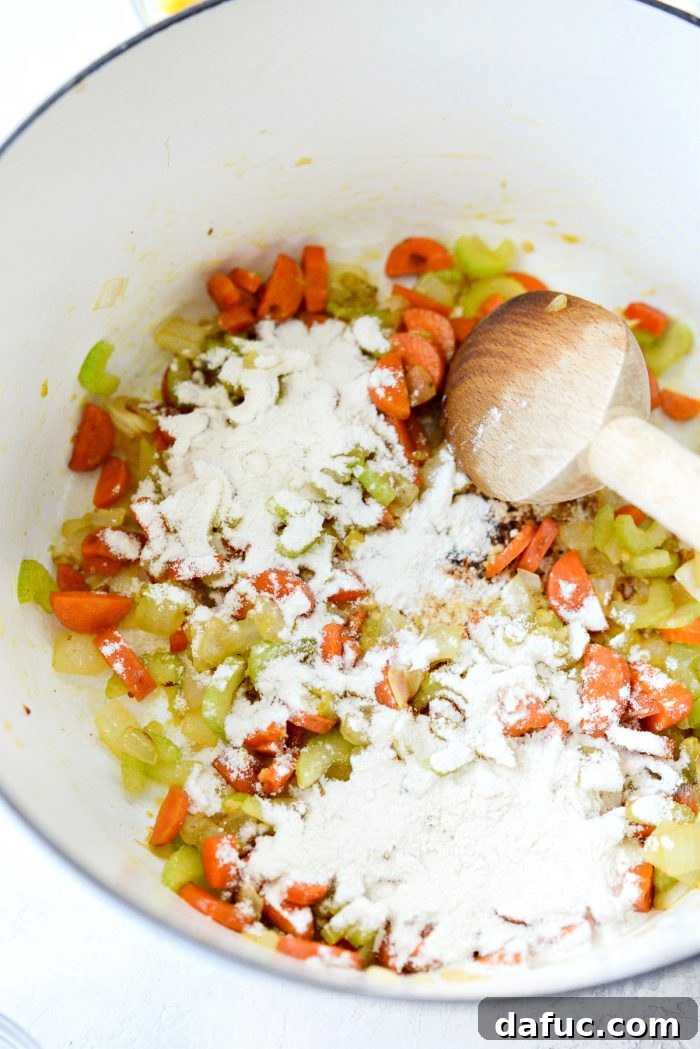
Step 6: Creating a Roux for Thickening
Once your vegetables are tender, sprinkle 2 tablespoons of all-purpose flour over them. This flour will combine with the residual bacon fat and vegetable juices to create a roux, which is essential for thickening the chowder. Stir vigorously to ensure the flour is fully incorporated and no lumps remain.
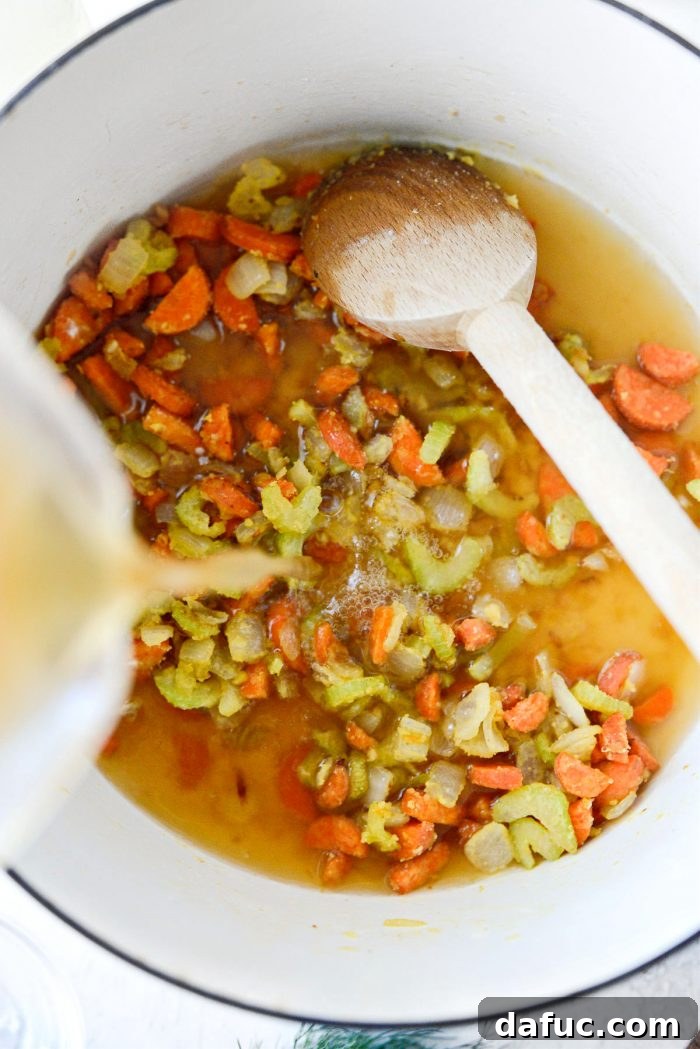
Step 7: Adding the Liquids
Cook the flour-coated vegetables for about 2 minutes, stirring constantly. This step cooks out the raw flour taste. Then, gradually pour in 3 cups of unsalted chicken stock. Stir continuously as you add the stock to prevent lumps and ensure a smooth base. The mixture will begin to thicken slightly as it heats.
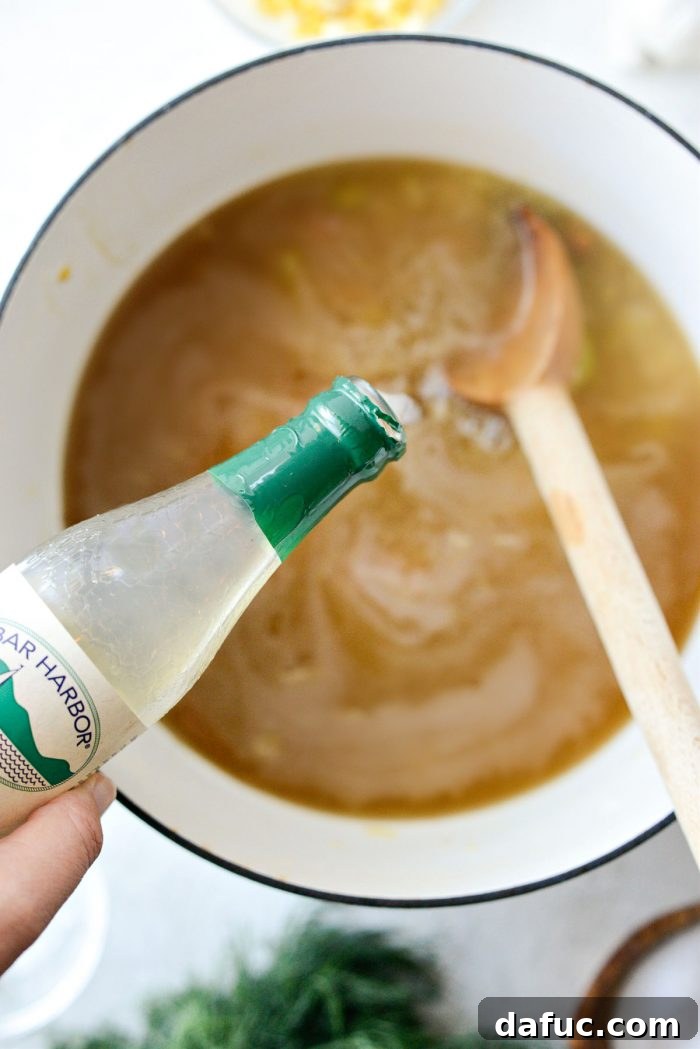
Step 8: The Secret Ingredient: Clam Juice
Now, add 1 cup (or one 8-ounce bottle) of clam juice to the pot. This ingredient is often overlooked but is a true game-changer in any seafood chowder. It provides a profound depth of oceanic flavor, enhancing the overall seafood essence without overpowering the delicate salmon. It’s the secret to making your chowder taste authentically rich and flavorful, just like a classic coastal dish.
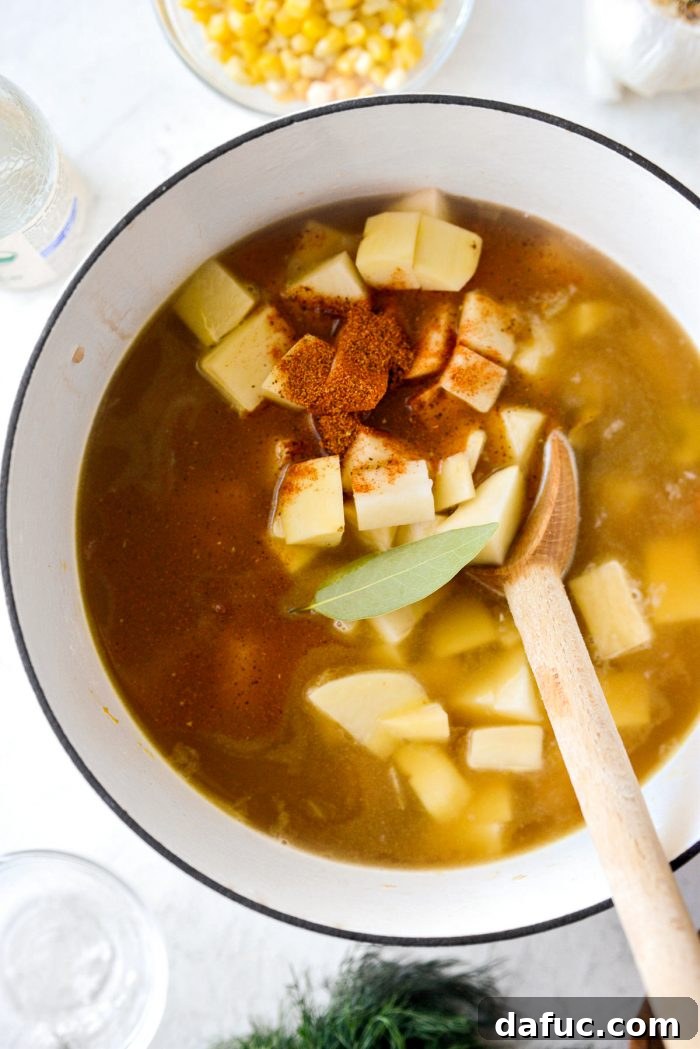
Step 9: Simmering for Flavor and Tenderness
Next, add the diced russet potatoes, 1 bay leaf, and 1 ½ teaspoons of Old Bay seasoning. This iconic blend brings a complex, savory, and slightly spicy character to the chowder. Stir all the ingredients together, cover the pot, and bring the mixture to a boil. Once boiling, reduce the heat to a gentle simmer, uncover, and let it cook for 15 minutes. This simmering time allows the potatoes to become tender and the flavors to meld beautifully.
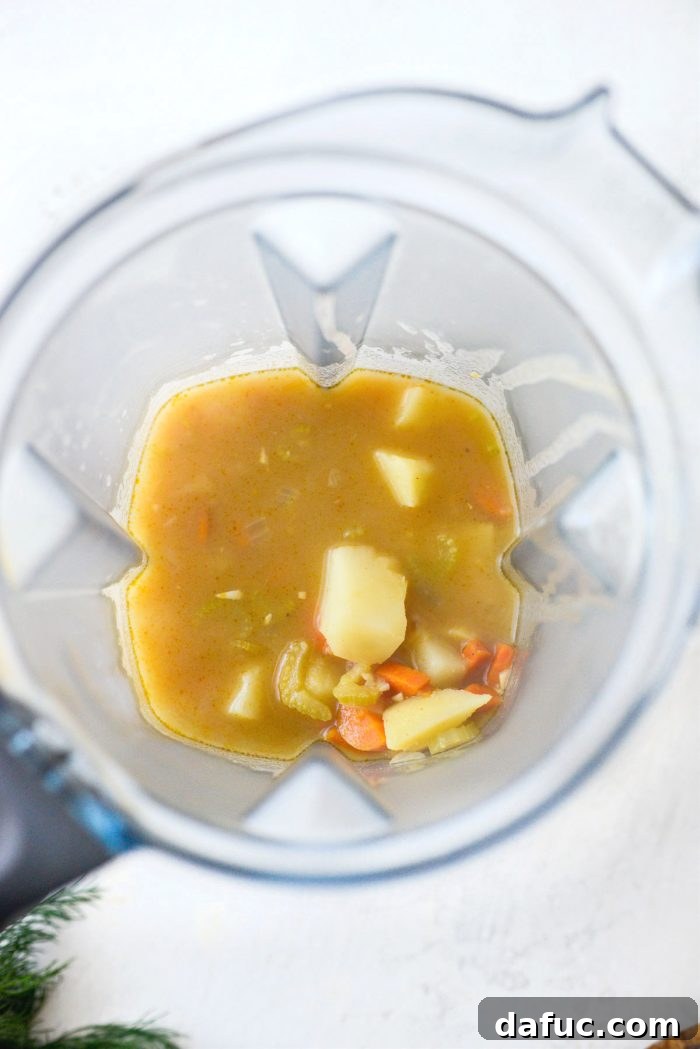
Step 10: Achieving Velvety Smoothness
For an extra creamy texture without adding excessive fat, transfer 2 ladles of the soup (being careful to avoid the bay leaf) into a blender. This portion will primarily consist of cooked potatoes and broth, which are perfect for creating a smooth, rich consistency. (Always be cautious when blending hot liquids; ensure the blender lid is securely vented to allow steam to escape.)
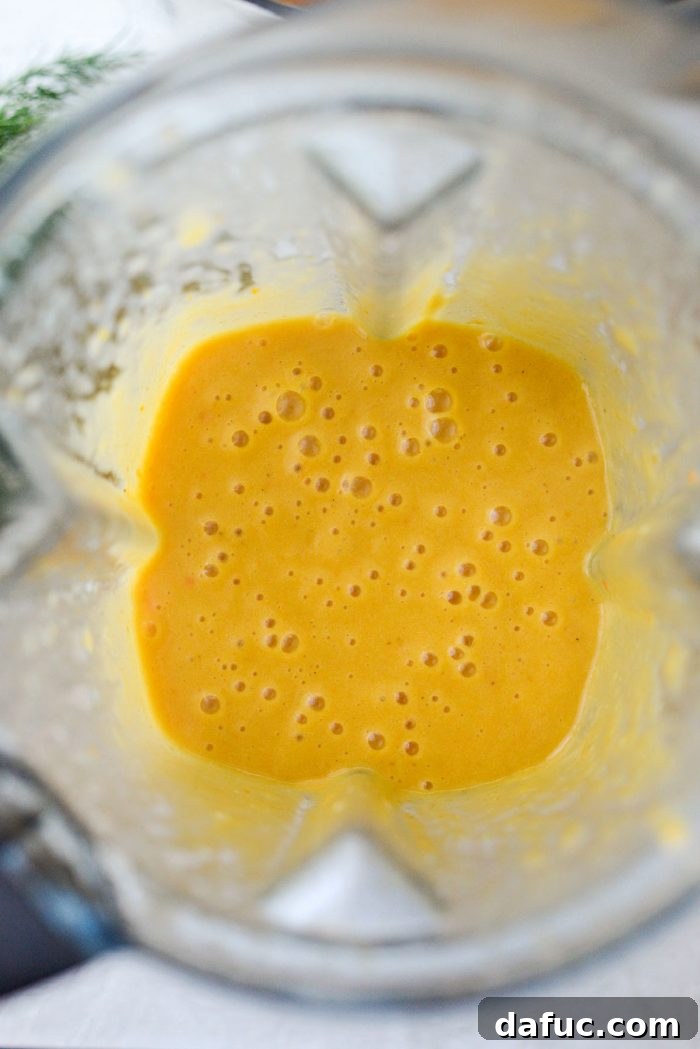
Step 11: Pureeing the Soup
Blend the transferred soup until it is completely velvety smooth. This step is key to creating a luxuriously thick and creamy chowder that still feels light and flavorful, as the starch from the potatoes naturally thickens the liquid. The pureed mixture will act as a natural emulsifier, binding all the flavors together beautifully.
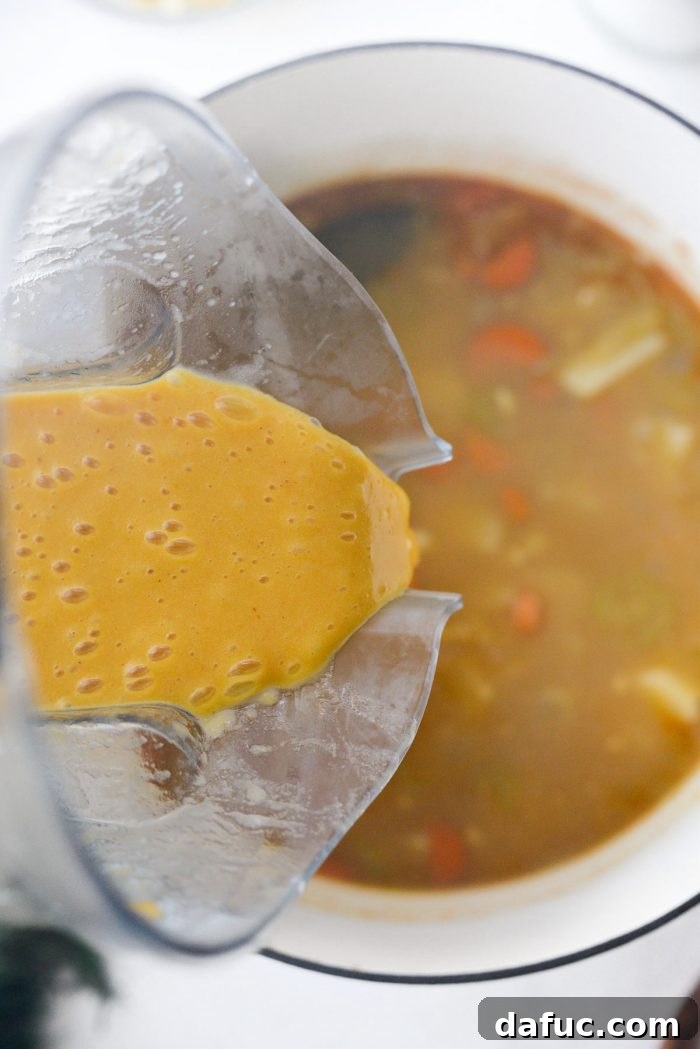
Step 12: Returning the Puree to the Pot
Carefully pour the pureed soup back into the main pot with the rest of the chowder. Stir well to fully incorporate the smooth mixture, instantly transforming the chowder into a rich, luscious consistency. This technique allows for a wonderful creaminess without needing to add large amounts of heavy cream, letting the natural ingredients shine.
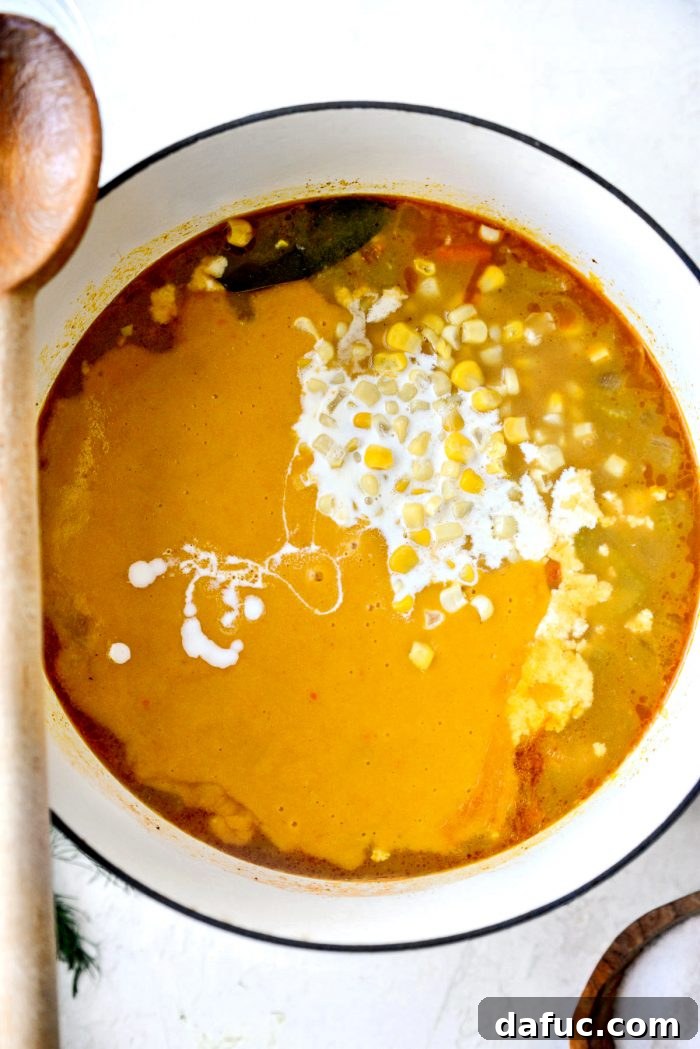
Step 13: Adding Dairy and Corn
Now, add 1 cup of half & half (or if you prefer a richer chowder, substitute with ½ cup heavy cream and ½ cup whole milk). Also, stir in 1 cup of sweet corn. Whether you use fresh kernels sliced from the cob or convenient frozen corn, both will add a delightful burst of sweetness and texture to the chowder. Stir gently to combine all these wonderful ingredients.
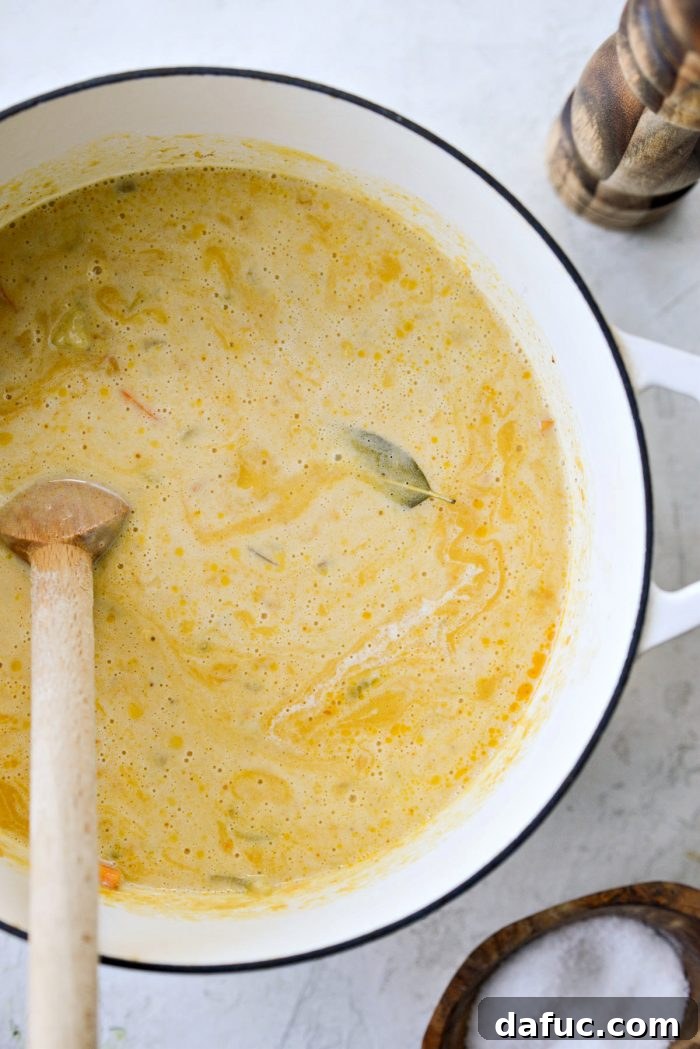
Step 14: Integrating the Salmon
Carefully drop the diced salmon chunks into the chowder. Once the salmon is in, cover the pot and continue to simmer for another 15 to 20 minutes. The cooking time will vary slightly depending on the thickness of your salmon pieces. The salmon is perfectly cooked when it becomes opaque throughout and flakes easily with a fork. Be careful not to overcook the salmon, as it can become dry; just until it’s tender and flaky is ideal.
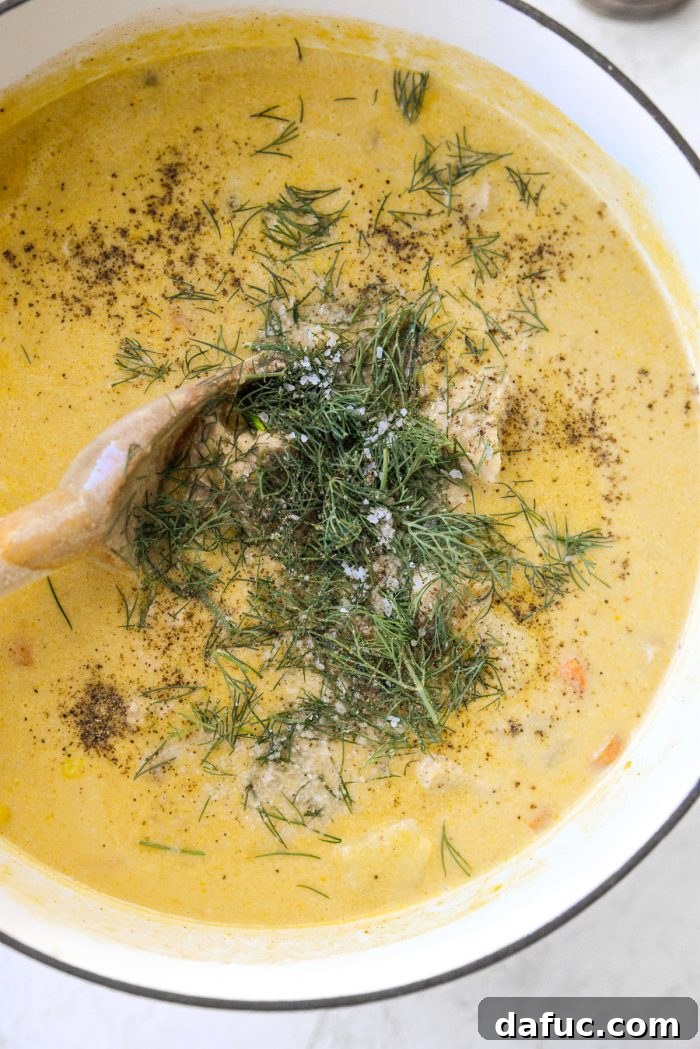
Step 15: Final Seasoning and Fresh Dill
Once the salmon is cooked, remove the bay leaf from the pot. Stir in 1 tablespoon of freshly chopped dill. Dill’s bright, herbaceous notes perfectly complement the richness of the salmon and the creamy chowder. Taste the chowder and season generously with kosher salt and freshly ground black pepper to your preference. I typically find around 1 ½ to 2 teaspoons of kosher salt is just right, but always adjust to your own taste buds.
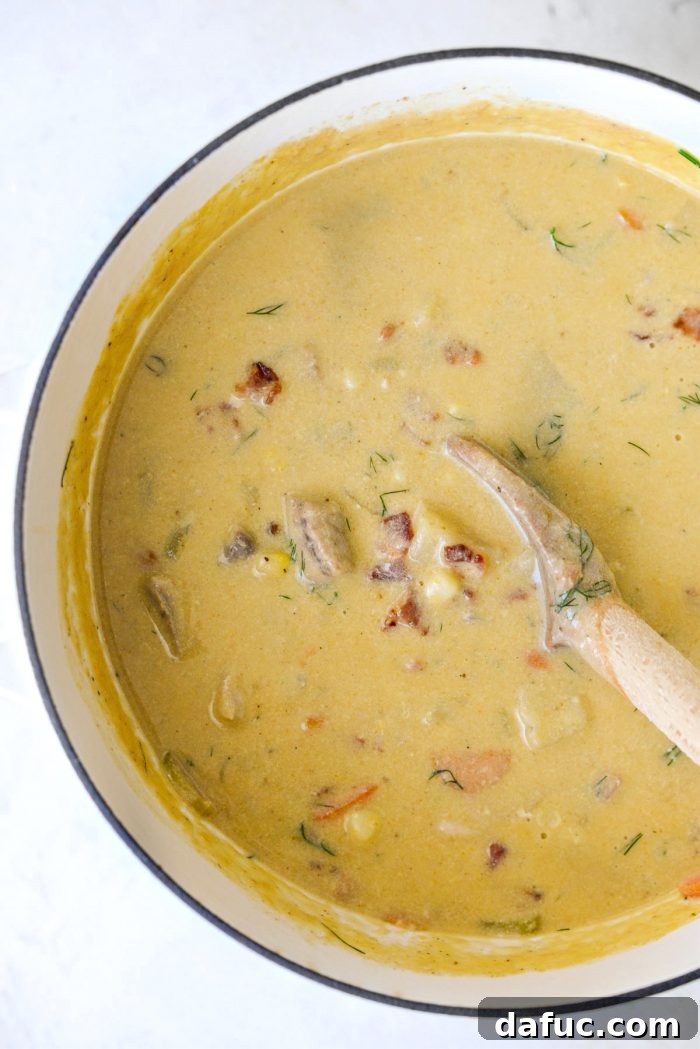
Step 16: The Final Touch: Bacon and Serving
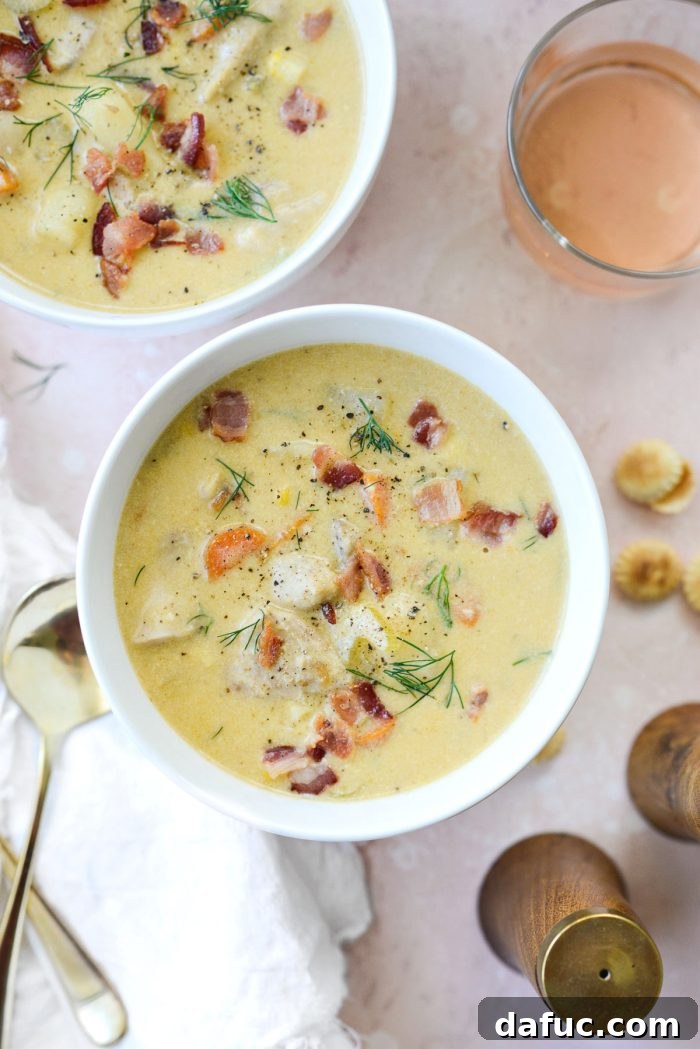
Finally, stir in most of the crispy bacon bits you set aside earlier. This adds another layer of smoky flavor and texture throughout the chowder. Reserve a few pieces for garnishing individual bowls. The chowder is now ready to serve! Ladle generously into bowls.
Garnish and Enjoy!
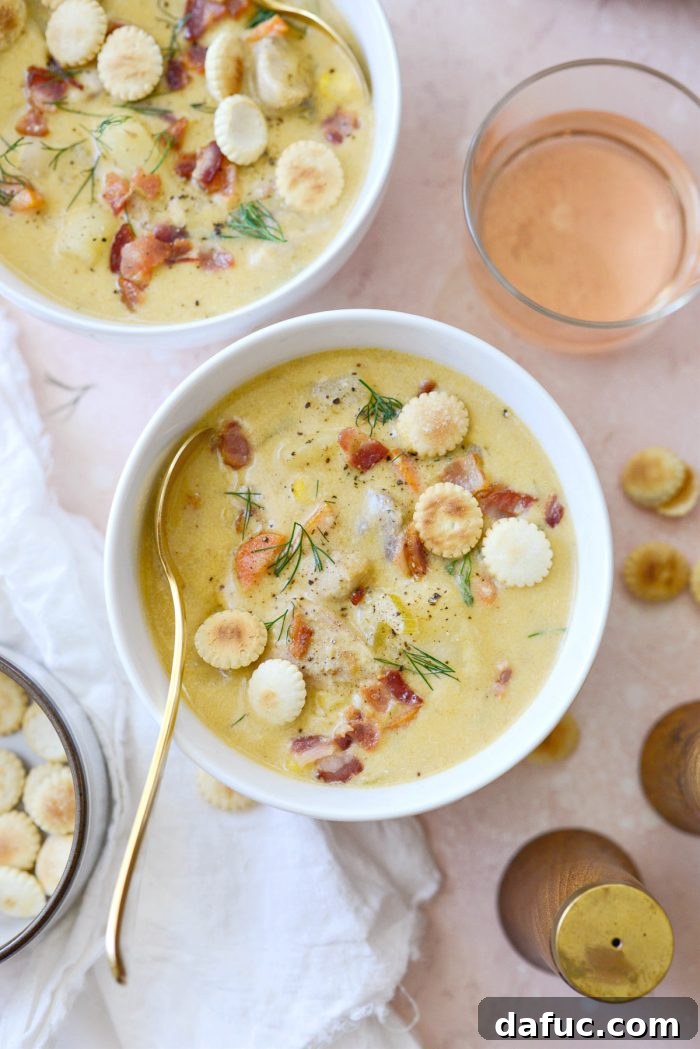
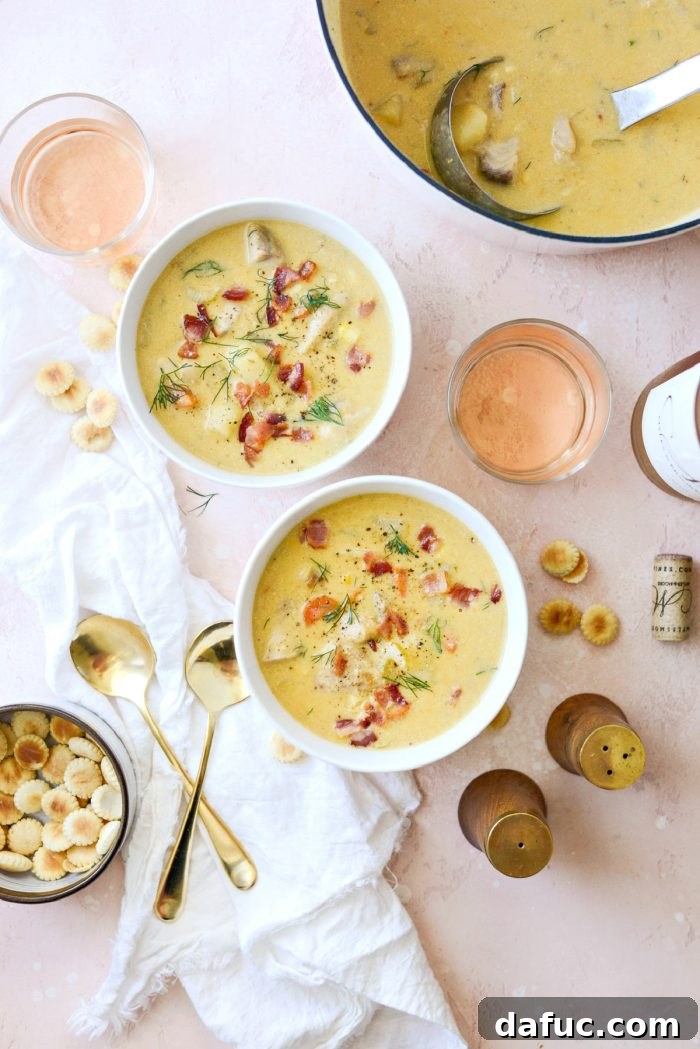
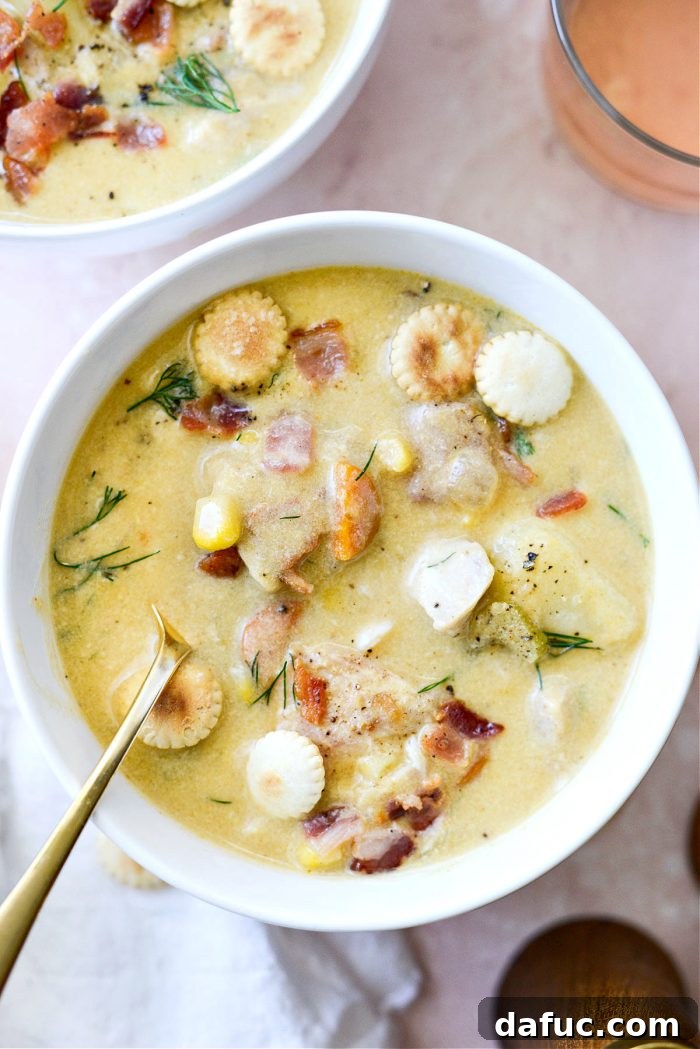
To truly elevate your Salmon Chowder, don’t forget the finishing touches. Garnish each bowl with the reserved crispy bacon pieces, a sprinkle of extra fresh dill, and a generous crack of freshly ground black pepper. For a complete and delightful meal, serve your chowder with a side of crunchy oyster crackers or warm, crusty bread perfect for soaking up every last drop of that creamy broth. A crisp glass of rosé, as pictured, makes for an excellent pairing, offering a refreshing contrast to the richness of the chowder. This soup, with its creamy texture and luscious flavor, manages to be wonderfully satisfying without being overly “seafood-y.” It truly is the perfect soup to warm you up from the inside out on a cold day, or simply to enjoy as a hearty and comforting meal any time of year.
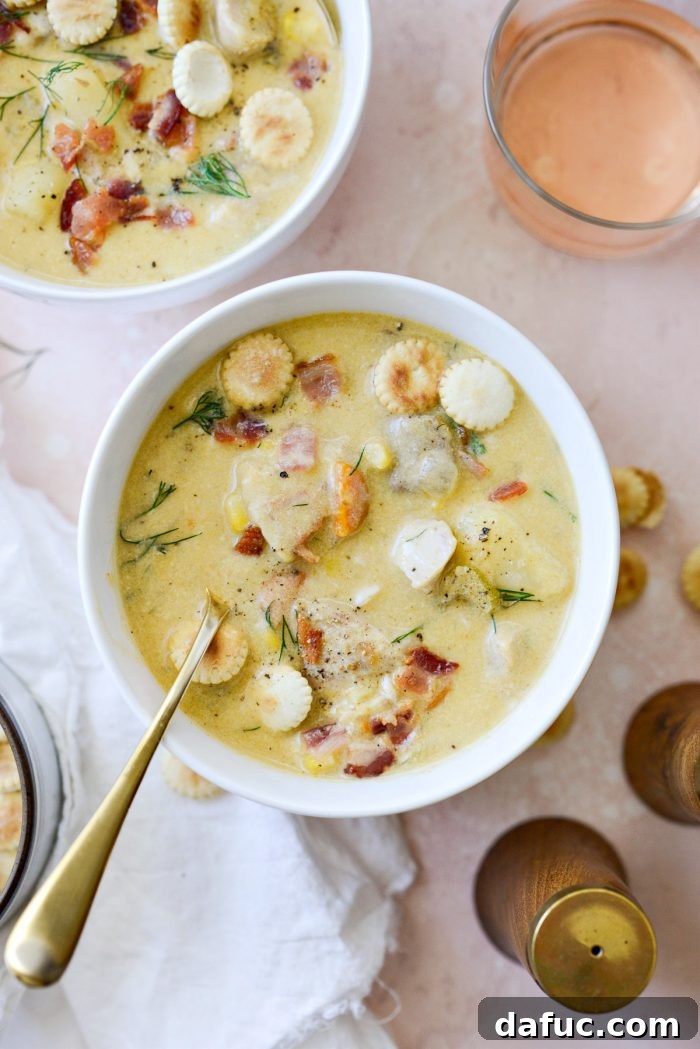
Enjoy this incredible Homemade Salmon Chowder! If you give this recipe a try, I’d love to hear from you. Snap a photo of your creation and share it on social media. You can tag me on Twitter or Instagram! Your culinary adventures inspire me.

Print Recipe
Pin Recipe
Leave a Review »
6
servings
Salmon Chowder
10 minutes
1 hour
1 hour
10 minutes
Ingredients
- olive oil spray
- 4 slices center cut bacon
- 2 short celery stalks, sliced
- 2 medium carrots, sliced into half moons
- 1 medium onion, diced
- 2 cloves garlic, minced
- kosher salt, to taste
- 2 tablespoon unbleached all-purpose flour
- 3 cups unsalted chicken stock, or low-sodium chicken broth
- 1 cup clam juice
- 2 russet potatoes, peeled and chopped
- 1 bay leaf
- 1½ teaspoons old bay seasoning
- 1 cup half & half
- 3/4 cup sweet corn
- 1½ pounds wild caught salmon, diced into 1½ to 2-inch pieces
- black pepper, freshly ground
- dill (fresh), for serving
Equipment
-
Lodge EC7OD13 Enameled Cast Iron Oval Dutch Oven, 7-Quart, Oyster White
Instructions
-
Spray the bottom of your dutch oven with olive oil and add the chopped bacon. Heat over medium and cook until crispy. Once crispy, use a slotted spoon to remove and transfer the bacon to a paper towel lined paper plate, reserving the bacon fat in the pot.
-
To the reserved bacon fat, add the diced onion, carrot, celery, and minced garlic with a pinch of kosher salt. Stir and cook until the vegetables are tender, which should take about 8 minutes.
-
Sprinkle in the 2 tablespoons of all-purpose flour. Stir well and cook for 1 to 2 minutes to cook out the raw flour taste, creating a roux.
-
Next, pour in the 3 cups of unsalted chicken stock and 1 cup of clam juice. Add the diced potatoes, bay leaf, and 1½ teaspoons of Old Bay seasoning. Stir to combine, cover the pot, and bring to a boil. Once boiling, reduce the heat to a simmer, uncover, and cook the potatoes for 15 minutes, or until tender.
-
Carefully scoop 2 ladles of the soup (avoiding the bay leaf) into a blender. Puree until smooth and then pour this velvety mixture back into the soup pot. Stir it in along with the 1 cup of half & half, 3/4 cup sweet corn, and the diced salmon. Cover the pot and continue to simmer for 15 to 20 minutes, or until the salmon is fully cooked and flakes easily with a fork.
-
Remove the bay leaf. Stir in most of the crispy bacon and 1 tablespoon of freshly chopped dill. Season the soup with kosher salt and freshly ground black pepper to taste. (Around 1½ to 2 teaspoons of kosher salt is typically a good starting point.)
-
Ladle into bowls and serve immediately, garnished with any remaining crispy bacon, fresh dill, and oyster crackers or warm, crusty bread.
Calories: 544kcal,
Carbohydrates: 26g,
Protein: 44g,
Fat: 29g,
Saturated Fat: 8g,
Polyunsaturated Fat: 19g,
Cholesterol: 125mg,
Sodium: 726mg,
Fiber: 3g,
Sugar: 5g
Laurie McNamara
Soups, Stews & Chilis
American