
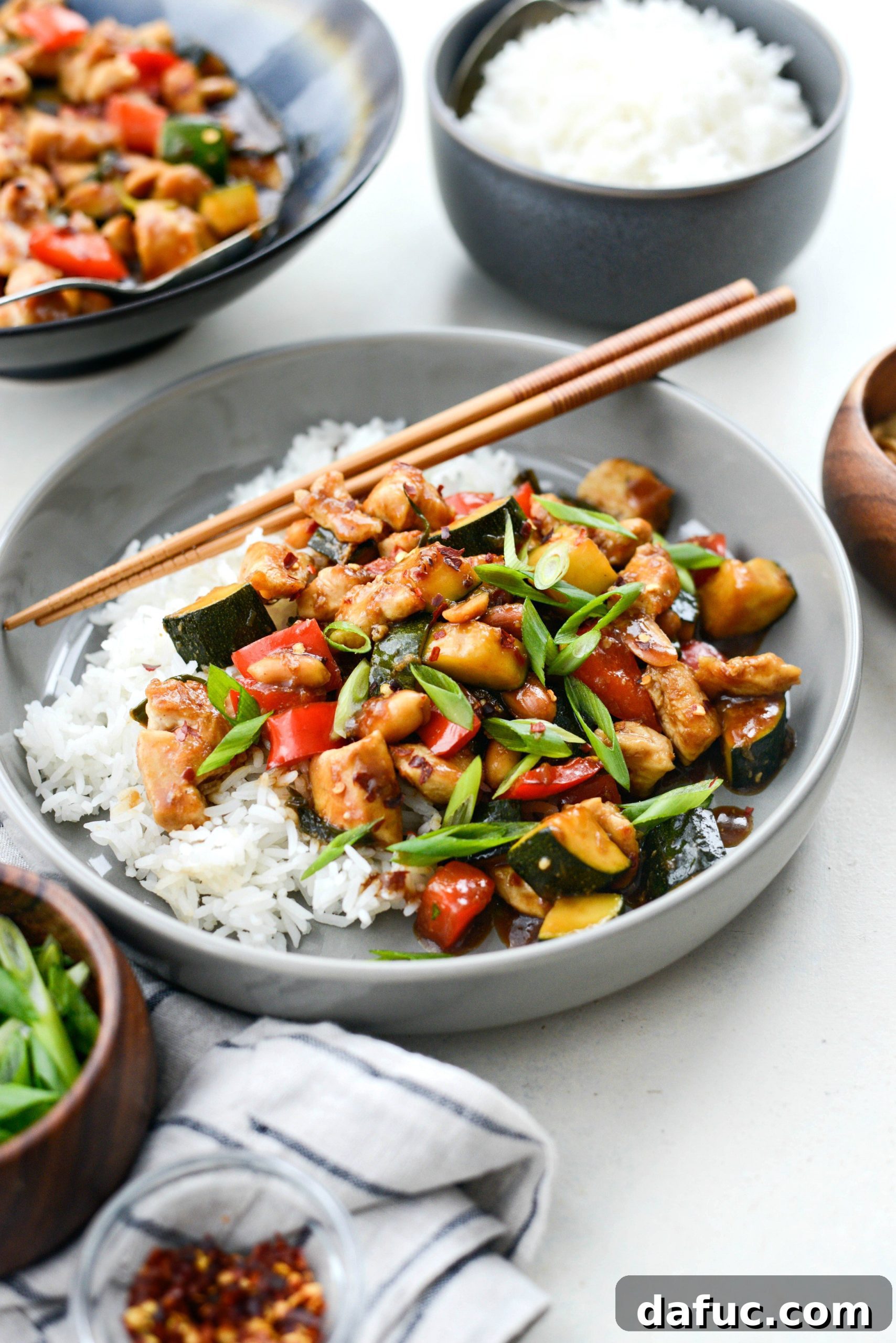
Mastering the Art of Homemade Kung Pao Chicken Stir-Fry: Your Ultimate Guide
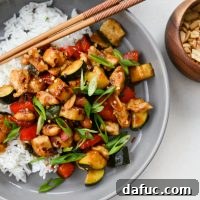
Tired of ordering takeout? Imagine recreating that beloved sweet and spicy flavor of authentic Kung Pao Chicken right in your own kitchen! This comprehensive guide will walk you through crafting a sensational homemade Kung Pao Chicken stir-fry, featuring succulent chicken pieces, crunchy peanuts, fresh zucchini, and vibrant bell peppers, all coated in a rich, aromatic sauce. Perfect for a cozy night in, this recipe yields 4 generous portions and can be ready to serve over steaming rice or noodles in just about an hour, proving that incredible Chinese cuisine is well within your reach.
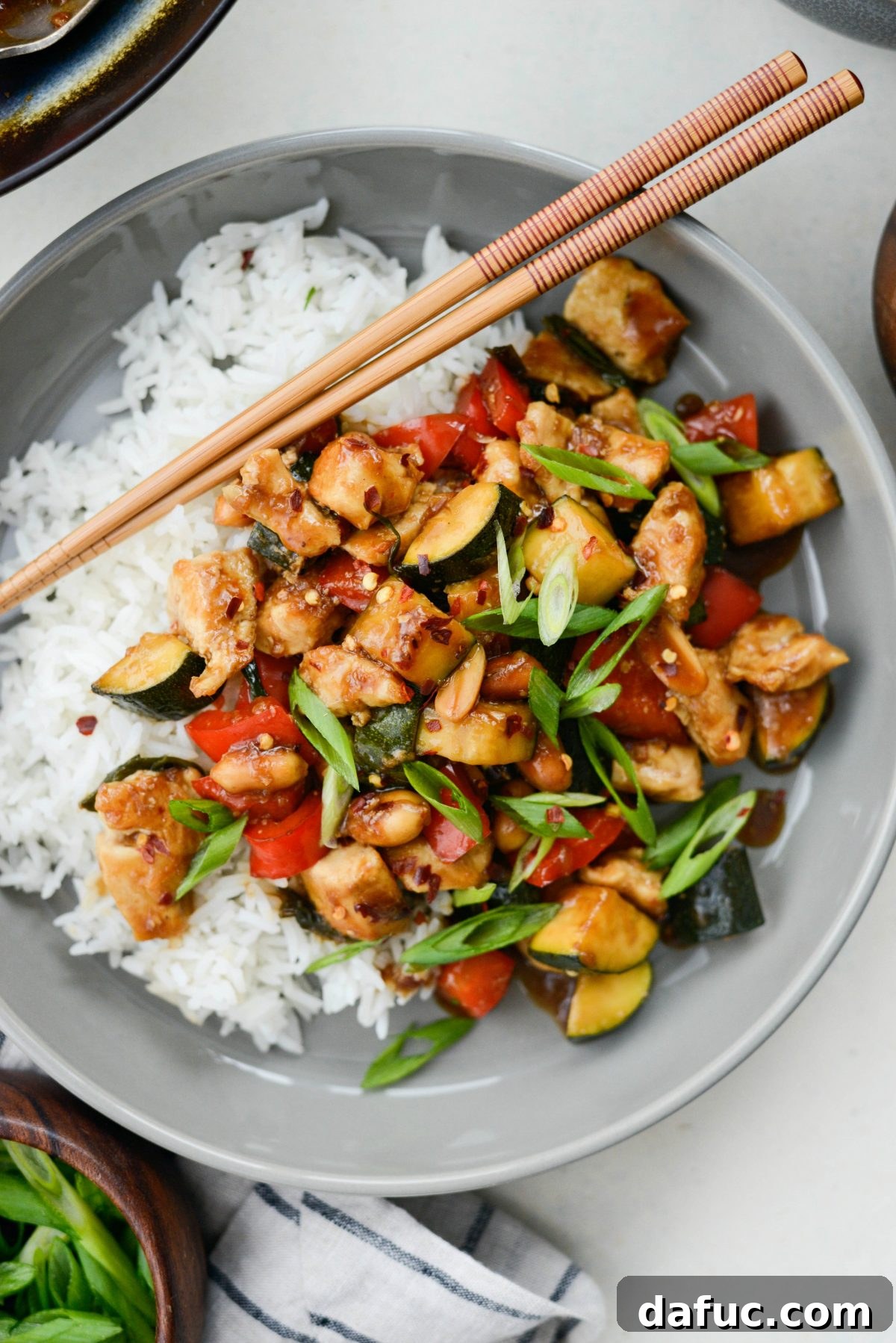
The Irresistible Allure of Chinese Cuisine: From Takeout to Homemade
There’s an undeniable charm to Chinese food, whether it’s a nostalgic meal from a cherished local spot or a quick pick-up from a popular chain – especially one with a convenient drive-through! I vividly recall a particular evening when the cooking motivation was at an all-time low. My partner, Pat, wisely suggested carryout. Who could argue with that? Our craving led us on a 35-minute drive to the nearest Panda Express, and let me tell you, it was absolutely worth every mile. The drive-through experience was seamless, and the food exceeded all expectations.
We indulged in an array of dishes that night: the classic orange chicken, savory broccoli beef, comforting chow mein noodles, and fluffy fried rice. But among the delightful spread served in those iconic red paper cartons, one dish truly captured my heart: the Kung Pao Chicken. Its exquisite balance of spicy heat, subtle sweetness, and an abundance of fresh vegetables was simply captivating. From that moment, I was determined to master my own version of this fantastic Kung Pao Chicken stir-fry at home.
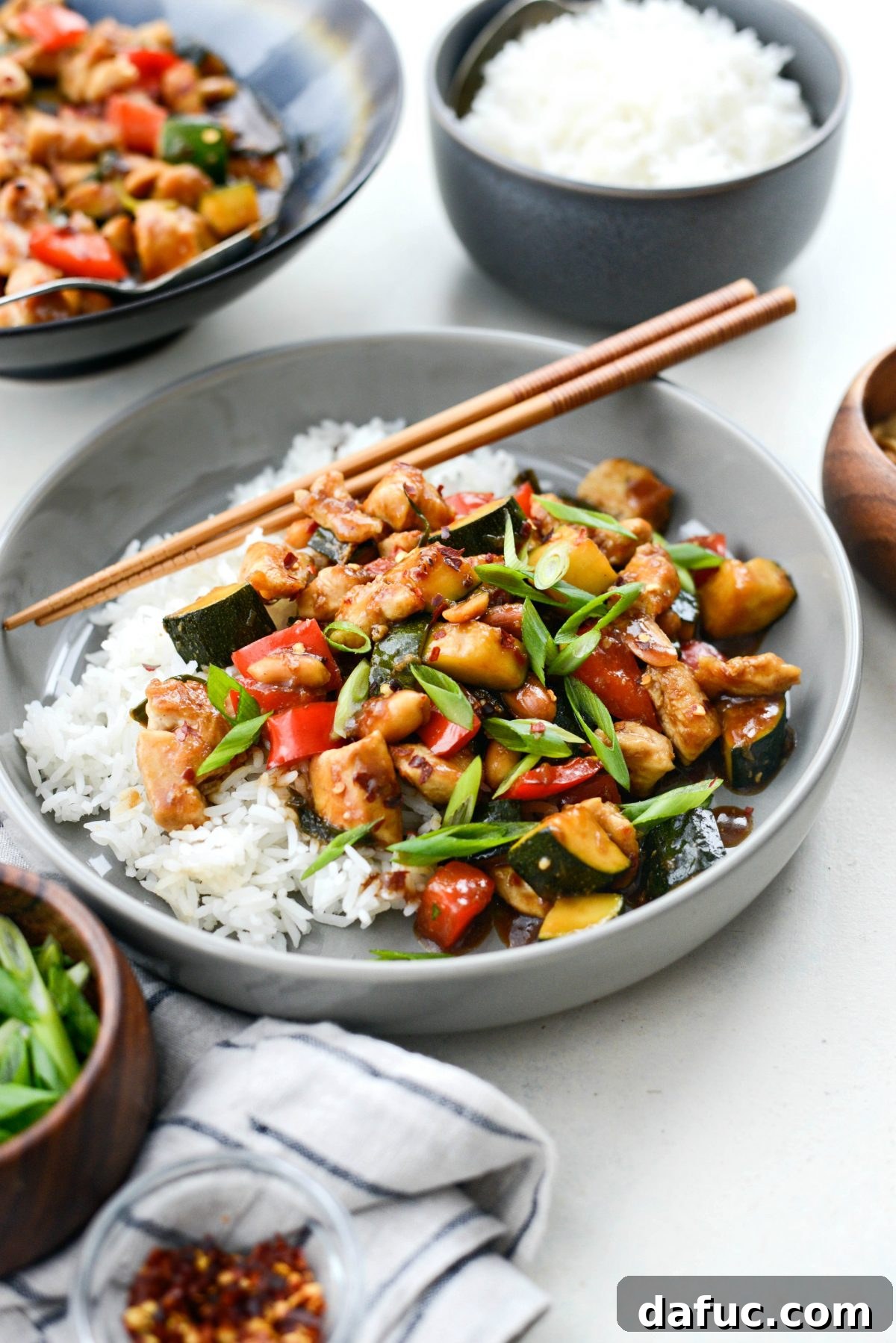
Since then, this homemade Kung Pao Chicken has earned its place as a cherished family favorite. It delivers all the vibrant flavors and textures we adore, with the added satisfaction of knowing exactly what goes into every delicious bite. It’s truly a game-changer for weeknight dinners and a testament to how simple and rewarding cooking authentic Asian dishes can be.
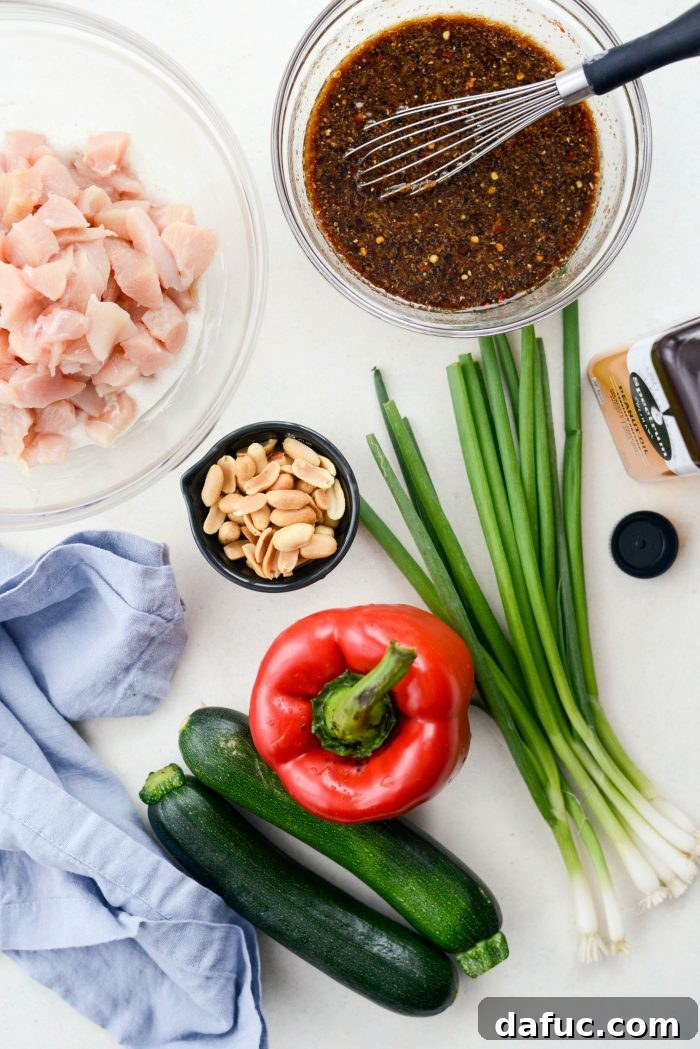
Essential Ingredients for Your Homemade Kung Pao Chicken Stir-Fry
Creating this irresistible Kung Pao Chicken at home, even in your most comfortable pajamas, starts with gathering the right ingredients. This recipe is divided into two main components: the flavorful Kung Pao sauce and the dynamic stir-fry itself. Each ingredient plays a crucial role in building the layered flavors that define this classic dish.
For the Main Stir-Fry:
- **Boneless, Skinless Chicken Breasts:** Diced into bite-sized pieces for quick cooking and tender texture.
- **Egg White:** Essential for velveting the chicken, creating a protective coating that ensures moisture and a tender interior.
- **Cornstarch:** Works hand-in-hand with the egg white to give the chicken a crisp “breading-like” exterior when seared.
- **White Pepper:** Adds a subtle, distinct warmth and fragrance to the chicken coating, different from black pepper.
- **Peanut Oil:** Ideal for stir-frying due to its high smoke point and authentic nutty flavor.
- **Zucchini:** Adds a mild, slightly sweet flavor and tender-crisp texture.
- **Red Bell Pepper:** Provides a burst of color, sweetness, and a pleasant crunch.
- **Green Onions:** Used for both flavor within the stir-fry and as a fresh garnish, offering a mild oniony bite.
- **Roasted Peanuts (lightly salted or unsalted):** A signature ingredient that delivers essential crunch and a rich, nutty depth.
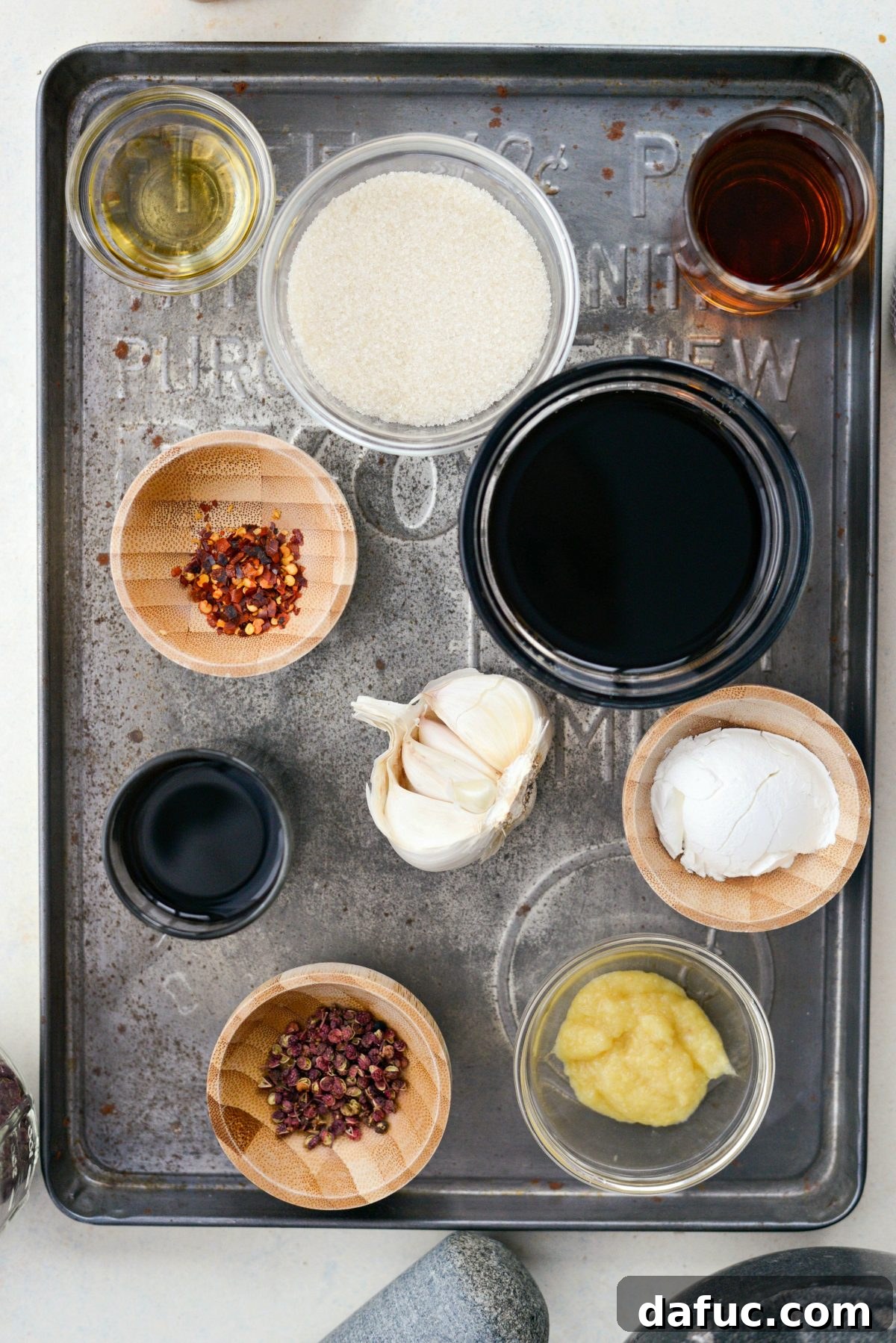
Crafting the Authentic Kung Pao Sauce from Scratch
The soul of any great Kung Pao Chicken lies in its sauce. This homemade rendition ensures an unparalleled depth of flavor that can’t be matched by store-bought alternatives. While some ingredients might be new to your pantry, they are fundamental for achieving that truly authentic taste. Don’t worry, they are readily available at most Asian markets or online.
For the Homemade Kung Pao Sauce:
- **Sugar:** Balances the spice and acidity, contributing to the signature sweet and savory profile.
- **Cornstarch:** Acts as a thickening agent, giving the sauce its desirable glossy consistency.
- **Ground Szechuan Peppercorns:** The star ingredient! These unique peppercorns provide the distinctive “mala” (numbing and spicy) sensation that is characteristic of authentic Szechuan cuisine. If you’re new to preparing them, click here for a guide on how to best prepare and grind your own.
- **Red Pepper Flakes:** For adjustable heat, allowing you to tailor the spice level to your preference.
- **Fresh Garlic:** Aromatic foundation, providing pungent depth.
- **Grated Fresh Ginger:** Adds a bright, zesty, and warming note that complements the garlic beautifully.
- **Chinkiang Vinegar:** A rich, dark, and slightly sweet Chinese black vinegar that offers a complex, tangy depth unlike any other. It’s crucial for the authentic flavor.
- **Low-Sodium Tamari (or Low-Sodium Soy Sauce):** Provides the savory umami base for the sauce. Using low-sodium allows better control over the overall saltiness.
- **Shaoxing Wine:** A traditional Chinese cooking wine that imparts a distinct, complex flavor profile, adding significant depth and authenticity to the sauce. There’s no true substitute if you’re aiming for genuine taste.
Feel free to customize the sauce slightly to your liking: increase the Chinkiang vinegar for a tangier sauce, or add more sugar for a sweeter profile. While a couple of these ingredients might seem unfamiliar, they are truly essential for an authentic stir-fry. I highly recommend seeking them out, as perfect substitutes that yield the same nuanced results are hard to come by. You’ll find links to the specific brands I use in the recipe section below.
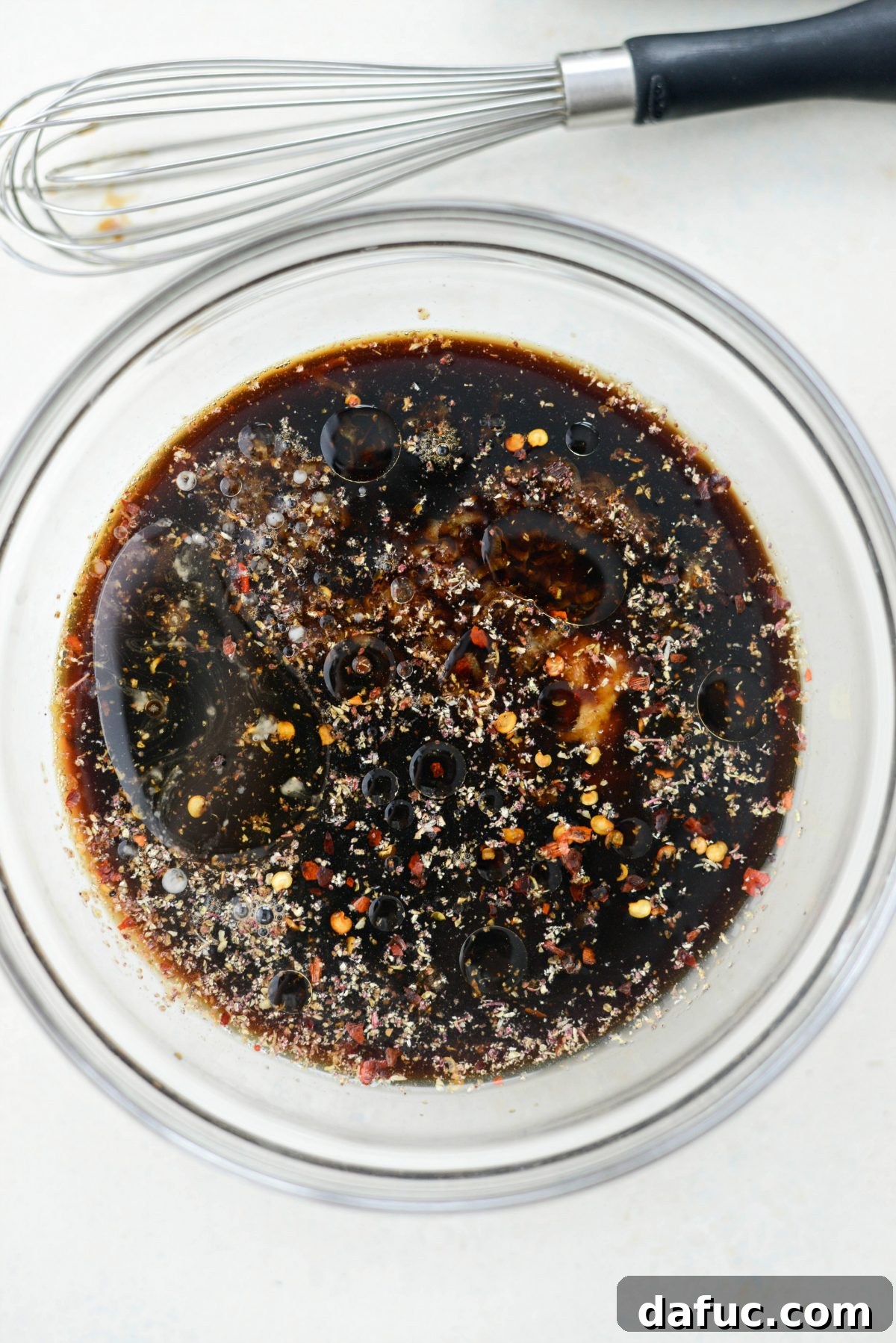
Mixing Your Authentic Kung Pao Sauce
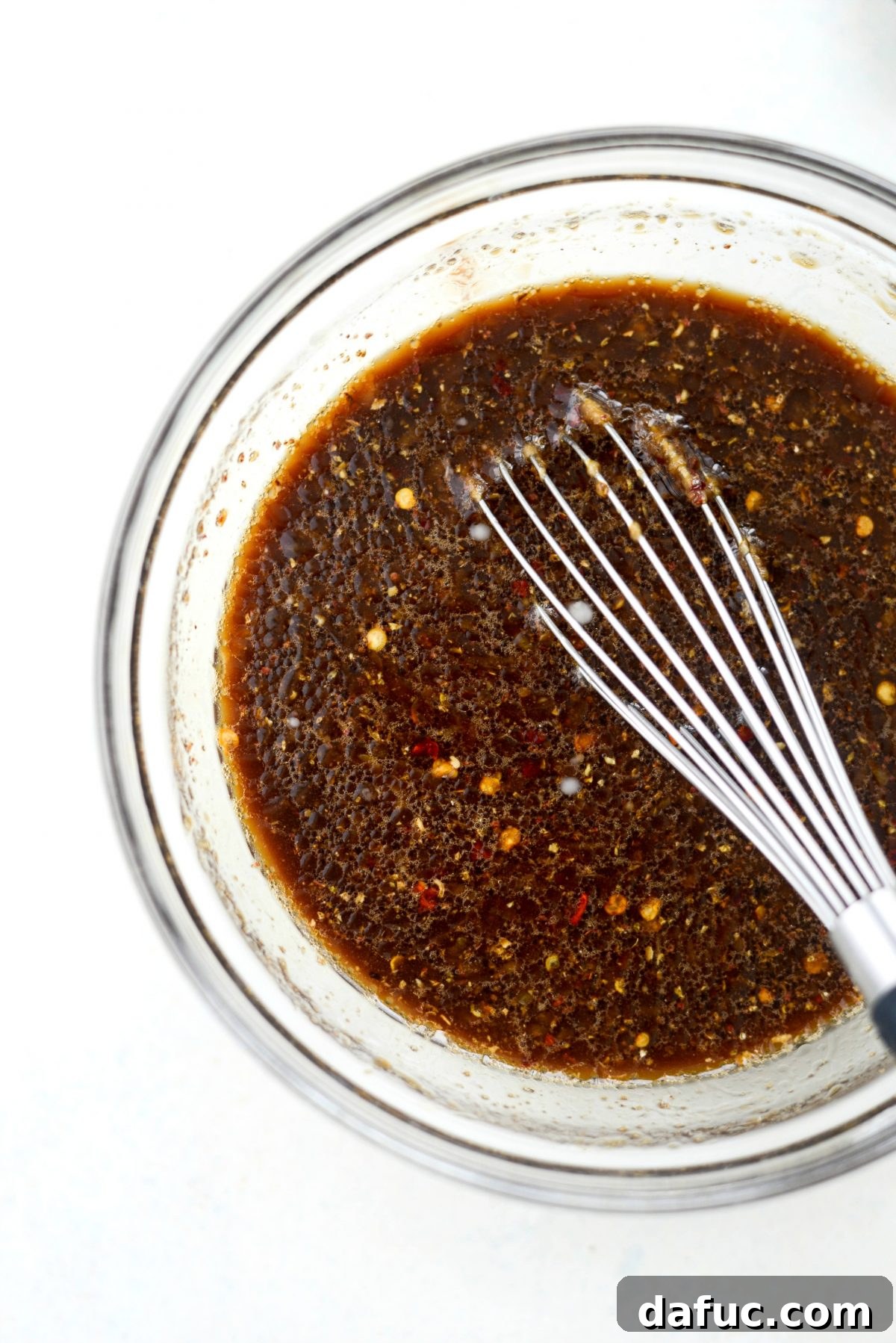
Once you have all your sauce ingredients prepped, the mixing process is straightforward. In a medium-sized mixing bowl, combine 1/3 cup sugar, 1 tablespoon cornstarch, 3/4 to 1 teaspoon ground Szechuan peppercorns (adjust to your heat preference), 1 teaspoon red pepper flakes (optional, for extra heat), 6 large cloves of minced garlic, 2 teaspoons grated fresh ginger, 1/3 cup Chinkiang vinegar, 1/4 cup low-sodium tamari (or low-sodium soy sauce), and 1/4 cup Shaoxing wine. Whisk these ingredients together vigorously until they are thoroughly combined and the sugar has dissolved. Set this flavorful mixture aside while you prepare the rest of your stir-fry components.
Preparing the Chicken for the Perfect Stir-Fry
The secret to tender, flavorful chicken in your stir-fry lies in a technique called velveting. This step not only protects the chicken from drying out but also gives it that delightful crispy texture reminiscent of professional takeout. Begin by heating 1 teaspoon of peanut oil in your wok or a large chef’s pan over high heat, allowing it to get intensely hot.
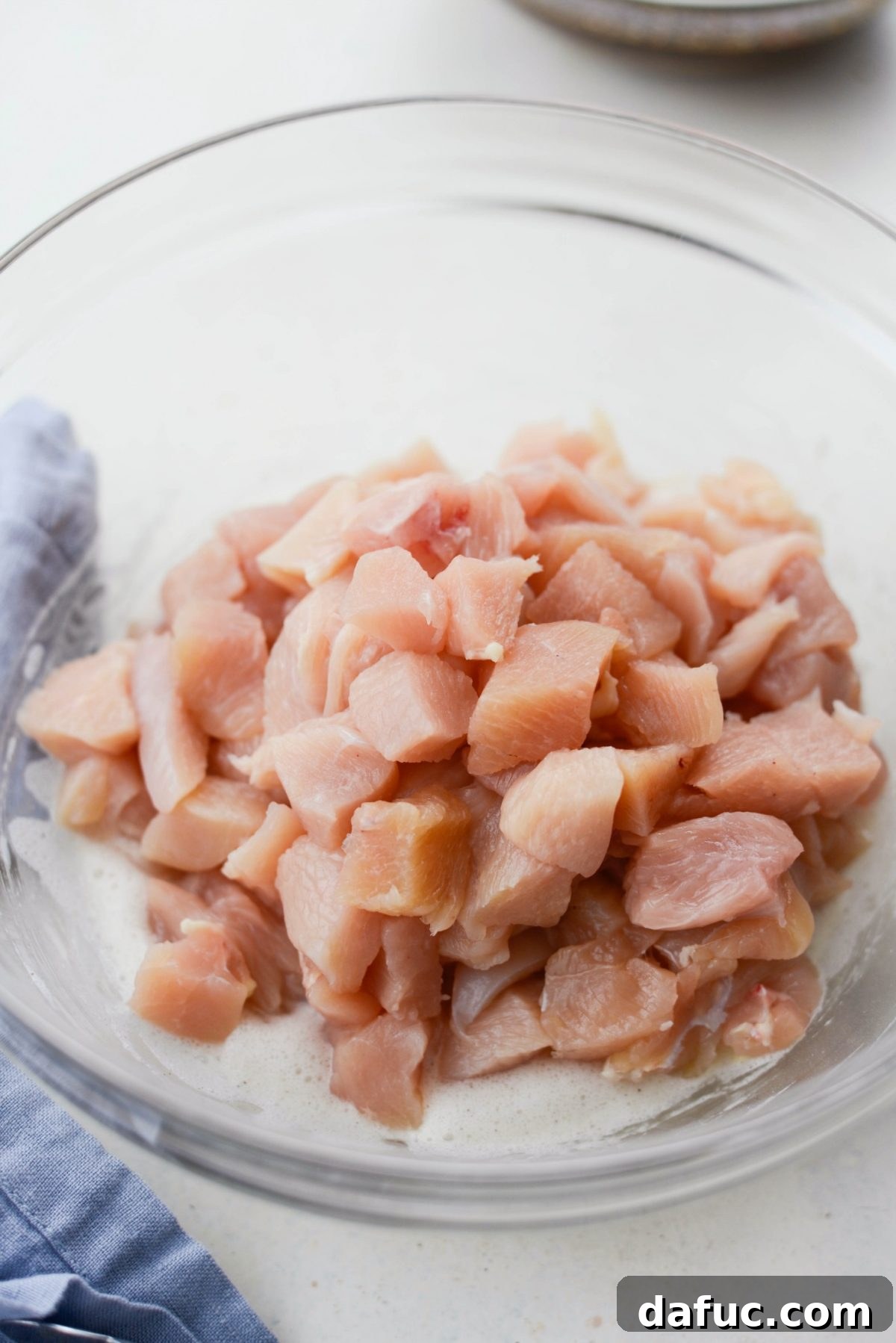
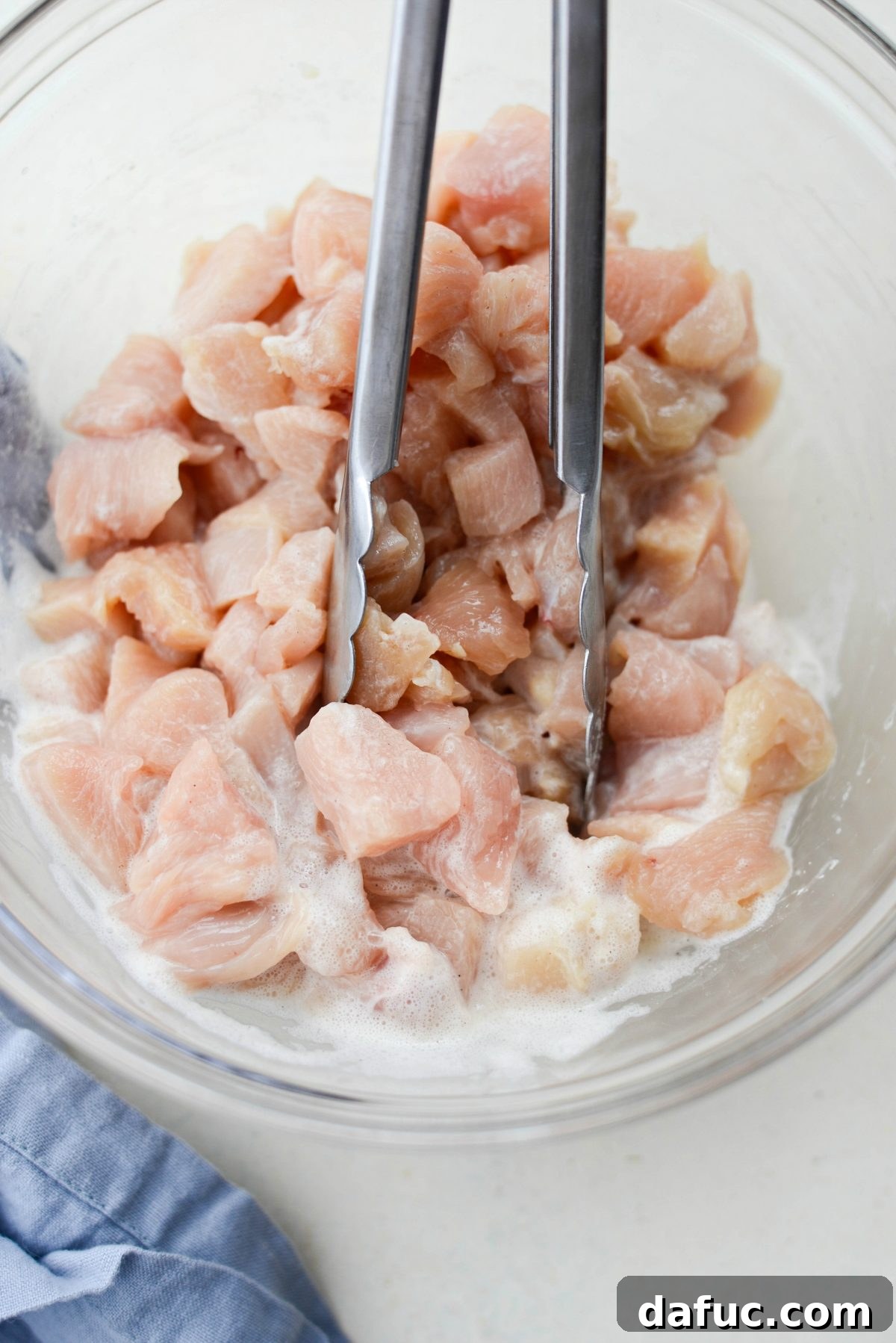
Meanwhile, in a separate, larger mixing bowl, whisk the egg white until it becomes frothy and slightly aerated. To this, add 2 teaspoons of cornstarch and 1/4 teaspoon of white pepper, stirring until a smooth, thin paste forms. Next, add your 1-1/4 pounds of diced boneless, skinless chicken breasts to this mixture. Toss the chicken thoroughly until each piece is evenly coated. This protective layer will be key to achieving a beautifully seared and tender chicken, rather than just steamed chicken, once it hits the hot wok.
Mastering the Stir-Fry Technique: Searing the Chicken to Perfection
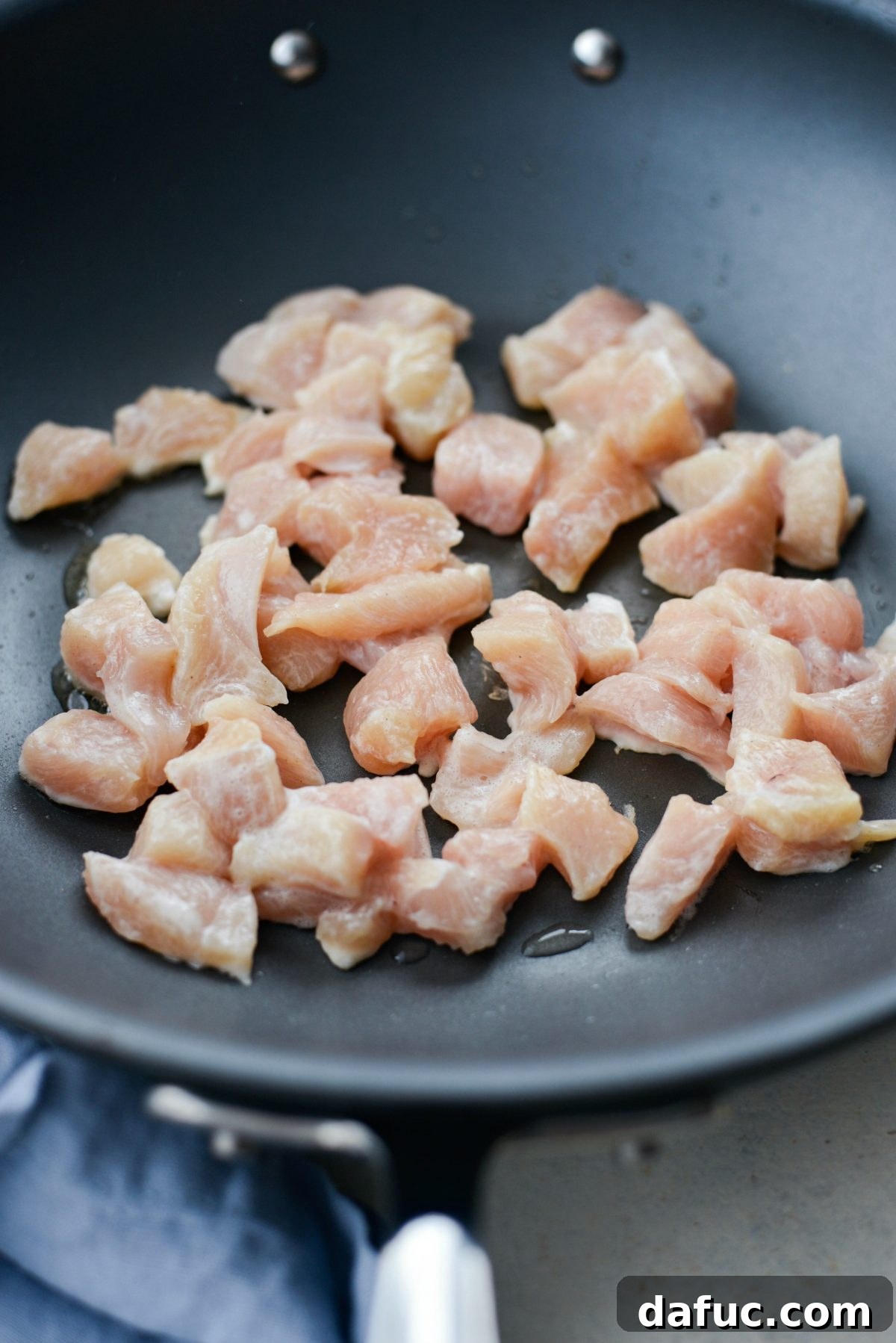
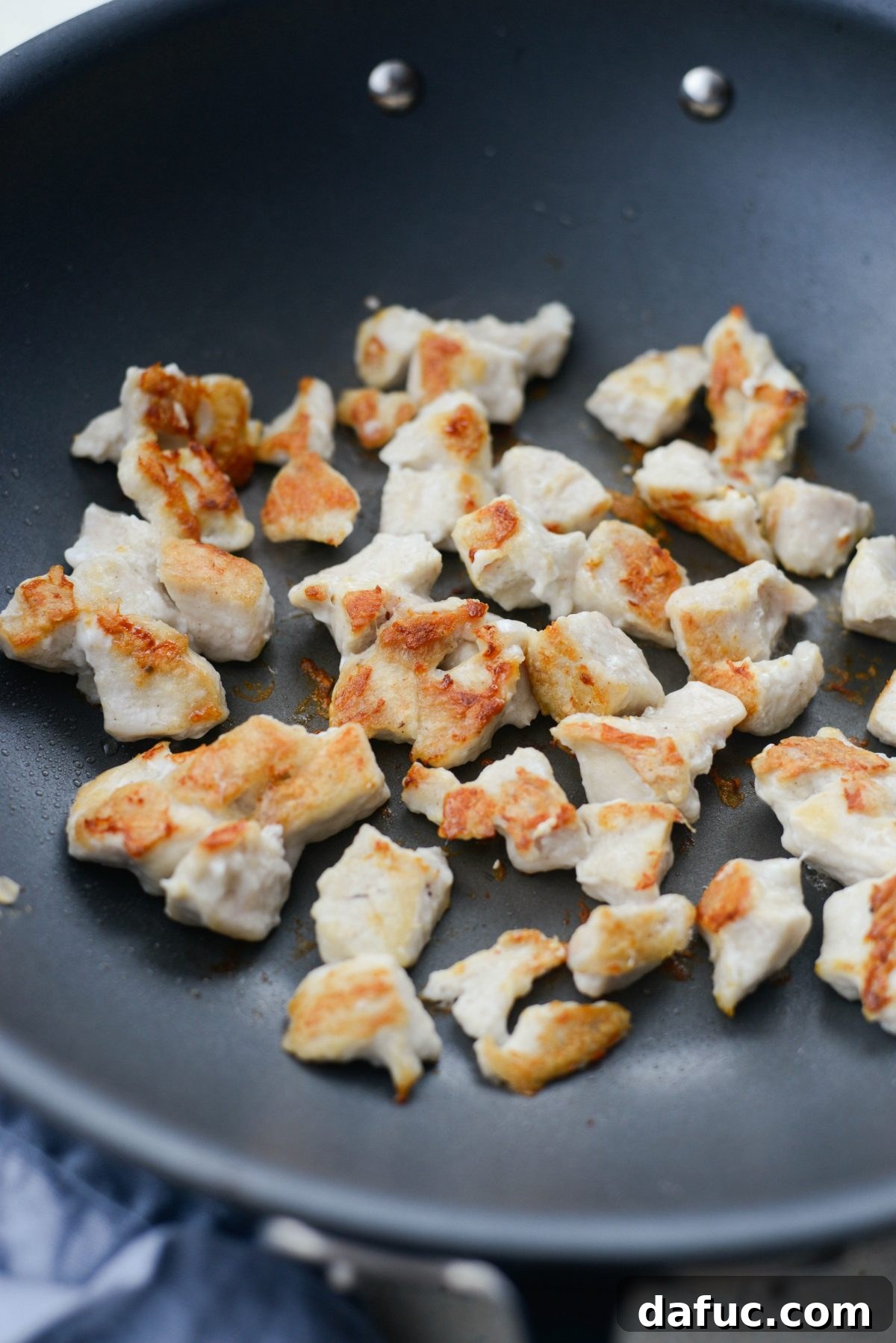
Achieving perfectly seared chicken is fundamental to a delicious Kung Pao stir-fry. This isn’t a step to rush! Ensure your wok or pan is smoking hot before adding the chicken. High heat is essential for developing that desirable crispy exterior and locking in the juices. Work in batches, ideally three, to avoid overcrowding the pan. Overcrowding will lower the temperature of your wok, causing the chicken to steam instead of sear, and you’ll miss out on those crucial caramelized edges and rich flavor.
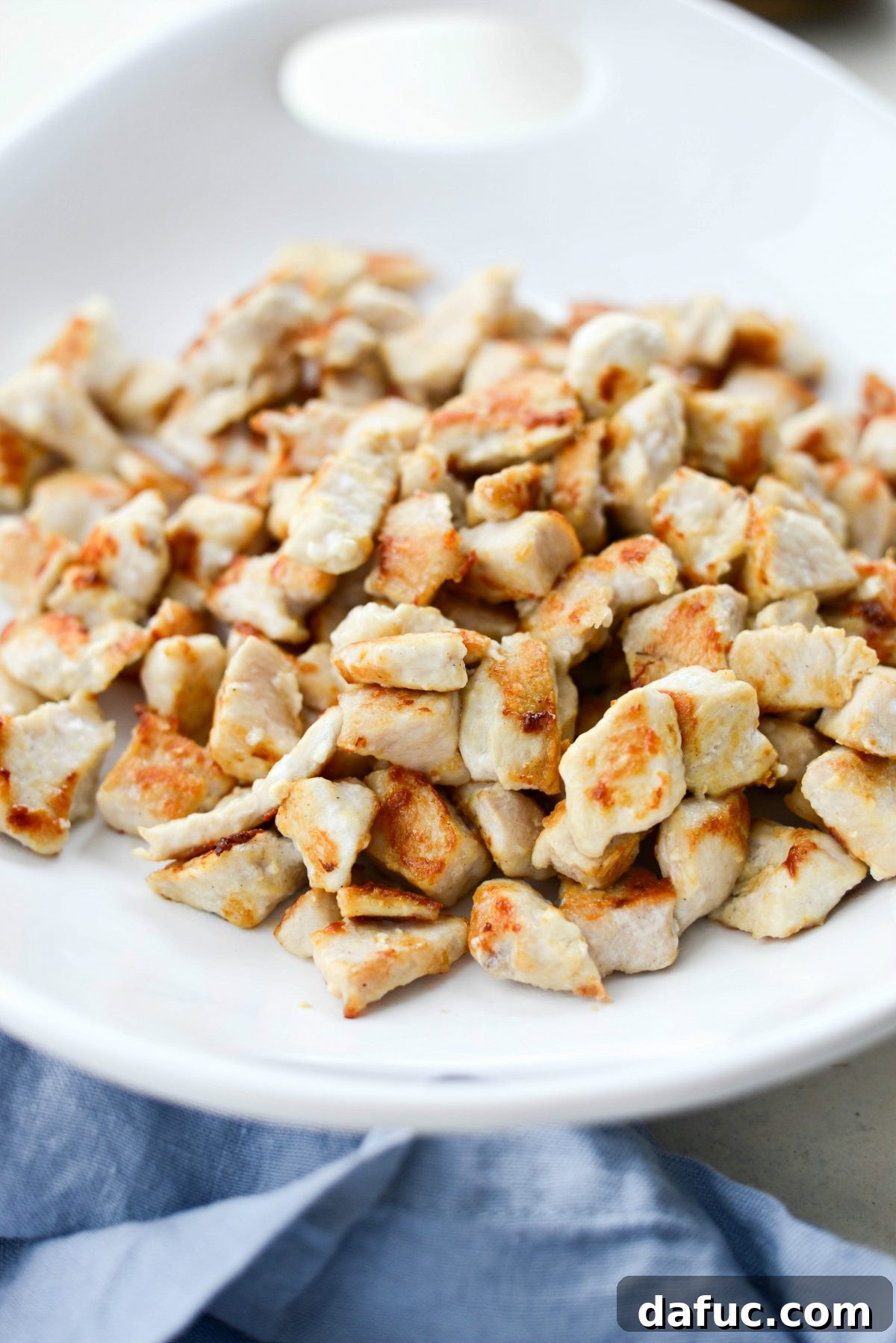
Add an even layer of coated chicken to the searing hot pan and allow it to cook undisturbed for 5 to 6 minutes. This initial searing creates a deeply golden and crispy crust. Once a beautiful crust has formed, turn the chicken pieces and continue cooking until they are fully cooked through. As each batch finishes cooking, transfer the crispy chicken to a clean dish and set it aside. Repeat this process with the remaining chicken, adding up to 2 additional teaspoons of peanut oil as needed between batches to maintain the ideal searing conditions.
Sautéing the Vegetables and Bringing It All Together
With the chicken perfectly seared and set aside, it’s time to add the vibrant vegetables and bring the stir-fry to completion. Add the final teaspoon of peanut oil to your wok. Then, introduce the diced zucchini, chopped red bell pepper, 1-inch strips of green onions, and 1/3 cup of your roasted peanuts. Add a pinch of kosher salt to help draw out their natural flavors. Toss these ingredients to coat them evenly in the hot oil. Allow the vegetables to cook for approximately 3 minutes, stirring only occasionally. This technique allows them to caramelize slightly and develop a tender-crisp texture, avoiding sogginess.
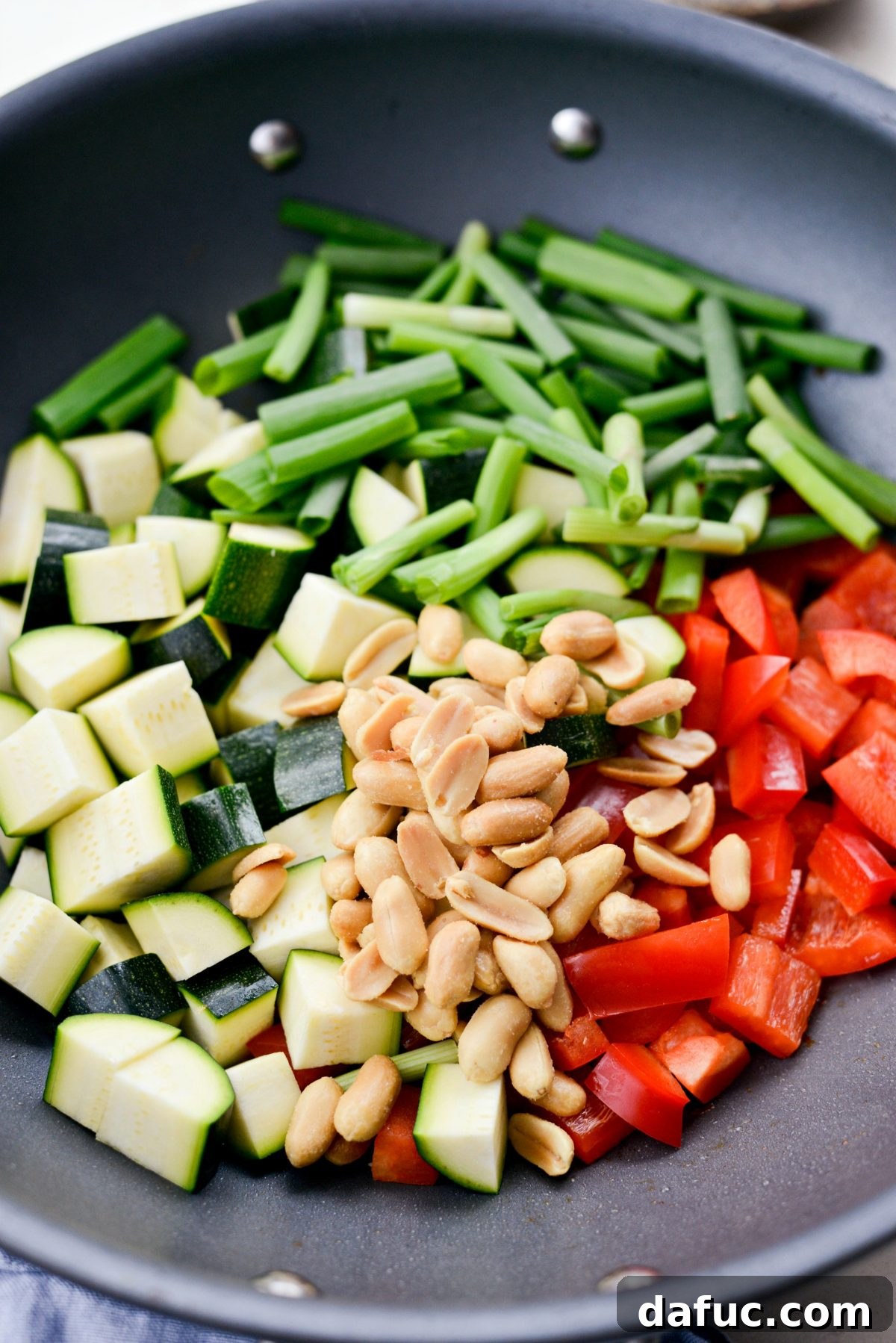
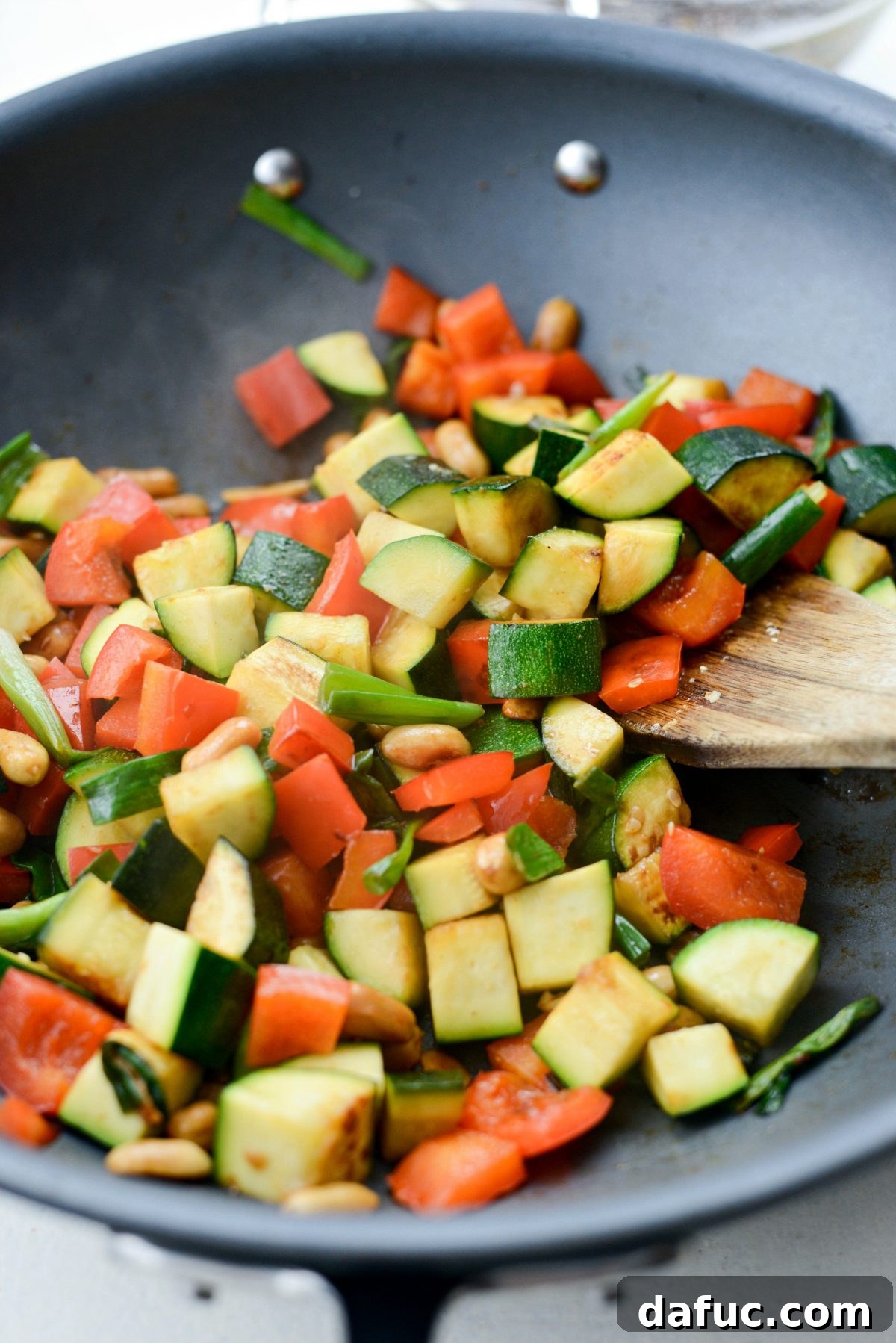
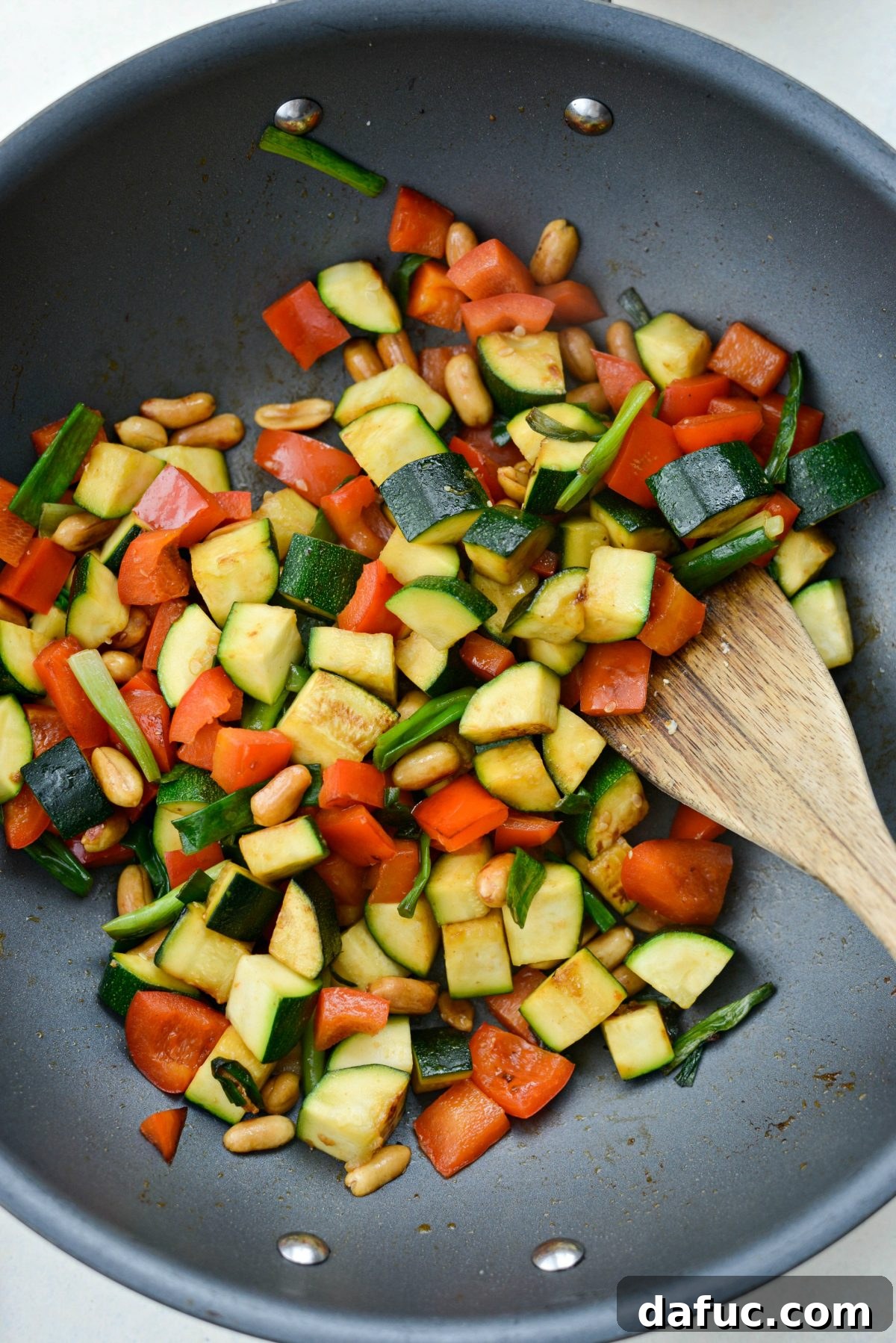
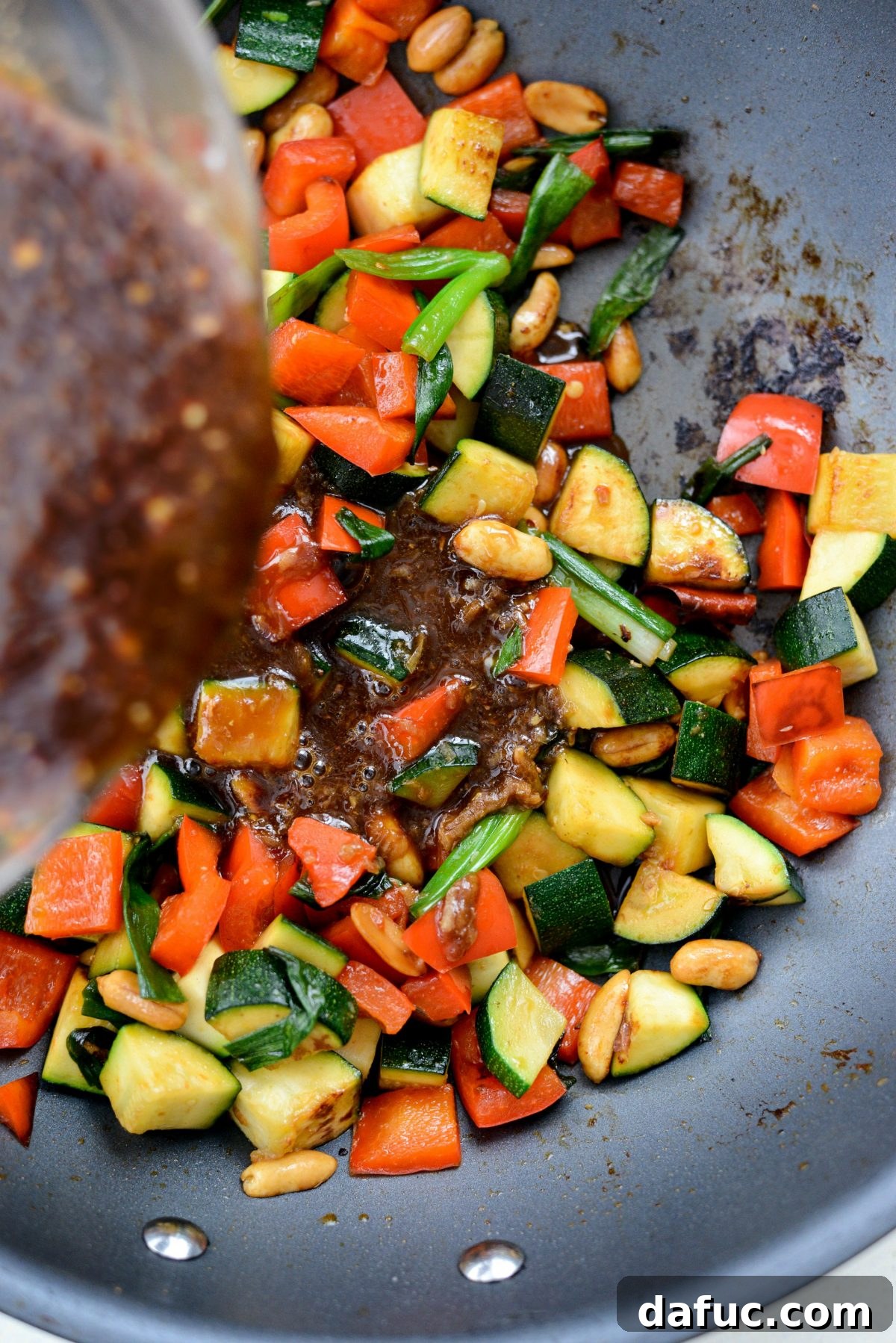
Once the vegetables have developed some color and softened slightly while still retaining a bite, it’s time for the grand finale. Pour your prepared Kung Pao sauce into the wok with the vegetables. Stir continuously for about 1 to 2 minutes until the sauce thickens to a glossy, rich consistency. Finally, return the fully cooked, crispy chicken to the wok. Toss everything together, ensuring the chicken is thoroughly coated in the delectable sauce and heated through. Your homemade Kung Pao Chicken Stir-fry is now ready to impress!
Serving Your Delicious Homemade Kung Pao Chicken
The beauty of this homemade Kung Pao Chicken is its versatility in serving. It pairs wonderfully with a bowl of fluffy white rice, which perfectly soaks up the extra sauce, or with a bed of slippery rice noodles for a different texture. For an extra touch of freshness and flavor, garnish your plated dish with a sprinkle of freshly sliced green onions, a handful of additional chopped peanuts for crunch, and a few extra red pepper flakes if you crave more spicy heat. The visual appeal and aromatic layers will make this dish truly unforgettable.
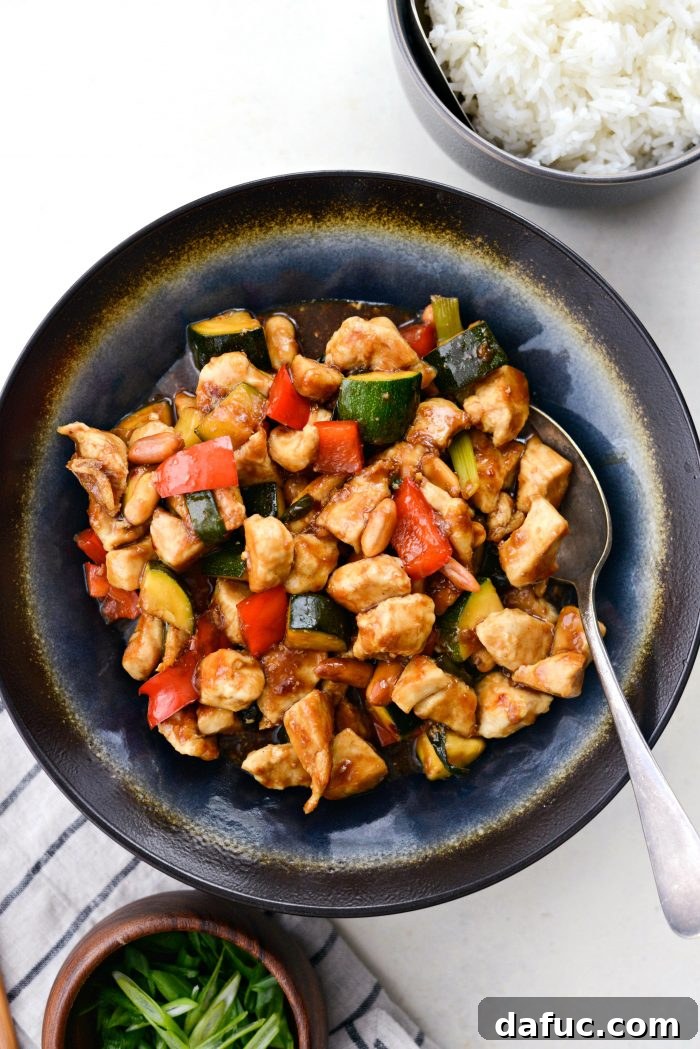
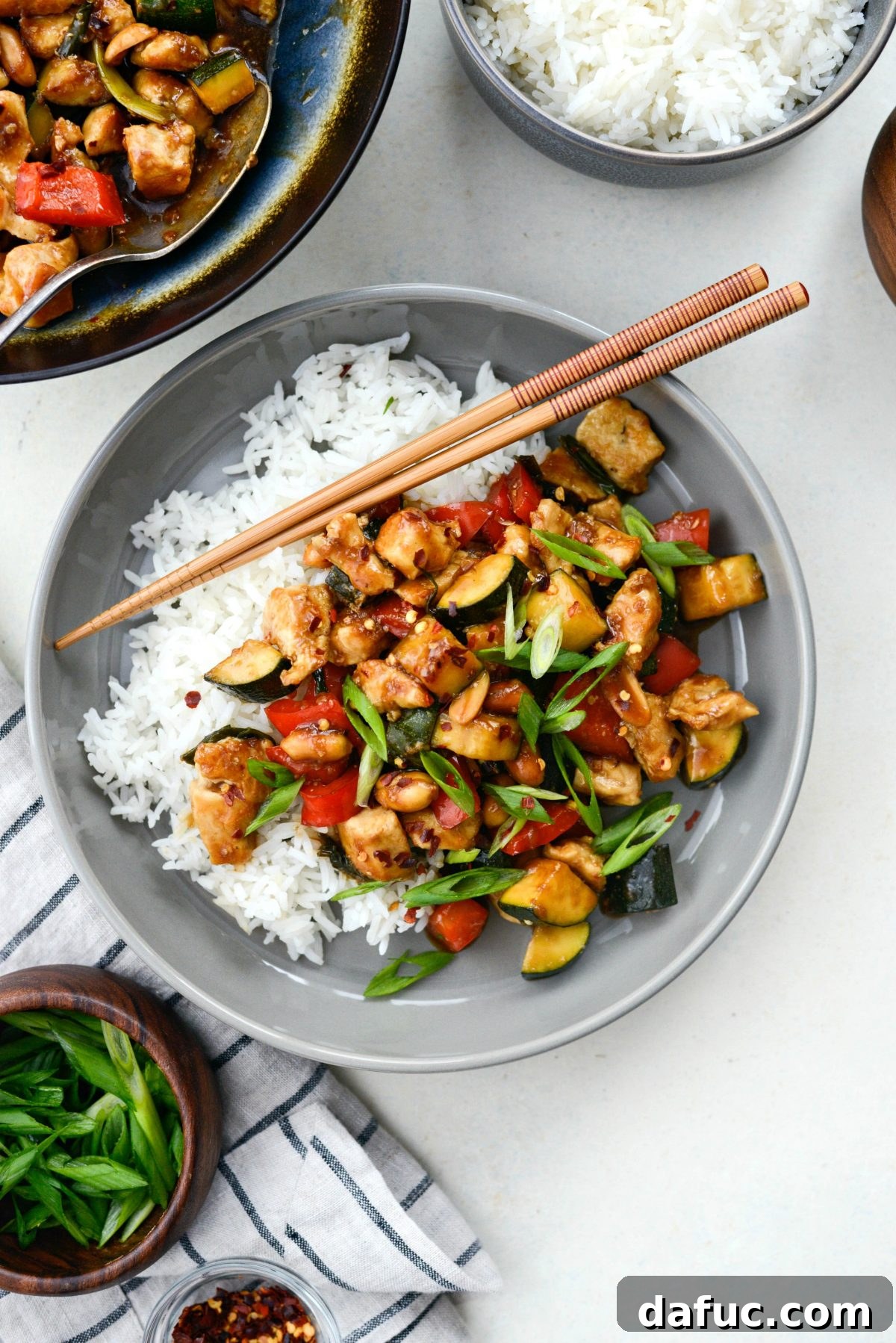
Chopsticks optional, enjoyment guaranteed!
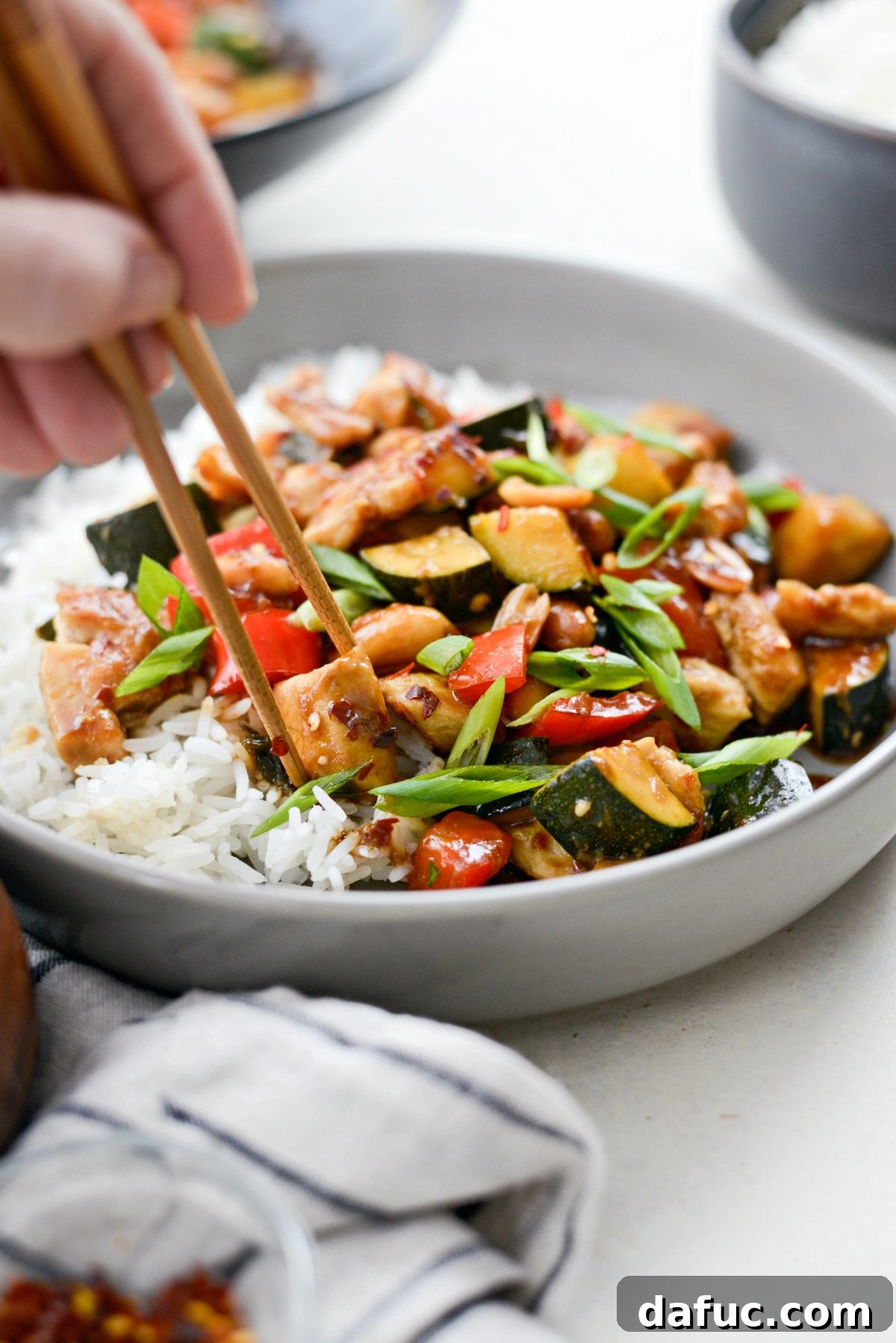
Enjoy every savory, spicy, and sweet bite of your incredible homemade Kung Pao Chicken Stir-fry. It’s a culinary journey that brings the flavors of your favorite Chinese restaurant right to your dining table, without the need for a drive-through!
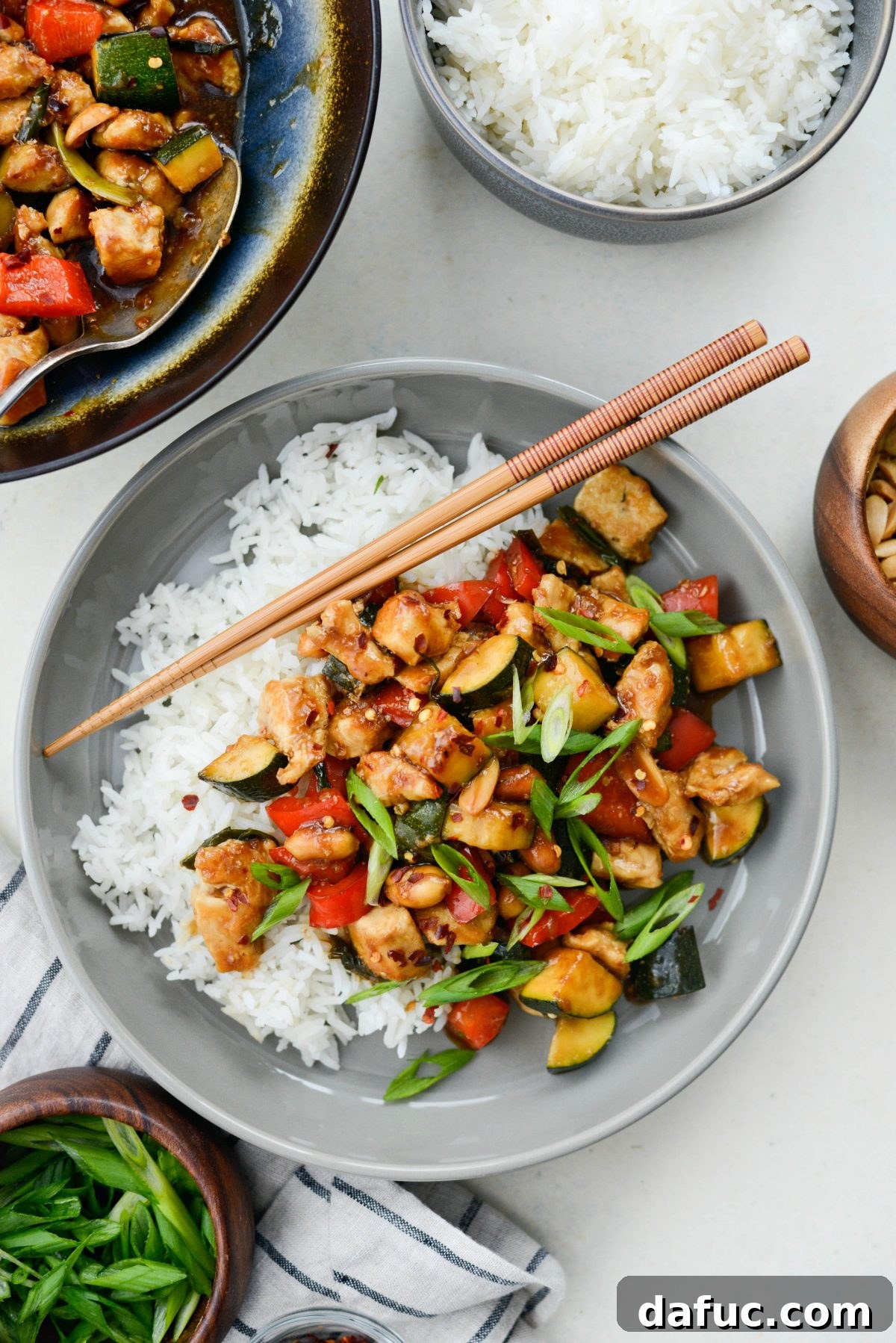
Pin Recipe
Yield: 4 servings
Kung Pao Chicken Stir-fry
Why order take-out when you can make this homemade Kung Pao Chicken Stir-fry in the comfort of your own kitchen? A delicious sweet and spicy dish consisting of tender pieces of chicken, peanuts, zucchini, and bell pepper in a flavorful sauce! Serve over rice or noodles.
Prep Time: 25 mins
Cook Time: 25 mins
Total Time: 50 mins
Ingredients
FOR THE KUNG PAO SAUCE:
- 1/3 cup sugar
- 1 tablespoon cornstarch
- 1 teaspoon ground Szechuan peppercorns
- 1 teaspoon red pepper flakes, more or less to preference
- 6 cloves garlic, peeled and grated
- 2 teaspoon grated fresh ginger
- 1/3 cup Chinkiang vinegar
- 1/4 cup low-sodium tamari, or substitute with low-sodium soy sauce
- 1/4 cup Shaoxing wine
- 1 tablespoon peanut oil, cold pressed, I use Spectrum
KUNG PAO STIR-FRY:
- 1¼ pound boneless skinless chicken breast, diced into bite-size pieces
- 1 egg white
- 2 teaspoons cornstarch
- 1/2 teaspoon white pepper
- 4 teaspoons cold pressed peanut oil, I use Spectrum
- 2 medium zucchinis, quartered and diced
- 1 medium red bell pepper, diced
- 1 bunch green onions, cut into 1-inch strips
- 1/3 cup roasted peanuts, lightly salted or unsalted
Equipment
- All-Clad Hard Anodized Nonstick Chefs Pan/Wok, 12-Inch, Black
- Chinkiang Vinegar + Shaohsing (shaoxing) Rice Cooking Wine
- Soeos Authentic Szechuan Peppercorns (4 ounces)
Instructions
MAKE THE KUNG PAO SAUCE:
- In a mixing bowl, measure and add in all of the sauce ingredients and whisk to combine thoroughly. Set aside.
MAKE THE KUNG PAO STIR-FRY:
- Heat 1 teaspoon peanut oil in a wok or large chef’s pan over high heat until very hot.
- Meanwhile, in a large mixing bowl, whisk the egg white until frothy. Add in 2 teaspoons cornstarch and white pepper, then stir to combine. Toss the diced chicken in this egg mixture until each piece is evenly coated.
- Once your wok is smoking hot, work in batches (of 3) to add the chicken in an even layer. Let the chicken cook for 5 to 6 minutes without stirring to form a deeply golden crust. Then turn and continue to cook until fully cooked through. Transfer the cooked chicken to a clean dish and repeat with the remaining chicken, adding up to 2 more teaspoons of oil as needed between batches.
- Next, add the final teaspoon of peanut oil to the wok along with the diced zucchini, red bell pepper, green onions, and peanuts, plus a pinch of kosher salt. Toss to coat and let the vegetables cook for about 3 minutes, stirring only occasionally to allow them to caramelize.
- When the vegetables have some color and have softened slightly, pour in the prepared Kung Pao sauce and stir continuously until thickened, about 1 to 2 minutes. Stir in the fully cooked chicken, tossing to coat evenly with the sauce.
- Once everything is heated through, serve immediately with rice or rice noodles, garnished with sliced green onions, additional peanuts, and red pepper flakes if desired for extra heat.
Notes
Note About The Sauce: You can play with these ingredients a little to suit your taste. For a more vinegar-y sauce, increase the Chinkiang vinegar. For a sweeter sauce, add a bit more sugar.
Nutrition Information
Serving: 1 heaping cup (does not include rice)
Calories: 451kcal
Carbohydrates: 31g
Protein: 38g
Fat: 18g
Saturated Fat: 3g
Polyunsaturated Fat: 5g
Monounsaturated Fat: 7g
Trans Fat: 1g
Cholesterol: 91mg
Sodium: 1061mg
Potassium: 1030mg
Fiber: 4g
Sugar: 21g
Vitamin A: 1378IU
Vitamin C: 60mg
Calcium: 61mg
Iron: 2mg
Author: Laurie McNamara
Course: Mains & Entrees
Cuisine: Chinese