
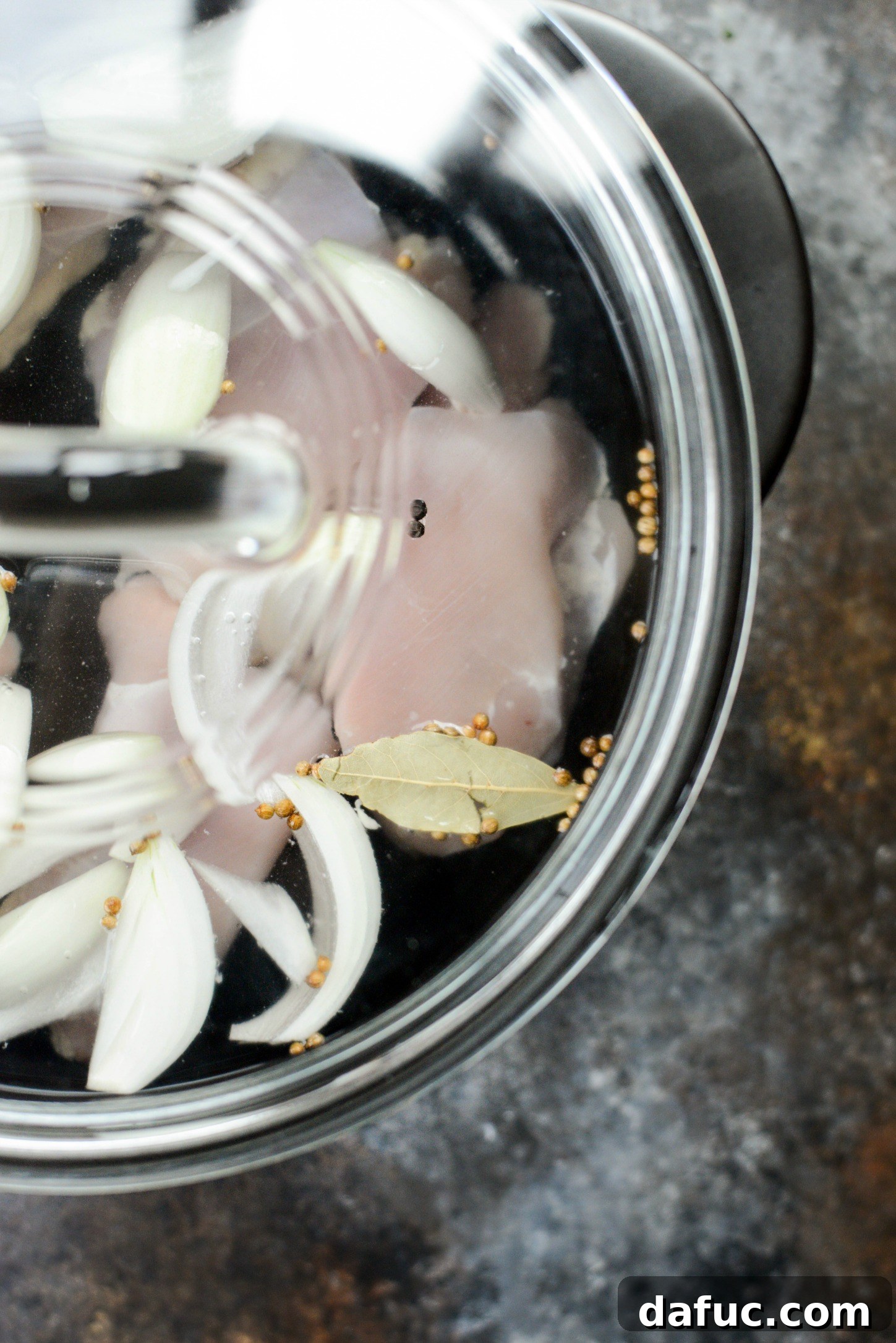
Poaching chicken is a culinary technique revered for its simplicity, health benefits, and remarkable ability to produce incredibly tender and juicy results. Far from a bland method, poaching unlocks a world of flavor potential, transforming everyday chicken into a versatile ingredient ready for an array of dishes. Whether you opt for lean boneless, skinless chicken breasts, succulent chicken thighs, or a harmonious blend of both, this gentle cooking approach is ideal for preparing chicken that shines in soups, elevates salads, perfects sandwiches, and serves as a stellar substitute in any recipe that calls for rotisserie chicken.
Why Poach Chicken? The Ultimate Meal Prep Secret
In our fast-paced lives, convenience often dictates our kitchen choices. Rotisserie chicken, for instance, is a go-to shortcut for many, myself included. Its pre-cooked nature saves precious time, making dinner assembly a breeze. However, this convenience often comes with a catch. For those who prefer to shop during off-peak hours, like my 7:30 AM grocery runs when stores are blissfully quiet, fresh rotisserie chickens are often not yet available, leaving us in a culinary bind. Even when they are, the options might be limited, or the desire for organic or specific flavor profiles might go unfulfilled.
This is where poaching chicken emerges as a superior, incredibly flexible, and often healthier alternative. It’s the perfect solution for when you need cooked chicken but can’t find a rotisserie, or when you simply prefer to control the quality and ingredients from start to finish. Last week, I faced just such a predicament: I needed shredded chicken for a quick dinner, had zero time for roasting a whole bird, and the rotisserie shelf was bare. Grabbing a pack of chicken thighs, I knew poaching at home would be my savior, delivering flavorful, tender chicken with minimal fuss.
The Unrivaled Benefits of Poached Chicken
Beyond being a quick fix, poaching offers a multitude of advantages:
- Unmatched Tenderness and Juiciness: Unlike high-heat cooking methods that can dry out chicken, poaching involves gently cooking the meat in liquid, resulting in exceptionally tender, moist, and flavorful chicken every time.
- Health-Conscious Cooking: Poaching requires minimal fat and cooks chicken in a liquid, making it a lean and healthy option. You control the sodium and fat content entirely.
- Flavor Customization: The poaching liquid is your canvas. Infuse chicken with a myriad of aromatics, herbs, and spices to complement any cuisine. This level of flavor control is simply not possible with pre-made options.
- Cost-Effective: Buying raw chicken and poaching it yourself is typically more economical than purchasing pre-cooked rotisserie chickens, especially if you’re aiming for organic or specialty varieties.
- Versatile Ingredient: Once poached, the chicken is ready for shredding, dicing, or slicing, making it a foundation for countless recipes. It’s a true meal-prep champion.
Mastering the Art of Poaching: A Step-by-Step Guide
Poaching chicken is less about following a rigid recipe and more about understanding a fundamental technique. It’s incredibly forgiving, making it perfect for novice cooks and seasoned chefs alike. Here’s how to achieve perfectly poached chicken with ease and incredible flavor.
1. Select Your Chicken
You can poach almost any cut of chicken, but boneless, skinless breasts or thighs are typically the easiest and quickest. Breasts will yield a leaner result, while thighs offer a richer flavor and maintain moisture exceptionally well. For this guide, we’ll focus on these popular cuts.
2. Prepare Your Poaching Pot and Aromatics
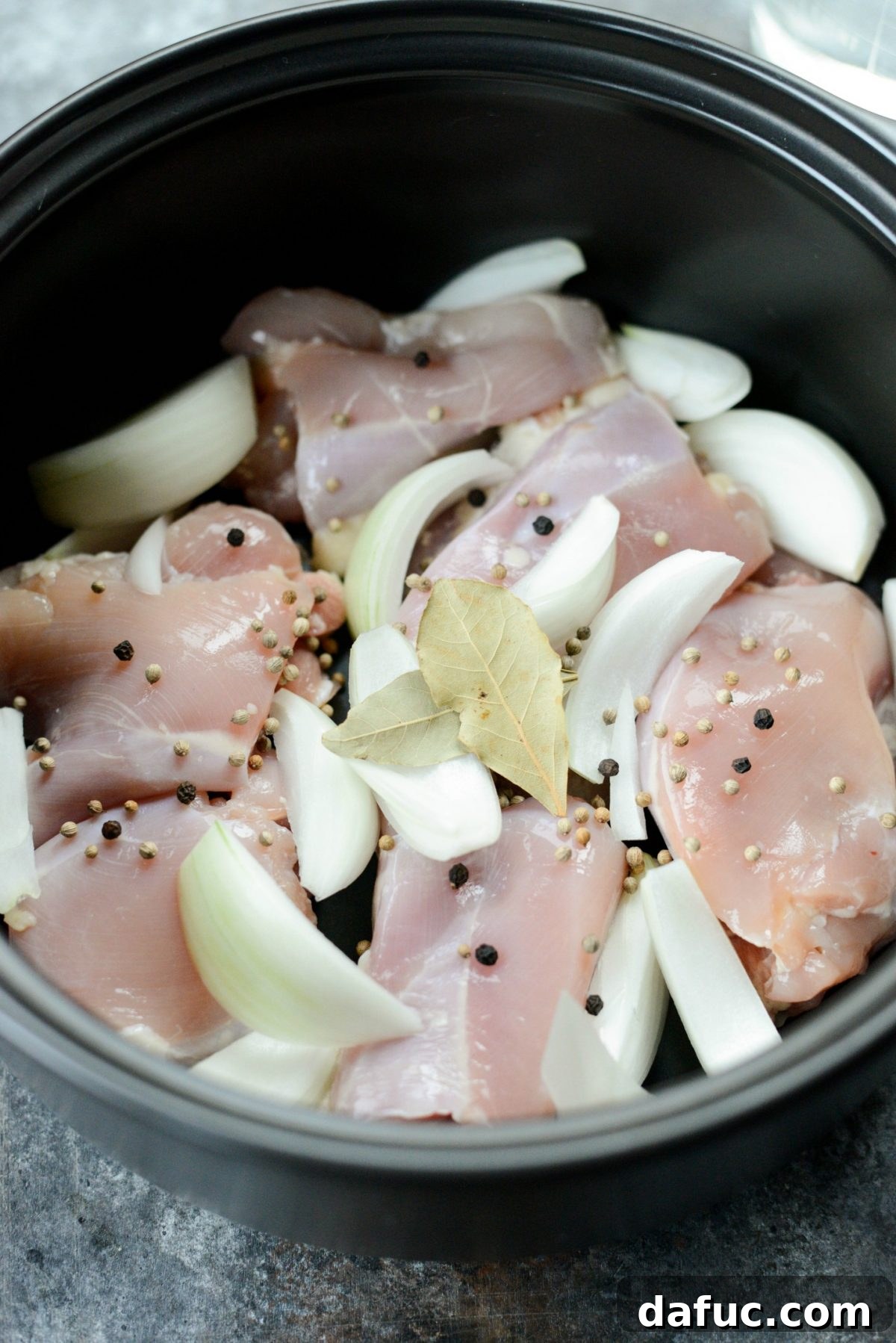
Start by choosing the right pot. A large 3 to 4-quart pot is ideal for most batches, but a smaller one will suffice for just a couple of chicken breasts. Arrange your chicken in a single, even layer at the bottom of the pot. This ensures even cooking. Now, it’s time to infuse flavor!
For a classic, all-purpose poached chicken, I recommend:
- 12 whole black peppercorns
- 2 bay leaves
- 1 medium onion, sliced
For a Mexican-inspired dish, as I was preparing, a teaspoon of whole coriander seeds adds a wonderful depth. This is where your creativity comes into play.
Play with the Flavors!
The beauty of poaching lies in its adaptability. You can elevate your chicken’s flavor profile dramatically by experimenting with different aromatics. Consider these additions:
- Herbs: Fresh thyme, rosemary, parsley stems, or dill.
- Spices: Star anise, garlic cloves, ginger slices, fennel seeds, or even a cinnamon stick for Middle Eastern or Asian flair.
- Vegetables: Celery stalks, carrots, leeks, or even a few lemon slices for brightness.
- Liquids: While water is perfectly fine, using chicken or vegetable broth, white wine, or even coconut milk can significantly enhance the flavor. Tailor your liquid to the dish you plan to make. For instance, coconut milk with ginger and lemongrass would be fantastic for a Thai-inspired chicken.
3. Add Liquid and Bring to a Boil
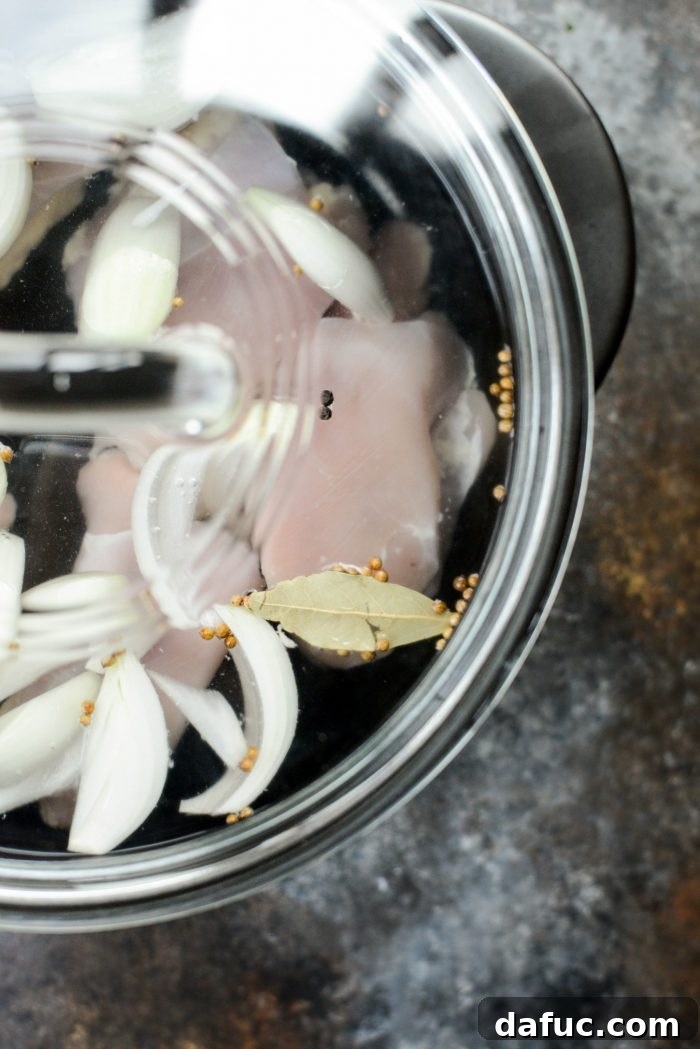
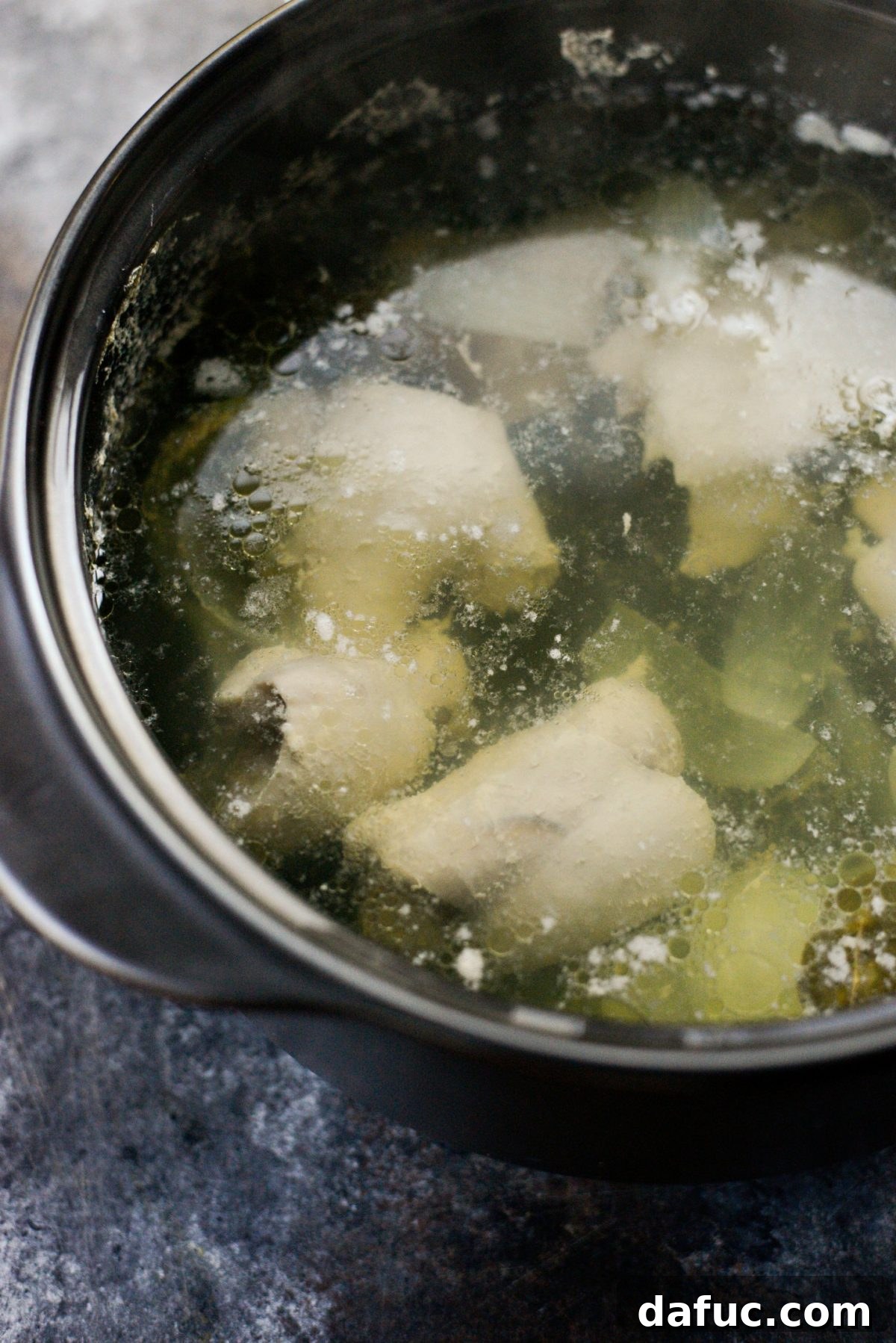
Once your chicken and aromatics are in place, pour in enough liquid to completely submerge the chicken. This typically ranges from 4 to 8 cups, depending on the quantity of chicken you are poaching. Cover the pot with a lid and place it over high heat, bringing the liquid to a rolling boil.
4. Simmer and Rest
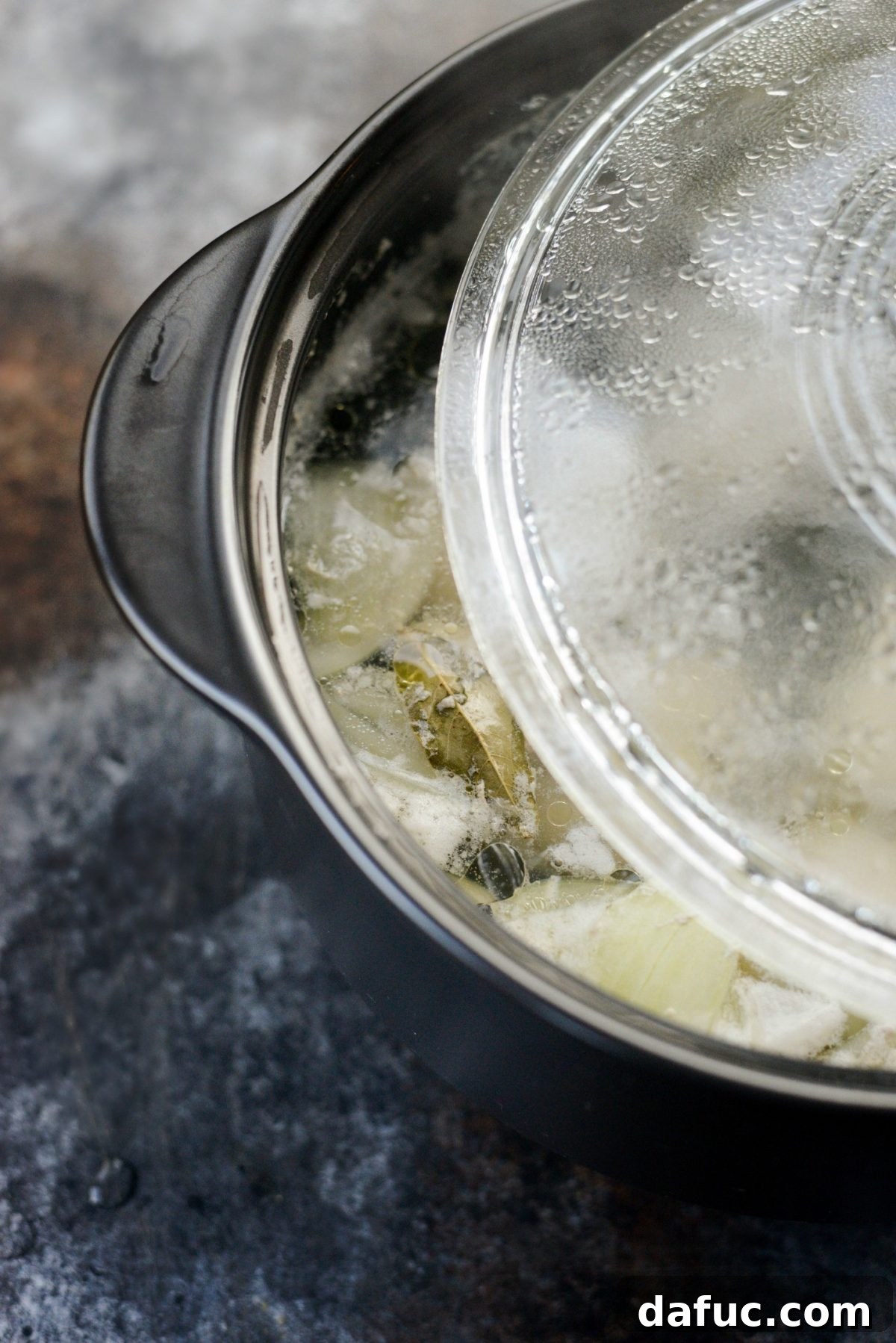
The trick to perfectly poached chicken is not to overcook it. Once the liquid reaches a vigorous boil, crack the lid slightly to allow some steam to escape, and immediately reduce the heat to low, just enough to maintain a gentle simmer. Cook the chicken for 10 to 12 minutes. This initial simmer starts the cooking process gently.
After the initial simmering time, turn off the heat completely. Keep the lid on the pot, ensuring it’s fully covered, and let the chicken finish cooking in the hot liquid for an additional 12 to 15 minutes. This residual heat method ensures the chicken cooks through without drying out, making it incredibly tender and juicy. This gentle carryover cooking is key to preventing tough, rubbery chicken.
5. Remove and Prepare
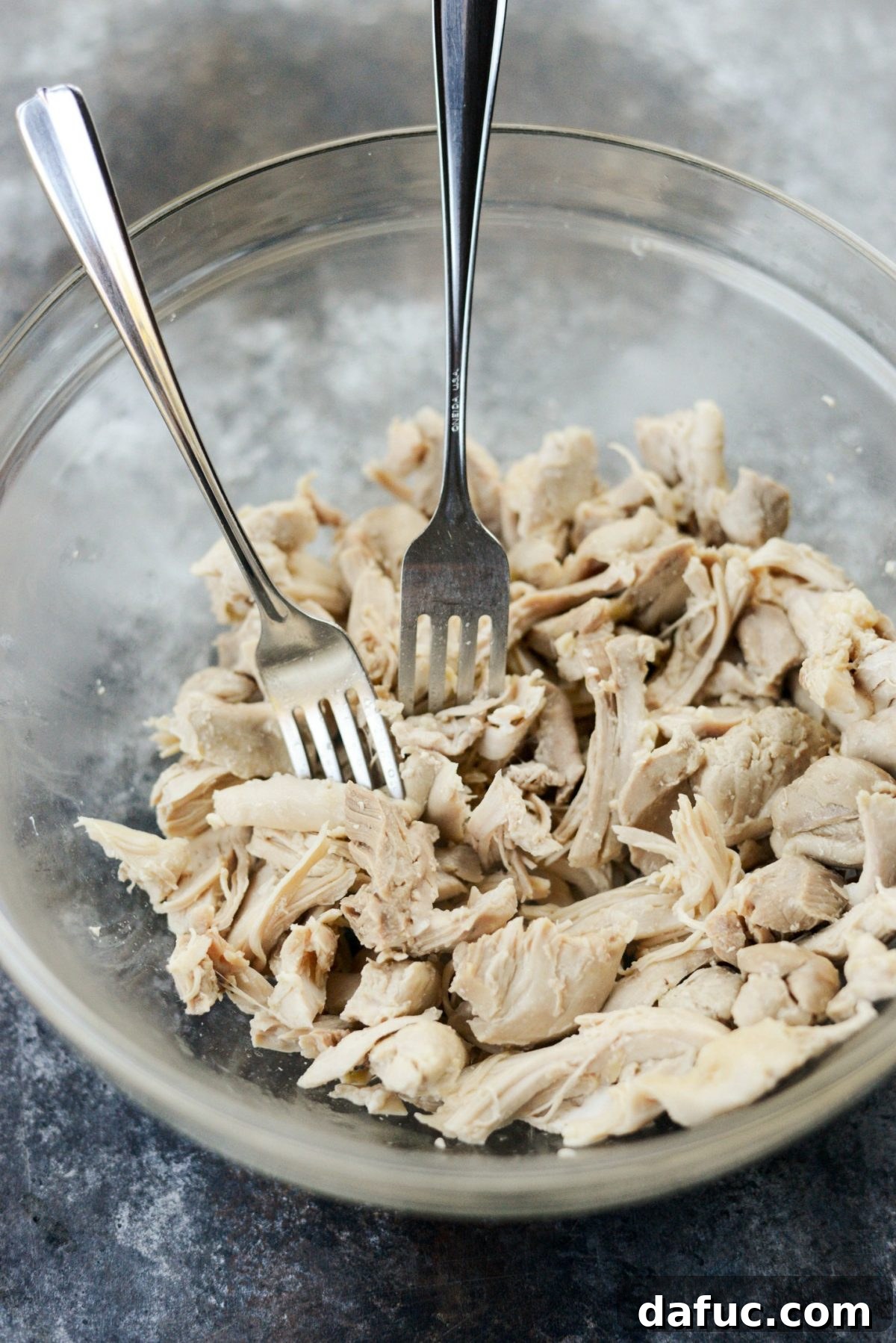
That’s it! Your chicken is now perfectly poached. Carefully remove the chicken from the pot. At this point, it will be incredibly tender and easy to work with. Depending on your recipe’s requirements, you can easily chop, slice, or shred it with a couple of forks. The chicken should yield effortlessly, a testament to the gentle poaching method.
Pro Tip: Don’t discard the poaching liquid! It’s now a flavorful broth, rich with the essences of chicken and aromatics. Strain it and use it as a base for soups, gravies, or simply enjoy it on its own. This adds another layer of value to your poaching efforts.
Unleashing the Versatility of Poached Chicken
Now that you’ve mastered how to poach chicken, the culinary possibilities are endless. This humble cooking method delivers a foundation for countless delicious and healthy meals. Here’s a deeper dive into how you can use your perfectly poached chicken:
- Sensational Salads: From a classic Caesar to a vibrant Asian chicken salad, poached chicken adds lean protein without overpowering other flavors. It’s fantastic for Cobb salads, Waldorf chicken salads, or even a simple green salad with a healthy vinaigrette.
- Hearty Soups and Stews: Shredded poached chicken is a natural fit for chicken noodle soup, chicken and rice soup, tortilla soup, or a comforting chicken stew. Its tenderness means it won’t get tough during simmering.
- Perfect Sandwiches and Wraps: Create epic chicken salad sandwiches, delicious wraps with fresh veggies, or warm paninis. The moist chicken ensures your fillings are never dry.
- Quick Tacos, Burritos, and Enchiladas: Shredded poached chicken takes mere minutes to season and assemble into your favorite Mexican dishes, making weeknight dinners a breeze.
- Pasta Dishes: Stir diced poached chicken into creamy Alfredo, pesto pasta, or a light lemon-herb sauce for a complete meal.
- Casseroles and Bakes: Poached chicken integrates beautifully into chicken pot pie, cheesy chicken and rice casseroles, or a savory chicken and vegetable bake.
- Stir-Fries and Bowls: Dice the chicken and add it towards the end of a vegetable stir-fry for added protein, or layer it into grain bowls with your favorite grains and roasted vegetables.
- Appetizers: Use finely diced poached chicken for spring rolls, mini chicken puffs, or in creamy dips.
The ease and versatility of poached chicken make it an indispensable tool in any kitchen, especially for those prioritizing healthy eating and efficient meal preparation. It’s truly a game-changer for quick, nutritious, and flavorful meals.

Print Recipe
Pin Recipe
Leave a Review »
How To Poach Chicken
Ingredients
- 1½ pounds boneless skinless chicken breasts, or thighs
- 1 medium onion, slices vertically
- 12 whole black peppercorns
- 2 bay leaves
Instructions
-
Place chicken in the bottom of a 2 to 3 quart pot. Add in the onion and spices and 6 cups water.
-
Cover and bring to a boil, once the water is at a rolling boil reduce heat to barely a simmer ( or low heat). Crack the lid an inch and cook for 10 to 12 minutes, then turn off the heat, leaving the chicken to finish cooking in the hot water for an additional 12 to 15 minutes.
-
Remove the chicken from the pot and either shred, slice or chop — depending on what the recipe calls for.