
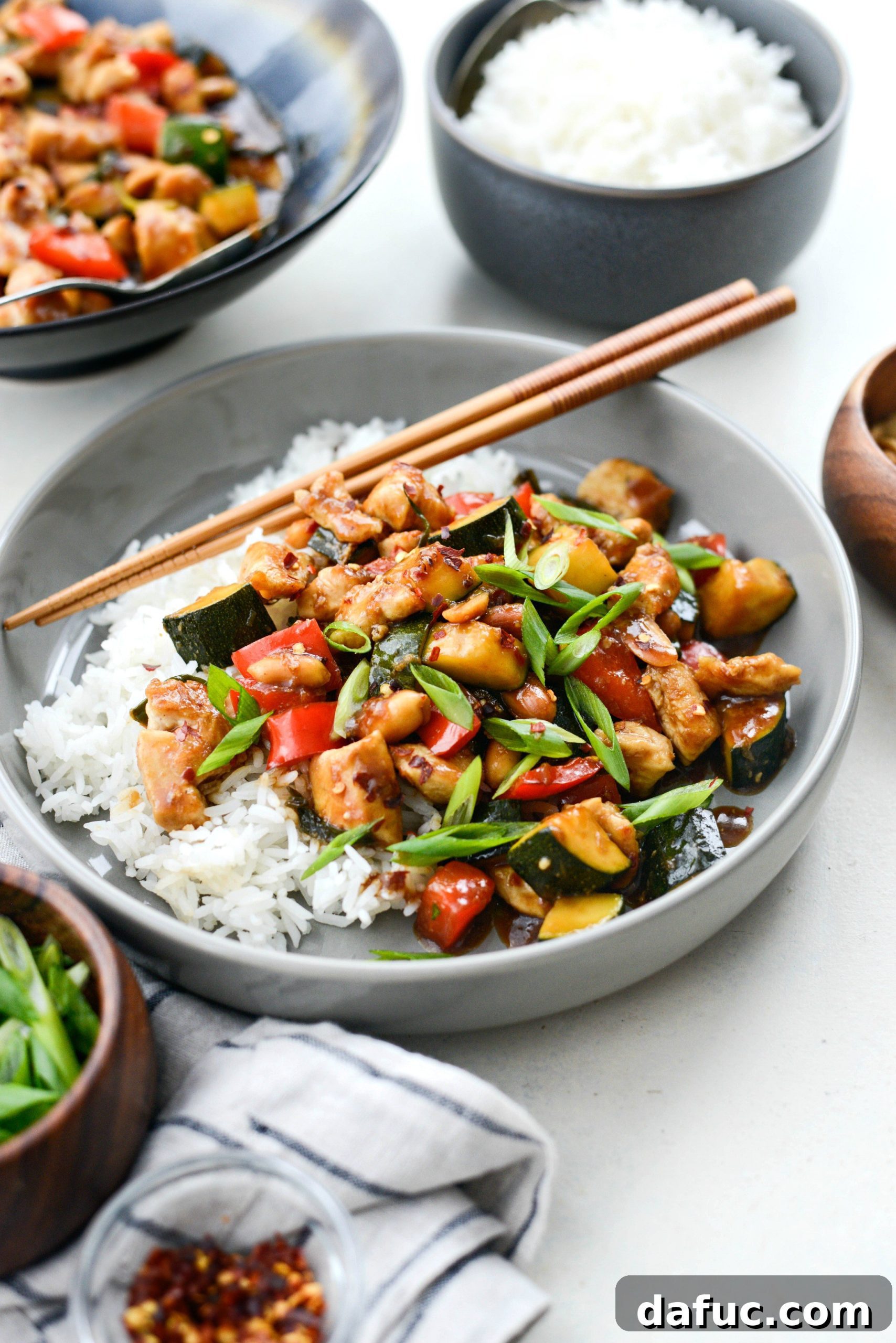
Homemade Kung Pao Chicken Stir-Fry: Your Ultimate Guide to a Takeout Favorite
Tired of relying on takeout for your favorite Chinese dishes? This comprehensive guide will show you how to prepare an exquisite homemade Kung Pao Chicken Stir-fry, offering a truly authentic and deeply satisfying culinary experience. Imagine succulent pieces of chicken, crunchy peanuts, and fresh, colorful vegetables all coated in a perfectly balanced sweet, spicy, and savory sauce. This isn’t just a recipe; it’s an invitation to create a restaurant-quality meal in the comfort of your own kitchen, delivering incredible flavors that surpass any store-bought alternative. Ready in approximately one hour, this recipe generously serves four, making it ideal for a family dinner or meal prep. Serve it proudly over a bed of steamed rice or your preferred noodles for a complete and unforgettable meal.
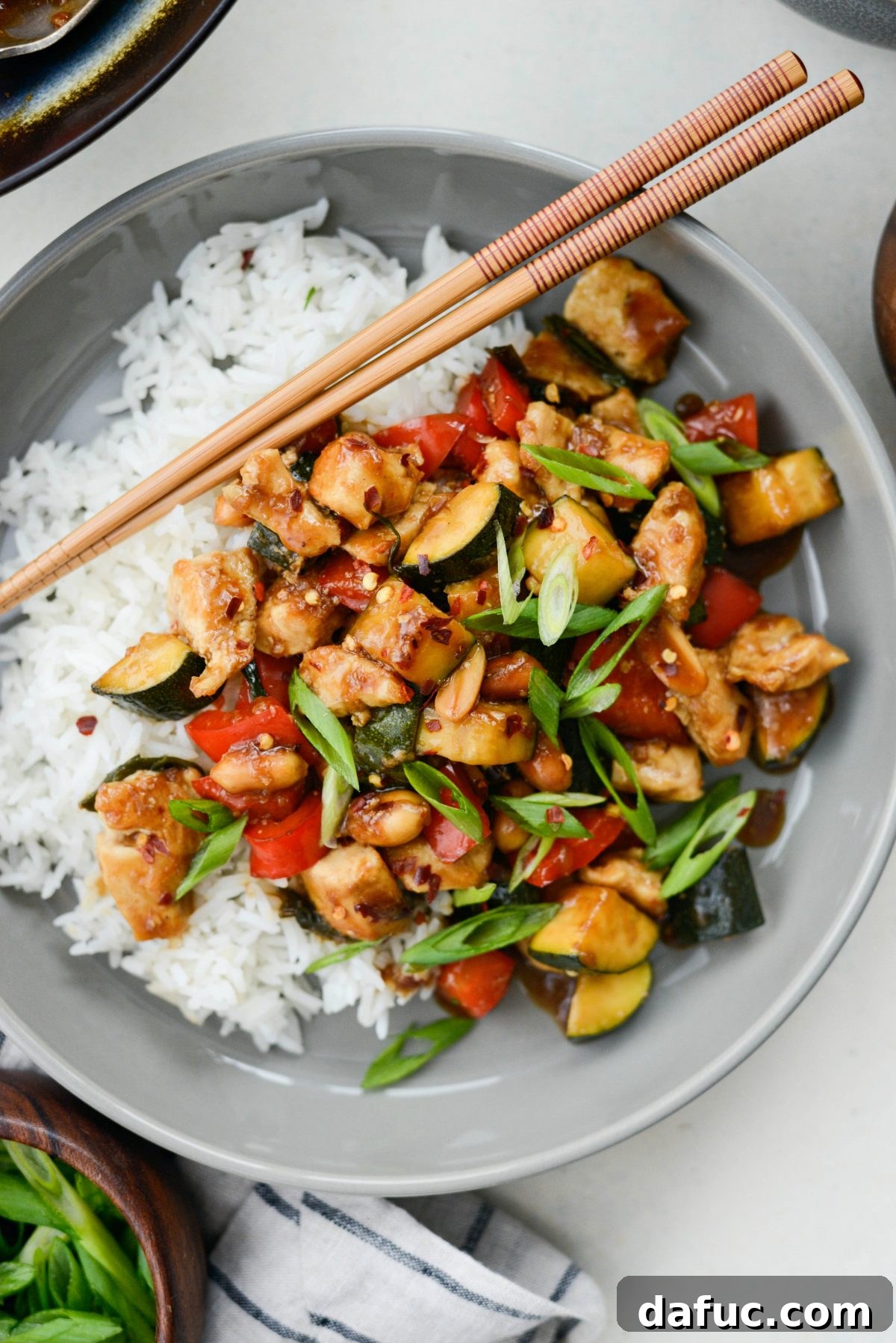
The Inspiration: Bringing Restaurant Flavors Home
There’s an undeniable comfort and joy found in Chinese cuisine, whether it’s from a beloved local spot or a popular chain. My personal quest to perfect homemade Kung Pao began on an evening when cooking felt like too much effort. My partner, Pat, suggested carryout, leading us on a 35-minute drive to the nearest Panda Express – a journey well worth it for the delicious offerings, especially with the added convenience of a drive-through! We ordered an array of classics, including the iconic orange chicken, robust broccoli beef, comforting chow mein, and savory fried rice.
However, it was the Kung Pao chicken, nestled in its adorable red paper carton, that truly captured my palate. Its masterful blend of delicious spice, subtle sweetness, and an abundance of fresh, crisp vegetables left an immediate and lasting impression. I was instantly smitten and, from that moment on, dedicated myself to meticulously developing and perfecting my very own homemade Kung Pao Chicken Stir-fry. The goal was simple: recreate that irresistible taste and texture from scratch, ensuring every bite delivered the authentic flavors I craved.
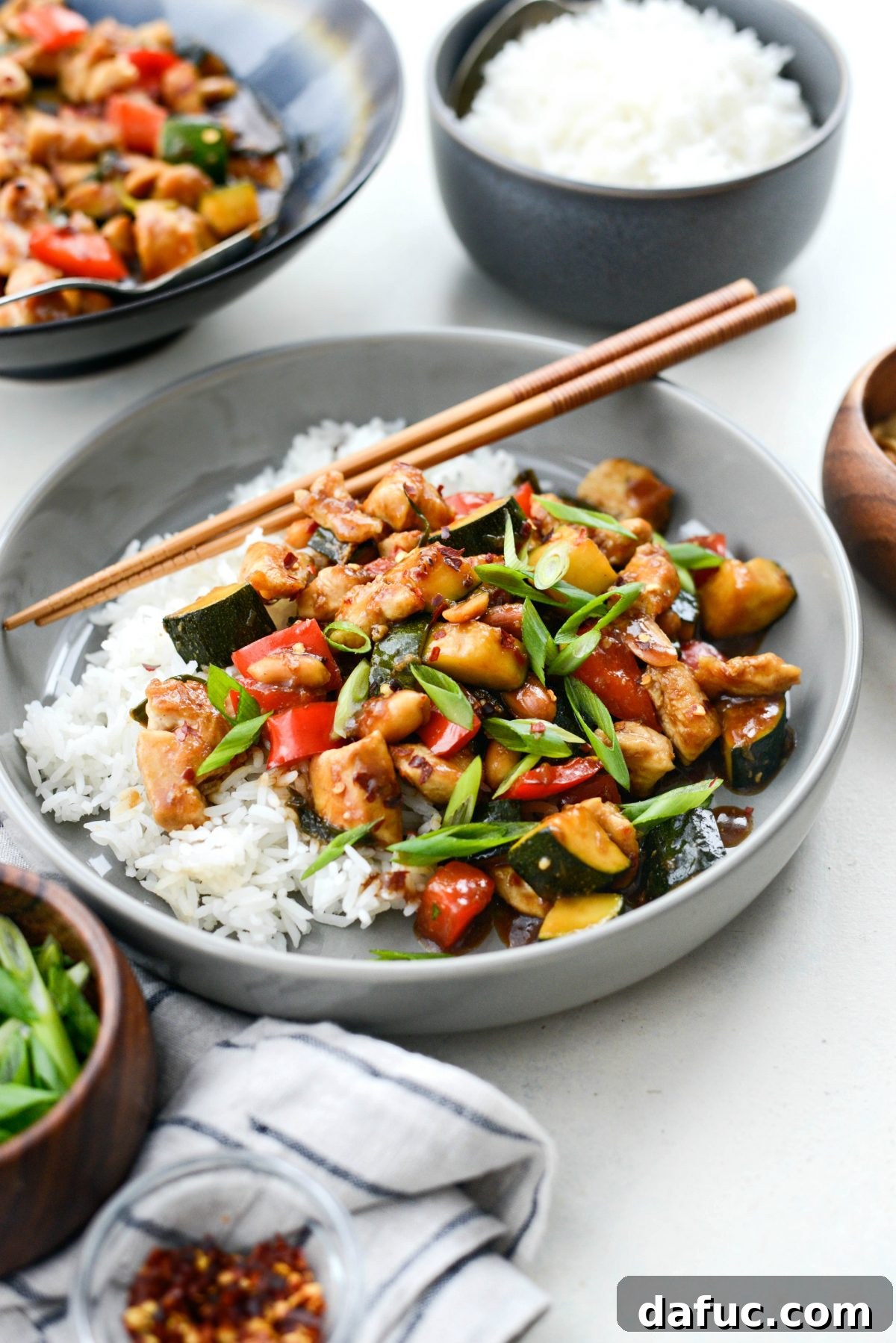
Needless to say, this homemade rendition has since become a cherished family favorite. Beyond replicating the flavors, there’s immense satisfaction in preparing such a vibrant and flavorful meal from scratch. Cooking at home allows you full control over the ingredients, enabling you to choose the freshest produce and quality meats. It also means you can customize the dish to your exact preferences – whether you desire more heat, extra sweetness, or a different mix of vegetables. This method not only guarantees a fresher and often healthier meal but also offers a deeply rewarding culinary experience that takeout simply cannot match.
Essential Ingredients for Your Authentic Kung Pao
To embark on this delicious journey of making Kung Pao Chicken, even in your most comfortable pajamas, you’ll need a selection of fresh produce, quality chicken, and a few specialized pantry items for that truly authentic flavor. Understanding each component is key to achieving the perfect balance in your stir-fry. Here’s a detailed breakdown of what to gather:
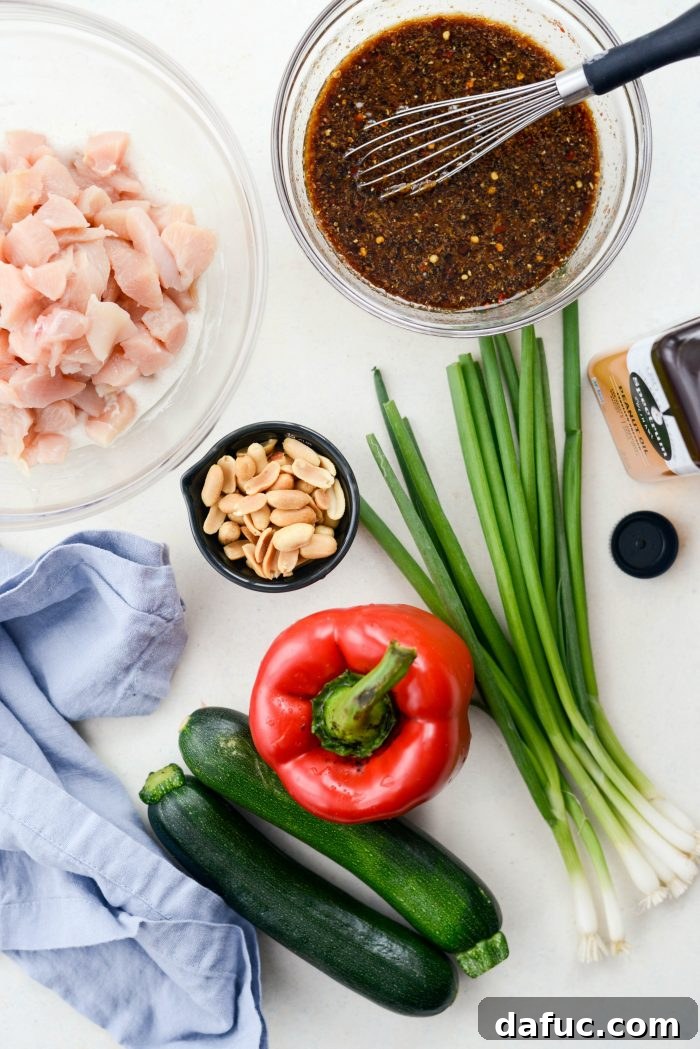
For the Main Stir-fry Components:
- Boneless, Skinless Chicken Breasts: The foundation of our dish. Dicing them into uniform, bite-sized pieces ensures even cooking and tenderness.
- Egg White: A crucial component for the “velveting” technique, which tenderizes the chicken and helps it achieve a delightful crispy crust.
- Cornstarch: Used both in the chicken coating and the sauce for thickening, giving the dish its signature glossy texture.
- White Pepper: Adds a subtle, traditional Asian spice to the chicken coating.
- Peanut Oil: Essential for stir-frying due to its high smoke point and distinctive, nutty flavor that complements Chinese cuisine perfectly. Cold-pressed varieties are often preferred for purity.
- Zucchini: Medium-sized, quartered, and diced. Zucchini adds a delicate sweetness and a tender-crisp texture to the vegetable medley.
- Red Bell Pepper: A medium-sized, diced red bell pepper contributes vibrant color, a sweet flavor, and a satisfying crunch.
- Green Onions: One bunch, cut into 1-inch strips. These add a mild oniony bite and a fresh, aromatic finish.
- Roasted Peanuts: Lightly salted or unsalted. Peanuts are indispensable for Kung Pao, providing a characteristic crunch and nutty depth that contrasts beautifully with the other ingredients.
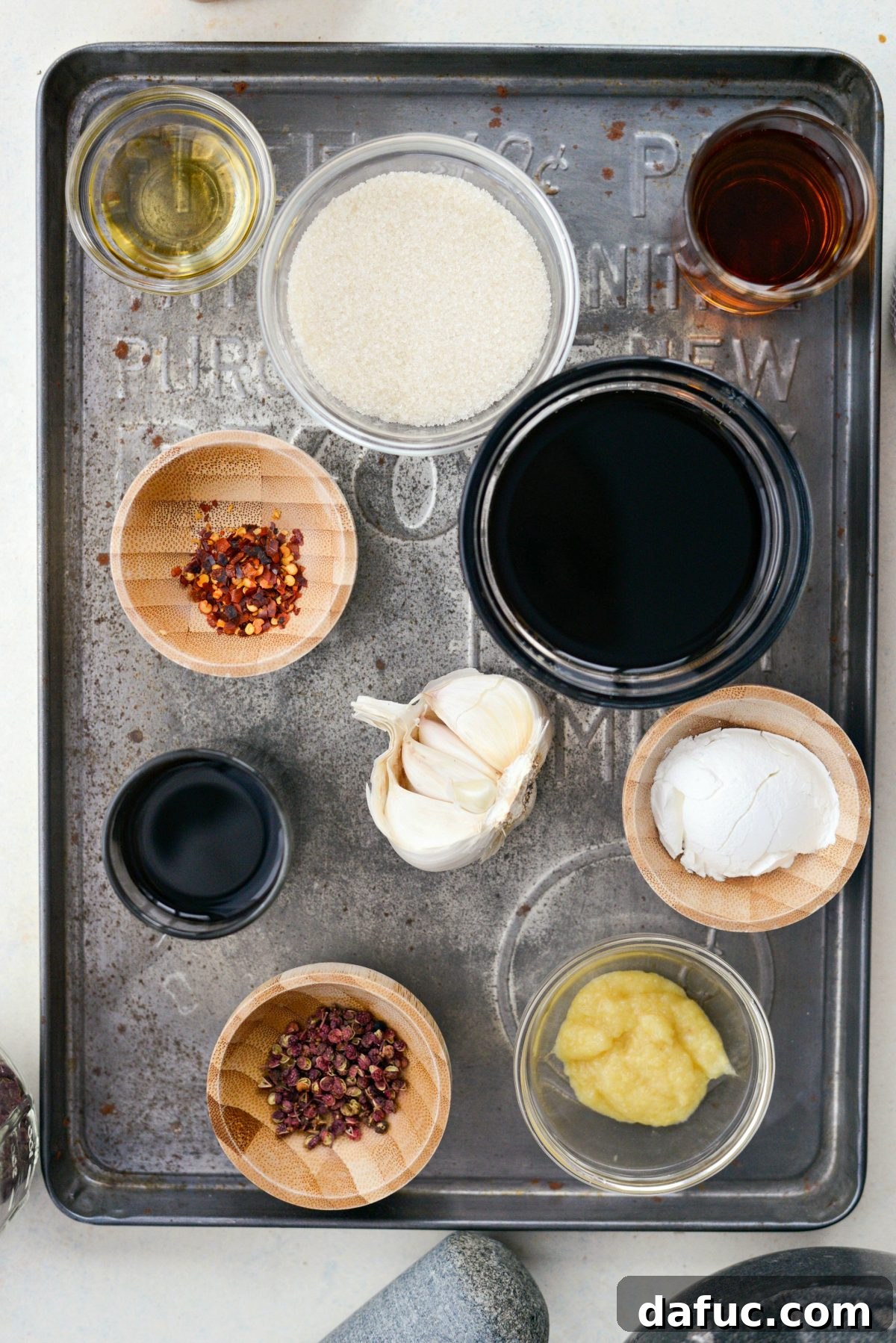
Crafting the Authentic Kung Pao Sauce:
The sauce is the vibrant heart of Kung Pao Chicken, and achieving its signature sweet, spicy, and tangy profile relies on a few key ingredients. While some may seem unfamiliar, they are vital for an authentic flavor that truly elevates this dish above standard takeout. Don’t be intimidated; these ingredients are increasingly available in Asian markets or online. You’ll find links to recommended brands in the full recipe details below.
- Granulated Sugar: Provides the essential sweetness that balances the spice and tang.
- Cornstarch: Acts as a thickening agent, giving the sauce its desirable glossy consistency.
- Ground Szechuan Peppercorns: Crucial for the unique ‘mala’ numbing and tingling sensation characteristic of authentic Szechuan cuisine. Click here for helpful tips on how to prepare and grind your own for maximum freshness and potency.
- Red Pepper Flakes: Delivers the primary spicy heat. Adjust the quantity to match your preferred level of spiciness.
- Fresh Garlic: Minced. Garlic provides an aromatic base and pungent flavor.
- Fresh Ginger: Grated. Ginger adds a warm, spicy, and fragrant note, a cornerstone of Asian cooking.
- Chinkiang Vinegar: A dark, complex Chinese black vinegar known for its rich, malty flavor and tartness. It’s indispensable for the authentic tang of Kung Pao.
- Low-Sodium Tamari: A gluten-free alternative to soy sauce that offers a deep, umami-rich, and salty flavor without excessive sodium. Low-sodium soy sauce can be substituted.
- Shaoxing Wine: A foundational Chinese rice cooking wine that imparts incredible depth, aroma, and a subtle sweetness to the sauce. It’s a non-negotiable for authentic flavor.
One of the beauties of homemade cooking is the ability to customize. Feel empowered to experiment with these sauce ingredients! For instance, if you prefer a more pronounced tangy kick, slightly increase the amount of Chinkiang vinegar. Conversely, if you have a sweeter tooth, adding a touch more sugar can create a sauce perfectly tailored to your palate. Remember, your kitchen is your laboratory, and personalizing flavors is half the fun!
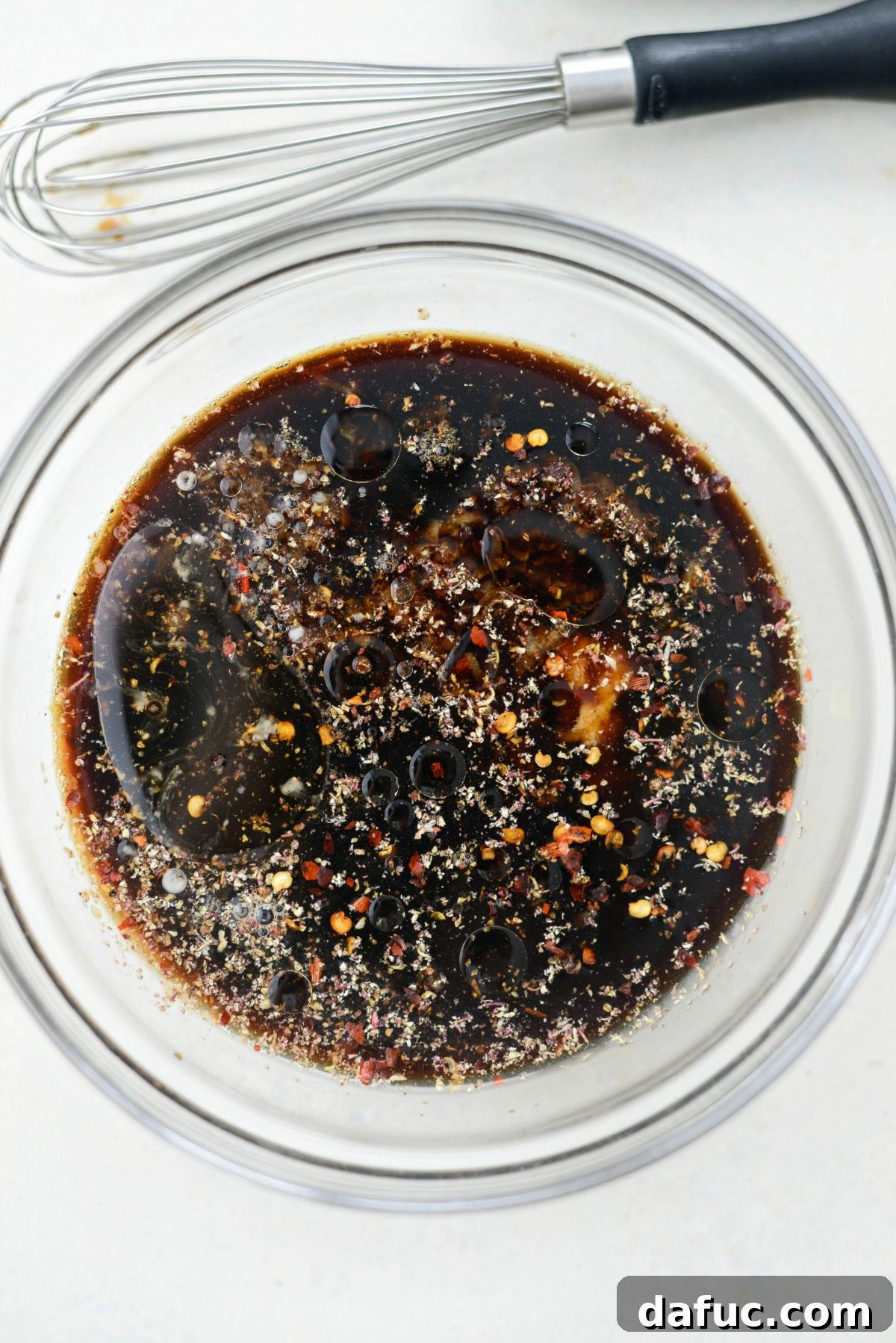
The Art of the Sauce: Building Layered Flavor
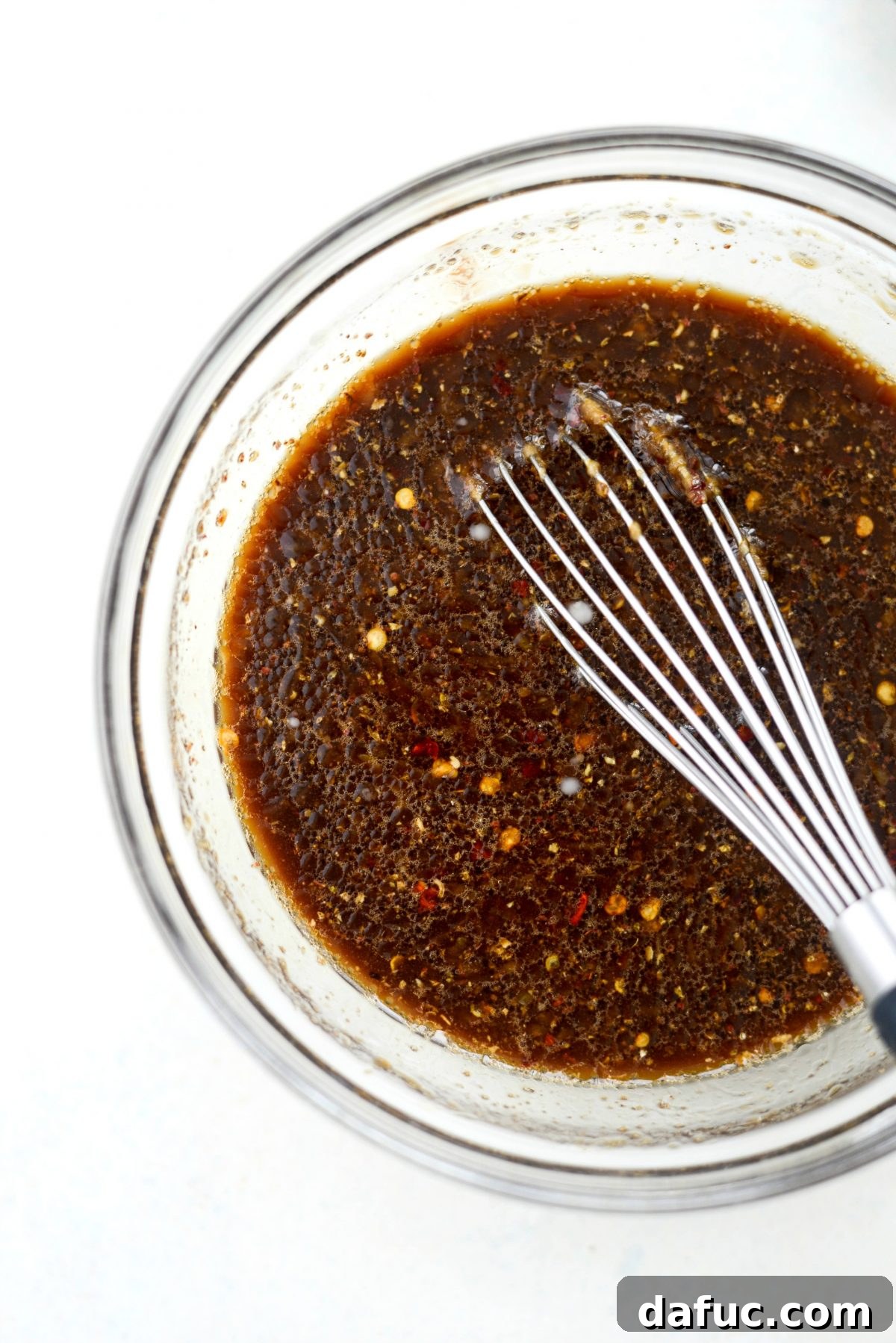
Before any searing begins, let’s assemble the star of the show: the rich and complex Kung Pao sauce. This step is incredibly straightforward but absolutely vital, as it forms the flavor backbone of your entire dish. In a medium-sized mixing bowl, meticulously measure and combine all the sauce ingredients. This includes 1/3 cup of granulated sugar, 1 tablespoon of cornstarch (for thickening), 3/4 to 1 teaspoon of ground Szechuan peppercorns (adjust this quantity based on your desired level of ‘mala’ sensation and heat), and 1 teaspoon of red pepper flakes (again, customize to your heat preference). To these dry ingredients, add 6 large cloves of freshly minced garlic, 2 teaspoons of freshly grated ginger, 1/3 cup of authentic Chinkiang vinegar, 1/4 cup of low-sodium tamari (or an equivalent low-sodium soy sauce), and 1/4 cup of Shaoxing wine. Once all ingredients are in the bowl, whisk them thoroughly and vigorously. Continue whisking until everything is perfectly combined and the cornstarch has completely dissolved, ensuring your sauce is smooth, lump-free, and uniformly flavored. With your aromatic and potent Kung Pao sauce now ready, simply set it aside. It awaits its triumphant moment to meld with the stir-fried chicken and vegetables, transforming them into a culinary masterpiece.
Stir-Frying Masterclass: Achieving the Perfect Texture
The hallmark of an exceptional stir-fry lies in perfectly cooked components, especially the chicken. This recipe employs a classic Chinese “velveting” technique that ensures your chicken pieces remain incredibly tender on the inside while developing a delightful, crispy exterior – a hallmark of truly authentic takeout.
Prepping the Chicken for Ultimate Tenderness:
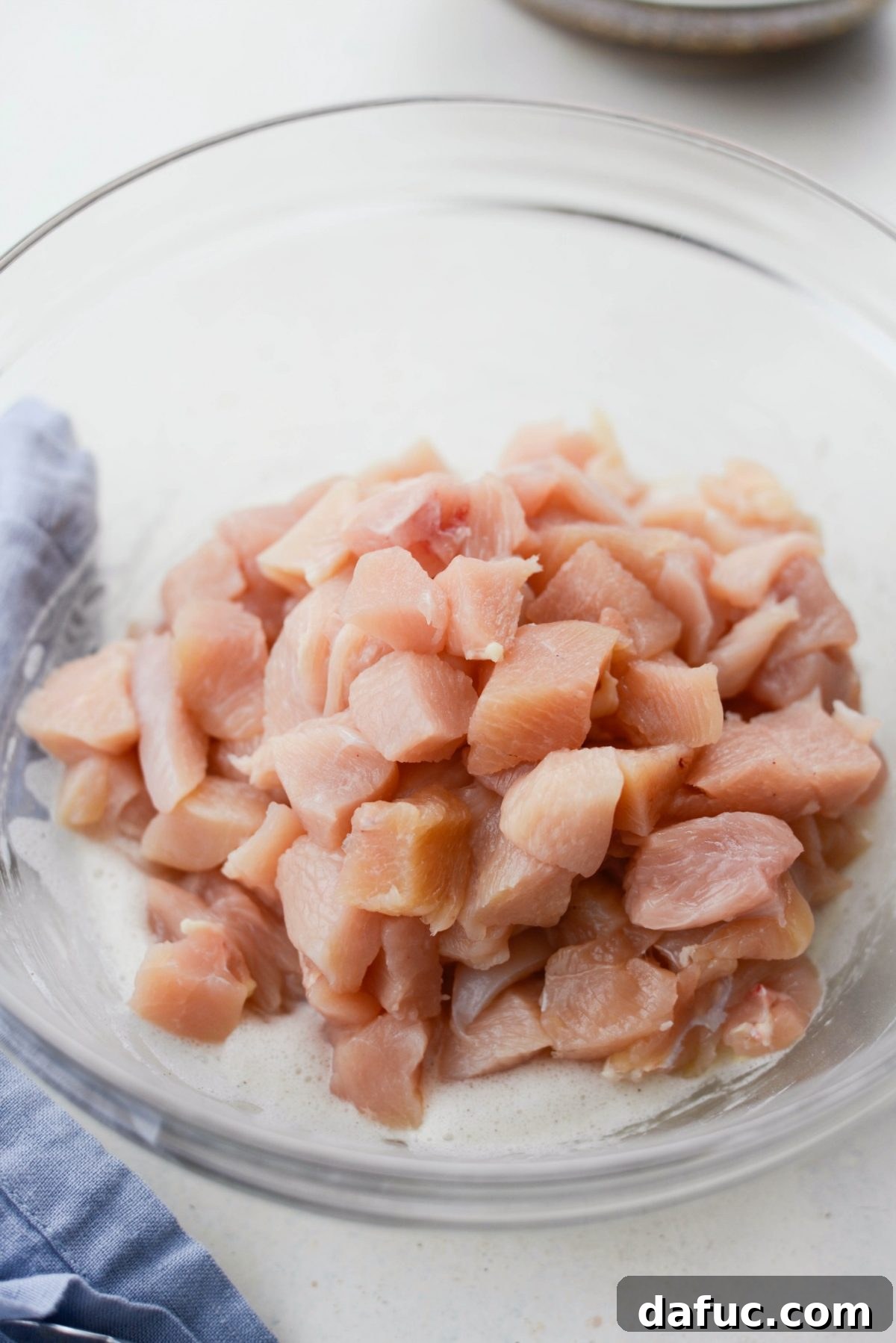
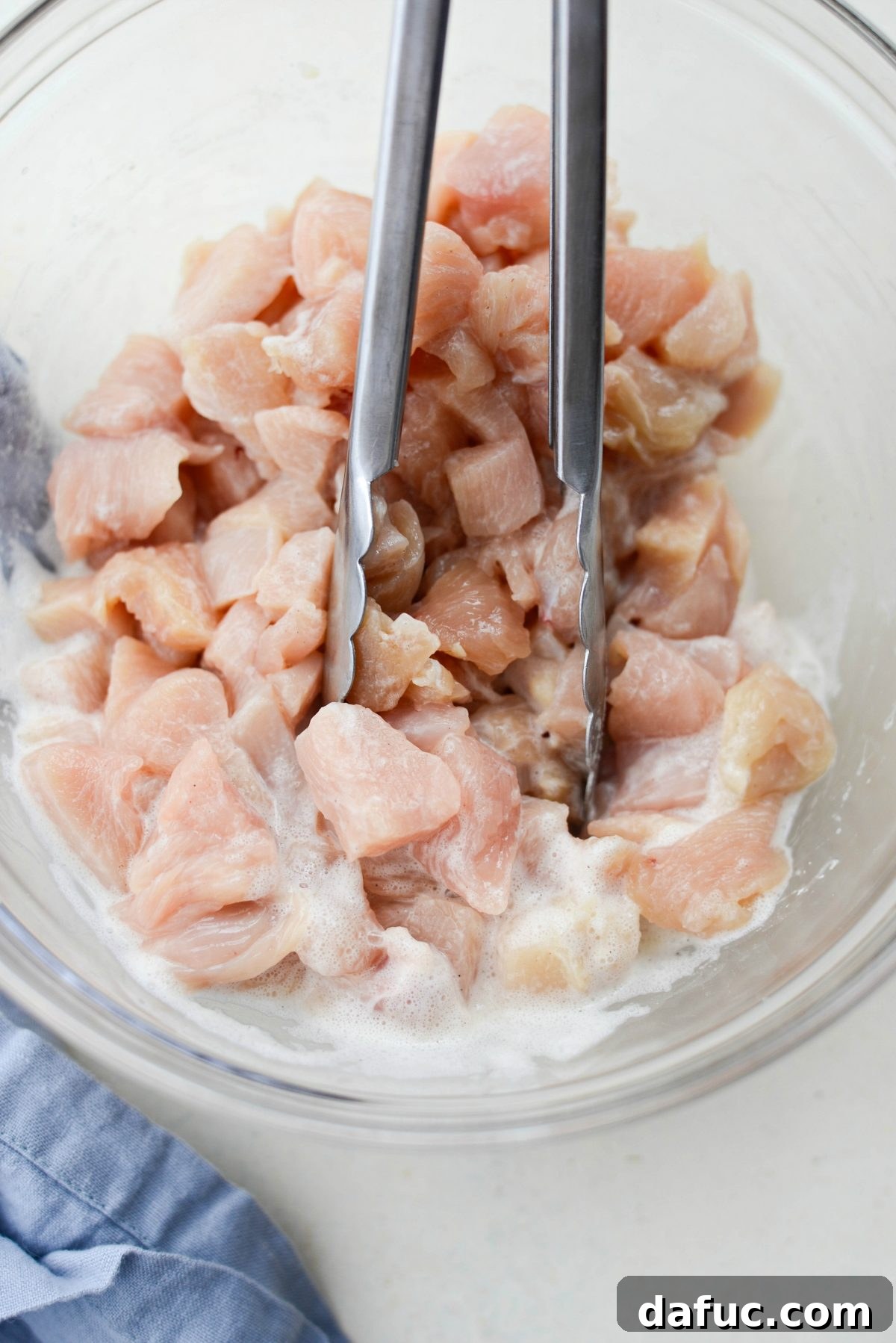
Begin by preparing your chicken. In a generously sized mixing bowl, whisk one egg white until it achieves a light, frothy consistency. This egg white acts as a crucial binding agent and helps create a protective, delicate coating around the chicken. Into this frothy egg white, measure and add 2 teaspoons of cornstarch along with 1/4 teaspoon of white pepper. Stir these ingredients thoroughly until they form a smooth, uniform slurry. Next, introduce 1-1/4 pounds of boneless, skinless chicken breasts, which you should have already diced into uniform, bite-sized pieces. Toss the chicken vigorously and evenly in the egg white and cornstarch mixture until every single piece is thoroughly coated. This vital “velveting” step is paramount; it not only tenderizes the chicken but also shields it from overcooking, ensuring it develops that coveted crispy, breading-like texture when it hits the scorching hot wok. This careful preparation is the secret to succulent, flavorful chicken.
The Art of Searing: Get Your Wok Smoking Hot!
This phase is undeniably the most critical for achieving that signature, restaurant-quality stir-fry texture. You must begin by heating 1 teaspoon of peanut oil in your wok or a large, heavy-bottomed chef’s pan over consistently high heat. The key here is to allow your pan to get intensely hot – you want it to be screaming hot, almost to the point where a wisp of smoke begins to rise. This extreme heat is paramount for searing the chicken rapidly and effectively, creating a beautifully caramelized, golden crust on the exterior while keeping the interior juicy and tender.
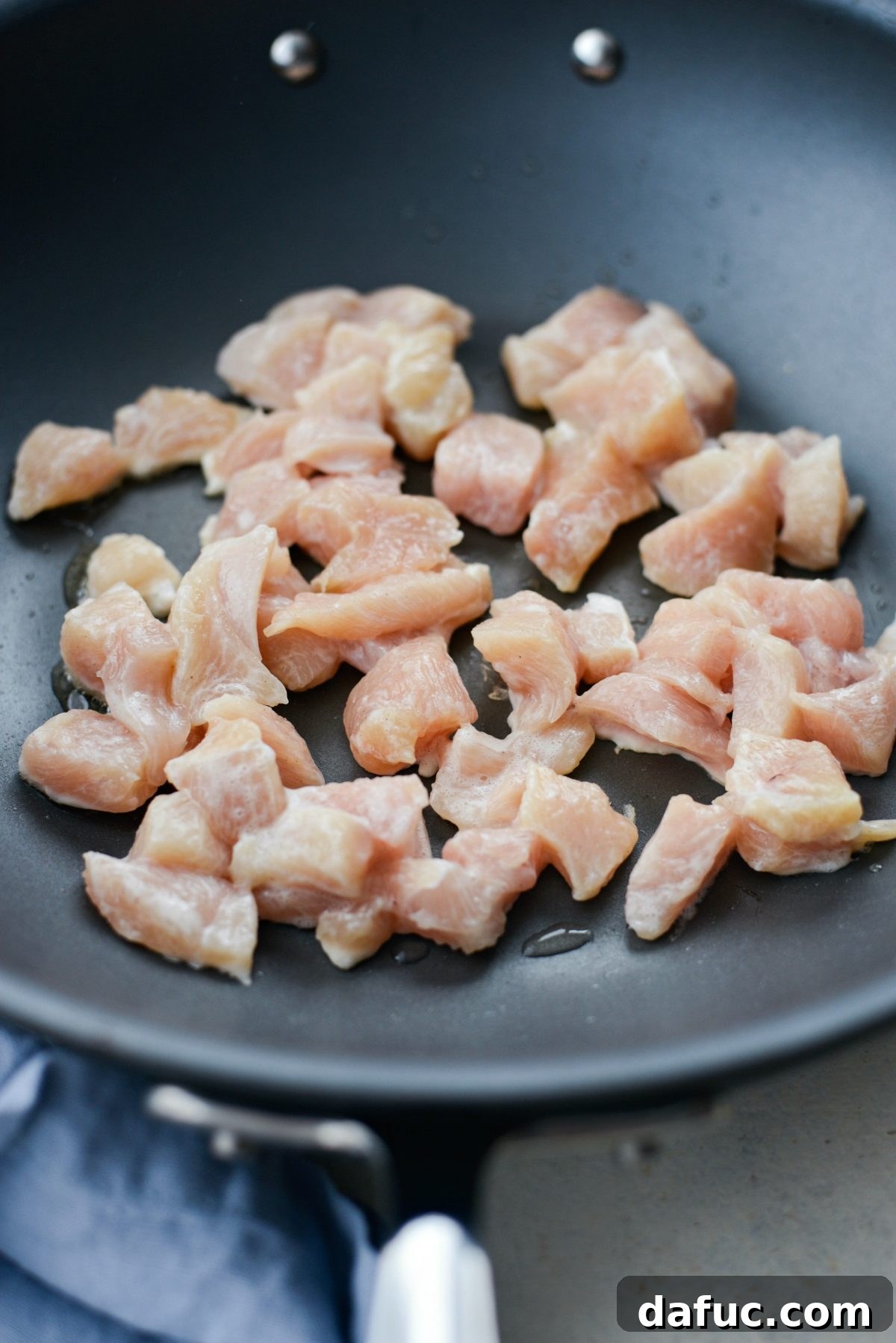
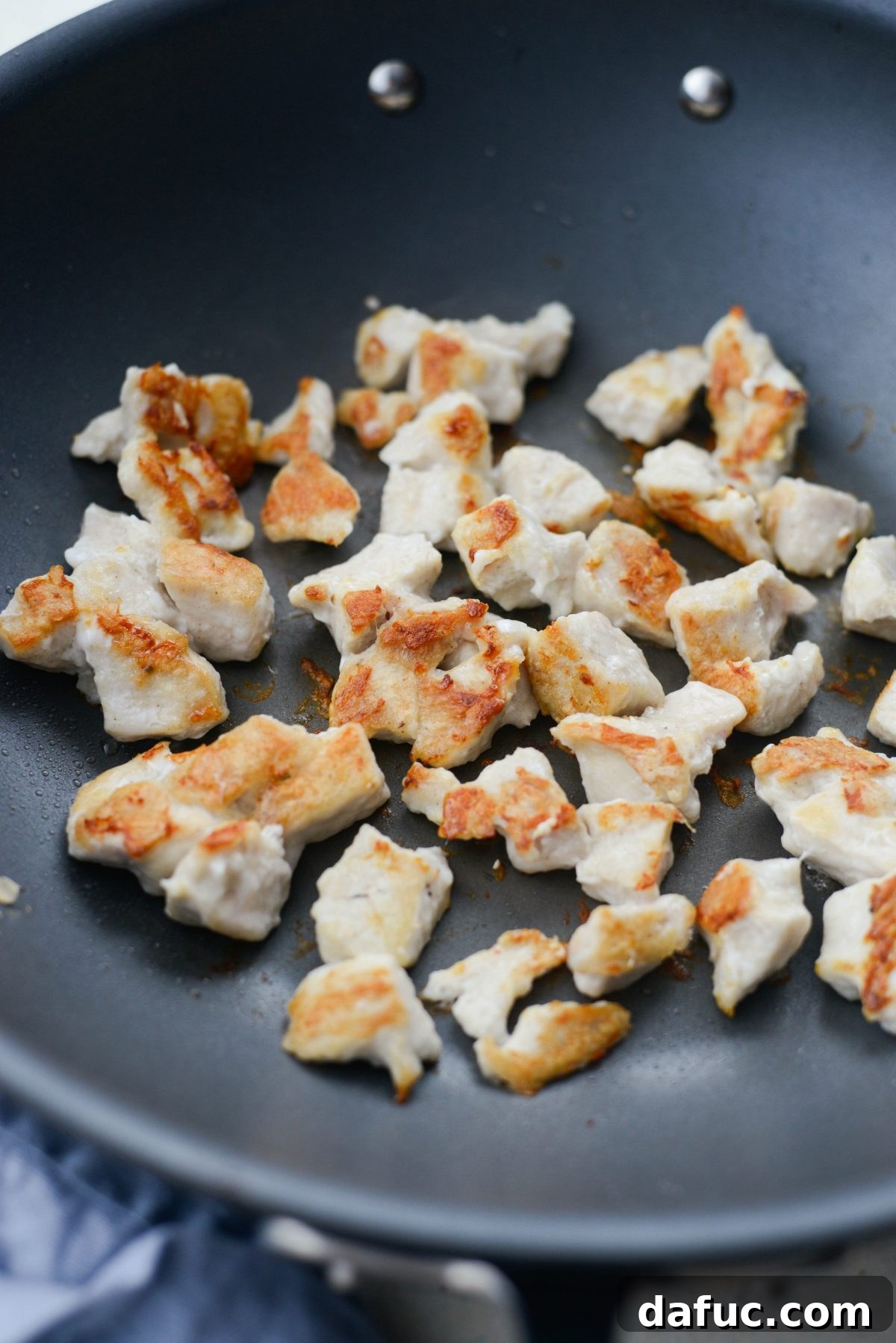
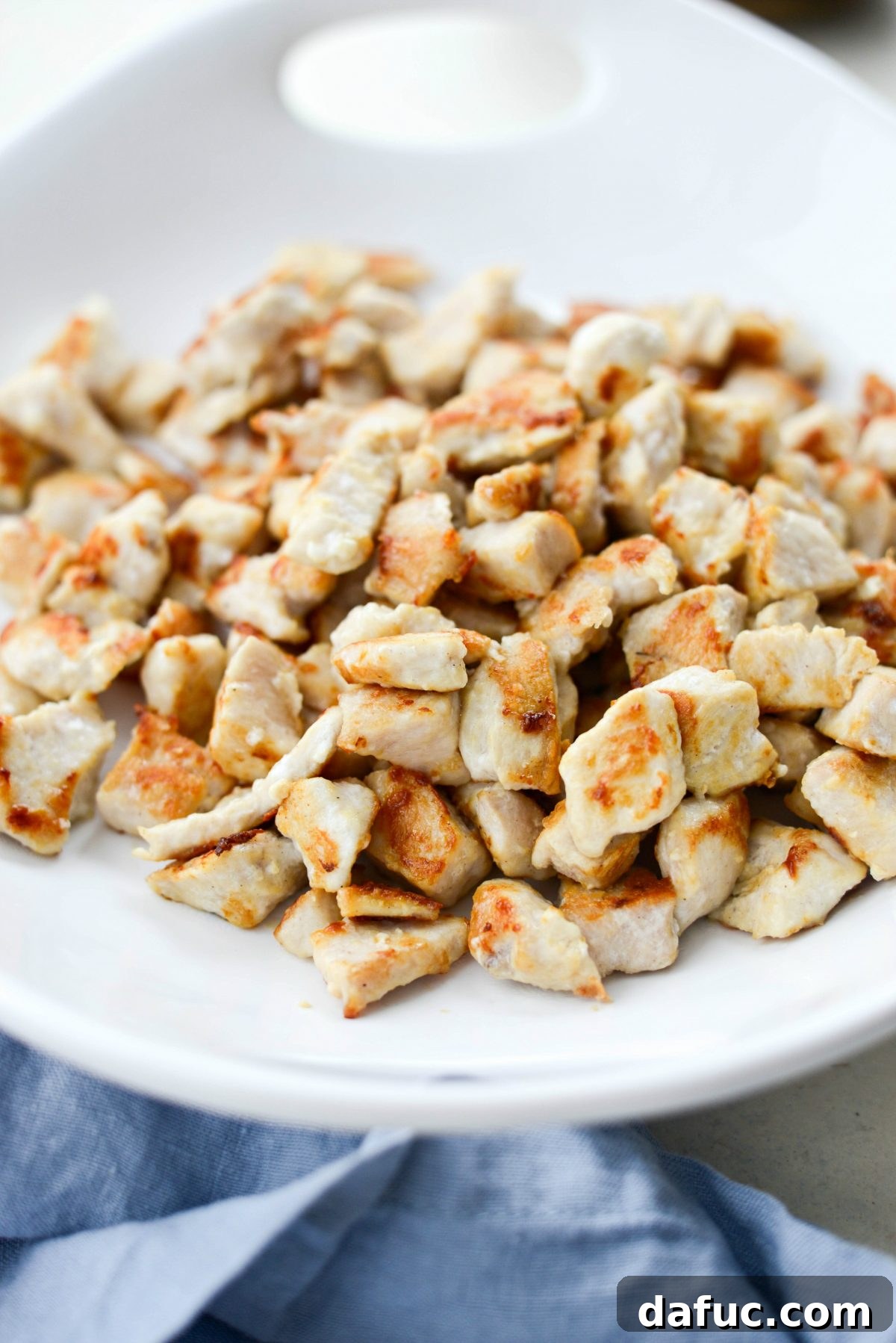
To prevent overcrowding and ensure proper searing, work with the chicken in small batches, typically 2 to 3, depending on the size of your wok or pan. Overfilling the pan will drastically reduce its temperature, causing the chicken to steam rather than sear, which results in a rubbery texture and a complete lack of those desirable crispy, caramelized edges. Add a single, even layer of the coated chicken pieces to the scorching hot wok and resist the urge to stir immediately. Allow the chicken to cook undisturbed for 5 to 6 minutes; this crucial time allows a deeply golden and crispy crust to form on one side. Once this crust has developed, turn the chicken pieces and continue cooking until they are thoroughly cooked through and boast an appealing golden-brown color on all sides. As each batch reaches perfection, promptly transfer the crispy chicken to a clean plate or dish and set it aside. Repeat this precise process with the remaining chicken, adding up to 2 additional teaspoons of peanut oil to the wok as needed for subsequent batches to maintain adequate searing fat.
Vegetable Harmony and Final Assembly:
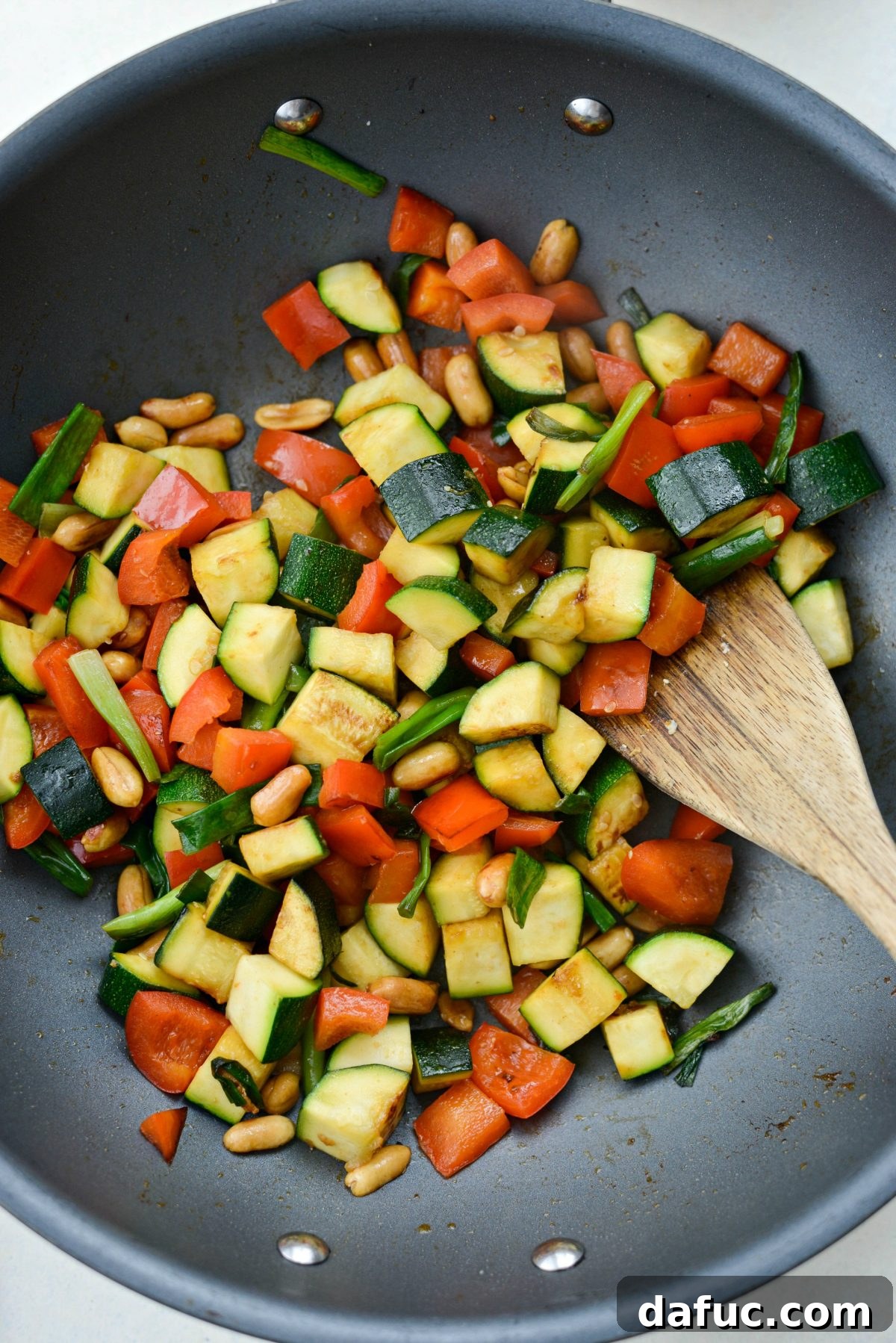
With your perfectly seared, crispy chicken patiently awaiting its return, it’s time to introduce the vibrant medley of vegetables to the wok. Add the final teaspoon of peanut oil to your still-hot wok. Immediately add 2 medium diced zucchinis, 1 chopped red bell pepper, 1 bunch of green onions (cut into visually appealing 1-inch strips), and 1/3 cup of your roasted peanuts. Sprinkle a pinch of kosher salt over the vegetables to enhance their natural flavors. Toss these ingredients gently but thoroughly to ensure they are evenly coated in the hot oil. Allow the vegetables to cook for approximately 3 minutes, stirring only occasionally. This intermittent stirring technique is key; it provides enough contact with the hot wok surface to allow them to caramelize slightly and develop a delicious char, while simultaneously ensuring they retain a delightful crisp-tender texture – a hallmark of an expertly executed stir-fry.
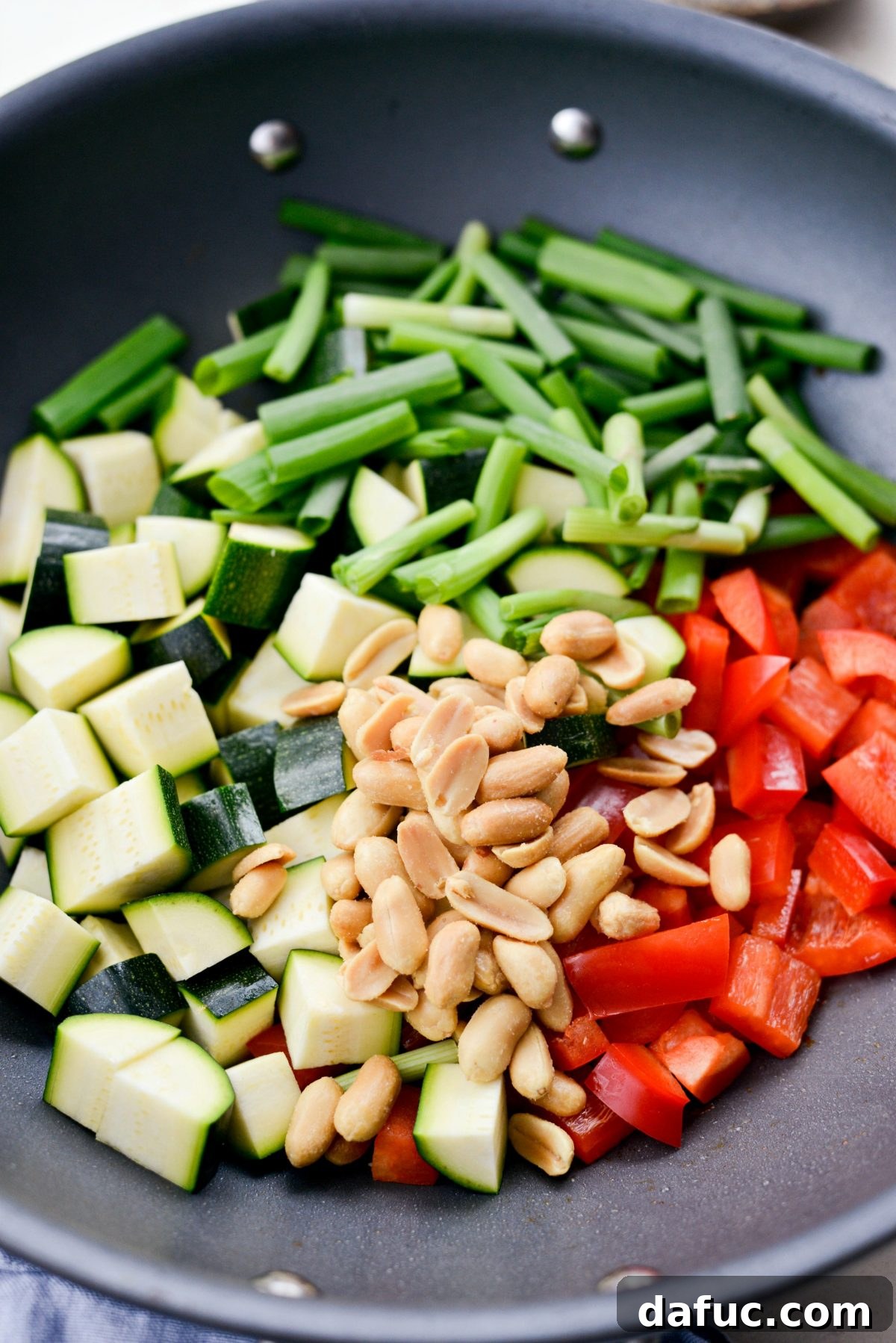
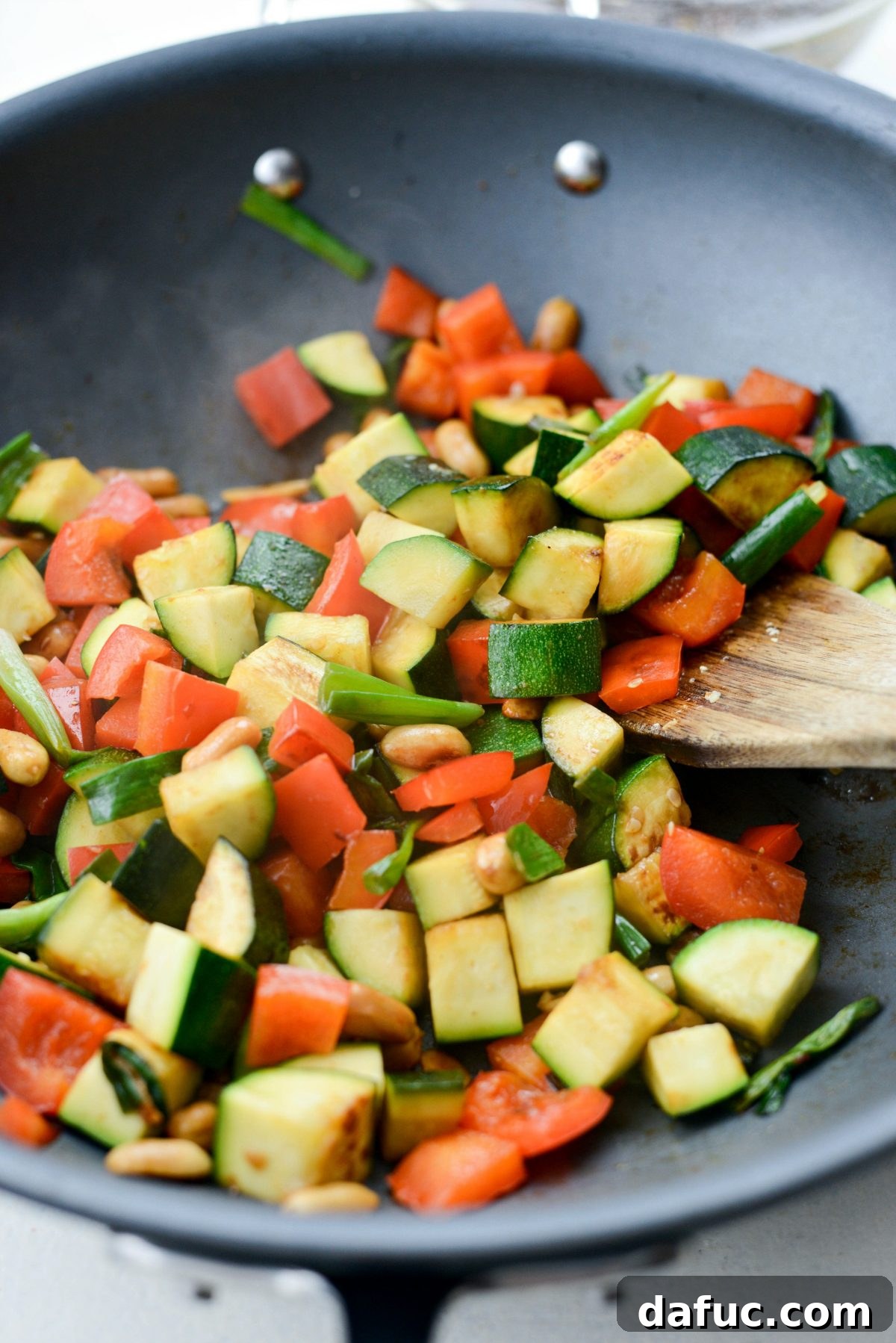
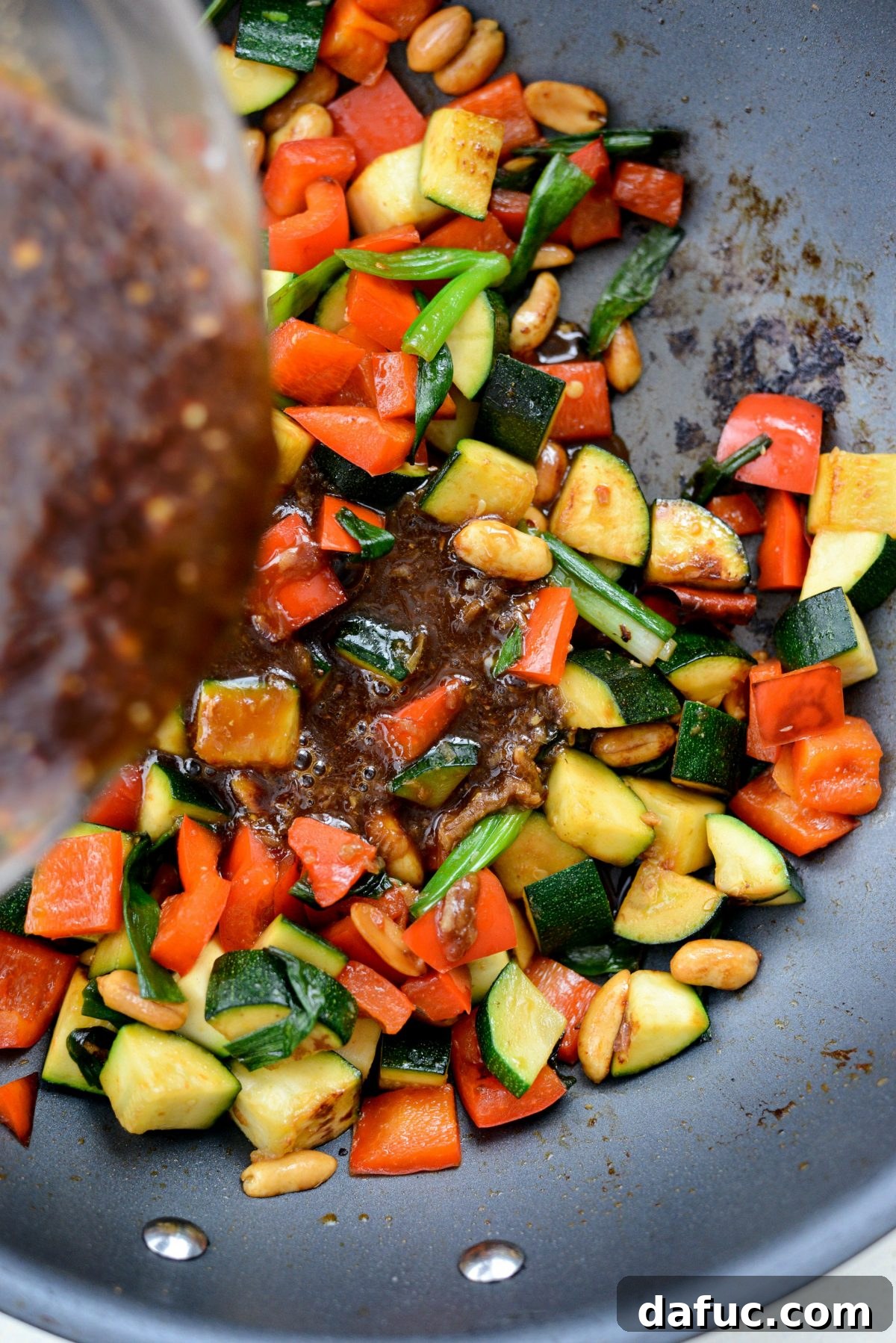
Once the vegetables have developed some appealing color and softened slightly while maintaining their satisfying crunch, it’s time for the grand finale. Give your meticulously prepared Kung Pao sauce a final, quick whisk (this ensures any settled cornstarch is reincorporated) and pour it directly into the wok with the sautéed vegetables. Stir continuously and vigorously for approximately 1 to 2 minutes. You will observe the sauce rapidly transforming, thickening into a glossy, rich, and aromatic coating that beautifully adheres to all the vegetables. Finally, return the fully cooked, crispy chicken pieces to the wok. Toss everything together one last time, ensuring that every piece of chicken and every vegetable is thoroughly coated in the luxurious sauce and heated through. This final, harmonious toss brings all the individual flavors and textures together, culminating in a cohesive, irresistible, and truly delicious homemade Kung Pao Chicken Stir-fry.
Serving Your Delicious Homemade Kung Pao Chicken
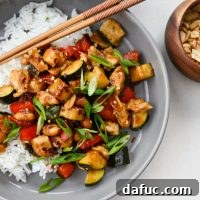
Congratulations! Your homemade Kung Pao Chicken Stir-fry is now complete and ready to be savored. Serve this incredible dish immediately, ensuring it’s piping hot, over a generous bed of fluffy steamed white rice, wholesome brown rice, or your favorite stir-fry noodles. The rich, glossy sauce perfectly complements the grains or noodles, allowing them to soak up every drop of its sweet, spicy, and savory goodness. To enhance the presentation and add an extra burst of fresh flavor, don’t forget to sprinkle your finished dish with additional thinly sliced green onions. For those who appreciate an extra layer of crunch and a more intense spicy kick, a scattering of more chopped roasted peanuts and a dash of red pepper flakes will elevate the experience, making each bite truly unforgettable.
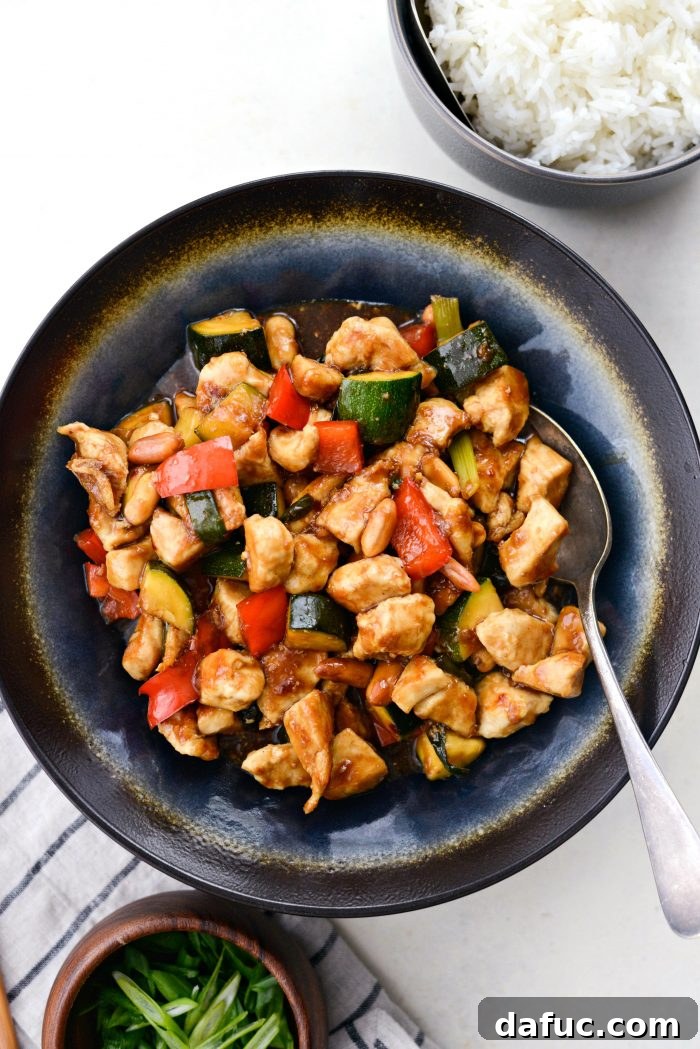
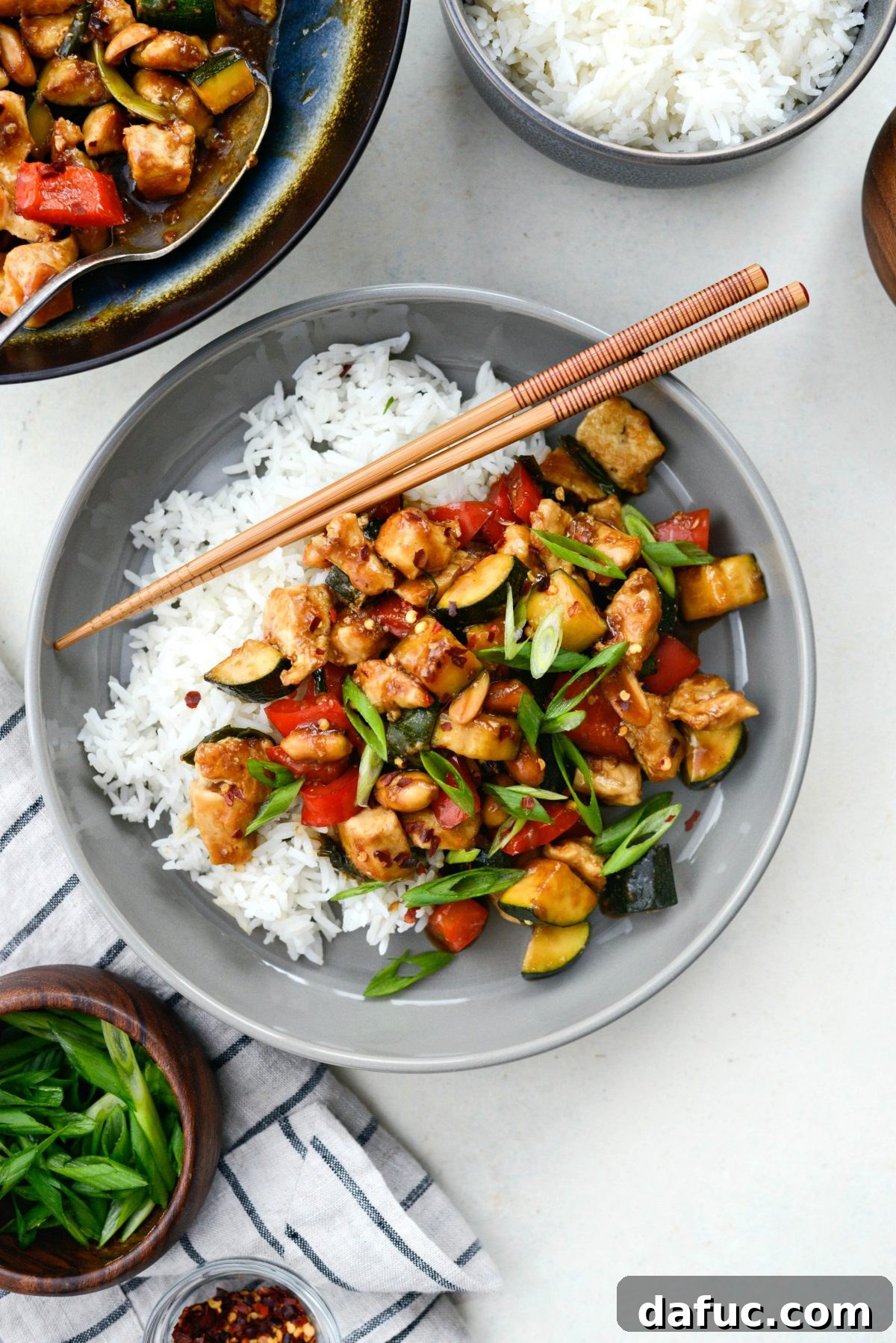
Chopsticks are Optional, but Highly Recommended!
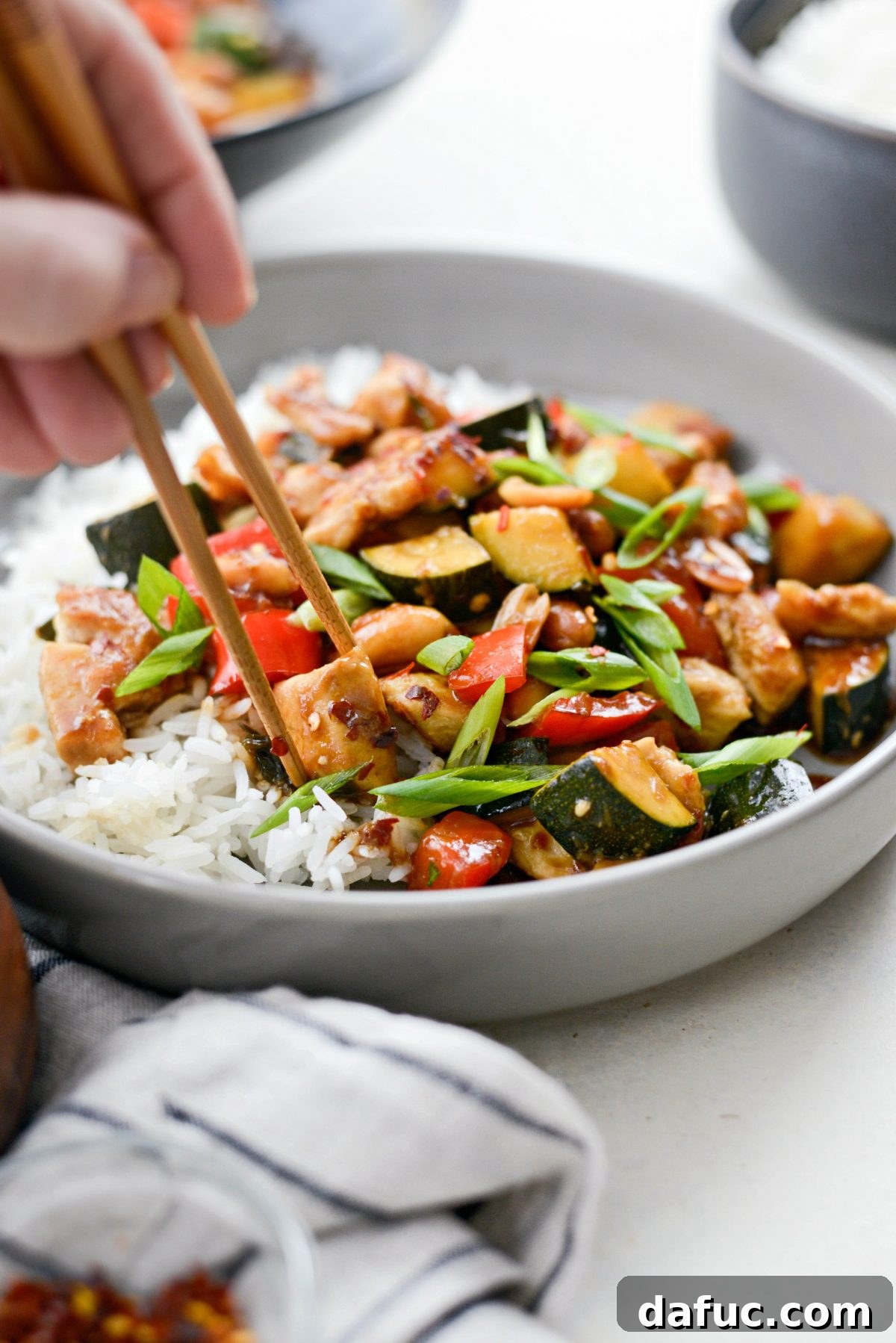
Whether you choose to embrace the traditional method with chopsticks or opt for the comfort of a trusty fork, prepare to enjoy one of the most gratifying and delicious Chinese dishes you can master in your own kitchen.
We sincerely hope you cherish every bite of this homemade Kung Pao Chicken Stir-fry recipe! If you decide to bring this delightful dish to life in your kitchen, we would absolutely love to see your creations. Please snap a photo of your culinary masterpiece and share it with us by tagging our accounts on Twitter or Instagram! Happy cooking!
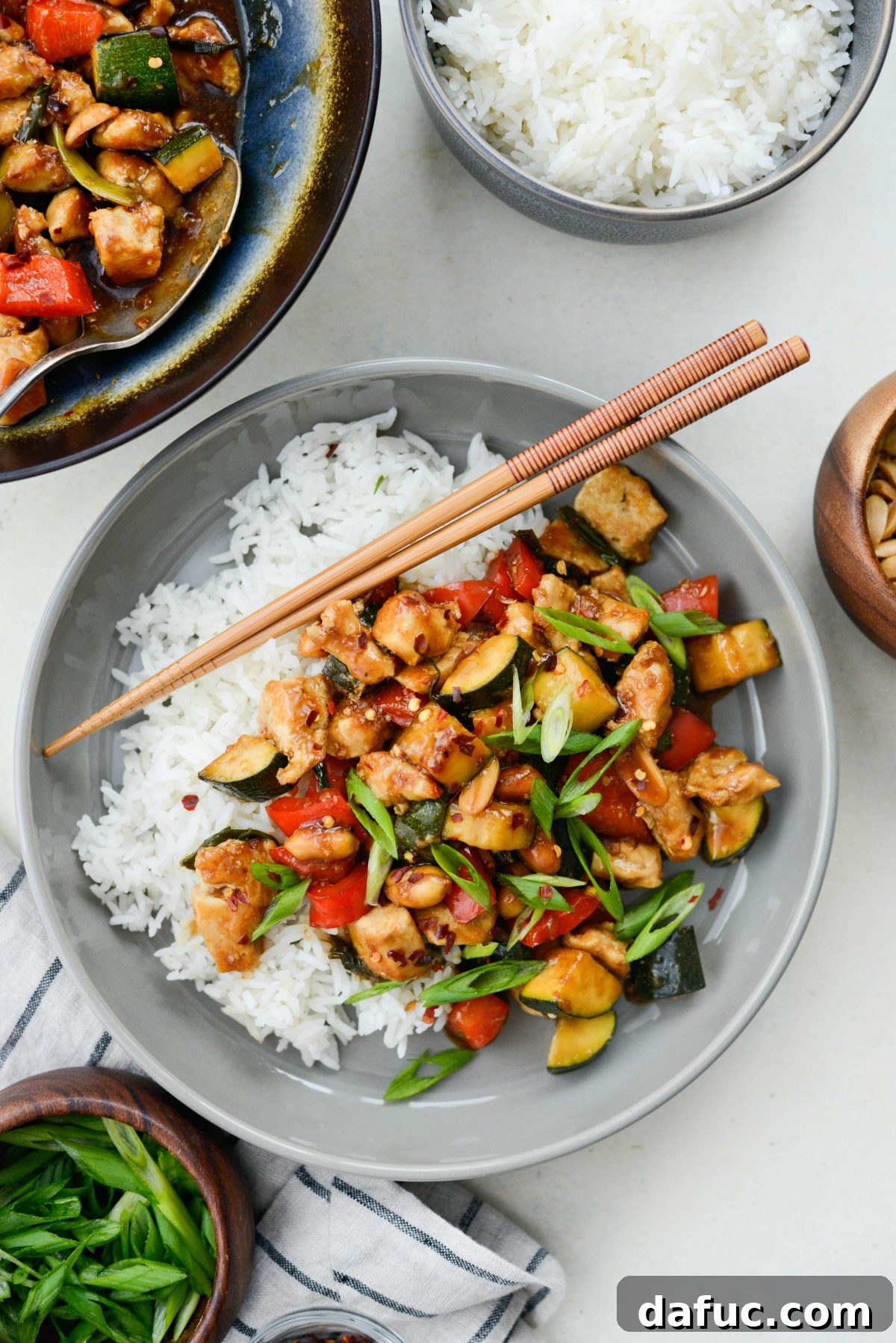
Kung Pao Chicken Stir-fry Recipe
This homemade Kung Pao Chicken Stir-fry brings the beloved sweet, spicy, and savory flavors of your favorite takeout dish right into your kitchen. Tender chicken, crisp vegetables, and crunchy peanuts are coated in an authentic, glossy sauce, ready to be served over rice or noodles.
Print Recipe | Pin Recipe
Recipe Details:
- Yield: 4 generous servings
- Prep Time: 25 minutes
- Cook Time: 25 minutes
- Total Time: 50 minutes
Ingredients
FOR THE KUNG PAO SAUCE:
- 1/3 cup granulated sugar
- 1 tablespoon cornstarch
- 1 teaspoon ground Szechuan peppercorns (adjust to taste, 3/4 to 1 tsp recommended)
- 1 teaspoon red pepper flakes (more or less to preference)
- 6 large cloves garlic, peeled and minced
- 2 teaspoons freshly grated ginger
- 1/3 cup Chinkiang vinegar
- 1/4 cup low-sodium tamari (or substitute with low-sodium soy sauce)
- 1/4 cup Shaoxing wine
- 1 tablespoon peanut oil, cold pressed (e.g., Spectrum brand)
KUNG PAO STIR-FRY:
- 1¼ pound boneless, skinless chicken breast, diced into bite-sized pieces
- 1 egg white
- 2 teaspoons cornstarch
- 1/2 teaspoon white pepper
- 4 teaspoons cold pressed peanut oil (e.g., Spectrum brand)
- 2 medium zucchinis, quartered and diced
- 1 medium red bell pepper, diced
- 1 bunch green onions, cut into 1-inch strips
- 1/3 cup roasted peanuts, lightly salted or unsalted
- Pinch of kosher salt (for vegetables)
Equipment
- All-Clad Hard Anodized Nonstick Chefs Pan/Wok, 12-Inch
- Chinkiang Vinegar + Shaohsing (Shaoxing) Rice Cooking Wine
- Soeos Authentic Szechuan Peppercorns (4 ounces)
- Mixing bowls
- Whisk
Instructions
MAKE THE KUNG PAO SAUCE:
- In a mixing bowl, combine all the sauce ingredients: sugar, cornstarch, ground Szechuan peppercorns, red pepper flakes, minced garlic, grated fresh ginger, Chinkiang vinegar, low-sodium tamari (or soy sauce), Shaoxing wine, and 1 tablespoon peanut oil. Whisk well until all ingredients are thoroughly combined and the cornstarch has dissolved. Set aside.
MAKE THE KUNG PAO STIR-FRY:
- Heat 1 teaspoon of peanut oil in a wok or large chef’s pan over high heat until very hot.
- Meanwhile, in a large mixing bowl, whisk the egg white until frothy. Add 2 teaspoons of cornstarch and 1/2 teaspoon of white pepper, stirring to combine. Add the diced chicken to the egg mixture and toss until each piece is evenly coated.
- Once your wok is screaming hot, add the coated chicken in batches (typically 2-3, do not overcrowd the pan). Allow the chicken to cook undisturbed for 5 to 6 minutes to form a deeply golden, crispy crust. Flip and continue to cook until fully cooked through and browned. Transfer cooked chicken to a clean dish and set aside. Repeat with remaining chicken, adding up to 2 additional teaspoons of oil as needed for subsequent batches.
- Next, add the final teaspoon of peanut oil to the wok. Add the diced zucchini, chopped red bell pepper, 1-inch strips of green onions, and 1/3 cup roasted peanuts along with a pinch of kosher salt. Toss to coat and cook for about 3 minutes, stirring only occasionally to allow the vegetables to caramelize and become crisp-tender.
- Once the vegetables have developed some color and softened slightly, give your prepared Kung Pao sauce another quick whisk and pour it into the wok. Stir continuously until the sauce thickens and becomes glossy, which should take about 1 to 2 minutes.
- Return the fully cooked, crispy chicken to the wok. Toss everything together, ensuring the chicken is thoroughly coated in the sauce and heated through.
- Serve immediately with steamed rice or rice noodles. Garnish with additional sliced green onions, chopped peanuts, and red pepper flakes, if desired, for extra flavor and heat.
Notes
Note About The Sauce: This recipe provides a balanced sweet and spicy flavor. You can easily customize it to your preference. For a more pronounced vinegar tang, increase the Chinkiang vinegar. If you enjoy a sweeter profile, add a little more sugar. For extra heat, simply increase the red pepper flakes or Szechuan peppercorns.
Nutrition Information (Approximate per serving)
(Serving: 1 heaping cup, does not include rice)
- Calories: 451 kcal
- Carbohydrates: 31g
- Protein: 38g
- Fat: 18g
- Saturated Fat: 3g
- Polyunsaturated Fat: 5g
- Monounsaturated Fat: 7g
- Trans Fat: 1g
- Cholesterol: 91mg
- Sodium: 1061mg
- Potassium: 1030mg
- Fiber: 4g
- Sugar: 21g
- Vitamin A: 1378 IU
- Vitamin C: 60mg
- Calcium: 61mg
- Iron: 2mg
Recipe Information
- Author: Laurie McNamara
- Course: Mains & Entrees
- Cuisine: Chinese