
Authentic Spaghetti Carbonara: Mastering the Classic Italian Pasta
Spaghetti Carbonara is more than just a pasta dish; it’s a culinary masterpiece that embodies the simplicity and richness of Italian cooking. Hailing from Rome, this iconic dish is celebrated for its harmonious blend of a few high-quality ingredients, resulting in a creamy, intensely flavorful experience without using actual cream. Our comprehensive guide will walk you through creating an authentic Carbonara that will impress with its depth and elegance, turning a simple meal into an unforgettable dining experience.
The Essence of Carbonara: Simplicity Meets Unrivaled Flavor
At its heart, true Carbonara is a testament to the idea that fewer, better ingredients lead to superior taste. The magic happens when hot pasta emulsifies with a mixture of eggs and cheese, creating a luxurious sauce that clings to every strand. Forget about heavy cream; the authentic method relies on the starch from the pasta water and the residual heat of the noodles to transform raw eggs and cheese into a velvety, glossy coating. This traditional approach yields a dish that is both light in texture and incredibly satisfying in flavor, making it a staple of Roman cuisine and a beloved dish worldwide.
Mastering Carbonara requires attention to detail and a commitment to quality ingredients. Each component plays a vital role, contributing to a symphony of flavors that is both complex and comforting. By following our detailed steps, you’ll unlock the secrets to a Carbonara that rivals those served in the finest Italian trattorias.
Unlocking the Flavors: Essential Ingredients for Authentic Carbonara
The beauty of Carbonara lies in its minimal yet impactful ingredient list. Each component plays a vital role in achieving the signature taste and texture. Choosing high-quality ingredients is paramount for an authentic and truly delicious result.
- Eggs: The foundational element of the creamy sauce. For the richest and most velvety consistency, a combination of whole eggs and extra yolks is often preferred. The yolks provide unparalleled richness and color, while the whites contribute to the sauce’s structure. Aim for fresh, high-quality eggs, as their flavor will shine through.
- Cured Pork (Guanciale or Pancetta): Traditionally, guanciale (cured pork jowl) is the authentic choice for Carbonara. Its unique fat renders beautifully, imparting a distinct, nuanced flavor that is hard to replicate. If guanciale is unavailable, high-quality, thick-cut pancetta (cured pork belly) is an excellent substitute. As a last resort, streaky bacon can be used, but ensure it’s unsmoked and of good quality to provide that essential salty, crispy element without overpowering the other flavors.
- Cheese (Pecorino Romano & Parmesan): A blend of freshly grated Pecorino Romano and Parmigiano-Reggiano is ideal. Pecorino Romano, a hard, salty sheep’s milk cheese, offers a sharp, tangy punch that is characteristic of Roman cuisine. Parmigiano-Reggiano, a harder, nuttier cow’s milk cheese, adds a more subtle, umami depth. Always grate your own cheese fresh; pre-grated cheeses often contain anti-caking agents that can hinder the sauce’s smoothness.
- Black Pepper: Freshly ground black pepper is absolutely non-negotiable. Its pungent aroma and subtle heat cut through the richness of the dish, adding a crucial layer of flavor and a beautiful visual contrast. For the best result, use a pepper mill with whole peppercorns and grind them just before use.
- Pasta (Spaghetti): Spaghetti is the classic choice for Carbonara due to its long, thin strands that are perfect for coating with the rich sauce. However, other long pasta shapes like bucatini (a thicker, hollow spaghetti) or even rigatoni can also work beautifully, offering different textures that capture the sauce effectively. Choose a good quality durum wheat pasta for the best texture.
Your Shopping List for a Simple Spaghetti Carbonara
To prepare this delightful Spaghetti Carbonara, gather these essential items. Remember, quality truly makes a difference here, so opt for the best you can find to elevate your dish.
- Sea salt (for generously salting the pasta water)
- 8 ounces of thick-cut bacon, pancetta, or ideally, guanciale
- 1 pound dried spaghetti noodles (or your preferred long pasta shape)
- 4 large eggs (preferably organic or free-range for richer yolks)
- Freshly grated Pecorino Romano cheese (about 1/2 cup)
- Freshly grated Parmesan (Parmigiano-Reggiano) cheese (about 1/2 cup)
- Freshly ground black pepper (generous amount)
- Fresh parsley, torn for garnish (optional, but adds a touch of color)
Step-by-Step Guide to Crafting Perfect Spaghetti Carbonara
Follow these instructions carefully to achieve a truly authentic and delicious Carbonara. Timing and technique are paramount to prevent scrambling the eggs and to ensure a perfectly emulsified sauce.
1. Prepare Your Mise en Place and Pasta Water
Begin by filling a large pot with at least 4-5 quarts of water for your pasta. You’ll need plenty of water to ensure the spaghetti cooks evenly and releases enough starch into the water, which is crucial for the sauce. Place the pot over high heat to bring it to a rolling boil. While the water heats, take your eggs out of the refrigerator. To help them reach room temperature faster, place them in a bowl of semi-warm (not hot) tap water for about 10-15 minutes. This step is essential because room-temperature eggs are less likely to seize or curdle when introduced to the hot pasta, resulting in a much smoother, more stable sauce.
2. Render the Cured Pork to Crispy Perfection
Cube approximately 8 ounces (about 1/2 pound) of your chosen cured pork (guanciale, pancetta, or thick-cut bacon) into small, even pieces. The ideal size is about 1/4 to 1/2 inch dice. Place the cubed pork in a cold skillet; this allows the fat to render slowly and evenly, preventing the meat from burning before its fat is fully released. Cook over medium heat, stirring occasionally, until the pieces are beautifully golden brown and delightfully crispy. This process not only cooks the pork but also renders out its deeply flavorful fat, which is an integral part of the Carbonara sauce.
Once crispy, use a slotted spoon to transfer the cooked pork to a plate lined with paper towels. This will drain off any excess fat, leaving you with perfectly crisp morsels. Crucially, reserve about 1-2 tablespoons of the rendered fat in the skillet. This flavorful fat is liquid gold and will be incorporated into your Carbonara sauce, adding another layer of richness and authentic flavor.
3. Cook the Spaghetti to Al Dente Perfection
Once your large pot of water is at a rolling boil, generously season it with sea salt – it should taste like the ocean (this is your only chance to season the pasta itself). Add 1 pound of dried spaghetti noodles, ensuring they are fully submerged. Stir frequently during the first few minutes to prevent the pasta from sticking together. Cook the spaghetti according to package directions until it is al dente – firm to the bite but cooked through. This usually takes about 8-10 minutes. Timing is critical here, as you’ll need the pasta to be piping hot when it meets the egg mixture.
4. Assemble the Luxurious Egg and Cheese Mixture
While the pasta is cooking, crack 4 large, room-temperature eggs into a large, deep serving bowl. This bowl should be generously sized to comfortably toss all the pasta later. Whisk the eggs thoroughly until they are light yellow, smooth, and slightly frothy. This ensures a uniform, consistent sauce texture.
Grate about 1/2 cup each of Pecorino Romano and Parmigiano-Reggiano cheese. Add both grated cheeses to the whisked eggs. Now, generously season the mixture with freshly ground black pepper. Carbonara is renowned for its bold, peppery kick, so do not be shy with the pepper! Stir everything together until well combined and the mixture forms a thick, paste-like consistency. This is your luscious Carbonara sauce base, waiting for the hot pasta.
5. Emulsify the Sauce and Combine All Elements
Just before draining the pasta, reserve about 1 cup of the starchy pasta water. This “liquid gold” is absolutely essential for achieving the perfect sauce consistency; it helps emulsify the eggs and cheese, creating a smooth, creamy texture. Immediately drain the cooked spaghetti (do not rinse!) and transfer it directly into the large serving bowl with the egg and cheese mixture. The residual heat from the piping hot pasta is what gently cooks the eggs and melts the cheese without scrambling them.
Working quickly, use tongs to toss the pasta vigorously and continuously, ensuring every single strand is thoroughly coated with the sauce. As you toss, the sauce will thicken and become wonderfully creamy and glossy. If the sauce appears too thick or dry, gradually add a tablespoon or two of the reserved starchy pasta water, mixing until you reach your desired consistency. Finally, add the crispy cured pork and the reserved pork fat from the skillet to the pasta. Toss everything together one last time, making sure the pork is evenly distributed throughout the dish.
Serving Your Exquisite Spaghetti Carbonara
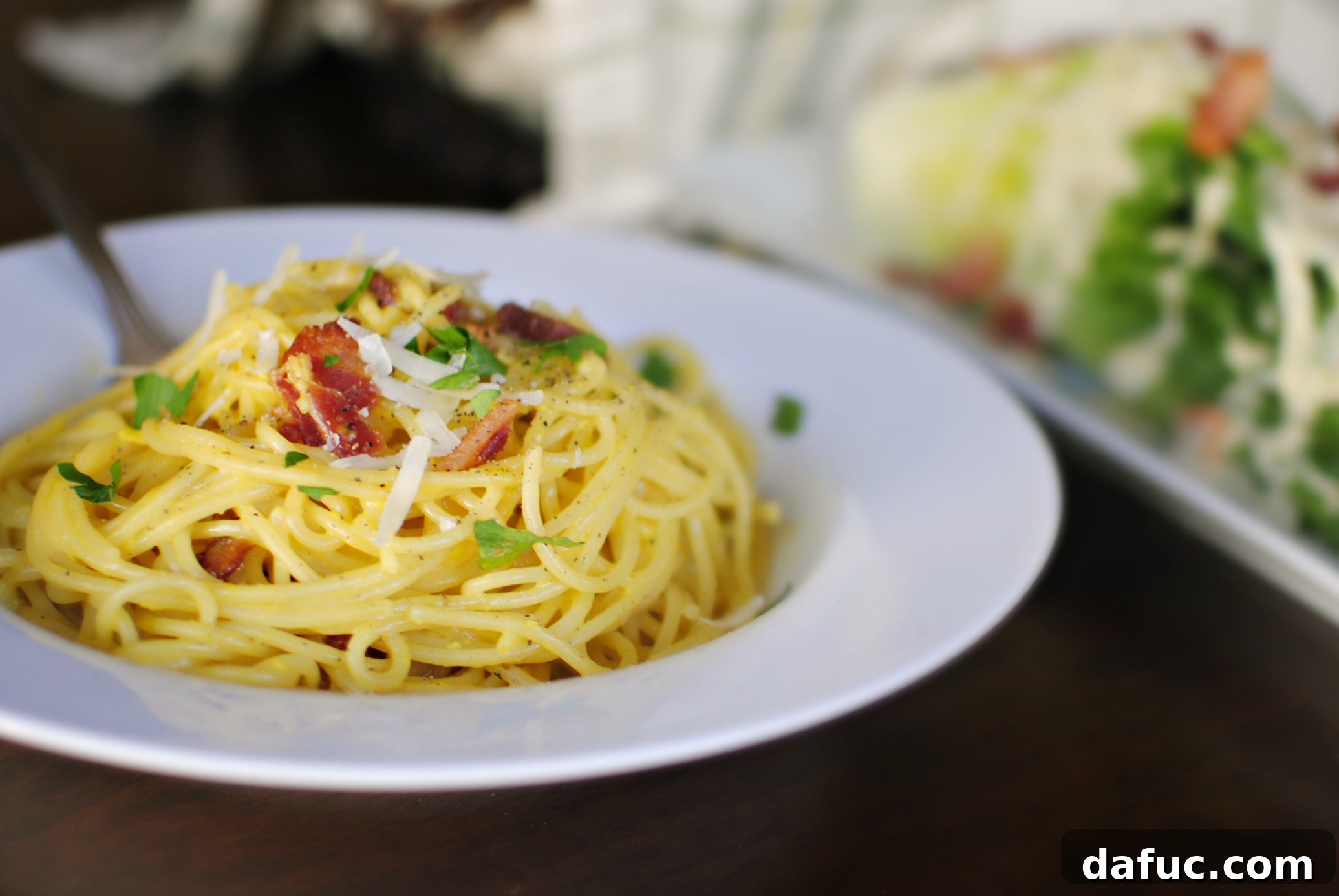
Serve your Spaghetti Carbonara immediately while it’s still warm and the sauce is at its creamiest. Carbonara is a dish best enjoyed fresh, as the sauce can tighten as it cools. Garnish each plate with an extra sprinkle of freshly ground black pepper for a final aromatic flourish, a generous dusting of grated Pecorino Romano for added savory depth, and a scattering of fresh torn parsley leaves, if you prefer. While parsley is not traditionally included in authentic Carbonara, some enjoy its fresh, herbaceous contrast. Enjoy this simple yet incredibly elegant and scrumptious pasta dish that comes together quicker than you might expect, making it perfect for a sophisticated weeknight meal or a comforting weekend treat. Pair it with a crisp green salad and a glass of dry white wine for a complete Italian dining experience.
Expert Tips for Carbonara Perfection
Achieving the perfect Carbonara consistently comes down to a few key techniques and considerations:
- Quality Ingredients are Non-Negotiable: This cannot be stressed enough. Good quality eggs, authentic Pecorino Romano, and flavorful guanciale (or high-quality, unsmoked bacon) make all the difference in the final taste profile.
- Room Temperature Eggs: As mentioned, this helps significantly prevent the eggs from scrambling when they meet the hot pasta, promoting a smooth, emulsified sauce.
- Don’t Rinse the Pasta: The starchy water clinging to the pasta is absolutely vital for creating the emulsified sauce. Rinsing it removes this essential ingredient.
- Work Quickly and Off the Heat: Speed is important when tossing the hot pasta with the egg mixture. Perform this step off direct heat to ensure the eggs cook gently without curdling or scrambling. Continuous vigorous tossing is key.
- Use Pasta Water Wisely: Add the reserved pasta water gradually, a tablespoon at a time, to achieve the desired sauce consistency. It’s always better to add too little and then more, rather than adding too much and ending up with a watery sauce.
- No Cream Allowed (for Authentic Carbonara): The creamy texture of authentic Carbonara comes entirely from the emulsion of egg, cheese, rendered pork fat, and starchy pasta water, not from added dairy cream.
- Taste as You Go: Always taste your sauce and adjust seasoning, especially the amount of freshly ground black pepper, to your preference before serving.
A Brief Journey Through the History of Spaghetti Carbonara
The exact origins of Carbonara are shrouded in a bit of mystery and delightful culinary debate, but it is widely believed to have emerged from the Lazio region of Italy, specifically Rome, likely sometime after World War II. One popular theory suggests that American soldiers stationed in Italy introduced their rations of bacon and eggs to local cooks, who then combined these ingredients with traditional Italian pasta and cheese, giving birth to Carbonara. This theory points to the prevalence of eggs and bacon in American military diets at the time.
Another fascinating theory links the dish to charcoal workers (carbonari in Italian). It’s thought that Carbonara was a hearty, energy-rich meal that these workers could easily prepare in the Apennine Mountains, with the specks of black pepper resembling charcoal dust. While both theories offer compelling narratives, what is certain is that Carbonara quickly became a beloved staple of Roman cuisine, celebrated for its robust flavors, economical ingredients, and deceptive simplicity. It stands today as a testament to Italian culinary ingenuity and a deeply cherished dish by food lovers around the globe.
Frequently Asked Questions About Carbonara
- Can I use other types of pasta besides spaghetti?
- While spaghetti is the traditional choice, other long pasta shapes like bucatini (a thicker, hollow spaghetti), linguine, or even short pasta like rigatoni or penne can be used. The key is to choose a shape that effectively holds and coats the rich, creamy sauce.
- Is it safe to eat eggs that aren’t fully cooked?
- The eggs in Carbonara are not consumed raw. The intense heat from the freshly cooked pasta, combined with constant vigorous tossing, gently cooks the eggs into a silky, emulsified sauce without scrambling them. For those with concerns about raw eggs, using pasteurized eggs can add an extra layer of safety. Always ensure your eggs are at room temperature to facilitate this gentle cooking process.
- What’s the main difference between guanciale and bacon?
- Guanciale is cured pork jowl, offering a distinctively richer, more complex, and nuanced flavor profile, along with a higher fat content compared to most bacon, which is typically pork belly. Guanciale’s fat renders beautifully and provides an unparalleled depth of flavor that is considered essential for authentic Carbonara. While good quality bacon can be a suitable substitute, it will yield a slightly different (though still delicious) flavor.
- Can I add vegetables to my Carbonara?
- Authentic Roman Carbonara does not traditionally include vegetables. However, many modern interpretations and personal preferences lead to additions like peas, mushrooms, or asparagus for added flavor, texture, and color. If you choose to add vegetables, cook them separately before stirring them into the finished pasta to avoid altering the delicate sauce’s consistency.
- How do I prevent the eggs from scrambling or curdling?
- Several factors prevent scrambling: ensure your eggs are at room temperature, work quickly once the hot pasta is added to the egg mixture, and vigorously toss the pasta continuously off direct heat. The reserved starchy pasta water is also crucial; it helps regulate the temperature and aids in creating a smooth emulsion, preventing the eggs from cooking too rapidly.
Enjoy this timeless Italian delight! We wholeheartedly encourage you to try this authentic Spaghetti Carbonara recipe and share your culinary journey with us. Snap a photo of your delicious creation and tag us on social media – we’d absolutely love to see them and celebrate your cooking success!
Connect with us: Twitter | Instagram
Simple Spaghetti Carbonara Recipe
Indulge in the timeless taste of Roman cuisine with this easy-to-follow Spaghetti Carbonara recipe. Hot pasta is expertly tossed with a rich Parmesan and egg mixture, then crowned with perfectly crispy cured pork and a final flourish of grated cheese and fresh pepper. This dish is pure comfort, elegance, and flavor in every bite – a truly classic Italian experience without the need for cream.
Yield: 6 servings
Prep Time: 25 minutes
Cook Time: 20 minutes (includes bacon cooking and pasta boiling)
Total Time: 45 minutes
Author: Laurie McNamara
Course: Mains & Entrees
Cuisine: Italian
Ingredients
- 1 pound dried spaghetti noodles
- 1 tablespoon sea salt, for pasta water
- 8 ounces thick-cut bacon, pancetta, or guanciale, cubed
- 4 large eggs, at room temperature
- 1/2 cup freshly grated Pecorino Romano cheese
- 1/2 cup freshly grated Parmesan (Parmigiano-Reggiano) cheese
- Freshly ground black pepper, to taste
- Fresh parsley, torn for garnish (optional)
Instructions
- Bring a large pot of water to a rolling boil.
- Place eggs in a bowl with warm water to help them reach room temperature while you prepare other ingredients.
- Cube the bacon or guanciale. Add it to a cold large skillet and cook over medium heat until crispy. Use a slotted spoon to transfer the crispy pork to a paper towel-lined plate, reserving 1-2 tablespoons of the rendered fat in the skillet.
- Once the pasta water is boiling, add 1 tablespoon of sea salt. Add the spaghetti and cook according to package directions until al dente.
- While the pasta cooks, crack the eggs into a large, deep serving bowl. Whisk them until well combined and slightly frothy. Stir in the grated Pecorino Romano and Parmesan cheeses, along with a generous amount of freshly ground black pepper. Combine well to form a thick paste.
- Before draining the pasta, reserve 1 cup of the starchy pasta water. Immediately drain the cooked spaghetti (do not rinse!) and add it directly to the serving bowl with the egg and cheese mixture.
- Working quickly, use tongs to toss the pasta vigorously and continuously, ensuring every strand is coated. The heat from the pasta will gently cook the eggs and melt the cheese into a creamy, emulsified sauce. If the sauce is too thick, gradually add a tablespoon or two of the reserved pasta water until the desired consistency is reached.
- Add the crispy cured pork (and the reserved pork fat) to the pasta. Toss again to evenly distribute throughout the dish.
- Serve immediately, garnished with more freshly ground black pepper, a sprinkle of grated Parmesan, and fresh torn parsley leaves, if desired.
Nutrition Information (Approximate per serving)
- Serving Size: 1 Serving
- Calories: 554 kcal
- Carbohydrates: 58g
- Protein: 25g
- Fat: 24g
- Saturated Fat: 9g
- Polyunsaturated Fat: 4g
- Monounsaturated Fat: 9g
- Trans Fat: 1g
- Cholesterol: 165mg
- Sodium: 1692mg
- Potassium: 307mg
- Fiber: 2g
- Sugar: 2g
- Vitamin A: 301 IU
- Calcium: 218mg
- Iron: 2mg