
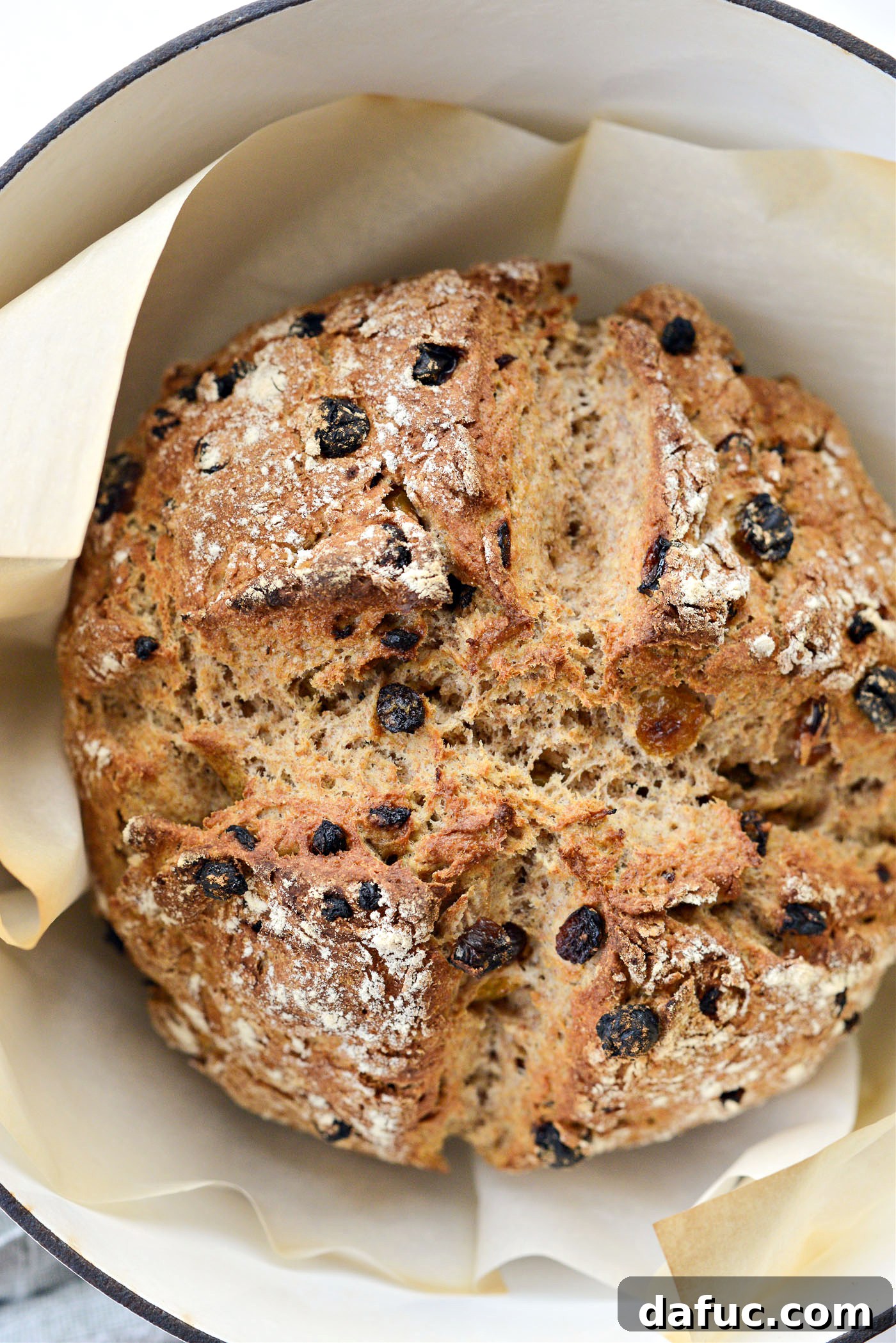
Step into the heartwarming world of traditional Irish baking with this exquisite Raisin and Currant Irish Wheaten Bread. More than just a simple loaf, this is a comforting hug in bread form, a whole grain quick-bread recipe that encapsulates the essence of rustic charm and delightful flavor. Crafted with time-honored ingredients like wholesome whole wheat flour, enriching baking soda, a touch of salt, creamy butter, and tangy buttermilk, this bread is generously studded with glistening golden raisins and plump Zante currants. Each slice offers a mild, inviting flavor profile and a tender texture, wonderfully reminiscent of the inside of a perfectly baked biscuit. It’s an unforgettable experience, especially when served warm, lavishly spread with salted butter and a dollop of your favorite jam or a drizzle of golden honey. One lovingly baked loaf promises approximately 10 generous slices, perfect for sharing or savoring over several days.
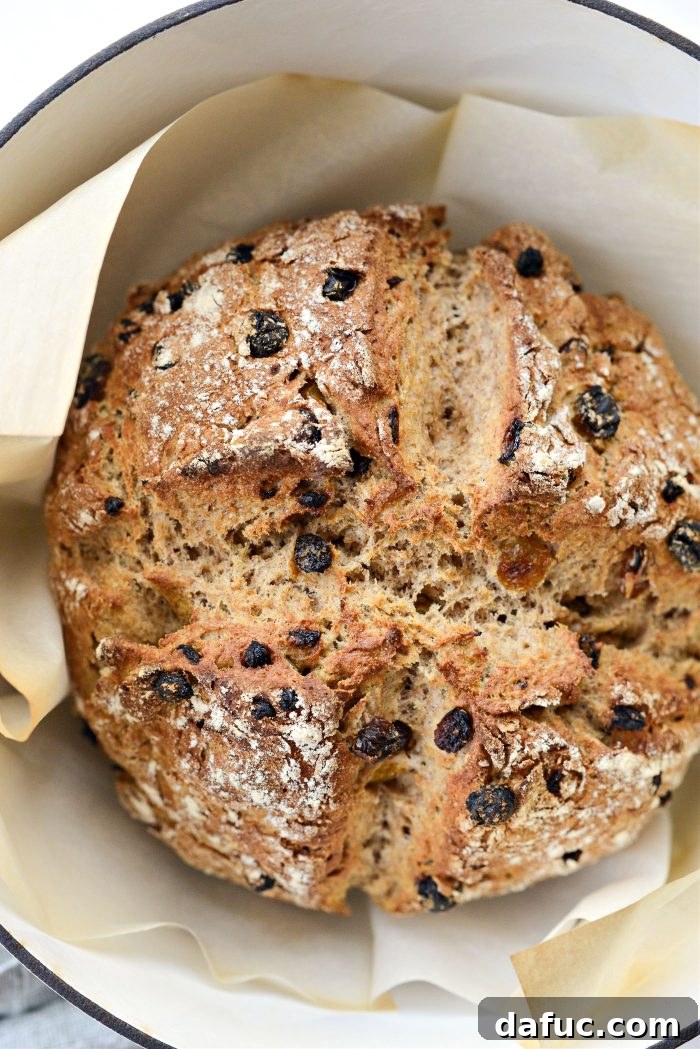
As the festive spirit of St. Patrick’s Day sweeps across, bringing with it a vibrant celebration of Irish culture and cuisine, this Raisin and Currant Irish Wheaten Bread stands out as a genuine culinary treasure. While my St. Patrick’s Day might involve a bit more chaperoning than pub-hopping this year, the tradition of preparing beloved Irish dishes remains. Alongside classic corned beef and boiled vegetables and perhaps a whimsical shamrock shake, this wheaten bread adds an authentic and comforting touch to any celebratory spread. Its rustic appeal and satisfying taste make it a perfect centerpiece, embodying the warmth and hospitality of Irish traditions.
Wheaten Bread vs. Soda Bread: Unraveling the Irish Baking Mystery
For those new to the nuances of Irish baking, the terms “soda bread” and “wheaten bread” might seem interchangeable, yet they represent distinct traditions. Both are quick breads, relying on baking soda as a leavening agent rather than yeast, making them relatively fast and simple to prepare. However, the key difference lies in their flour composition and overall flavor profile. Traditional Irish Soda Bread typically uses primarily white all-purpose flour and is often made without added sugar, resulting in a more savory loaf that pairs beautifully with hearty stews and cheeses. In contrast, Irish Wheaten Bread, as the name suggests, prominently features whole wheat flour, contributing a deeper, nuttier flavor and a more robust texture. Furthermore, wheaten bread is customarily sweetened, either through the addition of a little sugar, or, as in this recipe, generously incorporating naturally sweet dried fruits like golden raisins and Zante currants. This creates a bread that is wonderfully versatile, equally at home on a breakfast table with butter and jam, or as an accompaniment to a simple cup of tea in the afternoon. My recipe incorporates a modest amount of sugar, but the true sweetness blossoms from the generous bounty of golden raisins and currants, which also lend a delightful chewiness and bursts of fruity flavor to every bite.
Crafting the Perfect Loaf: Essential Ingredients for Your Raisin and Currant Irish Wheaten Bread
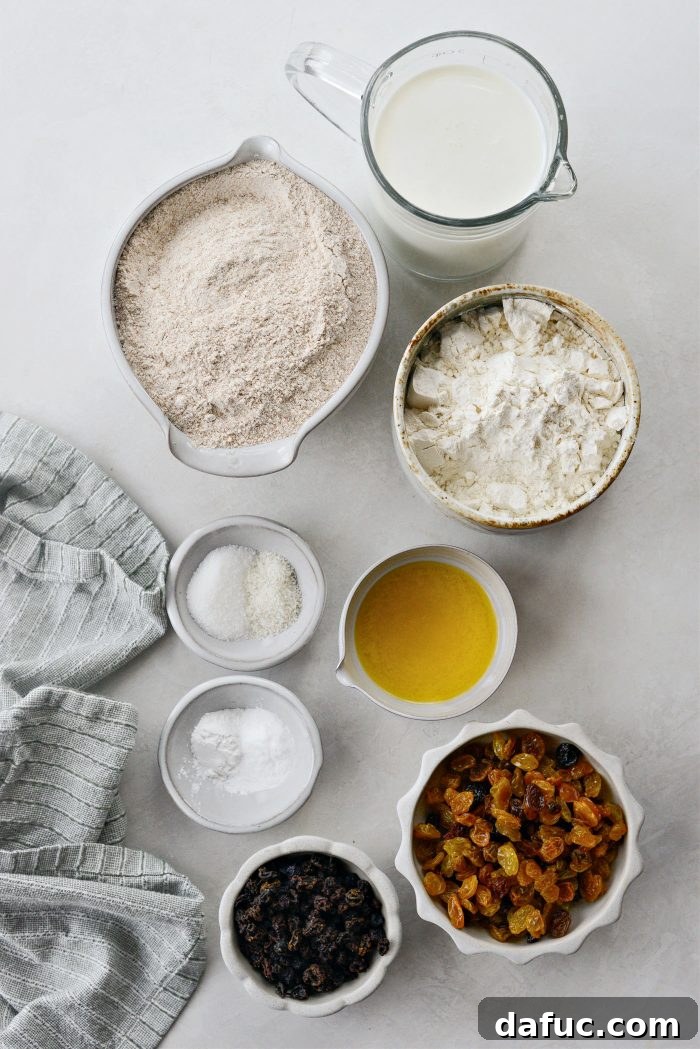
The magic of this Irish Wheaten Bread comes from a carefully selected blend of simple, wholesome ingredients. Each component plays a vital role in achieving its signature flavor and texture, making every bite a delightful experience. Understanding the purpose of each ingredient can elevate your baking and help you appreciate the traditional artistry behind this beloved bread.
- Whole Wheat Flour: This is the heart of our wheaten bread, imparting a rustic, wholesome character. It provides robust structure and a delightful earthy flavor, contributing to the bread’s satisfying density and mouthfeel. Choosing a good quality whole wheat flour is essential for the authentic taste.
- Unbleached All-Purpose Flour: While whole wheat provides the foundation, a portion of unbleached all-purpose flour helps to balance the texture. It lends a crucial elasticity and lightness to the dough, preventing the bread from becoming too dense and ensuring a tender crumb that holds together beautifully.
- Granulated Sugar (White): A subtle touch of granulated sugar enhances the natural sweetness of the dried fruits and balances the tang of the buttermilk. It doesn’t make the bread overly sweet but rather highlights the other flavors, making it a truly comforting treat.
- Fine Salt: Salt is a flavor enhancer, not just a seasoning. In baking, it’s critical for bringing out the depth of all the other ingredients, creating a more complex and well-rounded taste profile. I recommend using either fine sea salt or pink Himalayan salt for their clean, natural flavor.
- Baking Powder: This leavening agent works alongside baking soda to give the bread its rise and a lighter crumb. It reacts with moisture and heat, creating pockets of air that result in a wonderfully fluffy interior. Always check labels to avoid baking powder containing aluminum, which can sometimes impart a metallic taste.
- Baking Soda: As a traditional quick-bread leavener, baking soda is crucial for the bread’s rise. It reacts with the acidity in the buttermilk, producing carbon dioxide gas during baking. This gas gets trapped in the dough, causing the bread to expand and achieve its characteristic lift.
- Unsalted Butter (Melted): Butter is more than just flavor; it’s a cornerstone for richness and tenderness. Melted butter disperses evenly through the dough, contributing to a soft, moist crumb and a subtly luxurious mouthfeel. It also adds to the bread’s overall structure and golden hue.
- Buttermilk: The secret to the distinctive tangy flavor and tender texture of Irish quick breads. The acidity of buttermilk reacts with the baking soda, aiding in leavening, and its unique proteins contribute to a wonderfully moist and tender crumb that is difficult to achieve with regular milk.
- Golden Raisins: These plump, jewel-like fruits add bursts of concentrated sweetness and a delicate chewiness. Their slightly tart and fruity flavor complements the earthy bread beautifully, making each slice a delightful textural and taste experience. Feel free to use your preferred type of raisin if golden aren’t available.
- Zante Currants: Often confused with true currants, Zante currants are actually small, dried grapes, specifically a variety of Corinthian raisins. They provide an intense, sweet, and slightly tart grape-y flavor along with a pleasant chewiness, adding another layer of fruity complexity to the bread.
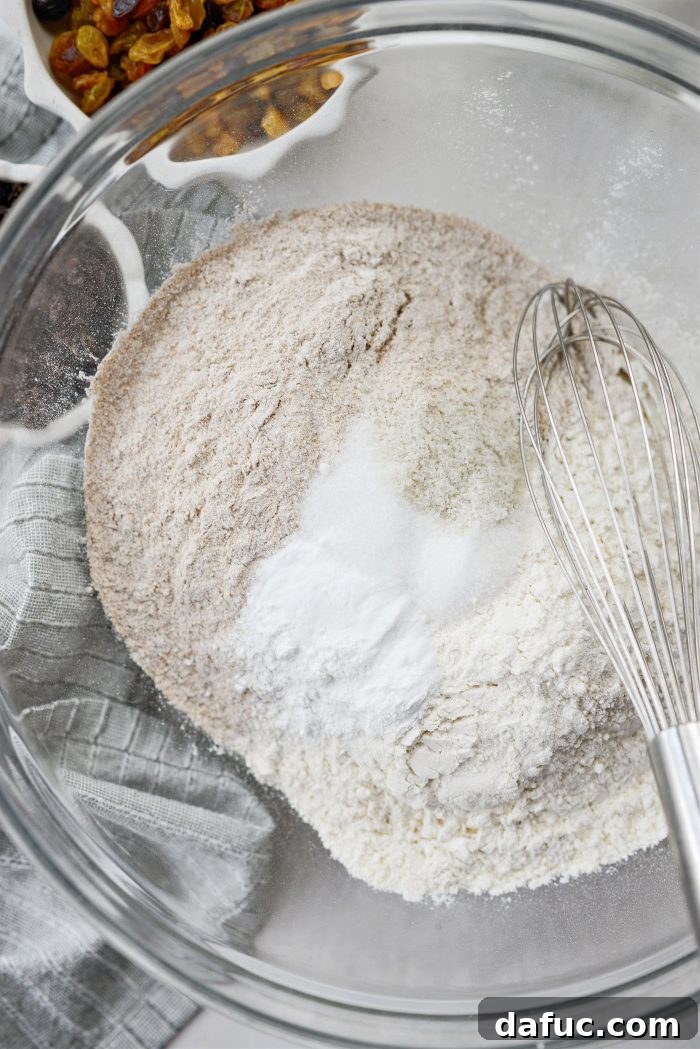
Step-by-Step: Baking Your Delicious Irish Wheaten Bread
Preparation is Key for a Perfect Loaf
Begin by preheating your oven to a robust 450℉ (or 230℃). A hot oven is essential for quick breads, ensuring a strong initial rise. Position your oven rack in the middle to lower third, depending on your oven’s design, to allow for even heat distribution around your Dutch oven.
Mixing the Dry Ingredients with Care
In a spacious mixing bowl, accurately measure and combine your dry ingredients: 2-1/2 cups of whole wheat flour, 1-1/2 cups of unbleached all-purpose flour, 2 teaspoons of granulated sugar, 1-1/2 teaspoons of fine salt, 1 teaspoon of baking powder, and 1 teaspoon of baking soda. Whisk these ingredients thoroughly to ensure that the leavening agents and salt are evenly distributed throughout the flours. This step is crucial for an even rise and consistent flavor in your finished bread.
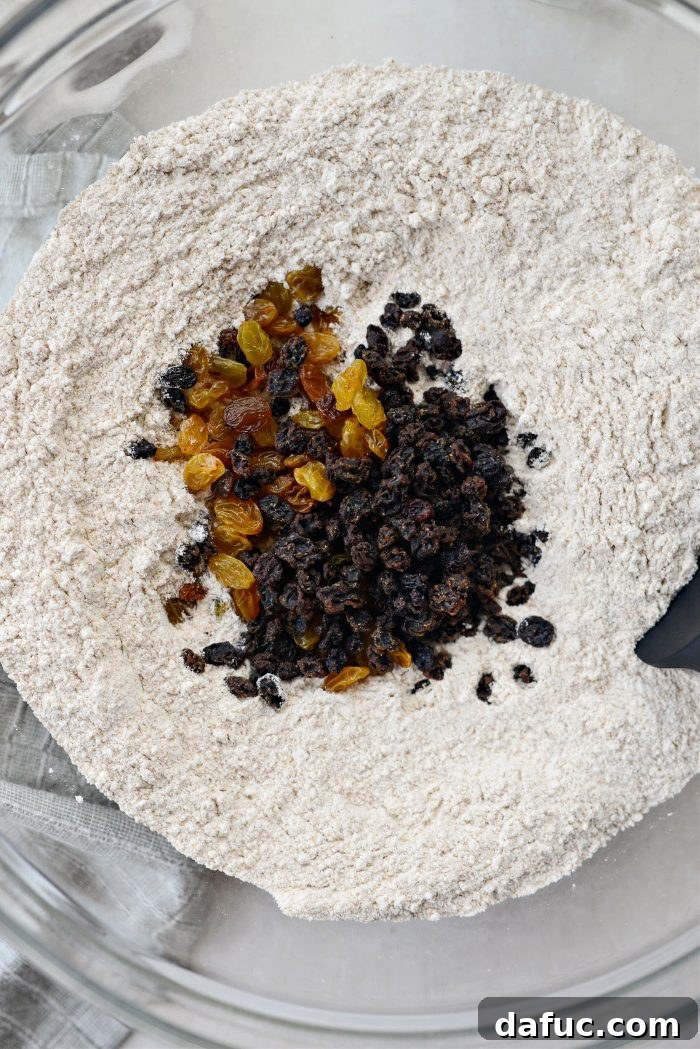
Infusing with Fruit: Raisins and Currants
Once your dry ingredients are well combined, it’s time to add the stars of the show: 2/3 cup of golden raisins and 1/3 cup of Zante currants. Add them directly into the dry mixture. Gently stir everything together again, ensuring the dried fruits are coated in flour. This prevents them from sinking to the bottom of the loaf during baking, guaranteeing an even distribution of sweetness and chewiness in every slice.
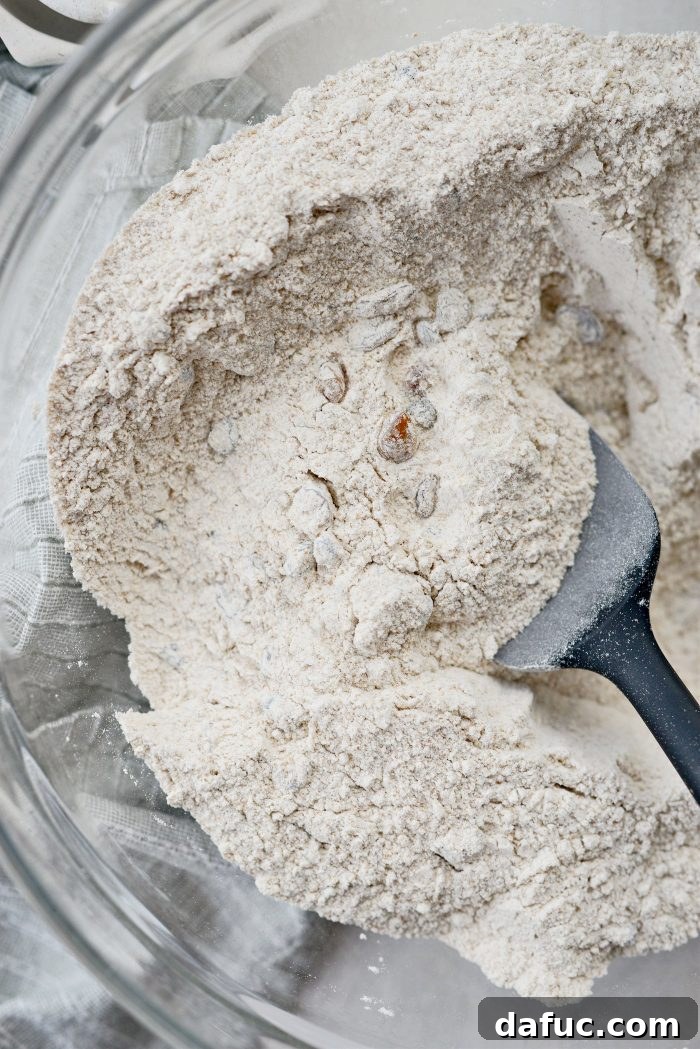
Stir everything thoroughly until all the ingredients are well combined and the fruits are evenly dispersed.
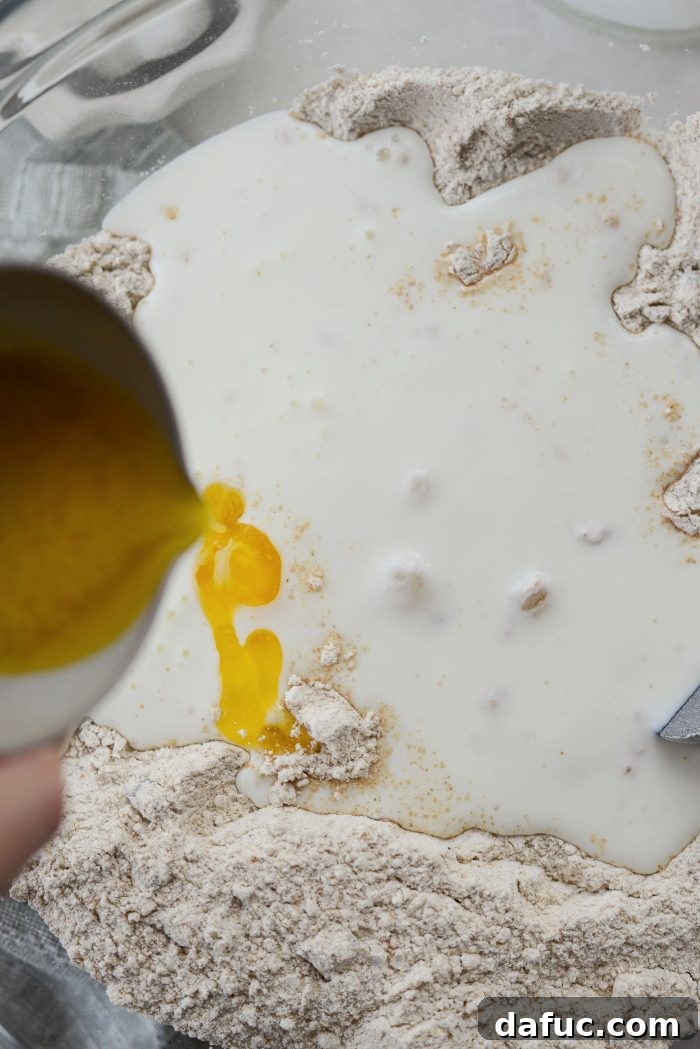
Combining Wet and Dry: The Shaggy Dough Stage
To the bowl of dry ingredients and fruits, pour in 1-3/4 cups of buttermilk and 2 tablespoons of unsalted butter (which should be melted and cooled slightly to avoid cooking the flour). Using a sturdy rubber spatula or a wooden spoon, mix the ingredients just until they are incorporated. The dough will look somewhat “shaggy” and uneven at this stage, with no dry spots remaining. Be careful not to overmix, as this can lead to a tough bread.
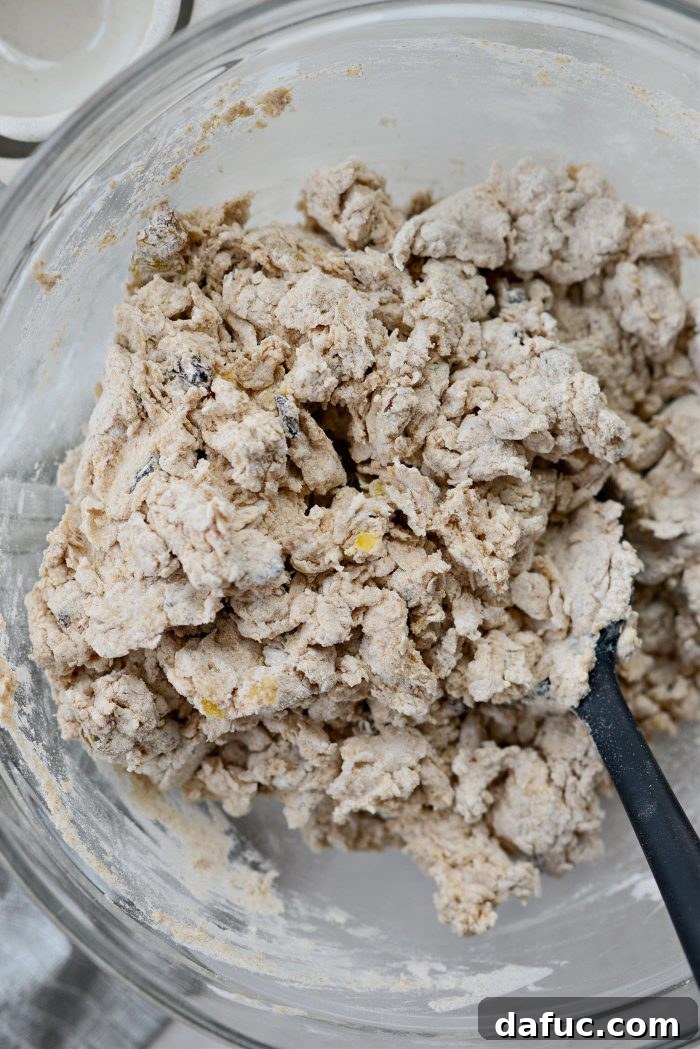
Continue mixing until the ingredients are just combined and the mixture forms a shaggy dough.
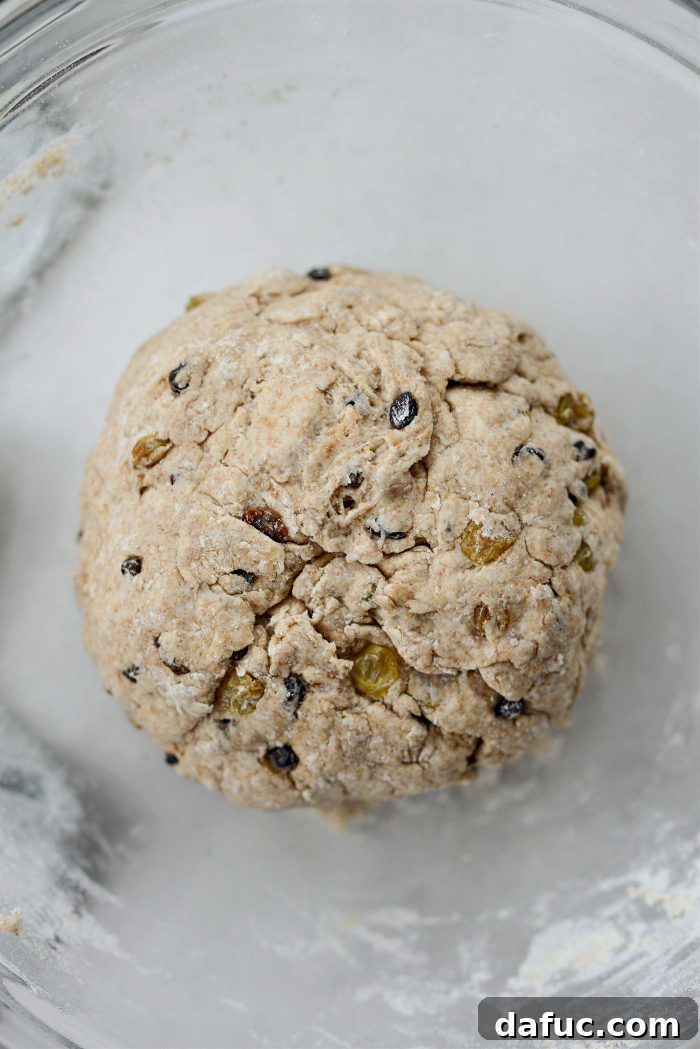
Shaping and Scoring Your Loaf
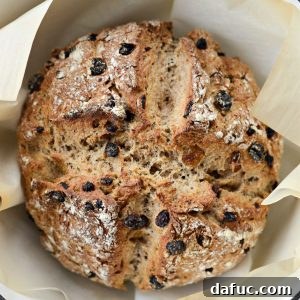
Within the mixing bowl, gently knead the dough a few times until it comes together into a cohesive mass. Initially, it may feel a bit dry, but as you continue to work the ingredients, the moisture will distribute. Form the dough into a large, round ball. Place this dough ball onto a piece of parchment paper. Lightly dust the top of the dough with a sprinkle of flour. Then, using a sharp knife, carefully score a large “X” across the top surface of the loaf. This traditional scoring serves a practical purpose: it helps the bread expand and rise more evenly during baking, preventing it from cracking uncontrollably.
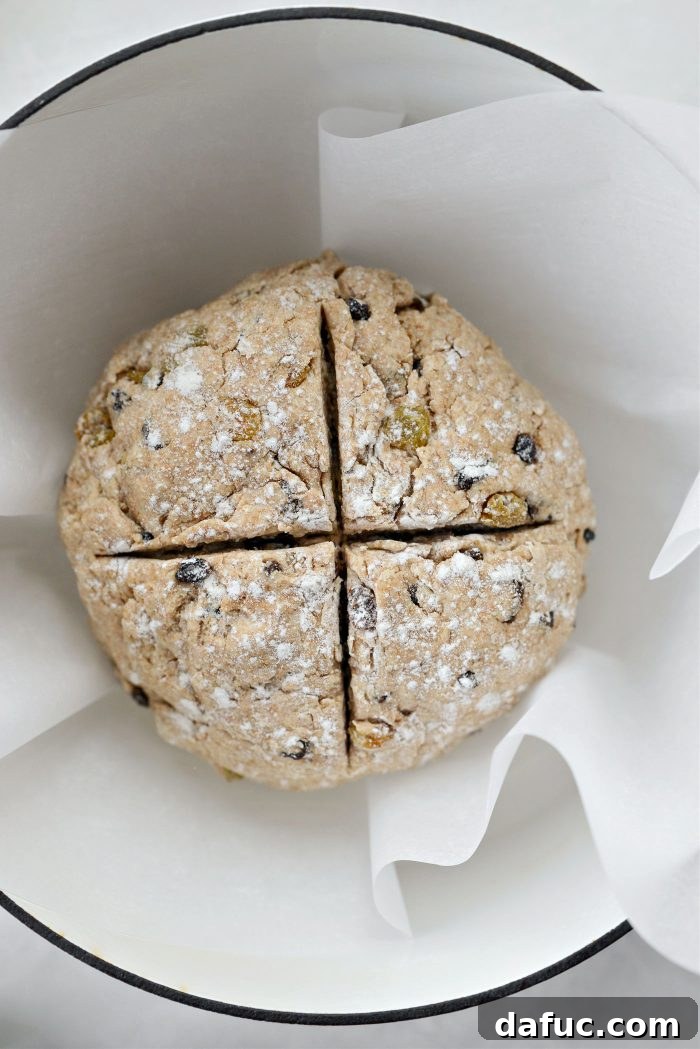
Dust lightly with flour and cut an X into the top. This aids in rising and expansion.
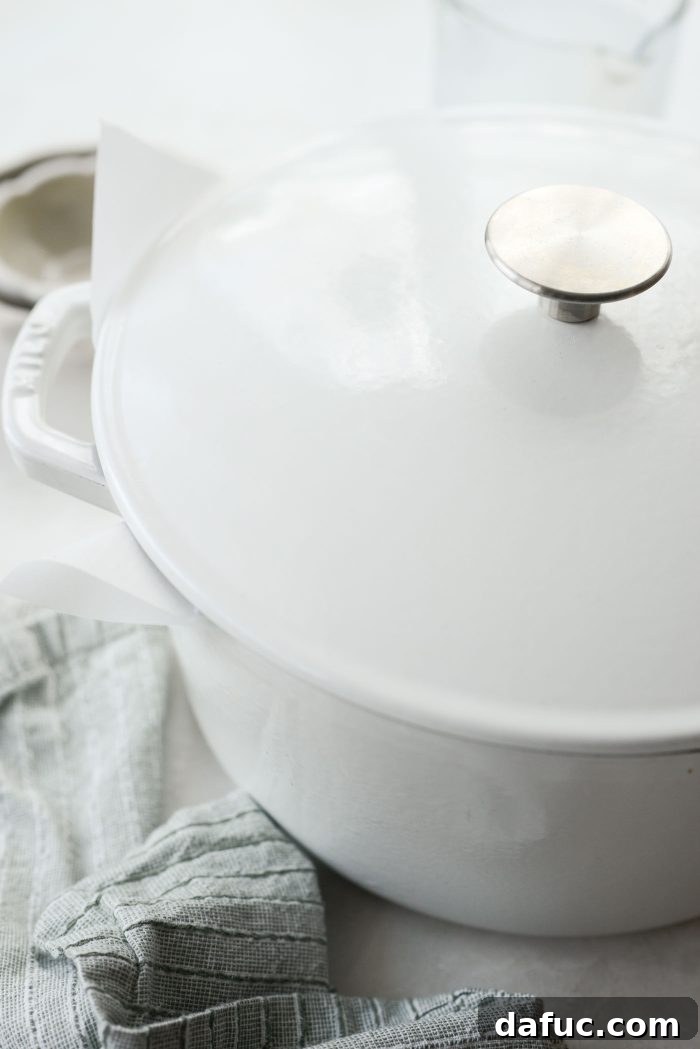
The Baking Process: Covered for Steam, Uncovered for Crust
Carefully use the parchment paper to lower the prepared dough into a preheated round Dutch oven. Cover the Dutch oven with its lid and place it into your preheated oven. Bake for an initial 40 minutes. The covered baking creates a steamy environment, which is crucial for achieving a beautiful rise and a tender interior. After 40 minutes, remove the lid.
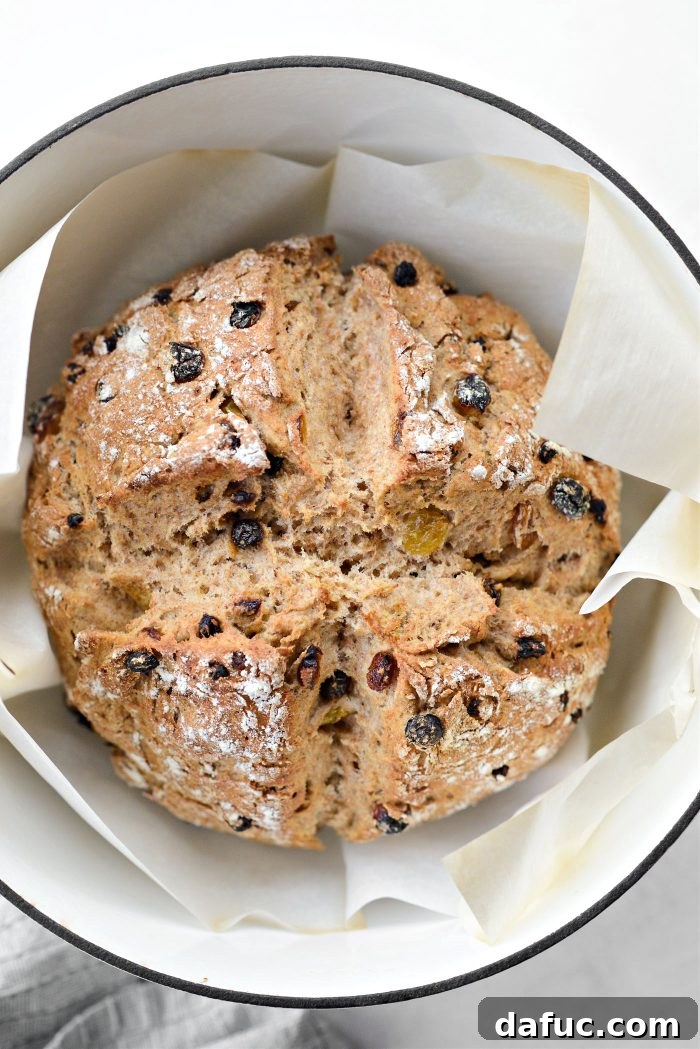
Continue to bake the bread uncovered for an additional 8 to 10 minutes, or until the top of the loaf achieves a rich golden-brown color and sounds hollow when tapped on the bottom. This final uncovered stage allows the crust to crisp up beautifully.
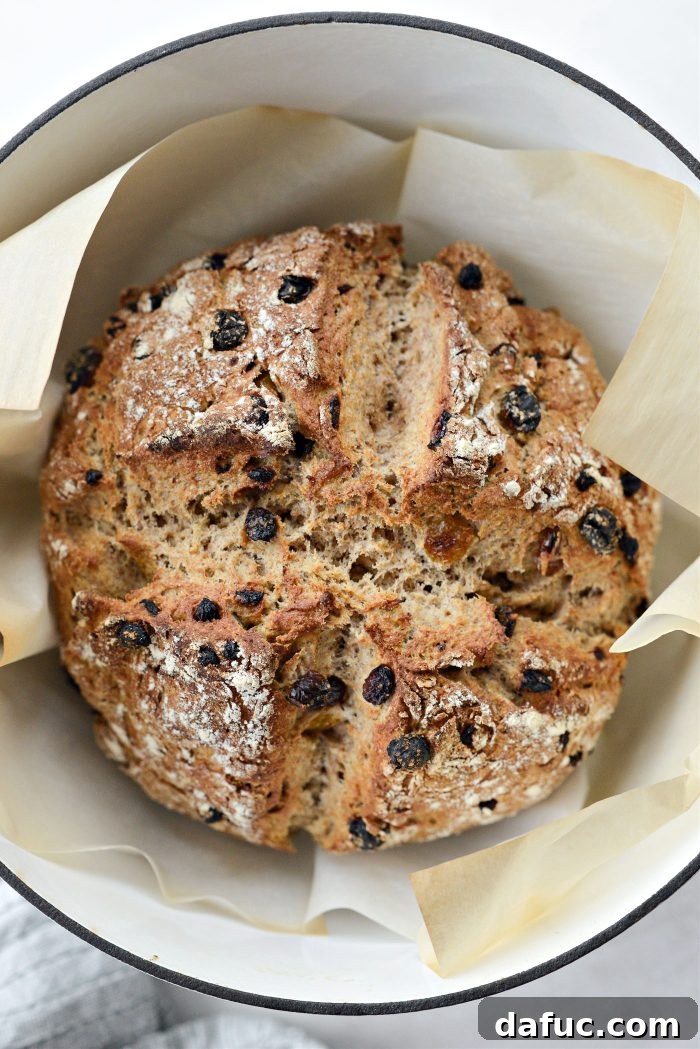
The aroma filling your kitchen will be utterly heavenly!
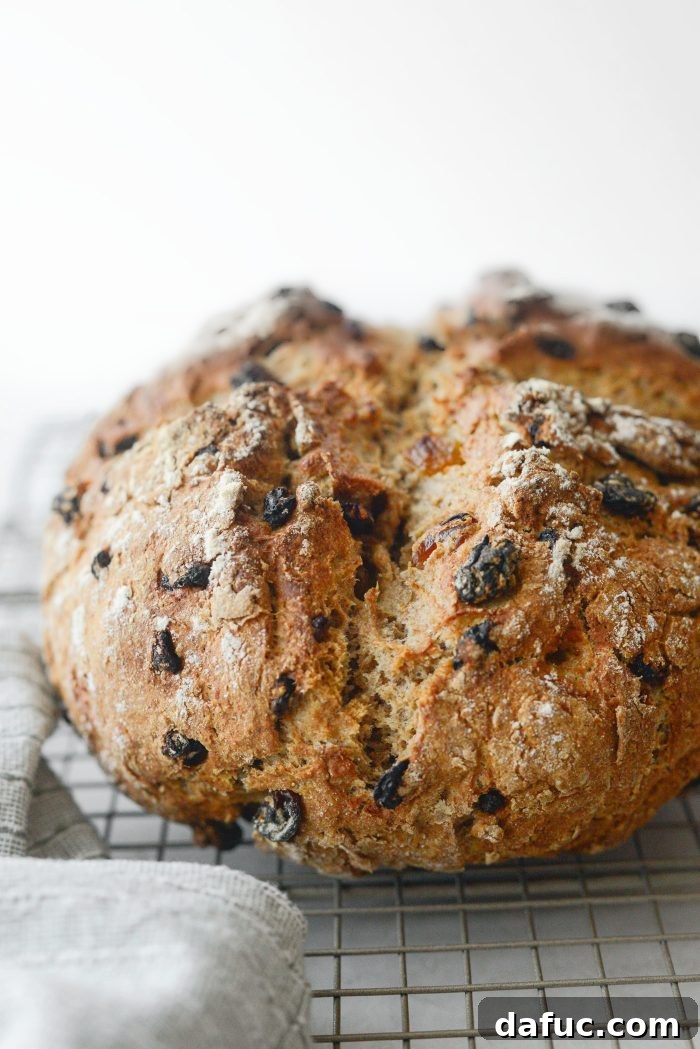
Cooling for Perfection
Once baked, carefully use the parchment paper to lift the hot loaf of bread out of the Dutch oven and transfer it to a wire rack. Allow the bread to cool completely, or at least until it’s only slightly warm, before slicing. This cooling period is vital; it allows the internal structure to set and prevents the bread from becoming gummy when cut. Patience is key for the perfect slice!
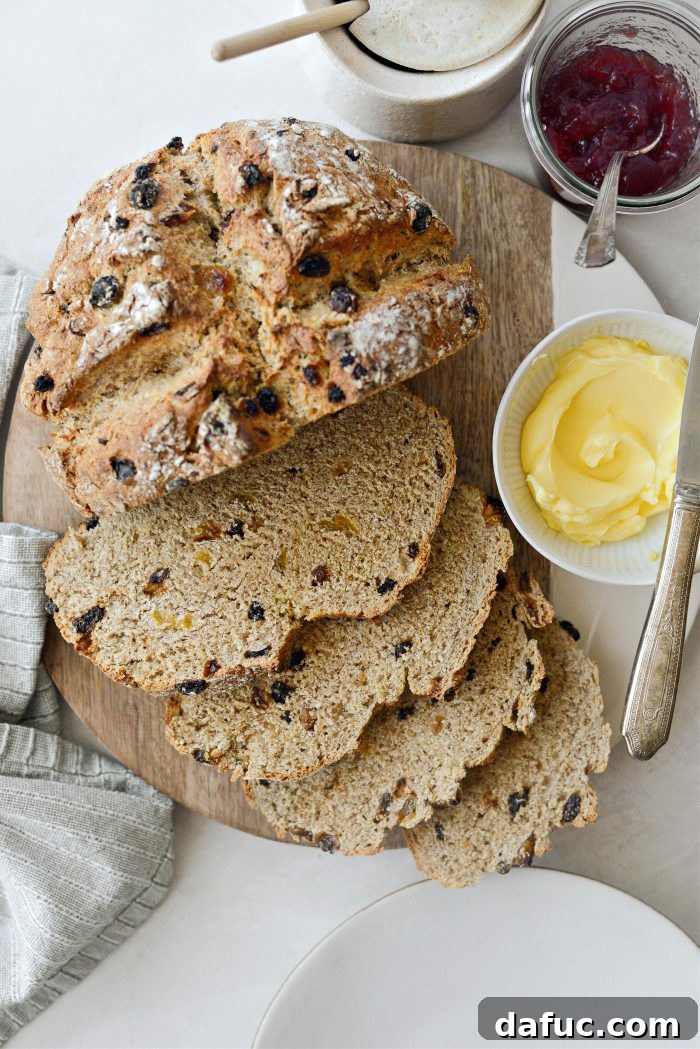
Serving Suggestions & Enjoyment
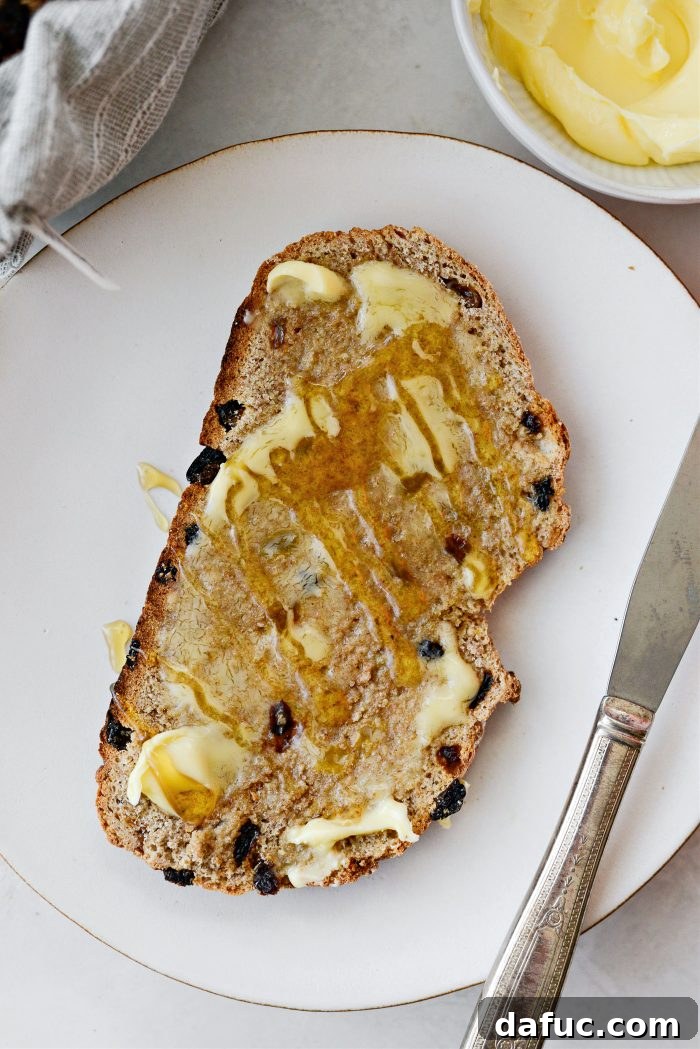
Once your Raisin and Currant Irish Wheaten Bread has cooled to your liking, it’s ready to be devoured. Slice it thick and savor its tender crumb. My favorite way to enjoy this bread is slathered generously with rich salted butter, allowing the salt to perfectly contrast the bread’s subtle sweetness and the fruits’ tartness. A delicate drizzle of honey or a spread of your favorite berry jam takes it to another level of deliciousness. This bread is incredibly versatile and can be enjoyed at any time of day – perfect for a hearty breakfast, a delightful afternoon tea, or as an accompaniment to a simple soup or stew. Its comforting flavors make it a staple you’ll want to bake again and again.
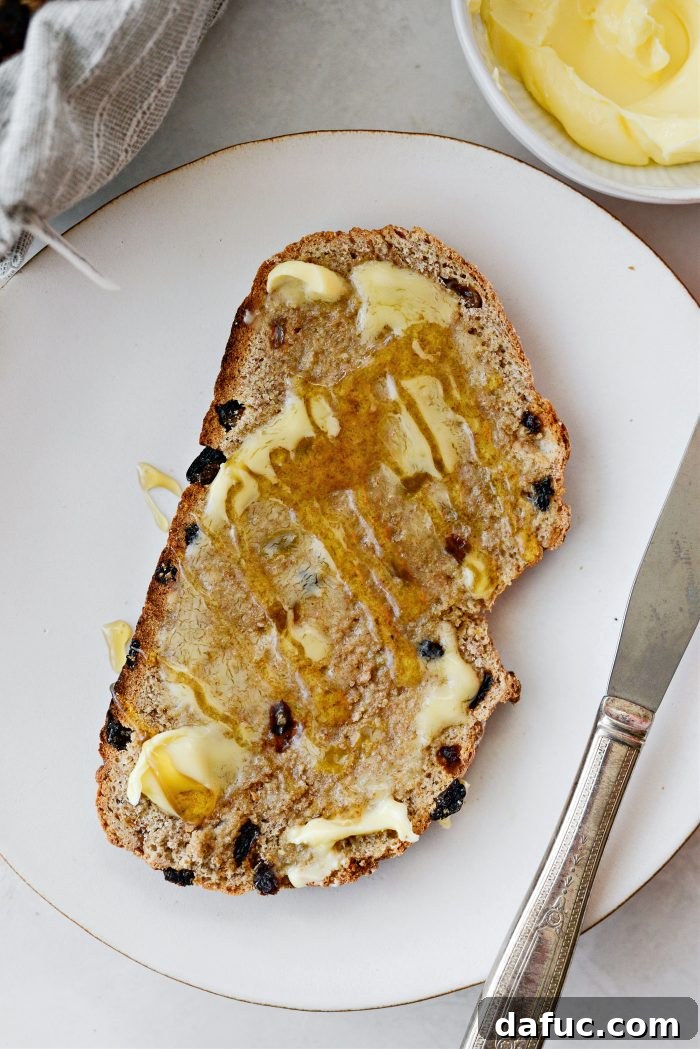
Enjoy every delightful bite of this homemade Irish Wheaten Bread! Its rich flavors and comforting texture are sure to become a cherished part of your baking repertoire.
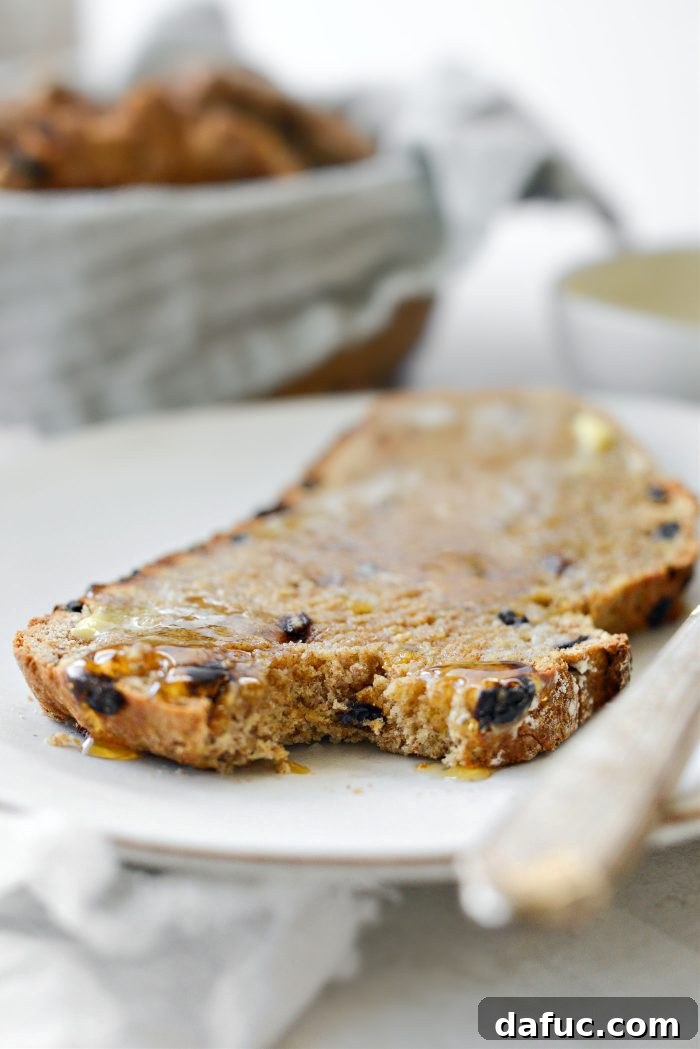
Tips for a Flawless Irish Wheaten Bread Experience
Achieving bakery-quality Irish Wheaten Bread at home is simpler than you think, especially with a few helpful tips:
- Don’t Overmix the Dough: Quick breads thrive on minimal mixing. Overworking the dough develops the gluten too much, which can result in a tough, chewy bread rather than the desired tender crumb. Mix just until the dry and wet ingredients are combined and no streaks of flour remain.
- Ingredient Temperature Matters: Ensure your buttermilk and melted butter are at room temperature, or at least not ice-cold. This helps them incorporate more easily and react optimally with the leavening agents, contributing to a better texture.
- Perfect Buttermilk Substitute: No buttermilk on hand? No problem! You can easily make your own by adding 1 tablespoon of white vinegar or lemon juice to a liquid measuring cup, then filling the rest of the cup to the 1 3/4 cup mark with regular milk. Let it sit for 5-10 minutes until it slightly curdles.
- Dutch Oven Benefits: Baking in a Dutch oven creates a steamy environment that mimics a professional baker’s oven. This helps the bread achieve a fantastic rise and a crisp, golden crust while keeping the interior moist and tender. If you don’t have a Dutch oven, you can try baking on a baking sheet, but the results might vary.
- Storage: This bread is best enjoyed fresh, ideally within 2-3 days. Store it in an airtight container at room temperature to maintain its freshness. For longer storage, slice the cooled bread and freeze individual slices. You can then toast them directly from the freezer for a quick and delicious treat.
- Experiment with Dried Fruits: While golden raisins and Zante currants are traditional and delicious, feel free to experiment with other dried fruits like chopped dried apricots, cranberries, or even a mix of berries for a personalized touch.
Golden Raisin and Currant Irish Brown Bread (Wheaten Bread) Recipe
This Raisin and Currant Irish Wheaten Bread is cozy and delicious! A whole grain quick-bread recipe consisting of traditional ingredients like flour, baking soda, salt, butter and buttermilk is studded with golden raisins and Zante currants. Delicious served warm, spread with salted butter and jam or honey. One loaf yields about 10 slices.
Yield: 10 servings
Prep Time: 20 mins
Cook Time: 50 mins
Total Time: 1 hr 10 mins
Ingredients
- 2½ cups whole wheat flour
- 1½ cups unbleached all-purpose flour
- 2 teaspoons granulated sugar
- 1½ teaspoon kosher salt
- 1 teaspoon baking powder
- 1 teaspoon baking soda
- 2/3 cup golden raisins
- 1/3 cup zante currants
- 1¾ cup buttermilk, plus more for brushing on the bread
- 2 tablespoons butter, melted
Equipment
- Lodge Round Dutch Oven
Instructions
- Preheat oven to 450℉ (230℃). Position your oven rack in the middle to lower third (depending on the size of your oven).
- In a large bowl, measure and add both flours, sugar, salt, baking powder, and baking soda. Whisk to combine. Add in the raisins and currants and stir once more.
- Pour in the buttermilk and melted (and cooled slightly) butter. Use a rubber spatula to combine until it resembles a shaggy dough.
- In the bowl, knead until it comes together. Form it into a large ball, place onto a piece of parchment paper. Lightly dust the top with flour and use a sharp knife to make a large X.
- Use the parchment to lower the dough into a round Dutch oven. Cover and bake in your preheated oven for 40 minutes.
- Uncover and continue to bake for 8 to 10 minutes or until golden brown.
- Carefully remove the bread using the parchment paper and place on a wire rack to cool. Once the bread has cooled, slice and serve with salted butter and/or drizzle with honey or jam!
Nutrition Information (Per Serving)
Serving: 1 slice, Calories: 405kcal, Carbohydrates: 75g, Protein: 11g, Fat: 9g, Saturated Fat: 5g, Polyunsaturated Fat: 1g, Monounsaturated Fat: 2g, Trans Fat: 1g, Cholesterol: 43mg, Sodium: 495mg, Potassium: 499mg, Fiber: 6g, Sugar: 25g, Vitamin A: 289IU, Vitamin C: 1mg, Calcium: 177mg, Iron: 4mg
Author: Laurie McNamara
Course: Breads & Baked Goods
Cuisine: Irish