
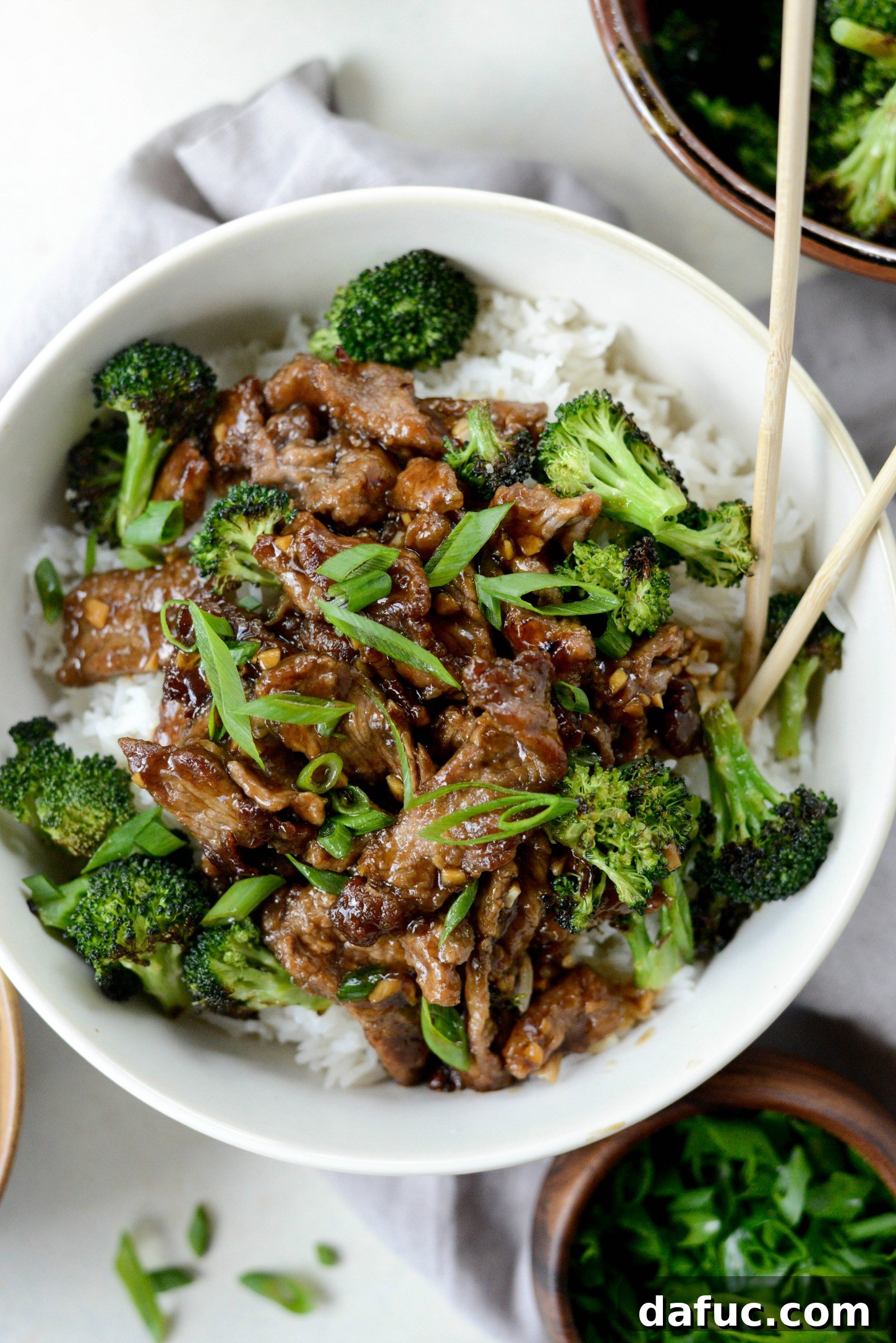
Irresistible Weeknight Mongolian Beef Stir-Fry: Your New Go-To Dinner
Discover the ultimate solution for a delicious and easy weeknight meal with this sensational Mongolian Beef Stir-Fry. Featuring perfectly thin slices of steak, seared to a delightful crisp and coated in a rich, savory sauce infused with fresh ginger and garlic, sweet brown sugar, and umami-packed tamari (or soy sauce). This recipe transforms ordinary dinner into an extraordinary culinary experience that’s surprisingly simple to prepare. Serve it alongside perfectly roasted broccoli or a colorful medley of your favorite vegetables for a wholesome, flavorful meal any day of the week.
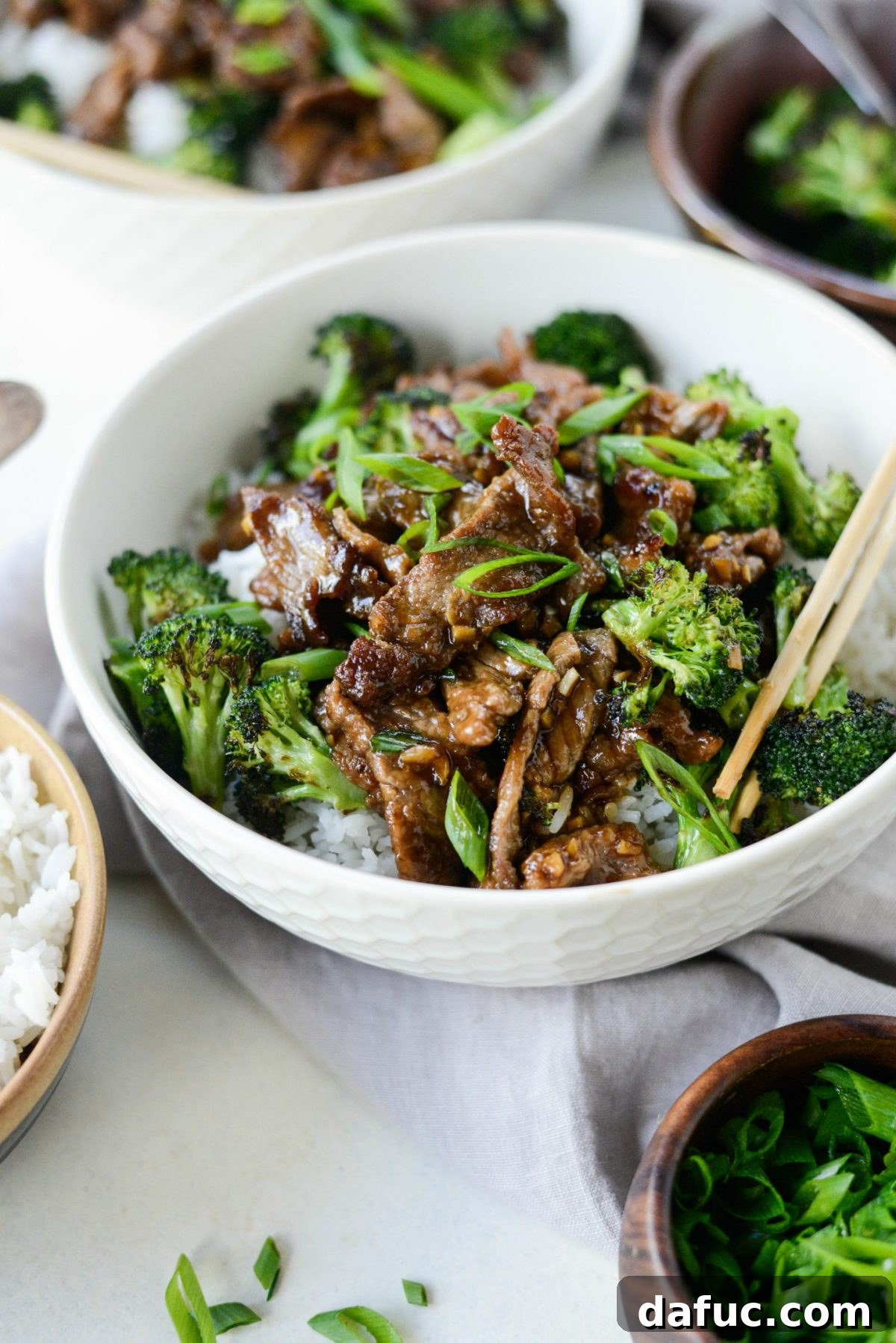
The Magic of Weeknight Mongolian Beef: A Stress-Free Dinner Solution
Meal planning can often feel like an Olympic sport, and it’s a challenge many of us face more often than we’d like to admit. You might spend hours on a Saturday meticulously planning meals and crafting a grocery list, only to find by Wednesday or Thursday that your enthusiasm for the scheduled dish has completely vanished. The struggle is undeniably real! This is precisely why having a few reliable, easy, and incredibly delicious recipes in your arsenal is a game-changer. For me, a well-executed stir-fry, especially this Mongolian Beef, consistently saves the day.
Lately, this homemade Mongolian Beef Stir-Fry has become a household favorite. What’s the secret to its undeniable appeal? Perhaps it’s the wonderfully crispy edges of the thinly sliced steak, which offer a satisfying textural contrast with every bite. Or maybe it’s the perfectly balanced sauce – a harmonious blend of sweet and savory, with a vibrant kick from fresh garlic and ginger. Whatever the reason, my family devours every last morsel. Even my pickiest eater, Malloree, who isn’t a fan of rice, happily enjoys the saucy steak with roasted broccoli. For Haileigh, Pat, and myself, a generous drizzle of Sriracha adds that extra spicy punch we crave, elevating an already fantastic dish.
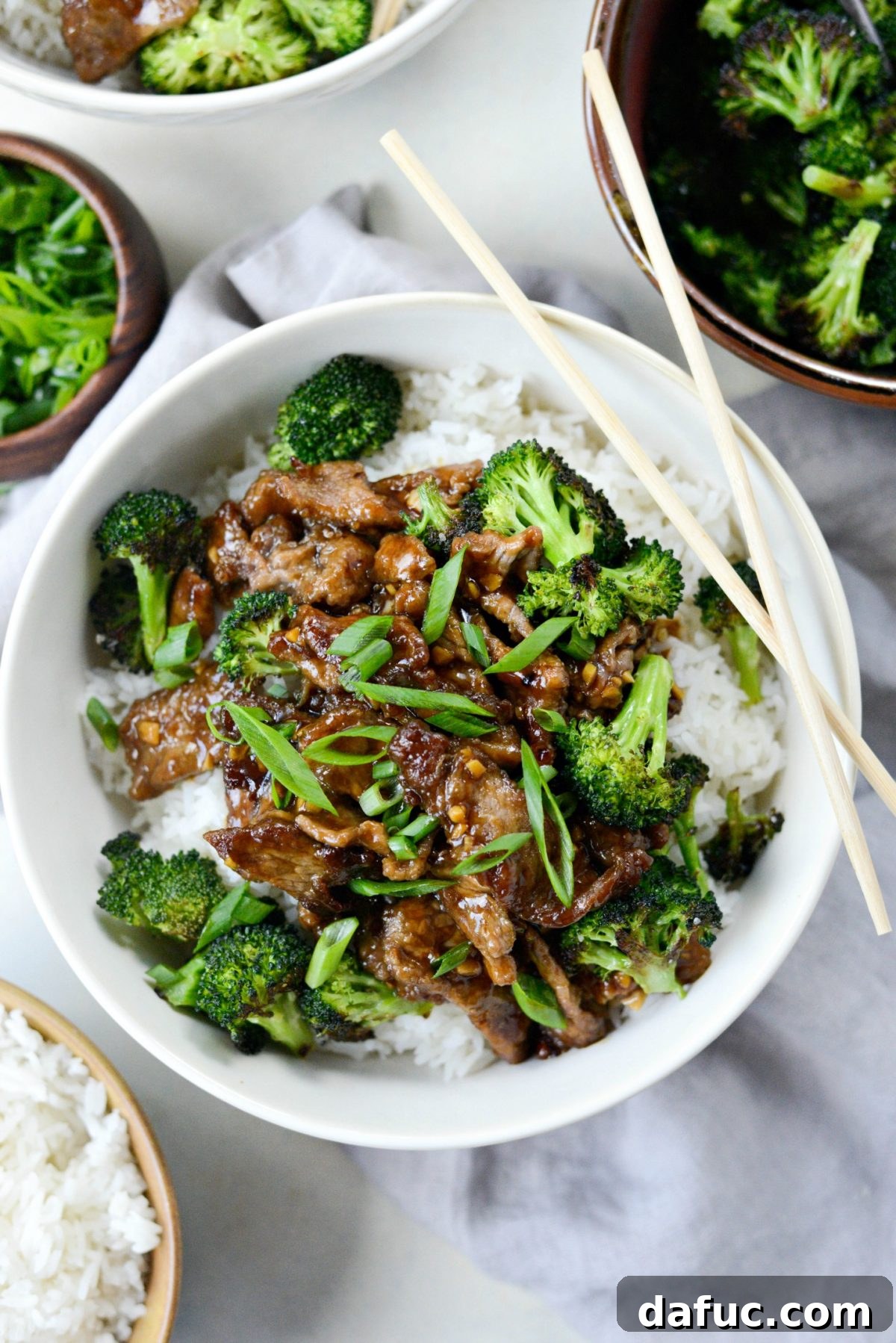
Beyond its incredible taste, one of the greatest advantages of this Mongolian Beef Stir-Fry is its sheer simplicity and versatility. It’s an ideal candidate for any night of the week, especially when time is of the essence. To make dinner even faster, consider a bit of advance prep: slice the steak, whisk together the sauce, and chop your chosen vegetables earlier in the day or even the day before. This foresight can shave precious minutes off your cooking time, allowing you to enjoy a gourmet-quality meal without the takeout price tag or wait. Who wouldn’t love the sound of that?
Mastering the Ingredients: What You’ll Need for Authentic Flavor
The beauty of Mongolian Beef lies in its relatively simple yet impactful ingredient list. Each component plays a crucial role in building the layered flavors and textures that make this dish so addictive. Here’s a detailed look at what you’ll need to create this incredible stir-fry:
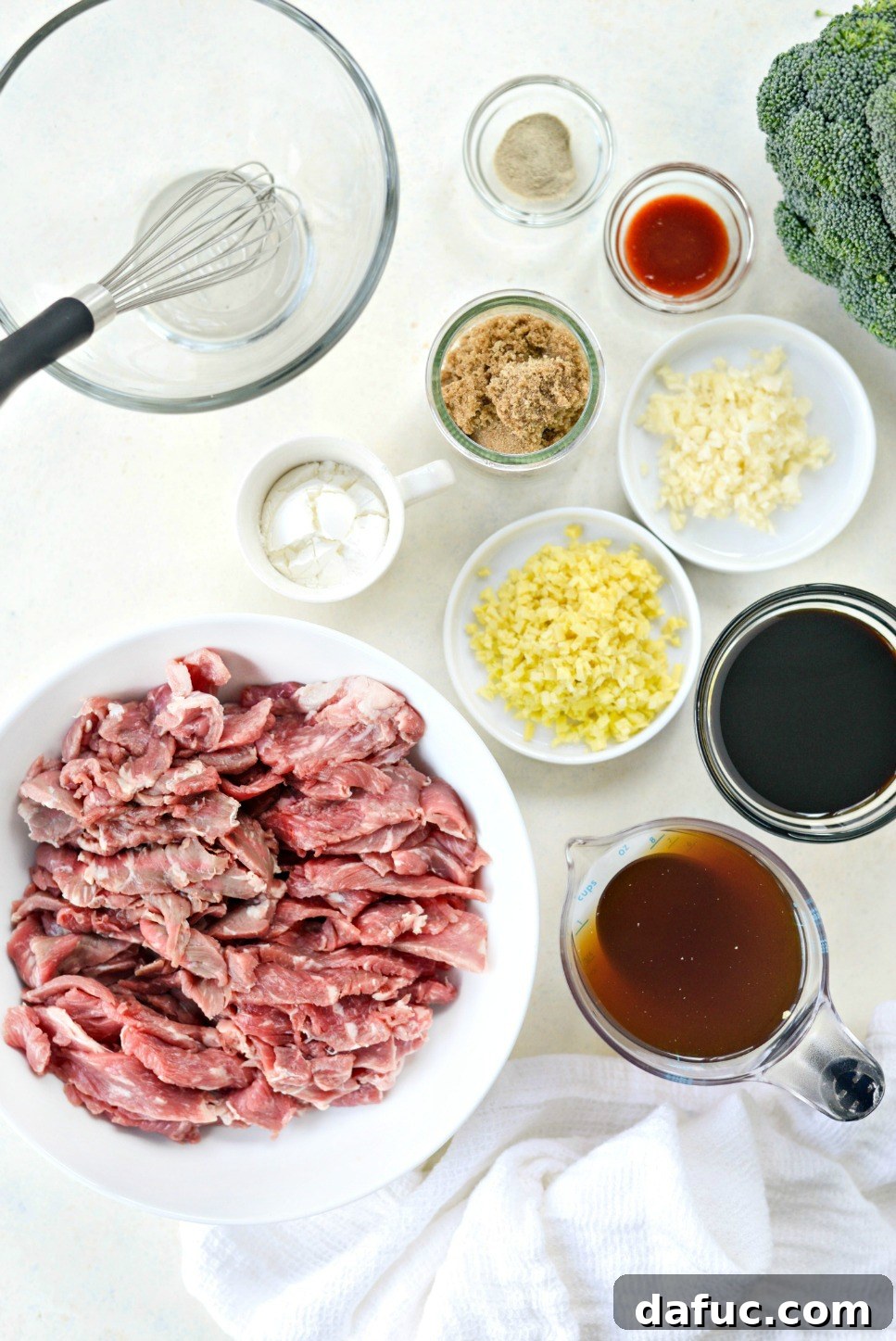
- Top Loin Steak (Strip Steak or New York Strip) or Sirloin Steak: These cuts are fantastic for stir-fries because they are tender and flavorful. Their marbling ensures a juicy result, and they hold up well to quick, high-heat cooking.
- White Pepper: Offering a milder, earthier heat than black pepper, white pepper is a traditional ingredient in many Asian cuisines, contributing a subtle warmth without overpowering the other flavors.
- Cornstarch: This is your secret weapon for both achieving crispy beef and thickening the luscious sauce. It creates a light, protective coating on the beef that crisps beautifully when fried and provides that signature glossy texture to the sauce.
- Dark Brown Sugar: Essential for the characteristic sweet notes of Mongolian Beef. Dark brown sugar adds a deeper, more molasses-like sweetness compared to its light counterpart, enhancing the overall richness of the sauce.
- Fresh Ginger Root (about one 2-inch piece, peeled): The backbone of the sauce’s aromatic profile. Fresh ginger provides a pungent, spicy, and slightly sweet flavor that brightens the entire dish. Don’t skimp on freshness for the best results!
- Garlic (about 5 cloves): Another cornerstone of flavor, fresh minced garlic contributes a robust, aromatic punch that complements the ginger perfectly.
- Low-Sodium Beef Broth: Forms the liquid base of the sauce, adding depth and richness. Opting for low-sodium allows you to control the overall saltiness, especially since tamari or soy sauce will also be added.
- Low-Sodium Tamari (or Soy Sauce): Provides the essential umami and savory depth. Tamari is a great gluten-free alternative to soy sauce, but regular low-sodium soy sauce works equally well.
- Sriracha: For those who love a little heat! Sriracha adds a fantastic spicy kick that balances the sweetness of the sauce. Adjust the amount to your personal preference.
- Extra Light Olive Oil (or Coconut Oil): Used for frying the beef. Its high smoke point makes it suitable for the high heat required to achieve those crispy edges.
- Cornstarch Slurry (1 tablespoon cornstarch + 1 tablespoon cold water): This simple mixture is key for thickening the sauce to that perfect consistency, ensuring it coats the beef beautifully.
- Cooked Jasmine Rice: The ideal fluffy accompaniment, providing a neutral base to soak up all the flavorful sauce.
- Green Onion: Sliced thinly, green onions serve as a fresh, crisp garnish, adding a mild oniony flavor and a vibrant pop of color.
Preparing Your Beef for Perfection
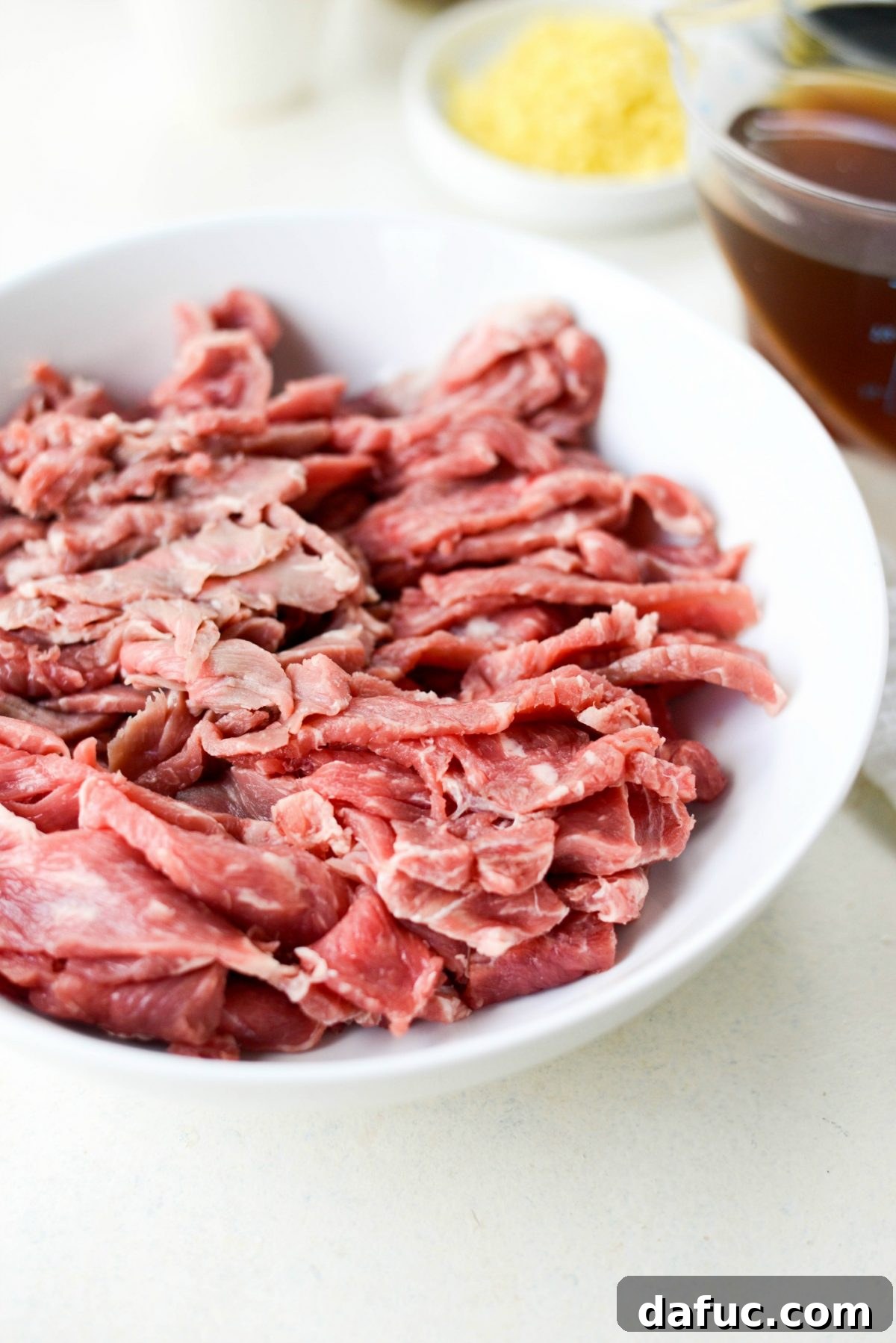
The secret to an outstanding beef stir-fry lies in how you prepare the meat. I cannot stress this enough: slice the steak *really* thin. This isn’t just a preference; it’s a technique that ensures quick cooking, incredible tenderness, and makes each piece easy to pick up with chopsticks (even if you prefer a fork!). Thin slices also maximize the surface area for crisping and absorbing the delicious sauce.
To make this task significantly easier, a little trick goes a long way: place your steak (or steaks) on a plate or small sheet pan and flash freeze it for about 10-15 minutes before slicing. The slight freezing firm will make it much simpler to achieve those ultra-thin, uniform strips that are crucial for a perfect stir-fry. It works wonderfully for chicken too!
Selecting the Right Cut of Beef for Your Stir-Fry
When it comes to choosing the best cut of meat for stir-fry, I consistently gravitate towards top loin or sirloin steaks. These cuts offer a great balance of tenderness and flavor. While flank steak is a popular choice and often listed in many stir-fry recipes, my family, particularly Pat, finds it can have a slightly “irony” or metallic taste that we prefer to avoid. If flank steak is your preference, feel free to use it, but for a consistently delicious and crowd-pleasing result, top loin or sirloin are excellent choices.
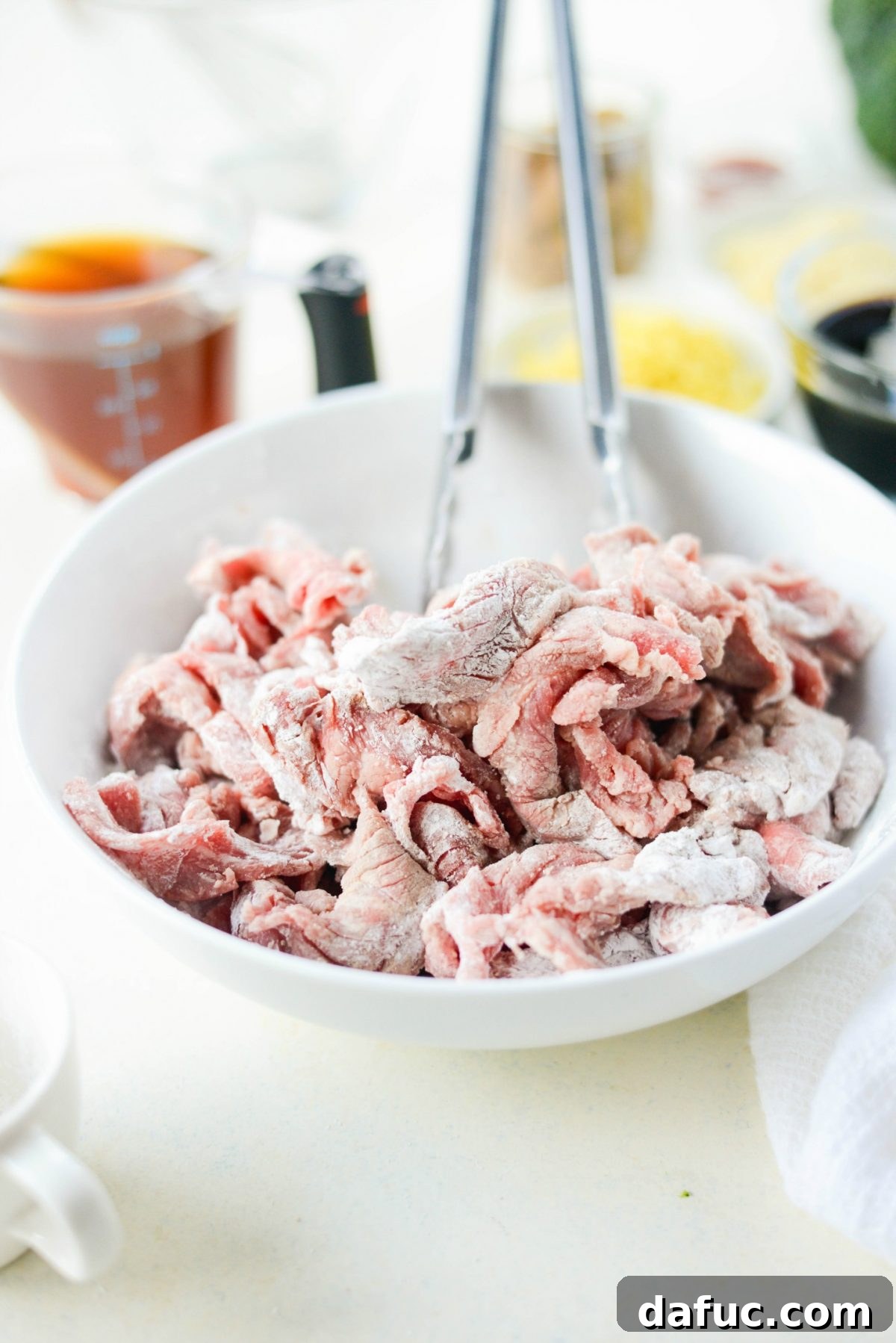
Once your steak is thinly sliced, place 1½ pounds of it into a medium-sized bowl. Season it evenly with ½ teaspoon of white pepper and 3 tablespoons of cornstarch. Use tongs to gently toss and coat each piece of beef thoroughly. This coating is vital for creating that sought-after crispy exterior. Once coated, set the beef aside while you quickly prepare the flavorful sauce.
Crafting the Perfect Sauce: Sweet, Savory, and Spicy
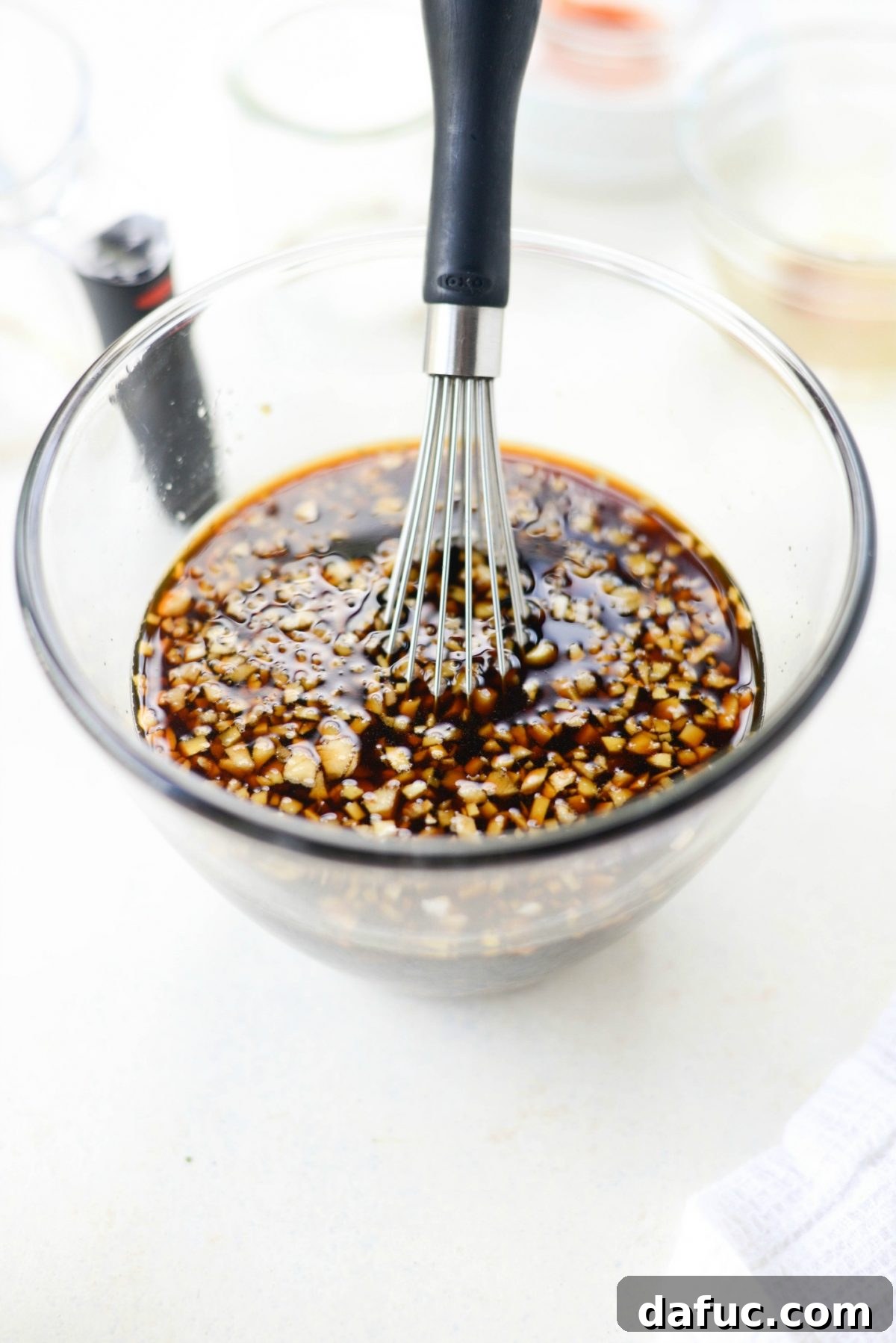
The sauce is the heart and soul of this Mongolian Beef Stir-Fry, bringing all the elements together with its irresistible balance of sweet, savory, and a hint of spice. In a small bowl, combine ⅓ cup of dark brown sugar, 2 tablespoons of finely minced fresh ginger, and 2 tablespoons of finely minced fresh garlic. Next, pour in 1 cup of low-sodium beef broth and ½ cup of low-sodium tamari (or low-sodium soy sauce). For a gentle kick, add ½ to 1 teaspoon of Sriracha hot sauce – feel free to add more if you love extra heat! Whisk all these ingredients together until well combined and the brown sugar has largely dissolved. Set this flavorful mixture aside; it will be ready when you are.
Cooking Techniques for Success: Achieving Crispy Beef and a Velvety Sauce
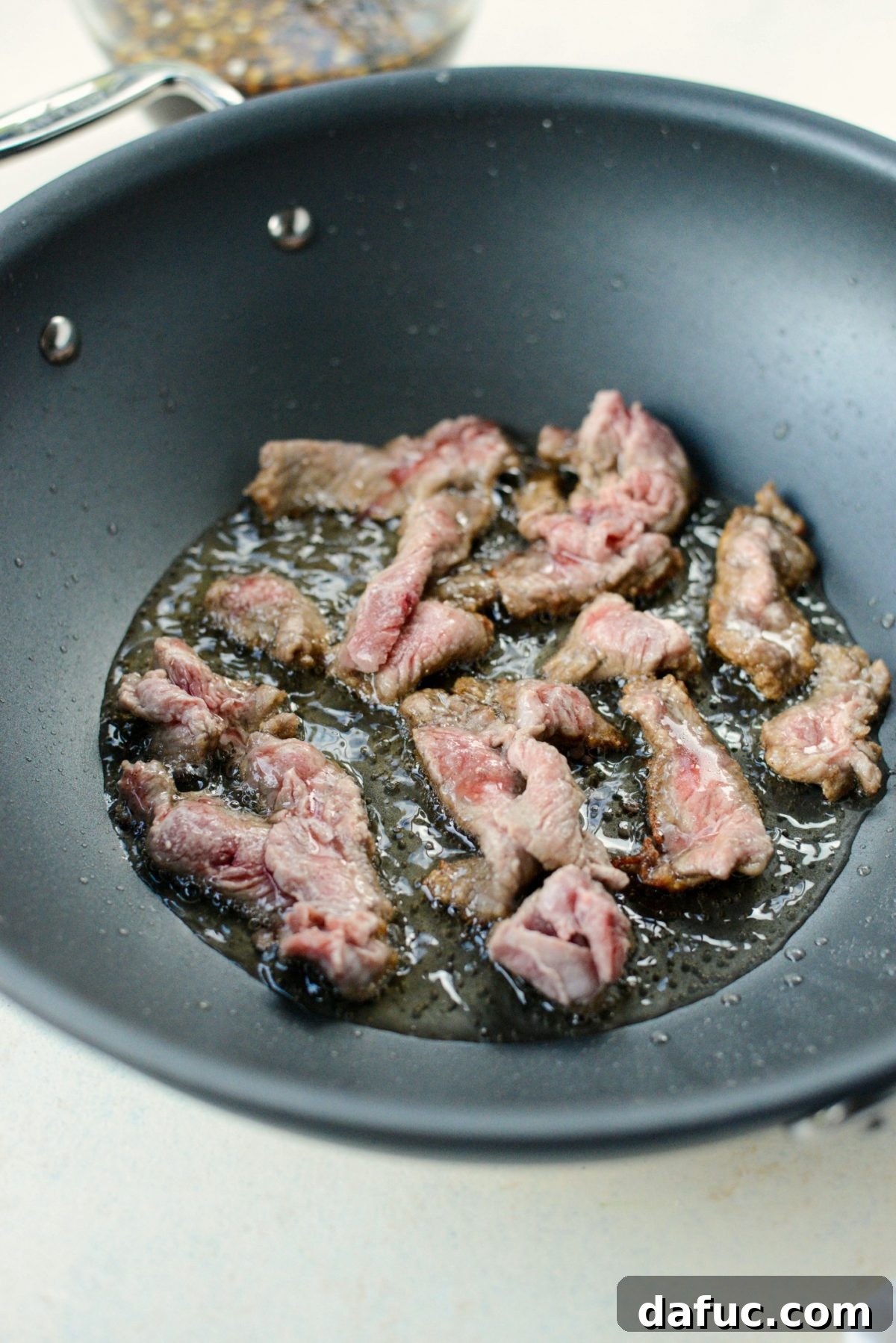
The key to achieving truly crispy Mongolian beef is high heat and cooking in batches. Heat 2 tablespoons of extra light olive oil or coconut oil in a large wok or a 12-inch chef’s pan over medium-high heat. Wait until the oil is shimmering and visibly hot before adding the beef. Working in small batches, place a single layer of the cornstarch-coated steak into the hot pan. Avoid overcrowding the pan, as this will lower the temperature and steam the beef instead of frying it, preventing it from getting crispy.
Cook each batch for approximately 2 minutes per side, or until the edges develop a beautiful deep golden color and a wonderfully crispy texture. A super hot pan is absolutely essential to making the steak get those desirable caramelized edges and a crisp bite. This Maillard reaction is what gives the beef its incredible depth of flavor.
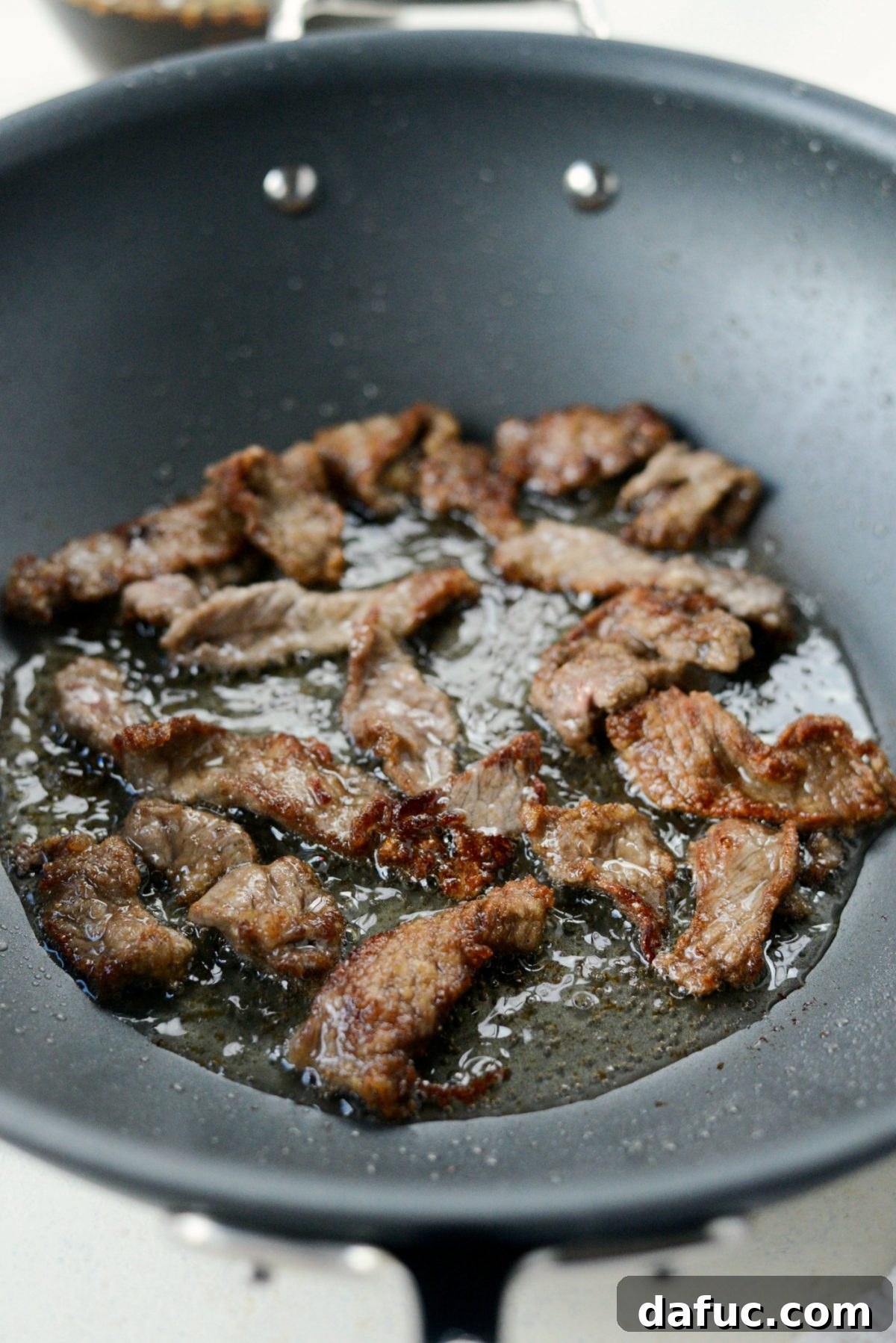
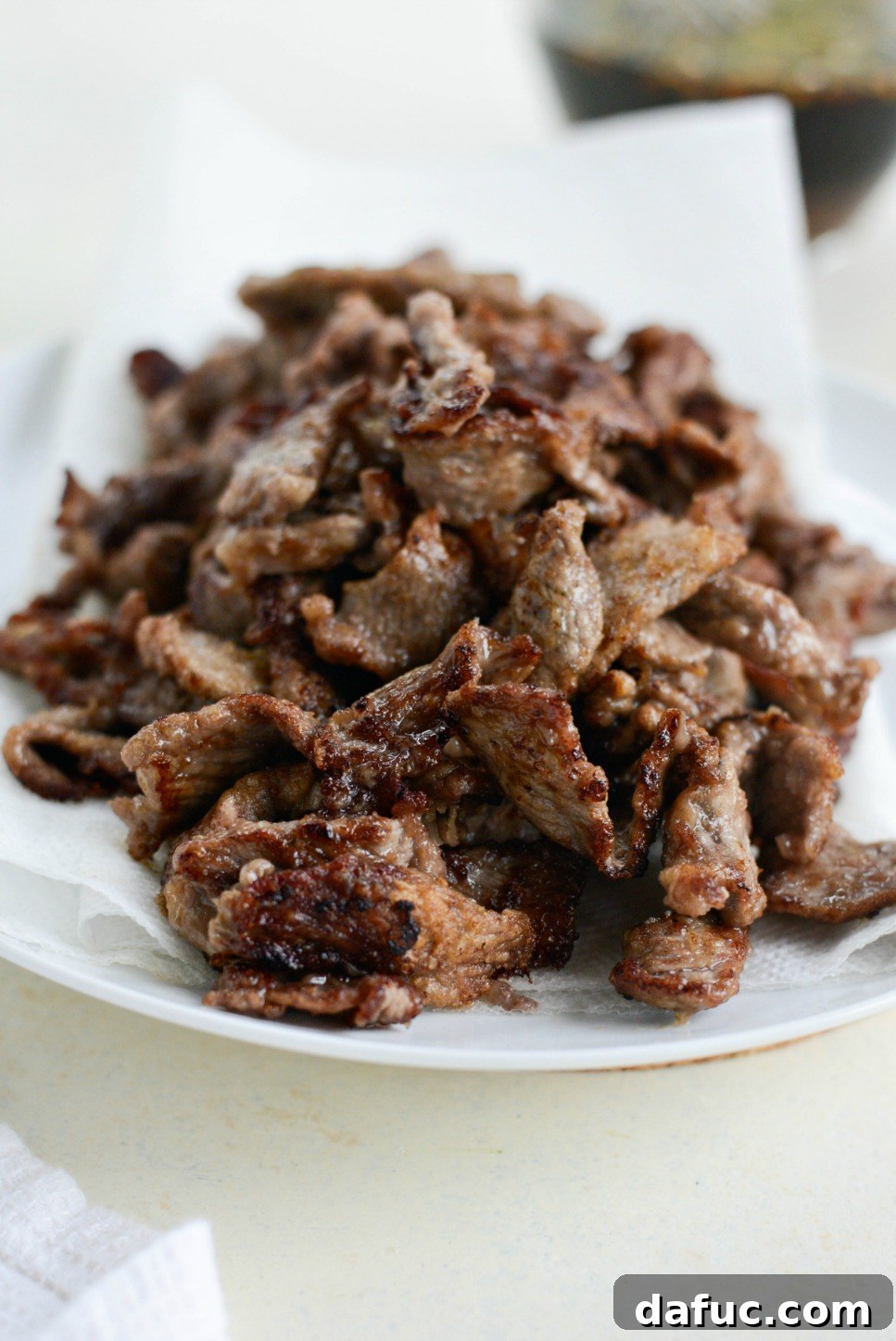
Once each batch of beef is cooked to crispy perfection, transfer it to a plate lined with paper towels to drain any excess oil. Repeat this process with the remaining steak, ensuring each batch is cooked properly and crisped evenly. This meticulous approach guarantees every piece of beef contributes to the overall fantastic texture of the dish.
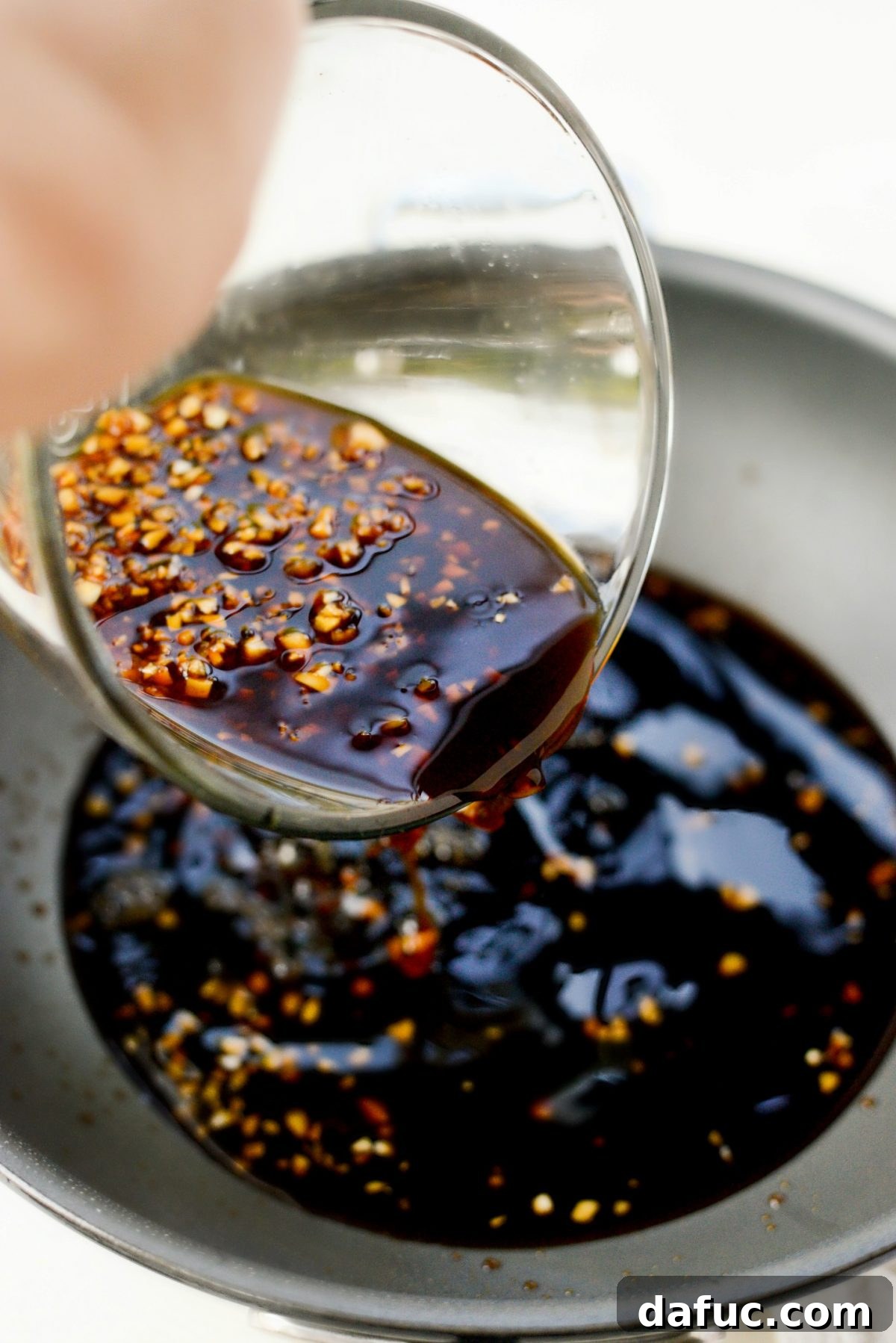
After all the beef is cooked and set aside, carefully use some paper towels to wipe the majority of the oil out of the pan. Leaving a small amount of the delicious stuck-on bits (fond) is perfectly fine, as these bits will add even more flavor to your sauce. Then, pour the prepared sauce mixture into the pan.
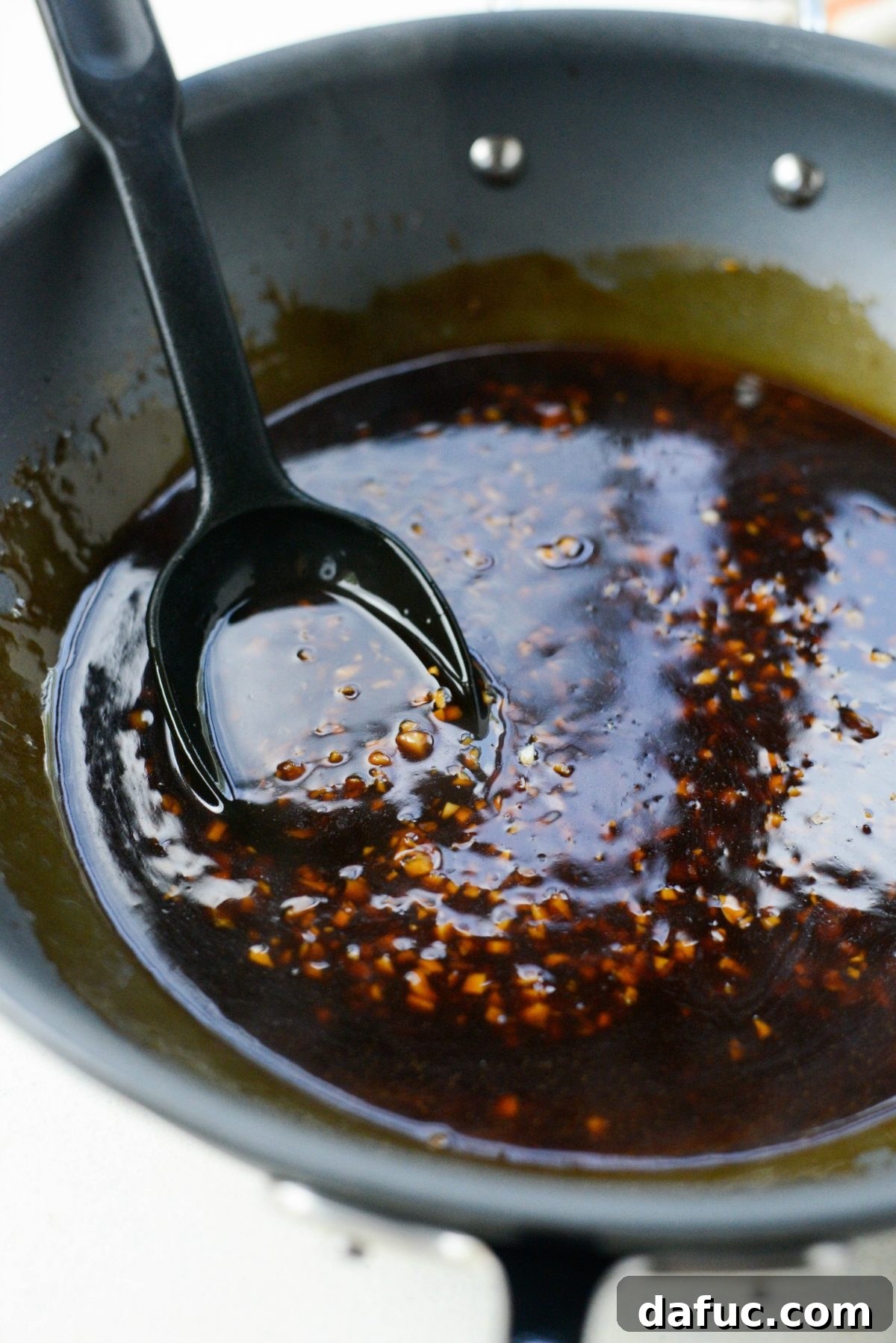
Bring the sauce to a boil over medium-high heat. While stirring continuously, slowly pour in the cornstarch slurry (which is simply 1 tablespoon of cornstarch mixed with 1 tablespoon of cold water). Continue to whisk the sauce as it simmers; you’ll notice it will begin to thicken almost immediately, transforming into a glossy, luscious consistency that is perfect for coating the crispy beef.
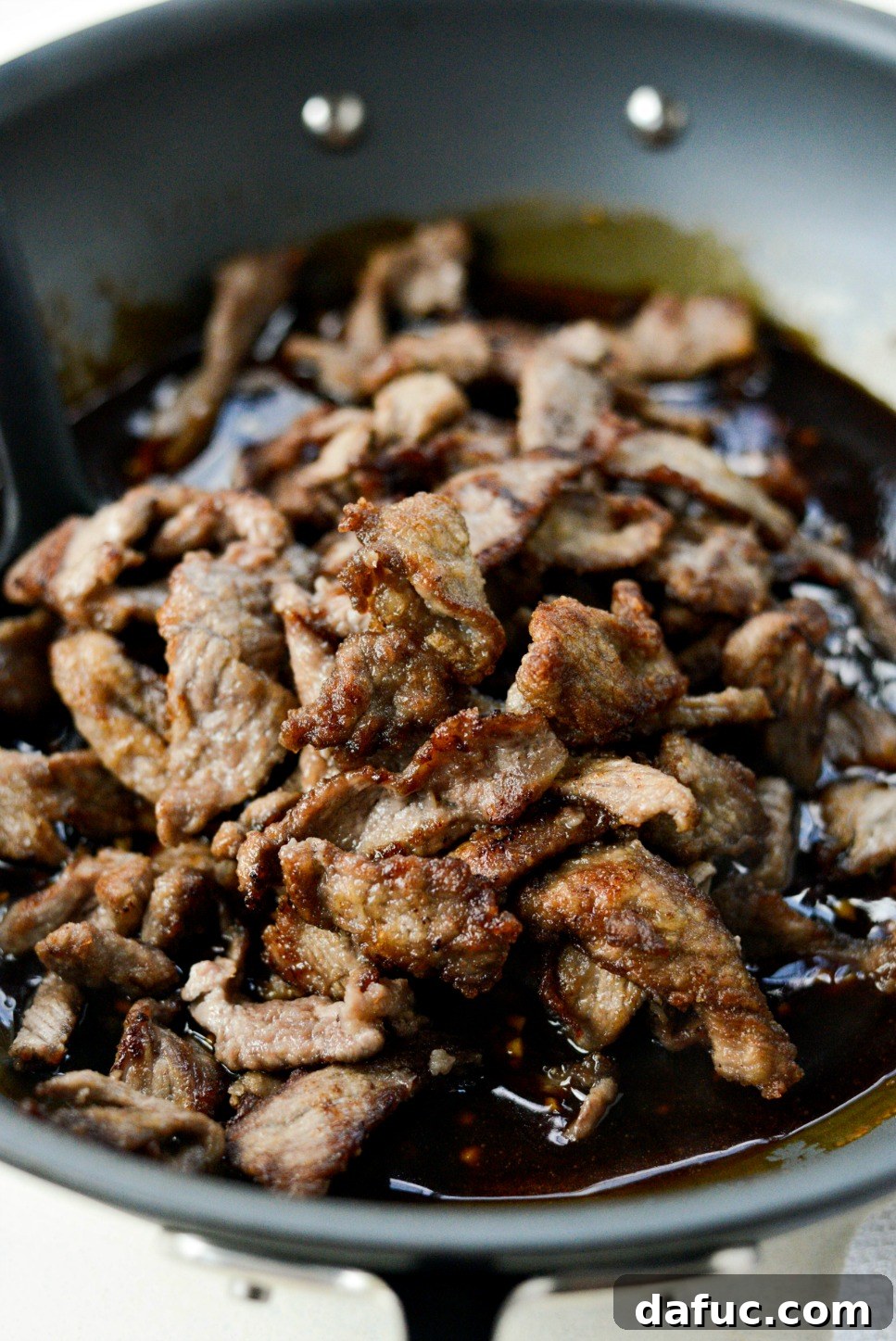
Once thickened, add in the crispy fried steak.
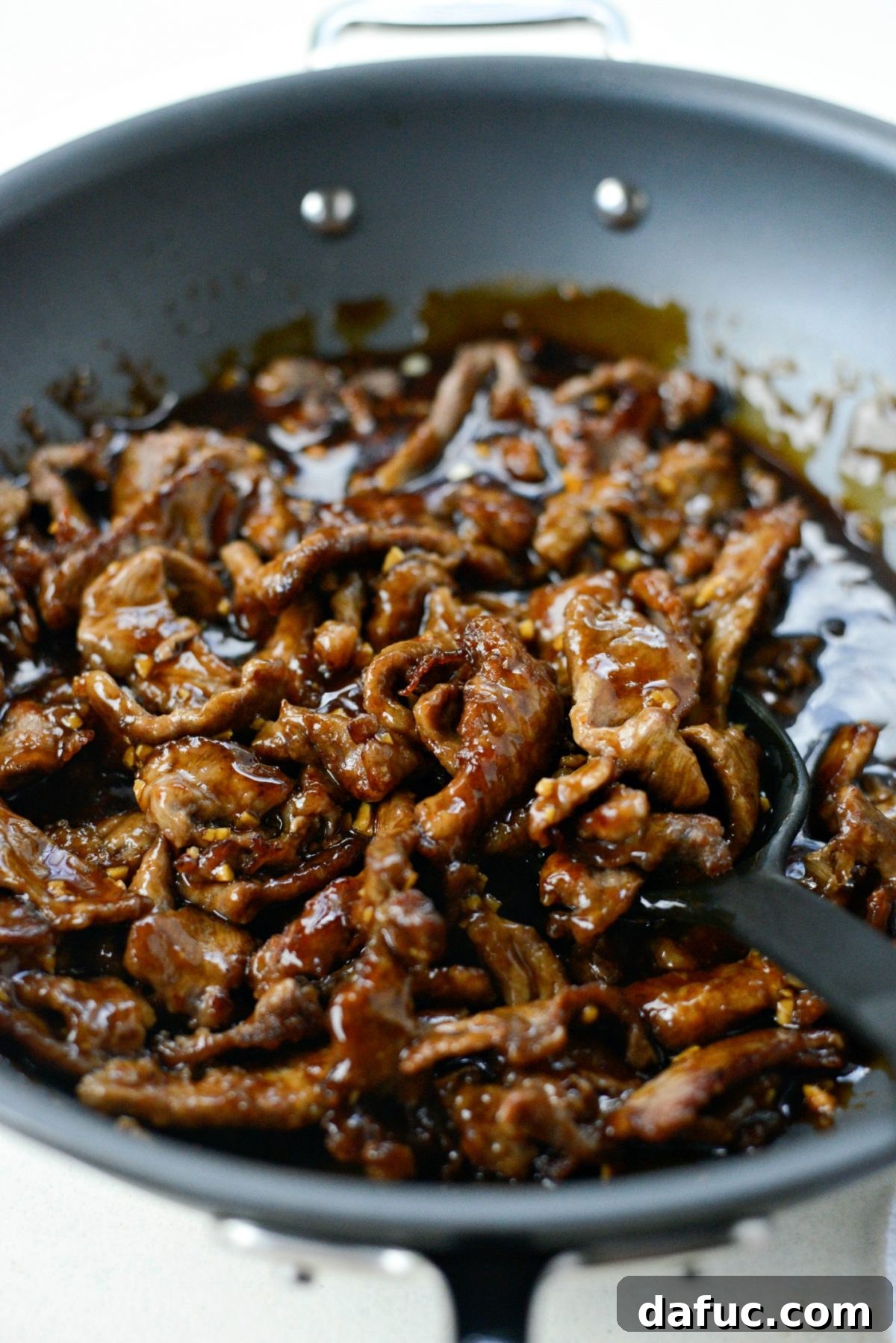
Once the sauce has reached your desired thickness, add all the crispy fried steak back into the pan. Toss everything gently to combine, ensuring each piece of beef is thoroughly coated in the rich, velvety sauce. Serve immediately. Adding the steak right before serving is crucial for maintaining its delightful crispy texture, preventing it from becoming soggy in the sauce.
Serving Suggestions and Customizations
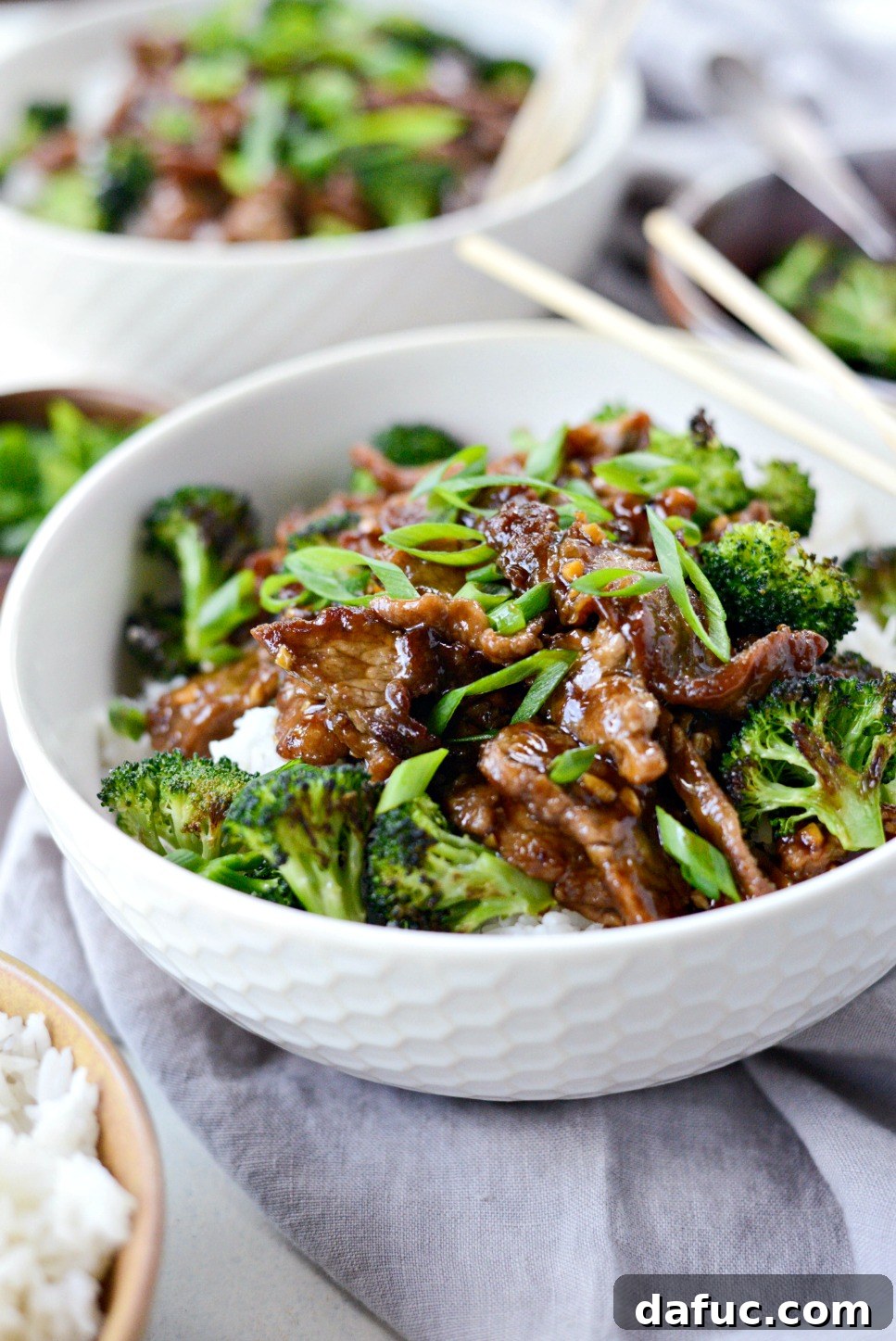
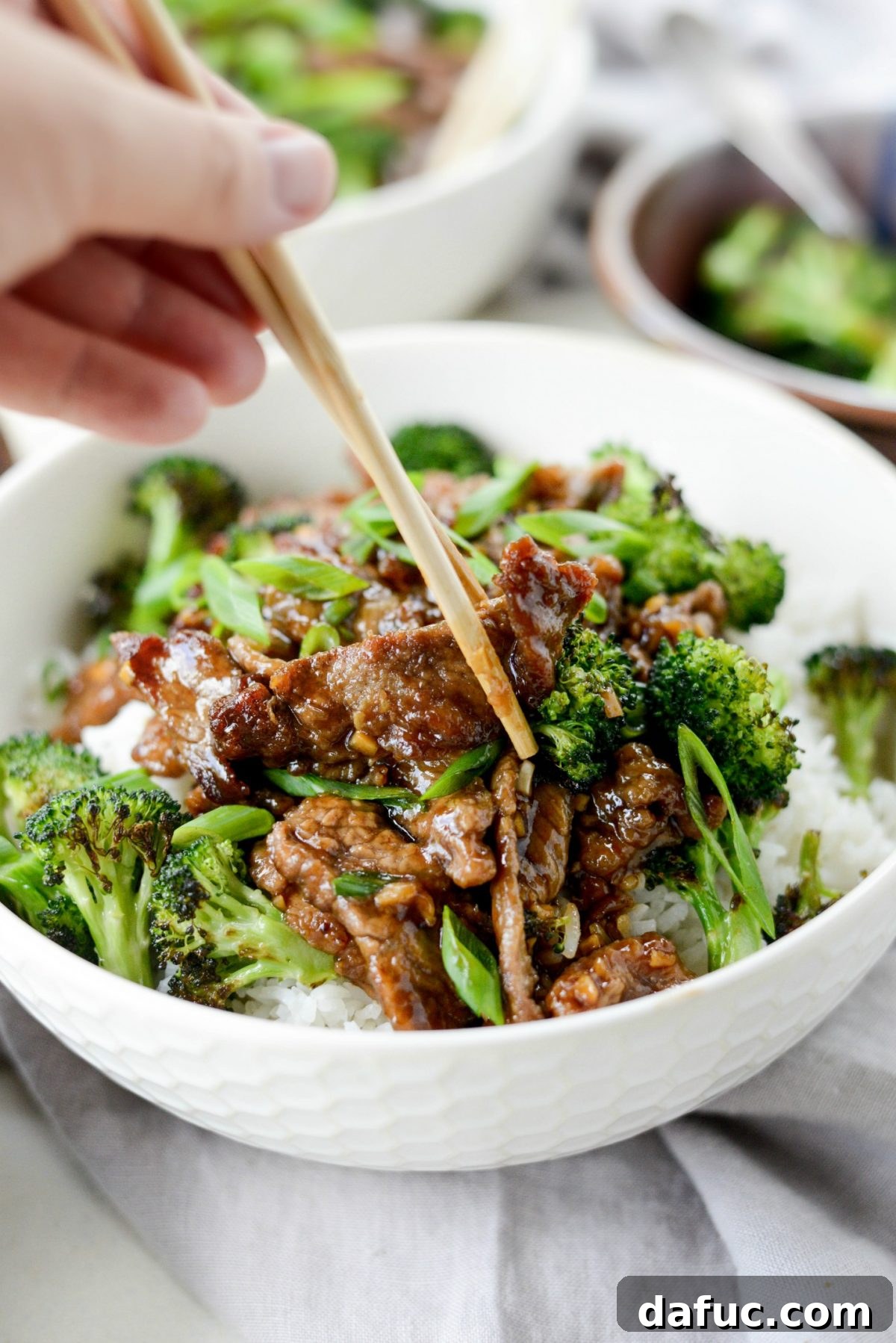
This Mongolian Beef is incredibly versatile, allowing for many delicious serving options. I love to serve it with perfectly roasted broccoli (a recipe I’ll be sharing with you very soon!) over a bed of fluffy jasmine rice. A sprinkle of thinly sliced green onions as a garnish adds a burst of freshness and a touch of color. For those who enjoy a little extra zing, don’t hesitate to add another dash of Sriracha at the table!
Beyond broccoli, consider a medley of your favorite stir-fry friendly vegetables: bell peppers, snap peas, carrots, or even bok choy would be excellent additions. For a low-carb option, skip the rice and serve it over cauliflower rice or zucchini noodles. If you’re a noodle lover, this sauce would also be fantastic tossed with lo mein or udon noodles. The possibilities are endless, making this recipe easily adaptable to any dietary preference or craving.
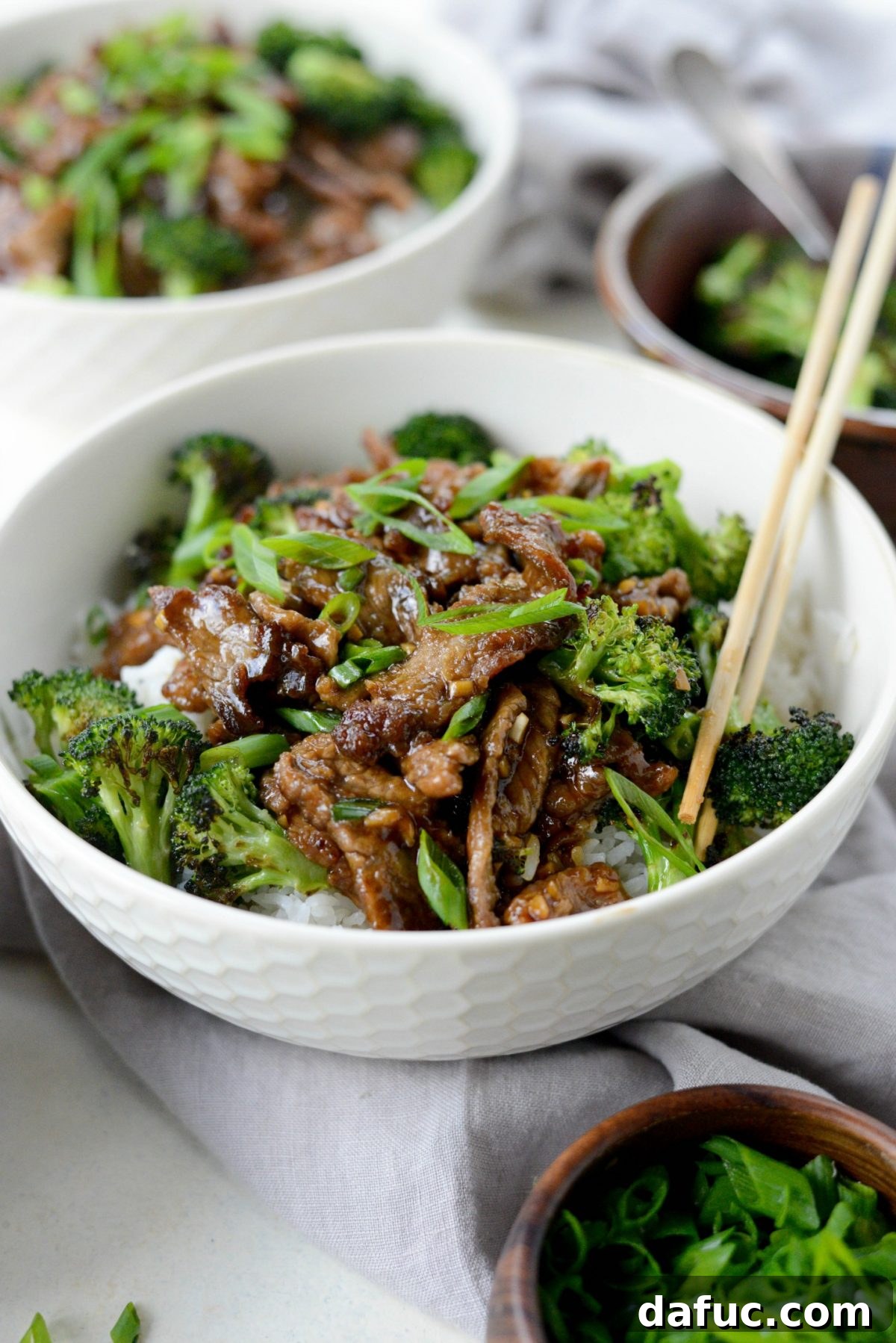
Dinner just got delicious, and incredibly easy!
Forget the temptation of ordering takeout! With this simple, flavorful, and incredibly satisfying Mongolian Beef Stir-Fry recipe, you can create a restaurant-quality meal right in the comfort of your own home. Not only will you save money, but you’ll also get to enjoy a fantastic dinner while perhaps even staying in your favorite pajamas. (Which, let’s be honest, is a major perk of home cooking, but that’s a story for another day.)
This recipe is designed to be straightforward yet packed with vibrant flavors. I am positive that once you try this homemade Mongolian Beef, it will quickly become a cherished favorite in your weekly meal rotation. It’s the perfect balance of convenience and gourmet taste.
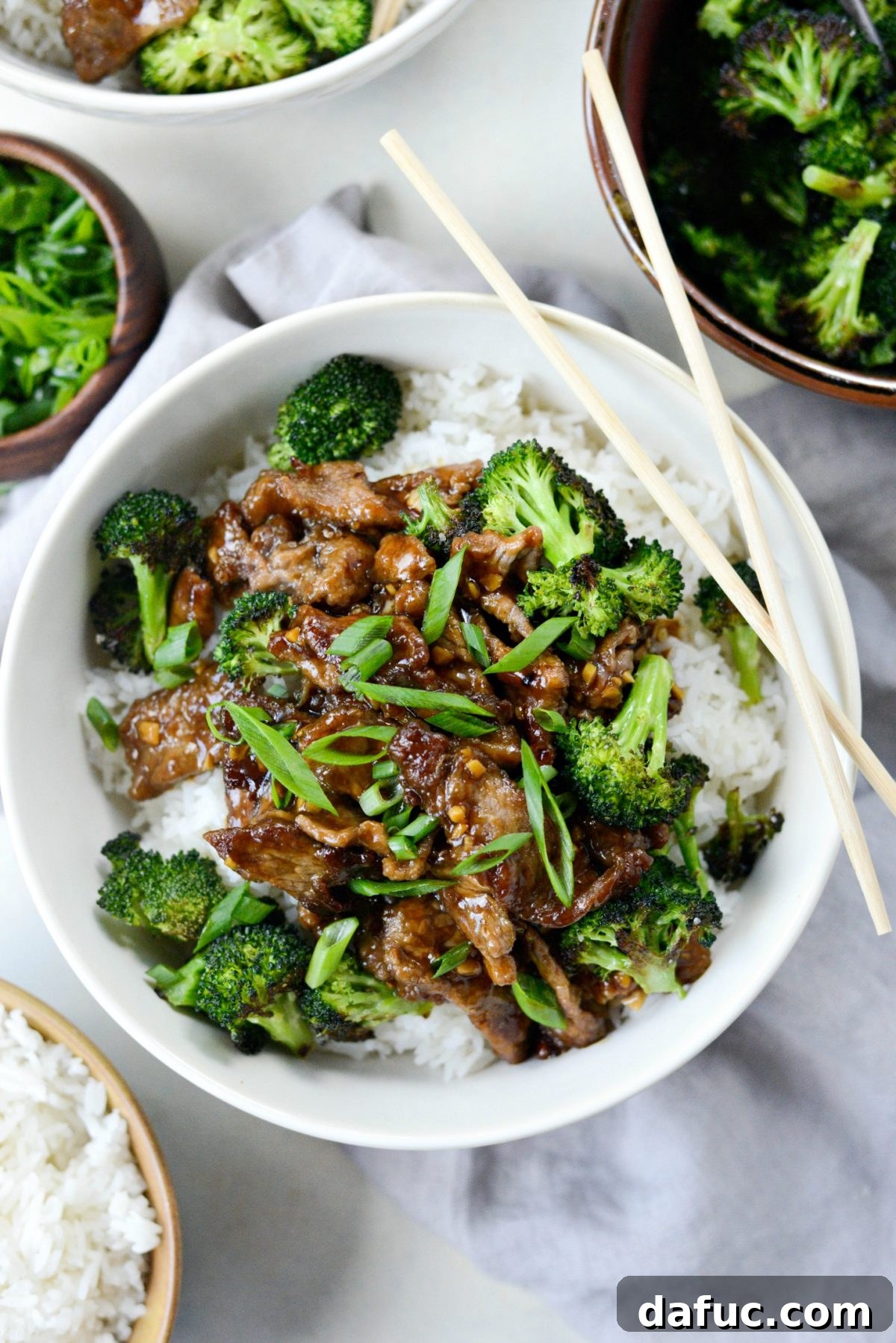
Enjoy! And if you give this amazing Mongolian Beef Stir-fry recipe a try, don’t keep it to yourself! I’d love to see your creations. Snap a photo and tag me on Twitter or Instagram!

Print Recipe
Pin Recipe
Leave a Review »
6
servings
Mongolian Beef Stir-Fry
20 minutes
25 minutes
45 minutes
Ingredients
FOR THE BEEF:
-
1½
pounds
top loin,
aka Strip Steak or New York Strip or sirloin steak, sliced very thin -
1/2
teaspoon
white pepper -
3
tablespoons
cornstarch
FOR THE SAUCE:
-
1/3
cup
dark brown sugar -
2
tablespoon
minced fresh ginger root,
about one 2-inch piece, peeled -
2
tablespoons
minced fresh garlic,
about 5 cloves -
1
cup
low-sodium beef broth -
1/2
cup
low-sodium tamari,
or soy sauce -
1/2 to 1
teaspoon
Sriracha -
2 to 4
tablespoons
extra light olive oil,
for frying -
1
tablespoon
cornstarch,
plus 1 tablespoon cold water for cornstarch slurry -
2
cups
cooked jasmine rice,
for serving -
3
green onion,
sliced thin, for serving
Equipment
-
All-Clad E7859464 HA1 Hard Anodized Nonstick Dishwasher Safe PFOA Free Chefs Pan/Wok Cookware, 12-Inch, Black
Instructions
-
Toss the thinly sliced steak with white pepper and cornstarch until coated evenly. Then set off to the side.
-
In a bowl combine the sugar, ginger, garlic, broth, tamari and Sriracha.
-
Heat oil a large wok or 12-inch chefs pan on medium-high. Once hot, work in small batches and evenly place an single layer of the steak into the hot pan. Cook about 2 minutes a side or until the edges are a deep golden color and are crispy. Transfer to a paper towel lined plate and repeat (still in small batches) with the remaining steak.
-
Use paper towel to carefully wipe most of the oil out the pan. Pour in the sauce and bring to a boil, then pour in the cornstarch slurry while whisking. Once the sauce has thickened, add the crispy steak back into the sauce and serve immediately with your favorite cooked veggie over cooked rice.
-
Garnish with thinly sliced green onions.
Serving:
1
g
,
Calories:
343
kcal
,
Carbohydrates:
35
g
,
Protein:
30
g
,
Fat:
9
g
,
Saturated Fat:
2
g
,
Polyunsaturated Fat:
1
g
,
Monounsaturated Fat:
5
g
,
Cholesterol:
67
mg
,
Sodium:
1232
mg
,
Potassium:
598
mg
,
Fiber:
1
g
,
Sugar:
12
g
,
Vitamin A:
61
IU
,
Vitamin C:
2
mg
,
Calcium:
54
mg
,
Iron:
3
mg
Laurie McNamara
Mains & Entrees
Asian