
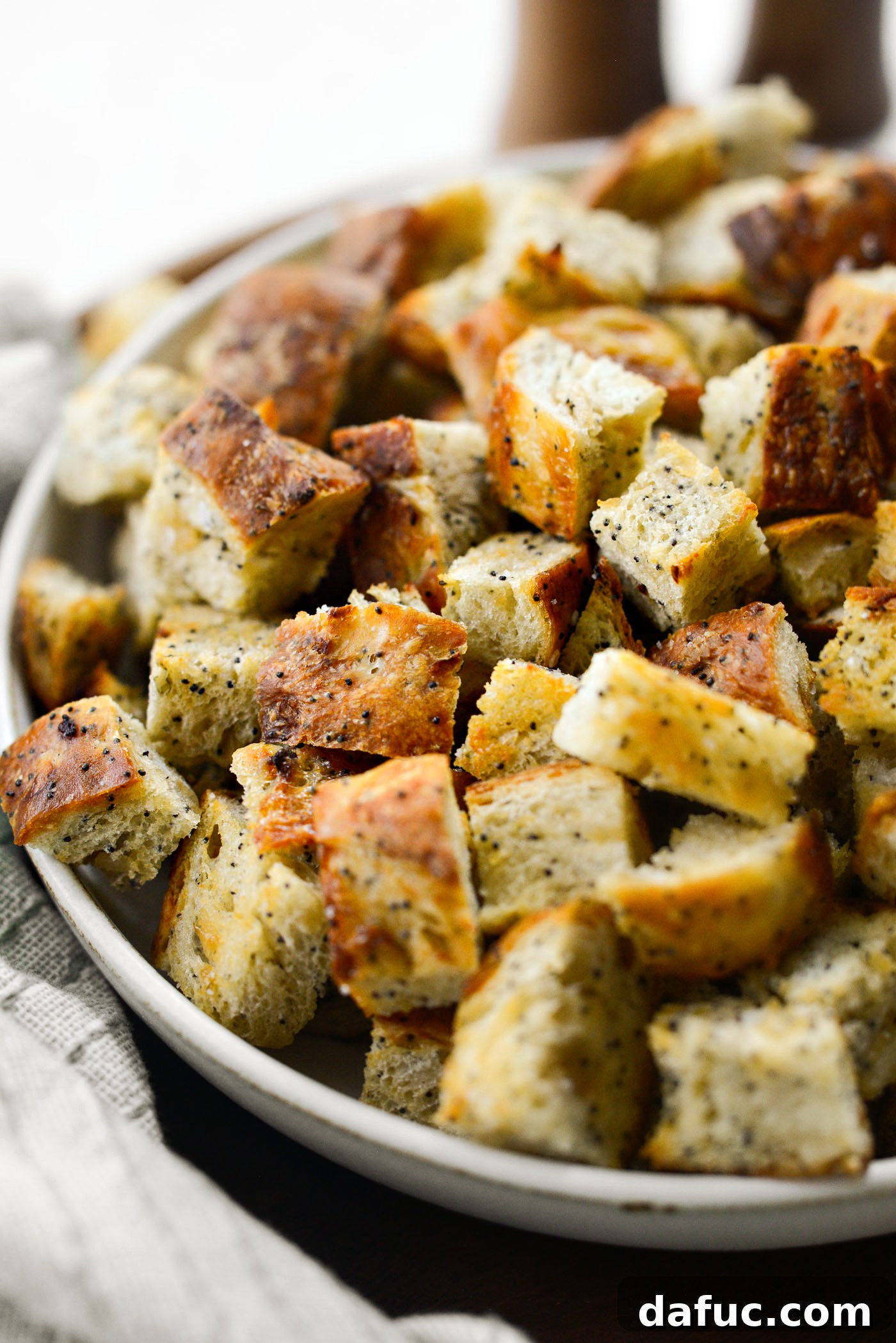
Welcome to the delightful world of homemade croutons! Forget those bland, rock-hard store-bought versions. Crafting your own crispy, flavorful croutons from scratch is not only incredibly easy but also transforms your salads, soups, and dishes with a gourmet touch. Prepare to say goodbye to mediocre toppings and hello to the absolute best croutons you’ll ever taste – perfectly golden, crunchy yet yielding, and bursting with irresistible flavor.
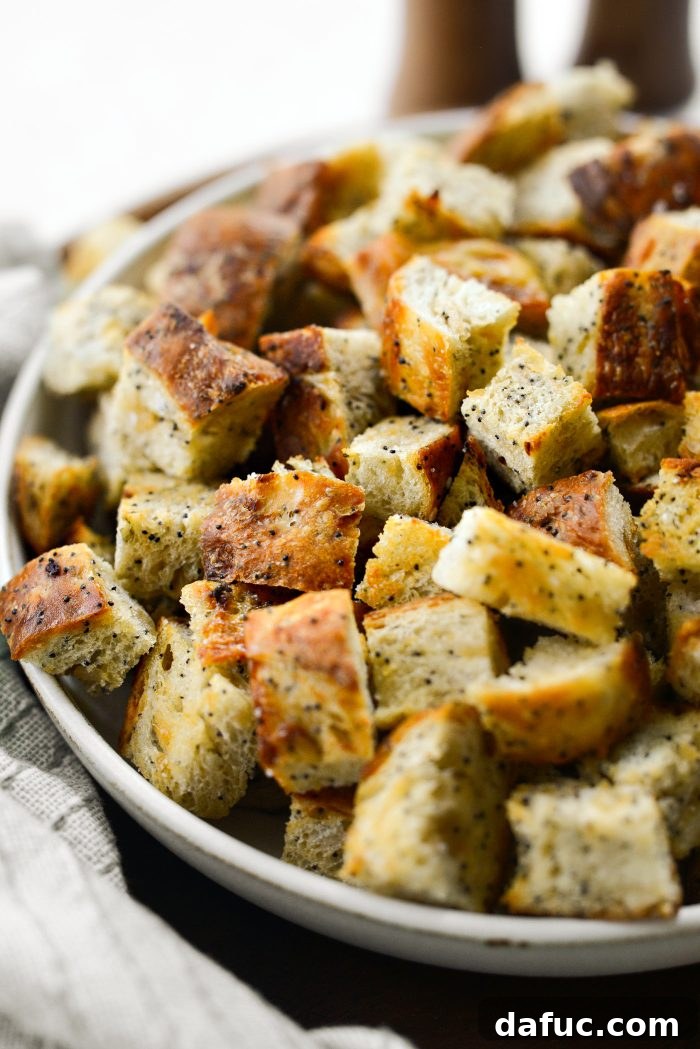
Homemade Croutons: The Ultimate Guide to Crispy, Flavorful Additions for Your Meals
Elevate your culinary creations with the simple addition of homemade croutons. This comprehensive guide will walk you through everything you need to know to create delicious, versatile croutons that are far superior to any pre-packaged alternative. From selecting the ideal bread to mastering the perfect bake and exploring exciting flavor variations, you’ll soon be a crouton expert, ready to add that perfect crunch to any meal.
Why Homemade Croutons Are a Game Changer for Your Kitchen
There are countless compelling reasons to ditch the commercial croutons and embrace the homemade difference. Once you try these from-scratch wonders, you’ll never look back.
- Unmatched Flavor & Texture: Store-bought croutons often lack depth, tasting either bland or artificially seasoned. They can also be excessively dry or rock-hard. Homemade versions, however, offer a superior balance of outer crispiness and a slightly tender, chewy interior. This allows them to absorb dressings and broth beautifully without becoming soggy, providing a delightful textural contrast. Most importantly, you control every nuance of flavor!
- Cost-Effective & Waste Reduction: One of the most brilliant aspects of making your own croutons is that it’s a fantastic way to utilize day-old or slightly stale bread. Instead of letting it go to waste, you transform it into a gourmet ingredient, saving money and contributing to a more sustainable kitchen.
- Endless Customization: The creative possibilities are truly limitless. Choose any bread that inspires you, experiment with various oils, and infuse your croutons with a medley of herbs, spices, and cheeses to perfectly complement any dish or cater to specific dietary preferences.
- Transparency & No Unwanted Additives: Many commercially produced croutons come packed with preservatives, artificial flavors, hydrogenated oils, and excessive sodium. When you make them at home, you have complete control over the ingredients, ensuring a healthier and cleaner topping for your meals.
- Pure Culinary Satisfaction: There’s an undeniable joy and reward in crafting such a simple yet impactful ingredient from scratch. The aroma filling your kitchen, the satisfying crunch, and the compliments from your family and friends will make it all worthwhile. Your taste buds (and your guests!) will thank you for the extra effort.
Choosing the Best Bread for Your Homemade Croutons
The adaptability of croutons means almost any type of bread can be used. However, certain varieties truly shine, yielding results that are far from ordinary. The primary secret to outstanding croutons often lies in using bread that is a day or two old, or slightly stale. This reduced moisture content allows the bread to toast more effectively, resulting in a crispier, more stable crouton.
Ideal Bread Types for Superior Croutons:
- Sourdough: A perennial favorite, sourdough’s distinctive tangy flavor and robust, chewy crust make for incredibly delicious and sturdy croutons. Its open crumb structure readily absorbs oils and seasonings.
- Ciabatta: Known for its airy texture and rustic, irregular crust, ciabatta bread creates light yet satisfyingly crunchy croutons that absorb flavor wonderfully. Consider using our easy homemade no-knead ciabatta bread recipe for the freshest experience.
- Focaccia: Rich with olive oil and often infused with herbs like rosemary, focaccia inherently brings a savory depth to your croutons, making them exceptionally flavorful and unique. Our homemade focaccia recipe is a perfect starting point.
- Rustic Boule or Crusty Loaf: Breads with a dense interior crumb and a thick, well-developed crust, such as a no-knead rustic boule, offer a fantastic textural contrast. They become wonderfully crispy on the outside while retaining a pleasing slight chewiness within.
- Pretzel Bread: For a truly distinctive and intriguing twist, pretzel bread offers a unique malty flavor and a denser, chewier texture that transforms into surprisingly addictive croutons. Explore our easy homemade pretzel bread to make your own.
- Rye Bread: Its distinctive earthy, slightly sour notes can introduce an exciting complexity to your croutons, making them an excellent accompaniment for hearty stews, robust salads, or rich soups. Our no-knead rye bread recipe works beautifully for this purpose.
- Pita Bread: Surprisingly versatile, day-old pita bread can be cut or torn into smaller pieces and transformed into thinner, extra-crispy croutons. These are particularly well-suited for Mediterranean-inspired salads or as a crunchy dipper. Learn to make mini pita bread at home.
- Cornbread: For a delightful touch of sweetness and a softer, cake-like texture, day-old cornbread croutons are exceptionally good, especially when paired with chili, black bean soup, or a hearty stew.
- Sweet Breads (Cinnamon Raisin, Cranberry Walnut): Don’t limit your crouton horizons to savory applications! Sweet croutons, made from loaves like cinnamon raisin or cranberry walnut bread, can be a delightful and unexpected addition to a breakfast salad, a fruit compote, yogurt parfaits, or even provide an intriguing layer of flavor to a savory soup like this homemade squash soup.
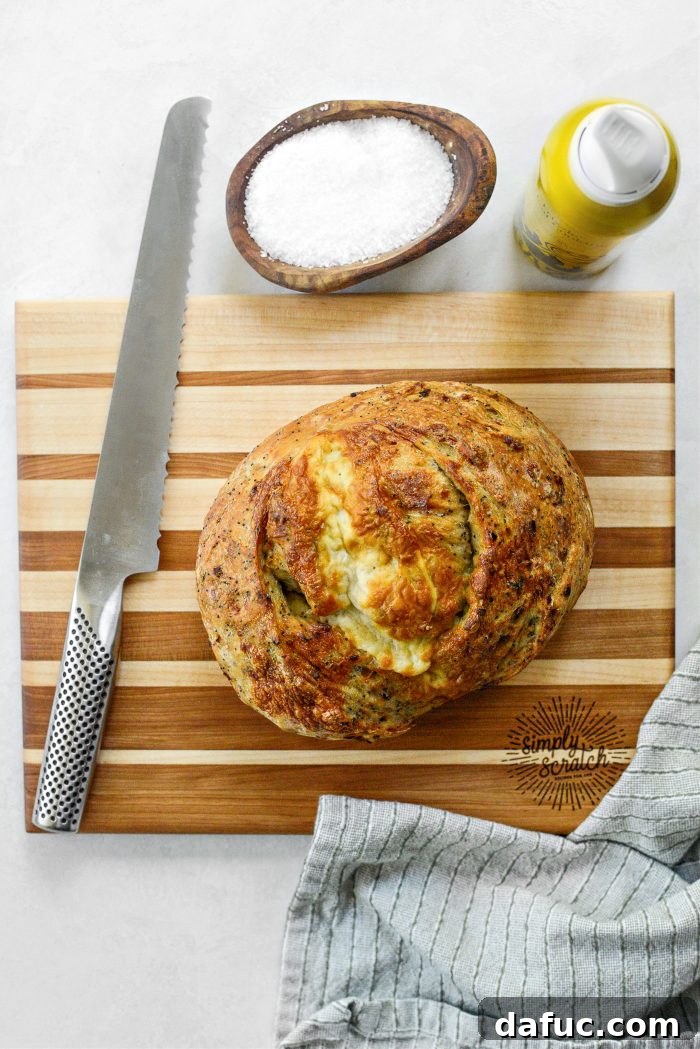
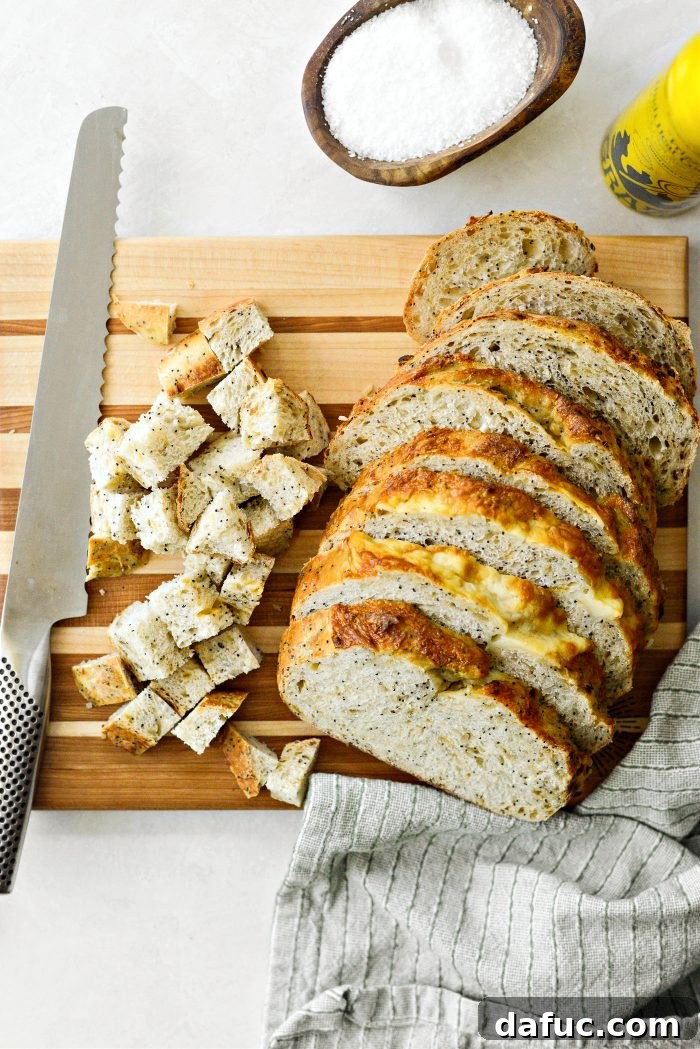
While standard sandwich bread can be used in a pinch, it typically has a softer crumb and less inherent flavor, which often results in a less robust and satisfying crouton. For truly outstanding results, always aim for a denser, crustier loaf with good structural integrity. For the croutons featured in this guide, I used an incredible onion asiago boule I discovered at our local grocery store bakery – the rich aroma and savory notes were utterly irresistible and perfectly showcased the potential for unique crouton flavors!
Essential Ingredients & Creative Flavor Enhancers
The inherent beauty of homemade croutons lies in their fundamental simplicity, requiring just a few basic ingredients. However, this minimalist foundation also serves as a perfect canvas for your culinary creativity, allowing you to infuse them with an array of exciting and personalized flavors.
Core Ingredients You’ll Need:
- Good Quality Bread: (Approximately 16 ounces or one medium loaf) – As previously discussed, using day-old or slightly stale bread is highly recommended. The reduced moisture content ensures a faster, crispier result. Fresh bread will still work but may require a slightly longer drying time in the oven.
- Olive Oil Spray (or Melted Olive Oil/Ghee): This is the secret weapon for achieving that coveted golden crispiness. An olive oil spray provides an even, light coating, which is ideal for thoroughly greasing each bread cube. Alternatively, you can toss the cubed bread with a few tablespoons of melted olive oil or ghee in a large bowl, ensuring every piece is well-coated. Ghee oil spray also works wonderfully, imparting a rich, buttery, and slightly nutty flavor.
- Kosher Salt: An absolute essential for seasoning, kosher salt plays a crucial role in enhancing all the flavors. Its larger crystal size adheres beautifully to the bread, providing a pleasant burst of salinity with every bite. You can adjust the amount to your personal preference.
Optional Flavor Enhancers to Elevate Your Croutons:
This is where you can truly unleash your inner chef and customize your croutons to match any dish or mood. Don’t be afraid to experiment!
- Garlic Powder or Granulated Garlic: A timeless and beloved pairing with bread. Garlic powder adds a wonderful aromatic depth and savory kick that complements almost any meal.
- Onion Powder: A fantastic complement to garlic, onion powder contributes a subtle sweetness and an additional layer of savory goodness without the sharpness of fresh onion.
- Dried Herbs: A pinch of dried herbs can transform your croutons. Classic choices include Italian seasoning, dried oregano, basil, thyme, or rosemary. A blend like Herbes de Provence also works beautifully. Start with a teaspoon or two for a standard loaf of bread and adjust to taste.
- Black Pepper: Freshly ground black pepper adds a subtle hint of warmth and spice, enhancing the overall flavor profile.
- Smoked Paprika: For a subtle smoky flavor and a beautiful, vibrant reddish hue, smoked paprika is an excellent addition.
- Parmesan Cheese (finely grated): Toss the bread cubes with finely grated Parmesan cheese before baking for an incredibly salty, umami-rich, and cheesy crust. If you prefer the cheese less toasted or fear it might burn, you can add it during the last few minutes of baking.
- Red Pepper Flakes: If you appreciate a little heat, a small pinch of red pepper flakes can add a delightful, zesty kick to your croutons.
Step-by-Step Guide to Baking Perfect Homemade Croutons
Crafting these golden nuggets of deliciousness is an incredibly straightforward process. By following these simple, detailed steps, you’ll achieve consistently perfect, crispy, and flavorful croutons every time.
- Prepare Your Oven and Baking Sheet:
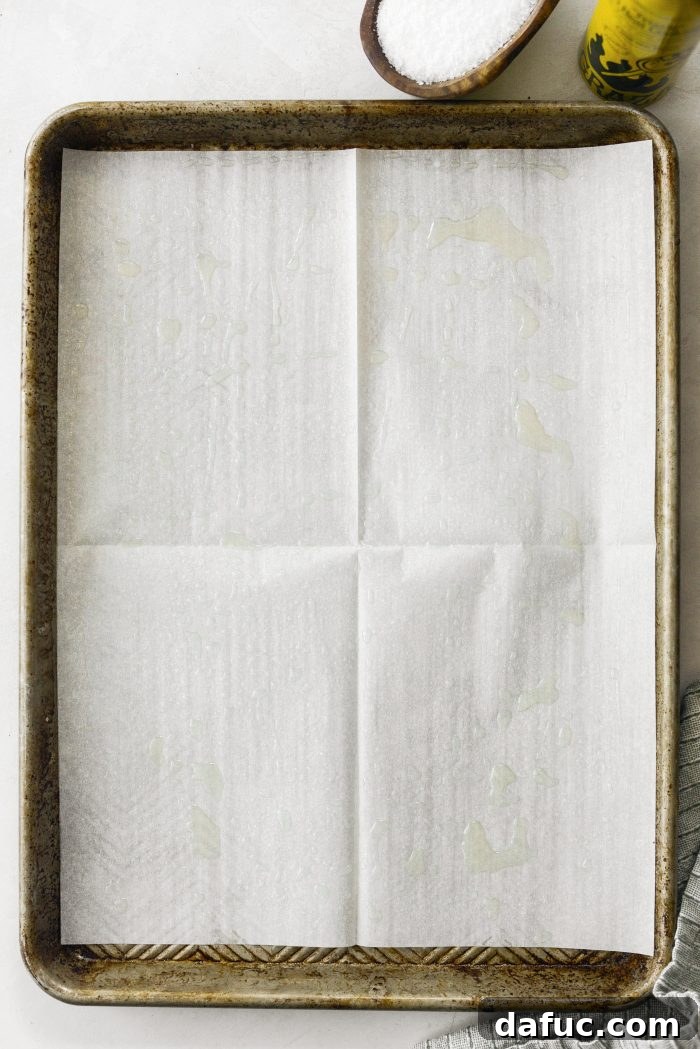
Begin by preheating your oven to 400°F (or 200°C). This temperature is ideal for quickly toasting the bread to a golden crisp without drying it out too much or burning it. Next, line a large, rimmed baking sheet with parchment paper. This simple step is crucial for preventing the croutons from sticking to the pan and makes cleanup an absolute breeze. Once lined, lightly spray the parchment paper with olive oil spray, ensuring an even, non-stick surface.
- Slice and Cube the Bread:
Take your chosen loaf of bread, approximately 16 ounces (or one standard loaf), and begin by slicing it into uniform pieces. For classic, evenly sized croutons, aim for slices that are about 3/4-inch to 1-inch thick. Once sliced, cut each slice into strips, and then cut the strips into even cubes. The key here is consistency in size; this ensures that all your croutons bake evenly. For a more rustic appearance and texture, you can also tear the bread by hand into bite-sized pieces. Just make sure the pieces are roughly the same size to promote uniform toasting.
- Season the Bread Cubes:
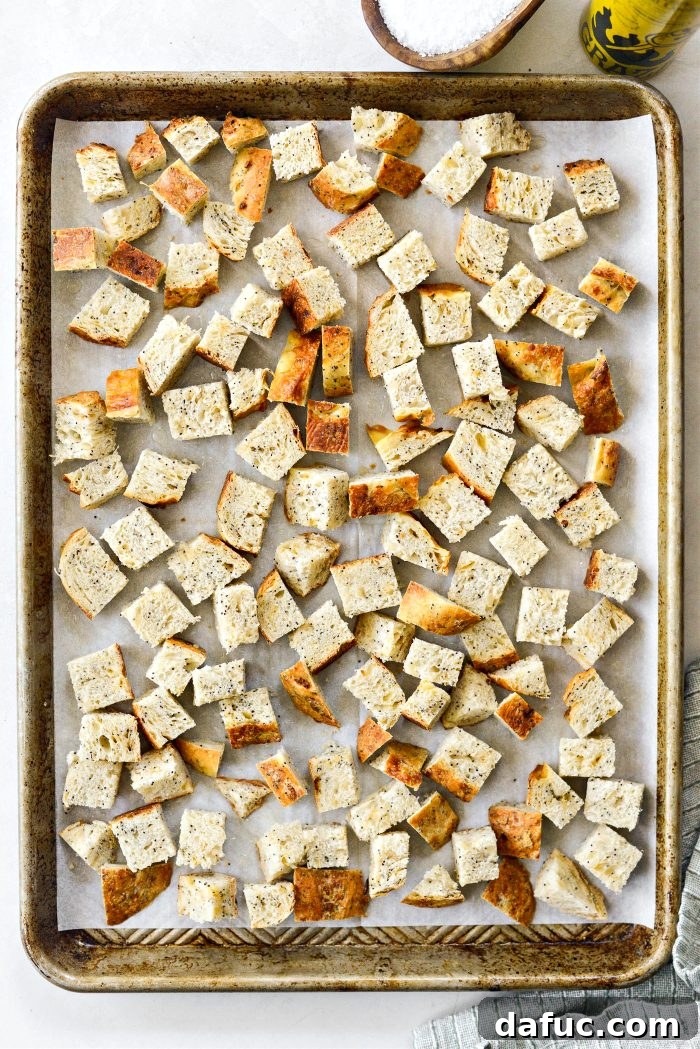
Spread the prepared bread cubes in a single, even layer across the baking sheet. It’s important to avoid overcrowding the pan, as this can cause the bread to steam rather than toast, leading to soggy croutons. Once spread, lightly and generously spray the bread cubes with olive oil spray. If you’re using melted oil, drizzle it evenly over the cubes. Then, sprinkle generously with kosher salt and any of your chosen optional seasonings, such as garlic powder, dried herbs, or black pepper. Use your hands to gently toss the cubes directly on the sheet, ensuring every piece is evenly coated with oil and seasonings.
- Bake to Golden Perfection:
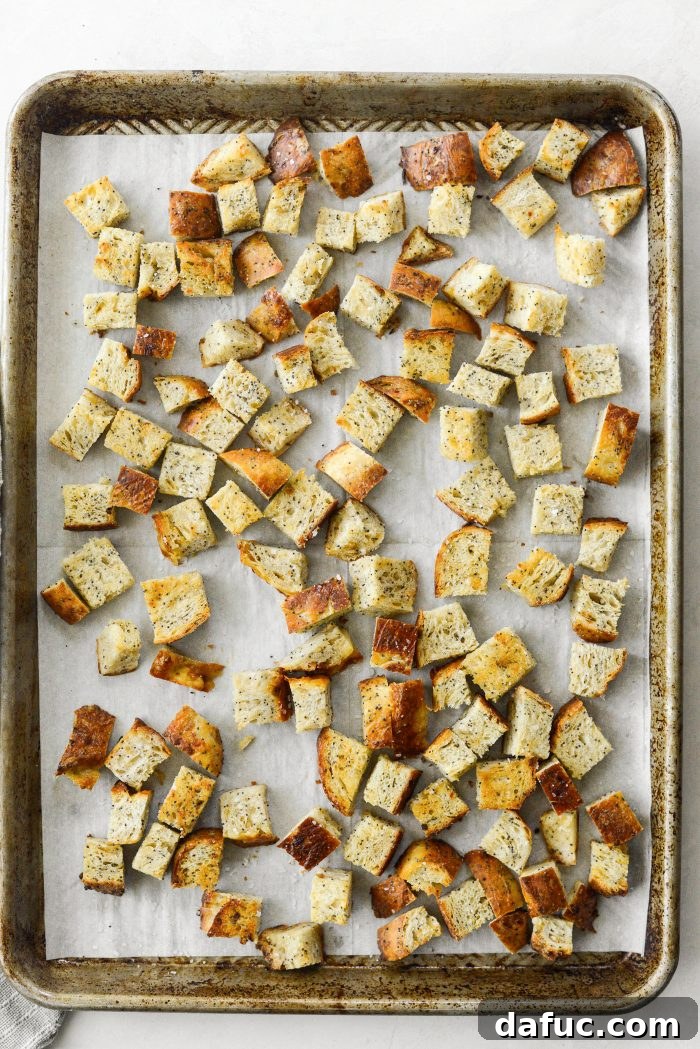
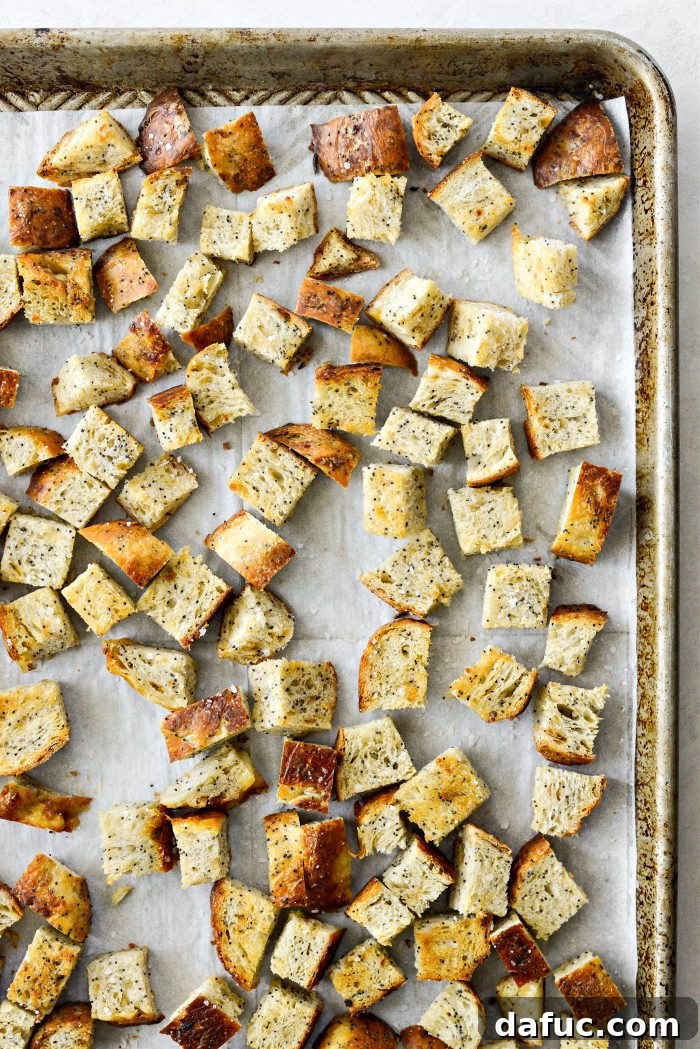
Carefully place the baking sheet on the middle rack of your preheated oven. Bake for approximately 8 to 10 minutes, or until the bottom of the croutons has turned a beautiful, consistent golden brown. For extra-crispy croutons, we recommend flipping them halfway through the baking time to ensure even browning on all sides. Continue to bake for an additional 2 to 3 minutes, or until they reach your desired level of crispness. It’s crucial to keep a close eye on them during these final minutes, as croutons can go from perfectly golden to burnt very quickly.
- Cool and Serve:
Once your croutons are baked to perfection, remove them from the oven. Allow them to cool completely on the baking sheet. As they cool, they will continue to crisp up and firm. Once fully cooled, they are ready to be added to your favorite salads, sprinkled over creamy soups, or simply enjoyed as a delightful, crunchy snack!
How to Store Homemade Croutons for Maximum Freshness
Ensuring proper storage is crucial for maintaining the irresistible crisp texture of your freshly made homemade croutons. Follow these guidelines to keep them delicious for longer:
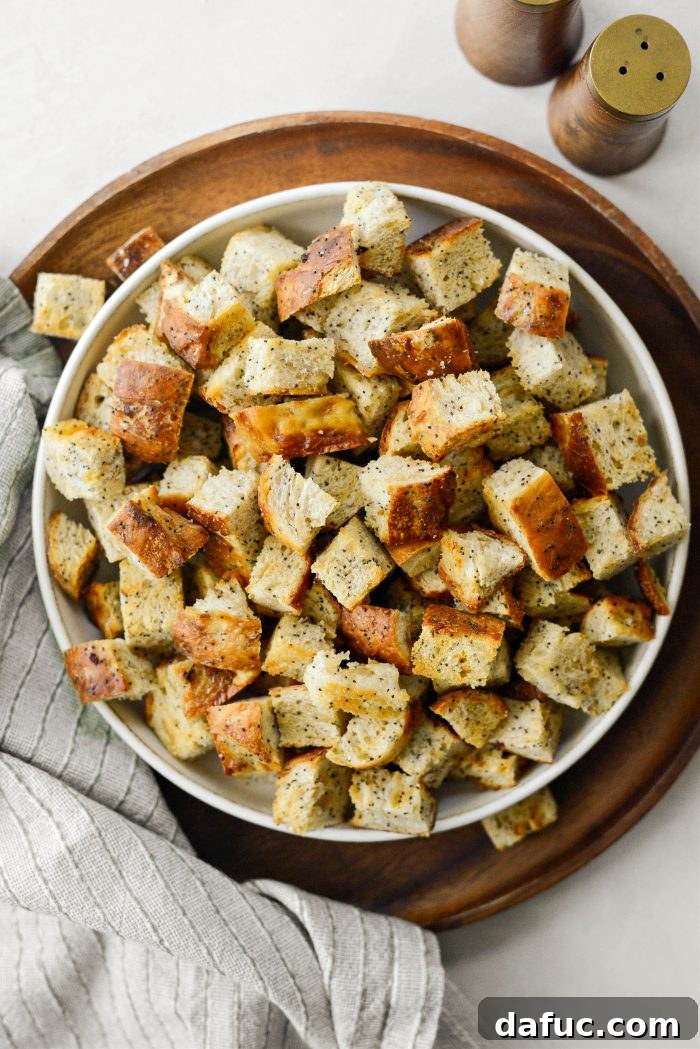
- Room Temperature Storage (Short-Term): Once your croutons are completely cooled – this is key to prevent condensation and sogginess – store them in an air-tight container or a re-sealable plastic bag. Keep them at room temperature in a dry pantry or cupboard. Stored this way, they will retain their freshness and crunch for 5 to 7 days.
- Re-Crisping Stale Croutons: If your croutons lose some of their initial crunch after a few days, don’t despair! They are easily revived. Simply spread them out in a single layer on a baking sheet and pop them back into a preheated 300°F (150°C) oven for about 5-10 minutes. Alternatively, you can toss them in an air-fryer at 350°F (175°C) for just 2-3 minutes. Keep a close watch to prevent them from burning.
- Freezing for Longer Storage: For extended freshness, especially if you’ve made a large batch, you can freeze fully cooled croutons. Place them in a freezer-safe bag or container, ensuring as much air as possible is removed. They can be stored in the freezer for up to 1-2 months. When ready to use, thaw them at room temperature for a bit, then re-crisp them in the oven or air fryer before serving.
- Always Check for Freshness: Although dried bread is less prone to quick spoilage, it’s always good practice to give your croutons a quick sniff and visual inspection before consuming them, particularly after the first few days of storage. Any signs of mold, an off smell, or excessive staleness mean they should be discarded.
Serving Suggestions: Beyond Salads and Soups
While croutons are undeniably famous for their stellar role in enhancing salads and soups, their versatility in the kitchen extends far beyond these classic applications. Get creative and explore new ways to enjoy these crunchy delights:
- The Quintessential Caesar Salad: A bowl of crisp romaine, tangy dressing, grated Parmesan, and a generous scattering of homemade croutons is a timeless classic that can’t be beat.
- Elevate Creamy Soups: Add a delightful textural contrast to smooth, rich soups like creamy tomato, butternut squash, or potato soup. The croutons soak up just enough liquid to become tender but still offer that satisfying crunch.
- French Onion Soup Topping: Before adding cheese and broiling, float a generous handful of homemade croutons on top of your French onion soup. They provide the perfect base for melted, bubbly cheese.
- Crunchy Casserole Topping: Crumble them over baked mac and cheese, green bean casserole, or any gratin for an instant, flavorful, and crispy topping that adds an extra dimension.
- Wholesome Snack: Well-seasoned homemade croutons make a surprisingly addictive and satisfying snack all on their own. They’re a great alternative to chips or crackers.
- Dipping Companion: Serve them as a fantastic alternative to crackers or breadsticks for dipping into your favorite hummus, spinach dip, warm cheese fondue, or creamy artichoke dip.
- Stuffing Base: If you find yourself with a larger batch of croutons, they can serve as the perfect flavorful foundation for a traditional homemade stuffing, absorbing broths and seasonings beautifully.
- Instant Breadcrumbs: Don’t let any leftover croutons go to waste! Easily transform them into fresh breadcrumbs by simply pulsing them in a food processor. These can then be used for breading cutlets, topping gratins, or thickening sauces.
Frequently Asked Questions About Homemade Croutons
- Can I use fresh bread for making croutons?
- Yes, you certainly can use fresh bread. However, day-old or slightly stale bread is often preferred because it has less moisture, which helps it crisp up more efficiently in the oven. If you opt for fresh bread, you might find it beneficial to bake it for an extra 5-10 minutes at a slightly lower temperature (around 300°F/150°C) initially to dry it out slightly before increasing the temperature for browning.
- What kind of oil is best for making croutons?
- Olive oil is the classic choice and is highly recommended due to its excellent flavor, health benefits, and ability to create a lovely crisp texture. However, you can also achieve great results with melted butter for a richer taste, ghee for a buttery and nutty profile, or even avocado oil for a neutral flavor with a high smoke point.
- Can I make gluten-free croutons?
- Absolutely! The process for making gluten-free croutons is exactly the same. Simply use your favorite gluten-free bread. The key is to choose a gluten-free loaf that is sturdy enough to hold its shape well when cut into cubes and can crisp up effectively.
- Can I make croutons in an air fryer?
- Yes, an air fryer is a fantastic tool for making quick and crispy croutons! Toss your bread cubes with oil and seasonings as you normally would. Then, air fry them at 350°F (175°C) for about 5-8 minutes, making sure to shake the basket halfway through to ensure even cooking and browning. Keep a close eye on them, as air fryers tend to cook very quickly.
- My croutons aren’t crispy enough, what might have gone wrong?
- If your croutons aren’t as crispy as you’d like, it’s usually due to one of a few common reasons: insufficient oil, overcrowding the baking sheet (which causes the bread to steam rather than toast), or simply not baking them long enough. Ensure each bread cube is evenly coated with oil, spread them in a single layer on the baking sheet without overlap, and continue to bake until they are truly golden brown and firm to the touch.
Homemade croutons are truly a simple yet incredibly rewarding kitchen project that transforms everyday meals into something extraordinary. With minimal effort, just a few basic ingredients, and endless possibilities for flavor customization, you can enjoy perfectly crunchy, deeply flavorful toppings that effortlessly outshine any store-bought alternative. So, grab that loaf of bread, get creative with your seasonings, and start making your own delicious, crispy croutons today!
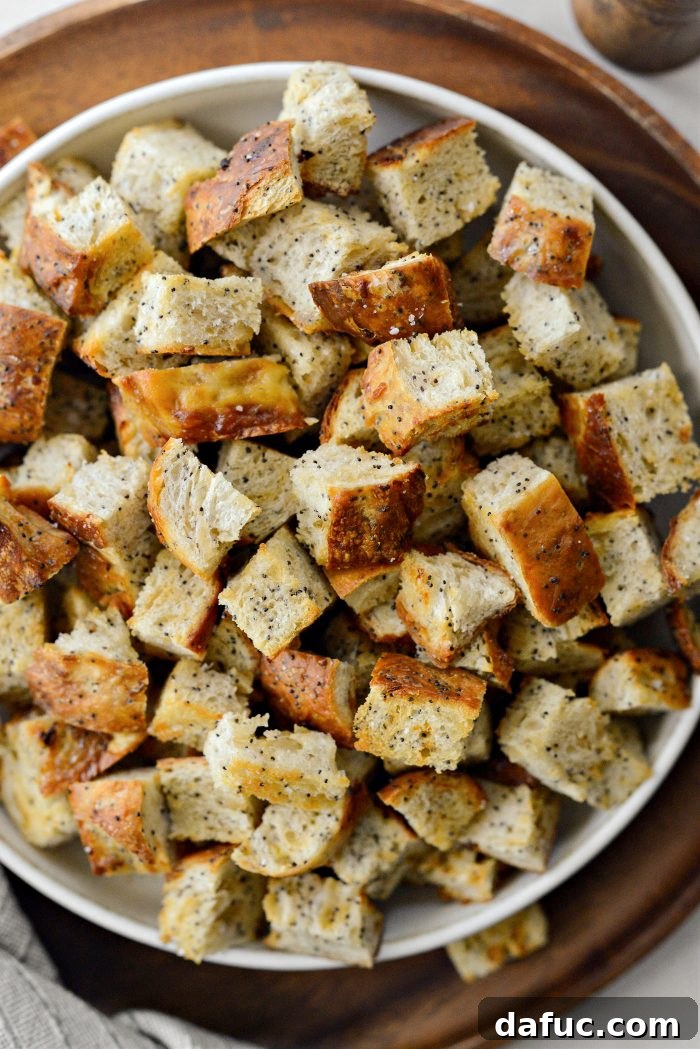
Enjoy your homemade croutons! We’d love to see your delicious creations. Snap a photo and tag us on Twitter or Instagram!
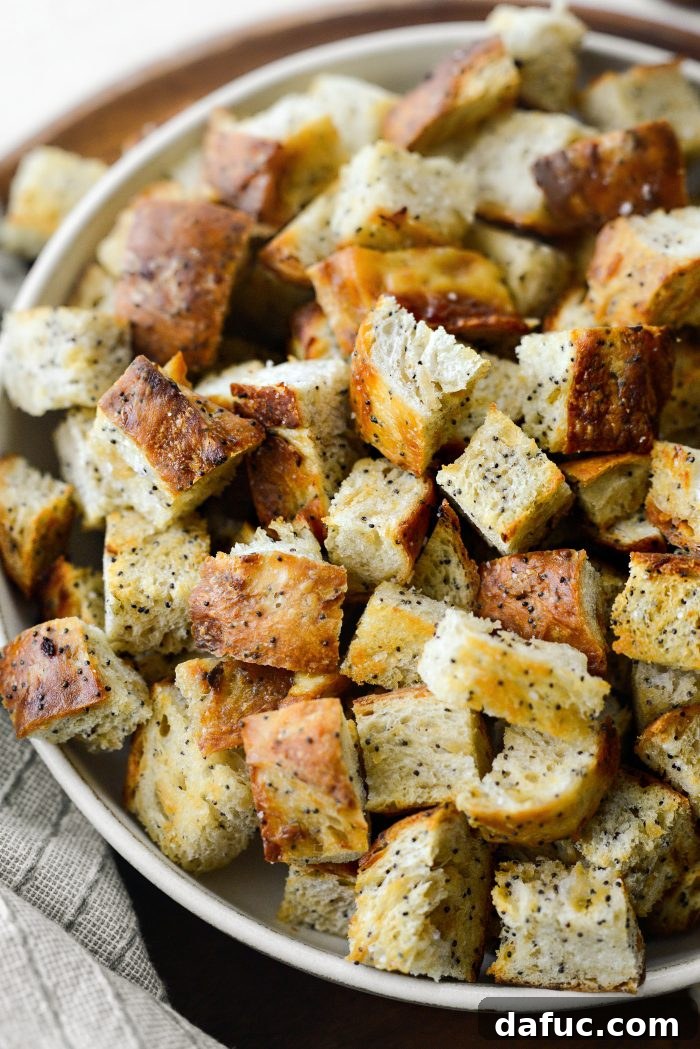
Homemade Croutons Recipe
Yield: Approximately 10 servings (adjusts based on bread type and cut size)
Prep Time: 10 minutes
Cook Time: 8-12 minutes
Total Time: 20-25 minutes
Author: Laurie McNamara
Course: Kitchen Basics, Appetizer, Side Dish
Cuisine: American
Summary: An incredibly easy and delicious recipe for making crispy, flavorful homemade croutons that are far superior to any store-bought alternative. Perfect for elevating salads, soups, and various other dishes.
Ingredients
- Olive oil spray (or 2-3 tablespoons melted olive oil or ghee)
- 1 (16-ounce) loaf day-old bread (e.g., sourdough, ciabatta, focaccia, rustic boule)
- 2-3 generous pinches kosher salt (or to taste)
- Optional Flavor Enhancers:
- 1 teaspoon garlic powder
- 1 teaspoon dried Italian herbs (oregano, basil, thyme, or a mix)
- 1/2 teaspoon freshly ground black pepper
- 1/4 teaspoon smoked paprika
- 2 tablespoons finely grated Parmesan cheese (add during last few minutes of baking if desired)
Equipment
- Large, rimmed baking sheet
- Parchment paper
- Sharp knife and cutting board
Instructions
- Preheat Oven & Prepare Pan: Preheat your oven to 400°F (200°C). Line a large, rimmed baking sheet with parchment paper and lightly spray or brush it with olive oil.
- Prepare Bread: Slice the day-old bread into 3/4-inch to 1-inch thick slices. Then, cut each slice into strips, and finally into even cubes. For a rustic look, you can also tear the bread by hand into bite-sized pieces, ensuring they are roughly uniform in size for even baking.
- Season Bread Cubes: Spread the cubed bread in a single, even layer onto the prepared baking sheet. Lightly spray the bread cubes generously with olive oil spray (or drizzle with melted oil). Sprinkle generously with kosher salt and any desired optional seasonings (garlic powder, dried herbs, black pepper, smoked paprika, etc.). Gently toss the cubes on the sheet with your hands to ensure they are thoroughly and evenly coated.
- Bake: Place the baking sheet on the middle rack of your preheated oven. Bake for 8 to 10 minutes, or until the bottom of the croutons turns a beautiful golden brown. For extra-crispy croutons, we recommend flipping them halfway through the baking process and continuing to bake for an additional 2 to 3 minutes (or longer) until they reach your desired level of crispness. Watch them closely during the final minutes to prevent burning.
- Cool & Serve: Once baked, remove the croutons from the oven and let them cool completely on the baking sheet. They will become even crispier as they cool. Once thoroughly cooled, they are ready to be added to your favorite salads, soups, or enjoyed as a crunchy snack.
Notes
Nutrition Disclaimer: All information presented on this site is intended for informational purposes only. I am not a certified nutritionist and any nutritional information shared here should only be used as a general guideline. Always consult with a qualified professional for personalized dietary advice.
Serving Size & Nutritional Value: The precise nutritional value of these homemade croutons will largely depend on the specific type of bread used, the exact amount of oil and seasonings added, and how large or small you cut the bread cubes for your croutons. The estimated nutrition information provided below should be considered a general guide.
Estimated Nutrition Information (Per 0.75 cup serving)
Serving: 0.75 cup, Calories: 124 kcal, Carbohydrates: 22g, Protein: 5g, Fat: 2g, Saturated Fat: 0.3g, Polyunsaturated Fat: 1g, Monounsaturated Fat: 0.3g, Trans Fat: 0.01g, Sodium: 292mg, Potassium: 64mg, Fiber: 2g, Sugar: 3g, Vitamin A: 1 IU, Vitamin C: 0.1mg, Calcium: 57mg, Iron: 2mg