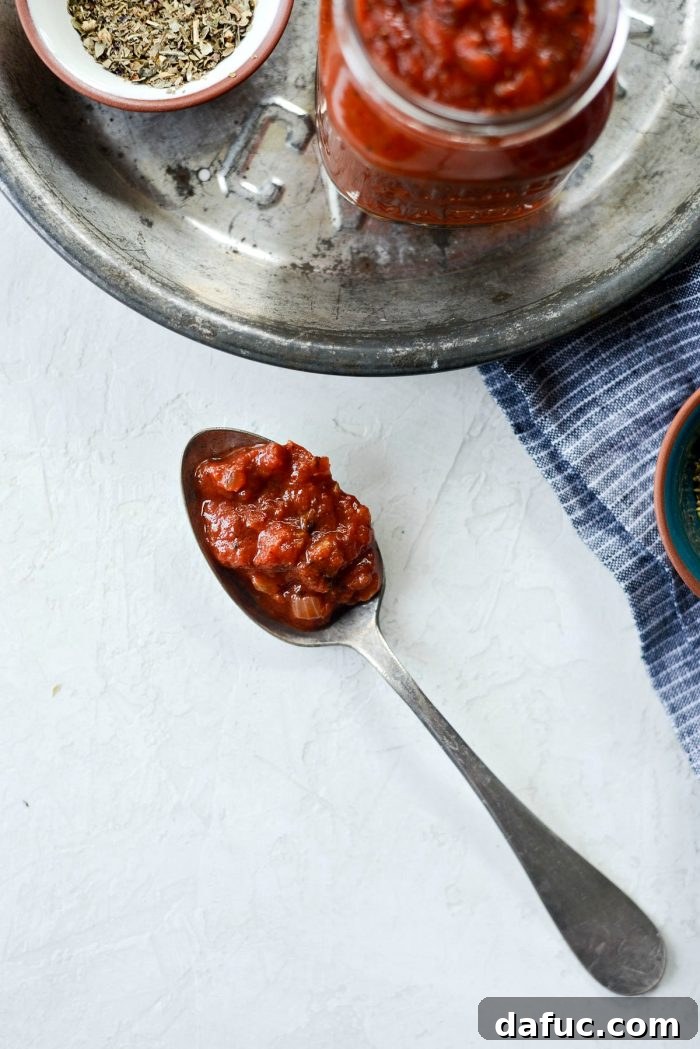
Craving the taste of authentic Italian pizza night at home? The secret to an unforgettable pizza lies not just in the crust or toppings, but in the heart of the pie: the sauce. Forget bland, store-bought jars! This recipe for the best homemade pizza sauce will transform your pizza experience. Bursting with robust flavors from sautéed minced onion and garlic, aromatic dried herbs, the rich tang of sun-dried tomatoes, and a subtle depth from a splash of wine, this thick and luscious sauce is surprisingly simple to make from scratch.
In just about 30 minutes, you can whip up 1-1/2 cups (equivalent to 6 servings of 1/4 cup each) of a truly remarkable pizza sauce that rivals any pizzeria. It’s not just for pizza; this versatile sauce is perfect for a variety of Italian-inspired dishes, elevating everything it touches. Prepare to impress your family and friends with a sauce so good, they’ll swear it came straight from a gourmet kitchen.
The Unexpected Origin of a Family Favorite Pizza Sauce
My journey to creating this superior easy homemade pizza sauce recipe began, as many great culinary discoveries do, with a dash of necessity and a sprinkle of improvisation. For years, my “from scratch” pizza sauce involved little more than opening a can of basic tomato sauce, then adding a few pantry staples: a dash of Italian seasoning, a pinch of sugar for sweetness, a bit of garlic powder, and sometimes a whisper of red pepper flakes for a kick. It was adequate, but never truly spectacular. It was a routine, a shortcut that produced predictable results.
Then, one fateful pizza night, as I reached into the pantry, disaster struck – or so I thought at the time. The tomato sauce can was nowhere to be found. Empty shelves stared back at me, signaling a potential halt to our much-anticipated pizza feast. Panic set in briefly, but then a glimmer of hope appeared: a tube of concentrated tomato paste. And as any seasoned home cook knows, when you have tomato paste, the possibilities are endless. It’s a concentrated burst of tomato flavor, a blank canvas awaiting creativity.
Channeling my inner chef, I embarked on a spontaneous kitchen scavenger hunt, much like a contestant on a cooking show. I rummaged through every nook and cranny of my pantry and refrigerator, seeking inspiration. What I ultimately created that day, out of a need to simply “make do,” was something truly extraordinary. It was a game-changer. This new recipe, infused with unexpected depth and complexity, quickly became my family’s absolute favorite robust pizza sauce, so beloved that it earned a coveted spot in my personal cookbook. This experience taught me that sometimes, the best recipes are born from moments of unexpected creativity and a willingness to step outside the familiar.
What Makes This Homemade Pizza Sauce Truly Special?
While many pizza sauces rely on a standard blend of tomatoes and herbs, this homemade pizza sauce from scratch distinguishes itself with two star ingredients that elevate its flavor profile beyond compare: sun-dried tomatoes and a touch of white wine. These aren’t just additions; they are game-changers, offering layers of rich, savory, and slightly sweet notes that you simply won’t find in typical jarred sauces or basic no-cook recipes.
- Sun-Dried Tomatoes: These intensely flavored gems bring a concentrated burst of sweet and tangy tomato goodness. When rehydrated and cooked into the sauce, they release a profound umami depth that adds complexity and a delightful chewiness. They act as a secret weapon, enhancing the overall tomato flavor without making it taste solely of sun-dried tomatoes. Make sure to use oil-packed sun-dried tomatoes for the best flavor and texture, as the oil adds another dimension of richness.
- White Wine: The inclusion of white wine (preferably a dry variety like Sauvignon Blanc) is where this sauce truly shines. As the wine simmers and reduces, its alcohol evaporates, leaving behind a beautifully complex flavor. It deglazes the pan, picking up all the savory bits from sautéed onions and garlic, and adds a subtle acidity and fruitiness that brightens the entire sauce. This depth is what makes the sauce taste sophisticated and “gourmet.” For those who prefer to avoid alcohol, don’t worry – a suitable alternative is provided in the recipe instructions.
Beyond these two unique ingredients, the foundation of this incredible sauce includes other fresh and aromatic components:
- Fresh Garlic and Onion: Sautéed until fragrant and tender, these aromatics form the backbone of savory flavor.
- Dried Oregano and Basil: The classic Italian herb duo, providing that essential pizza parlor aroma and taste. Using dried herbs ensures a potent, consistent flavor that blossoms beautifully when cooked.
- Salt and Black Pepper: Essential for seasoning, bringing all the flavors into balance.
The combination of these elements creates a thick, robust, and utterly delicious pizza sauce that will make every bite of your homemade pizza a truly exceptional experience. It’s these thoughtful additions that elevate it from good to outstanding.
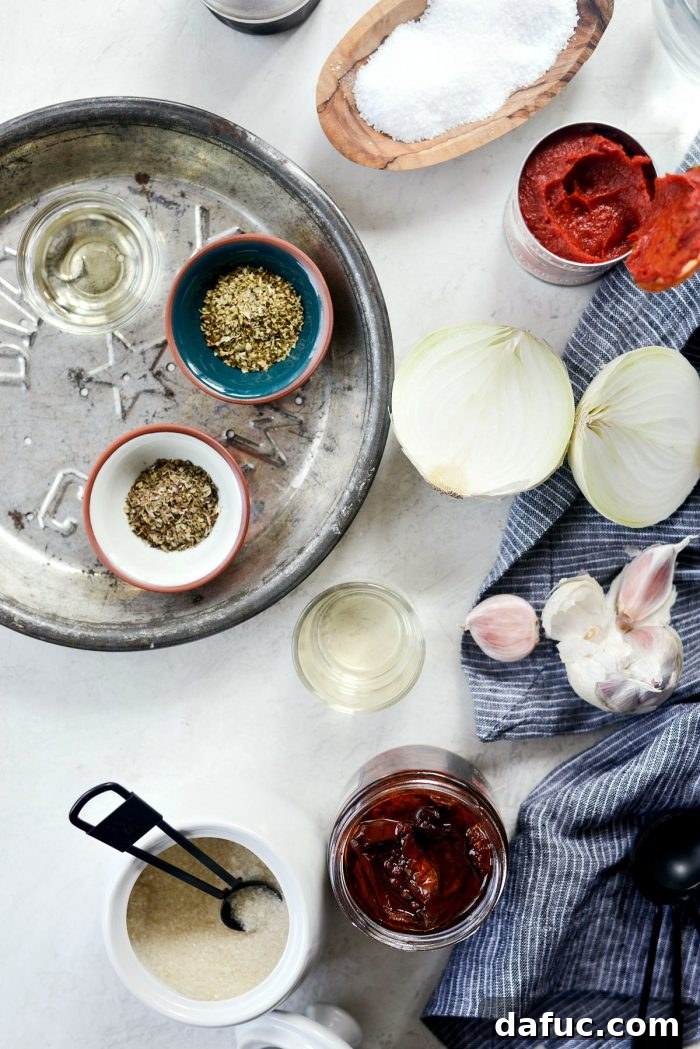
Essential Ingredients for Your Perfect Homemade Pizza Sauce
Gathering your ingredients is the first step towards creating this flavorful sun-dried tomato pizza sauce. You’ll find most of these are common pantry and fridge staples, ensuring that this delicious sauce is always within reach for your next pizza night.
- Light olive oil: For sautéing the aromatics.
- Finely diced white onion: Forms the savory base. You can pulse it in a food processor for an even smoother texture.
- Fresh garlic: Adds pungent depth. Minced, grated, or pressed – your choice!
- Sun-dried tomatoes: The secret ingredient for intense, concentrated tomato flavor. Opt for oil-packed for best results.
- Dried oregano: A classic Italian herb essential for pizza sauce.
- Dried basil: Complements the oregano, adding sweet and peppery notes.
- Tomato paste: Provides a concentrated tomato base and thickens the sauce beautifully.
- Sugar: Just a pinch balances the acidity of the tomatoes and enhances overall flavor (optional, but recommended).
- Water: To thin the tomato paste to the perfect sauce consistency.
- Kosher salt: To taste, bringing out all the other flavors.
- Freshly ground black pepper: For a touch of warmth and spice.
- Dry white wine (like Sauvignon Blanc): The other secret ingredient for amazing depth.
Having all your ingredients prepped and measured (mise en place) before you start cooking will make the process incredibly smooth and enjoyable.
Step-by-Step Guide to Crafting Your Best Pizza Sauce
Making this incredible robust homemade pizza sauce is a straightforward process that yields incredibly rewarding results. Follow these detailed steps to create a sauce that will become a staple in your kitchen.
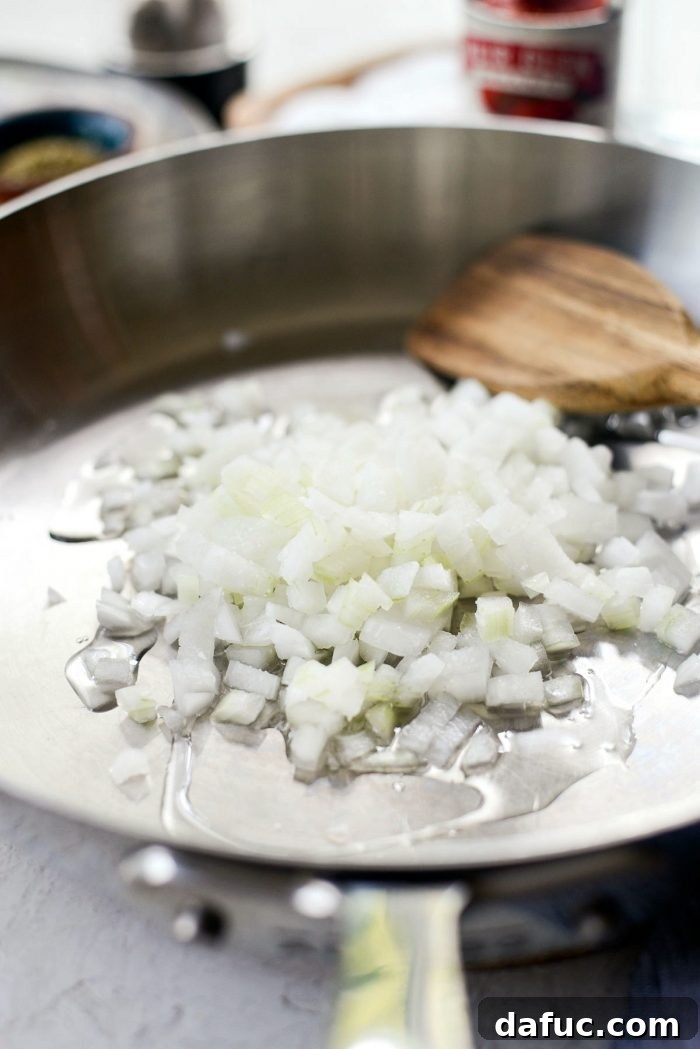
Step 1: Sauté the Aromatics
Begin by heating a 10-inch skillet over moderate heat. A good quality skillet ensures even cooking. Once the skillet is hot, add one tablespoon of light olive oil. The oil should shimmer but not smoke. Introduce 1/2 cup of finely minced white onions into the hot oil, along with a pinch of kosher salt. The salt helps draw out moisture from the onions, aiding in their softening. Sauté the onions, stirring occasionally, until they become translucent and tender, usually about 3-5 minutes. This step is crucial for building the foundational flavor of your sauce. For an extra smooth sauce texture, you can pulse the diced onion briefly in a mini food processor before adding it to the pan.
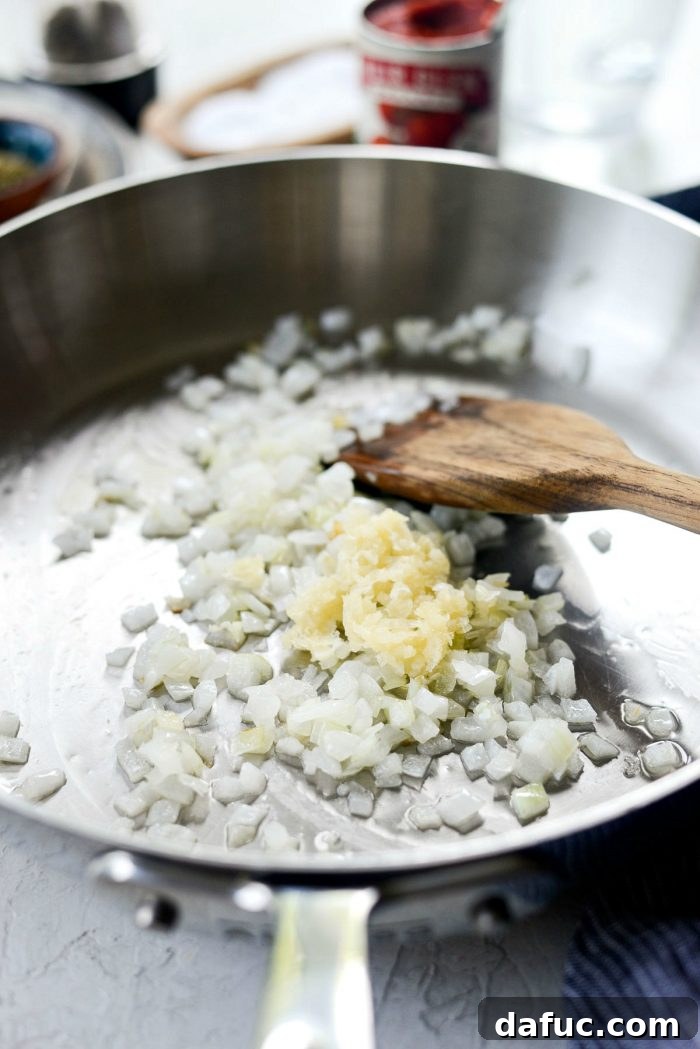
Step 2: Infuse with Garlic
The moment your onions have softened and become fragrant, it’s time to add the garlic. Incorporate 2 cloves of fresh garlic. You have a few options for preparing your garlic: you can finely mince it with a knife, grate it using a microplane for a paste-like consistency, or press it through a garlic press for maximum flavor release. Add the garlic to the skillet with the onions and sauté for a brief 30 seconds. Be careful not to burn the garlic, as burnt garlic can turn bitter and negatively impact the sauce’s flavor. A quick sauté is enough to release its pungent, aromatic oils.
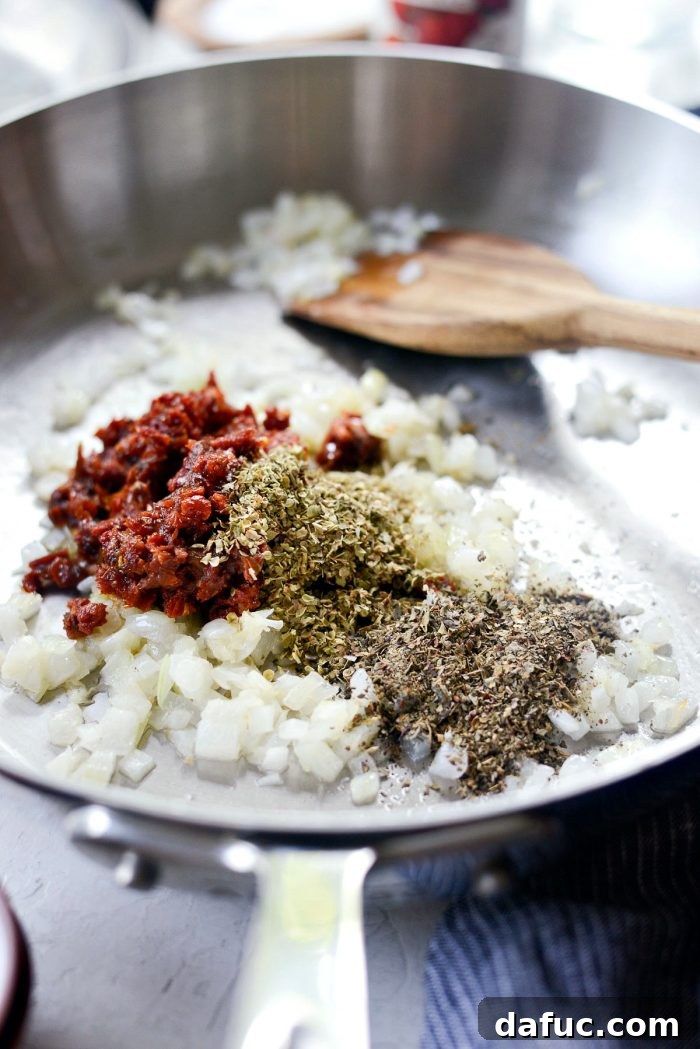
Step 3: Introduce Sun-Dried Tomatoes and Herbs
Next, add the secret flavor enhancers to your garlicky onion mixture. Stir in 2 tablespoons of minced sun-dried tomatoes (preferably oil-packed for a richer taste), 2 teaspoons of dried oregano, and 1-1/2 teaspoons of dried basil. Stir these ingredients together well, ensuring they are evenly distributed. Allow them to cook for about 1 minute. The residual heat from the pan and the olive oil will help to “bloom” the dried herbs, intensifying their aroma and flavor, while the sun-dried tomatoes begin to release their concentrated essence.
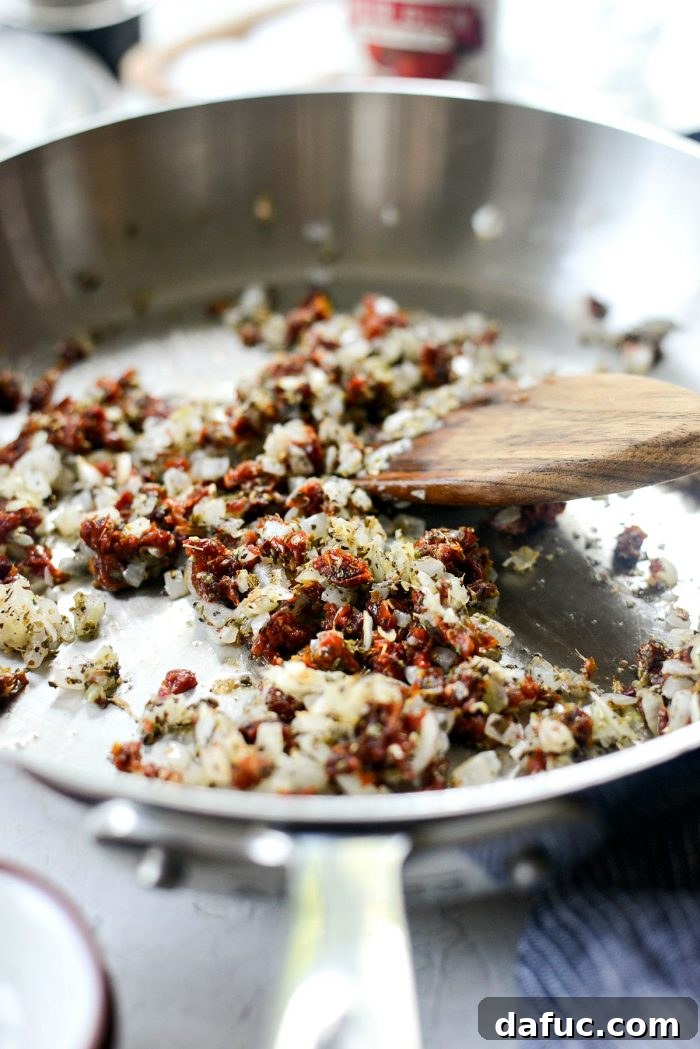
Step 4: Deglaze with Wine for Depth
Now for the ingredient that truly sets this recipe apart: the wine. Pour in 2 tablespoons of dry white wine. Sauvignon Blanc is an excellent choice, but any dry white wine you enjoy drinking will work beautifully. It’s crucial to avoid sweet white wines, as they can unbalance the sauce’s flavor profile. As the wine hits the hot pan, it will create steam and help deglaze the skillet, lifting all the flavorful browned bits from the bottom. Let this mixture simmer until the wine is almost completely absorbed. This reduction process concentrates the wine’s complex flavors, adding a wonderful depth to the sauce. If you prefer to avoid alcohol, simply omit the wine and add an additional 2 tablespoons of water or vegetable broth later on with the main cup of water.
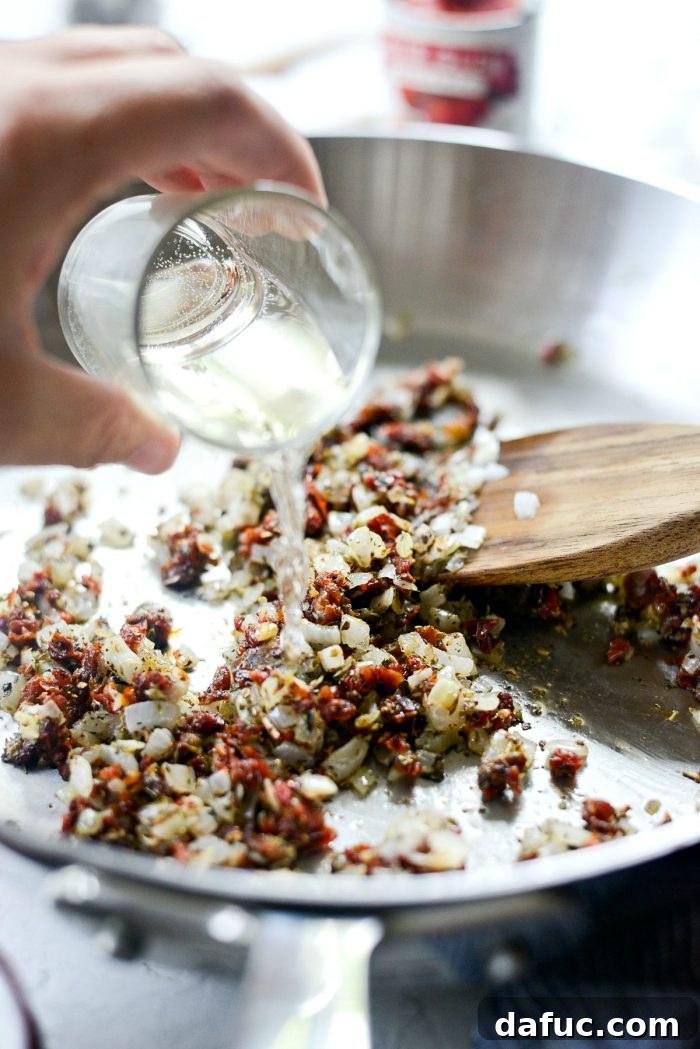
Continue to stir gently as the wine simmers and reduces, ensuring the flavors meld together perfectly. This step is key to developing the rich, layered taste that makes this sauce so distinctive.
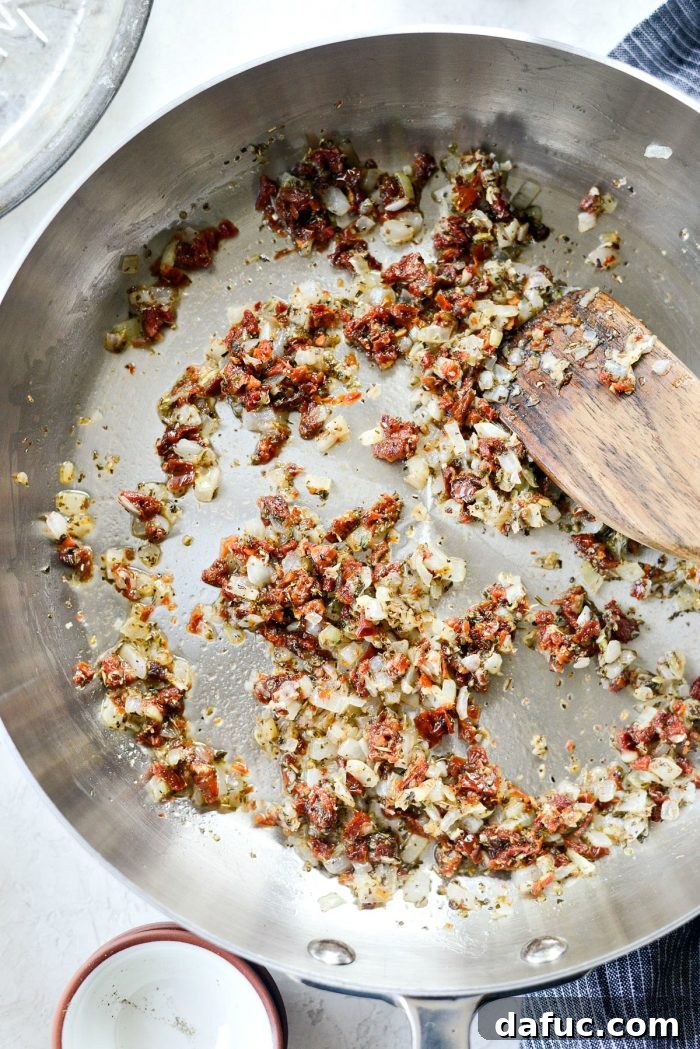
Step 5: Build the Tomato Base
Once the wine has reduced, it’s time to build the robust tomato base. Add 6 ounces of high-quality tomato paste to the skillet. Stir it vigorously into the aromatic mixture. It’s important to cook the tomato paste for a minute or two before adding any liquids, as this helps to deepen its flavor and remove any raw, metallic taste. The paste will combine with the onions, garlic, sun-dried tomatoes, and herbs, creating an intensely flavored foundation.
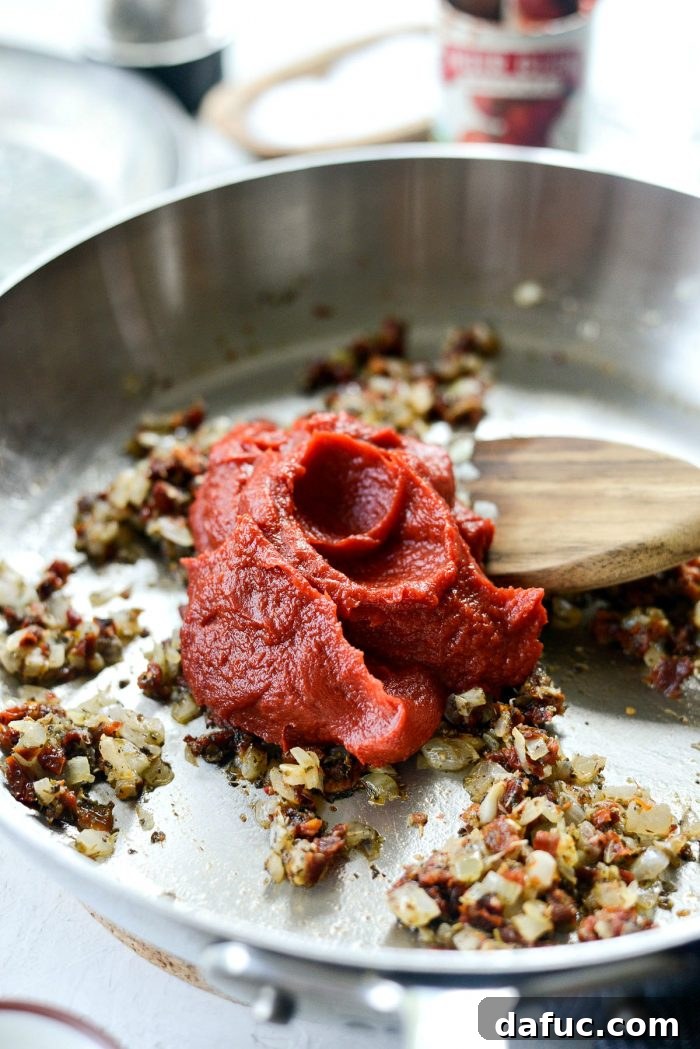
Step 6: Simmer to Perfection
To finish the sauce, sprinkle in 1/4 teaspoon of sugar (this is optional but highly recommended as it balances the acidity of the tomatoes beautifully) and then pour in 1 cup of water. Stir everything thoroughly until the tomato paste is completely dissolved and the sauce is smooth. Reduce the heat to medium-low or low, allowing the sauce to gently simmer for 10 to 15 minutes. During this time, the flavors will meld and deepen, and the sauce will thicken to a rich, luscious consistency. Remember to stir occasionally to prevent sticking and ensure even cooking.
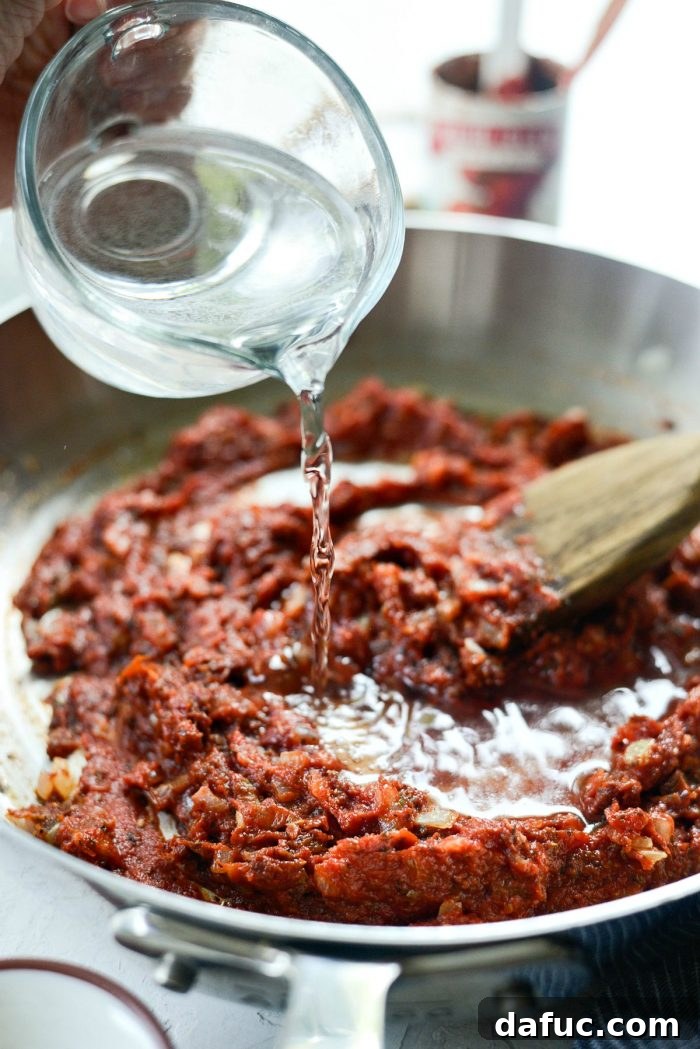
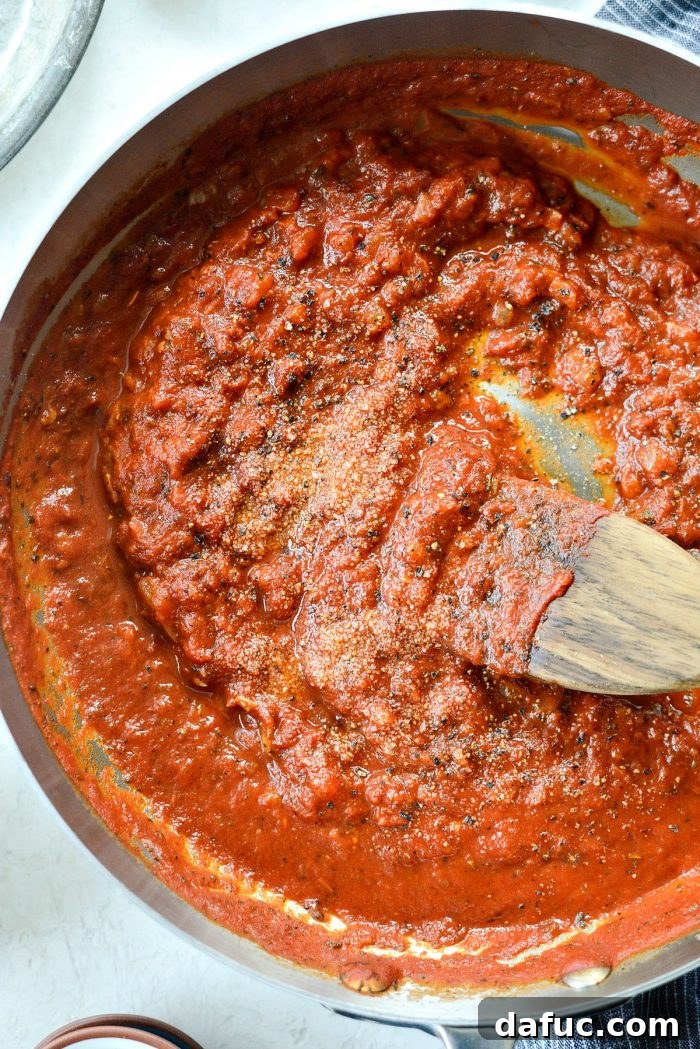
Step 7: Season and Serve
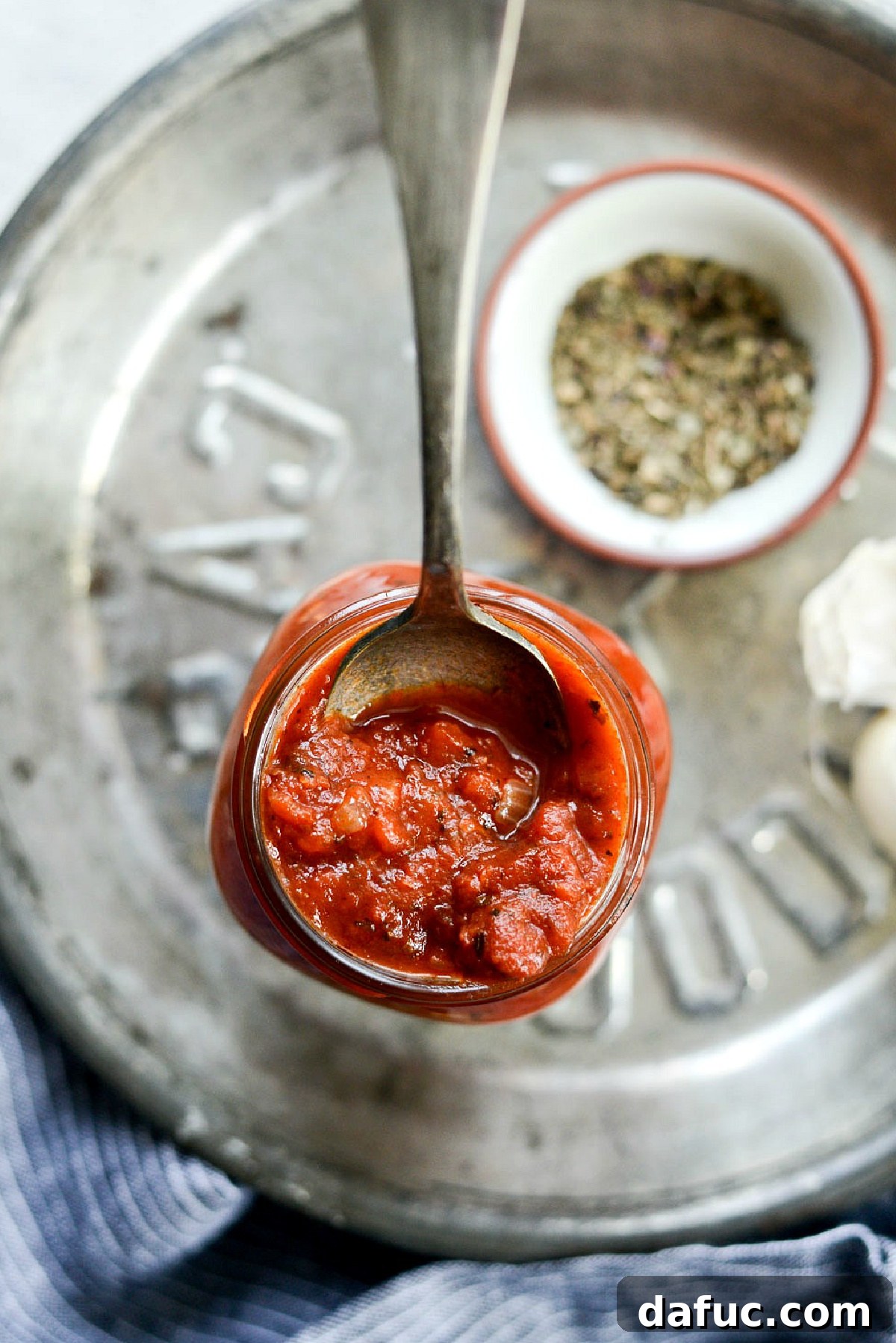
Finally, taste your magnificent sauce. Season it generously with 3/4 to 1 teaspoon of kosher salt and several grinds of fresh black pepper, adjusting to your personal preference. Keep simmering for another minute or two if needed until it reaches your desired thickness. This sauce should be wonderfully thick and robust, clinging beautifully to a spoon – a true indicator of its richness and depth of flavor. Once seasoned to perfection, it’s ready to elevate your culinary creations!
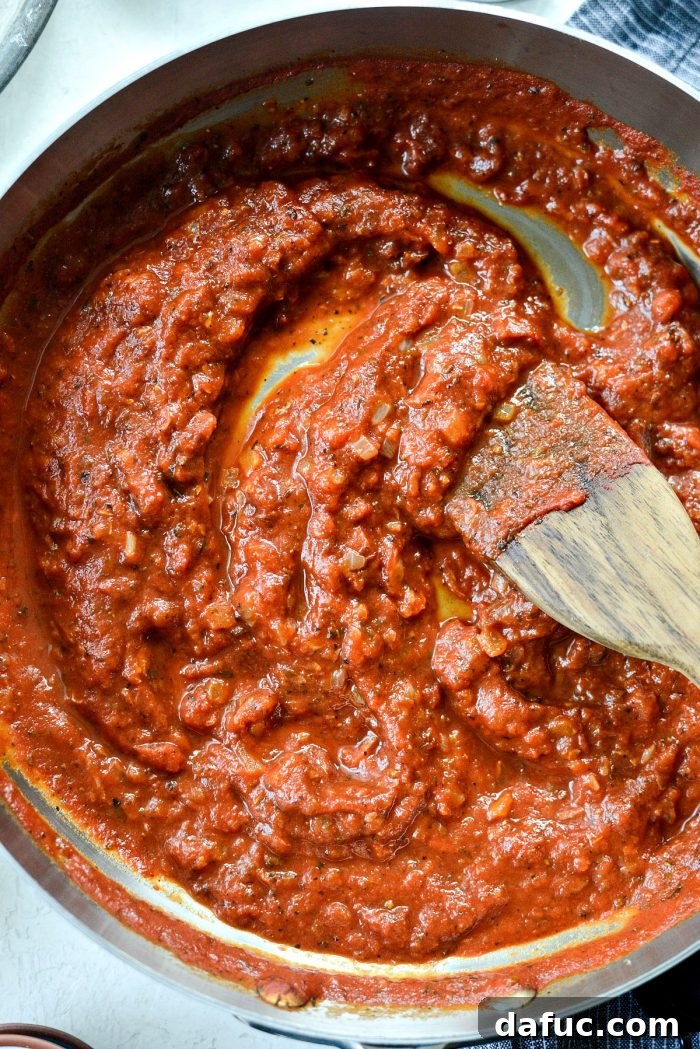
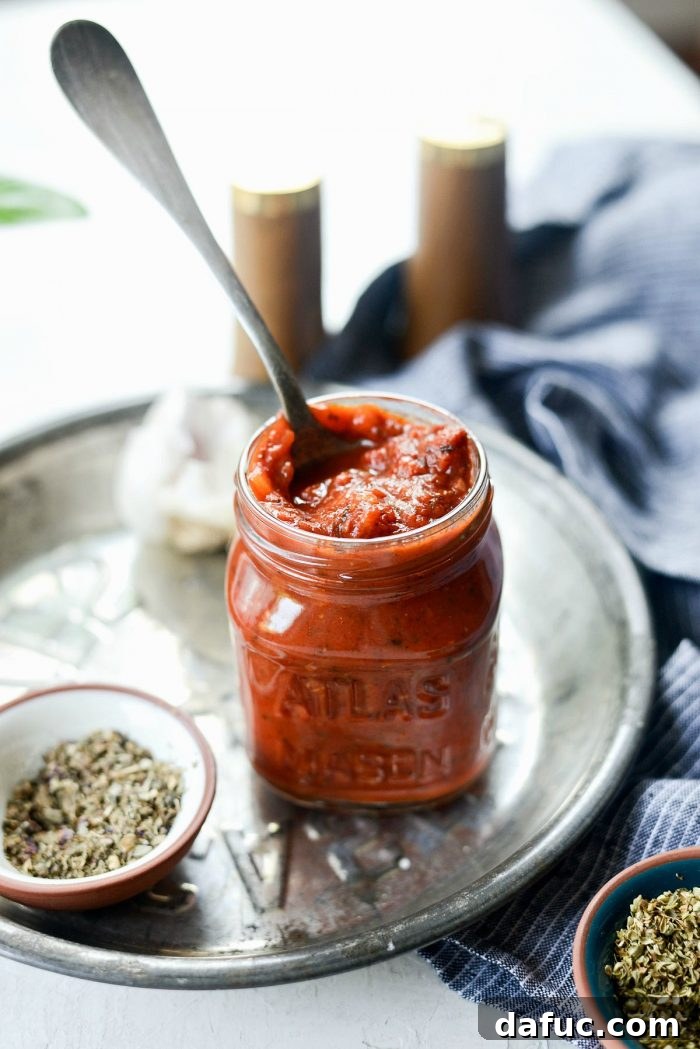
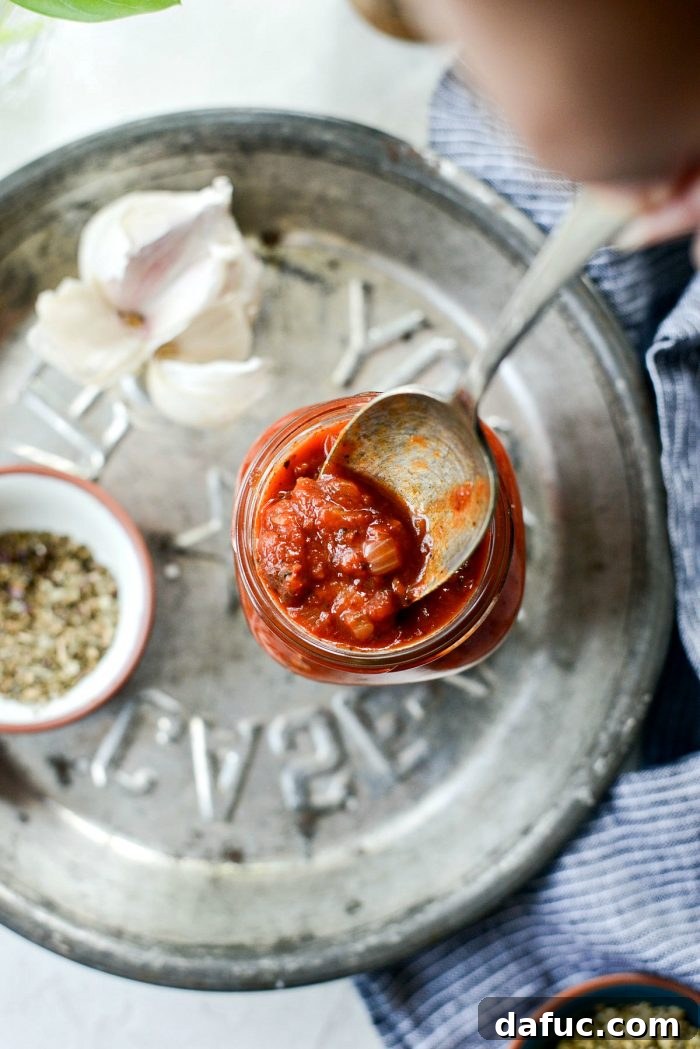
The result is a thick, luscious, and absolutely amazing homemade pizza sauce that will make your taste buds sing. Its rich color and delightful aroma are just a prelude to the incredible flavor experience awaiting you.
Beyond Pizza: Versatile Uses for Your Homemade Sauce
While this sauce is undeniably the best pizza sauce recipe you’ll ever make, its incredible depth of flavor and luscious texture make it incredibly versatile for a multitude of other culinary applications. Don’t limit its use to just pizza night!
- Sandwich Spread: Spread a thin layer on toasted bread or a baguette before adding your favorite sandwich fillings. It adds a gourmet touch to grilled cheese, turkey melts, or even a simple veggie sandwich.
- Filling for Pizza Rolls: Use it as the flavorful core for homemade pizza rolls, strombolis, or calzones. Its thickness ensures it won’t make your dough soggy.
- Dip for Appetizers: Serve it warm as a dipping sauce for mozzarella cheese sticks, garlic knots, breadsticks, or even crispy chicken tenders. It’s a crowd-pleaser for game nights or parties.
- Pasta Sauce Base: While slightly different from a traditional marinara, this sauce makes an excellent quick pasta sauce. Just thin it slightly with a little pasta water or broth, toss with your favorite pasta, and perhaps add some fresh basil and Parmesan cheese.
- Marinade or Glaze: Use it as a flavorful base for marinades for chicken or pork, or as a glaze for meatballs. Its robust taste stands up well to grilling or baking.
- Eggs Benedict Twist: For a unique breakfast or brunch, use a dollop of this sauce instead of Hollandaise for a “Pizza Benedict.”
- Savory Tart or Galette Filling: Spread it on a puff pastry base before adding vegetables and cheese for a quick and impressive savory tart.
The options truly are endless when you have a homemade sauce this good. Its rich, concentrated flavor profile means a little goes a long way in adding a burst of deliciousness to many dishes.
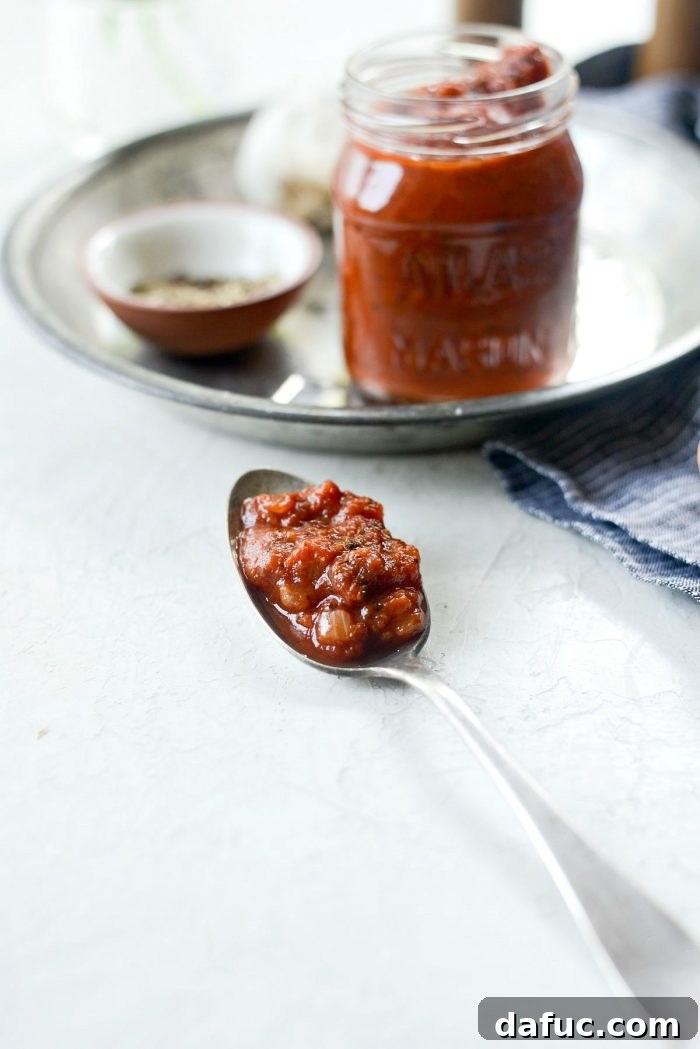
There’s pizza sauce, and then there’s homemade pizza sauce – and once you taste the difference, there’s no going back. Making your own brings a level of freshness and flavor that pre-made options simply cannot match.
Tips for Storing and Enjoying Your Homemade Pizza Sauce
One of the many benefits of making a batch of this delicious freezer-friendly pizza sauce is that it’s perfect for meal prepping. You can enjoy the rich flavors of homemade pizza sauce long after you’ve made it, ensuring a quick and easy start to future pizza nights or other culinary adventures.
How To Store Homemade Pizza Sauce:
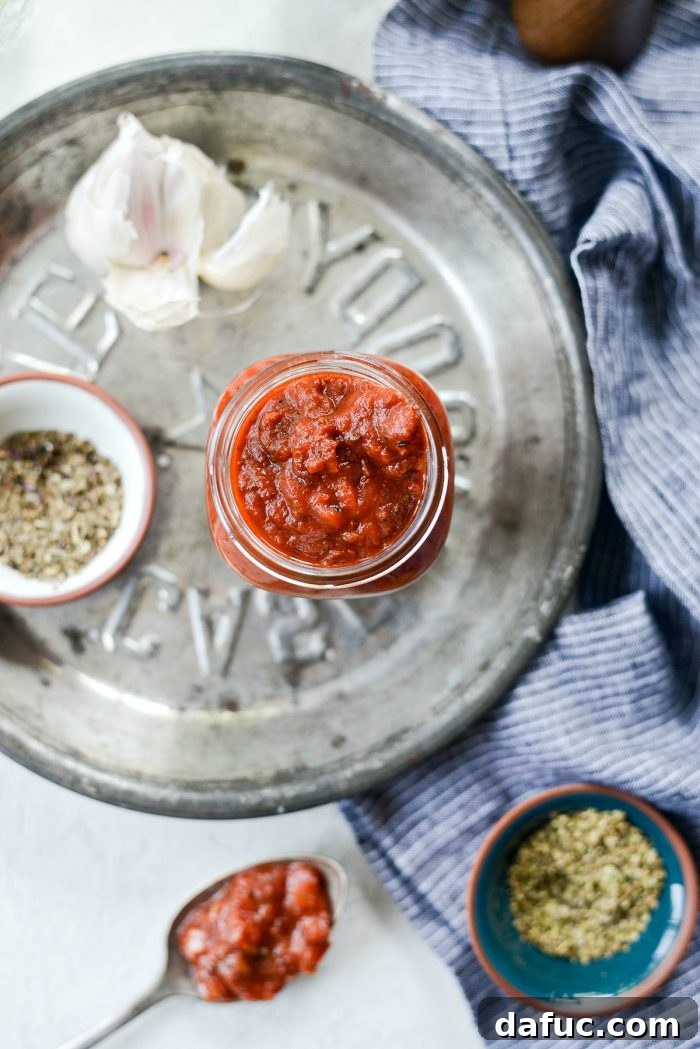
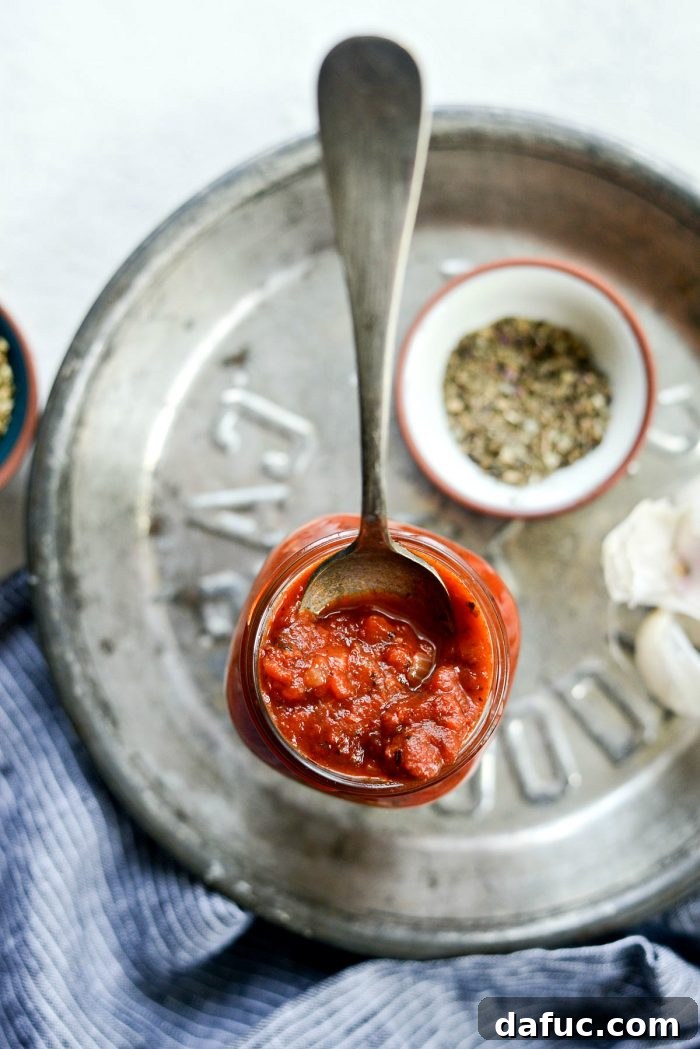
Proper storage is key to maintaining the sauce’s freshness and flavor. First, allow the sauce to cool completely to room temperature. This is important to prevent condensation, which can lead to spoilage, and to ensure food safety. Once cooled, transfer the sauce into an airtight jar or container. Glass jars with tight-fitting lids (like Mason jars) are ideal, as they don’t absorb odors or colors. Ensure the container is freezer-safe if you plan to freeze the sauce.
How Long Will Homemade Pizza Sauce Last?
- Refrigerator: When stored properly in an airtight container, your homemade pizza sauce will last for up to 1 week in the refrigerator. This makes it perfect for a few nights of pizza or for incorporating into other meals throughout the week.
- Freezer: For longer storage, this sauce freezes beautifully. Portion the cooled sauce into freezer-safe containers, heavy-duty freezer bags, or even ice cube trays (for smaller, individual portions). If using bags, squeeze out as much air as possible before sealing and laying flat to freeze, which saves space. Frozen pizza sauce will maintain its quality for up to 6 months. To use, simply thaw overnight in the refrigerator or gently reheat from frozen in a saucepan over low heat.
Having a stash of this incredible sauce on hand means you’re always just minutes away from a gourmet pizza experience or a quick and flavorful addition to any meal. It’s a testament to the power of homemade ingredients!
Frequently Asked Questions About Homemade Pizza Sauce
- Can I use fresh herbs instead of dried?
- Absolutely! If using fresh oregano and basil, you’ll need a larger quantity as their flavor is less concentrated. A general rule of thumb is to use about three times the amount of fresh herbs compared to dried. Add them towards the end of the simmering process to preserve their vibrant flavor.
- What if I don’t have white wine or prefer not to use alcohol?
- No problem! You can easily substitute the white wine with an equal amount of chicken or vegetable broth, or even just water. The wine adds a unique depth, but the sauce will still be delicious without it, especially with the sun-dried tomatoes providing rich flavor.
- Can I make this sauce spicier?
- Yes! To add some heat, you can include a pinch or two of red pepper flakes when you sauté the garlic and onions, or even a dash of cayenne pepper. Adjust to your desired level of spice.
- Why use tomato paste instead of crushed tomatoes?
- Tomato paste is incredibly concentrated, giving the sauce a robust, deep tomato flavor and a naturally thick consistency without needing to simmer for hours. While crushed tomatoes can be used, they would require a much longer reduction time to achieve the same thickness and intensity of flavor.
- How can I make the sauce smoother?
- For an ultra-smooth sauce, after simmering, you can use an immersion blender directly in the pot, or carefully transfer the cooled sauce to a regular blender and blend until completely smooth. Be cautious blending hot liquids.
- Is it okay to add a little sweetness to pizza sauce?
- Yes, a small amount of sugar (or even honey/maple syrup) is often used in tomato sauces to balance the acidity of the tomatoes. It enhances the overall flavor without making the sauce taste sweet. It’s an optional addition, but one that many chefs recommend.
Enjoy! We truly hope you love this homemade pizza sauce recipe as much as we do. It’s a testament to how simple, fresh ingredients can create something truly extraordinary. If you give this recipe a try, we’d be thrilled to hear from you! Share your culinary creations by snapping a photo and tagging us on Twitter or Instagram. Your feedback and shares inspire us to keep creating delicious recipes!
Print Recipe | Pin Recipe
Average Rating: 4.74 from 15 ratings
Leave a Review »
Easy Homemade Pizza Sauce
Looking for the BEST homemade pizza sauce? You’ve come to the right place! Sautéed minced onion and garlic combined with dried herbs, sun-dried tomatoes and wine in a thick and robust tomato sauce. This recipe yields 1½ cups or 6 (1/4 cup per serving) in about 30 minutes.
Yield: 6 servings
Prep Time: 5 mins
Cook Time: 20 mins
Additional Time: 5 mins
Total Time: 30 mins
Ingredients
- 1 tablespoon olive oil
- 1/2 cup minced white onion
- 2 cloves garlic, pressed through a garlic press
- 2 tablespoons minced sun-dried tomatoes, packed in olive oil
- 2 teaspoons dried oregano
- 1½ teaspoon dried basil
- 2 tablespoons white wine, like Sauvignon Blanc
- 6 ounces tomato paste
- 1/4 teaspoon sugar, optional
- 1 cup water
- kosher salt, to taste
- black pepper, to taste
Instructions
- Heat a large 10-inch skillet over moderate heat. When hot add in olive oil, minced onion with a pinch of salt and sauté until soft.
- Add in the garlic, and cook for 30 seconds.
- Add in the minced sun-dried tomatoes, dried oregano and basil and stir, cooking for 1 minute. The oil and the heat of the pan will soften up the dried herbs.
- Pour in the white wine and let that simmer until absorbed.
- Add in the tomato paste, sugar and the cup of water and stir until combined. Reduce the heat to medium-low and simmer the sauce for 10 to 15 minutes before seasoning with kosher salt and black pepper.
Notes
How to Store Homemade Pizza Sauce:
Allow to cool before transferring it to a jar or container with a tight-fitting lid and refrigerate or freeze (using a freezer safe container).
How Long Will Homemade Pizza Sauce Last?
If store properly, pizza sauce will last for up to 1 week in the refrigerator or 6 months in the freezer.
Nutrition Disclaimer: All information presented on this site is intended for informational purposes only. I am not a certified nutritionist and any nutritional information shared on SimplyScratch.com should only be used as a general guideline.
Nutrition Information (per serving – 0.25 cup):
- Calories: 45kcal
- Carbohydrates: 4g
- Protein: 1g
- Fat: 3g
- Saturated Fat: 0.4g
- Polyunsaturated Fat: 0.4g
- Monounsaturated Fat: 2g
- Sodium: 18mg
- Potassium: 121mg
- Fiber: 1g
- Sugar: 1g
- Vitamin A: 79IU
- Vitamin C: 6mg
- Calcium: 25mg
- Iron: 1mg
Author: Laurie McNamara
Course: condiments
Cuisine: Italian